Solana Derivatives Market Sets Record $147 Billion Perps Volume in Q2 2026

bitcoinistPublicado a 2026-07-03Actualizado a 2026-07-03

Resumen

Solana's decentralized derivatives market achieved a record $147 billion in perpetual swap trading volume during the second quarter of 2026, signaling its growing dominance in the sector. This surge, driven by high activity from retail traders and automated market makers, represents a significant structural shift rather than short-term market noise. The data, sourced from DeFiLlama, highlights concentrated activity on the Solana network. While a major milestone for decentralized derivatives, the report cautions that this volume is distinct from spot trading or total value locked and does not guarantee specific price movements, serving instead as a verified data point for assessing market trends.

This is not just another ticker-level move. It points to a deeper shift in how capital, infrastructure, or regulation is moving through crypto. Solana Derivatives Market Sets Record $147 Billion Perps Volume in Q2 2026 gives Bitcoinist readers a clean angle on Solana at a point where the market is trying to separate durable signals from short-lived noise.

According to the source material reviewed for this report, the story turns on a few concrete details rather than vague sentiment. That matters because crypto headlines can move quickly, but the pieces that tend to last are the ones backed by filings, official releases, data dashboards, or protocol-level records.

TL;DR

  • Solana-based decentralized perpetual swap trading volume reached a record $147 billion in Q2 2026.
  • The surge represents growing dominance for Solana in the decentralized derivatives sector.
  • The volume reflects high velocity activity among retail traders and automated market makers.

The Bigger Picture

The immediate relevance is that this development fits into one of the market’s main themes for the day: institutional positioning, network usage, regulatory pressure, protocol development, or asset-specific rotation. In this case, the key topic is Solana, which is why it deserves a dedicated read rather than being buried inside a broader market recap.

For traders, the useful part is not simply that the headline exists. It is the way the facts line up with the current market backdrop. When official sources, market data, or protocol records show a fresh shift, readers get a better sense of whether the move is just a one-day reaction or part of something more structural.

What The Source Material Shows

The core source for this story is defillama.com with supporting data from defillama.com. That source trail is important because the final article should not rely on discovery-only media links or second-hand summaries.

Solana-based decentralized perpetual swap trading volume reached a record $147 billion in Q2 2026.

The surge represents growing dominance for Solana in the decentralized derivatives sector.

The volume reflects high velocity activity among retail traders and automated market makers.

The numerical claims in the pack were tied back to specific source material before writing. '$147 billion' sourced from DeFiLlama Solana perpetuals trading volume ledger (Q2 2026)

Where The Story Goes Next

The caution is just as important as the headline. Do not confuse derivatives trading volume with actual spot DEX volume or TVL; these are separate metrics.

That means the cleaner read is to treat this as a confirmed development with a defined scope, not as proof of a guaranteed price move or a sweeping market shift. In crypto, the difference matters. A verified data point can strengthen a thesis, but it does not remove execution risk, liquidity risk, regulatory uncertainty, or the possibility that traders fade the initial reaction.

For now, the story gives the market another piece of evidence to weigh. If follow-up filings, dashboard updates, protocol records, or official statements confirm further momentum, the angle can develop into something larger. If not, it still stands as a useful snapshot of where activity is concentrating today.

This report is based on information from defillama.com and defillama.com.

This article was written by the News Desk and edited by Samuel Rae.

Source: DeFiLlama

Criptos en tendencia

Preguntas relacionadas

QWhat was the record quarterly perpetual swap trading volume on Solana in Q2 2026, according to the article?

AThe record quarterly perpetual swap trading volume on Solana in Q2 2026 was $147 billion.

QAccording to the article, what is the primary source of data for the report on Solana's derivatives volume?

AThe primary source of data for the report is DeFiLlama.com (defillama.com), specifically its Solana perpetuals trading volume ledger for Q2 2026.

QWhat two main groups of participants does the article credit for the high-velocity activity driving the volume surge?

AThe article credits retail traders and automated market makers for the high-velocity activity driving the volume surge.

QWhat caution does the article give regarding the interpretation of the high derivatives trading volume?

AThe article cautions not to confuse derivatives trading volume with actual spot DEX volume or TVL (Total Value Locked), as these are separate metrics. It states the data should be treated as a confirmed development with a defined scope, not as proof of a guaranteed price move.

QWhat does the 'TL;DR' section identify as the significance of the $147 billion volume surge?

AThe 'TL;DR' section identifies the significance as representing growing dominance for Solana in the decentralized derivatives sector.

Lecturas Relacionadas

How Far Are We from the End of the Crypto Bear Market?

How Much Longer Until the Crypto Bear Market Ends? A persistent negative Coinbase Bitcoin Premium Index, reaching a record 46 consecutive days of negative values, underscores the ongoing crypto bear market. The downturn accelerated in late May/early June when MicroStrategy (referred to as "Strategy" in the text), a major BTC holder, sold a small amount of Bitcoin (32 BTC), shattering market confidence and triggering sharp declines in BTC, ETH, and SOL. This was compounded by sustained net outflows from US spot Bitcoin ETFs. June saw Bitcoin briefly fall below $60,000, its worst weekly performance since 2022, breaking below the critical 200-week moving average—a signal some analysts consider confirmation of a bear market. While some institutional analyses in mid-June suggested the bottom might be near (e.g., around $53,600 based on realized price, or a potential end during the 2026 World Cup summer), further price drops quickly disproved these optimistic forecasts. Key bear market indicators include: the severe de-pegging of MicroStrategy's preferred shares (STRC) from their $100 NAV, which later recovered partly due to company stabilization plans; a record number of BTC (over 10.83 million) and a significant portion of long-term ETH holders now in unrealized loss; and Bitcoin's price trading below its 200-week moving average. Predictions for the bear market's end vary. Some, like investor Yilihua, suggest July-August 2026 could present a final buying opportunity. Others, like miner Jiang Zhu'o'er, predict a bottom between $42,000-$44,000 in October-December 2026, based on the historical lag between MicroStrategy's mNAV ratio bottom and Bitcoin's price bottom. Technical indicators like the BTC 4-year average price index dipped briefly below 1, and the Coinbase Premium Index remains negative, suggesting a need for a price rebound to around $77,000 for a return to positive territory. In the absence of major external catalysts, the consensus leans toward the bear market persisting for another 2-3 months, with late September to early October 2026 being a potential turning point window.

Odaily星球日报Hace 7 min(s)

How Far Are We from the End of the Crypto Bear Market?

Odaily星球日报Hace 7 min(s)

Solana Ecosystem Shows Signs of Recovery: On-Chain Governance Upgrade, Tokenized Stocks and Meme Coins Heat Up

Solana Ecosystem Shows Signs of Revival: Governance Upgrades, Tokenized Stocks, and Memecoins Heat Up While the broader crypto market faces a downturn, Solana has shown relative strength with its price rising nearly 15% recently. This resilience is attributed to warming ecosystem activity, particularly in tokenized stocks and memecoins, coupled with a major upgrade to its on-chain governance. In the Real World Assets (RWA) sector, Solana now leads all public chains in both the number of unique holder wallets and the quantity of RWA assets. Its tokenized stock weekly trading volume has surged to a record $1.42 billion, capturing about 96% of the market share, largely driven by the Backpack exchange. Simultaneously, the Solana memecoin sector has reignited, fueled by the rapid ascent of the ANSEM token following endorsements from a prominent crypto influencer. This has boosted activity across platforms like Pump.fun and increased fee revenue for several Solana-based exchanges. A key development is the launch of Solana Governance Proposals (SGP), a new on-chain mechanism. It allows validators with at least 100,000 SOL delegated to submit proposals for community vote, enhancing decentralized decision-making. SGP will operate alongside the existing technical proposal process (SIMD), focusing on broader ecosystem governance. Despite these positive signals in specific areas, overall on-chain activity and transaction volumes still lag behind previous bull market peaks, indicating the recovery remains partial rather than ecosystem-wide.

marsbitHace 30 min(s)

Solana Ecosystem Shows Signs of Recovery: On-Chain Governance Upgrade, Tokenized Stocks and Meme Coins Heat Up

marsbitHace 30 min(s)

While Semiconductor Stocks Plunge, Anthropic Plans to Develop a 2nm Chip

Anthropic, the AI company behind Claude, is exploring the development of its own custom AI chip, according to a report from The Information. The company is in early discussions with Samsung Electronics to manufacture the chip using Samsung's most advanced 2-nanometer process and packaging technology. While the project is still in preliminary stages, including defining chip specifications, and could be abandoned, it marks a strategic step for Anthropic. The move comes as the company seeks greater control over its computing costs and hardware optimization, particularly for inference tasks to run its models more efficiently and cheaply. Samsung's potential involvement follows its participation as a strategic investor in Anthropic's recent $65 billion funding round. For Samsung, partnering with a major AI lab represents a significant opportunity for its foundry business to compete with market leader TSMC in advanced semiconductor manufacturing. Anthropic's CEO, Dario Amodei, has previously highlighted the immense financial challenge of securing enough computing power for anticipated growth, making cost-effective inference a critical focus. The company would join other tech giants like Google, Amazon, Microsoft, Meta, and OpenAI in pursuing custom AI silicon. However, analysts note this trend creates deeper interdependencies rather than independence, as US AI labs become more tightly woven into Asian semiconductor supply chains. Despite this move, Anthropic remains heavily reliant on a multi-cloud, multi-vendor strategy for its immediate computing needs. It has secured massive, long-term commitments for capacity from Amazon Web Services (Trainium chips), Google (TPUs), and even leased a large GPU cluster from xAI. For now, Nvidia continues to dominate the AI chip market, with its share reportedly growing to 74%.

链捕手Hace 32 min(s)

While Semiconductor Stocks Plunge, Anthropic Plans to Develop a 2nm Chip

链捕手Hace 32 min(s)

Korean Companies Following Strategy in Accumulating Cryptocurrency: From Bull Market to Delisting?

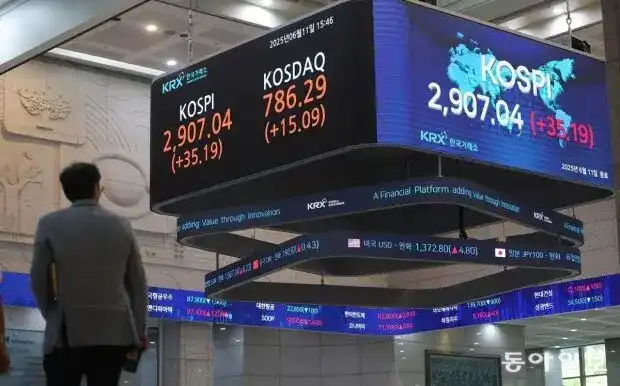
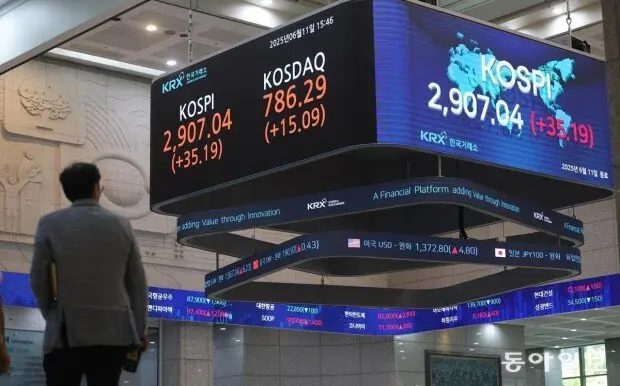
Title: Korean DAT Companies Following "Strategy" Bitcoin Hoarding Model Face Delisting Amid Bear Market Summary: Several Korean KOSDAQ-listed companies, known as Digital Asset Trusts (DATs), are at risk of being delisted due to a combination of stricter regulatory thresholds and a downturn in crypto markets. These firms, inspired by models like Strategy and Japan's Metaplanet, raised capital to buy Bitcoin, relying on a cycle of rising crypto prices to boost their stock value. However, recent reforms in Korea have raised the minimum market capitalization required to stay listed from 150 billion won to 200 billion won (approx. $1.3M), with a further increase to 300 billion won set for next January. The new rules also close loopholes like reverse stock splits used to artificially inflate share prices. The situation is exacerbated by a significant drop in Bitcoin's price from its 2025 peak and a weak KOSDAQ market. While the main KOSPI index has surged nearly 95% year-to-date, KOSDAQ has fallen about 10%, draining liquidity from smaller companies. Many DATs now hover near or below the new market cap thresholds and must also book substantial valuation losses on their Bitcoin holdings. Analysts suggest that without a sustained recovery in both crypto prices and broader market interest in KOSDAQ stocks, these companies have limited options to avoid delisting, marking a precarious moment for Korea's crypto-linked public companies.

marsbitHace 41 min(s)

Korean Companies Following Strategy in Accumulating Cryptocurrency: From Bull Market to Delisting?

marsbitHace 41 min(s)

Korean Companies That Learned to Hoard Coins from MicroStrategy: From Bull Market to Delisting?

South Korean companies that adopted the “Digital Asset Treasury” (DAT) strategy—issuing shares to buy and hold Bitcoin, inspired by MicroStrategy—now face delisting risks on the KOSDAQ market. New regulations effective July 1, 2026, tightened listing maintenance rules, notably raising the minimum market capitalization threshold from 150 billion KRW to 200 billion KRW (about $1.3 million), with a further increase to 300 billion KRW scheduled for January 2027. Companies failing to meet both the share price and market cap requirements for specified periods risk being designated for delisting, with fewer options for financial engineering like stock splits to artificially boost prices. The downturn in cryptocurrency prices has severely impacted these firms. Bitcoin, which peaked above $120,000 in mid-2025, has fallen below $60,000, forcing DAT companies to report large valuation losses. Compounding this, the KOSDAQ index has dropped about 10% year-to-date, while the main KOSPI index surged nearly 95%, diverting investor interest away from smaller-cap stocks. Examples like BitPlanet (holding 300 BTC) and Parataxis Ethereum currently hover just above the new market cap limits, but face heightened scrutiny and potential delisting starting in 2027. Industry analysts warn that the combination of weak crypto markets, a struggling KOSDAQ, and stricter regulations creates a significant survival challenge for these companies, highlighting the risks of business models overly reliant on volatile digital asset prices.

链捕手Hace 46 min(s)

Korean Companies That Learned to Hoard Coins from MicroStrategy: From Bull Market to Delisting?

链捕手Hace 46 min(s)

Trading

Spot

Artículos destacados

Cómo comprar MOVE

¡Bienvenido a HTX.com! Hemos hecho que comprar Movement (MOVE) sea simple y conveniente. Sigue nuestra guía paso a paso para iniciar tu viaje de criptos.Paso 1: crea tu cuenta HTXUtiliza tu correo electrónico o número de teléfono para registrarte y obtener una cuenta gratuita en HTX. Experimenta un proceso de registro sin complicaciones y desbloquea todas las funciones.Obtener mi cuentaPaso 2: ve a Comprar cripto y elige tu método de pagoTarjeta de crédito/débito: usa tu Visa o Mastercard para comprar Movement (MOVE) al instante.Saldo: utiliza fondos del saldo de tu cuenta HTX para tradear sin problemas.Terceros: hemos agregado métodos de pago populares como Google Pay y Apple Pay para mejorar la comodidad.P2P: tradear directamente con otros usuarios en HTX.Over-the-Counter (OTC): ofrecemos servicios personalizados y tipos de cambio competitivos para los traders.Paso 3: guarda tu Movement (MOVE)Después de comprar tu Movement (MOVE), guárdalo en tu cuenta HTX. Alternativamente, puedes enviarlo a otro lugar mediante transferencia blockchain o utilizarlo para tradear otras criptomonedas.Paso 4: tradear Movement (MOVE)Tradear fácilmente con Movement (MOVE) en HTX's mercado spot. Simplemente accede a tu cuenta, selecciona tu par de trading, ejecuta tus trades y monitorea en tiempo real. Ofrecemos una experiencia fácil de usar tanto para principiantes como para traders experimentados.

283 Vistas totalesPublicado en 2024.12.13Actualizado en 2026.06.02

Cómo comprar MOVE

Discusiones

Bienvenido a la comunidad de HTX. Aquí puedes mantenerte informado sobre los últimos desarrollos de la plataforma y acceder a análisis profesionales del mercado. A continuación se presentan las opiniones de los usuarios sobre el precio de MOVE (MOVE).

活动图片