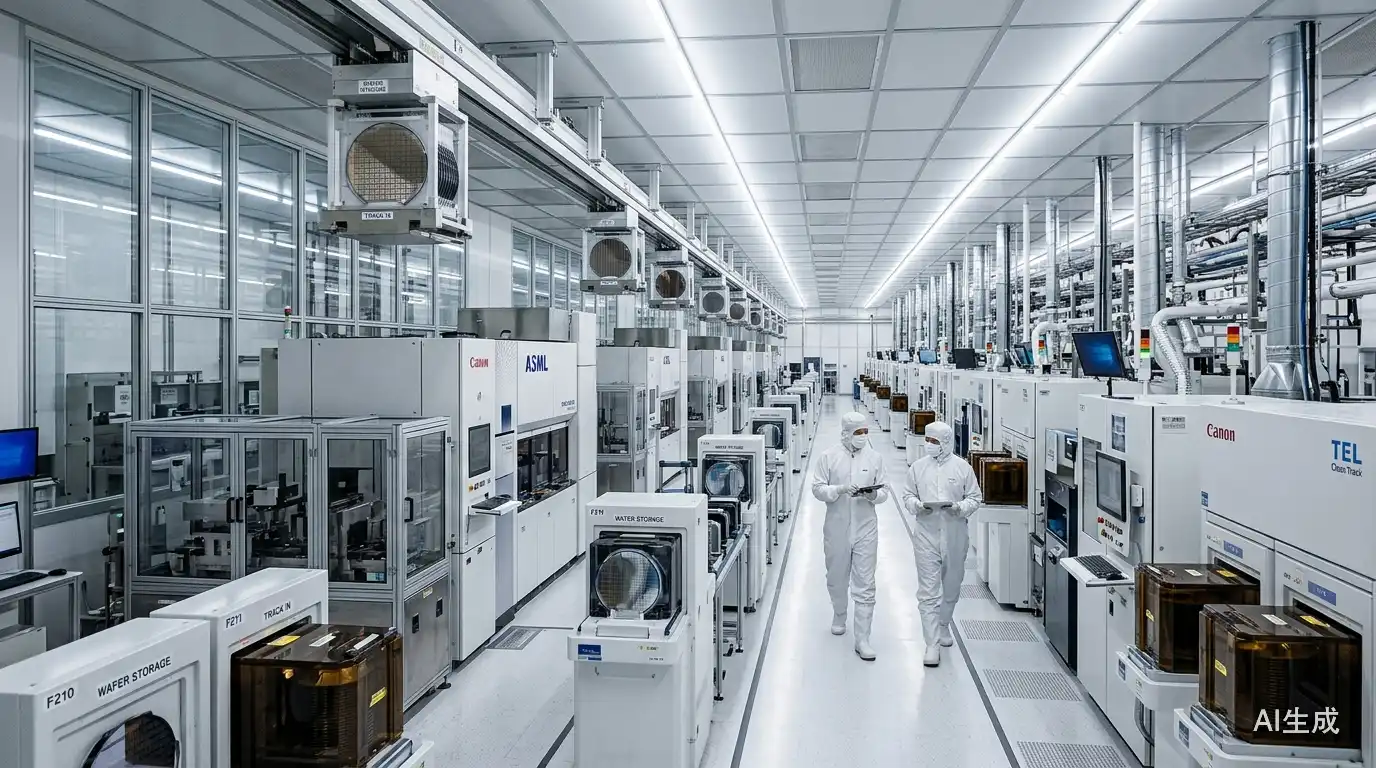
China Launches Production of Chip Printing Machines: Why Experts Aren't Quick to Applaud

cryptonews.ruPublicado a 2026-07-28Actualizado a 2026-07-28

Resumen

China has reportedly begun production of immersion DUV lithography machines, critical for manufacturing modern semiconductors. According to reports citing anonymous sources, the state-owned Shanghai Aishengna Electronic Technology Group plans to produce a limited number of these machines in 2026 and 2027, with initial deliveries intended for major Chinese chipmakers. However, industry experts and analysts express significant skepticism. They note the new equipment is far from matching the performance, reliability, and commercial viability of systems from the global leader, ASML. Key challenges identified include the difficulty of transitioning from limited production to high-volume manufacturing with consistent precision and yield over thousands of cycles. Analysts also caution that previous announcements of Chinese progress in this field have often failed to meet expectations. While the development is notable, experts suggest a more immediate risk to ASML could come from potential U.S. export restrictions rather than Chinese competition. The market consensus is that ASML's dominance in the lithography equipment segment remains secure for the foreseeable future. The true test for the Chinese machine will be whether it can achieve meaningful, scaled production by 2027 as claimed.

A state-owned company from Shanghai has begun production of immersion DUV lithography machines—equipment critical for the manufacture of modern semiconductors. This was reported on July 27, 2026, by the publication The Information, citing two anonymous sources familiar with the program. According to them, the company plans to produce about five such machines in 2026 and approximately 20 in 2027, with the first shipments intended for Semiconductor Manufacturing International Corp (SMIC), Hua Hong Semiconductor, and ChangXin Memory Technologies (CXMT).

The following day, July 28, Reuters revealed the manufacturer's name: it turned out to be a little-known state-owned entity, Shanghai Aishengna Electronic Technology Group, registered in August 2023 with a capital of 7 billion yuan. Reportedly, the company united development teams from several Chinese firms, including the startup Shanghai Yuliangsheng Technology, which tested a DUV machine prototype back in 2025, as well as specialists from Shanghai Micro Electronics Equipment (SMEE).

Far from ASML's Level

A source familiar with the matter emphasized in a conversation with Reuters: Aishengna's machine will require additional testing and is still far from matching models by the Dutch company ASML—the world leader in lithography equipment manufacturing. Similar skepticism was expressed by JPMorgan Chase analysts, noting that producing a small number of deep ultraviolet (DUV) lithography machines is significantly different from manufacturing equipment suitable for large-scale production. According to them, mass production depends much more heavily on yield rates, alignment accuracy, throughput, and reliability over thousands of wafer processing cycles.

Experts interviewed by the South China Morning Post took a similar position: the publication cited the opinion of Paul Triolo, a partner at DGA-Albright Stonebridge Group, who pointed out that producing machines of such complexity that are commercially viable and can operate 24/7 year-round is an extremely difficult task. William Bavington, an analyst at Jefferies, recalled that previous reports of China's progress in immersion DUV lithography later turned out to be unreliable and suggested waiting for confirmation of the current claims by independent sources. In the opinion of the analysts interviewed, ASML's dominance in the lithography equipment market is not yet under threat.

A More Realistic Risk for ASML—Not China

Experts interviewed by the South China Morning Post added that a more serious threat to ASML might come not from the progress of Chinese developers, but from the possible passage of the MATCH Act in the United States, which could restrict the company's sales and servicing of its equipment abroad.

The fate of the new equipment will depend on whether Aishengna's ability to establish truly mass production of machines, not just single prototypes, is confirmed. For now, market participants agree that ASML's position in this segment remains strong.

AI Opinion

From the perspective of macroeconomic connections, the course of events looks less dramatic than the headlines: in the second quarter, China accounted for only 14% of ASML's net sales, about €6.6 billion, while the company's shares reacted to the news with a decline. The region remains a notable but not decisive source of revenue for the Dutch giant.

A historical pattern suggests caution in assessing timelines. A prototype of a Chinese EUV machine in Shenzhen was already generating ultraviolet radiation back in 2025 but never moved to producing working chips, and the path from a laboratory sample to a mass-produced product in Chinese practice has traditionally stretched over years. Whether Aishengna's machine will be an exception to this rule or another long-term project will only be shown by the actual delivery volume in 2027.


Criptos en tendencia

Preguntas relacionadas

QWhat specific type of equipment did the Chinese company begin producing, and what is its primary use?

AThe Chinese company began producing immersion DUV (Deep Ultraviolet) lithography machines, which are equipment critically important for manufacturing modern semiconductors.

QWhich Chinese companies are slated to receive the first batch of these domestically produced machines?

AThe first batch of machines is planned to be supplied to Semiconductor Manufacturing International Corp (SMIC), Hua Hong Semiconductor, and ChangXin Memory Technologies (CXMT).

QAccording to analysts and experts cited in the article, what are the main reasons for skepticism regarding China's new lithography machines?

AExperts are skeptical because the machines still require extensive testing, are far from matching the standards of market leader ASML, and face significant challenges in achieving the reliability, precision, and high-volume production throughput necessary for commercial viability.

QWhat potential threat to ASML, mentioned by experts, is considered more serious than the progress of Chinese developers?

AA more serious potential threat to ASML is the possible enactment of the MATCH Act in the United States, which could restrict the company's sales and servicing of its equipment overseas.

QWhat historical precedent does the article mention to caution against over-optimism about China's rapid progress in lithography?

AThe article mentions that a prototype of a Chinese EUV machine in Shenzhen generated ultraviolet light in 2025 but never progressed to producing working chips. It highlights that the path from a lab prototype to a mass-market product has traditionally taken years in China's experience.

Lecturas Relacionadas

Behind the 67,000 Semiconductor Talent Shortage: U.S. Industrial Policy Game and Implications for China

The U.S. push to reshore semiconductor manufacturing faces a core challenge: a significant talent shortage. While over $770 billion in investments are planned across 160 projects, a key hurdle is finding enough people to run the new fabs. According to industry projections, the U.S. could face a shortage of approximately 67,000 technicians, engineers, and computer scientists by 2030. This shortage is multi-faceted. It includes not only high-level chip design engineers requiring advanced degrees but also a substantial need for technicians to operate and maintain fab equipment. Technician roles, while often requiring less formal education, are hard to fill due to factors like shift work, factory locations, and local community infrastructure. Conversely, for high-end engineers, the issue is less about salary—which is already competitive—and more about intense competition for specialized skills from other tech sectors and the long lead time to develop such expertise. The geographic dispersion of new investments complicates recruitment, as fabs need large numbers of local, stable employees. In response, U.S. policy emphasizes building workforce development as critical infrastructure. Strategies include expanding community college programs for technician training, fostering industry-education partnerships, and pursuing immigration reforms for high-skilled talent, aiming to balance immediate needs with long-term domestic pipeline development. For China, the key takeaway is the need to integrate talent supply planning with factory construction from the outset. This involves requiring companies to submit workforce plans, strengthening vocational education aligned with industry needs, and building supportive local ecosystems to retain talent. Ultimately, a sustainable semiconductor industry depends not just on building fabs, but on cultivating a continuous, local talent pipeline capable of keeping them running and advancing.

marsbitHace 2 min(s)

Behind the 67,000 Semiconductor Talent Shortage: U.S. Industrial Policy Game and Implications for China

marsbitHace 2 min(s)

Trading

Spot

Artículos destacados

Cómo comprar CHIP

¡Bienvenido a HTX.com! Hemos hecho que comprar USD.AI (CHIP) sea simple y conveniente. Sigue nuestra guía paso a paso para iniciar tu viaje de criptos.Paso 1: crea tu cuenta HTXUtiliza tu correo electrónico o número de teléfono para registrarte y obtener una cuenta gratuita en HTX. Experimenta un proceso de registro sin complicaciones y desbloquea todas las funciones.Obtener mi cuentaPaso 2: ve a Comprar cripto y elige tu método de pagoTarjeta de crédito/débito: usa tu Visa o Mastercard para comprar USD.AI (CHIP) al instante.Saldo: utiliza fondos del saldo de tu cuenta HTX para tradear sin problemas.Terceros: hemos agregado métodos de pago populares como Google Pay y Apple Pay para mejorar la comodidad.P2P: tradear directamente con otros usuarios en HTX.Over-the-Counter (OTC): ofrecemos servicios personalizados y tipos de cambio competitivos para los traders.Paso 3: guarda tu USD.AI (CHIP)Después de comprar tu USD.AI (CHIP), guárdalo en tu cuenta HTX. Alternativamente, puedes enviarlo a otro lugar mediante transferencia blockchain o utilizarlo para tradear otras criptomonedas.Paso 4: tradear USD.AI (CHIP)Tradear fácilmente con USD.AI (CHIP) en HTX's mercado spot. Simplemente accede a tu cuenta, selecciona tu par de trading, ejecuta tus trades y monitorea en tiempo real. Ofrecemos una experiencia fácil de usar tanto para principiantes como para traders experimentados.

485 Vistas totalesPublicado en 2026.04.21Actualizado en 2026.06.02

Cómo comprar CHIP

Discusiones

Bienvenido a la comunidad de HTX. Aquí puedes mantenerte informado sobre los últimos desarrollos de la plataforma y acceder a análisis profesionales del mercado. A continuación se presentan las opiniones de los usuarios sobre el precio de CHIP (CHIP).

活动图片