Hands-on with Hunyuan Hy3 Preview: Tencent's AI, Finally Competitive?

marsbitPublicado a 2026-04-26Actualizado a 2026-04-26

Resumen

Tencent's Hunyuan AI team has released its latest language model, Hy3 preview, marking a significant step forward for the company's AI capabilities. With 295B total parameters and support for 256K context length, the model employs a mixture-of-experts architecture. It shows improvements in complex logic, instruction following, contextual learning, code generation, and agent task execution. In testing, Hy3 preview demonstrated strong performance in multi-step logical reasoning but showed occasional instability in identifying traps in trick questions. It performed well in extracting key information from disordered meeting transcripts and accurately followed new linguistic rules. As an AI agent, it successfully built functional applications like a Snake game and generated data analysis dashboards, though it sometimes fell short in fully completing complex open-ended tasks. In natural language use, it produced coherent and stylistically appropriate narratives with reduced “AI-like” tone. Priced competitively, Hy3 preview is already integrated into Tencent’s key products, including Tencent Cloud and WorkBuddy. While not leading in every benchmark, it represents a solid, practical model that signals Tencent’s renewed momentum in AI development.

By AIX Finance, Author: Lei Jing, Editor: Jin Yufan

The AI circle has been active recently, and Tencent's Hunyuan Hy3 preview has also officially debuted.

On April 23, Tencent Hunyuan officially released and open-sourced the new generation language model Hy3 preview. According to the official website introduction, this model adopts a mixture-of-experts architecture that integrates fast and slow thinking, with a total of 295B parameters, 21B activated parameters, and supports a maximum context length of 256K. This is hailed by the official as the most intelligent Hunyuan model to date.

Three months ago, Yao Shunyu joined Tencent with experience in the ReAct framework and实战经验 from OpenAI, leading the reconstruction of the pre-training and reinforcement learning infrastructure. Hy3 preview is the first report card after this rebuild. The official stated that the model has achieved significant improvements in complex reasoning, instruction following, in-context learning, code generation, and agent capabilities.

Judging from the data and evaluation results disclosed by the official, Hy3 preview demonstrates impressive strength in multiple basic tests. Although it may not reach the industry's top level in all dimensions, it is sufficient to meet practical needs in most scenarios.

In terms of actual operational efficiency and stability, Hy3 preview has also made breakthroughs. Official data shows that this model reduces first token latency by 54% and end-to-end duration by 47%, significantly improving response speed. At the same time, task success rates have also improved, and it can now stably drive complex Agent workflows, covering various business scenarios such as document processing and data analysis.

Furthermore, its inference cost has decreased. On Tencent Cloud API, input costs are as low as 1.2 RMB per million Tokens, and personal packages start at 28 RMB per month, placing it in the lowest price tier among models of similar size. Currently, Hy3 preview has been launched in core Tencent products such as Tencent Cloud, Yuanbao, and WorkBuddy.

Next, we will test the performance of the Hunyuan large model in practical applications based on the four directions mentioned by the official.

Reasoning Ability: Can Decompose Complex Logic, But Trap Identification Needs Strengthening

We first tested the model's reasoning ability. Logic reasoning questions are a type netizens love to use to test a model's "IQ". In this segment, we first tested with the classic "car wash problem" within Yuanbao.

In this classic trick question, Hy3 preview initially did not answer correctly. It provided a clear and logical reasoning to suggest walking, overlooking the key point which was "washing the car". Only after being reminded again about the need to wash the car did it give the correct answer.

It is worth noting that in tests by other netizens, Hy3 preview has been able to answer correctly directly, indicating that its trap identification ability lacks stability.

Let's try another brain teaser. In this problem, one needs to understand the real-world logic that the eggs that were broken, fried, and eaten are the same batch. But Hy3 preview did not realize this; it thought the fried eggs still existed and could be eaten.

Subsequently, we increased the difficulty and tested it with a logic problem that has a more complex derivation process. The difficulty of this question lies in the lack of direct positioning information; one must rely on implicit conditions to eliminate possibilities, making it easy to miss key information.
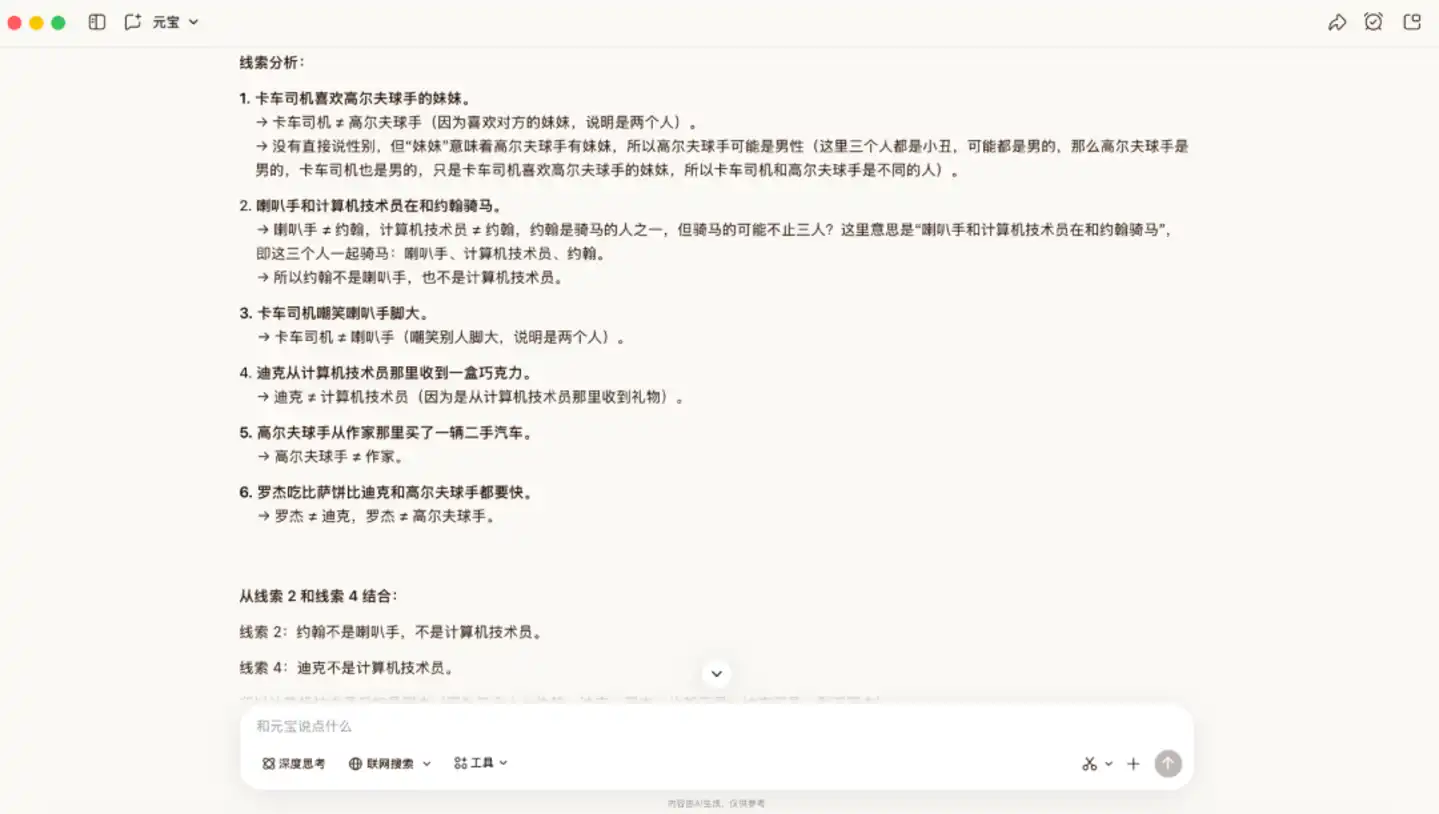
In this scenario, Hy3 preview provided the correct answer. It first broke down the clues one by one, extracted the mutually exclusive relationships between people and professions, and then locked identities through elimination. Next, it sequentially determined the归属 of some positions and then gradually filled in the rest结合 the rules.

Overall, Hy3 preview has strong conventional rational logic deduction abilities, but its reverse thinking, trap identification, and flexible thinking in life scenarios are still insufficient. When facing tricky brain teasers, it tends to be limited by literal conventional logic,忽略 the traps in the questions and real-world scenarios, performing poorly. However, when facing complex logic reasoning problems with hidden conditions and繁琐 derivations, it can拆解 clues and reason step by step, demonstrating solid logical analysis and step-by-step deduction capabilities.

In-Context Learning and Instruction Following: Extracting Information, Stable Performance Under Interference Scenarios

This segment tests two basic skills of the model: whether it can grasp the true instruction, and whether it can quickly understand the instruction.

Tencent provided five scenarios in its official blog, including project planning, travel summaries, and reading notes. We selected two scenarios for practical testing.

Scenario 1: Information extraction from messy meeting minutes

We provided a混乱 transcript of a meeting recording,混杂 with interruptions, digressions, repeated corrections, etc., and asked it to extract three types of information.
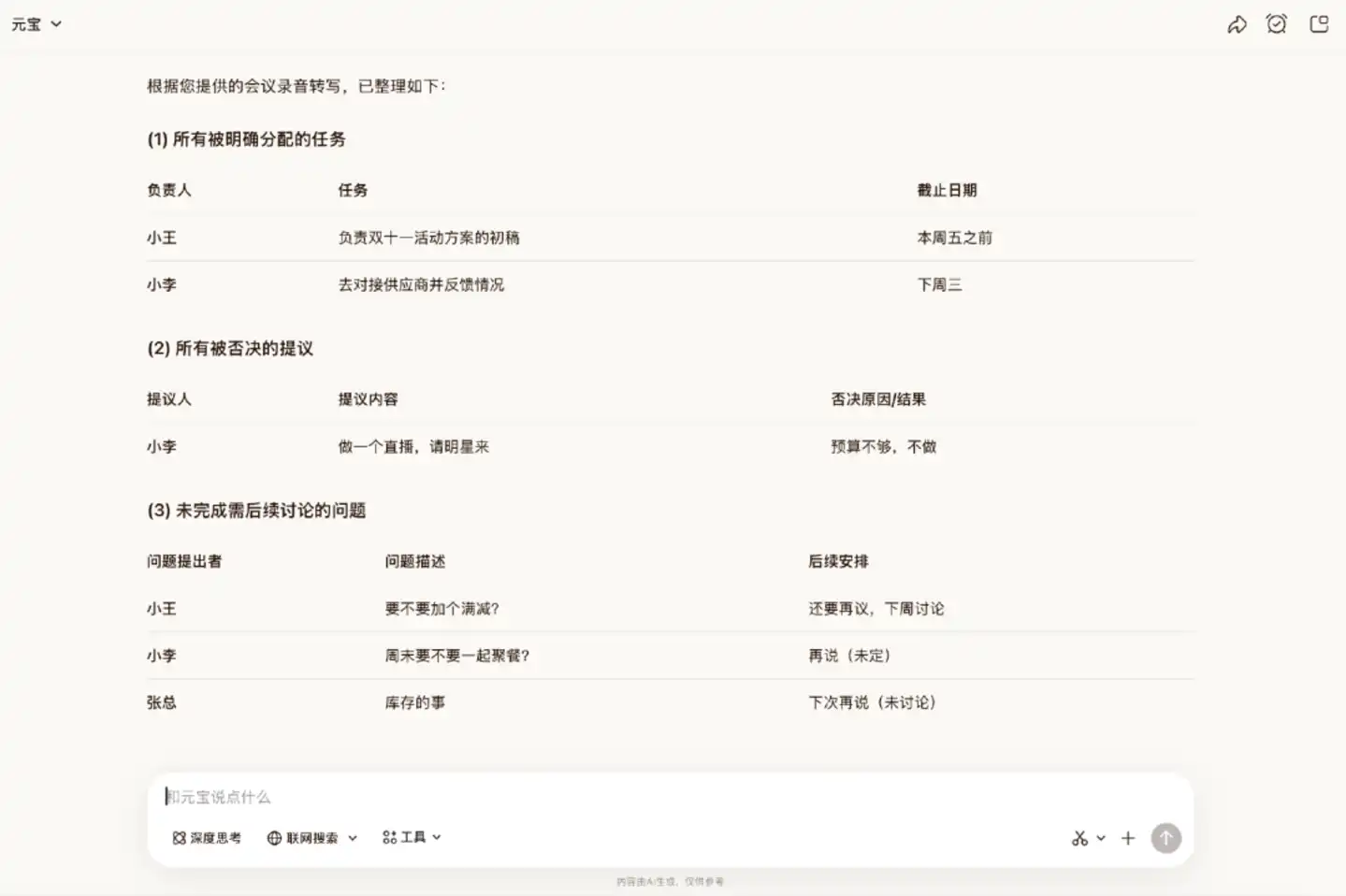
The answer given by Hy3 preview accurately listed these three types of information, demonstrating good information extraction capabilities.

Scenario 2: Understanding and following new language rules

We created a simple language, demonstrated the rules to it through examples, and gave it three new sentences to translate.
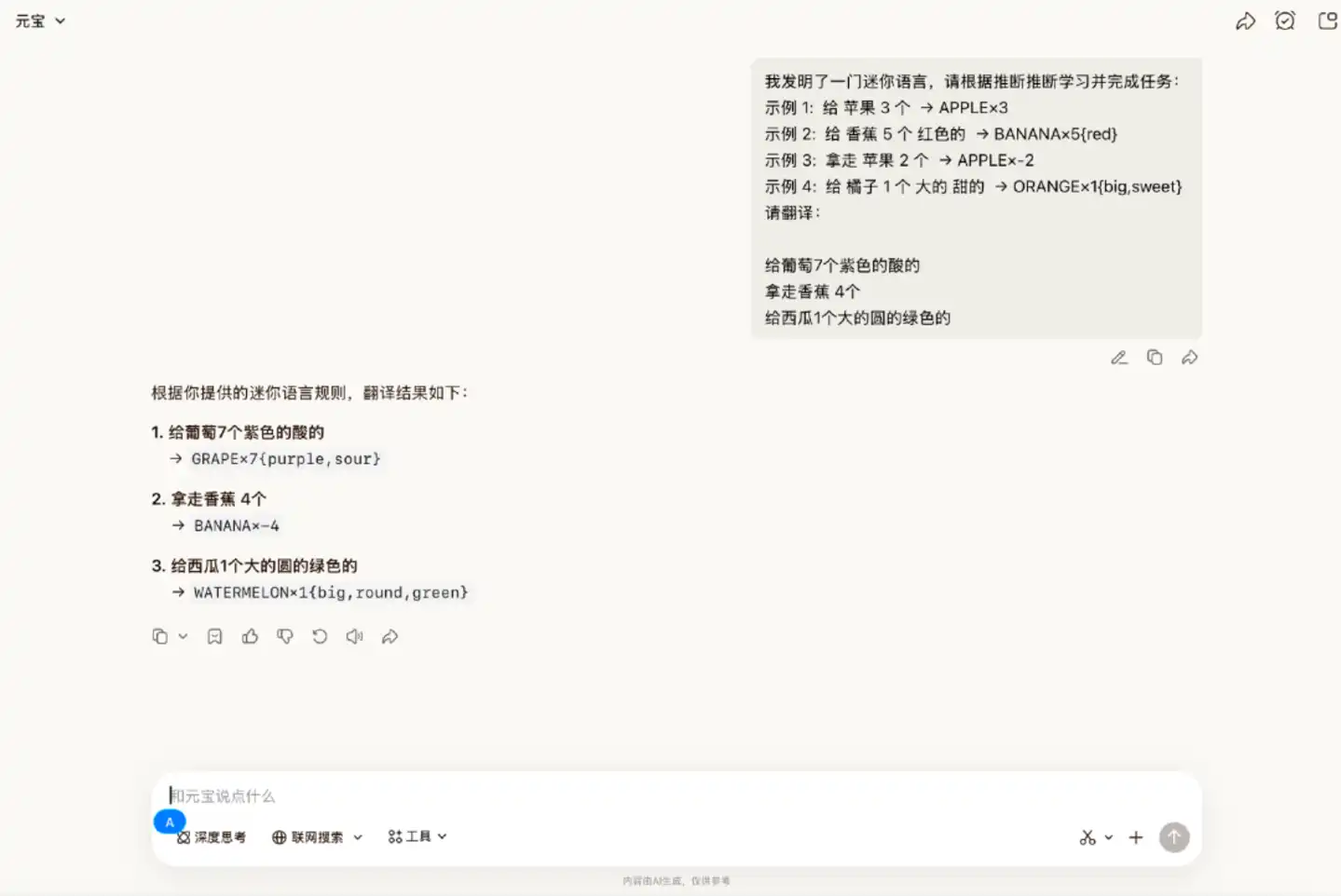
In this round, Hy3 preview was able to accurately complete the relevant requirements, executing every detail according to the rules.

Overall, Hy3 preview can understand instruction requirements and effectively排除干扰信息, making it suitable for practical scenarios with繁杂 information interference and information extraction.

Code and Agent: Tool Calling is Relatively Mature, Task Delivery Completeness is Lacking

Code ability and agent ability are important dimensions for evaluating whether an AI assistant is useful. This tests both the model's depth of understanding of user needs and the Agent's ability to plan, call tools, and close the loop in multi-step tasks. In this segment, we designed three tasks for WorkBuddy (Tencent's AI assistant).

For the first task, we asked WorkBuddy to crawl the air quality data of five cities from the past year and generate an analysis report based on this data.
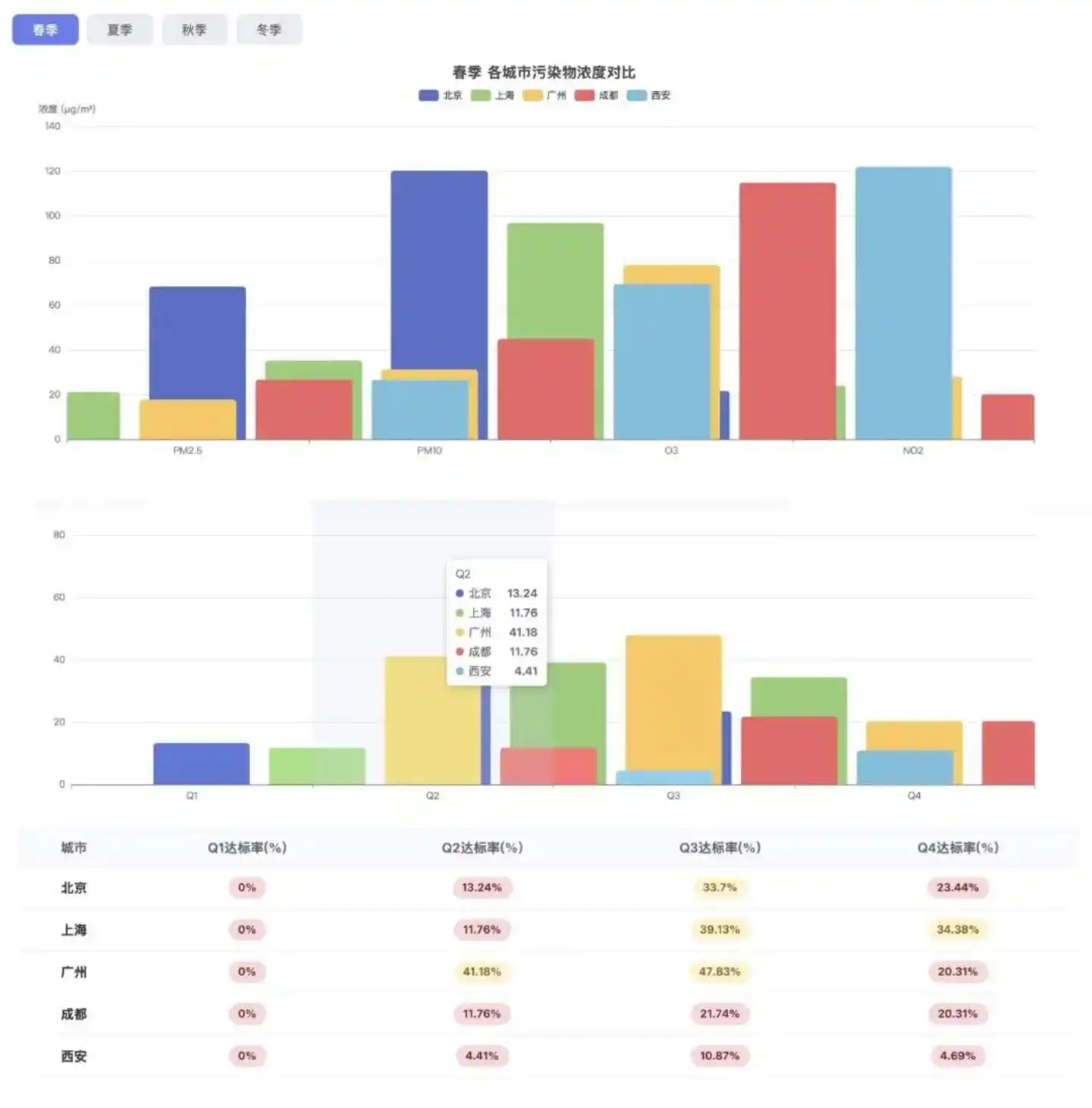
Judging from the page presentation, the finished product is合格. The structure of sections like season switching, radar charts, trend charts, and correlation heatmaps is complete, the visual presentation is orderly, and the charts also have basic interactive functions. This indicates that its execution capability at the front-end presentation level meets the standard.

However, there are two main problems: first, due to obstacles in the data acquisition phase, Hy3 preview only obtained 224 days of valid data, a large gap which affected the credibility of subsequent charts; second, the prompt clearly requested a paragraph of analysis conclusion. Although Hy3 preview reserved the area for the corresponding section on the page, the actual content was blank. This means it has task closure awareness, but its final delivery capability is still insufficient.

For the second task, we asked it to build a small贪吃蛇 (Snake) game.

The final result was relatively mature, with exquisite graphics, complete logic, and it could run normally. However, it should be noted that贪吃蛇 belongs to a closed-rule task with clear requirements and no need to call external data. The evaluation criteria are relatively clear, making it a scenario where agents are more proficient. WorkBuddy's performance in this task can only reflect its capabilities within its comfort zone, verifying that it has certain practical value.
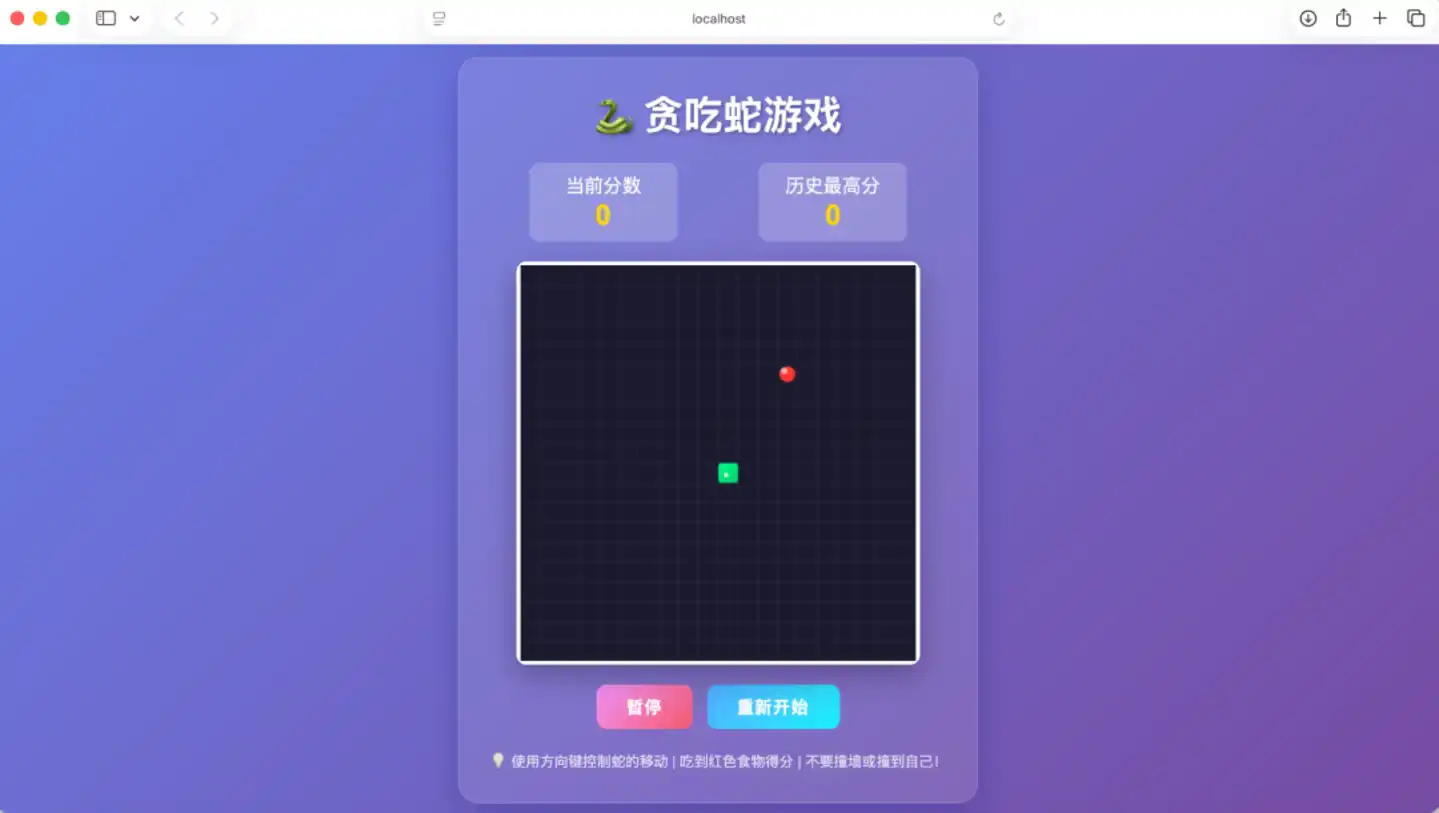
For the third task, we increased the difficulty and asked it to analyze an open-ended complex task: analyze the business model evolution of the AI Coding industry, review the development history from 2023 to the present, and identify key turning points and core driving factors in the industry.

This is an open-ended complex task with no single standard answer. The quality of the result depends on the Agent's judgment, information screening ability, and expression ability.

At the execution level, WorkBuddy was able to automatically call multiple tools, first revising the execution plan and then落地推进 the plan. The entire process took about half an hour.
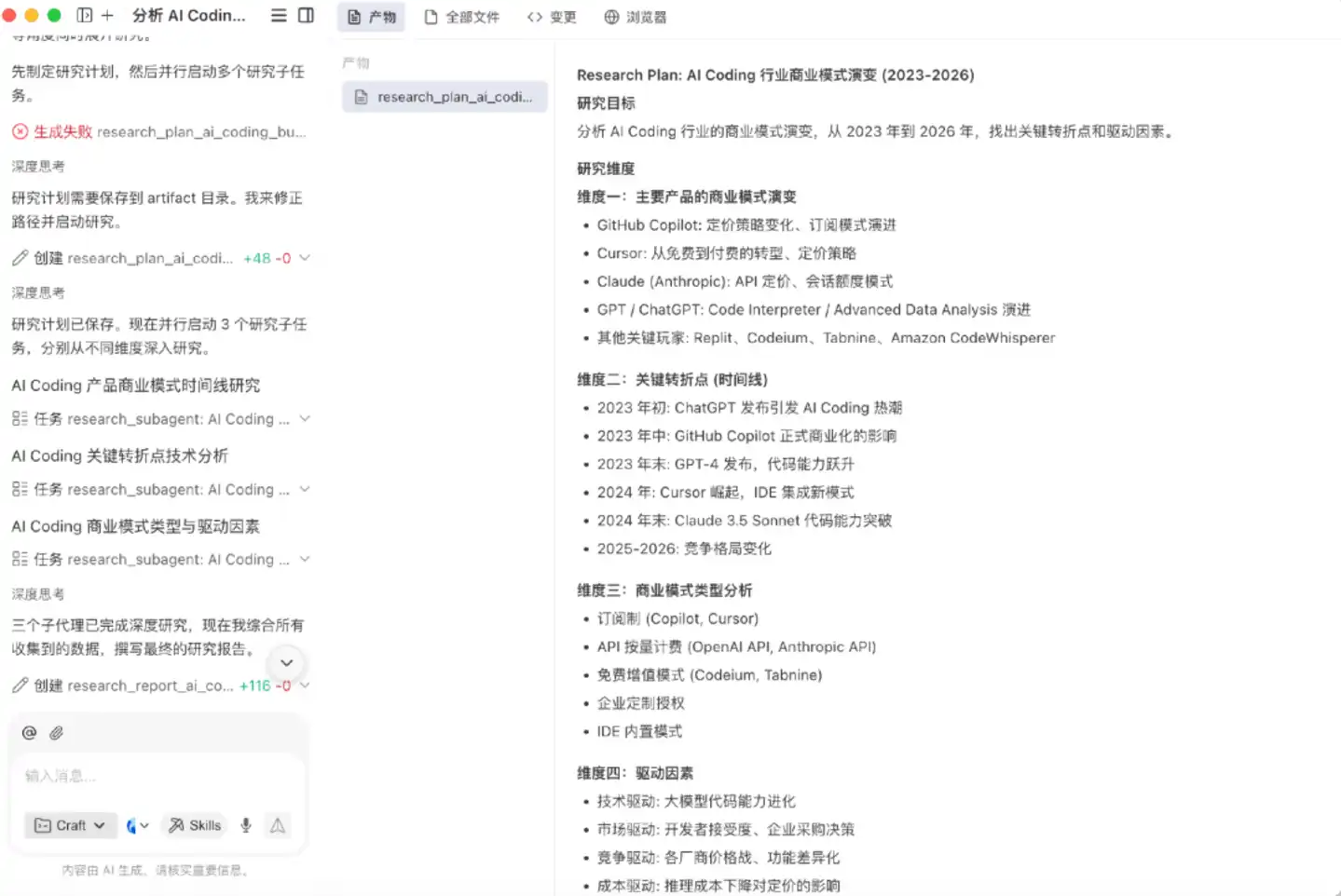
However, the final result was not impressive; it only built a basic framework, and the actual content was not substantial enough. It can be seen that although it掌握了 the method of decomposing research problems, it does not know how to further refine these dimensions into valuable research arguments.

In summary, WorkBuddy already possesses the capabilities expected of a daily coding assistant, but there is still room for improvement in the deep execution and final delivery of complex tasks.

Natural Conversation: AI Flavor Significantly Reduced

Finally, let's see if Yuanbao has "human flavor". This round tests through two scenarios: casual chat and creative writing.

Scenario 1: Casual Chat

The official documentation mentions that Hy3 preview can better understand users'倾诉 intentions,承接 user emotions, and avoid preachy, templated replies.
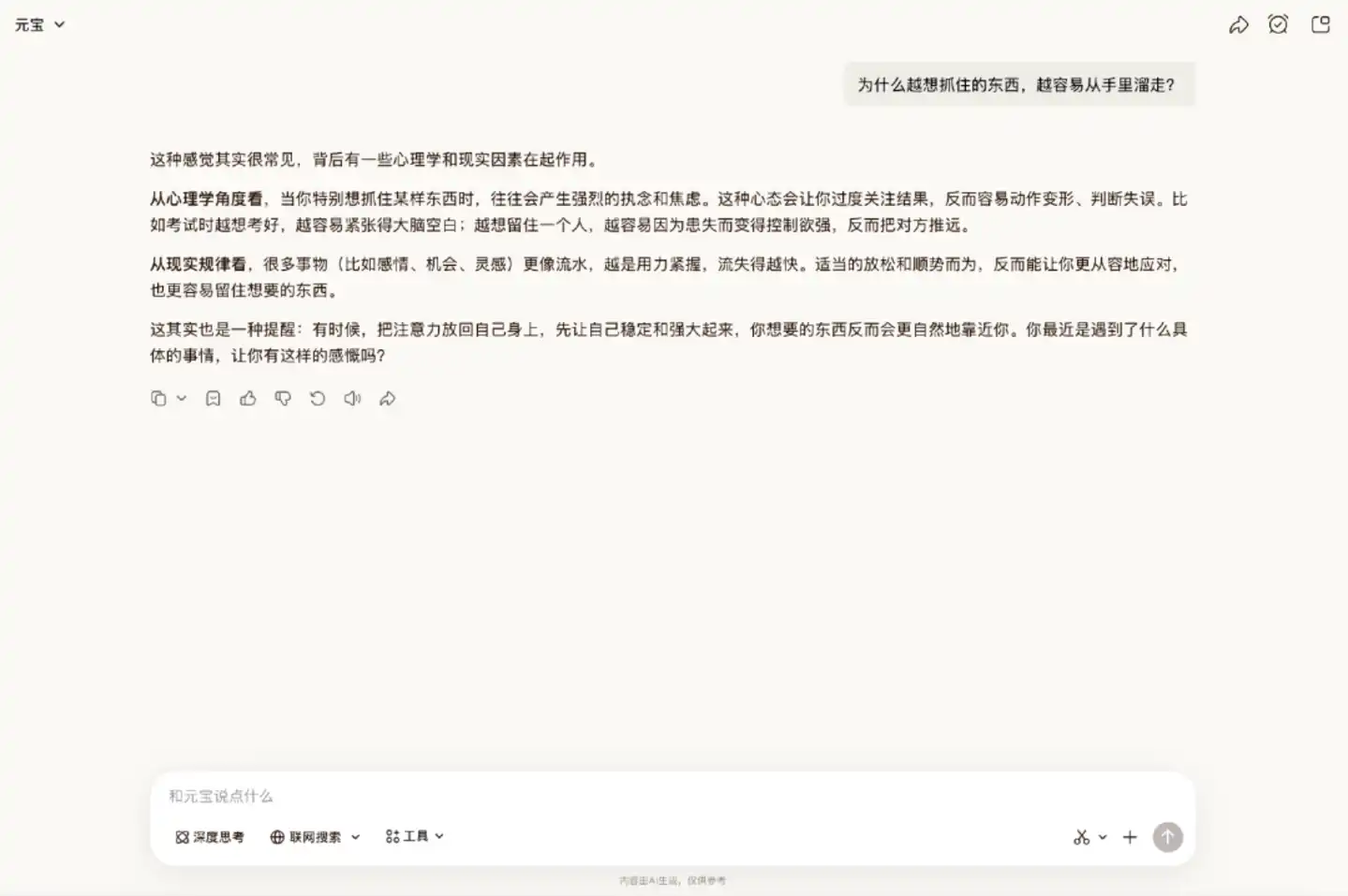
In actual testing, Hy3 preview's performance确实 aligns with this positioning. It did not start by listing a bunch of suggestions but first objectively analyzed the possible reasons behind it, then asked if something had happened. The overall tone was温和, quite measured, and had a natural feel suitable for casual chat scenarios.

Scenario 2: Creative Writing

In this segment, we designed two tasks to test its narrative and expressive abilities.

We first asked it to write a story where the protagonist never appears on stage, but readers can clearly understand who he is, what he experienced, and why he is important after reading.
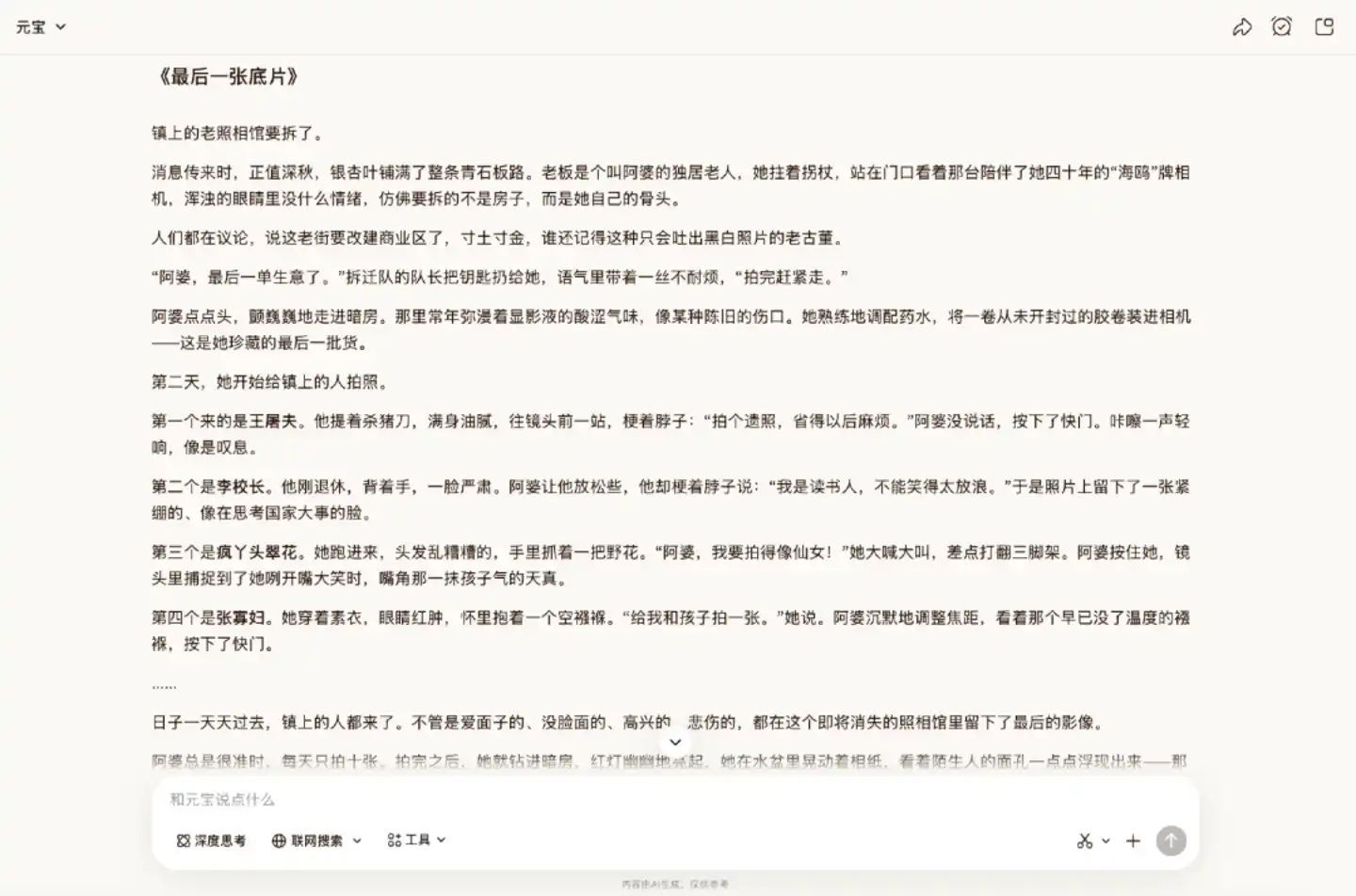
The finished product submitted by Yuanbao had self-consistent logic, smooth narrative, and relatively high completion, almost devoid of the套路感 common in AI writing.

Next, we asked it to imitate the writing style of "Those Things in the Ming Dynasty" (《明朝那些事儿》) to write a historical story about figures from another dynasty.

AI writing often manifests style replication as rigid imitation, merely copying the writing framework without grasping the article's style. But judging from the generated result, Hy3 preview's style replication ability is strong, meeting the requirements overall. It captured the style of the original book's popular history telling and presented the entire story quite well.
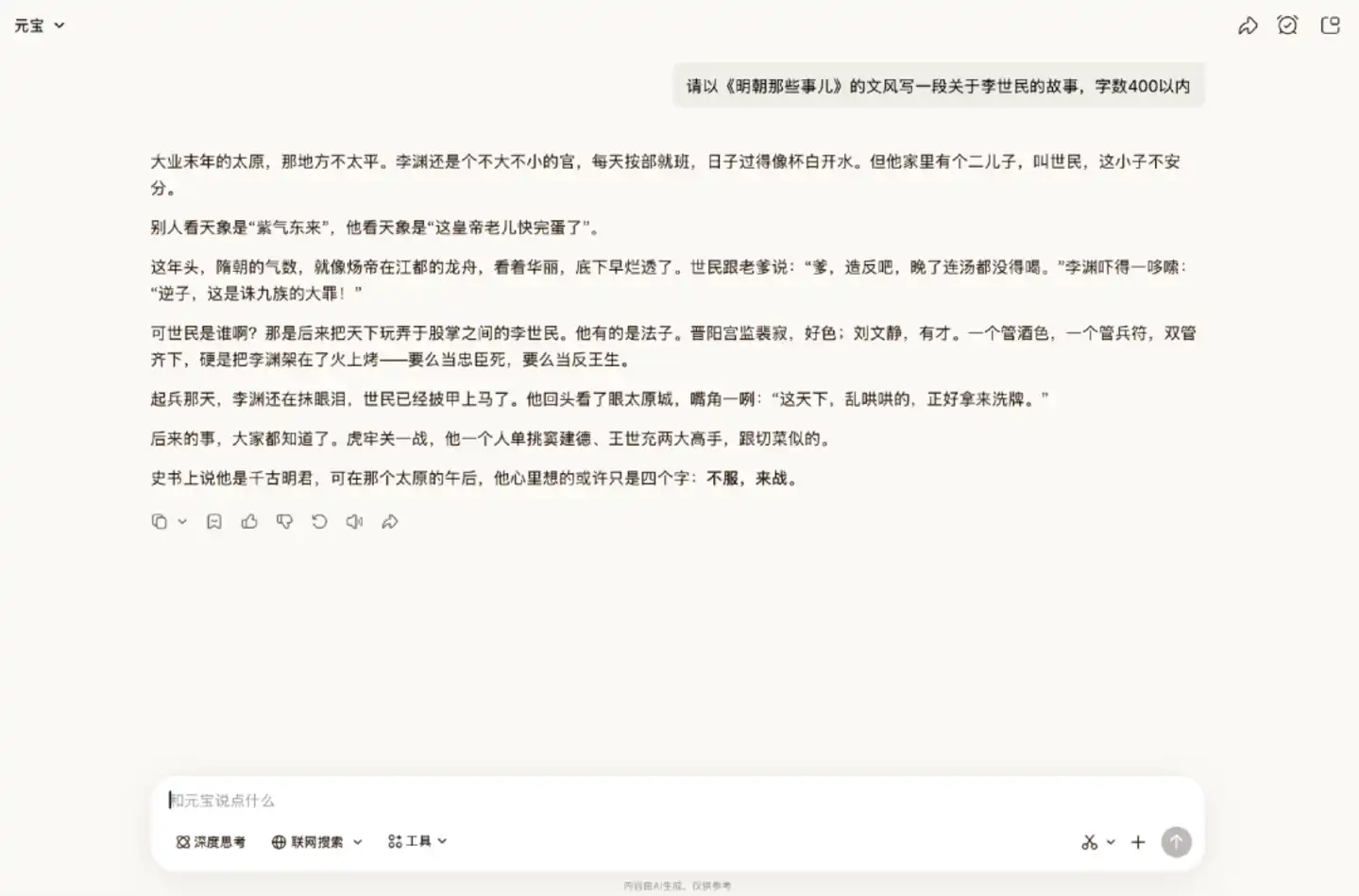
This round of evaluation was the most surprising. Overall, in natural language expression, Hy3 preview has already shed the套路腔 that is correct but flavorless, and can write texts with high readability.

Conclusion

After testing the four dimensions, Hy3 preview gives the impression of being "steady but not stunning".

It did not deliver a crushing performance in any single item, but it also has almost no obvious shortcomings. Placed within the entire ranking of domestic large models, it may not be the most stunning one, but it meets the standard of a practical model that can get work done.

Pulling the perspective back a bit, the real significance of Hy3 preview might not lie in the model itself.

Over the past two years, Tencent has been relatively passive on the large model battlefield. At the end of January this year, Ma Huateng publicly admitted at the annual meeting that Tencent's AI actions were slow. The relatively slow technical pace and the lack of a benchmark model that the outside world could remember were the two major problems Tencent faced. The release of Hy3 preview marks a turning point in Tencent's AI story and gives Tencent an AI model that can be used across its entire ecosystem.

Currently, Hy3 preview is only a preview version. Feedback from the open-source community is still being collected, and the actual calling experience in products like Yuanbao, QQ, and Tencent Docs still needs time to检验. According to official disclosures, larger parameter-scale models will be released后续.

But at least, Tencent AI has begun to撕掉 the "passive" label of the past two years.

Preguntas relacionadas

QWhat are the key features and specifications of Tencent's Hunyuan Hy3 preview model as mentioned in the article?

AThe Hunyuan Hy3 preview model uses a hybrid expert architecture with fast and slow thinking fusion, has a total of 295B parameters and 21B activated parameters, and supports a maximum context length of 256K. It also features a 54% reduction in first-token latency and a 47% reduction in end-to-end time, with lower inference costs.

QHow did the Hy3 preview model perform in logical reasoning tests according to the article?

AThe Hy3 preview model showed strong capabilities in conventional logical reasoning and complex step-by-step deduction but was less effective at identifying traps in trick questions and demonstrated instability in handling脑筋急转弯 (brain teasers) and real-world scenario adaptations.

QWhat were the findings regarding Hy3 preview's context learning and instruction following abilities?

AThe model effectively understood instructions, extracted key information from cluttered inputs like messy meeting transcripts, and correctly followed new language rules in tests, showing stability in干扰场景 (interference scenarios).

QHow did the WorkBuddy AI assistant, powered by Hy3 preview, perform in code and agent task tests?

AWorkBuddy demonstrated mature tool invocation and could handle closed-rule tasks like building a Snake game well. However, it struggled with data acquisition and task completion in complex, open-ended assignments, such as generating a reliable data analysis report or深度执行 (deep execution) of industry analysis.

QWhat improvements in natural language and creative writing did the article note for the Hy3 preview model?

AThe model showed reduced 'AI flavor,' with more natural and empathetic conversational tones. It also produced coherent, high-readability creative writing, successfully mimicking specific styles like '明style' (Ming style) in historical storytelling without falling into clichés.

Lecturas Relacionadas

How Many Tokens Away Is Yang Zhilin from the 'Moon Chasing the Light'?

The article explores the intense competition between two leading Chinese AI companies, DeepSeek and Kimi (Moon Dark Side), and the mounting pressure on Yang Zhilin, the founder of Kimi. While DeepSeek re-emerged after 15 months of silence with its powerful V4 model—boasting 1.6 trillion parameters and low-cost, long-context capabilities—Kimi has been focusing on long-context processing and multi-agent systems with its K2.6 model. Yang faces a threefold challenge: technological rivalry, commercialization pressure, and investor expectations. Despite Kimi’s high valuation (reaching $18 billion), its revenue heavily relies on a single product with low paid conversion rates, while DeepSeek’s strategic silence and open-source influence have strengthened its market position and valuation prospects, now targeting over $20 billion. Both companies reflect broader trends in China’s AI ecosystem: Kimi aims for global influence through open-source contributions and agent-based advancements, while DeepSeek prioritizes foundational innovation and hardware independence, notably shifting to Huawei’s chips. Their competition is seen as vital for China’s AI progress, with the gap between top Chinese and U.S. models narrowing to just 2.7% on the Elo rating scale. Ultimately, the article argues that this rivalry, though anxiety-inducing for leaders like Zhilin, is essential for driving innovation and solidifying China’s role in the global AI landscape.

marsbitHace 5 hora(s)

How Many Tokens Away Is Yang Zhilin from the 'Moon Chasing the Light'?

marsbitHace 5 hora(s)

TechFlow Intelligence Bureau: ChatGPT Helps Amateur Mathematician Crack 60-Year-Old Problem, CFTC Sues New York Regulator Over Coinbase and Gemini

An amateur mathematician, with the assistance of ChatGPT, has solved a combinatorial mathematics puzzle originally proposed by Hungarian mathematician Paul Erdős in the 1960s. This marks another milestone in AI-aided mathematical research, demonstrating the evolving capabilities of large language models in formal reasoning. In other AI developments, OpenAI introduced a new privacy filter tool for enterprise API usage, automatically screening sensitive data. Meanwhile, the Qwen3.6-27B model achieved 100 tokens per second on a single RTX 5090 GPU using quantization, significantly lowering the cost barrier for local AI deployment. In crypto and Web3, the U.S. CFTC sued New York’s financial regulator, challenging its oversight of Coinbase and Gemini—a first-of-its-kind federal-state regulatory clash. Following a vulnerability, KelpDAO and major DeFi protocols established a recovery fund. Tether froze $344 million in assets linked to Iran’s central bank upon U.S. Treasury request, highlighting the centralized control risks in stablecoins. Separately, Litecoin underwent a 3-hour chain reorganization to undo a privacy-layer exploit. In the U.S., former President Trump invoked the Defense Production Act to address power grid bottlenecks affecting AI data centers and dismissed the entire National Science Board, raising concerns over research independence. A retail trader gained 250% on a $600k Intel options bet amid AI-related speculation. Xiaomi announced its first performance electric vehicle, targeting rivals like Tesla. Meanwhile, iPhone users reported devices automatically reinstalling a hidden app daily, suspected to be MDM-related. A Chinese securities report noted that A-share institutional crowding has reached its second-longest streak since 2007, signaling high valuations and potential style rotation. The day’s developments reflect a dual narrative: AI is enabling unprecedented individual breakthroughs, while centralized power structures—whether governmental or corporate—are becoming more assertive, underscoring that decentralization is as much a political-economic challenge as a technical one.

marsbitHace 5 hora(s)

TechFlow Intelligence Bureau: ChatGPT Helps Amateur Mathematician Crack 60-Year-Old Problem, CFTC Sues New York Regulator Over Coinbase and Gemini

marsbitHace 5 hora(s)

Trading

Spot
Futuros

Artículos destacados

Qué es $S$

Entendiendo SPERO: Una Visión General Completa Introducción a SPERO A medida que el panorama de la innovación continúa evolucionando, la aparición de tecnologías web3 y proyectos de criptomonedas juega un papel fundamental en la configuración del futuro digital. Un proyecto que ha atraído la atención en este campo dinámico es SPERO, denotado como SPERO,$$s$. Este artículo tiene como objetivo reunir y presentar información detallada sobre SPERO, para ayudar a entusiastas e inversores a comprender sus fundamentos, objetivos e innovaciones dentro de los dominios web3 y cripto. ¿Qué es SPERO,$$s$? SPERO,$$s$ es un proyecto único dentro del espacio cripto que busca aprovechar los principios de descentralización y tecnología blockchain para crear un ecosistema que promueva la participación, la utilidad y la inclusión financiera. El proyecto está diseñado para facilitar interacciones de igual a igual de nuevas maneras, proporcionando a los usuarios soluciones y servicios financieros innovadores. En su esencia, SPERO,$$s$ tiene como objetivo empoderar a los individuos al proporcionar herramientas y plataformas que mejoren la experiencia del usuario en el espacio de las criptomonedas. Esto incluye habilitar métodos de transacción más flexibles, fomentar iniciativas impulsadas por la comunidad y crear caminos para oportunidades financieras a través de aplicaciones descentralizadas (dApps). La visión subyacente de SPERO,$$s$ gira en torno a la inclusividad, buscando cerrar brechas dentro de las finanzas tradicionales mientras aprovecha los beneficios de la tecnología blockchain. ¿Quién es el Creador de SPERO,$$s$? La identidad del creador de SPERO,$$s$ sigue siendo algo oscura, ya que hay recursos públicos limitados que proporcionan información de fondo detallada sobre su(s) fundador(es). Esta falta de transparencia puede derivarse del compromiso del proyecto con la descentralización, una ética que muchos proyectos web3 comparten, priorizando las contribuciones colectivas sobre el reconocimiento individual. Al centrar las discusiones en torno a la comunidad y sus objetivos colectivos, SPERO,$$s$ encarna la esencia del empoderamiento sin señalar a individuos específicos. Como tal, comprender la ética y la misión de SPERO sigue siendo más importante que identificar a un creador singular. ¿Quiénes son los Inversores de SPERO,$$s$? SPERO,$$s$ cuenta con el apoyo de una diversa gama de inversores que van desde capitalistas de riesgo hasta inversores ángeles dedicados a fomentar la innovación en el sector cripto. El enfoque de estos inversores generalmente se alinea con la misión de SPERO, priorizando proyectos que prometen avances tecnológicos sociales, inclusión financiera y gobernanza descentralizada. Estas fundaciones de inversores suelen estar interesadas en proyectos que no solo ofrecen productos innovadores, sino que también contribuyen positivamente a la comunidad blockchain y sus ecosistemas. El respaldo de estos inversores refuerza a SPERO,$$s$ como un contendiente notable en el dominio de proyectos cripto que evoluciona rápidamente. ¿Cómo Funciona SPERO,$$s$? SPERO,$$s$ emplea un marco multifacético que lo distingue de los proyectos de criptomonedas convencionales. Aquí hay algunas de las características clave que subrayan su singularidad e innovación: Gobernanza Descentralizada: SPERO,$$s$ integra modelos de gobernanza descentralizada, empoderando a los usuarios para participar activamente en los procesos de toma de decisiones sobre el futuro del proyecto. Este enfoque fomenta un sentido de propiedad y responsabilidad entre los miembros de la comunidad. Utilidad del Token: SPERO,$$s$ utiliza su propio token de criptomoneda, diseñado para servir diversas funciones dentro del ecosistema. Estos tokens permiten transacciones, recompensas y la facilitación de servicios ofrecidos en la plataforma, mejorando la participación y la utilidad general. Arquitectura en Capas: La arquitectura técnica de SPERO,$$s$ apoya la modularidad y escalabilidad, permitiendo la integración fluida de características y aplicaciones adicionales a medida que el proyecto evoluciona. Esta adaptabilidad es fundamental para mantener la relevancia en el cambiante paisaje cripto. Participación de la Comunidad: El proyecto enfatiza iniciativas impulsadas por la comunidad, empleando mecanismos que incentivan la colaboración y la retroalimentación. Al nutrir una comunidad sólida, SPERO,$$s$ puede abordar mejor las necesidades de los usuarios y adaptarse a las tendencias del mercado. Enfoque en la Inclusión: Al ofrecer tarifas de transacción bajas e interfaces amigables para el usuario, SPERO,$$s$ busca atraer a una base de usuarios diversa, incluyendo a individuos que anteriormente pueden no haber participado en el espacio cripto. Este compromiso con la inclusión se alinea con su misión general de empoderamiento a través de la accesibilidad. Cronología de SPERO,$$s$ Entender la historia de un proyecto proporciona información crucial sobre su trayectoria de desarrollo y hitos. A continuación se presenta una cronología sugerida que mapea eventos significativos en la evolución de SPERO,$$s$: Fase de Conceptualización e Ideación: Las ideas iniciales que forman la base de SPERO,$$s$ fueron concebidas, alineándose estrechamente con los principios de descentralización y enfoque comunitario dentro de la industria blockchain. Lanzamiento del Whitepaper del Proyecto: Tras la fase conceptual, se lanzó un whitepaper completo que detalla la visión, los objetivos y la infraestructura tecnológica de SPERO,$$s$ para generar interés y retroalimentación de la comunidad. Construcción de Comunidad y Primeras Interacciones: Se realizaron esfuerzos de divulgación activa para construir una comunidad de primeros adoptantes y posibles inversores, facilitando discusiones en torno a los objetivos del proyecto y obteniendo apoyo. Evento de Generación de Tokens: SPERO,$$s$ llevó a cabo un evento de generación de tokens (TGE) para distribuir sus tokens nativos a los primeros seguidores y establecer liquidez inicial dentro del ecosistema. Lanzamiento de la dApp Inicial: La primera aplicación descentralizada (dApp) asociada con SPERO,$$s$ se puso en marcha, permitiendo a los usuarios interactuar con las funcionalidades centrales de la plataforma. Desarrollo Continuo y Alianzas: Actualizaciones y mejoras continuas a las ofertas del proyecto, incluyendo alianzas estratégicas con otros actores en el espacio blockchain, han moldeado a SPERO,$$s$ en un jugador competitivo y en evolución en el mercado cripto. Conclusión SPERO,$$s$ se erige como un testimonio del potencial de web3 y las criptomonedas para revolucionar los sistemas financieros y empoderar a los individuos. Con un compromiso con la gobernanza descentralizada, la participación comunitaria y funcionalidades diseñadas de manera innovadora, allana el camino hacia un paisaje financiero más inclusivo. Como con cualquier inversión en el espacio cripto que evoluciona rápidamente, se anima a los posibles inversores y usuarios a investigar a fondo y participar de manera reflexiva con los desarrollos en curso dentro de SPERO,$$s$. El proyecto muestra el espíritu innovador de la industria cripto, invitando a una mayor exploración de sus innumerables posibilidades. Mientras el viaje de SPERO,$$s$ aún se desarrolla, sus principios fundamentales pueden, de hecho, influir en el futuro de cómo interactuamos con la tecnología, las finanzas y entre nosotros en ecosistemas digitales interconectados.

72 Vistas totalesPublicado en 2024.12.17Actualizado en 2024.12.17

Qué es $S$

Qué es AGENT S

Agent S: El Futuro de la Interacción Autónoma en Web3 Introducción En el paisaje en constante evolución de Web3 y las criptomonedas, las innovaciones están redefiniendo constantemente cómo los individuos interactúan con las plataformas digitales. Uno de estos proyectos pioneros, Agent S, promete revolucionar la interacción humano-computadora a través de su marco agente abierto. Al allanar el camino para interacciones autónomas, Agent S busca simplificar tareas complejas, ofreciendo aplicaciones transformadoras en inteligencia artificial (IA). Esta exploración detallada profundizará en las complejidades del proyecto, sus características únicas y las implicaciones para el dominio de las criptomonedas. ¿Qué es Agent S? Agent S se presenta como un marco agente abierto innovador, diseñado específicamente para abordar tres desafíos fundamentales en la automatización de tareas informáticas: Adquisición de Conocimiento Específico del Dominio: El marco aprende inteligentemente de diversas fuentes de conocimiento externas y experiencias internas. Este enfoque dual le permite construir un rico repositorio de conocimiento específico del dominio, mejorando su rendimiento en la ejecución de tareas. Planificación a Largo Plazo de Tareas: Agent S emplea planificación jerárquica aumentada por la experiencia, un enfoque estratégico que facilita la descomposición y ejecución eficiente de tareas complejas. Esta característica mejora significativamente su capacidad para gestionar múltiples subtareas de manera eficiente y efectiva. Manejo de Interfaces Dinámicas y No Uniformes: El proyecto introduce la Interfaz Agente-Computadora (ACI), una solución innovadora que mejora la interacción entre agentes y usuarios. Utilizando Modelos de Lenguaje Multimodal de Gran Escala (MLLMs), Agent S puede navegar y manipular diversas interfaces gráficas de usuario sin problemas. A través de estas características pioneras, Agent S proporciona un marco robusto que aborda las complejidades involucradas en la automatización de la interacción humana con las máquinas, preparando el terreno para una multitud de aplicaciones en IA y más allá. ¿Quién es el Creador de Agent S? Si bien el concepto de Agent S es fundamentalmente innovador, la información específica sobre su creador sigue siendo elusiva. El creador es actualmente desconocido, lo que resalta ya sea la etapa incipiente del proyecto o la elección estratégica de mantener a los miembros fundadores en el anonimato. Independientemente de la anonimidad, el enfoque sigue siendo en las capacidades y el potencial del marco. ¿Quiénes son los Inversores de Agent S? Dado que Agent S es relativamente nuevo en el ecosistema criptográfico, la información detallada sobre sus inversores y patrocinadores financieros no está documentada explícitamente. La falta de información disponible públicamente sobre las bases de inversión u organizaciones que apoyan el proyecto plantea preguntas sobre su estructura de financiamiento y hoja de ruta de desarrollo. Comprender el respaldo es crucial para evaluar la sostenibilidad del proyecto y su posible impacto en el mercado. ¿Cómo Funciona Agent S? En el núcleo de Agent S se encuentra una tecnología de vanguardia que le permite funcionar de manera efectiva en diversos entornos. Su modelo operativo se basa en varias características clave: Interacción Humano-Computadora Similar a la Humana: El marco ofrece planificación avanzada de IA, esforzándose por hacer que las interacciones con las computadoras sean más intuitivas. Al imitar el comportamiento humano en la ejecución de tareas, promete elevar las experiencias de los usuarios. Memoria Narrativa: Empleada para aprovechar experiencias de alto nivel, Agent S utiliza memoria narrativa para hacer un seguimiento de las historias de tareas, mejorando así sus procesos de toma de decisiones. Memoria Episódica: Esta característica proporciona a los usuarios una guía paso a paso, permitiendo que el marco ofrezca apoyo contextual a medida que se desarrollan las tareas. Soporte para OpenACI: Con la capacidad de ejecutarse localmente, Agent S permite a los usuarios mantener el control sobre sus interacciones y flujos de trabajo, alineándose con la ética descentralizada de Web3. Fácil Integración con APIs Externas: Su versatilidad y compatibilidad con varias plataformas de IA aseguran que Agent S pueda encajar sin problemas en ecosistemas tecnológicos existentes, convirtiéndolo en una opción atractiva para desarrolladores y organizaciones. Estas funcionalidades contribuyen colectivamente a la posición única de Agent S dentro del espacio cripto, ya que automatiza tareas complejas y de múltiples pasos con una intervención humana mínima. A medida que el proyecto evoluciona, sus posibles aplicaciones en Web3 podrían redefinir cómo se desarrollan las interacciones digitales. Cronología de Agent S El desarrollo y los hitos de Agent S pueden encapsularse en una cronología que resalta sus eventos significativos: 27 de septiembre de 2024: El concepto de Agent S fue lanzado en un documento de investigación integral titulado “Un Marco Agente Abierto que Usa Computadoras Como un Humano”, mostrando las bases del proyecto. 10 de octubre de 2024: El documento de investigación fue puesto a disposición del público en arXiv, ofreciendo una exploración profunda del marco y su evaluación de rendimiento basada en el benchmark OSWorld. 12 de octubre de 2024: Se lanzó una presentación en video, proporcionando una visión visual de las capacidades y características de Agent S, involucrando aún más a posibles usuarios e inversores. Estos marcadores en la cronología no solo ilustran el progreso de Agent S, sino que también indican su compromiso con la transparencia y la participación comunitaria. Puntos Clave Sobre Agent S A medida que el marco Agent S continúa evolucionando, varios atributos clave destacan, subrayando su naturaleza innovadora y potencial: Marco Innovador: Diseñado para proporcionar un uso intuitivo de las computadoras similar a la interacción humana, Agent S aporta un enfoque novedoso a la automatización de tareas. Interacción Autónoma: La capacidad de interactuar de manera autónoma con las computadoras a través de GUI significa un salto hacia soluciones informáticas más inteligentes y eficientes. Automatización de Tareas Complejas: Con su metodología robusta, puede automatizar tareas complejas y de múltiples pasos, haciendo que los procesos sean más rápidos y menos propensos a errores. Mejora Continua: Los mecanismos de aprendizaje permiten a Agent S mejorar a partir de experiencias pasadas, mejorando continuamente su rendimiento y eficacia. Versatilidad: Su adaptabilidad en diferentes entornos operativos como OSWorld y WindowsAgentArena asegura que pueda servir a una amplia gama de aplicaciones. A medida que Agent S se posiciona en el paisaje de Web3 y criptomonedas, su potencial para mejorar las capacidades de interacción y automatizar procesos significa un avance significativo en las tecnologías de IA. A través de su marco innovador, Agent S ejemplifica el futuro de las interacciones digitales, prometiendo una experiencia más fluida y eficiente para los usuarios en diversas industrias. Conclusión Agent S representa un audaz avance en la unión de la IA y Web3, con la capacidad de redefinir cómo interactuamos con la tecnología. Aunque aún se encuentra en sus primeras etapas, las posibilidades para su aplicación son vastas y atractivas. A través de su marco integral que aborda desafíos críticos, Agent S busca llevar las interacciones autónomas al primer plano de la experiencia digital. A medida que nos adentramos más en los reinos de las criptomonedas y la descentralización, proyectos como Agent S sin duda desempeñarán un papel crucial en la configuración del futuro de la tecnología y la colaboración humano-computadora.

354 Vistas totalesPublicado en 2025.01.14Actualizado en 2025.01.14

Qué es AGENT S

Cómo comprar S

¡Bienvenido a HTX.com! Hemos hecho que comprar Sonic (S) sea simple y conveniente. Sigue nuestra guía paso a paso para iniciar tu viaje de criptos.Paso 1: crea tu cuenta HTXUtiliza tu correo electrónico o número de teléfono para registrarte y obtener una cuenta gratuita en HTX. Experimenta un proceso de registro sin complicaciones y desbloquea todas las funciones.Obtener mi cuentaPaso 2: ve a Comprar cripto y elige tu método de pagoTarjeta de crédito/débito: usa tu Visa o Mastercard para comprar Sonic (S) al instante.Saldo: utiliza fondos del saldo de tu cuenta HTX para tradear sin problemas.Terceros: hemos agregado métodos de pago populares como Google Pay y Apple Pay para mejorar la comodidad.P2P: tradear directamente con otros usuarios en HTX.Over-the-Counter (OTC): ofrecemos servicios personalizados y tipos de cambio competitivos para los traders.Paso 3: guarda tu Sonic (S)Después de comprar tu Sonic (S), guárdalo en tu cuenta HTX. Alternativamente, puedes enviarlo a otro lugar mediante transferencia blockchain o utilizarlo para tradear otras criptomonedas.Paso 4: tradear Sonic (S)Tradear fácilmente con Sonic (S) en HTX's mercado spot. Simplemente accede a tu cuenta, selecciona tu par de trading, ejecuta tus trades y monitorea en tiempo real. Ofrecemos una experiencia fácil de usar tanto para principiantes como para traders experimentados.

716 Vistas totalesPublicado en 2025.01.15Actualizado en 2025.03.21

Cómo comprar S

Discusiones

Bienvenido a la comunidad de HTX. Aquí puedes mantenerte informado sobre los últimos desarrollos de la plataforma y acceder a análisis profesionales del mercado. A continuación se presentan las opiniones de los usuarios sobre el precio de S (S).

活动图片