Jane Street's Three Sins: Insider Trading, Index Manipulation, and the Bitcoin 'Morning Massacre'

marsbitPublicado a 2026-02-26Actualizado a 2026-02-26

Resumen

Jane Street, a highly profitable quantitative trading firm, faces serious allegations across multiple continents. In the U.S., Terraform Labs’ bankruptcy trustee has sued Jane Street, accusing it of insider trading related to the May 2022 collapse of Terra Luna. The suit claims Jane Street withdrew $85 million from a liquidity pool just minutes after Terraform secretly removed $150 million, allegedly using non-public information from a former intern. The action allegedly helped trigger a $40 billion crash. Simultaneously, in India, the Securities and Exchange Board (SEBI) has accused Jane Street of manipulating the Bank Nifty index through a “pump-and-dump” scheme over 18 expiration dates, resulting in alleged illegal profits of ~$580 million. Jane Street has been barred from Indian markets and is appealing. Additionally, Bitcoin traders had observed a pattern of sharp sell-offs at 10 AM ET—dubbed the "10 AM Crashes"—coinciding with U.S. market open, which many attributed to Jane Street’s trading activity. Notably, Jane Street is an authorized participant of BlackRock’s IBIT Bitcoin ETF, holding significant shares. After the Terra lawsuit was filed, the predictable sell-offs stopped, and Bitcoin saw a notable price rebound. The broader implication is the risk of market manipulation by privileged intermediaries within ETF structures—a problem Bitcoin was designed to overcome. If Jane Street halts its alleged manipulative strategies due to legal pressure, a major selling pre...

Author: Roberto Rios (@peruvian_bull)

Compiled by: Deep Tide TechFlow

Deep Tide Introduction: Jane Street is the most profitable quantitative trading company in Wall Street history, yet few know of its existence—until this week when it was accused of insider trading leading to the Terra Luna crash, while also embroiled in a $560 million index manipulation lawsuit in India. This article connects Jane Street's alleged manipulation of Terra Luna, market manipulation in India, and the daily 10 a.m. Bitcoin dump known as the "10 AM Smash" into a complete investigative chain, with timelines and data that withstand scrutiny. Bitcoin's rebound today may be tied to this story.

Full Text Below:

The most powerful trading company you've never heard of was just caught with its hand in the cookie jar. Twice. On two different continents.

And Bitcoin, finally, is set free because of it.

Follow me:

Jane Street Group is a New York-based quantitative trading firm. They have no CEO.

By their own description, the company operates like an "anarchist commune." In just the first nine months of 2025, they recorded net trading revenue of $24 billion, surpassing the $20.5 billion for all of 2024. In Q2 2025 alone, they achieved $10.1 billion—the highest quarterly trading revenue ever recorded by any company in Wall Street history.

By any measure, Jane Street is the most profitable trading institution on Earth.

And just this week, the Terraform Labs bankruptcy administrator filed a lawsuit in Manhattan federal court, accusing Jane Street of using insider information to position itself ahead of and profit from the May 2022 collapse of Terra Luna. That crash wiped out $40 billion in value and triggered a chain reaction that ultimately brought down Celsius, Three Arrows Capital, and FTX.

The logic of the accusation is stunningly simple.

On May 7, 2022, Terraform Labs quietly withdrew $150 million in UST from the Curve 3pool, a major decentralized liquidity pool. No announcement, just a silent liquidity withdrawal.

Ten minutes later, a wallet linked to Jane Street withdrew $85 million from the same liquidity pool.

A full ten minutes.
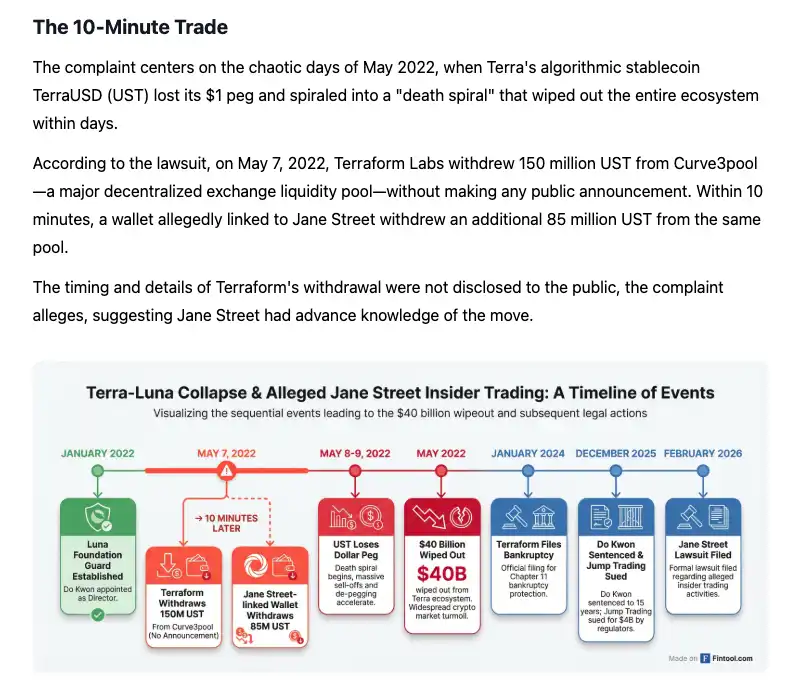
The lawsuit alleges that a former intern at Terraform, Bryce Pratt, who joined Jane Street as a full-time employee in September 2021, established a secret communication channel with his former colleagues at Terraform. He is accused of directly conveying material non-public information about Terraform's liquidity operations to Jane Street's trading desk.

The lawsuit names four defendants: Jane Street Group LLC, co-founder Robert Granieri, and employees Bryce Pratt and Michael Huang.

The bankruptcy administrator's statement cuts to the chase: The trades executed by Jane Street "would not have been possible without access to material non-public information to which they were exclusively privy."

It gets worse. The lawsuit alleges that Jane Street's withdrawal helped trigger the de-pegging of UST, pushing the entire Terraform ecosystem into a death spiral. LUNA fell from over $80 to near zero. $40 billion evaporated. Ordinary people lost everything—retirement savings, education funds, a lifetime of accumulation, gone in days.
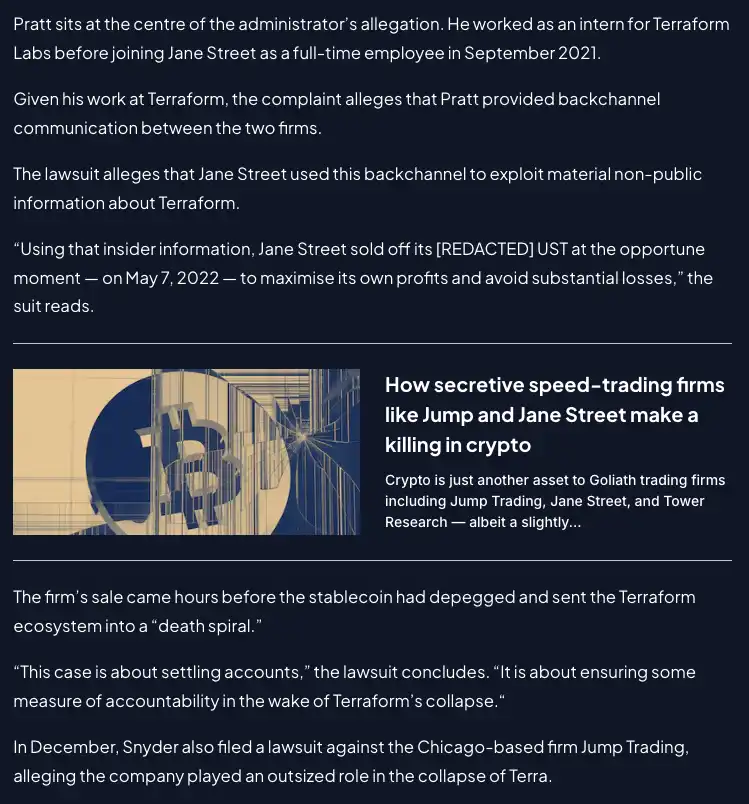
Jane Street's response? They call it a "desperate move by those with their backs against the wall," "baseless allegations."

But the problem is, this isn't their first time.

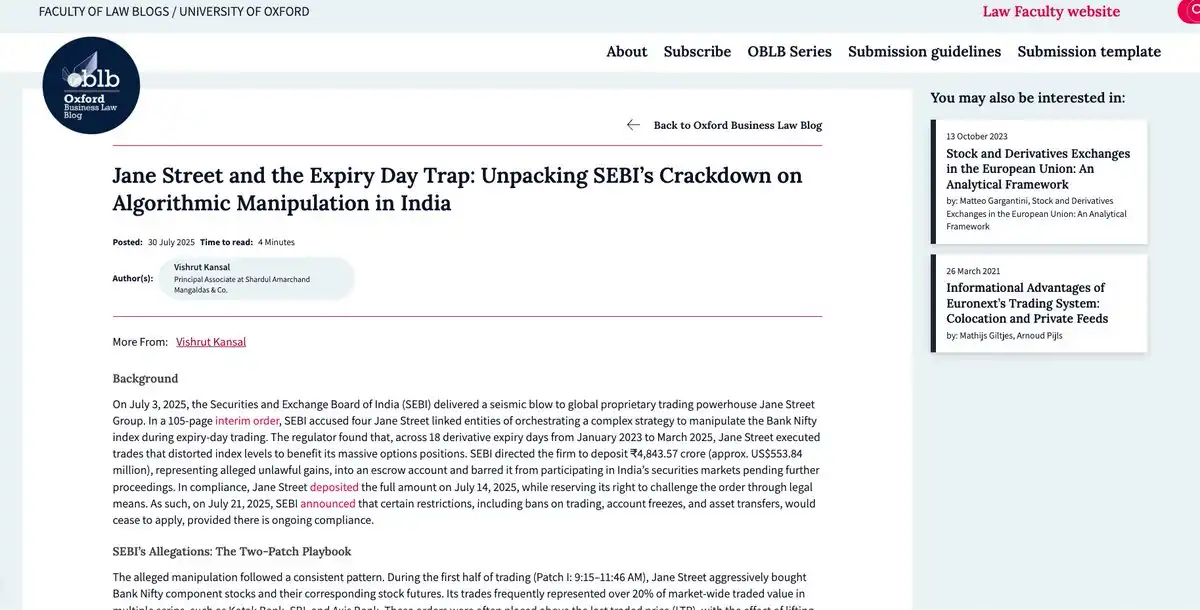
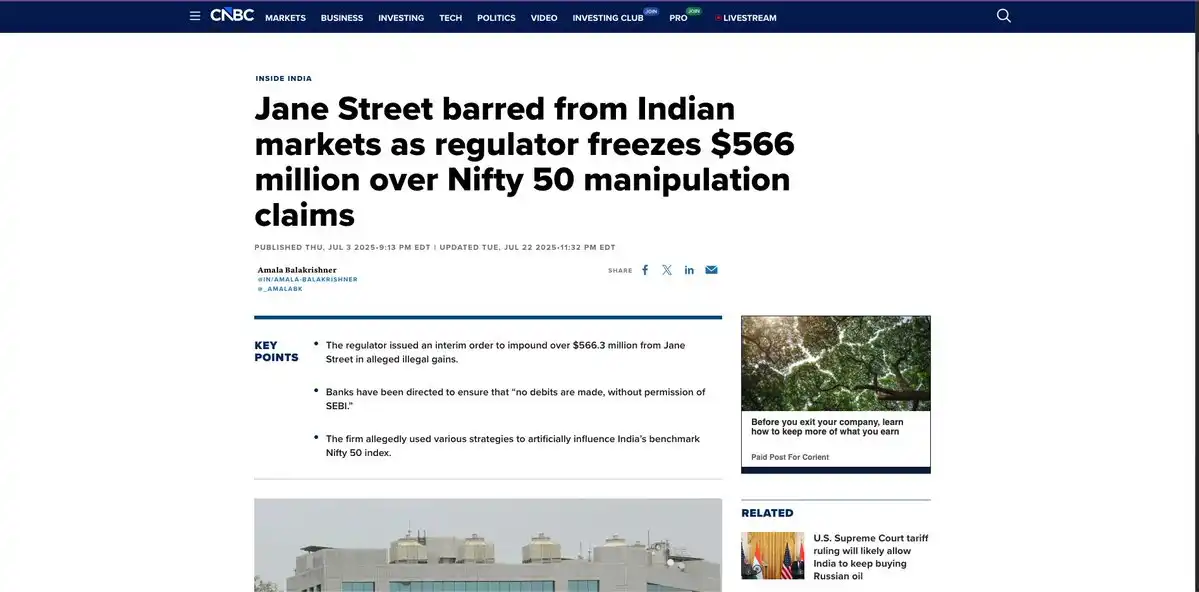
In July 2025, the Securities and Exchange Board of India (SEBI) brought one of the largest market manipulation charges in Indian history against Jane Street. SEBI's investigation found that on 18 derivative expiry days between January 2023 and March 2025, Jane Street executed a textbook pump-and-dump manipulation of the Bank Nifty index.
The operation was mechanically precise:

Morning: Jane Street's algorithms heavily bought Bank Nifty component stocks and futures, pushing the index up 1% to 1.3%. SEBI found that on some trading days, Jane Street alone contributed to the entire positive price impact of the index.

Simultaneously, they built large short option positions, primarily selling calls and buying puts, with the size of their options positions severely disproportionate to their stock holdings. SEBI found that, in delta equivalent terms, their options positions were 7.3 times larger than their stock and futures positions. This wasn't hedging, this wasn't arbitrage; this was directional manipulation with extra steps.

Afternoon: They reversed and sold all the stocks bought in the morning, the index fell, the short options profited, rinse and repeat, every expiry day.

SEBI's ruling: Illegal profits of 4.843 billion rupees, approximately $580 million. They characterized Jane Street's actions as a "deliberately designed means to manipulate the settlement price." SEBI also specifically noted that Jane Street continued this strategy even after the National Stock Exchange of India issued a clear warning in February 2025.

SEBI's wording was unusually harsh, rare for a regulator: "The integrity of the market, and the trust of millions of small investors and traders, can no longer be held hostage to the machinations of such an untrustworthy participant."

Jane Street was banned from the Indian securities market. They deposited over $560 million into an escrow account and immediately appealed. As of today, the case is still under review at the Securities Appellate Tribunal in India.
Now, about Bitcoin.

Since November 2025, Bitcoin traders noticed a strange pattern: every morning around 10 a.m. ET—coinciding with the US stock market open—heavy selling would hit BTC and related ETF shares.

This pattern was eerily consistent. Bitcoin would rise during Asian and European trading hours, only to be suppressed as soon as New York opened.

(See: https://www.tradingview.com/news/newsbtc:f65a83ede094b:0-is-jane-street-manipulating-bitcoin-the-viral-theory-explained/)
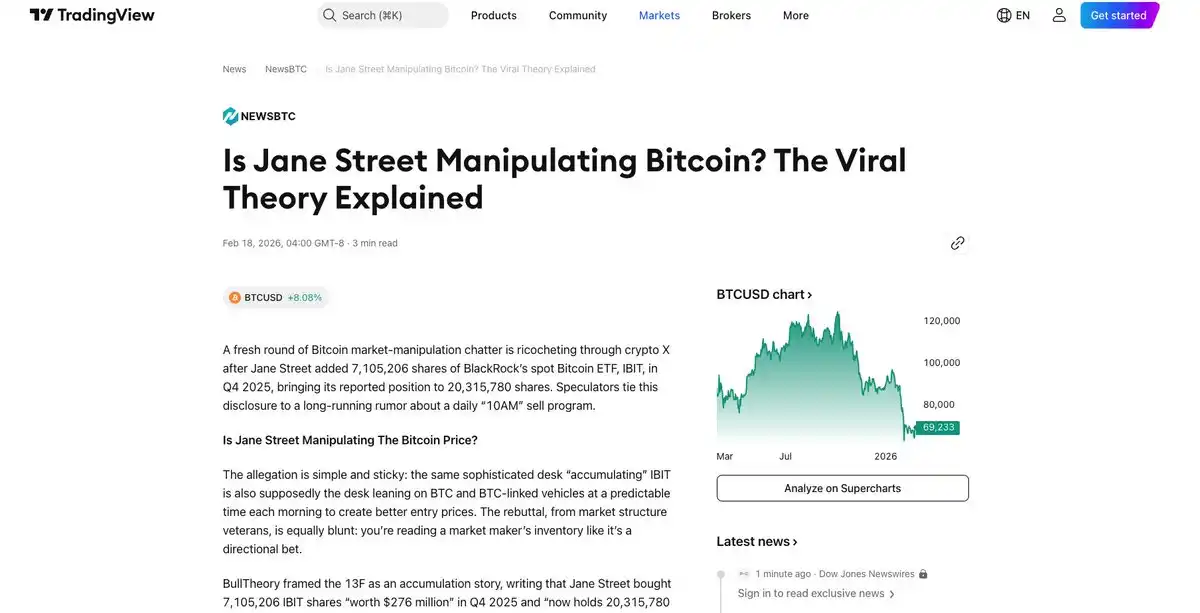
The numbers were staggering. Charts from December 2025 showed BTC falling from $89,700 to $87,700 in minutes on some days, liquidating $171 million in leveraged long positions before the price recovered. This occurred on December 1st, 5th, 8th, 10th, 12th, 15th, and repeated throughout January and February 2026.

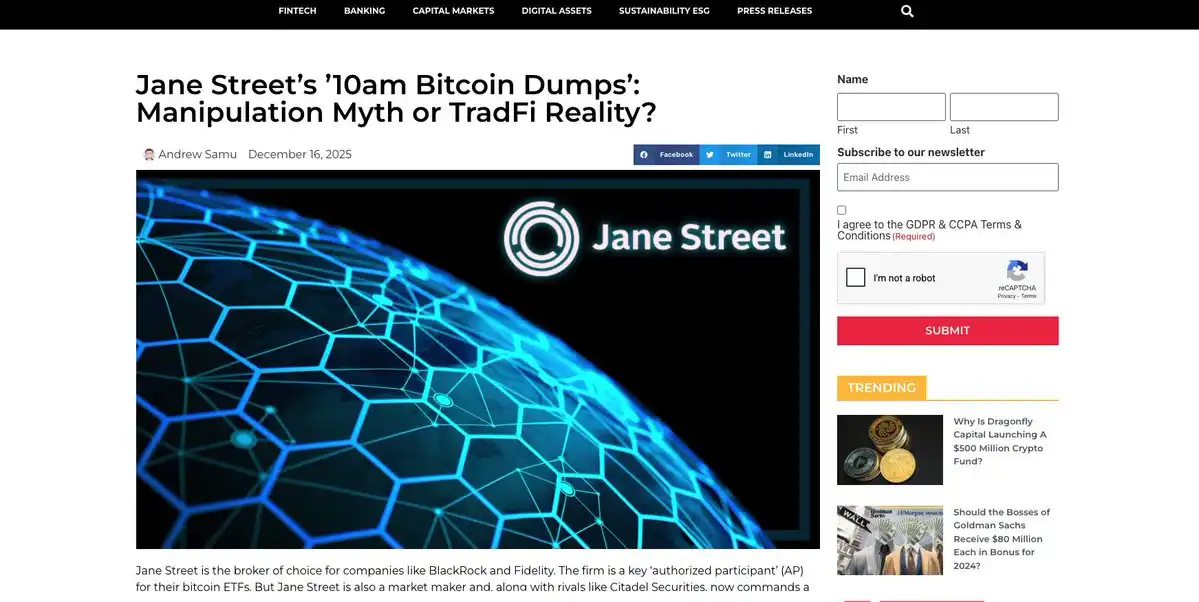
Crypto Twitter dubbed it the "10 AM Smash."
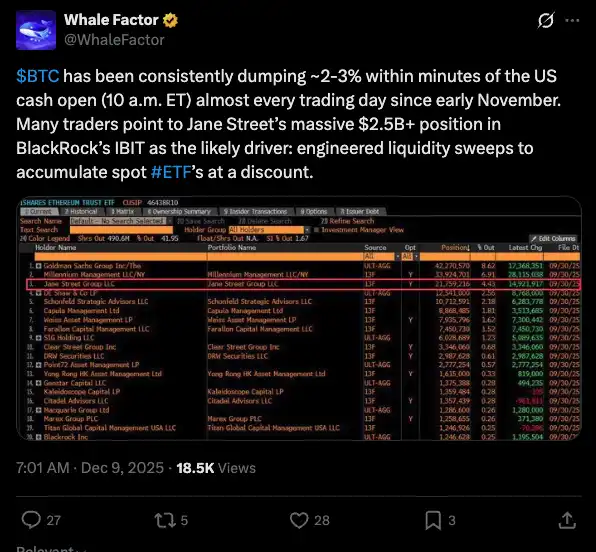
Fingers pointed squarely at Jane Street, for good reason. Jane Street is one of only four Authorized Participants for BlackRock's IBIT, the world's largest spot Bitcoin ETF. The other three are Virtu Americas, J.P. Morgan Securities, and Marex. As an Authorized Participant, Jane Street has the unique ability to create and redeem ETF shares, meaning they have direct access to the pipeline for Bitcoin moving in and out of the institutional wrapper.
Their 13F filings confirm massive holdings. Jane Street held $5.7 billion worth of IBIT shares as of Q3 2025. In Q4, they added another $276 million, bringing their total holdings to over 20 million shares, worth approximately $790 million at year-end prices. At their peak, they held nearly $2.5 billion in IBIT.
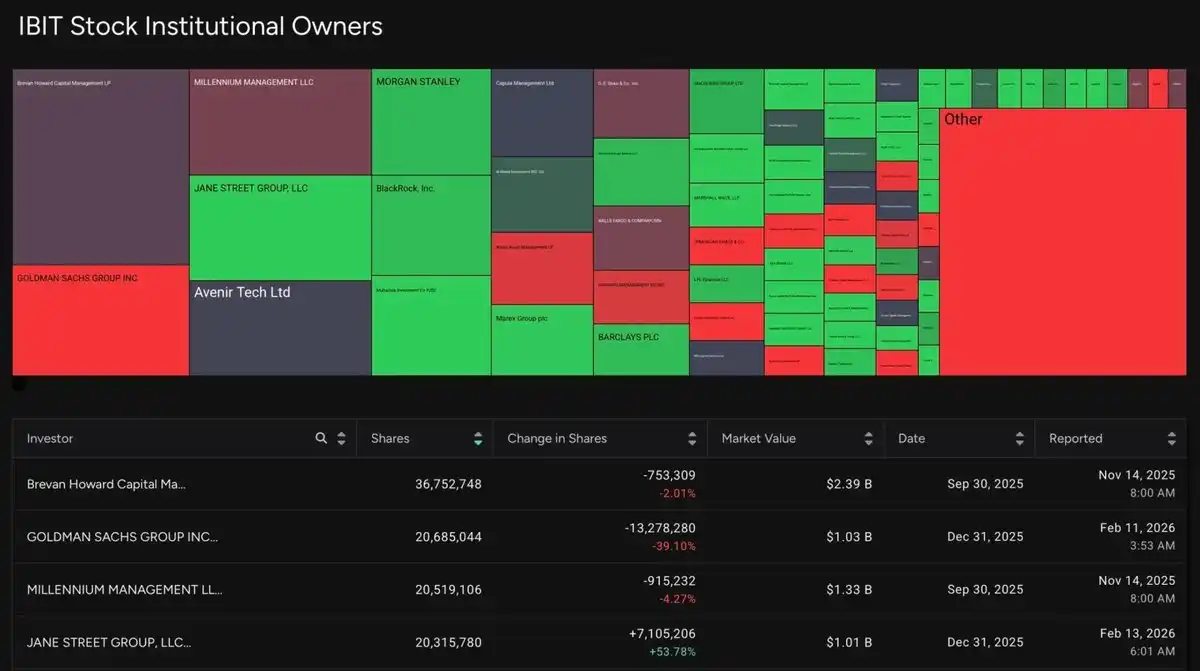
But one thing was suspicious: While allegedly selling spot BTC every morning, Jane Street increased its MSTR (Strategy, formerly MicroStrategy) position by 473% in Q4 2025, buying 951,187 shares worth approximately $121 million. This happened while major funds like BlackRock and Vanguard were selling billions of dollars worth of MSTR.

Think about what this implies: Sell BTC at the open, push the price down, liquidate leveraged longs, buy back lower. Meanwhile, heavily buy the most leveraged Bitcoin proxy on the market, waiting for the inevitable price recovery.

Glassnode co-founders Jan Happel and Yann Allemann, through their Negentropic account on X, reignited this theory, linking the algorithmic trading patterns to the filing of the Terraform lawsuit. The Milk Road account amplified the message further, describing "persistent whispers" about institutional trading desks executing a "very specific and conspiratorial playbook."
Then, the lawsuit came. Then, something unexpected happened.

After the Terraform lawsuit against Jane Street was filed, the "10 AM Smash"... didn't happen. For the first time in months, Bitcoin wasn't suppressed at the US market open; instead, it rose.
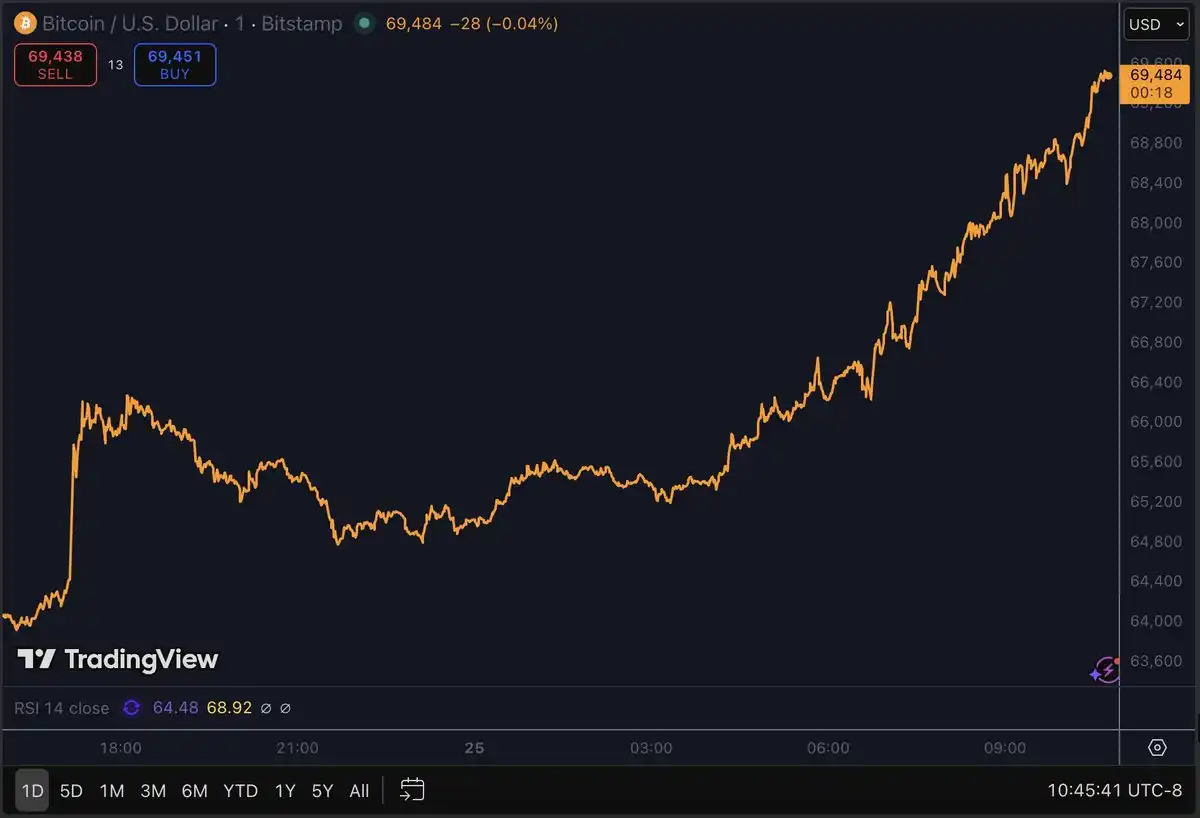
Today, February 25, 2026, Bitcoin surged over 3%, breaking through multiple resistance levels, trading above $68,000, just days after threatening to fall below $60,000. $323 million in short positions were liquidated. The Stochastic RSI hit 100. ETFs saw a net inflow of $257.7 million for the day, the highest since early February.

https://x.com/peruvian_bull/status/2026730420168192432?s=20

The pattern broke.

I want to be careful here. Correlation does not equal causation. Multiple factors were at play simultaneously: Trump's State of the Union, oversold technicals, short covering. The Fear & Greed Index was at 11, extreme fear, which is often a contrarian turning point. The RSI had fallen to 15.80, a reading not seen since the COVID crash of 2020, which was followed by a 1400% rally. But the timing coincidence is hard to ignore.

Rumors circulated on X that Jane Street was "forced to shut down its trading algorithms" after the lawsuit was filed. Jane Street told Cointelegraph these were "baseless speculative allegations." Whether they were forced to stop or paused out of legal prudence, the result was the same:

The selling pressure vanished.

What this really means for Bitcoin.

Bitcoin spot ETFs were supposed to be the great equalizer. Institutional access, regulated products, BlackRock's stamp of approval. And they have been wildly successful—IBIT alone has attracted over $20 billion in inflows since launch.

But the ETF structure introduced something Bitcoin was specifically designed to escape: trusted intermediaries with privileged access to the pipeline.

When the SEC approved Bitcoin spot ETFs in January 2024, it required cash-only creation and redemption. Whenever shares needed to be created or redeemed, someone had to actually buy or sell Bitcoin. And the firms with access to this process—the Authorized Participants—held a structural advantage over every other market participant.

In September 2025, the SEC approved in-kind creation and redemption for IBIT, meaning Authorized Participants could now exchange Bitcoin directly for ETF shares, bypassing the fiat step. This gave Jane Street, Virtu, J.P. Morgan, and Marex more direct control over the flow of Bitcoin in and out of the largest institutional wrapper.
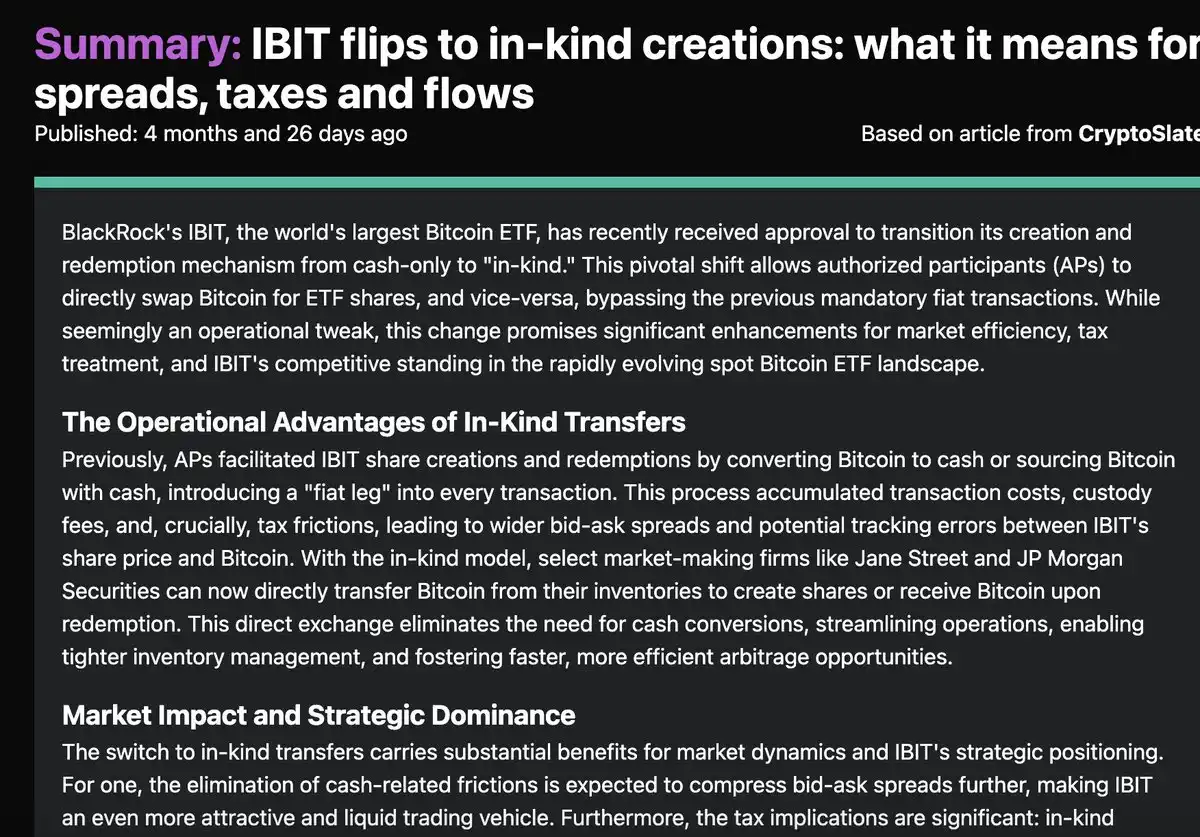
The "10 AM Smash" is essentially a symptom of the same disease that has plagued the gold market for decades.

I wrote about this in "The Final Gold Game Begins": Paper trading against paper trading, where the institutions with the most access to the pipeline can move the price before the rest of the market can react.

https://x.com/peruvian_bull/status/1778146092279861279?s=20

J.P. Morgan traders Gregg Smith and Michael Nowak were convicted of placing fraudulent orders in the precious metals futures market, a scheme that lasted eight years and involved thousands of illegal trades. J.P. Morgan paid a $920 million settlement. Deutsche Bank paid $30 million for the same behavior. UBS, HSBC, and six individual traders all faced CFTC charges for anti-fraud violations.

Same playbook, different asset.

Every time, these firms call it "market making," "arbitrage," "hedging." The euphemisms are endless, the result always the same: The little guy gets carved up, and the insiders capture the spread.

So, where do we go from here?

The broader structural picture hasn't changed. $4.5 billion in ETF net outflows in the first eight weeks of 2026 looks concerning, but Strategy (Saylor's company) just bought $39 million worth of BTC, accounting for 99% of all public company purchases in that period. The big players aren't selling; they were waiting for the algorithms to do their work.
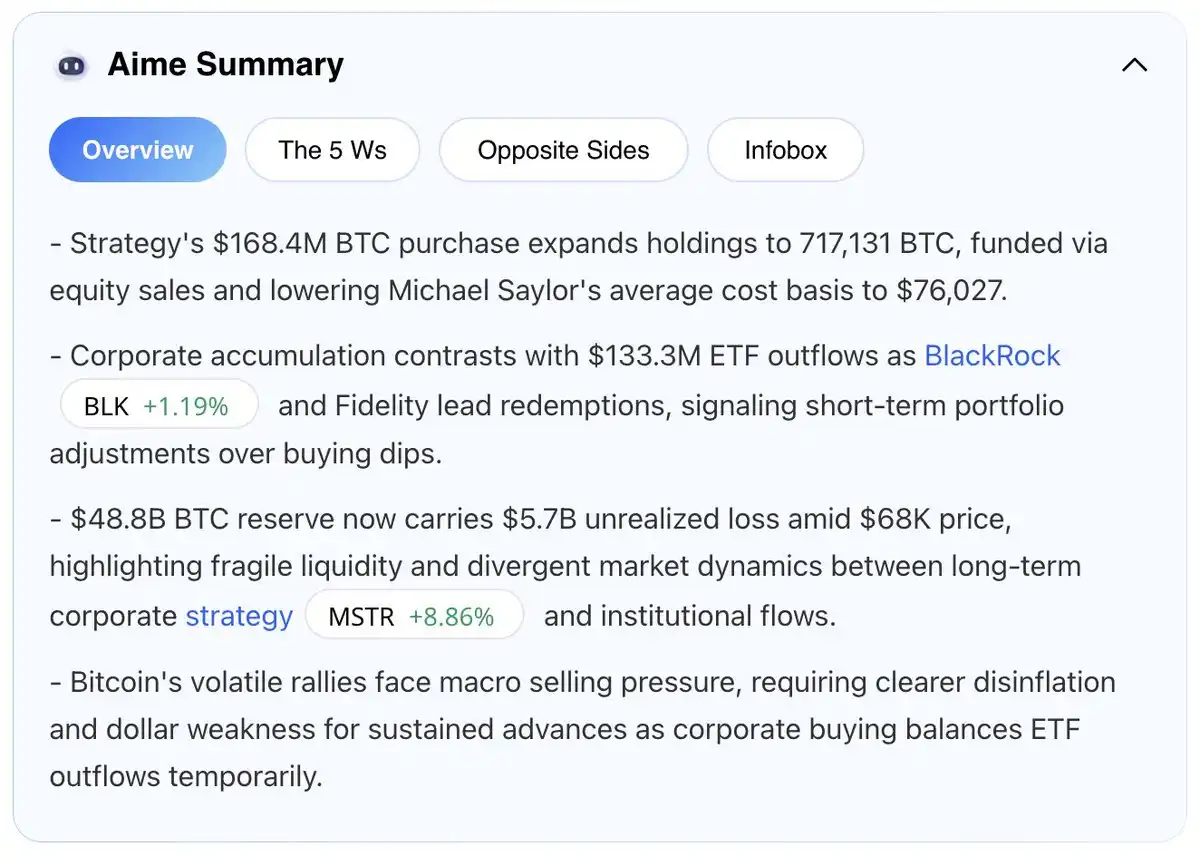
And perhaps, just now, the algorithms are finished.

If Jane Street—whether due to legal exposure, regulatory scrutiny on multiple continents, or simple self-preservation—has been forced to retreat from its alleged daily selling program, it means a persistent structural resistance that has suppressed Bitcoin for four months has been removed.

Bitcoin was born for this moment. A monetary system that doesn't rely on trusted intermediaries, doesn't need Authorized Participants, and cannot be front-run by messages from a former intern passed through a secret pipeline to a trading desk.

But don't forget how we got here. The very firms that were supposed to "make markets" and "provide liquidity" are the same ones accused of front-running a collapse, manipulating a national stock index, and running an algorithmic selling program daily against the very asset their ETF was supposed to track.

This is the very system Bitcoin was designed to replace.
Preguntas relacionadas

QWhat are the three main allegations against Jane Street Group as detailed in the article?

AThe three main allegations are: 1) Insider trading related to the Terra Luna collapse, 2) Market manipulation of the Bank Nifty index in India, and 3) The daily '10 a.m. slaughter' of Bitcoin at the U.S. market open.

QWhat specific evidence is cited in the lawsuit regarding Jane Street's alleged insider trading in the Terra Luna case?

AThe lawsuit states that ten minutes after Terraform Labs secretly withdrew $150 million in UST from the Curve3pool on May 7, 2022, a wallet linked to Jane Street withdrew $85 million from the same pool. It alleges a former Terraform intern turned Jane Street employee, Bryce Pratt, established a secret communication channel to pass non-public information.

QHow did the Indian regulatory body SEBI characterize Jane Street's trading activity, and what was the financial penalty?

ASEBI characterized Jane Street's activity as 'a deliberately designed means of manipulating the settlement price.' They alleged illegal profits of 4.843 billion rupees (approximately $580 million at the time) and banned Jane Street from the Indian securities market.

QWhat is the '10 a.m. slaughter' theory, and why was Jane Street suspected of being behind it?

AThe '10 a.m. slaughter' refers to the theory that Bitcoin faced consistent, heavy selling pressure at precisely 10 a.m. EST (U.S. market open). Jane Street was suspected because it is an Authorized Participant for the iShares Bitcoin Trust (IBIT), giving it unique access to the creation/redemption mechanism for Bitcoin ETF shares, and its trading patterns and large holdings were seen as correlating with the sell-offs.

QAccording to the author, what broader systemic issue does the alleged '10 a.m. slaughter' represent for Bitcoin?

AThe author argues it represents the same issue that has plagued gold markets: a system where trusted intermediaries (like Authorized Participants) with privileged access to the market pipeline can move prices before the rest of the market reacts, undermining the very trustless, intermediary-free system Bitcoin was designed to create.

Lecturas Relacionadas

TechFlow Intelligence Bureau: KelpDAO Attack Causes Nearly $300 Million Loss, Triggers Aave Withdrawal Wave, RAVE Crashes 95% in a Single Day

China's AI firm DeepSeek is seeking external funding for the first time, with a valuation exceeding $10 billion, signaling intensifying competition and high R&D costs in the domestic large model sector. Meanwhile, OpenAI CEO Sam Altman faces scrutiny over potential conflicts of interest between his personal investments and OpenAI’s business ahead of a possible IPO. In Web3, KelpDAO suffered a $294 million attack due to forged cross-chain messages on LayerZero, leading to massive withdrawals from Aave and a resulting 18% drop in AAVE tokens. Separately, RAVE cryptocurrency collapsed by 95% in a single day amid suspected insider manipulation. Geopolitically, Iran is now demanding Bitcoin payments for transit through the Strait of Hormuz, reflecting both internal governmental discord and the growing adoption of crypto in tense regions. In semiconductors, Nvidia CEO Jensen Huang showed rare public frustration over questions regarding chip sales to China, while the industry faces renewed price hikes. Tesla continues expanding its Robotaxi service, and a Chinese humanoid robot outperformed humans in a half-marathon, marking a milestone in robotics. Despite Middle East tensions and market uncertainties, U.S. stocks continue to rise, prompting discussions about market optimism versus risk blindness. Overall, today’s developments highlight systemic vulnerabilities—in tech, finance, and geopolitics—while also showcasing innovation in crises.

marsbitHace 5 hora(s)

TechFlow Intelligence Bureau: KelpDAO Attack Causes Nearly $300 Million Loss, Triggers Aave Withdrawal Wave, RAVE Crashes 95% in a Single Day

marsbitHace 5 hora(s)

Trading

Spot
Futuros

Artículos destacados

Qué es BITCOIN

Entendiendo HarryPotterObamaSonic10Inu (ERC-20) y Su Posición en el Espacio Cripto En los últimos años, el mercado de criptomonedas ha sido testigo de un aumento en la popularidad de las monedas meme, capturando el interés no solo de los comerciantes, sino también de aquellos que buscan compromiso comunitario y valor de entretenimiento. Entre estos tokens únicos se encuentra HarryPotterObamaSonic10Inu (ERC-20), un proyecto intrigante que mezcla referencias culturales en el tejido de las criptomonedas. Este artículo profundiza en los aspectos clave de HarryPotterObamaSonic10Inu, explorando sus mecanismos, ethos impulsado por la comunidad y su relación con el paisaje cripto más amplio. ¿Qué es HarryPotterObamaSonic10Inu (ERC-20)? Como su nombre sugiere, HarryPotterObamaSonic10Inu es una moneda meme construida sobre la blockchain de Ethereum, clasificada bajo el estándar ERC-20. A diferencia de las criptomonedas tradicionales que pueden enfatizar la utilidad práctica o el potencial de inversión, este token prospera en el valor de entretenimiento y la fuerza de su comunidad. El proyecto tiene como objetivo fomentar un entorno donde los usuarios comprometidos puedan reunirse, compartir ideas y participar en actividades inspiradas por diversos fenómenos culturales. Una característica notable de HarryPotterObamaSonic10Inu es su cero impuestos en las transacciones. Este atractivo elemento tiene como objetivo incentivar el comercio y la participación comunitaria, sin cargos adicionales que puedan disuadir a los comerciantes de pequeña escala. El suministro total de la moneda está establecido en mil millones de tokens, una cifra que marca su intención de mantener una circulación sustancial dentro de la comunidad. Creador de HarryPotterObamaSonic10Inu (ERC-20) Los orígenes de HarryPotterObamaSonic10Inu están algo envueltos en misterio; los detalles sobre el creador siguen siendo desconocidos. El desarrollo de este token carece de un equipo identificable o de un plan explícito, lo cual no es inusual dentro del sector de monedas meme. En cambio, el proyecto ha surgido de manera orgánica, con su progreso muy dependiente del entusiasmo y la participación de su comunidad. Inversores de HarryPotterObamaSonic10Inu (ERC-20) En cuanto a inversiones externas y respaldo, HarryPotterObamaSonic10Inu también sigue siendo ambiguo. El token no lista ninguna fundación de inversión conocida o apoyo organizacional significativo. En cambio, la savia del proyecto es su comunidad de base, que informa su crecimiento y sostenibilidad a través de la acción colectiva y el compromiso en el espacio cripto. ¿Cómo Funciona HarryPotterObamaSonic10Inu (ERC-20)? Como una moneda meme, HarryPotterObamaSonic10Inu opera principalmente fuera de los marcos tradicionales que a menudo rigen el valor de los activos. Hay varios aspectos distintivos que definen cómo funciona el proyecto: Transacciones Sin Impuestos: Sin tarifas impositivas en las transacciones, los usuarios pueden comprar y vender el token libremente sin preocuparse por costos ocultos. Compromiso Comunitario: El proyecto prospera en la interacción comunitaria, aprovechando plataformas de redes sociales para crear entusiasmo y facilitar la participación. Las discusiones, el intercambio de contenido y el compromiso son elementos cruciales que ayudan a expandir su alcance y fomentar la lealtad entre los seguidores. Sin Utilidad Práctica: Cabe señalar que HarryPotterObamaSonic10Inu no ofrece utilidad concreta dentro del ecosistema financiero. Más bien, se clasifica como un token principalmente para actividades de entretenimiento y comunitarias. Referencia Cultural: El token incorpora astutamente elementos de la cultura popular para atraer interés, conectando con entusiastas de los memes y seguidores de las criptomonedas por igual. HarryPotterObamaSonic10Inu ejemplifica cómo las monedas meme operan de manera diferente a los proyectos de criptomonedas más tradicionales, ingresando al mercado como construcciones sociales innovadoras en lugar de activos utilitarios. Cronología de HarryPotterObamaSonic10Inu (ERC-20) La historia de HarryPotterObamaSonic10Inu está marcada por varios hitos notables: Creación: El token surgió de un meme viral, capturando la imaginación de muchos entusiastas de las criptomonedas. Las fechas específicas de creación no están disponibles, subrayando su ascenso orgánico. Listado en Exchanges: HarryPotterObamaSonic10Inu ha llegado a varios exchanges, permitiendo un acceso y comercio más fácil por parte de la comunidad. Iniciativas de Compromiso Comunitario: Actividades continuas destinadas a mejorar la interacción comunitaria, incluyendo concursos, campañas en redes sociales y generación de contenido por parte de fanáticos y defensores. Planes de Expansión Futuros: La hoja de ruta del proyecto incluye el lanzamiento de una colección de NFT, mercancía y un sitio de comercio electrónico relacionado con sus temas culturales, involucrando aún más a la comunidad e intentando añadir más dimensiones a su ecosistema. Puntos Clave Sobre HarryPotterObamaSonic10Inu (ERC-20) Naturaleza Impulsada por la Comunidad: El proyecto prioriza la participación colectiva y la creatividad, asegurando que la involucración de los usuarios esté a la vanguardia de su desarrollo. Clasificación como Moneda Meme: Representa la epítome de las criptomonedas basadas en el entretenimiento, diferenciándose de los vehículos de inversión tradicionales. Sin Afiliación Directa con Bitcoin: A pesar de la similitud en el nombre del ticker, HarryPotterObamaSonic10Inu es distinto y no tiene relación con Bitcoin u otras criptomonedas establecidas. Enfoque en la Colaboración: HarryPotterObamaSonic10Inu está diseñado para crear un espacio para la colaboración y el intercambio de historias entre sus poseedores, proporcionando una vía para la creatividad y el vínculo comunitario. Perspectivas Futuras: La ambición de expandirse más allá de su premisa inicial hacia NFTs y mercancías describe un camino para que el proyecto potencialmente ingrese a avenidas más tradicionales dentro de la cultura digital. A medida que las monedas meme continúan capturando la imaginación de la comunidad de criptomonedas, HarryPotterObamaSonic10Inu (ERC-20) se destaca debido a sus lazos culturales y su enfoque centrado en la comunidad. Si bien puede no encajar en el molde típico de un token impulsado por la utilidad, su esencia radica en la alegría y la camaradería fomentadas entre sus seguidores, destacando la naturaleza en evolución de las criptomonedas en una era cada vez más digital. A medida que el proyecto continúa desarrollándose, será importante observar cómo las dinámicas comunitarias influyen en su trayectoria en el cambiante paisaje de la tecnología blockchain.

1.2k Vistas totalesPublicado en 2024.04.01Actualizado en 2024.12.03

Qué es BITCOIN

Cómo comprar BTC

¡Bienvenido a HTX.com! Hemos hecho que comprar Bitcoin (BTC) sea simple y conveniente. Sigue nuestra guía paso a paso para iniciar tu viaje de criptos.Paso 1: crea tu cuenta HTXUtiliza tu correo electrónico o número de teléfono para registrarte y obtener una cuenta gratuita en HTX. Experimenta un proceso de registro sin complicaciones y desbloquea todas las funciones.Obtener mi cuentaPaso 2: ve a Comprar cripto y elige tu método de pagoTarjeta de crédito/débito: usa tu Visa o Mastercard para comprar Bitcoin (BTC) al instante.Saldo: utiliza fondos del saldo de tu cuenta HTX para tradear sin problemas.Terceros: hemos agregado métodos de pago populares como Google Pay y Apple Pay para mejorar la comodidad.P2P: tradear directamente con otros usuarios en HTX.Over-the-Counter (OTC): ofrecemos servicios personalizados y tipos de cambio competitivos para los traders.Paso 3: guarda tu Bitcoin (BTC)Después de comprar tu Bitcoin (BTC), guárdalo en tu cuenta HTX. Alternativamente, puedes enviarlo a otro lugar mediante transferencia blockchain o utilizarlo para tradear otras criptomonedas.Paso 4: tradear Bitcoin (BTC)Tradear fácilmente con Bitcoin (BTC) en HTX's mercado spot. Simplemente accede a tu cuenta, selecciona tu par de trading, ejecuta tus trades y monitorea en tiempo real. Ofrecemos una experiencia fácil de usar tanto para principiantes como para traders experimentados.

4.6k Vistas totalesPublicado en 2024.12.12Actualizado en 2025.03.21

Cómo comprar BTC

Qué es $BITCOIN

ORO DIGITAL ($BITCOIN): Un Análisis Integral Introducción al ORO DIGITAL ($BITCOIN) ORO DIGITAL ($BITCOIN) es un proyecto basado en blockchain que opera en la red Solana, cuyo objetivo es combinar las características de los metales preciosos tradicionales con la innovación de las tecnologías descentralizadas. Aunque comparte un nombre con Bitcoin, a menudo referido como “oro digital” debido a su percepción como un refugio de valor, ORO DIGITAL es un token separado diseñado para crear un ecosistema único dentro del paisaje Web3. Su meta es posicionarse como un activo digital alternativo viable, aunque los detalles sobre sus aplicaciones y funcionalidades aún están en desarrollo. ¿Qué es ORO DIGITAL ($BITCOIN)? ORO DIGITAL ($BITCOIN) es un token de criptomoneda diseñado explícitamente para su uso en la blockchain de Solana. A diferencia de Bitcoin, que proporciona un papel de almacenamiento de valor ampliamente reconocido, este token parece centrarse en aplicaciones y características más amplias. Aspectos notables incluyen: Infraestructura Blockchain: El token está construido sobre la blockchain de Solana, conocida por su capacidad para manejar transacciones de alta velocidad y bajo costo. Dinámicas de Suministro: ORO DIGITAL tiene un suministro máximo limitado a 100 cuatrillones de tokens (100P $BITCOIN), aunque los detalles sobre su suministro circulante no se han divulgado actualmente. Utilidad: Si bien las funcionalidades precisas no están delineadas explícitamente, hay indicios de que el token podría ser utilizado para diversas aplicaciones, potencialmente involucrando aplicaciones descentralizadas (dApps) o estrategias de tokenización de activos. ¿Quién es el Creador de ORO DIGITAL ($BITCOIN)? En la actualidad, la identidad de los creadores y el equipo de desarrollo detrás de ORO DIGITAL ($BITCOIN) sigue siendo desconocida. Esta situación es típica entre muchos proyectos innovadores dentro del espacio blockchain, particularmente aquellos alineados con las finanzas descentralizadas y fenómenos de monedas meme. Si bien tal anonimato puede fomentar una cultura impulsada por la comunidad, intensifica las preocupaciones sobre la gobernanza y la responsabilidad. ¿Quiénes son los Inversores de ORO DIGITAL ($BITCOIN)? La información disponible indica que ORO DIGITAL ($BITCOIN) no tiene patrocinadores institucionales conocidos ni inversiones destacadas de capital de riesgo. El proyecto parece operar en un modelo de peer-to-peer centrado en el apoyo y la adopción de la comunidad en lugar de rutas de financiamiento tradicionales. Su actividad y liquidez se sitúan principalmente en intercambios descentralizados (DEX), como PumpSwap, en lugar de plataformas de trading centralizadas establecidas, lo que resalta aún más su enfoque de base. Cómo Funciona ORO DIGITAL ($BITCOIN) Los mecanismos operativos de ORO DIGITAL ($BITCOIN) pueden elaborarse en función de su diseño blockchain y atributos de red: Mecanismo de Consenso: Al aprovechar el único proof-of-history (PoH) de Solana combinado con un modelo de proof-of-stake (PoS), el proyecto asegura una validación de transacciones eficiente que contribuye al alto rendimiento de la red. Tokenómica: Si bien los mecanismos deflacionarios específicos no se han detallado extensamente, el vasto suministro máximo de tokens implica que podría atender microtransacciones o casos de uso nicho que aún están por definirse. Interoperabilidad: Existe el potencial de integración con el ecosistema más amplio de Solana, incluyendo varias plataformas de finanzas descentralizadas (DeFi). Sin embargo, los detalles sobre integraciones específicas permanecen no especificados. Cronología de Eventos Clave Aquí hay una cronología que destaca hitos significativos relacionados con ORO DIGITAL ($BITCOIN): 2023: El despliegue inicial del token ocurre en la blockchain de Solana, marcado por su dirección de contrato. 2024: ORO DIGITAL gana visibilidad al estar disponible para trading en intercambios descentralizados como PumpSwap, permitiendo a los usuarios comerciar contra SOL. 2025: El proyecto presencia actividad de trading esporádica y potencial interés en compromisos liderados por la comunidad, aunque no se han documentado asociaciones notables o avances técnicos hasta el momento. Análisis Crítico Fortalezas Escalabilidad: La infraestructura subyacente de Solana soporta altos volúmenes de transacciones, lo que podría mejorar la utilidad de $BITCOIN en varios escenarios de transacción. Accesibilidad: El potencial bajo precio de trading por token podría atraer a inversores minoristas, facilitando una participación más amplia debido a oportunidades de propiedad fraccionada. Riesgos Falta de Transparencia: La ausencia de patrocinadores, desarrolladores o un proceso de auditoría conocidos públicamente puede generar escepticismo sobre la sostenibilidad y confiabilidad del proyecto. Volatilidad del Mercado: La actividad de trading depende en gran medida del comportamiento especulativo, lo que puede resultar en una volatilidad de precios significativa y en incertidumbre para los inversores. Conclusión ORO DIGITAL ($BITCOIN) surge como un proyecto intrigante pero ambiguo dentro del ecosistema de Solana en rápida evolución. Si bien intenta aprovechar la narrativa del “oro digital”, su alejamiento del papel establecido de Bitcoin como refugio de valor subraya la necesidad de una diferenciación más clara de su utilidad y estructura de gobernanza previstas. La aceptación y adopción futura dependerán probablemente de abordar la actual opacidad y de definir sus estrategias operativas y económicas de manera más explícita. Nota: Este informe abarca información sintetizada disponible hasta octubre de 2023, y pueden haber ocurrido desarrollos más allá del período de investigación.

83 Vistas totalesPublicado en 2025.05.13Actualizado en 2025.05.13

Qué es $BITCOIN

Discusiones

Bienvenido a la comunidad de HTX. Aquí puedes mantenerte informado sobre los últimos desarrollos de la plataforma y acceder a análisis profesionales del mercado. A continuación se presentan las opiniones de los usuarios sobre el precio de BTC (BTC).

活动图片