Strongest Earnings Report in 15 Years Fails to Mask Trillion-Dollar Debt; Oracle Rumored to Lay Off 30,000 in 'AI Replacement' Move—Can It Fill the Computing Power Pit?

marsbitPublicado a 2026-03-11Actualizado a 2026-03-11

Resumen

Oracle reported its strongest financial results in 15 years, with Q3 revenue reaching $17.2 billion, a 22% year-over-year increase, and cloud revenue surging 44%. The company's remaining performance obligations (RPO) grew 325% to $553 billion. Despite these gains, Oracle faces significant financial challenges, including negative free cash flow of -$13.18 billion over the past 12 months and total debt exceeding $100 billion, with an additional $248 billion in off-balance-sheet lease commitments. To fund its aggressive data center expansion—with capital expenditures projected to reach $50 billion this year—Oracle is reportedly planning to lay off up to 30,000 employees. Analysts estimate these cuts could save the company $8–10 billion in free cash flow. The shift toward an asset-light “AI infrastructure management” model, where clients prepay or supply their own GPUs, reduces balance sheet pressure but also transforms Oracle into a lower-margin service operator. Competitive pressures are mounting: key clients like OpenAI have canceled expansion plans due to rapid chip obsolescence, as NVIDIA’s new Vera Rubin chips offer significantly better performance. This reflects a broader industry trend where tech giants are cutting jobs to fund AI investments, transferring the cost of technological advancement onto their workforce.

Author: C Labs Crypto Watch

Today (March 10), Oracle released an earnings report that drew applause from Wall Street.
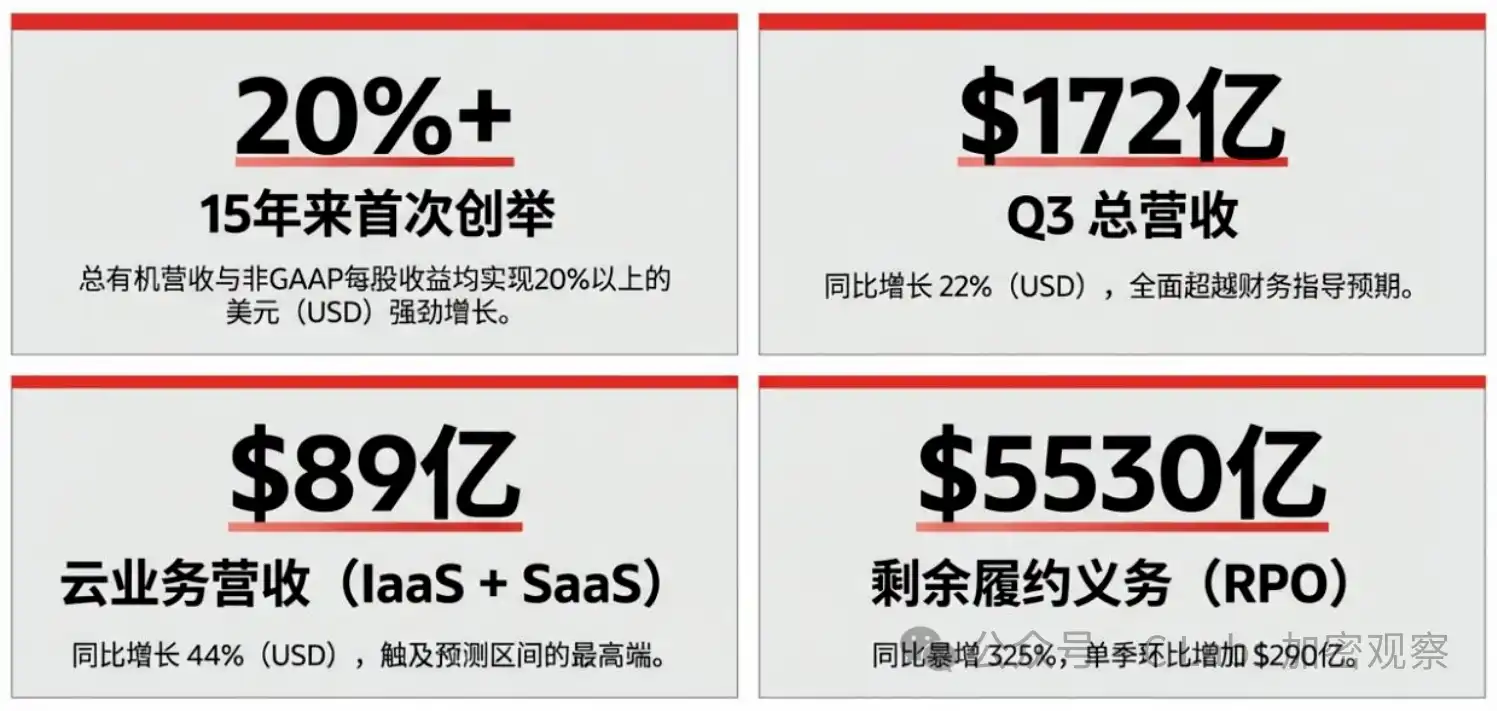
Total revenue reached $17.2 billion, a 22% year-over-year increase. Cloud business grew by 44%. The remaining performance obligation (RPO) surged to $553 billion, up 325% year-over-year. Oracle claimed this was the first time in 15 years that both revenue and profit achieved over 20% growth simultaneously. The stock price rose over 10% in after-hours trading.
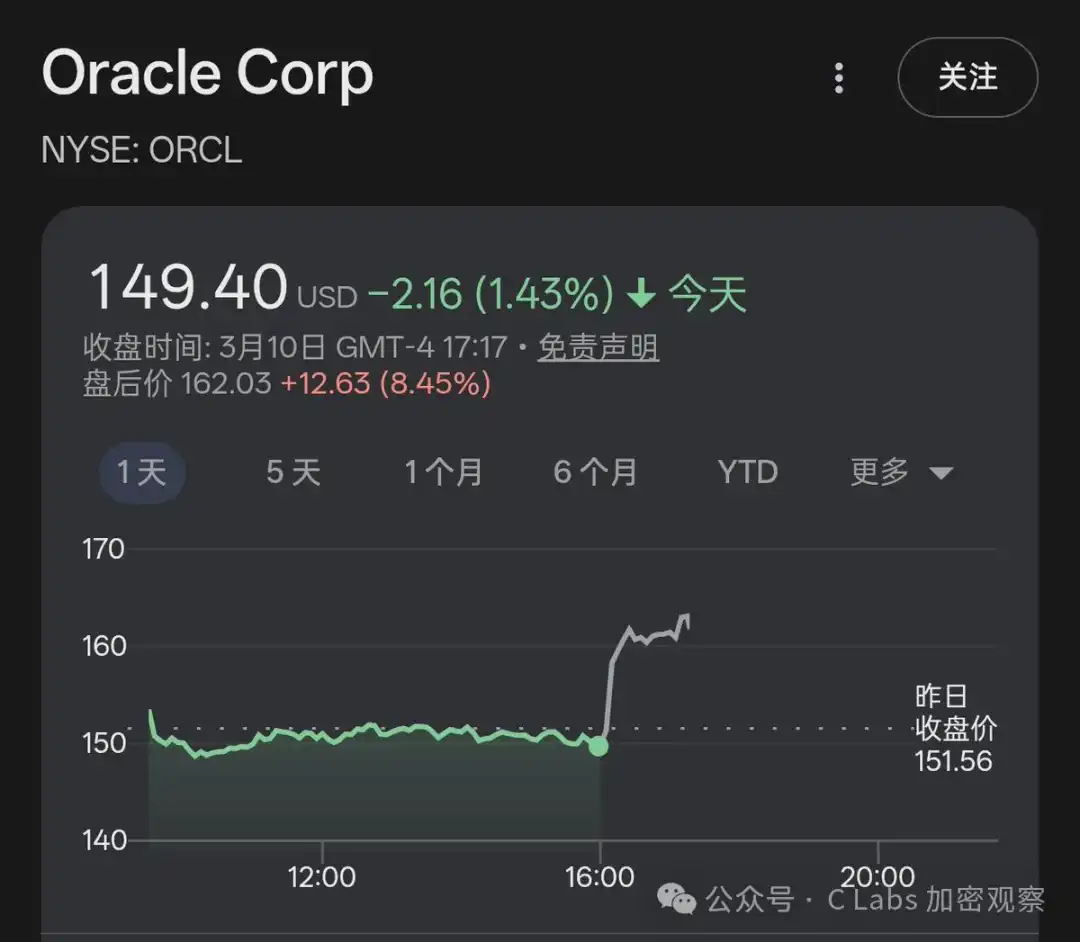
But in the same week, other news was also circulating:

  • Several banks are quietly withdrawing from Oracle's data center projects;

  • A private credit institution refused to finance Oracle's $10 billion data center;

  • Oracle is preparing to lay off tens of thousands of employees.

These two sets of news come from the same company and occurred during the same period.

01. Oracle's Financial Problems
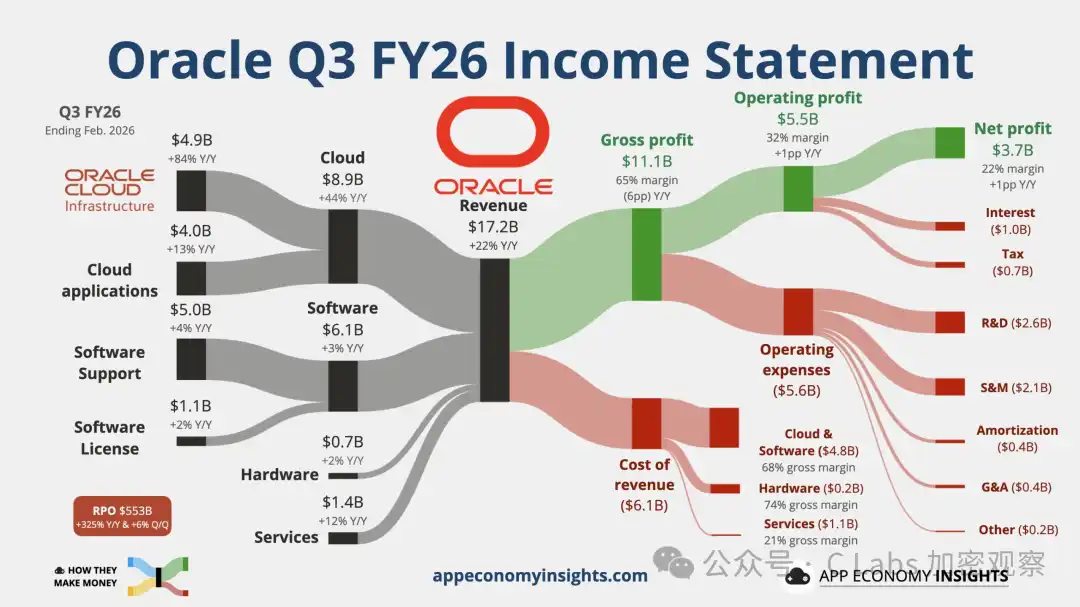
First, free cash flow is negative, and significantly so

Over the past 12 months, Oracle's free cash flow was negative $13.18 billion. Operating cash flow was positive at $23.5 billion, but capital expenditures consumed even more—the full-year capital expenditure guidance for this year is $50 billion, more than seven times that of two years ago. Revenue is growing, but so is accelerating.

Second, debt continues to expand

This quarter, Oracle raised an additional $30 billion through investment-grade bonds and convertible preferred stock, bringing total debt to over $100 billion. Hidden in the footnotes of the earnings report is an even larger number: $248 billion in off-balance-sheet lease commitments. This means Oracle currently owes over $100 billion in loans and has signed long-term leases totaling $248 billion over more than a decade—this money hasn't been paid yet, but it's already owed.

Oracle promised during the earnings call not to issue new debt in the 2026 calendar year. Publicly committing to "not borrowing new money this year"—this speaks volumes: creditors are becoming uneasy, and Oracle had to step in to reassure them.

Third, data centers become obsolete as soon as they're built!

The $553 billion RPO is the most attractive number in the entire earnings report, up 325% year-over-year. But Oracle explained the source of these contracts during the call: most of the equipment is either prepaid by customers or brought by customers themselves for Oracle to operate.
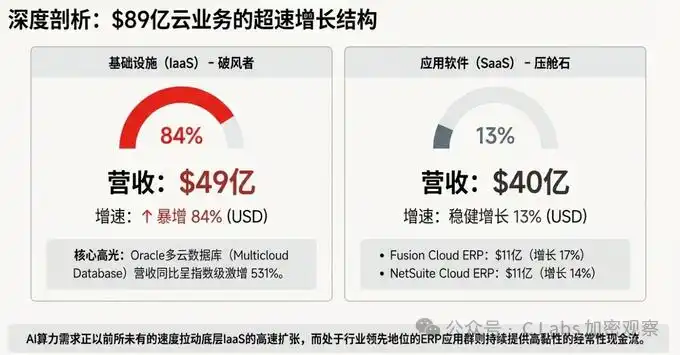
In plain terms: Oracle is increasingly playing the role of an "operator" rather than using its own money to build data centers and then leasing them out. This shift in business model reduces balance sheet pressure but also means Oracle is no longer a capital-intensive, high-margin computing power landlord; instead, it has become a computing power property management company. It's akin to the digital center version of "Wanda Commercial Management." Meanwhile, Oracle's largest customer, OpenAI, has canceled the expansion contract for its Texas data center.
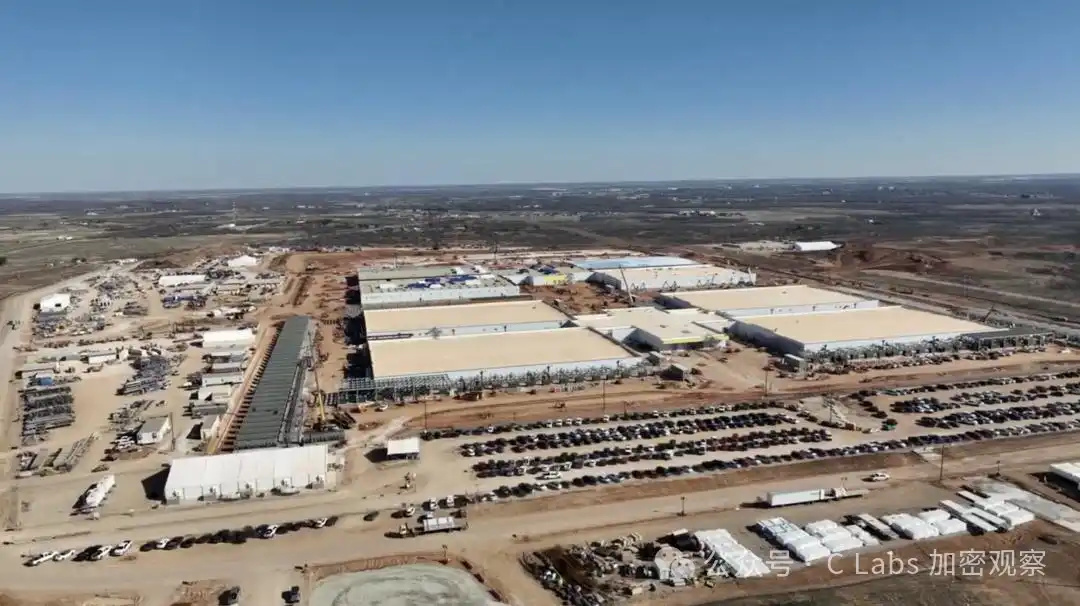
The reason is that Oracle's data centers are equipped with Blackwell chips, while Nvidia's next-generation Vera Rubin offers five times the inference performance of Blackwell. OpenAI doesn't want to be tied to an infrastructure that is about to become outdated. Data center construction cycles take 12 to 24 months, but chip update cycles have been compressed to 12 months by Jensen Huang—building a data center only for it to become obsolete upon completion is a contradiction with no simple solution. This is a significant pitfall for Oracle, which focuses on data center business but does not control chip production.

02. "Replacing Humans with AI": Oracle's Financial Self-Rescue Strategy

How to fill the financial gap? Oracle has found a politically correct answer for the current times: layoffs, justified by AI replacement.

Oracle currently has about 162,000 employees. A TD Cowen research report estimates that Oracle will lay off 30,000 employees, which could free up $8 to $10 billion in free cash flow for Oracle—specifically to fill the funding gap caused by data center expansion.

The logic is very clear: lay off workers and use the saved money to build data centers that run AI.

03. Tech Giants Rushing to Emulate Layoffs

Oracle is not an isolated case. Any tech company that has over-invested in the AI arms race and is under cash flow pressure faces the same bill. "Replacing humans with AI" provides a financially reasonable, narratively legitimate, and shareholder-acceptable way out.

Currently, North American giants like Amazon and Meta are adopting this strategy, and the capital market has welcomed it.

The bill for the AI arms race ultimately has to be paid by someone.

It's just that, once again, it's the employees who are footing the bill.

Related reading: Block Lays Off Nearly Half, Soars 24%! CEO: AI Improves Efficiency, Most Companies Will Make Similar Adjustments in the Next Year

Preguntas relacionadas

QWhat were the key financial highlights from Oracle's recent earnings report?

AOracle reported total revenue of $17.2 billion, a 22% year-over-year increase. Its cloud business grew by 44%, and its Remaining Performance Obligations (RPO) surged 325% to $553 billion. The company stated it was the first time in 15 years that both revenue and profit grew by over 20% simultaneously, leading to a more than 10% increase in its stock price after hours.

QWhat major financial challenges does Oracle face despite its strong revenue growth?

AOracle faces significant financial challenges, including negative free cash flow of -$13.18 billion over the past 12 months. Its total debt has exceeded $100 billion, and it has an additional $248 billion in off-balance-sheet lease commitments. Capital expenditures are projected to be $50 billion for the year, which is seven times higher than two years ago.

QWhat is the reported reason behind Oracle's potential plan to lay off 30,000 employees?

AAccording to a TD Cowen research report, Oracle plans to lay off approximately 30,000 employees to free up $8 to $10 billion in free cash flow. This financial strategy, framed as 'AI replacement,' aims to cover the funding gap created by the massive expansion of its data centers.

QHow is Oracle's business model for its data centers changing, as mentioned in the article?

AOracle's business model is shifting from building and renting out its own data centers to acting more as a 'operator' or 'property management' company for compute power. A significant portion of its $553 billion RPO comes from contracts where equipment is either pre-paid by customers or where customers provide their own GPUs for Oracle to operate, reducing pressure on its balance sheet but also transforming it into a lower-margin service provider.

QWhy did OpenAI cancel its data center expansion contract with Oracle in Texas?

AOpenAI canceled its data center expansion contract with Oracle because the facility was equipped with Blackwell chips. Nvidia's next-generation Vera Rubin chips, which offer five times the inference performance of Blackwell, made OpenAI reluctant to be locked into an infrastructure that would soon become outdated, highlighting the rapid pace of chip innovation in the AI industry.

Lecturas Relacionadas

Trading

Spot
Futuros

Artículos destacados

Cómo comprar MOVE

¡Bienvenido a HTX.com! Hemos hecho que comprar Movement (MOVE) sea simple y conveniente. Sigue nuestra guía paso a paso para iniciar tu viaje de criptos.Paso 1: crea tu cuenta HTXUtiliza tu correo electrónico o número de teléfono para registrarte y obtener una cuenta gratuita en HTX. Experimenta un proceso de registro sin complicaciones y desbloquea todas las funciones.Obtener mi cuentaPaso 2: ve a Comprar cripto y elige tu método de pagoTarjeta de crédito/débito: usa tu Visa o Mastercard para comprar Movement (MOVE) al instante.Saldo: utiliza fondos del saldo de tu cuenta HTX para tradear sin problemas.Terceros: hemos agregado métodos de pago populares como Google Pay y Apple Pay para mejorar la comodidad.P2P: tradear directamente con otros usuarios en HTX.Over-the-Counter (OTC): ofrecemos servicios personalizados y tipos de cambio competitivos para los traders.Paso 3: guarda tu Movement (MOVE)Después de comprar tu Movement (MOVE), guárdalo en tu cuenta HTX. Alternativamente, puedes enviarlo a otro lugar mediante transferencia blockchain o utilizarlo para tradear otras criptomonedas.Paso 4: tradear Movement (MOVE)Tradear fácilmente con Movement (MOVE) en HTX's mercado spot. Simplemente accede a tu cuenta, selecciona tu par de trading, ejecuta tus trades y monitorea en tiempo real. Ofrecemos una experiencia fácil de usar tanto para principiantes como para traders experimentados.

221 Vistas totalesPublicado en 2024.12.13Actualizado en 2025.03.21

Cómo comprar MOVE

Discusiones

Bienvenido a la comunidad de HTX. Aquí puedes mantenerte informado sobre los últimos desarrollos de la plataforma y acceder a análisis profesionales del mercado. A continuación se presentan las opiniones de los usuarios sobre el precio de MOVE (MOVE).

活动图片