Overnight, Crypto Moguls Were Severely Mocked by 'Vanity Fair'

marsbitPublicado a 2026-03-18Actualizado a 2026-03-18

Resumen

Crypto industry leaders, including Cathie Wood (ARK Invest), Olaf Carlson-Wee (Polychain), and Michael Novogratz (Galaxy Digital), faced widespread mockery after a Vanity Fair cover story portrayed them in an unflattering light. The article, titled “Crypto’s True Believers Demand to Be Taken Seriously,” depicted the billionaires as eccentric and out-of-touch—highlighting their interests in alien life, extreme survivalism, and going barefoot, while questioning their influence on global power structures. Industry insiders criticized the piece for reinforcing negative perceptions. A former fashion photographer noted the deliberately demeaning composition of the photos, such as camera angles that diminished Wood’s stature and shadowy, unflattering shots of Novogratz. The coverage was seen as a deliberate attempt to ridicule the crypto elite rather than engage with the industry seriously. The incident sparked broader reflection: some argued that seeking validation from traditional media contradicts crypto’s original anti-establishment ethos. As one founder noted, “We weren’t built for Vanity Fair or Forbes. We were built to rebel against everything they represent.” The episode underscores the tension between crypto’s growing political influence and its struggle for cultural legitimacy.

Author: Gu Yu, ChainCatcher

Overnight, a group photo of crypto moguls flooded the X timelines of all crypto practitioners, accompanied by overwhelming ridicule and criticism.

The protagonists in the picture include industry heavyweights such as ARK Invest CEO Cathie Wood, Polychain founder Olaf Carlson-Wee, and Galaxy Digital founder Michael Novogratz, but this still couldn't stop the storm, which even intensified.
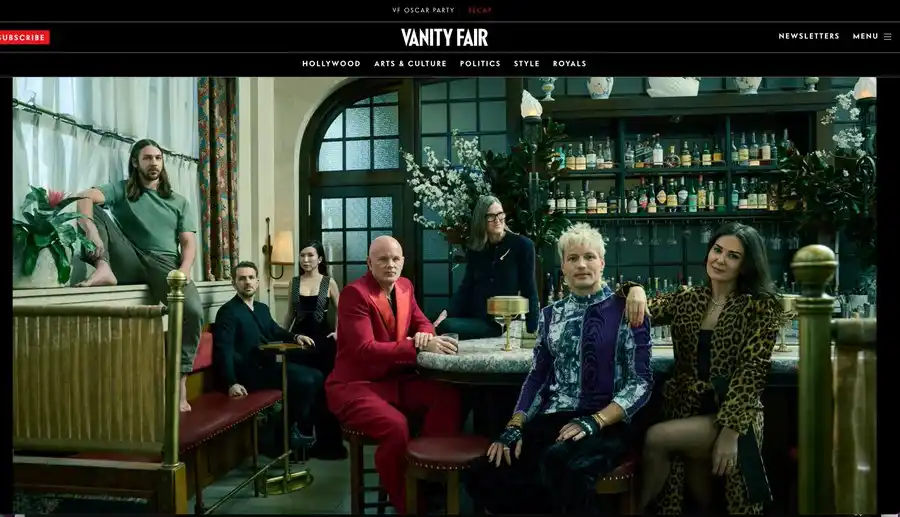
Upon closer examination of this group photo, it can be identified as a work from the venerable celebrity magazine 'Vanity Fair,' published in the latest issue's cover story 'Cryptocurrency's True Believers Demand to Be Taken Seriously.'

Through close observation of the industry's core circle, this article delves into how, after enduring multiple rounds of regulatory storms and market crashes, the crypto industry is attempting to redefine the global power landscape in 2026 through massive political donations and a 'messianic' grand narrative.

Although the stories of crypto industry moguls have already appeared in a series of traditional magazines like 'Fortune' and 'The New York Times,' 'Vanity Fair,' as a media outlet deeply versed in celebrity culture, clearly has a more 'sinister' reporting perspective. The article doesn't dwell much on complex industry trends but instead spends considerable ink on the starkly contrasting private life details of these 'power restructurers.'

In the author's portrayal, these billionaires are depicted as a group of eccentrics who are both detached from reality and eager to dominate it: on one hand, they discuss the future of human civilization in mansions in Puerto Rico; on the other hand, they are obsessed with searching for extraterrestrial life, practicing extreme survivalism, and even often going barefoot in public.

Triple Crown Digital partner Noelle Acheson commented on this, saying, 'We can laugh (and indeed we want to laugh) at 'Vanity Fair's' photos, at the awkward poses and perplexing character portrayals... but the deeper question is: Is this how the mainstream media views the cryptocurrency industry? If so, we have a lot of work to do.'

In the view of most industry insiders, this article not only fails to positively portray cryptocurrency practitioners but also highlights stereotypes about the crypto industry.

Tally co-founder Dennison Bertram further revealed that this article is 'Vanity Fair' magazine deliberately mocking cryptocurrency and its related figures, with both text and photos filled with deep disdain and sarcasm. Before getting involved in cryptocurrency, he had worked as a fashion photographer for over a decade.

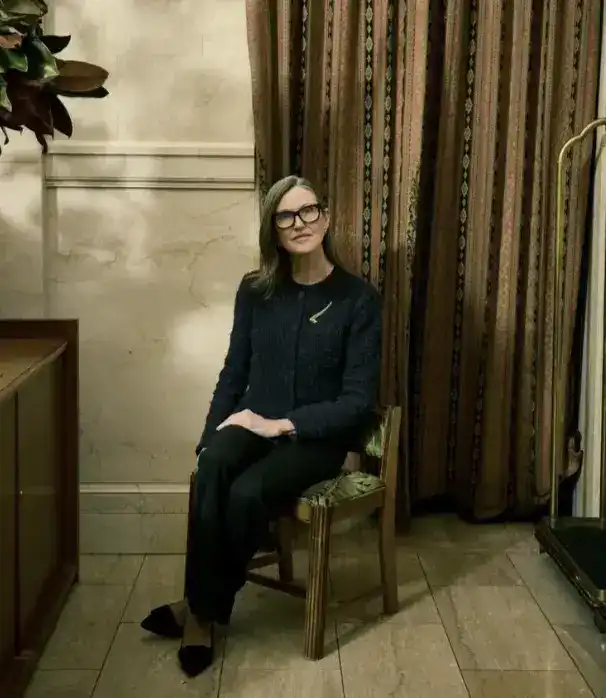
He analyzed Cathie Wood's individual portrait as an example: 'Here, Cathie Wood is deliberately made to appear small. The camera looks down on her, and the composition deliberately downplays her stature. The messy curtains, her crossed ankles, and the intentionally placed luggage cart all contribute to the deliberately created冷酷无情 (cold and ruthless) effect in the frame. Could there be a more mean-spirited visual effect than this?'
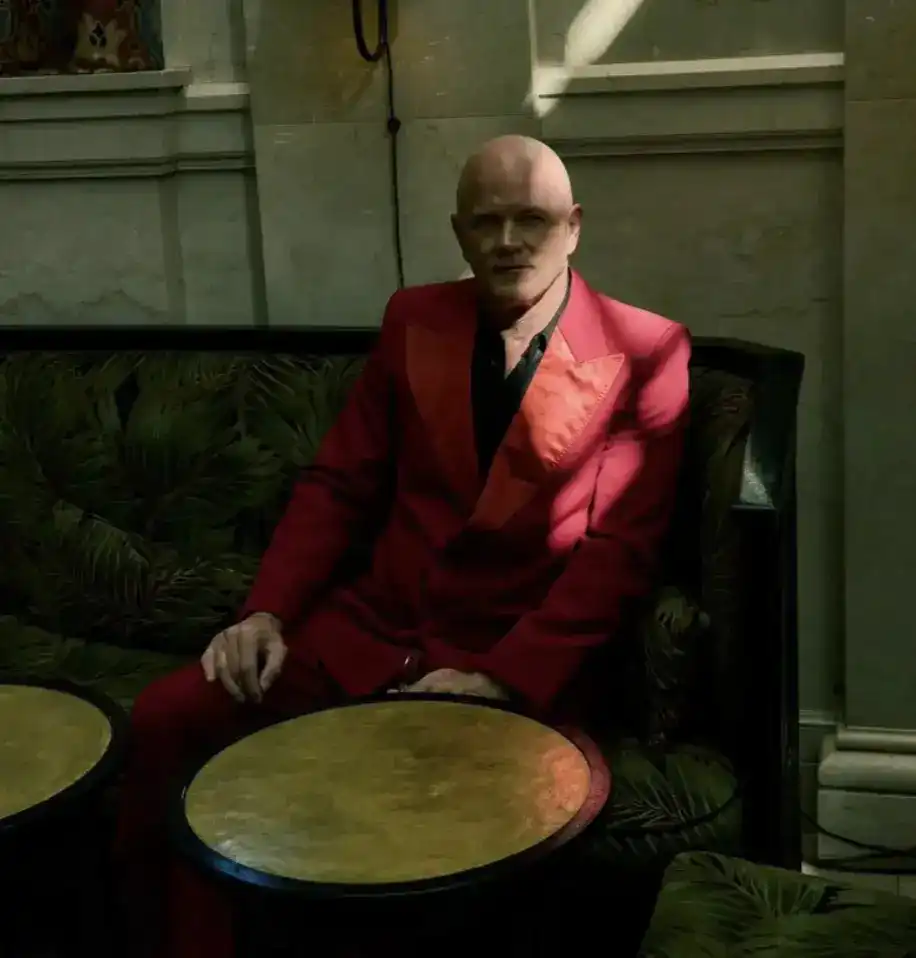
Looking at Michael Novogratz's photo: 'His eyes are squinted, looking fierce. Why? Because he's wearing glasses. He's holding them, almost invisible. His face is deliberately cast in shadow, appearing very menacing. Again, it's a mess, everything is crooked, nothing is整齐划一 (neat and uniform). Is this a positive image? I don't think so at all.'
A group of moguls who rose to the top through the crypto industry, originally attempting to seek more recognition and support from the outside world through 'Vanity Fair' magazine, unexpectedly fell into a huge 'trap' and ended up appearing as clown-like figures in the public eye. This is undoubtedly a painful lesson.

At this point, the very act of seeking validation in mainstream magazines has itself become an object of criticism. Nozomi founder Jinelle D'Lima believes that Satoshi Nakamoto and the cypherpunks never sought approval. 'The key point is, you don't need their approval: capital flows don't need it, the network runs without it, everything operates without it. We weren't built to cater to 'Vanity Fair' or 'Forbes.' We were built to resist everything they represent: gatekeepers, the establishment, and those who decide what is legitimate and what is illegal.'

'Now we're on the cover. Could it be any more ironic? This isn't like us. We were never supposed to be these people.' Jinelle D'Lima said.

The reason 'Vanity Fair's' report has become a vortex of controversy is that it reveals an awkward predicament for the crypto industry: Even though the industry attempts to exchange astronomical political donations and 'capitulation' to the mainstream financial system for 'serious treatment' from mainstream circles, within the aesthetic and value systems of mainstream culture, these new elites are still viewed as a subcultural group with cult-like overtones.

This PR disaster might be telling everyone: the true power of the crypto industry has never been in the mainstream media coverage, but in the code that can run just fine without needing to be 'taken seriously'.


Preguntas relacionadas

QWhat was the main criticism from the crypto community regarding Vanity Fair's article and photos?

AThe crypto community criticized Vanity Fair for portraying industry leaders in a mocking and disrespectful manner, using unflattering photos and emphasizing eccentric personal details rather than serious industry trends, which reinforced negative stereotypes.

QHow did Dennison Bertram analyze the photographic techniques used in Cathie Wood's portrait?

ADennison Bertram, a former fashion photographer, analyzed that Cathie Wood was deliberately made to appear small through a top-down camera angle, cluttered background with messy curtains, crossed ankles, and a luggage cart, creating a冷酷无情 (cold and ruthless) visual effect.

QWhat deeper issue did Noelle Acheson raise about the Vanity Fair coverage?

ANoelle Acheson raised the concern that if this is how mainstream media perceives the cryptocurrency industry, then there is still significant work to be done to improve its image and understanding among traditional outlets.

QAccording to Jinelle D'Lima, what is seeking validation from mainstream magazines like Vanity Fair contrary to?

AJinelle D'Lima stated that seeking validation from mainstream magazines contradicts the original ethos of crypto pioneers like Satoshi Nakamoto and cypherpunks, who built the industry to resist gatekeepers, institutions, and those who decide legitimacy, rather than to seek their approval.

QWhat lesson did the Vanity Fair incident teach the crypto industry about its power and acceptance?

AThe incident highlighted that the crypto industry's true power lies in its code and decentralized operation, which function without needing validation from mainstream media or traditional financial systems, and that seeking acceptance from these circles may result in misrepresentation and ridicule.

Lecturas Relacionadas

Utexo Partners with x402 to Provide Near-Instant USDT Settlement for the Agent Economy

Utexo, a Bitcoin-native stablecoin payment execution and settlement layer, has partnered with x402 to integrate USDT compatibility into the x402 payment protocol. This collaboration enables near-instant settlement for agent-to-agent transactions, with speeds as fast as 50 milliseconds. x402 is an open protocol that uses the HTTP 402 "Payment Required" status code to embed payment functionality directly into HTTP requests. This allows applications, APIs, and autonomous systems to pay for services in real-time without requiring pre-funded accounts. The integration expands x402’s initial USDC support to include USDT, one of the most widely used stablecoins globally. Utexo’s infrastructure is designed for high-frequency, low-latency transactions, making it well-suited for machine-driven payments. According to Utexo CEO Viktor Ihnatiuk, supporting USDT within the x402 framework significantly broadens access and provides developers the performance needed for real-time agent-based systems. Kevin Leffew of x402 at Coinbase added that expanding stablecoin access improves performance and accelerates developer adoption. This partnership supports growing use cases where software systems autonomously conduct transactions—such as paying for API calls, accessing data on-demand, and coordinating services across platforms without human intervention. By combining x402’s protocol with Utexo’s settlement infrastructure, the collaboration enables a payment model where transactions are as fast and efficient as the requests that trigger them.

marsbitHace 2 hora(s)

Utexo Partners with x402 to Provide Near-Instant USDT Settlement for the Agent Economy

marsbitHace 2 hora(s)

Trading

Spot
Futuros
活动图片