Kraken Launches CFTC-Regulated Perpetual Futures For US Pro Traders

bitcoinistPublicado a 2026-06-17Actualizado a 2026-06-17

Resumen

Kraken has launched U.S. CFTC-regulated perpetual futures contracts for eligible institutional and professional clients, making a core crypto derivatives product available on a compliant domestic platform. The contracts, for assets including BTC, ETH, and SOL, are offered via Kraken Pro with clearing through a registered Futures Commission Merchant. This move brings the popular perpetual futures format, which allows leveraged trading without an expiry date, into the stricter U.S. regulatory framework. It provides professional traders a potential alternative to offshore platforms, balancing regulatory comfort with access to key products. However, the launch is explicitly not for retail investors. Its success depends on whether Kraken can build sufficient liquidity to compete with dominant offshore venues on metrics like spreads and execution quality. While symbolically significant for U.S. market maturity, its practical impact hinges on attracting meaningful trading activity onshore.

Kraken is bringing one of crypto’s most important derivatives products into a regulated US framework. The exchange has launched CFTC-regulated perpetual futures for eligible institutional and professional clients through its Bitnomial integration, according to the June 16 writing handoff.

The new contracts are available through Kraken Pro, with brokerage and clearing services handled by NinjaTrader Clearing, a CFTC-registered Futures Commission Merchant and NFA member. The listed assets include BTC, ETH, SOL, XRP, ADA, LINK, DOGE, LTC, and AVAX, using an eight-hour funding rate structure.

Why Regulated Perps Matter

Perpetual futures are the dominant derivatives format in global crypto markets. They allow traders to take leveraged long or short exposure without a fixed expiry date, using periodic funding payments to keep contracts aligned with spot markets. Much of that activity has historically taken place offshore because US derivatives rules are stricter.

Kraken’s launch is therefore less about inventing a new product and more about bringing an existing crypto-native market structure into a compliant US venue. For professional traders, that matters. It can reduce the need to choose between offshore liquidity and domestic regulatory comfort.

Not A Retail Product

The caveat is clear: this is not a mass-market retail launch. The handoff states that access is restricted to eligible US institutional and professional clients. That distinction should not be buried. A CFTC-regulated perpetual future may sound like a mainstream breakthrough, but it remains a sophisticated derivatives product aimed at a narrower user base.

For Kraken, the move fits a wider push to build a more complete US derivatives stack. For the market, it signals that perpetual futures are no longer just an offshore product category. If regulated US venues can offer meaningful liquidity, the structure of crypto derivatives trading could gradually shift.

That will not happen overnight. Offshore platforms still dominate volume. But Kraken’s launch gives US professional traders another route into the product that has defined crypto leverage for years.

A Signal For US Market Maturity

The bigger question is whether regulated perpetuals can attract enough liquidity to compete with offshore venues. Professional traders care about spreads, funding efficiency, margin rules, and execution quality as much as regulatory status. If Kraken can offer a credible market inside a US-compliant structure, it may pull some activity back onshore. If liquidity stays thin, the product will still be symbolically important, but offshore platforms will remain the practical center of crypto leverage.

That makes the story useful as an evening draft because it gives readers a clear market takeaway rather than a simple headline rewrite. The important point is not only what happened, but what traders should monitor next: confirmation from primary sources, whether the initial reaction holds, and whether the development creates lasting liquidity, regulatory, or risk-management implications.

This article was written by the News Desk and edited by Samuel Rae.

Criptos en tendencia

Preguntas relacionadas

QWhat is Kraken launching for eligible US professional and institutional clients, and what makes this launch significant?

AKraken is launching CFTC-regulated perpetual futures contracts. This is significant because it brings the dominant crypto derivatives product, which has historically been traded on offshore platforms, into a regulated US framework, offering professional traders a compliant domestic alternative.

QThrough which platform are the new regulated perpetual futures available, and which entities are handling brokerage and clearing services?

AThe new contracts are available through Kraken Pro. Brokerage and clearing services are handled by NinjaTrader Clearing, which is a CFTC-registered Futures Commission Merchant and a member of the NFA.

QWhy does the article emphasize that Kraken's new perpetual futures are not a mass-market retail product?

AThe article emphasizes this because access is strictly restricted to eligible US institutional and professional clients. Perpetual futures are sophisticated derivatives products aimed at a narrower, more experienced user base, not the general retail public.

QWhat key factor will determine if regulated perpetual futures on US venues like Kraken can successfully compete with offshore platforms?

AThe key factor is whether they can attract enough liquidity. Professional traders prioritize spreads, funding efficiency, margin rules, and execution quality alongside regulatory status. Without deep liquidity, offshore platforms will remain the practical center for crypto leverage trading.

QAccording to the article, what should traders and readers monitor following Kraken's launch of regulated perpetual futures?

ATraders and readers should monitor confirmation from primary sources, whether the initial positive market reaction holds, and whether this development creates lasting implications for liquidity, regulation, or risk management in the crypto derivatives space.

Lecturas Relacionadas

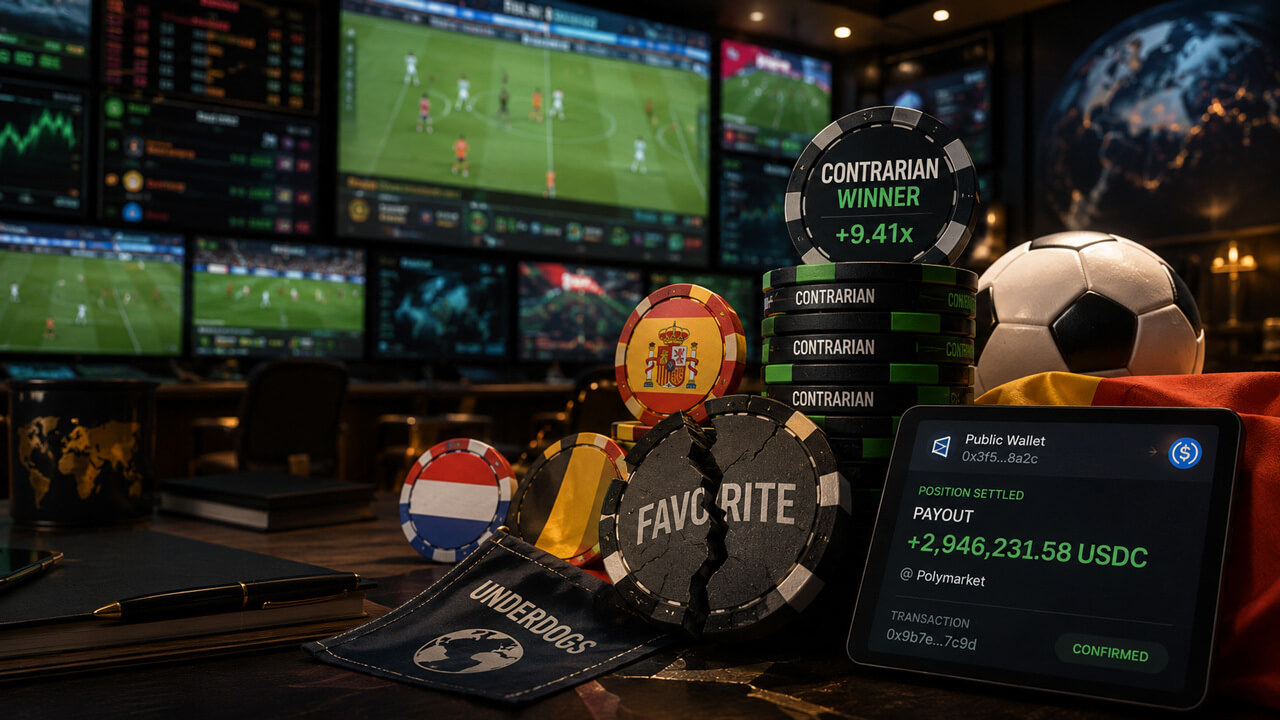
Football Draw Harvests Whales: Extreme Profit-Loss Divergence on Polymarket's World Cup

A bettor known as "fishalive" made a stunning profit of nearly $9 million on the Polymarket prediction platform by correctly wagering against favorites during the 2026 FIFA World Cup group stage. The account, registered just before the tournament, risked roughly $400,000 on two contracts for a Spain vs. Cape Verde match: one that Spain would *not* win, and another on a Cape Verde +2.5 goal handicap. The resulting 0-0 draw triggered both payouts. This single event, with a total market volume of $64 million, highlighted extreme profit-and-loss divergence. Other traders, like "betoor619" and "leeeeroyjenkins," lost millions by betting heavily on favorites Spain and Belgium to win outright—contracts that become worthless in a draw. The article explains that while markets heavily favored strong teams, the "team to win" contracts are binary and do not account for the common outcome of a draw. This creates high-risk, low-reward scenarios for favorite backers, while asymmetric profits flow to those betting on underdogs or against outright wins. The transparency of Polymarket's on-chain ledger publicly documents these massive wins and losses, driving mainstream media coverage. As the tournament progresses, the author suggests traders may shift towards hedging strategies that account for draws. The piece also notes growing regulatory scrutiny in the US and Europe, questioning whether such large-scale, anonymous sports prediction markets should be regulated as gambling or financial derivatives.

Foresight NewsHace 1 min(s)

Football Draw Harvests Whales: Extreme Profit-Loss Divergence on Polymarket's World Cup

Foresight NewsHace 1 min(s)

ChatGPT Loses Half Its Market: From Monopoly to Shared Market in Three and a Half Years

In a landmark shift three and a half years after its debut, ChatGPT's global market share in the AI assistant market has fallen below 50% for the first time, dropping to 46.4% as of May 2026. This signals the end of its initial dominance, with the market now diversifying among competitors like Gemini (27.7%) and Claude (10.3%). The report from Sensor Tower indicates the AI assistant landscape has matured from a phase of awe and experimentation into one of product comparison, ecosystem integration, and monetization. Users are increasingly pragmatic, readily switching between assistants based on specific use cases, brand trust, and value propositions. The industry is moving past the "free lunch" era, with users demonstrating a willingness to pay for premium features, driving significant in-app expenditure. Major players are adopting varied monetization strategies: Claude boasts a high subscription conversion rate, while ChatGPT is increasingly testing ads and shopping integrations to complement its subscription revenue. However, this growth comes with immense costs, as exemplified by OpenAI's soaring cash burn for model training and infrastructure. While ChatGPT remains the largest single player, its declining share symbolizes a broader normalization of AI. The technology is no longer a novelty but an integral, scrutinized part of daily digital life, judged on practical utility, price, and seamless integration. The battle has shifted from proving AI's potential to competing in a crowded field where no single product holds a permanent monopoly.

marsbitHace 12 min(s)

ChatGPT Loses Half Its Market: From Monopoly to Shared Market in Three and a Half Years

marsbitHace 12 min(s)

Trading

Spot
Futuros

Artículos destacados

Cómo comprar ONE

¡Bienvenido a HTX.com! Hemos hecho que comprar Harmony (ONE) sea simple y conveniente. Sigue nuestra guía paso a paso para iniciar tu viaje de criptos.Paso 1: crea tu cuenta HTXUtiliza tu correo electrónico o número de teléfono para registrarte y obtener una cuenta gratuita en HTX. Experimenta un proceso de registro sin complicaciones y desbloquea todas las funciones.Obtener mi cuentaPaso 2: ve a Comprar cripto y elige tu método de pagoTarjeta de crédito/débito: usa tu Visa o Mastercard para comprar Harmony (ONE) al instante.Saldo: utiliza fondos del saldo de tu cuenta HTX para tradear sin problemas.Terceros: hemos agregado métodos de pago populares como Google Pay y Apple Pay para mejorar la comodidad.P2P: tradear directamente con otros usuarios en HTX.Over-the-Counter (OTC): ofrecemos servicios personalizados y tipos de cambio competitivos para los traders.Paso 3: guarda tu Harmony (ONE)Después de comprar tu Harmony (ONE), guárdalo en tu cuenta HTX. Alternativamente, puedes enviarlo a otro lugar mediante transferencia blockchain o utilizarlo para tradear otras criptomonedas.Paso 4: tradear Harmony (ONE)Tradear fácilmente con Harmony (ONE) en HTX's mercado spot. Simplemente accede a tu cuenta, selecciona tu par de trading, ejecuta tus trades y monitorea en tiempo real. Ofrecemos una experiencia fácil de usar tanto para principiantes como para traders experimentados.

295 Vistas totalesPublicado en 2024.12.12Actualizado en 2026.06.02

Cómo comprar ONE

Discusiones

Bienvenido a la comunidad de HTX. Aquí puedes mantenerte informado sobre los últimos desarrollos de la plataforma y acceder a análisis profesionales del mercado. A continuación se presentan las opiniones de los usuarios sobre el precio de ONE (ONE).

活动图片