Multi-Chain Decentralized Over-Collateralized Stablecoin USDD Debuts at 2026 Istanbul Blockchain Week

marsbitPublicado a 2026-06-02Actualizado a 2026-06-02

Resumen

On June 2, 2026, the Istanbul Blockchain Week (IBW) commenced at the Istanbul Bomonti Hilton Hotel & Conference Center. During this major two-day Web3 industry event, the multi-chain over-collateralized decentralized stablecoin USDD made its appearance. USDD, in partnership with TRON, established a joint exhibition booth to showcase the latest developments in stablecoin and Web3 ecosystems to attendees. The event, now in its fifth year and organized by EAK Digital, focused on key topics including Real World Asset tokenization (RWA), Artificial Intelligence (AI), stablecoins, regulatory compliance, privacy protection, and Decentralized Finance (DeFi). It attracted numerous leading global Web3 institutions, industry leaders, and innovative projects. USDD aims to leverage this platform to deepen connections with global Web3 resources and further empower its global ecosystem expansion and application adoption.

On June 2, the 2026 Istanbul Blockchain Week (IBW) officially opened at the Hilton Istanbul Bomonti Hotel & Conference Center. The conference, spanning two days, will continue until June 3. The multi-chain decentralized over-collateralized stablecoin USDD made its appearance at this event, joining forces with TRON to set up a joint exhibition booth on-site, showcasing the latest developments in the stablecoin and Web3 ecosystem to attendees. Leveraging this premier industry gathering, USDD aims to further strengthen its deep connections with global Web3 resources, continuously empowering the global expansion and practical application of its ecosystem.
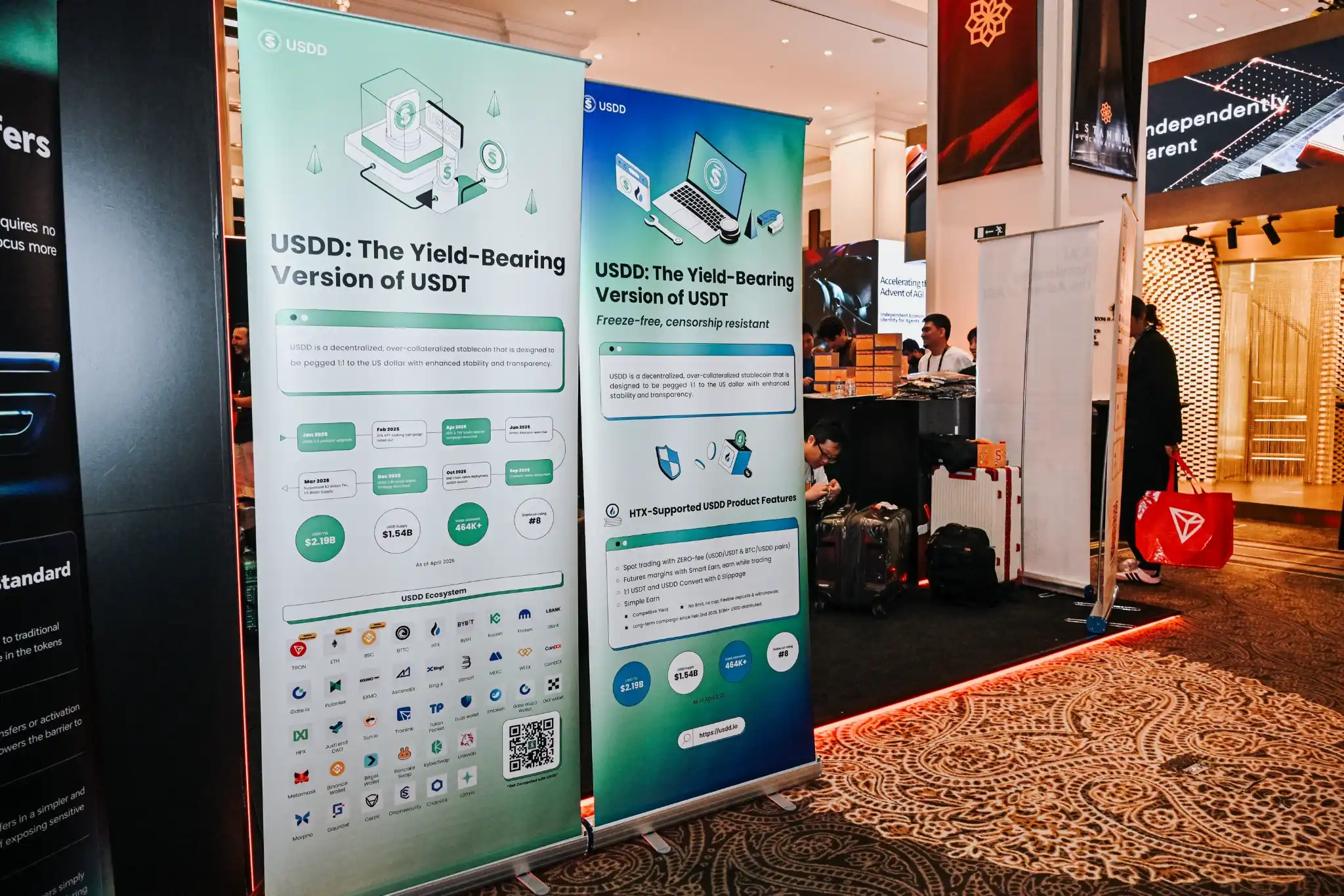
It is reported that IBW, organized by EAK Digital, has now successfully reached its fifth edition and is a globally renowned Web3 industry event. This year's conference focused on key topics such as real-world asset tokenization (RWA), artificial intelligence (AI), stablecoins, regulatory compliance, privacy protection, and decentralized finance (DeFi), attracting participation from numerous leading global Web3 institutions, industry leaders, and innovative projects.

Preguntas relacionadas

QWhat was the main purpose of USDD and TRON establishing a joint booth at the 2026 Istanbul Blockchain Week?

AThe main purpose was to showcase the latest development achievements in the stablecoin and Web3 ecosystem fields to attendees.

QWhich company organizes the Istanbul Blockchain Week (IBW) event mentioned in the article?

AThe Istanbul Blockchain Week is organized by EAK Digital.

QWhere and when did the 2026 Istanbul Blockchain Week take place?

AIt took place at the Istanbul Bomonti Hilton Hotel & Conference Center and ran from June 2nd to June 3rd, 2026.

QWhat type of stablecoin is USDD described as in the article?

AUSDD is described as a multi-chain decentralized over-collateralized stablecoin.

QAccording to the article, what were some of the key topics focused on at the 2026 Istanbul Blockchain Week?

AKey topics included real-world asset tokenization (RWA), artificial intelligence (AI), stablecoins, regulatory compliance, privacy protection, and decentralized finance (DeFi).

Lecturas Relacionadas

For Hedging, Buy Gold and Oil; For Explosive Growth, Buy AI; Bitcoin, the 'Outdated' Asset, Enters a Bear Market

Bitcoin’s price has recently fallen sharply, hitting a two-month low near $66,000, with Ethereum also dropping to a three-month low. While surface explanations point to ETF outflows, geopolitical tensions, and corporate selling, a deeper issue is emerging: Bitcoin is losing a crucial asset competition. For years, Bitcoin thrived in a low-rate environment where investors sought alternatives amid inflation fears and dissatisfaction with traditional options. Now, the market landscape has shifted, leaving Bitcoin stuck in an "awkward middle ground," facing challenges on three fronts: 1. **As an inflation hedge, gold is winning.** Investors worried about persistent inflation are turning to tangible assets like gold, energy stocks, and commodity producers, which offer more direct pricing power and physical backing. 2. **For growth exposure, AI is winning.** Those seeking high growth now favor AI-related companies with actual revenues and profits, an area where Bitcoin's lack of cash flow puts it at a disadvantage. 3. **Within crypto, infrastructure and stablecoins are winning.** Even investors wanting crypto exposure have alternatives like exchanges, stablecoin issuers, and tokenization firms, whose performance is directly tied to real-world adoption and offers clearer operational leverage. The recent market reaction to inflation warnings highlights this shift. Instead of boosting Bitcoin as "digital gold," such news now drives flows toward traditional inflation-sensitive assets. Therefore, recent events like ETF outflows and corporate selling are seen not as causes, but as symptoms of this new reality. Capital has more compelling options, and investors are becoming more selective. The emerging bear case for Bitcoin is no longer about it being a fraud or failed technology, but rather that **scarcity alone is no longer enough**. It is no longer seen as the best hedge, the best growth asset, or the only crypto play.

marsbitHace 3 min(s)

For Hedging, Buy Gold and Oil; For Explosive Growth, Buy AI; Bitcoin, the 'Outdated' Asset, Enters a Bear Market

marsbitHace 3 min(s)

SaaS Battle Royale: The Survivors Who Win All Share One Common Trait

**Summary** The AI revolution has triggered a "SaaS apocalypse," forcing a brutal market shakeout. The key dividing line is the pricing model. Companies like Snowflake and Datadog, which charge based on consumption (e.g., data processed or compute used), are thriving. AI workloads actively *generate* more demand for their services, fueling growth. Datadog's accelerating revenue is a prime example. Microsoft and Palantir, as platform/ecosystem players, also benefit by acting as essential channels for AI deployment. In contrast, traditional SaaS firms built on per-seat or per-task licensing (e.g., Intuit, Adobe) face direct pressure, as AI threatens to automate the very human tasks their software supports. Companies like Salesforce, a per-seat giant, are caught in the middle. While showing strong AI monetization (e.g., its Agentforce platform) and experimenting with consumption-based "Flex Credits," its stock remains under pressure, illustrating that the market rewards *completed* transitions, not just the intent. The recent Microsoft Build conference underscored key trends: AI is evolving from an assistant to an autonomous "agent," and platform providers like Microsoft are consolidating their control. The market's recovery is highly selective, focused on identifying which companies are "fed by AI" versus "eaten by AI." Future focus will be on the diffusion of this recovery to transforming companies and the real-world adoption data of AI agents like Microsoft Copilot.

marsbitHace 20 min(s)

SaaS Battle Royale: The Survivors Who Win All Share One Common Trait

marsbitHace 20 min(s)

Trading

Spot
Futuros
活动图片