Morning Post | Michael Saylor Says This Week's Buy Was Bonds, Not Bitcoin; StablR Suffers Attack Losing Approximately $2.8 Million; US Congress Reintroduces Bitcoin Reserve Bill

链捕手Publicado a 2026-05-25Actualizado a 2026-05-25

Resumen

This cryptocurrency industry digest covers key developments from May 25. MicroStrategy's Michael Saylor clarified the company purchased bonds, not Bitcoin, this week. In regulatory news, the US Congress reintroduced a Bitcoin reserve bill, with Republican backing aiming to accumulate 5% of global supply. The legal and audit firms for the collapsed FTX agreed to a $66 million settlement over fraud allegations. Several CFTC officials skeptical of prediction market oversight were reportedly suspended and forced out. On the security front, the StablR stablecoin was attacked and de-pegged, resulting in an estimated $2.8 million loss for the attacker. The Ethereum Foundation faced criticism, though a researcher defended its core protocol-building mission over influencing ETH's price. Market data from GMGN showed the top 24-hour trending meme tokens on ETH were HEX, SHIB, LINK, PEPE, and mUSD. On Solana, leaders were TROLL, neet, WORLDCUP, HANTA, and Buttcoin. Base chain's top tokens included TOSHI, KEYCAT, BRETT, CLANKER, and LUNA. Featured articles included an a16z analysis arguing tokenization, or real-world assets (RWA), is fundamentally transforming asset nature and financial systems, with the market growing tenfold to ~$34 billion in two years. Another piece deconstructed Hyperliquid's success through a five-layer financial stack framework, emphasizing the critical importance of building from a robust settlement layer upward.

Compiled by: ChainCatcher


Key News:

  • Former FTX Law Firm and Auditor Agree to Pay $66 Million to Settle Fraud Allegations
  • StablR Stablecoin Depegs After Attack, Attacker Profited Approximately $2.8 Million
  • Ethereum Foundation Frequently Criticized, Researcher Defends Its Mission is to Build Protocol, Not Pump ETH
  • Multiple CFTC Officials Who Questioned Prediction Market Regulation Suspended and Forced to Resign
  • US Congress Reintroduces Bitcoin Reserve Bill, Republicans Plan to Push for Accumulating 5% of Global Bitcoin
  • Michael Saylor: This Week's Buy Was Bonds, Not Bitcoin

What Happened in the Past 24 Hours?

US Congress Reintroduces Bitcoin Reserve Bill, Republicans Plan to Push for Accumulating 5% of Global Bitcoin

Meme Top Charts

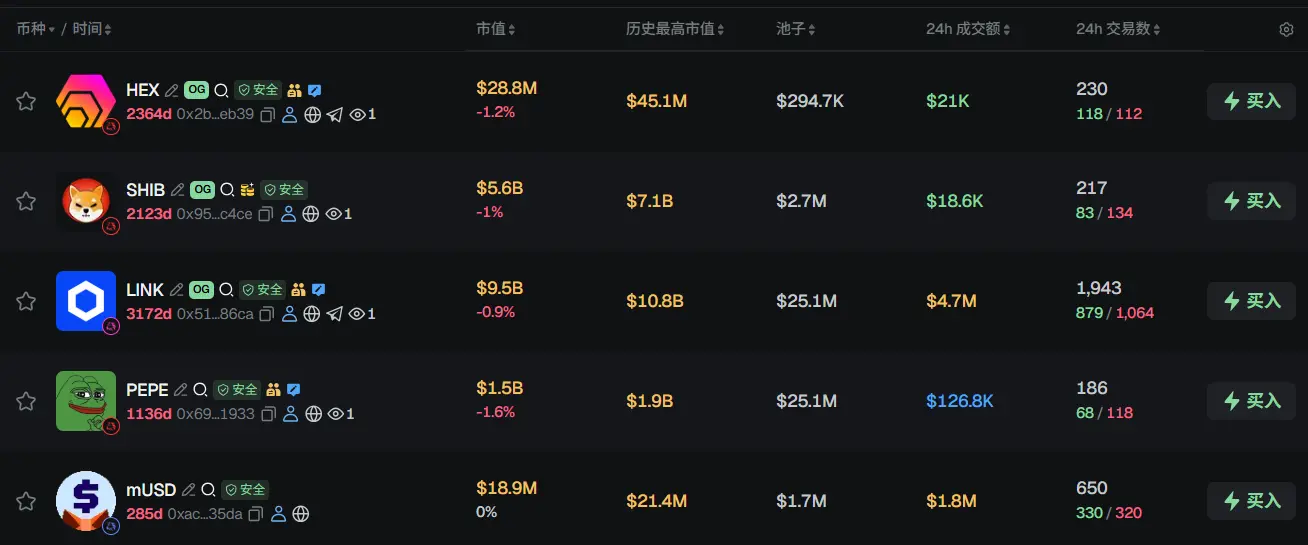
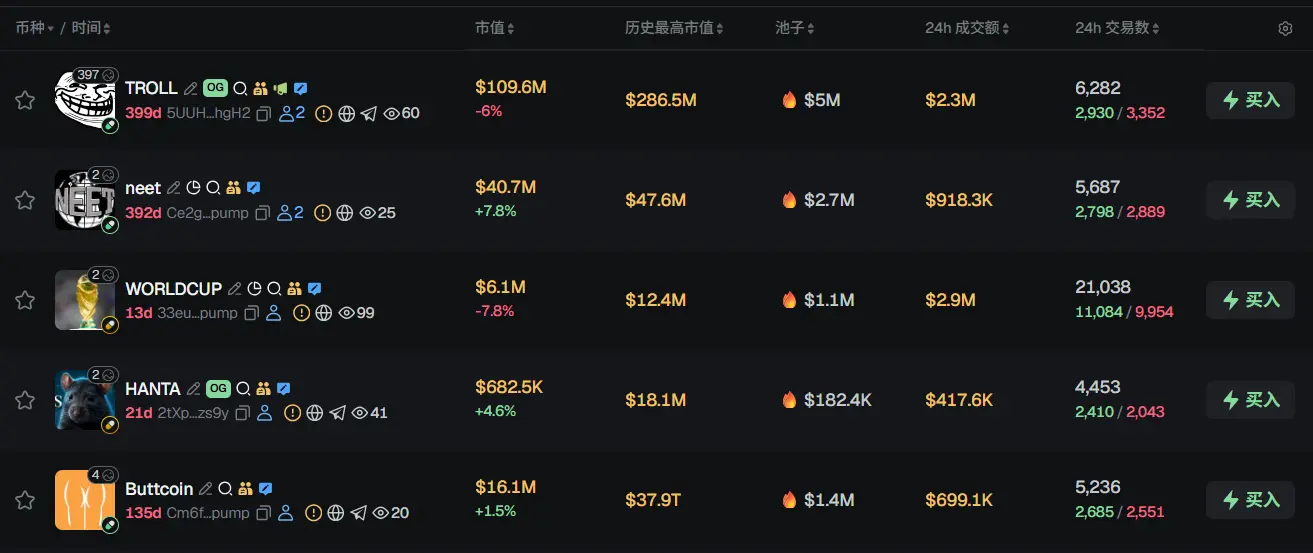
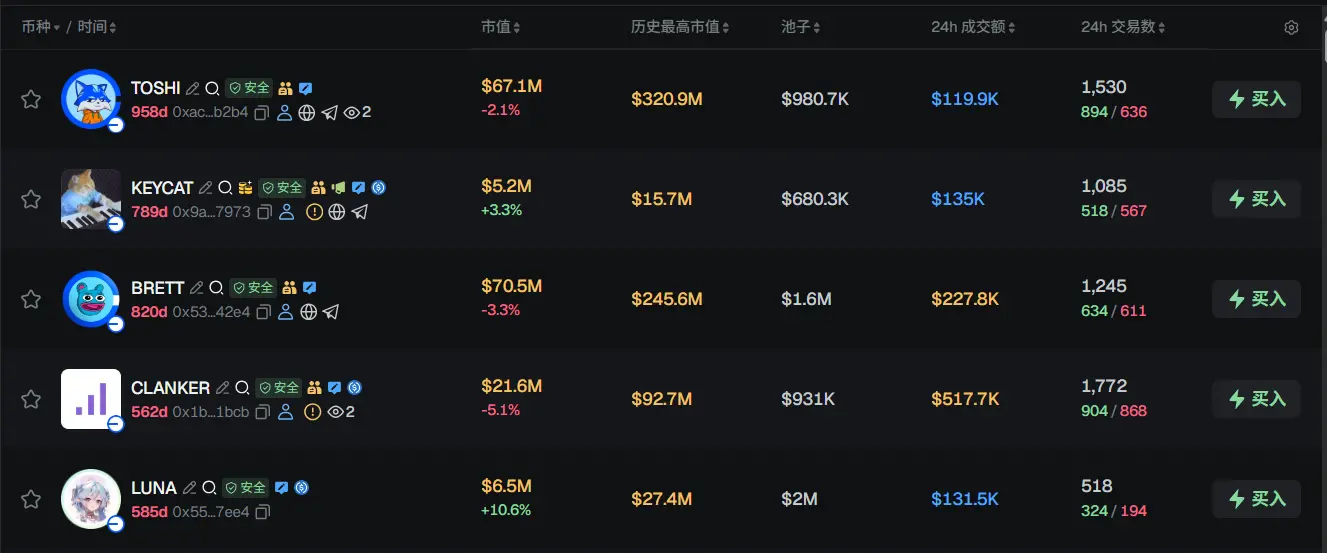
According to meme token tracking and analysis platform GMGN market data, as of May 25th, 09:00,

Top 5 popular ETH tokens in the past 24h are: HEX, SHIB, LINK, PEPE, mUSD
Top 5 popular Solana tokens in the past 24h are: TROLL, neet, WORLDCUP, HANTA, Buttcoin
Top 5 popular Base tokens in the past 24h are: TOSHI, KEYCAT, BRETT, CLANKER, LUNA
What are the Must-Read Articles in the Past 24 Hours?

a16z: 7 Charts to Understand How Tokenization Changes the Nature of Assets

Tokenized Assets, also known as 'Real World Assets (RWA)', are changing the form of assets, how they flow, and how the financial system is built.

Just last month, the tokenized asset market size surpassed $30 billion, currently hovering around $34 billion (excluding stablecoins). This scale is roughly equivalent to a regional bank or a top-tier university endowment fund. While still very small compared to the global financial system, it is already large enough to have real impact.

Just two years ago, the tokenized asset market was less than $3 billion, but then the market underwent dramatic changes: the US GENIUS Act brought a clearer regulatory framework for stablecoins, institutional-grade on-chain infrastructure matured, and a large number of financial institutions began deploying blockchain technology almost simultaneously. It was under the push of these factors that the tokenized asset market grew 10-fold in less than two years.

Decoding the Secret to Hyperliquid's Success Through a Five-Layer Financial Stack

The construction of institutional-grade financial infrastructure often follows a pattern. You don't start with the most expressive product and then work backwards.

You start with the settlement layer, prove it works under stress, and then unlock all the features that depend on it.

The New York Stock Exchange didn't add derivatives before it had a well-functioning stock market. The Chicago Mercantile Exchange didn't launch options before it launched futures.

This order is not arbitrary. The order of the foundational layers determines the possibilities of the superstructure.

Hyperliquid understands this well.

Preguntas relacionadas

QWhat is Michael Saylor's recent purchase, according to the title and the 'Important News' section of the article?

AAccording to the article, Michael Saylor stated that the purchase made this week was bonds, not Bitcoin.

QWhat is the reported loss from the StablR attack mentioned in the article?

AThe StablR stablecoin project suffered an attack resulting in a loss of approximately 2.8 million USD.

QWhat legislation related to Bitcoin is being promoted again by the US Congress, as per the article?

AThe US Congress is once again promoting a Bitcoin reserve bill. Specifically, Republicans are reportedly pushing a plan to accumulate 5% of the world's Bitcoin.

QWhich two companies related to FTX agreed to a settlement over fraud allegations, and for what amount?

AFTX's former law firm and auditing agency agreed to pay 66 million USD to settle fraud allegations.

QWhat is the core argument made by the Ethereum Foundation researcher mentioned in the 'Important News' section?

AThe researcher defended the Ethereum Foundation, stating that its mission is to build the protocol, not to pump the price of ETH.

Lecturas Relacionadas

DeFi Has Reached Its Most Dangerous Moment: The Real Vulnerabilities Are Not in the Code

DeFi in Peril: The Real Vulnerability Isn't in the Code April 2026 marked a paradigm shift in DeFi security, with over $625 million lost across 30 incidents—the worst month in crypto history by event count. Crucially, none of the major exploits (Drift Protocol: $285M, KelpDAO: $292M, Wasabi Protocol: $4.5M) resulted from smart contract vulnerabilities. Instead, failures occurred in the operational "plumbing": social engineering to compromise multi-signature councils, a single-point-of-failure 1-of-1 bridge validator, and stolen admin private keys. These events expose a fundamental misalignment: the industry's security model has long focused on code audits, while the actual attack surface has shifted to privileged access points and off-chain infrastructure. The article introduces the term "OpenFi" to describe this reality: permissionless, on-chain, yet operationally dependent on trusted third parties (admins, validators, oracles) at key junctures. The KelpDAO exploit vividly demonstrated asymmetric "contagion risk." A configuration error in a smaller protocol triggered a panic, causing approximately $13.2 billion in outflows from larger, unaffected protocols like Aave within 48 hours, as users fled uncertain collateral. The core dilemma is the double-edged sword of centralization. Operational levers like emergency councils (e.g., Arbitrum freezing stolen funds post-KelpDAO) enable crisis response but also create catastrophic attack surfaces if compromised (e.g., Drift). The path forward demands radical honesty: protocols must clearly disclose their trust assumptions, operational levers, and failure modes. The industry must treat operational security (key management, configurations, incident response) with the same rigor as code security. Survival depends on building systems whose risks can be understood, priced, and insured, moving beyond the outdated "code is law" mantra to a mature model of disclosed and managed trust.

链捕手Hace 5 hora(s)

DeFi Has Reached Its Most Dangerous Moment: The Real Vulnerabilities Are Not in the Code

链捕手Hace 5 hora(s)

Vitalik's Article Emphasizes Ethereum Must Be 'Amazing', But Foundation Is Not the Center

Vitalik Buterin has published a lengthy response to recent community criticism directed at the Ethereum Foundation (EF). Acknowledging a sense of "unease," he addresses concerns about the EF's strategic direction, its perceived disconnect from ETH's price performance, and calls for its reduced central role. Vitalik rejects the notion that the EF should be the central governing body of Ethereum, framing it instead as one "node with a clear mandate" among many within the ecosystem. He highlights the EF's limited ETH holdings (≈0.16% of supply) compared to other blockchain foundations and states it will no longer sell significant amounts of ETH. Its future focus will be on long-term, critical projects that align with Ethereum's core values of censorship-resistance and decentralization, which might not otherwise happen. A core argument is that Ethereum must be "amazing," but not by merely chasing higher transaction speeds at the cost of decentralization. He proposes focusing on the "CROPS" dimensions: creating a Cryptographically provable, Reliable, Open, Private, and Secure network. This includes pursuing goals like a formally verifiable, bug-free Ethereum client and minimizing protocol-level reliance on intermediaries. The article concludes by noting that while Vitalik clarifies the EF's refocused role, he does not directly address community suggestions for creating a new organization explicitly aligned with ETH's economic interests. This "alignment gap" is presented as a key challenge for Ethereum's future.

链捕手Hace 6 hora(s)

Vitalik's Article Emphasizes Ethereum Must Be 'Amazing', But Foundation Is Not the Center

链捕手Hace 6 hora(s)

Galxe: How a Quest Platform Evolved into Web3's Growth Infrastructure

Galxe, once perceived as a simple Web3 quest platform, has evolved into a core growth infrastructure within the Web3 ecosystem. It addresses a fundamental Web3 growth dilemma: the lack of a mature, systematic user acquisition and retention system akin to Web2's advertising and analytics platforms. While users complete quests (social tasks, on-chain interactions) for rewards, Galxe's true innovation lies in transforming these fragmented, one-off actions into lasting, verifiable identity credentials. This process of *behavioral assetization* creates a persistent record of a user's activities across projects and chains. For users, their wallet accumulates a valuable history that can unlock future access and rewards, fostering a "profile-building" mentality. For projects, Galxe provides a pre-screened user pool with rich behavioral data, enabling targeted outreach to users based on their specific on-chain history and community engagement. Galxe employs a gamefied growth path, guiding users from low-friction social tasks into deeper, valuable on-chain interactions through a structured progression of quests. This solves the incentive-behavior mismatch common in Web3, filtering users by their willingness to engage. Beyond quests, products like Passport (identity verification) and Starboard (community analytics) position Galxe as a comprehensive growth operating system. The platform's defensible advantage is its self-reinforcing data and network flywheel: more projects attract more users, enriching behavioral data; richer data enables better user targeting, attracting more projects. Ultimately, Galxe is shifting Web3's growth logic from short-term "reward-driven" traffic towards a long-term "identity-driven" relationship model, where a user's accumulated on-chain履历 becomes a core asset.

marsbitHace 6 hora(s)

Galxe: How a Quest Platform Evolved into Web3's Growth Infrastructure

marsbitHace 6 hora(s)

Trading

Spot
Futuros

Artículos destacados

Cómo comprar BILL

¡Bienvenido a HTX.com! Hemos hecho que comprar Billions Network (BILL) sea simple y conveniente. Sigue nuestra guía paso a paso para iniciar tu viaje de criptos.Paso 1: crea tu cuenta HTXUtiliza tu correo electrónico o número de teléfono para registrarte y obtener una cuenta gratuita en HTX. Experimenta un proceso de registro sin complicaciones y desbloquea todas las funciones.Obtener mi cuentaPaso 2: ve a Comprar cripto y elige tu método de pagoTarjeta de crédito/débito: usa tu Visa o Mastercard para comprar Billions Network (BILL) al instante.Saldo: utiliza fondos del saldo de tu cuenta HTX para tradear sin problemas.Terceros: hemos agregado métodos de pago populares como Google Pay y Apple Pay para mejorar la comodidad.P2P: tradear directamente con otros usuarios en HTX.Over-the-Counter (OTC): ofrecemos servicios personalizados y tipos de cambio competitivos para los traders.Paso 3: guarda tu Billions Network (BILL)Después de comprar tu Billions Network (BILL), guárdalo en tu cuenta HTX. Alternativamente, puedes enviarlo a otro lugar mediante transferencia blockchain o utilizarlo para tradear otras criptomonedas.Paso 4: tradear Billions Network (BILL)Tradear fácilmente con Billions Network (BILL) en HTX's mercado spot. Simplemente accede a tu cuenta, selecciona tu par de trading, ejecuta tus trades y monitorea en tiempo real. Ofrecemos una experiencia fácil de usar tanto para principiantes como para traders experimentados.

85 Vistas totalesPublicado en 2026.05.07Actualizado en 2026.05.12

Cómo comprar BILL

Discusiones

Bienvenido a la comunidad de HTX. Aquí puedes mantenerte informado sobre los últimos desarrollos de la plataforma y acceder a análisis profesionales del mercado. A continuación se presentan las opiniones de los usuarios sobre el precio de BILL (BILL).

活动图片