Fei-Fei Li's Team Clarifies the Concept of 'World Models', Sora Merely a Renderer

marsbitPublicado a 2026-06-04Actualizado a 2026-06-04

Resumen

"World Models" has become a widely used yet confusing term in AI. To address this, a team led by Fei-Fei Li and World Labs proposed a functional taxonomy based on the Partially Observable Markov Decision Process framework. This taxonomy categorizes systems called "world models" into three distinct projections: Renderers, Simulators, and Planners. Renderers, like OpenAI's Sora and other video generation models, focus on producing photorealistic visual outputs for human perception. They prioritize visual fidelity over physical accuracy. Simulators, such as NVIDIA Omniverse, aim to compute precise future environmental states for computational tasks like engineering analysis or digital twins. Planners, like Vision-Language-Action models, take in observations and goals to output executable actions for robots or agents. The article clarifies that most current "world models," including Sora, are primarily Renderers. They generate convincing visuals but lack the core ability to simulate state transitions based on actions, a key requirement for a true world model in classic reinforcement learning definitions. This conceptual confusion has practical implications, leading to potential misalignment in technology selection, investment, and public understanding of AI capabilities. Clear categorization is crucial. It helps enterprises avoid costly mistakes (e.g., using a renderer for robot training), allows investors to accurately assess markets, and enables researchers to build comparab...

On June 3, 2026, the World Labs team, in collaboration with Stanford University Professor Fei-Fei Li, released a conceptual analysis article with an almost unadorned title: "A Functional Taxonomy of World Models." The opening sentence punctured an industry unspoken agreement: "'World model' is one of the most important and most abused terms in the field of artificial intelligence today."

The context for this statement is familiar to anyone who has followed the AI industry.

In February 2024, OpenAI released the video generation model Sora, whose technical report prominently featured the title "Video generation models as world simulators." NVIDIA's Robotics Director, Jim Fan, commented on LinkedIn at the time, a statement later frequently quoted: Sora is essentially "a world model that only allows 'no-op' as the single allowed action." On the other hand, according to public reports, Tesla's AI team has repeatedly referred to the predictive component within its Full Self-Driving system as a "world model" or "world simulator" in public forums. Game engines, 3D generation tools, embodied intelligence models—various products and technologies are stuffed into the same basket, labeled with the same tag.

A video generator, an autonomous driving prediction network, a robot control model, a physics engine—what do they have in common? Almost nothing. Yet, they are all called "world models."

This conceptual confusion, persisting for over two years, has finally prompted a systematic attempt at clarification. Fei-Fei Li's team did not release a new model, announce a new benchmark, or demonstrate any product functionality. They did something more fundamental: returning to the theoretical source of partially observable Markov decision processes, they reduced all systems currently called "world models" on the market to three different functional projections of the same cognitive loop.

The three projections are: Renderer, Simulator, and Planner. Under World Labs' classification framework, Sora and similar video generation models belong to the Renderer category.

Why Can One Term Contain So Many Contradictory Meanings

To understand the root of this confusion, one must ask a more fundamental question: when a company says "we are building a world model," what exactly are they saying?

For OpenAI, Sora's goal is to "understand and depict the physical world in video." According to the technical report, by learning statistical patterns from vast amounts of video data, Sora can generate scenes that conform to visual common sense: a cup shatters when dropped, a paper airplane flies when released, a person's legs alternate when walking. These scenes appear to "understand physics."

For Tesla, the "world model" is the neural network within the FSD system that predicts the motion trajectories of road participants in the coming seconds. It needs to output precise 3D positions, velocities, and orientations for the path-planning module to compute safe driving decisions. This model does not need to output pixels; it outputs vectors and probability distributions.

For robotics companies, the "world model" is the internal simulation mechanism that allows a robotic arm to predict "if I push this cup 5 centimeters to the left, will it tip over?" It needs to understand object properties, contact mechanics, and stability, outputting feasibility assessments of actions.

The goals of the three types of companies are entirely different. Video generation companies care about pixel fidelity; autonomous driving companies care about the accuracy of physical state prediction; robotics companies care about the inferability of action consequences. They are all working on "world models," but they are fundamentally not doing the same thing.

World Labs gets to the heart of the matter in the article: the reason these systems are all given the same name is that they each embody a certain aspect of "understanding the world." However, they each only complete one part of the full cognitive loop, yet are packaged by marketing language, media coverage, and capital narratives as complete world models.

Another driver of conceptual confusion is the inherent tension of the term itself. "World model" carries grand narrative connotations, sounding more imaginative than "video generation model" or "video prediction model," and better able to support high valuations and funding stories. When technical capabilities cannot match public expectations, it becomes inevitable for concepts to devolve into promotional tools.

Going Back to the 1960s: What Should a Complete 'World Model' Be

World Labs' classification framework is built upon a seemingly ancient theoretical foundation: partially observable Markov decision processes.

This framework describes the complete loop of an intelligent agent interacting with its environment. The agent exists in some environmental state, executes an action, the action changes the environmental state, the agent receives a partial observation through sensors, the observation triggers an update of its internal state, and the updated cognition drives the next action. The cycle repeats.

Within this framework, the complete function of a "world model" should include three steps: generating observations from states (pixels, point clouds seen by human eyes or collected by sensors), inferring the next state from actions and the current state (predicting physical changes), and generating actions from observations and goals (decision planning).

Language models learn statistical patterns of text sequences, while world models learn statistical properties of space and time. How light reflects off different material surfaces, how objects move under gravity, how energy transfers after rigid body collisions—these are the patterns world models aim to capture.

World Labs points out in the article that all systems currently called "world models" on the market are essentially just projections of one functional component of the aforementioned complete loop. Some systems only perform rendering ("from state to observation"), some only perform state inference ("from action and current state to next state"), and some only perform planning ("from observation to action"). They each capture an arc of the loop but are labeled as representing the full circle.

The value of this analytical framework lies in providing a comparative coordinate system that transcends marketing rhetoric. Regardless of how a company packages its product, placing it back into the POMDP loop—examining what it inputs, what it outputs, and which component it lacks—exposes the true boundaries of its capabilities.

Renderer, Simulator, Planner: The Capability Boundaries of Three Projections

In World Labs' taxonomy, the first category is defined as "Renderer." Its core objective is to generate high-fidelity pixel outputs for human visual perception. The input is a representation of some environmental state (could be text description, 3D scene parameters, or implicit encoding), and the output is a sequence of continuous frames.

The Renderer optimizes for visual realism, not physical precision. The World Labs article explicitly states that a building generated by a Renderer might look "rickety" because it does not actually solve structural mechanics equations; the splashing liquid it generates might look realistic, but the liquid volume, flow rate, and impact force might not correspond to real physical quantities at all. Therefore, such models cannot be used for architectural design, robot training, or tasks requiring physically accurate simulation.

Google's Genie 3, various text-to-video models, and almost all AI video generation tools fall into this category. Sora, of course, is among them.

The second category is "Simulator." Its core objective is not to generate visuals for human consumption but to generate precise states usable for subsequent computation. The input is the current environmental state and external forces (or actions), and the output is the next state that faithfully adheres to real-world physical and geometric laws. The state output by a Simulator can be used for stress analysis, energy consumption calculations, collision detection, or as input for a Renderer to generate visualizations. However, its core value lies in the computability of the state itself.

NVIDIA Omniverse is a typical example of such a system. It is not an AI-native model but a digital twin platform integrating traditional physics engines with AI-accelerated computation. World Labs comments in the article that Simulators are bridges connecting rendering and planning, but the scarcity of high-quality 3D physical annotation data is a major bottleneck. According to World Labs' estimates in the article, the data used to train such models is orders of magnitude less than the video data available on the internet.

The third category is "Planner." Its input is observation data (camera images, LiDAR point clouds, tactile sensor readings, etc.) and target instructions, and its output is what action to execute next. VLA (Vision-Language-Action) models and World Action Models belong to this category.

The differences among the three categories are not minor divergences in technical approach but fundamental functional distinctions. Renderers output pixels for humans to see, Simulators output states for machines to calculate, Planners output actions for actuators to perform. A system can possess multiple capabilities, but when most systems called "world models" essentially only perform rendering, equating "rendering" with "understanding the world" constitutes a severe cognitive mismatch.

A Debate Lasting Two Years: Is Sora Actually a World Model

In February 2024, OpenAI released Sora, with its technical report title directly stating "Video generation models as world simulators." This wording immediately sparked intense debate in academia and the developer community.

Supporters argued that Sora-generated videos demonstrated 3D spatial consistency, object permanence, and an intuitive understanding of physical interactions. A bitten hamburger showing teeth marks, a dog running in snow kicking up flakes—such details seemed to indicate the model had learned some physical laws.

The core argument of opponents stemmed from the classical definition of world models in reinforcement learning: a world model must be capable of state transition prediction based on actions. That is, given the current state and an action input, the model should output the state following that action. Sora cannot do this. Users cannot tell Sora "push that cup from the left" and then observe whether it will tip over, in which direction, and where the pieces might fly.

Jim Fan's comment precisely captured this contradiction: "Sora is essentially a world model, just one that only allows 'no-op' as the single allowed action." This means Sora is indeed predicting how the environment changes over time, but this change process is not subject to any external intervention; it can only unfold along the inherent causal chains present in the video data. It is not performing interactive inference but rather passively continuing observed sequences.

On the r/MachineLearning subreddit, many reinforcement learning researchers expressed sharper criticism: a system that cannot predict state transitions based on actions cannot be called a world model; it can only be called a video prediction model.

World Labs' classification framework provides a definitive answer to this debate. In the POMDP loop, action is the key input driving state transition. Systems lacking this input are merely projections of the "observation generation" component in the complete cognitive loop. Sora belongs to the Renderer category; it is not a complete world model, and certainly not a world simulator.

This does not mean Sora lacks value. Renderers solve a different problem: how to generate images that meet human visual expectations. This problem itself is extremely difficult and holds immense commercial value. The issue lies in packaging rendering capability as "understanding the world," which misleads technical decision-makers and investors, making them mistakenly believe these models already possess physical inference or embodied interaction capabilities.

The Industrial Value of Conceptual Clarification

Clarifying the definitional boundaries of "world model" is not mere academic semantics. It directly impacts technology selection, investment judgment, and public understanding of AI capability levels.

For a manufacturing company evaluating whether to use a certain "world model" for robot training, understanding whether the model is a Renderer, Simulator, or Planner is a prerequisite to avoiding costly trial-and-error worth millions of dollars. A model that can only generate video, no matter how realistic, cannot replace precise calculations of object forces, motion trajectories, and collision consequences.

For investment institutions, distinguishing between the three projections allows for more accurate identification of a project's position in the technology stack. A startup claiming to be a "world model" company, if its product is essentially a Renderer, competes with video generation companies, not digital twin platforms or robot control models. This directly determines how market size is estimated and which companies serve as benchmarks.

For academia, clear classification is a prerequisite for establishing comparable benchmarks. If the term "world model" continues to be diluted, researchers will struggle to define what constitutes an improvement versus a breakthrough, and peer review will be based on ambiguity.

World Labs also notes in the article that conceptual clarification is not meant to create opposition. The future direction will involve the convergence of the three projections. A model that truly understands the physics of a cup should be able to simultaneously render its visual appearance, simulate its physical process when pushed over, and plan how a robotic hand can stably grasp it. However, until technology reaches that stage, recognizing respective boundaries is more meaningful than envisioning convergence.

According to World Labs' estimate in the article, Simulators and digital twin technologies, represented by NVIDIA Omniverse, target a potential market exceeding trillions of dollars in sectors like factories, warehouses, and supply chains. This figure comes from the vendors' own assessments; when the market will actually reach this scale depends on whether Simulators can break through the bottleneck of scarce high-quality 3D physical data.

For the AI industry at its current stage, perhaps the most important takeaway is simple: being able to generate realistic videos does not equate to understanding the physical world; being called a world model does not mean it is actually simulating the world. Penetrating marketing language and examining what a system truly inputs, outputs, and lacks within the POMDP loop is the most honest way to judge the boundaries of its technical capabilities.


Preguntas relacionadas

QAccording to Li Fei-Fei's team's framework, what are the three functional projections of a complete 'world model'?

AAccording to the framework proposed by Li Fei-Fei's team and World Labs, the three functional projections of a complete world model within a POMDP (Partially Observable Markov Decision Process) loop are: 1) **Renderer**: Generates human-viewable observations (e.g., pixels, video) from a state representation. 2) **Simulator**: Predicts the next state of the environment based on the current state and an action, focusing on physically accurate state transitions. 3) **Planner**: Generates the next action based on observations and a goal.

QWhy does the article classify OpenAI's Sora as a 'renderer' rather than a full world model or simulator?

AThe article classifies Sora as a 'renderer' because its core function is to generate visually realistic video frames (observations) from inputs like text descriptions or latent codes. Crucially, it lacks the ability to accept a specific 'action' as input to predict the resulting 'state change' in a physically precise manner—a key requirement for a simulator in the POMDP framework. As noted, Sora predicts passive video continuations but cannot perform interactive state-transition predictions based on user-specified actions.

QWhat is the fundamental source of confusion surrounding the term 'world model' in AI, as explained in the article?

AThe fundamental confusion stems from the fact that diverse systems—like video generators (Sora), autonomous vehicle predictors (Tesla FSD), and robot control models—are all labeled 'world model' despite targeting entirely different functions. This occurs because each system addresses one *aspect* of 'understanding the world' (rendering, state prediction, or planning) within the complete cognitive loop. However, marketing narratives, media reports, and capital-driven storytelling often present these specialized projections as if they were complete, general-purpose world models, leading to conceptual inflation and misalignment.

QWhat practical value does clarifying the definition of 'world model' have for industry and investment, according to the article?

AClarifying the definition has significant practical value: 1) **For enterprises (e.g., in manufacturing/robotics)**: It prevents costly misapplication—e.g., using a video renderer for tasks requiring precise physical simulation. 2) **For investors**: It enables accurate market positioning and valuation by distinguishing whether a startup's 'world model' competes in video generation, digital twins, or robot control. 3) **For academia**: It establishes clear benchmarks for research progress and peer review. Overall, it grounds expectations, informs technical procurement, and directs capital toward genuinely needed capabilities.

QHow does the article characterize the relationship and future direction among renderers, simulators, and planners?

AThe article characterizes renderers, simulators, and planners as three distinct, currently separate projections of a complete POMDP-based world model. Each has a clear boundary: renderers output pixels for humans, simulators output calculable states for machines, and planners output actions for executors. The future direction is the **fusion** of these three capabilities into integrated systems that can, for example, render an object's appearance, simulate its physical behavior when manipulated, and plan actions to interact with it. However, the article stresses that recognizing current boundaries is more pragmatically valuable than premature speculation about fusion.

Lecturas Relacionadas

GitHub, Transfixed by AI

On the night of February 9th, GitHub suffered a major outage caused by a simple configuration change—reducing a cache refresh interval from 12 to 2 hours—that triggered a cascade of failures. This was not an isolated event, but part of a broader pattern. In early 2026, GitHub experienced at least 8 major incidents, failing to meet its promised 99.9% availability. These outages stemmed from structural issues: explosive growth in load, tight service coupling, and insufficient protection against abnormal traffic. This unprecedented load is driven by AI Agents. In 2025, GitHub handled ~1 billion commits. By 2026, weekly commits reached 275 million, projecting to ~14 billion for the year—a 14x increase. AI tools like Claude Code now contribute 4.5% of all public repository commits, with weekly submissions surging 25x in just three months. AI-generated pull requests jumped from 4 million to 17 million per month in half a year. Unlike human developers, AI Agents work continuously, generating commits at a scale that overwhelms infrastructure designed for human rhythms. The surge also shattered GitHub's business model. Copilot's flat-rate pricing, based on assisting human developers, became unsustainable as Agentic AI sessions consumed resources worth hundreds of dollars for a few dollars in fees. In response, GitHub imposed usage limits and, by June 1st, shifted to a pay-per-use "AI Credits" system. Facing this new reality, GitHub realized a 10x scaling plan was insufficient. It announced a need to *redesign* its architecture for 30x current scale—decoupling services, adding fault isolation, and improving change management to prevent cascading failures. Other platforms like Stripe and AWS are facing similar challenges with AI Agents. Fundamentally, GitHub is transitioning from a human collaboration platform to an "exhaust pipe" for automated AI workflows. Its detailed post-mortem reports aim to maintain trust during this turbulent rebuild. The February outage was not just a technical glitch, but a signal of the software industry's entry into a new, AI-driven era.

marsbitHace 26 min(s)

GitHub, Transfixed by AI

marsbitHace 26 min(s)

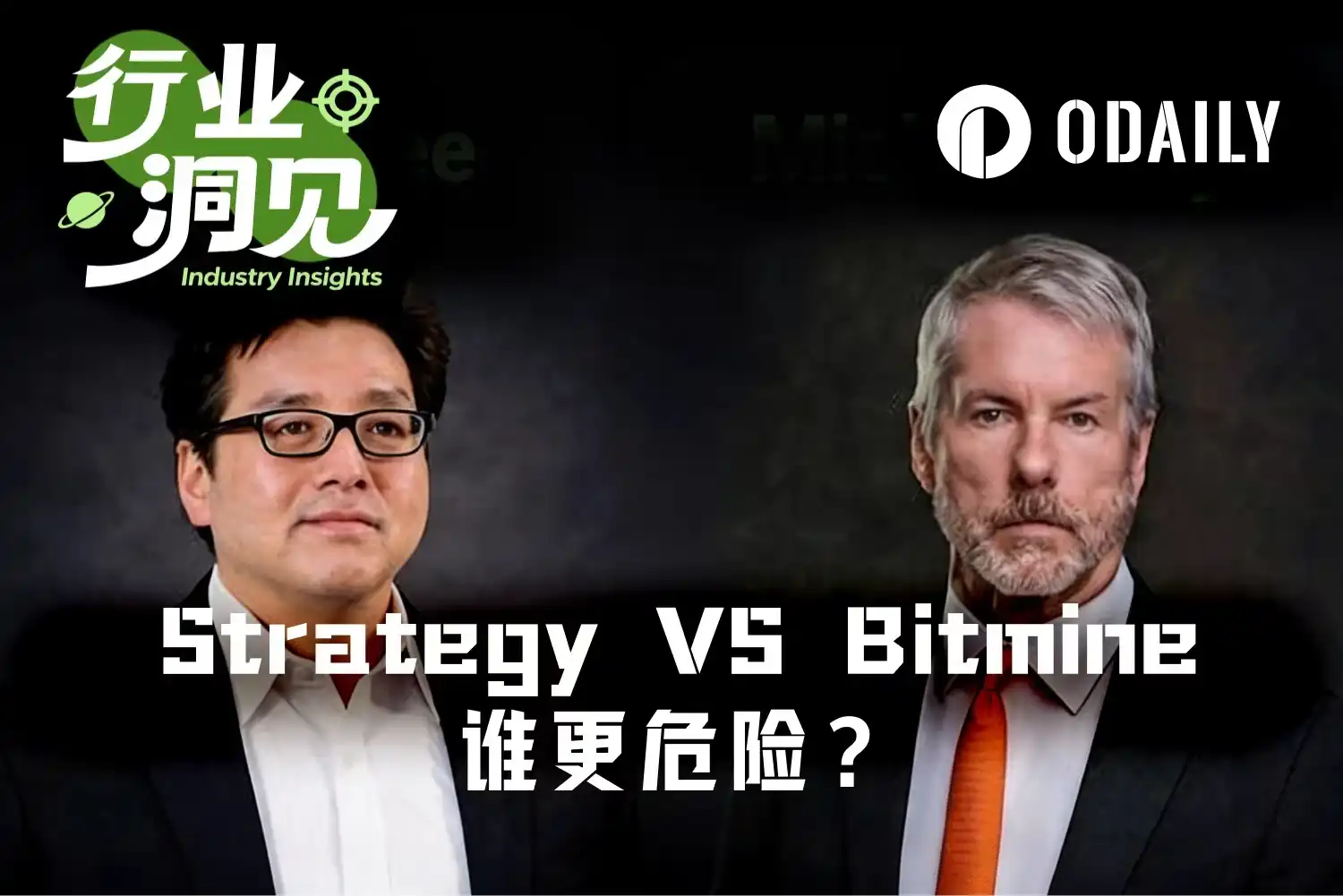
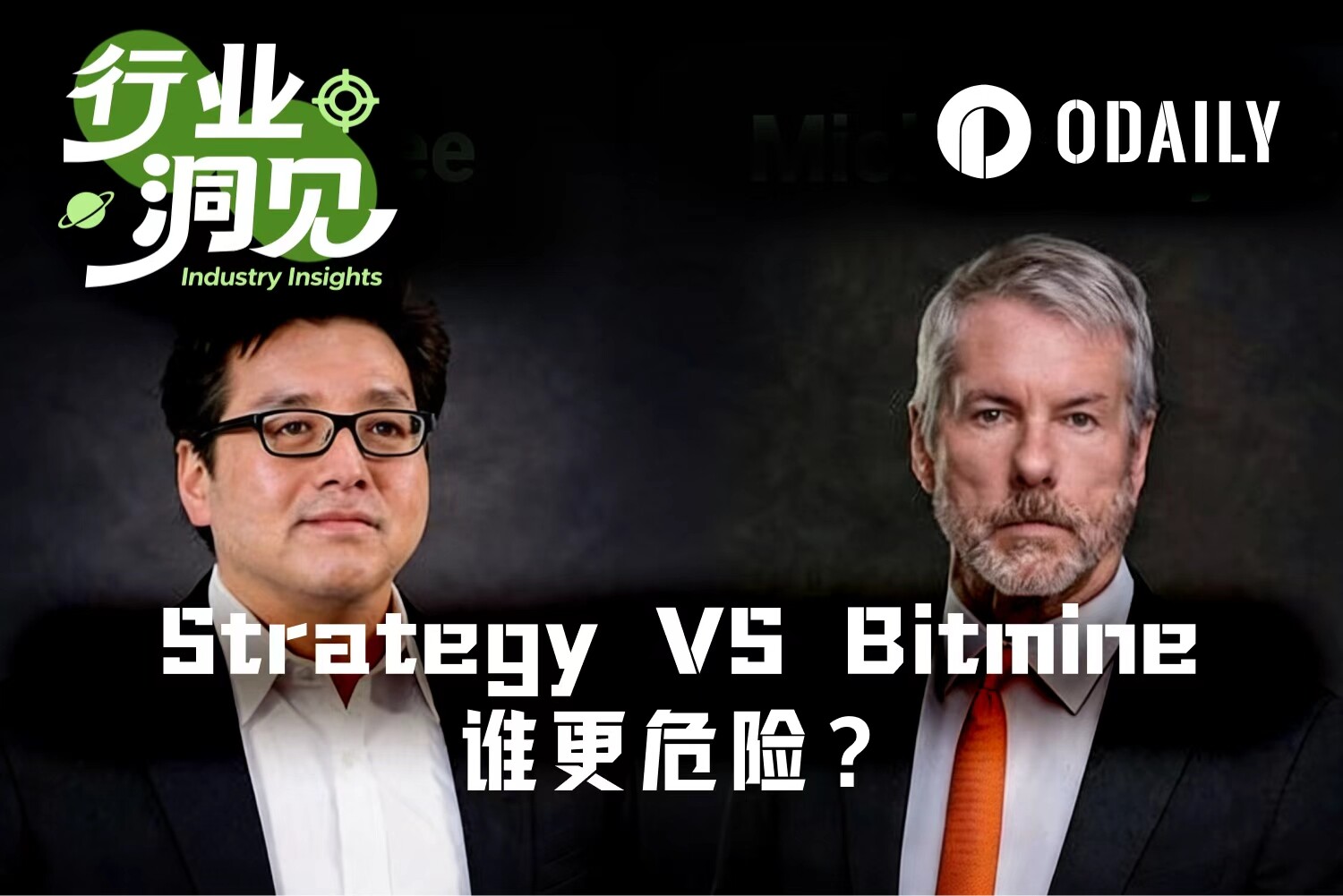
Both Suffer Massive Losses Exceeding $90 Billion, Which Is in Greater Peril: Strategy or Bitmine?

Facing massive paper losses exceeding $90 billion each amidst a sharp market downturn, "Digital Asset Treasury" (DAT) giants Strategy and Bitmine find themselves in a precarious position, but with different underlying risks. Strategy, heavily invested in Bitcoin (BTC), faces significant financial strain. Its strategy relies heavily on debt, including convertible notes and preferred stock (STRC) requiring substantial dividend payments. With its cash reserves dwindling and BTC offering no staking yield for cash flow, Strategy's high leverage makes it vulnerable. A continued price decline could force asset sales to meet obligations, potentially creating a negative feedback loop. Its market value has already fallen sharply. In contrast, Bitmine, an Ethereum (ETH) holder, appears on firmer financial ground. It primarily funds its purchases through equity offerings (like ATM programs), avoiding debt pressure. It also generates income by staking a large portion of its ETH holdings. While not immune to market drops and shareholder dilution concerns, Bitmine maintains more flexibility, recently announcing a new preferred share offering to raise further capital. The core divergence lies in their financing: Bitmine uses equity (investor money), while Strategy uses debt (borrowed money). Consequently, Bitmine currently faces less immediate liquidity pressure than Strategy, which must navigate the dual challenge of servicing debt/dividends and a declining core asset (BTC) price.

marsbitHace 33 min(s)

Both Suffer Massive Losses Exceeding $90 Billion, Which Is in Greater Peril: Strategy or Bitmine?

marsbitHace 33 min(s)

Trading

Spot
Futuros

Artículos destacados

Qué es $S$

Entendiendo SPERO: Una Visión General Completa Introducción a SPERO A medida que el panorama de la innovación continúa evolucionando, la aparición de tecnologías web3 y proyectos de criptomonedas juega un papel fundamental en la configuración del futuro digital. Un proyecto que ha atraído la atención en este campo dinámico es SPERO, denotado como SPERO,$$s$. Este artículo tiene como objetivo reunir y presentar información detallada sobre SPERO, para ayudar a entusiastas e inversores a comprender sus fundamentos, objetivos e innovaciones dentro de los dominios web3 y cripto. ¿Qué es SPERO,$$s$? SPERO,$$s$ es un proyecto único dentro del espacio cripto que busca aprovechar los principios de descentralización y tecnología blockchain para crear un ecosistema que promueva la participación, la utilidad y la inclusión financiera. El proyecto está diseñado para facilitar interacciones de igual a igual de nuevas maneras, proporcionando a los usuarios soluciones y servicios financieros innovadores. En su esencia, SPERO,$$s$ tiene como objetivo empoderar a los individuos al proporcionar herramientas y plataformas que mejoren la experiencia del usuario en el espacio de las criptomonedas. Esto incluye habilitar métodos de transacción más flexibles, fomentar iniciativas impulsadas por la comunidad y crear caminos para oportunidades financieras a través de aplicaciones descentralizadas (dApps). La visión subyacente de SPERO,$$s$ gira en torno a la inclusividad, buscando cerrar brechas dentro de las finanzas tradicionales mientras aprovecha los beneficios de la tecnología blockchain. ¿Quién es el Creador de SPERO,$$s$? La identidad del creador de SPERO,$$s$ sigue siendo algo oscura, ya que hay recursos públicos limitados que proporcionan información de fondo detallada sobre su(s) fundador(es). Esta falta de transparencia puede derivarse del compromiso del proyecto con la descentralización, una ética que muchos proyectos web3 comparten, priorizando las contribuciones colectivas sobre el reconocimiento individual. Al centrar las discusiones en torno a la comunidad y sus objetivos colectivos, SPERO,$$s$ encarna la esencia del empoderamiento sin señalar a individuos específicos. Como tal, comprender la ética y la misión de SPERO sigue siendo más importante que identificar a un creador singular. ¿Quiénes son los Inversores de SPERO,$$s$? SPERO,$$s$ cuenta con el apoyo de una diversa gama de inversores que van desde capitalistas de riesgo hasta inversores ángeles dedicados a fomentar la innovación en el sector cripto. El enfoque de estos inversores generalmente se alinea con la misión de SPERO, priorizando proyectos que prometen avances tecnológicos sociales, inclusión financiera y gobernanza descentralizada. Estas fundaciones de inversores suelen estar interesadas en proyectos que no solo ofrecen productos innovadores, sino que también contribuyen positivamente a la comunidad blockchain y sus ecosistemas. El respaldo de estos inversores refuerza a SPERO,$$s$ como un contendiente notable en el dominio de proyectos cripto que evoluciona rápidamente. ¿Cómo Funciona SPERO,$$s$? SPERO,$$s$ emplea un marco multifacético que lo distingue de los proyectos de criptomonedas convencionales. Aquí hay algunas de las características clave que subrayan su singularidad e innovación: Gobernanza Descentralizada: SPERO,$$s$ integra modelos de gobernanza descentralizada, empoderando a los usuarios para participar activamente en los procesos de toma de decisiones sobre el futuro del proyecto. Este enfoque fomenta un sentido de propiedad y responsabilidad entre los miembros de la comunidad. Utilidad del Token: SPERO,$$s$ utiliza su propio token de criptomoneda, diseñado para servir diversas funciones dentro del ecosistema. Estos tokens permiten transacciones, recompensas y la facilitación de servicios ofrecidos en la plataforma, mejorando la participación y la utilidad general. Arquitectura en Capas: La arquitectura técnica de SPERO,$$s$ apoya la modularidad y escalabilidad, permitiendo la integración fluida de características y aplicaciones adicionales a medida que el proyecto evoluciona. Esta adaptabilidad es fundamental para mantener la relevancia en el cambiante paisaje cripto. Participación de la Comunidad: El proyecto enfatiza iniciativas impulsadas por la comunidad, empleando mecanismos que incentivan la colaboración y la retroalimentación. Al nutrir una comunidad sólida, SPERO,$$s$ puede abordar mejor las necesidades de los usuarios y adaptarse a las tendencias del mercado. Enfoque en la Inclusión: Al ofrecer tarifas de transacción bajas e interfaces amigables para el usuario, SPERO,$$s$ busca atraer a una base de usuarios diversa, incluyendo a individuos que anteriormente pueden no haber participado en el espacio cripto. Este compromiso con la inclusión se alinea con su misión general de empoderamiento a través de la accesibilidad. Cronología de SPERO,$$s$ Entender la historia de un proyecto proporciona información crucial sobre su trayectoria de desarrollo y hitos. A continuación se presenta una cronología sugerida que mapea eventos significativos en la evolución de SPERO,$$s$: Fase de Conceptualización e Ideación: Las ideas iniciales que forman la base de SPERO,$$s$ fueron concebidas, alineándose estrechamente con los principios de descentralización y enfoque comunitario dentro de la industria blockchain. Lanzamiento del Whitepaper del Proyecto: Tras la fase conceptual, se lanzó un whitepaper completo que detalla la visión, los objetivos y la infraestructura tecnológica de SPERO,$$s$ para generar interés y retroalimentación de la comunidad. Construcción de Comunidad y Primeras Interacciones: Se realizaron esfuerzos de divulgación activa para construir una comunidad de primeros adoptantes y posibles inversores, facilitando discusiones en torno a los objetivos del proyecto y obteniendo apoyo. Evento de Generación de Tokens: SPERO,$$s$ llevó a cabo un evento de generación de tokens (TGE) para distribuir sus tokens nativos a los primeros seguidores y establecer liquidez inicial dentro del ecosistema. Lanzamiento de la dApp Inicial: La primera aplicación descentralizada (dApp) asociada con SPERO,$$s$ se puso en marcha, permitiendo a los usuarios interactuar con las funcionalidades centrales de la plataforma. Desarrollo Continuo y Alianzas: Actualizaciones y mejoras continuas a las ofertas del proyecto, incluyendo alianzas estratégicas con otros actores en el espacio blockchain, han moldeado a SPERO,$$s$ en un jugador competitivo y en evolución en el mercado cripto. Conclusión SPERO,$$s$ se erige como un testimonio del potencial de web3 y las criptomonedas para revolucionar los sistemas financieros y empoderar a los individuos. Con un compromiso con la gobernanza descentralizada, la participación comunitaria y funcionalidades diseñadas de manera innovadora, allana el camino hacia un paisaje financiero más inclusivo. Como con cualquier inversión en el espacio cripto que evoluciona rápidamente, se anima a los posibles inversores y usuarios a investigar a fondo y participar de manera reflexiva con los desarrollos en curso dentro de SPERO,$$s$. El proyecto muestra el espíritu innovador de la industria cripto, invitando a una mayor exploración de sus innumerables posibilidades. Mientras el viaje de SPERO,$$s$ aún se desarrolla, sus principios fundamentales pueden, de hecho, influir en el futuro de cómo interactuamos con la tecnología, las finanzas y entre nosotros en ecosistemas digitales interconectados.

72 Vistas totalesPublicado en 2024.12.17Actualizado en 2024.12.17

Qué es $S$

Qué es AGENT S

Agent S: El Futuro de la Interacción Autónoma en Web3 Introducción En el paisaje en constante evolución de Web3 y las criptomonedas, las innovaciones están redefiniendo constantemente cómo los individuos interactúan con las plataformas digitales. Uno de estos proyectos pioneros, Agent S, promete revolucionar la interacción humano-computadora a través de su marco agente abierto. Al allanar el camino para interacciones autónomas, Agent S busca simplificar tareas complejas, ofreciendo aplicaciones transformadoras en inteligencia artificial (IA). Esta exploración detallada profundizará en las complejidades del proyecto, sus características únicas y las implicaciones para el dominio de las criptomonedas. ¿Qué es Agent S? Agent S se presenta como un marco agente abierto innovador, diseñado específicamente para abordar tres desafíos fundamentales en la automatización de tareas informáticas: Adquisición de Conocimiento Específico del Dominio: El marco aprende inteligentemente de diversas fuentes de conocimiento externas y experiencias internas. Este enfoque dual le permite construir un rico repositorio de conocimiento específico del dominio, mejorando su rendimiento en la ejecución de tareas. Planificación a Largo Plazo de Tareas: Agent S emplea planificación jerárquica aumentada por la experiencia, un enfoque estratégico que facilita la descomposición y ejecución eficiente de tareas complejas. Esta característica mejora significativamente su capacidad para gestionar múltiples subtareas de manera eficiente y efectiva. Manejo de Interfaces Dinámicas y No Uniformes: El proyecto introduce la Interfaz Agente-Computadora (ACI), una solución innovadora que mejora la interacción entre agentes y usuarios. Utilizando Modelos de Lenguaje Multimodal de Gran Escala (MLLMs), Agent S puede navegar y manipular diversas interfaces gráficas de usuario sin problemas. A través de estas características pioneras, Agent S proporciona un marco robusto que aborda las complejidades involucradas en la automatización de la interacción humana con las máquinas, preparando el terreno para una multitud de aplicaciones en IA y más allá. ¿Quién es el Creador de Agent S? Si bien el concepto de Agent S es fundamentalmente innovador, la información específica sobre su creador sigue siendo elusiva. El creador es actualmente desconocido, lo que resalta ya sea la etapa incipiente del proyecto o la elección estratégica de mantener a los miembros fundadores en el anonimato. Independientemente de la anonimidad, el enfoque sigue siendo en las capacidades y el potencial del marco. ¿Quiénes son los Inversores de Agent S? Dado que Agent S es relativamente nuevo en el ecosistema criptográfico, la información detallada sobre sus inversores y patrocinadores financieros no está documentada explícitamente. La falta de información disponible públicamente sobre las bases de inversión u organizaciones que apoyan el proyecto plantea preguntas sobre su estructura de financiamiento y hoja de ruta de desarrollo. Comprender el respaldo es crucial para evaluar la sostenibilidad del proyecto y su posible impacto en el mercado. ¿Cómo Funciona Agent S? En el núcleo de Agent S se encuentra una tecnología de vanguardia que le permite funcionar de manera efectiva en diversos entornos. Su modelo operativo se basa en varias características clave: Interacción Humano-Computadora Similar a la Humana: El marco ofrece planificación avanzada de IA, esforzándose por hacer que las interacciones con las computadoras sean más intuitivas. Al imitar el comportamiento humano en la ejecución de tareas, promete elevar las experiencias de los usuarios. Memoria Narrativa: Empleada para aprovechar experiencias de alto nivel, Agent S utiliza memoria narrativa para hacer un seguimiento de las historias de tareas, mejorando así sus procesos de toma de decisiones. Memoria Episódica: Esta característica proporciona a los usuarios una guía paso a paso, permitiendo que el marco ofrezca apoyo contextual a medida que se desarrollan las tareas. Soporte para OpenACI: Con la capacidad de ejecutarse localmente, Agent S permite a los usuarios mantener el control sobre sus interacciones y flujos de trabajo, alineándose con la ética descentralizada de Web3. Fácil Integración con APIs Externas: Su versatilidad y compatibilidad con varias plataformas de IA aseguran que Agent S pueda encajar sin problemas en ecosistemas tecnológicos existentes, convirtiéndolo en una opción atractiva para desarrolladores y organizaciones. Estas funcionalidades contribuyen colectivamente a la posición única de Agent S dentro del espacio cripto, ya que automatiza tareas complejas y de múltiples pasos con una intervención humana mínima. A medida que el proyecto evoluciona, sus posibles aplicaciones en Web3 podrían redefinir cómo se desarrollan las interacciones digitales. Cronología de Agent S El desarrollo y los hitos de Agent S pueden encapsularse en una cronología que resalta sus eventos significativos: 27 de septiembre de 2024: El concepto de Agent S fue lanzado en un documento de investigación integral titulado “Un Marco Agente Abierto que Usa Computadoras Como un Humano”, mostrando las bases del proyecto. 10 de octubre de 2024: El documento de investigación fue puesto a disposición del público en arXiv, ofreciendo una exploración profunda del marco y su evaluación de rendimiento basada en el benchmark OSWorld. 12 de octubre de 2024: Se lanzó una presentación en video, proporcionando una visión visual de las capacidades y características de Agent S, involucrando aún más a posibles usuarios e inversores. Estos marcadores en la cronología no solo ilustran el progreso de Agent S, sino que también indican su compromiso con la transparencia y la participación comunitaria. Puntos Clave Sobre Agent S A medida que el marco Agent S continúa evolucionando, varios atributos clave destacan, subrayando su naturaleza innovadora y potencial: Marco Innovador: Diseñado para proporcionar un uso intuitivo de las computadoras similar a la interacción humana, Agent S aporta un enfoque novedoso a la automatización de tareas. Interacción Autónoma: La capacidad de interactuar de manera autónoma con las computadoras a través de GUI significa un salto hacia soluciones informáticas más inteligentes y eficientes. Automatización de Tareas Complejas: Con su metodología robusta, puede automatizar tareas complejas y de múltiples pasos, haciendo que los procesos sean más rápidos y menos propensos a errores. Mejora Continua: Los mecanismos de aprendizaje permiten a Agent S mejorar a partir de experiencias pasadas, mejorando continuamente su rendimiento y eficacia. Versatilidad: Su adaptabilidad en diferentes entornos operativos como OSWorld y WindowsAgentArena asegura que pueda servir a una amplia gama de aplicaciones. A medida que Agent S se posiciona en el paisaje de Web3 y criptomonedas, su potencial para mejorar las capacidades de interacción y automatizar procesos significa un avance significativo en las tecnologías de IA. A través de su marco innovador, Agent S ejemplifica el futuro de las interacciones digitales, prometiendo una experiencia más fluida y eficiente para los usuarios en diversas industrias. Conclusión Agent S representa un audaz avance en la unión de la IA y Web3, con la capacidad de redefinir cómo interactuamos con la tecnología. Aunque aún se encuentra en sus primeras etapas, las posibilidades para su aplicación son vastas y atractivas. A través de su marco integral que aborda desafíos críticos, Agent S busca llevar las interacciones autónomas al primer plano de la experiencia digital. A medida que nos adentramos más en los reinos de las criptomonedas y la descentralización, proyectos como Agent S sin duda desempeñarán un papel crucial en la configuración del futuro de la tecnología y la colaboración humano-computadora.

471 Vistas totalesPublicado en 2025.01.14Actualizado en 2025.01.14

Qué es AGENT S

Cómo comprar S

¡Bienvenido a HTX.com! Hemos hecho que comprar Sonic (S) sea simple y conveniente. Sigue nuestra guía paso a paso para iniciar tu viaje de criptos.Paso 1: crea tu cuenta HTXUtiliza tu correo electrónico o número de teléfono para registrarte y obtener una cuenta gratuita en HTX. Experimenta un proceso de registro sin complicaciones y desbloquea todas las funciones.Obtener mi cuentaPaso 2: ve a Comprar cripto y elige tu método de pagoTarjeta de crédito/débito: usa tu Visa o Mastercard para comprar Sonic (S) al instante.Saldo: utiliza fondos del saldo de tu cuenta HTX para tradear sin problemas.Terceros: hemos agregado métodos de pago populares como Google Pay y Apple Pay para mejorar la comodidad.P2P: tradear directamente con otros usuarios en HTX.Over-the-Counter (OTC): ofrecemos servicios personalizados y tipos de cambio competitivos para los traders.Paso 3: guarda tu Sonic (S)Después de comprar tu Sonic (S), guárdalo en tu cuenta HTX. Alternativamente, puedes enviarlo a otro lugar mediante transferencia blockchain o utilizarlo para tradear otras criptomonedas.Paso 4: tradear Sonic (S)Tradear fácilmente con Sonic (S) en HTX's mercado spot. Simplemente accede a tu cuenta, selecciona tu par de trading, ejecuta tus trades y monitorea en tiempo real. Ofrecemos una experiencia fácil de usar tanto para principiantes como para traders experimentados.

958 Vistas totalesPublicado en 2025.01.15Actualizado en 2026.06.02

Cómo comprar S

Discusiones

Bienvenido a la comunidad de HTX. Aquí puedes mantenerte informado sobre los últimos desarrollos de la plataforma y acceder a análisis profesionales del mercado. A continuación se presentan las opiniones de los usuarios sobre el precio de S (S).

活动图片