ChatGPT Loses Half Its Market: From Monopoly to Shared Market in Three and a Half Years

marsbitPublicado a 2026-06-18Actualizado a 2026-06-18

Resumen

In a landmark shift three and a half years after its debut, ChatGPT's global market share in the AI assistant market has fallen below 50% for the first time, dropping to 46.4% as of May 2026. This signals the end of its initial dominance, with the market now diversifying among competitors like Gemini (27.7%) and Claude (10.3%). The report from Sensor Tower indicates the AI assistant landscape has matured from a phase of awe and experimentation into one of product comparison, ecosystem integration, and monetization. Users are increasingly pragmatic, readily switching between assistants based on specific use cases, brand trust, and value propositions. The industry is moving past the "free lunch" era, with users demonstrating a willingness to pay for premium features, driving significant in-app expenditure. Major players are adopting varied monetization strategies: Claude boasts a high subscription conversion rate, while ChatGPT is increasingly testing ads and shopping integrations to complement its subscription revenue. However, this growth comes with immense costs, as exemplified by OpenAI's soaring cash burn for model training and infrastructure. While ChatGPT remains the largest single player, its declining share symbolizes a broader normalization of AI. The technology is no longer a novelty but an integral, scrutinized part of daily digital life, judged on practical utility, price, and seamless integration. The battle has shifted from proving AI's potential to competing i...

It has been three and a half years since ChatGPT made its debut. At that time, many people realized for the first time that a dialog box could become the next-generation internet gateway. Today, it has long been the fastest application in human history to reach 1 billion monthly active users. Yet, at the same time, it has reached a symbolic turning point:

ChatGPT's global market share has fallen below 50% for the first time.

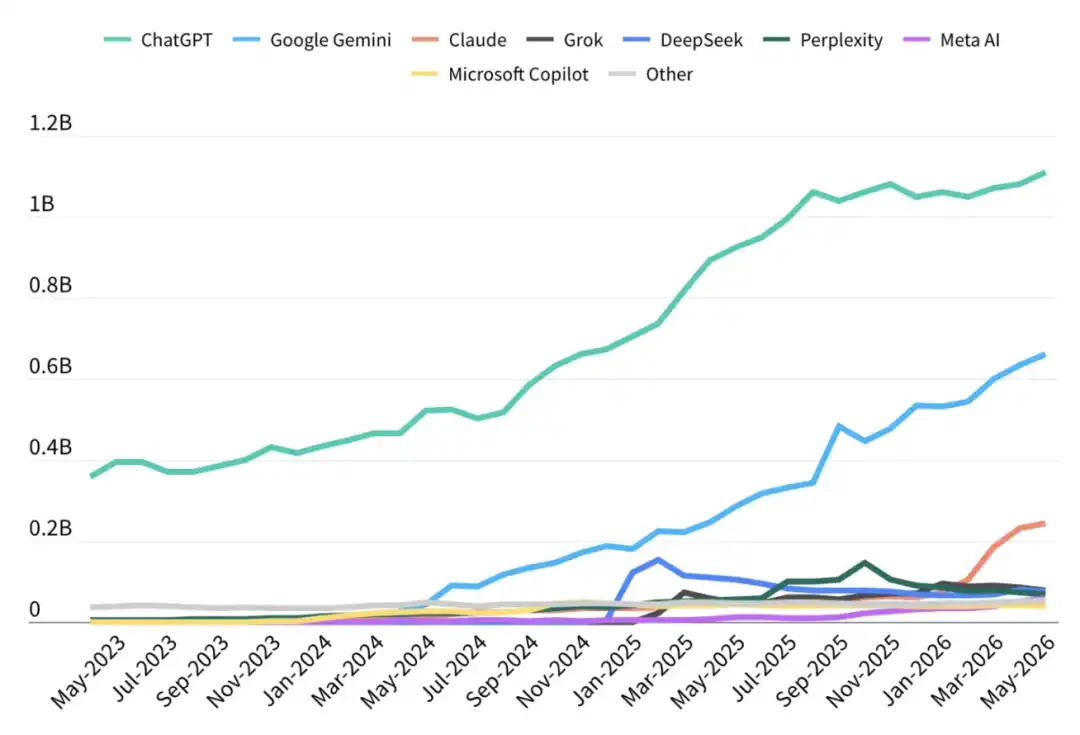
According to data analytics firm Sensor Tower's "State of AI 2026 Report," as of the end of May this year, ChatGPT's share of the global AI assistant market dropped to 46.4%. Before January this year, that figure was still above 50%. ChatGPT remains the world's largest AI assistant. But leading no longer equals monopolizing.

The AI assistant boom ignited by OpenAI has moved from awe, trial, and admiration into the stages of product comparison, ecosystem integration, paid conversion, and commercial realization.

Loyalty Is a False Proposition, Users Are All 'Heartbreakers'

In 2023, having a ChatGPT account still carried a certain identity of being an AI pioneer.

By 2026, AI assistants have increasingly become internet infrastructure, much like search, email, and office suites. The most noteworthy change in the Sensor Tower report is not just that ChatGPT still ranks first.

More importantly, users are becoming more willing to migrate. As long as another assistant is more convenient in a specific scenario, users will immediately allocate time to another product.

The main competitors pulling ChatGPT's share below 50% are Gemini and Claude.

As of the end of May, Gemini's global share reached 27.7%, and Claude reached 10.3%. Products like Grok, Perplexity, DeepSeek, and Meta AI each still hold less than 5%, but they are also constantly squeezing the remaining market.
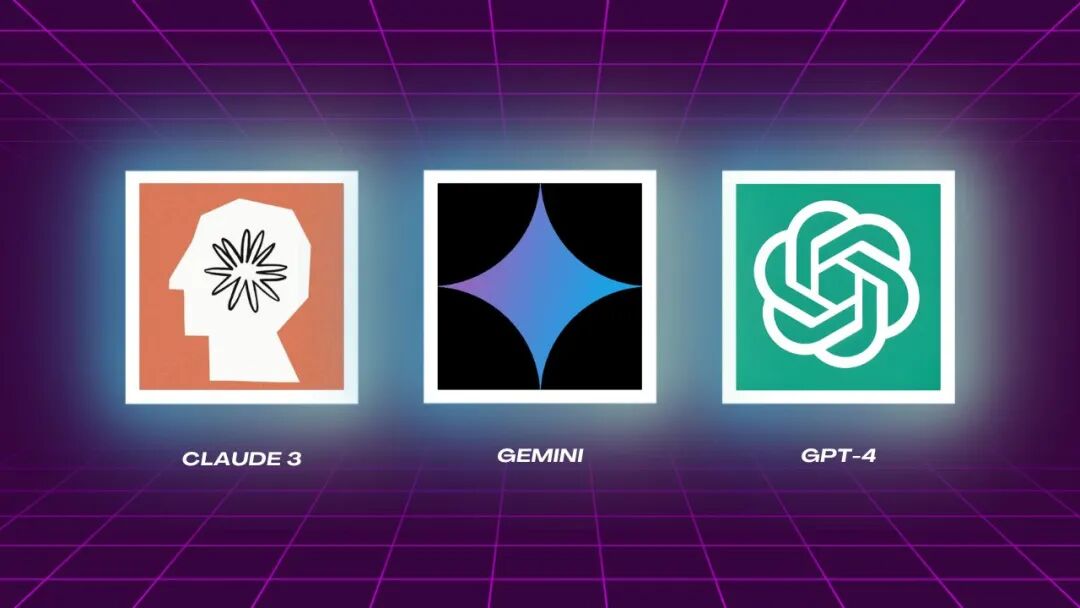
Gemini's growth is easy to understand. It's backed by Google's complete ecosystem. Search, Gmail, Docs, Calendar, and Android are all natural entry points. When AI is embedded into tools users rely on daily, many average users have no need to specifically open another webpage to summon ChatGPT.

Especially after the release of Gemini 3.0, Google also achieved its first truly significant victory, officially securing a seat at the AI table and entering the mainstream user's view.

Claude's path is more like a victory for a productivity tool.

It lacks a distribution system like Google's, but has built a strong reputation in scenarios like writing, coding, long-text processing, and complex task collaboration. Sensor Tower states that Claude is approaching ChatGPT's user retention levels. For power users, AI assistants have shed their toy-like attributes and are genuinely beginning to impact work efficiency.
A more subtle change is that when users evaluate AI products, they no longer look solely at model capability. As AI assistants gradually take on more personalized interaction characteristics, users are also starting to discuss work, emotions, judgments, and decisions with them. Brand trust, value orientation, and institutional relationships can all become part of the user's choice.

A hint of public controversy can trigger a massive wave of uninstalls. OpenAI CEO Sam Altman has likely gained a deep understanding of this over the past year.

AI companies once believed that as long as the model was stronger, users would stay. The reality in 2026 is far more complex. Capability, ecosystem, price, use case, and brand trust are now collectively determining whether an assistant will be used consistently.

The Free Lunch Is Over, AI Apps Start Talking Money

Beyond market share, another set of data from the Sensor Tower report better illustrates the stage change in the industry: AI applications are still growing, but the growth logic has changed.

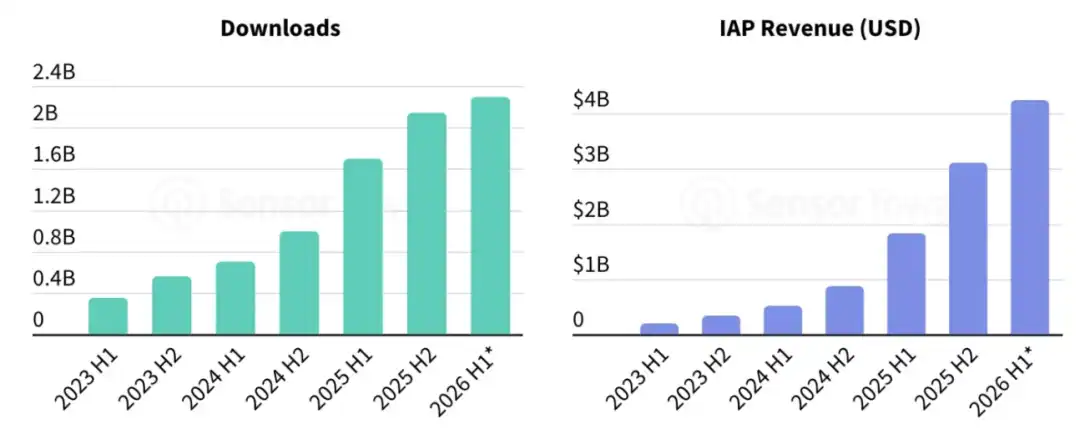
Sensor Tower estimates that in the first half of 2026, global AI app downloads will approach 2.3 billion, with in-app spending exceeding $4.2 billion. In comparison, AI app in-app spending was $1.83 billion in the first half of 2025.

Users are still downloading AI apps and are also willing to pay for AI.

However, the growth rates for both downloads and spending have slowed. Meanwhile, the industry has moved from a period of rapid expansion into a more realistic phase of competition.

Vendors can no longer just talk about user growth; they must also prove they can turn traffic into revenue. Regional differences are also emerging. Asia remains the market with the highest AI app downloads, but in Q1 2026, downloads declined for the first time by 3.3%, mainly affected by markets like India.
In contrast, North America and Europe are stronger in terms of in-app consumption. For AI companies, what truly determines the business model is often the ability to pay; install base only solves part of the problem. The trend in the US market is more pronounced. Users are starting to use AI assistants for productivity tasks and are more willing to pay for premium features.

Claude performs notably well here. Sensor Tower states that Anthropic has 13% of its users subscribing to a paid plan, a conversion rate ranking among the highest in the industry. This 13% subscription conversion rate explains why Claude can continue to expand its presence amidst competition from giants.

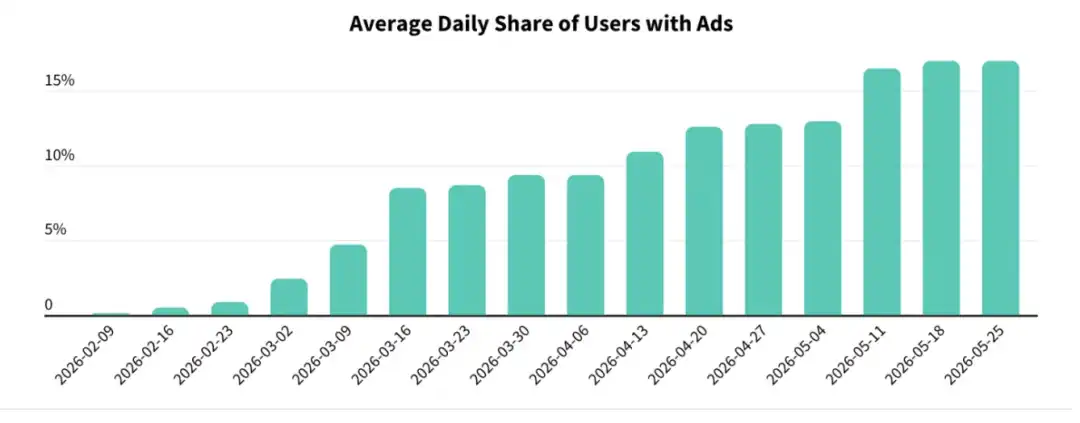
As long as AI can help users save time, complete code, organize documents, and handle complex tasks, monthly subscription fees ranging from twenty to even two hundred dollars are actually within an acceptable range. ChatGPT's commercialization path is more diverse and also more controversial. Sensor Tower states that OpenAI began testing ads in ChatGPT starting in February this year, gradually expanding the scale of ad displays and the proportion of users covered.

By May, an average of 17% of users were seeing ads daily. Software and shopping are currently the largest advertiser categories, followed by media & entertainment, and food & beverage.
From subscriptions to ads, ChatGPT is moving towards a more typical internet business model. Early users were familiar with a clean dialog box, an entry point imbued with the imagination of Artificial General Intelligence (AGI).

Unfortunately, even the smartest AI on this planet ultimately cannot escape the fate of becoming a shopping guide.

For OpenAI, ads and shopping have become necessary experiments to advance. Now, this entry point is also starting to carry ads, shopping guides, recommendations, and transaction conversions.

Model inference, training, and computing power expenses are extremely costly; relying solely on subscription revenue can hardly cover long-term investments. Advertising and shopping are becoming the next pieces of the puzzle for ChatGPT's commercialization.

As AI begins to penetrate core scenarios like shopping, office work, and search, the imagination of AI becoming a unified super-gateway is also encountering increasingly realistic platform boundaries. Sensor Tower estimates that in the first half of 2026, global AI app usage time will grow from 17.2 billion hours in the same period last year to approximately 36 billion hours.

Among them, the top three AI assistants account for 89% of the total usage time of AI assistant apps.

New players still have opportunities, but these opportunities exist more in fragmented scenarios, such as AI companions, AI content generation, and vertical industry tools. The main battlefield for general assistants is already mostly occupied by ChatGPT, Gemini, and Claude.

Stepping Down from the Altar, AI Goes Mainstream

ChatGPT's share decline occurs at a somewhat paradoxical time: OpenAI's revenue is still growing rapidly, its user base is still expanding, and its capital reserves far exceed those of most startups. According to a report by The Information, based on documents OpenAI disclosed to shareholders, OpenAI consumed $3.7 billion in cash in the first quarter, more than half of its $5.7 billion revenue.

Both cash burn and revenue tripled compared to the same period last year.

This is also a common challenge facing the current AI industry. Users and revenue continue to grow, yet massive capital investment is required to sustain model training, inference services, and infrastructure construction.
Furthermore, OpenAI expects cash burn could reach $25 billion in 2026, further rising to $57 billion in 2027. Even though OpenAI has confidentially submitted its IPO filing documents, the listing time may still be adjusted based on market conditions.

In other words, as one of the world's strongest AI brands, OpenAI still needs to answer a question: when models become increasingly expensive, competition grows fiercer, and users become more prone to migrate, how high can ChatGPT's business model's profit margin ultimately be.

Nevertheless, even as ChatGPT's share falls below 50%, it remains the world's largest AI assistant and is still the name most frequently mentioned when discussing AI. But this milestone is symbolic. The AI assistant market has moved beyond the era defined by a single product. In the past, ChatGPT was responsible for convincing the public that AI could change the internet.

Now, Gemini, Claude, Grok, DeepSeek, and various vertical AI assistants are collectively dividing up user time, usage scenarios, and commercial revenue.
User demands are also subtly changing.

By now, you likely no longer find satisfaction in just having AI write a poem or tell a silly joke. Instead, you start demanding it write code with fewer errors, process documents more accurately, collaborate in office work more conveniently, and offer more reasonable subscription prices, etc.

When a technology no longer elicits repeated amazement but instead begins to be criticized, compared, and replaced, it has truly started to enter mainstream life.

ChatGPT has lost half of its market dominance, but AI has truly begun to win over the world.

It's just that in this new world, there are no eternal kings, only us, forever ready to migrate for better tools.


Criptos en tendencia

Preguntas relacionadas

QAccording to the article, what is the current global market share of ChatGPT and what has caused its decline?

AAccording to the article, as of May, ChatGPT's global market share has dropped to 46.4%. The decline is attributed to increased competition from other AI assistants like Gemini (27.7%) and Claude (10.3%). Users are now more willing to migrate to other products if they offer a better fit for specific scenarios, and factors like ecosystem integration, productivity features, brand trust, and price are becoming key decision points.

QWhat does the article suggest about user loyalty in the AI assistant market?

AThe article suggests that user loyalty is a 'false proposition' and that users are fickle ('渣男'). Users are willing to switch between AI assistants based on which product performs better in specific use cases, such as writing, coding, or integration with existing tools like Google's ecosystem.

QHow is the business model for AI applications evolving, according to the Sensor Tower report cited in the article?

AThe business model is shifting from focusing solely on user growth to monetization. The 'free lunch' is ending. Methods include subscription fees (e.g., Claude's 13% paid user conversion rate) and advertising (e.g., ChatGPT testing ads shown to 17% of daily users by May). The report notes that while downloads are still growing, the pace has slowed, and the ability to convert traffic into revenue is now critical.

QWhat financial challenge does OpenAI face despite its growth, as mentioned in the article?

ADespite rapid revenue growth, OpenAI faces the significant financial challenge of massive cash burn to sustain model training, inference services, and infrastructure. The article states that in Q1, OpenAI burned $3.7 billion in cash, over half of its $5.7 billion revenue. It is projected that cash burn could reach $25 billion in 2026 and $57 billion in 2027, raising questions about the long-term profitability of its business model.

QWhat does the symbolic decline of ChatGPT's market share below 50% represent for the AI industry?

AThe symbolic decline represents the end of a single product defining the AI assistant market. The industry has moved past the initial phase of awe and experimentation into a stage of practical comparison, ecosystem competition, and commercial diversification. While ChatGPT popularized AI, the market is now being shared by multiple players like Gemini, Claude, and others, indicating that AI technology is maturing and becoming integrated into everyday life.

Lecturas Relacionadas

My Coding Betting Dashboard is Profiting, but Polymarket is Truly Not a Good Place for 'Arbitrage'

The author built a custom monitoring dashboard for Polymarket, a prediction market platform, and tested it with $1,600, achieving over 30% returns. However, the core argument is that Polymarket is not a good venue for traditional arbitrage. The dashboard has two main sections: a "Portfolio Dashboard" for tracking active positions with key metrics like total capital, P&L, and a risk-control module using a tier system (T1, T2, T3), and an "Opportunity Watchlist" for monitoring markets. The article details a critical structural trap in binary markets: a bet with a high perceived probability of success still carries a 100% loss risk if wrong. The author's T1/T2/T3 system is designed to manage this by limiting position sizes based on conviction and time horizon, emphasizing that high confidence should not equal high concentration. A key insight is the danger of "pseudo-diversification"—betting on different markets driven by the same underlying variable. The author concludes that Polymarket offers few true low-risk, arbitrage opportunities. It is instead a high-risk environment where wins can create a false sense of mastery, leading to large losses. The platform is better viewed as a training ground for honing judgment through disciplined, framework-driven betting rather than a reliable income source. The tools help transform intuition into structured, rule-based decisions to mitigate the risk of catastrophic errors.

marsbitHace 50 min(s)

My Coding Betting Dashboard is Profiting, but Polymarket is Truly Not a Good Place for 'Arbitrage'

marsbitHace 50 min(s)

WeChat AI Card Hands-On Guide: Has the AI Shopping Era Arrived?

**"WeChat AI Card" Practical Test Guide: Has the Era of AI Shopping Arrived?** WeChat has officially launched the "AI Exclusive Card," a feature integrated into its Workbuddy AI assistant. This card is designed to handle payments for AI-initiated purchases. Our hands-on test reveals it's not yet a tool for fully autonomous AI shopping, but rather a controlled payment layer for AI agents. The AI Card functions as an isolated sub-wallet within WeChat Pay. Users must bind the card and transfer funds into it from their main wallet. Crucially, every transaction requires explicit user confirmation via smartphone scan; AI cannot spend autonomously. Currently accessible through the Workbuddy agent, the card targets specific digital consumption scenarios: purchasing paid content (reports, data), calling paid APIs/tools, and subscribing to services. Its design prioritizes security and control by separating funds and mandating approval for each payment. We tested a real-world scenario: ordering bubble tea via Workbuddy using a "Meituan Life Assistant" skill. The process encountered multiple hurdles: high "skill" usage costs (exceeding daily free credits), and most importantly, while a payment was successfully initiated, the AI purchased an incorrect product (a mismatched group-buy coupon instead of the desired drink). This highlights the current limitation: the **AI Card only solves the payment step**. The broader challenge lies in the **AI agent's execution chain**—accurately understanding intent, navigating third-party platforms, selecting the right product, and ensuring proper fulfillment. The payment succeeded, but the purchase failed to meet the user's need. In conclusion, the WeChat AI Exclusive Card is a cautious, early-step experiment in AI commerce. It provides a secure, user-controlled payment method for agent interactions but is not yet capable of reliable, end-to-end complex purchases. For now, it's best used for low-value, low-risk digital services with careful user verification at each step. The vision of AI handling complete shopping tasks remains a work in progress.

marsbitHace 3 hora(s)

WeChat AI Card Hands-On Guide: Has the AI Shopping Era Arrived?

marsbitHace 3 hora(s)

Deconstructing Notion's Growth: From a Note-taking Tool to 100 Million Users—How Notion Built a Triple Growth Flywheel Through Product, Templates, and Community

Notion's growth from a niche note-taking tool to a platform with 100 million users is powered by three interconnected flywheels: Product-Led Growth (PLG), a Template Economy, and Community-Driven Growth. First, Notion's PLG strategy relies on a highly flexible, "plastic" product that users can adapt to countless personal and team workflows. Its freemium model lowers the barrier to entry, while features like page sharing and collaboration drive organic, usage-based viral growth as users naturally invite others. Second, the Template Economy solves the "blank page" problem. Templates, created by both Notion and its community, transform abstract product capabilities into concrete, copyable solutions for specific scenarios (e.g., project management, content calendars). This dramatically lowers activation costs for new users and fuels SEO-driven discovery. Third, a vibrant Community acts as a distributed growth engine. Users and official Ambassadors create tutorials, share use cases, and host local events. This community not only educates users but also fosters a sense of identity around pursuing "better ways of working," strengthening loyalty and enabling global, low-cost expansion. Together, these flywheels create a self-reinforcing ecosystem: a great product attracts users who create templates and community content, which in turn attracts more users and deepens engagement. This system allowed Notion to scale from individuals to teams and enterprises through a bottom-up adoption path. Looking ahead, AI integration promises to accelerate these flywheels further by making templates smarter and the platform a potential AI-native work operating system. Ultimately, Notion's defensible advantage is not just its features, but this deeply entrenched network of user assets, creators, and community trust.

marsbitHace 3 hora(s)

Deconstructing Notion's Growth: From a Note-taking Tool to 100 Million Users—How Notion Built a Triple Growth Flywheel Through Product, Templates, and Community

marsbitHace 3 hora(s)

$10 Billion, Qualcomm to Acquire Chip Legend Jim Keller's Company

Global mobile chip giant Qualcomm is in advanced talks to acquire AI chip startup Tenstorrent in a deal valued between $8-10 billion, according to media reports. This potential acquisition would be one of the largest in the AI chip sector in recent years. Tenstorrent, led by legendary chip architect Jim Keller, has gained prominence for its RISC-V architecture and AI accelerator designs. The move highlights Qualcomm's strategic push to diversify beyond its core smartphone chip business. As the smartphone market matures, Qualcomm is aggressively targeting growth in automotive, data center, and cloud AI. Acquiring Tenstorrent would allow Qualcomm to rapidly enter the high-end AI computing market, bypassing lengthy in-house development cycles. Tenstorrent's cost-effective system architecture, which avoids expensive HBM memory and relies on standard Ethernet for clustering, offers a potential alternative to Nvidia's costly solutions. Furthermore, Tenstorrent's high-performance RISC-V CPU technology and its focus on the automotive and edge computing segments align with Qualcomm's strategic goals, including its "Snapdragon Digital Chassis" platform. Despite the strategic rationale, the high valuation has sparked some investor caution. The successful integration of Tenstorrent's open-source culture and independent team into Qualcomm's organization, along with the commercialization of its technology, remains a key challenge.

marsbitHace 4 hora(s)

$10 Billion, Qualcomm to Acquire Chip Legend Jim Keller's Company

marsbitHace 4 hora(s)

CARDS' Brutal Truth of $535M FDV: Only $43M Net Revenue, Profit Margin Halved

The article deconstructs Collector Crypt (CC), a blockchain-based platform for trading tokenized collectible cards, revealing a significant disparity between its high volume and actual business fundamentals. Key findings include: * CC's cumulative revenue of $635M is misleading; 90.6% is instantly returned to users via card buybacks, leaving only $43M in net revenue (6.7% retention). * Trading activity is minimal, with real secondary market trading below $5M. eBay sales as a percentage of volume have declined for six consecutive quarters. * The platform's user base is highly concentrated, with a few dozen high-frequency wallets driving most of the volume, resembling a "casino" with ~420 daily active players. * As volume shifts to higher-priced card packs, the net profit margin has halved from 11.2% to 5.8%. * Token value capture (via burns and buybacks) totals only $1.4M, just 3.4% of net revenue. Meanwhile, operational wallets have off-ramped $45.7M in USDC. * With a Fully Diluted Valuation (FDV) of ~$535M, the token trades at 7.3x net revenue. The float is only 20.5%, with 72% of the supply allocated to insiders and locked until November 2027. The analysis concludes that while CC has found product-market fit as a high-speed gacha machine, it shows little evidence of evolving into a sustainable collector's marketplace, with minimal value accruing to its CARDS token.

marsbitHace 4 hora(s)

CARDS' Brutal Truth of $535M FDV: Only $43M Net Revenue, Profit Margin Halved

marsbitHace 4 hora(s)

Trading

Spot
Futuros

Artículos destacados

Qué es DOGE M

Doge Matrix ($doge m): La Nueva Raza de Criptomonedas Impulsadas por la Comunidad Introducción En el paisaje en constante evolución de las criptomonedas, nuevos proyectos emergen constantemente, cada uno con el objetivo de captar el interés de inversores y entusiastas por igual. Uno de los últimos en entrar en este dominio es Doge Matrix, representado por el símbolo de ticker $doge m. Este proyecto ha atraído atención gracias a sus raíces en la popular cultura de memes que rodea a Dogecoin, estableciendo su lugar dentro del espacio web3. Este artículo tiene como objetivo proporcionar un análisis integral de Doge Matrix, cubriendo su visión general, creador, inversores, funcionalidad, cronología y aspectos notables. ¿Qué es Doge Matrix ($doge m)? Doge Matrix es un proyecto de criptomoneda impulsado por la comunidad que aparentemente se basa en el atractivo generalizado de Dogecoin, una moneda digital conocida por su mascota Shiba Inu y sus orígenes en memes. Si bien los objetivos generales de Doge Matrix no están ampliamente definidos, se caracteriza por un compromiso con la participación y el apoyo de la comunidad. A diferencia de las criptomonedas tradicionales que a menudo enfatizan la utilidad o el valor intrínseco a través de tecnologías subyacentes, Doge Matrix se posiciona dentro de un espacio que abraza el fenómeno cultural de las criptomonedas, apelando particularmente a aquellos que resuenan con la ética de los activos basados en memes. Aprovechando las fortalezas de la comunidad de Dogecoin, Doge Matrix opera como parte de un ecosistema más amplio, invitando a la participación y el compromiso de usuarios que comparten un interés en la criptomoneda y el paisaje digital. ¿Quién es el Creador de Doge Matrix ($doge m)? La identidad del creador de Doge Matrix sigue siendo desconocida. Esta falta de transparencia no es un acontecimiento poco común en el espacio de las criptomonedas, donde algunos proyectos se lanzan sin revelar las identidades de sus fundadores. La ausencia de información sobre el equipo fundador puede generar preguntas entre los posibles inversores sobre la responsabilidad y dirección del proyecto. ¿Quiénes son los Inversores de Doge Matrix ($doge m)? Hasta el momento, no hay información disponible públicamente que detalle los inversores o fundaciones de inversión que respaldan a Doge Matrix. El proyecto parece depender principalmente del apoyo de la comunidad en lugar de inversiones institucionales. Este modelo se alinea con la naturaleza impulsada por la comunidad de la iniciativa, fomentando un entorno donde la dirección del proyecto es moldeada por sus participantes en lugar de ser dictada por unos pocos patrocinadores financieros seleccionados. ¿Cómo Funciona Doge Matrix ($doge m)? Los detalles sobre los mecanismos operativos de Doge Matrix son algo vagos, reflejando una tendencia más amplia de proyectos en el espacio de las monedas meme donde las funcionalidades innovadoras no siempre están claramente articuladas. No obstante, Doge Matrix parece estar diseñado para aprovechar el ecosistema existente de criptomonedas alentar la participación de los usuarios mientras se conecta con las referencias culturales familiares asociadas a Dogecoin. Sus características potencialmente únicas derivan de las interacciones comunitarias en lugar de avances tecnológicos, enfatizando experiencias compartidas y colaboración entre los poseedores de tokens. Si bien las innovaciones exactas no se han delineado explícitamente, el proyecto parece crear un espacio donde los miembros de la comunidad pueden interactuar, compartir ideas y propulsar el potencial del proyecto hacia adelante. Cronología de Doge Matrix ($doge m) Reflexionar sobre la cronología del proyecto revela eventos notables que han definido su trayectoria hasta ahora: 25 de noviembre de 2024: Doge Matrix alcanzó su valor máximo histórico, marcando un hito significativo en su historia temprana. 1 de enero de 2025: Por el contrario, Doge Matrix alcanzó su valor mínimo histórico, ilustrando la volatilidad a menudo asociada con las criptomonedas, especialmente en las primeras etapas del ciclo de vida de un proyecto. En curso: El proyecto continúa siendo activamente negociado y respaldado por su comunidad, aunque aún no se han divulgado hitos u objetivos futuros específicos. Puntos Clave Sobre Doge Matrix ($doge m) Enfoque Comunitario En el corazón de Doge Matrix hay un compromiso con la participación de la comunidad. El proyecto prospera sobre la premisa de colaboración y objetivos compartidos entre sus miembros, enfatizando la importancia del esfuerzo colectivo. A diferencia de los proyectos centralizados que a menudo tienen una estructura de liderazgo definida, Doge Matrix actualmente muestra un enfoque más fluido hacia la gobernanza, donde la voz de cada miembro de la comunidad importa. Volatilidad El mercado de criptomonedas es notorio por su volatilidad, y Doge Matrix no es una excepción. Su historial de precios refleja fluctuaciones significativas entre valores altos y bajos, lo cual es típico de muchas nuevas criptomonedas, pero subraya los riesgos asociados con la inversión en tokens emergentes. Falta de Información Detallada Una de las características más llamativas de Doge Matrix es la escasez de información detallada sobre sus fundamentos tecnológicos y mecanismos operativos. Esta ambigüedad requiere que los posibles inversores realicen una diligencia debida exhaustiva antes de involucrarse con el proyecto. Conclusión En resumen, Doge Matrix ($doge m) ilustra una nueva ola de proyectos de criptomonedas que se apoyan en gran medida en la participación de la comunidad y la relevancia cultural. Si bien carece de ciertos detalles, como liderazgo claro, objetivos definidos y funcionalidad detallada, el proyecto ha logrado generar interés dentro de la comunidad cripto, aprovechando el atractivo establecido de la cultura de memes. Al igual que con cualquier inversión en el espacio de las criptomonedas, comprender los riesgos inherentes y realizar una investigación exhaustiva es esencial para los participantes potenciales. Doge Matrix se erige como un recordatorio de la naturaleza dinámica y, a veces, impredecible de la industria cripto, marcada por una evolución constante y entusiasmo por iniciativas impulsadas por la comunidad.

419 Vistas totalesPublicado en 2025.02.03Actualizado en 2025.02.03

Qué es DOGE M

Qué es $M

Entendiendo Mantis ($M): Una Nueva Era en la Interoperabilidad entre Cadenas En el paisaje en constante evolución de Web3 y las criptomonedas, nuevos proyectos se esfuerzan por ofrecer soluciones innovadoras destinadas a mejorar la experiencia del usuario y expandir las posibilidades funcionales dentro del ecosistema financiero descentralizado. Uno de estos proyectos que está ganando atención es Mantis ($M), un protocolo pionero fundado en los principios de interoperabilidad entre cadenas y liquidaciones basadas en intenciones. Este artículo profundiza en los aspectos esenciales de Mantis, incluyendo su funcionalidad central, creadores, respaldo de inversión, características innovadoras y hitos críticos. ¿Qué es Mantis ($M)? Mantis se describe como un protocolo de liquidación de intenciones multi-dominio que simplifica las interacciones entre cadenas, permitiendo a los usuarios ejecutar transacciones financieras complejas a través de varias plataformas de blockchain sin problemas. El protocolo opera a través de tres capas principales: Expresión de Intenciones: Los usuarios pueden articular sus objetivos de transacción utilizando un lenguaje natural facilitado por el DISE LLM, un modelo de lenguaje de IA avanzado. Por ejemplo, un usuario podría expresar el deseo de intercambiar Ethereum (ETH) por Solana (SOL) con una tolerancia de deslizamiento específica del 1%. Ejecución: Esta capa emplea una red de solucionadores que compiten para cumplir con las intenciones de los usuarios. Las transacciones se ejecutan utilizando mecanismos como Coincidencia de Deseos (CoWs) y Subastas de Flujo de Órdenes (OFAs), que aseguran que las demandas de los usuarios se satisfagan de manera óptima. Liquidación: Aprovechando el protocolo de Comunicación Inter-Blockchain (IBC), Mantis permite transacciones atómicas entre cadenas, permitiendo a los usuarios operar a través de varias cadenas soportadas, incluyendo Ethereum, Solana y Cosmos. Mantis está diseñado para introducir generación de rendimiento nativa para activos inactivos, utilizando pruebas criptográficas para mantener la integridad de las transacciones a lo largo de todo el proceso. Creadores y Equipo de Desarrollo Mantis fue concebido por la Composable Foundation, una organización impulsada por la investigación notable por su énfasis en soluciones de interoperabilidad de blockchain. Esta fundación colabora con instituciones académicas de renombre, incluyendo la Universidad de Harvard y la Universidad de Lisboa, contribuyendo a extensos esfuerzos de investigación y desarrollo que informan la arquitectura y funcionalidad de Mantis. El compromiso de la Composable Foundation de fomentar la innovación en el espacio de blockchain posiciona a Mantis como una solución robusta para la creciente demanda de interoperabilidad entre múltiples redes de blockchain. Inversores y Respaldo Si bien los detalles específicos sobre inversores individuales no se han divulgado públicamente, Mantis disfruta de un respaldo sustancial de varias entidades, incluyendo: Subvenciones del ecosistema de cadenas habilitadas por IBC, que apoyan el crecimiento del protocolo y su integración dentro de ecosistemas de finanzas descentralizadas. Asociaciones estratégicas con proveedores de infraestructura que mejoran las capacidades de la red de Mantis y sus estrategias de implementación. Financiamiento a través del tesoro de la Composable Foundation, asegurando un apoyo financiero sostenido para el desarrollo continuo y los costos operativos. Estos esfuerzos colaborativos reflejan un consenso entre las partes interesadas sobre la importancia de mejorar la funcionalidad entre cadenas y la utilidad potencial de las innovaciones infraestructurales de Mantis. Innovaciones Clave Mantis se distingue por varias innovaciones pioneras que mejoran su funcionalidad y utilidad: Intenciones Agnósticas a la Cadena: Los usuarios pueden iniciar transacciones desde cualquier cadena soportada mientras liquidan en otra. Esta flexibilidad empodera a los usuarios, impulsando una mayor interacción entre diferentes plataformas. Interfaz Potenciada por IA: La integración del DISE LLM permite a los usuarios realizar operaciones complejas de DeFi utilizando lenguaje natural, simplificando así las interacciones y haciendo que la tecnología blockchain sea accesible a un público más amplio. Captura de MEV Inter-Dominio: Mantis crea un mercado interno para el valor máximo extraíble (MEV) a través de competencias entre solucionadores. Este enfoque innovador permite una mayor eficiencia y extracción de valor en transacciones complejas. Capa de Liquidación Modular: El protocolo soporta varios métodos de verificación, incluyendo pruebas de conocimiento cero y rollups optimistas, proporcionando un marco versátil que puede adaptarse a las tecnologías de blockchain emergentes. Línea de Tiempo Histórica El desarrollo de Mantis está marcado por varios hitos críticos que trazan su trayectoria y crecimiento: | Año | Hito | |————|———————————————————————–| | 2022 | Desarrollo del concepto inicial dentro de la división de investigación de la Composable Foundation. | | Q3 2024 | Lanzamiento de la testnet con capacidades de puenteo entre Solana y Ethereum. | | Q1 2025 | Evento de Generación de Token (TGE) anticipado junto con el lanzamiento de la mainnet. | | Q2 2025 | Integración esperada del DISE LLM y expansión de las capacidades entre cadenas. | | 2025 H2 | Soporte planeado para más de 15 cadenas a través de futuras actualizaciones de IBC. | Esta línea de tiempo describe la evolución de Mantis, desde discusiones conceptuales hasta la implementación activa y fases de crecimiento futuro. Estrategia de Crecimiento del Ecosistema La estrategia de Mantis para el crecimiento del ecosistema incluye varias iniciativas diseñadas para fomentar la participación de los usuarios y el compromiso de los desarrolladores: Sistema de Créditos: Los usuarios pueden ganar créditos del protocolo al proporcionar liquidez y participar en programas de referidos. Estos créditos son canjeables por incentivos en el futuro, fomentando una comunidad de usuarios robusta. Kit de Desarrollo de Software Modular (SDK): Este conjunto de herramientas empodera a los desarrolladores para crear aplicaciones basadas en modelos impulsados por intenciones utilizando la infraestructura de Mantis, promoviendo así la innovación dentro de su ecosistema. Modelo de Gobernanza: A medida que el protocolo madura, los poseedores de tokens $M tendrán voz en la gobernanza del protocolo, permitiéndoles votar sobre actualizaciones y cambios propuestos, mejorando así el compromiso de la comunidad y la descentralización. Mantis representa un avance significativo en el ámbito de la arquitectura entre cadenas. Al integrar sin problemas algoritmos avanzados de IA con un marco de liquidación robusto, Mantis busca abordar los problemas de fragmentación dentro de los ecosistemas multi-cadena. Su enfoque innovador prioriza la mejora de la experiencia del usuario mientras se adhiere a los principios fundamentales de descentralización y seguridad, estableciendo un nuevo estándar para la futura interoperabilidad de las tecnologías blockchain. A medida que Mantis continúa su camino de crecimiento e implementación, promete ser un proyecto a seguir de cerca en el competitivo paisaje de Web3 y las finanzas descentralizadas. Con su enfoque en cruzar fronteras y elevar la participación del usuario, Mantis está preparado para ser una parte integral de los futuros desarrollos en el espacio de las criptomonedas.

38 Vistas totalesPublicado en 2025.03.18Actualizado en 2025.03.18

Qué es $M

Cómo comprar M

¡Bienvenido a HTX.com! Hemos hecho que comprar MemeCore (M) sea simple y conveniente. Sigue nuestra guía paso a paso para iniciar tu viaje de criptos.Paso 1: crea tu cuenta HTXUtiliza tu correo electrónico o número de teléfono para registrarte y obtener una cuenta gratuita en HTX. Experimenta un proceso de registro sin complicaciones y desbloquea todas las funciones.Obtener mi cuentaPaso 2: ve a Comprar cripto y elige tu método de pagoTarjeta de crédito/débito: usa tu Visa o Mastercard para comprar MemeCore (M) al instante.Saldo: utiliza fondos del saldo de tu cuenta HTX para tradear sin problemas.Terceros: hemos agregado métodos de pago populares como Google Pay y Apple Pay para mejorar la comodidad.P2P: tradear directamente con otros usuarios en HTX.Over-the-Counter (OTC): ofrecemos servicios personalizados y tipos de cambio competitivos para los traders.Paso 3: guarda tu MemeCore (M)Después de comprar tu MemeCore (M), guárdalo en tu cuenta HTX. Alternativamente, puedes enviarlo a otro lugar mediante transferencia blockchain o utilizarlo para tradear otras criptomonedas.Paso 4: tradear MemeCore (M)Tradear fácilmente con MemeCore (M) en HTX's mercado spot. Simplemente accede a tu cuenta, selecciona tu par de trading, ejecuta tus trades y monitorea en tiempo real. Ofrecemos una experiencia fácil de usar tanto para principiantes como para traders experimentados.

837 Vistas totalesPublicado en 2025.07.02Actualizado en 2026.06.02

Cómo comprar M

Discusiones

Bienvenido a la comunidad de HTX. Aquí puedes mantenerte informado sobre los últimos desarrollos de la plataforma y acceder a análisis profesionales del mercado. A continuación se presentan las opiniones de los usuarios sobre el precio de M (M).

活动图片