SoftBank's Son, Bankrupted by Good Stories, Awaits His Next Alibaba

marsbitPublicado a 2026-06-09Actualizado a 2026-06-09

Resumen

Masayoshi Son is back. After years defined by Vision Fund's massive losses and costly missteps like WeWork—which shattered market confidence and led to billions in write-downs—Son has found redemption through AI. His early, high-conviction bets are paying off handsomely. Arm, acquired for $32 billion in 2016 and once a heavily leveraged burden, has become a gold mine amid the AI compute boom, delivering roughly a 10x return for SoftBank after its 2023 IPO. More crucially, SoftBank has made an enormous, concentrated bet on OpenAI, committing over $64 billion for a roughly 13% stake. This investment is already showing massive paper gains, contributing significantly to SoftBank's soaring valuation and propelling Son back to the top as Asia's richest person. The narrative has shifted from the "fool" who fell for grandiose stories to the visionary who endured a brutal downturn and is now being rewarded for his early faith in artificial intelligence.

Masayoshi Son is back.

In recent years, when people mention SoftBank, they no longer talk about him being Jack Ma's 'benefactor'. More often, they think of the failed investment in WeWork, the massive losses of the Vision Fund, and the Japanese investor who was repeatedly humbled by the market during the tech bubble.

But today, AI assets are being repriced. The value of Son's shares in Arm and OpenAI is rising. SoftBank's stock price has surged, Son's fortune has climbed back to the top, and he is once again Asia's richest person.

Evaporating $70 Billion

People fear the unknown, so someone who hasn't experienced a bubble bursting might be afraid.

But not Masayoshi Son. At 67, he has experienced the peak of the internet 20 years ago and was left bruised when the bubble burst.

Son was first chosen by fortune in the late 1990s. Back then, the internet was like a newly discovered magic. Yahoo, portals, e-commerce, online trading—anything related to the web was believed by the capital markets to be rewriting the world. SoftBank also changed during that time. It was no longer just a Japanese software company but became a massive basket filled with internet stocks. Son bet on Yahoo and Yahoo Japan, and SoftBank's stock price was pushed to dizzying heights by the bubble.

In early 2000, Son's wealth became unreal. At that time, his net worth could increase by about $10 billion in a week, even briefly surpassing Bill Gates to become the world's richest person for three days. A Japanese entrepreneur of Korean descent from Kyushu, relying on extreme belief in the internet, suddenly stood at the pinnacle of global wealth.

After the dot-com bubble burst, SoftBank's stock plummeted, and Son's personal wealth evaporated by about $70 billion from a peak of roughly $76 billion. However, Son wasn't written off as a failure of that bubble era because he still held Alibaba. In the autumn of 2014, Alibaba listed on the NYSE. With the huge success of this single investment, Son's personal wealth exceeded $58 billion. That's equivalent to Warren Buffett's total investment gains over 70 years.

It was the most important and successful venture capital investment in the history of China's internet. This investment forged Alibaba and also made Masayoshi Son.

Around 2017, the Vision Fund was established with a size close to $100 billion. Son became the person tech startups worldwide most wanted to meet and the most powerful money bag in Silicon Valley.

Armed with funds from the Middle East, Apple, Qualcomm, and others, he traveled through Silicon Valley, China, India, and Southeast Asia, pouring money into ride-sharing, food delivery, fintech, autonomous driving, and co-working spaces. Those companies all talked about scale, network effects, winner-takes-all, and changing the world.

Son Felt He Was Getting Old

Son's fall from grace this time started with WeWork.

An ordinary failed investment at most hurts profits, but WeWork damaged the market's trust in Son's judgment and his acumen.


In early 2019, WeWork's valuation was still as high as $47 billion. Its founder, Adam Neumann, was charismatic and wildly ambitious. He never described his company as just an office rental business but as a lifestyle, a community, a future work order.

Son liked this kind of person because he was one himself. He spent his life searching for founders who framed business on a human scale.

But not everyone bought it.

In August 2019, WeWork filed its IPO prospectus. Details previously obscured in the private financing market by grand visions were now under the spotlight, laid bare before investors.

The company was burning massive cash, weighed down by heavy leases, plagued by governance chaos, and had a founder with excessive power. It claimed to be a tech company, but the more Wall Street looked, the more its core business appeared to be leasing office buildings and subdividing and subletting them. This business could hardly support a $47 billion valuation.

The market began to doubt Son's own abilities, forcing him to reflect on his investment style: Were those who could articulate grand visions more likely to get Son's money? Did he value founder charisma too much and financial discipline too lightly? Why was SoftBank willing to give such high valuations? Why believe a company that hadn't proven profitability could burn cash into a future? Could a founder who was good at saying 'change the world' make Son overlook due diligence, valuation, and business models?

Months later, WeWork withdrew its IPO. Adam Neumann resigned as CEO. The valuation plummeted from $47 billion to around $8 billion.

But by then, SoftBank and WeWork were in the same boat, unable to disembark. SoftBank had no choice but to bail it out.

Heaven abhors excess; human affairs avoid perfection. The company once lifted to the clouds by Son suddenly became the most glaring loss on SoftBank's books.

In November 2019, SoftBank posted its first quarterly loss in 14 years. The Vision Fund alone lost nearly $9 billion in a single quarter. Son admitted his misjudgment and that he had turned a blind eye to WeWork's governance issues. Because he wanted so desperately to find the next Alibaba, to replicate that victory of betting early when everyone else couldn't see.

In 2020, the wounds widened. The pandemic hit global markets. Uber underperformed its original myth. Oyo fell into layoffs and governance controversies. OneWeb filed for bankruptcy. Wirecard imploded, and later Greensill collapsed.

The money Son scattered had basically turned into shattered fragments.

Then, in 2021, fortune briefly glanced his way again. DoorDash, Coupang, and others went public. SoftBank's stock surged, and buybacks pushed the price higher. That year, Son returned to the top of Japan's wealth list. For a while, the outside world thought WeWork was just an ugly interlude, and the Vision Fund could eventually cover its losses with a few big wins. Son seemed about to prove once more that he wasn't wrong, just early to the market again.

But it was just a brief recovery. Starting in the second half of 2021, the winds changed. China tightened internet regulations, US inflation heated up, interest rates rose, and global tech stocks receded. The market was no longer willing to pay infinite money for 'will be big in the future.' Companies reliant on financing, scale, and imagination to support their valuations suddenly had to answer the same old question: When exactly will you make money?

Heaven and Earth have cycles; life has its ups and downs. Observing the way of Heaven and acting accordingly—that is all.

In 2022, Son truly fell into the biggest trough of his life.

The SoftBank Vision Fund lost about $27.5 billion in the 2021 fiscal year. In August 2022, SoftBank announced a net loss of about $23.4 billion for a single quarter.

He said he cried for two whole weeks. "For two weeks, I cried every day. I did nothing. I was anxious, didn't know what to do."

Recalling that period later, Son left a sincere monologue: "I thought about how I am already old, my remaining life is limited, but I haven't achieved anything. I cried a lot. I asked myself, am I really going to grow old like this and then die? People call me a successful businessman? Entrepreneur? Business guru? But I really felt sorry for myself."

SoftBank also began to shrink. New investments slowed dramatically. The Vision Fund team faced layoffs. Assets were continuously monetized. Alibaba, the功臣 that once helped Son turn his fortunes, was also gradually sold off by SoftBank to improve its financial structure. Son's business empire was under siege from all sides, and his father was taken by cancer.

In recent years, the companies that excited Son became strings of write-downs and losses. He said, "I would rather accept my own stupidity and ignorance, accept the wrong decisions I made, so I can learn from them." He admitted that he was too happy when he saw huge profits in the past and now felt ashamed. He also said that if he had been more selective and invested better at the time, the damage wouldn't have been so great.

Many said that Son during those years was not like the Son they knew. He grew quiet and rarely reappeared in the public eye.

He said SoftBank would enter "defense mode," and he would focus on Arm in the coming years.

Looking back today, this was another great investment by Son.

AI Has Forgiven Son

But initially, Arm didn't seem like a destined success; the deal put Son under immense pressure.

In the summer of 2016, SoftBank spent a whopping $32 billion in cash to acquire a 90% stake in Arm, a 40% premium.

Arm was, of course, a good company then. But most of the funds for the acquisition came from bank loans—leverage of 1.5 times raised by an already debt-laden SoftBank. Many investors doubted if Arm was really worth it. Even after being taken private by SoftBank, Arm's increased investments led to falling profit margins and severe performance declines at one point. SoftBank nearly sold Arm to Nvidia.

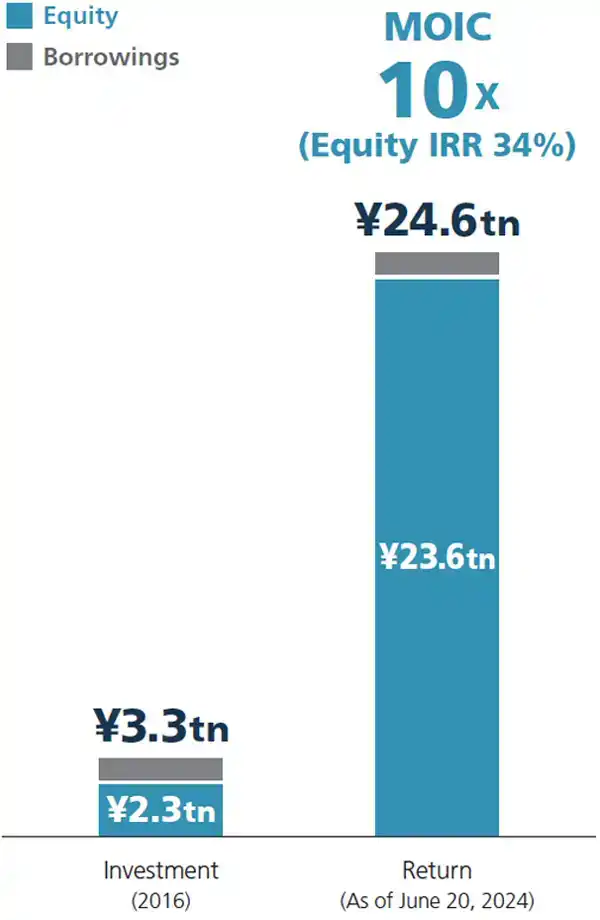
It wasn't until after ChatGPT that the market re-understood computing power. The vast rivers of artificial intelligence made Arm shine brightly. In September 2023, Arm listed on Nasdaq with an IPO valuation of about $54.5 billion. From about 14 trillion yen at the end of March 2023, SoftBank's NAV rose to about 34 trillion yen in June 2024. Arm now constitutes the bulk of SoftBank's shareholding value. SoftBank stated in its annual report that Arm has delivered returns of 24.6 trillion yen to group shareholders, roughly a 10x return.
If Arm gave Son a pull out of the mud, then OpenAI might be his comeback battle.

In January 2025, OpenAI, SoftBank, Oracle, and MGX announced the Stargate project, planning to build large-scale AI infrastructure in the US, with potential investments up to $500 billion over the next four years.

Subsequently, SoftBank's investments in OpenAI became very aggressive.

In 2025, SoftBank completed an investment of about $30 billion in OpenAI. By February 2026, SoftBank signed an additional $30 billion investment agreement with OpenAI. According to SoftBank's announcement, upon completion of the top-up, SoftBank's cumulative investment in OpenAI is expected to reach $64.6 billion for an approximately 13% stake. In April 2026, SoftBank executed the first tranche of this additional investment, amounting to $10 billion.

In March 2026, SoftBank secured a $40 billion bridge loan, primarily for the subsequent OpenAI investment. It is also selling or monetizing other assets, using Arm shares, SoftBank telecom assets, etc., as financing leverage.
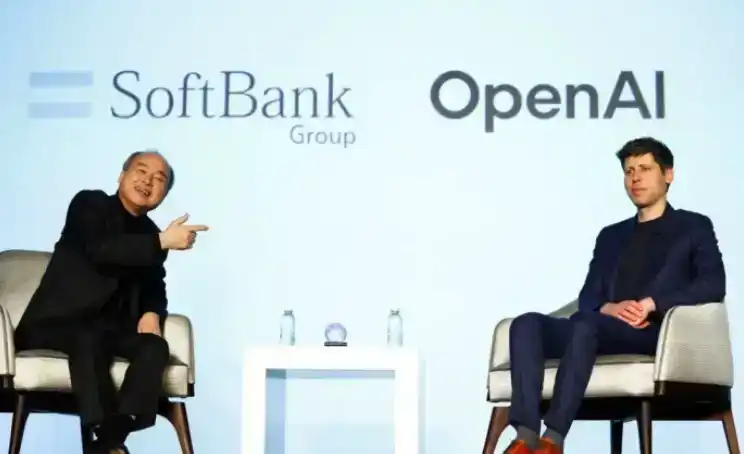
This investment is classic Son. Once again, he is putting SoftBank's most valuable assets on the line to buy a ticket to the next round of the future.

In the internet era, he bet himself on Yahoo and Alibaba; in the mobile internet era, he heavily invested in telecoms, Sprint, Arm; in the Vision Fund era, he scattered money to startups telling huge stories. And in the AI era, he is pushing SoftBank towards OpenAI and AI infrastructure.

At the end of March this year, SoftBank disclosed its OpenAI investment cost at about $34.6 billion, with a fair value of about $79.6 billion, resulting in cumulative investment gains of about $45 billion.

Recently, SoftBank's stock soared, its market cap once surpassing Toyota, making it one of Japan's most sought-after companies. Son also reclaimed his title as Asia's richest person.

Fortune is once again on Son's side.

Preguntas relacionadas

QWhy did the WeWork failure significantly damage Masayoshi Son's reputation and investment strategy?

AWeWork's failure, from a $47 billion valuation to a collapse before its planned IPO, exposed deep flaws in its business model, financials, and governance. It damaged Son's reputation because it became a symbol of his investment strategy prioritizing grand vision and charismatic founders over rigorous due diligence, financial discipline, and sustainable business models. It led the market to question his judgment and marked the beginning of massive losses for the Vision Fund.

QWhat role did the acquisition and IPO of Arm play in Masayoshi Son's recent financial recovery?

AThe acquisition of Arm in 2016, though initially heavily leveraged and criticized, became a cornerstone of Son's recovery. With the AI boom driving demand for compute power, Arm's value soared. Its successful IPO in 2023 at a $54.5 billion valuation significantly boosted SoftBank's asset value. Arm now constitutes a major part of SoftBank's holdings, delivering an approximately 10x return and helping to restore investor confidence and financial stability.

QHow did Masayoshi Son's investment in OpenAI contribute to his return as Asia's richest person?

ASon made aggressive, large-scale investments in OpenAI, with SoftBank's total commitment reaching around $64.6 billion for a roughly 13% stake. By March 2026, the fair value of this stake was approximately $79.6 billion against a cost of $34.6 billion, generating an unrealized gain of about $45 billion. This massive bet on a leading AI company, coupled with Arm's success, fueled a surge in SoftBank's stock price and market capitalization, propelling Son back to the top of Asia's wealth rankings.

QWhat major factors led to the massive losses of SoftBank's Vision Fund after 2021?

AKey factors include: the collapse of major portfolio companies like WeWork; broader market shifts where rising interest rates and inflation ended the era of cheap capital, forcing unprofitable tech companies to face scrutiny; regulatory tightening in China affecting tech investments; and underperformance or failures of other bets like Uber, Oyo, OneWeb, Wirecard, and Greensill. These combined to create unprecedented losses for the Vision Fund, culminating in a $27.5 billion loss for the 2021 fiscal year.

QHow did Masayoshi Son describe his personal and emotional state during the low point of his career in 2022?

ASon described being deeply distressed, stating he cried for two weeks straight, felt anxious, and did nothing. He questioned his life's achievements, feeling that despite being labeled a successful businessman, he had accomplished nothing meaningful as he grew older. He expressed shame over past mistakes driven by excitement over large profits and acknowledged his 'stupidity and ignorance' in making poor investment decisions, vowing to learn from them.

Lecturas Relacionadas

WeChat Agent Issues a 'Heroic Summons,' Half of the Internet Responds

WeChat AI Agent is on the horizon. The WeChat Open Platform has issued a guide for developers, offering them ways to integrate into the WeChat AI ecosystem. This will enable mini-programs to be discovered and invoked by the AI. Meituan has already announced its integration, allowing users to access services like food delivery through WeChat AI. Other platforms like Ctrip and Tongcheng have followed suit. Furthermore, WeChat is collaborating with major smartphone manufacturers to enable their native AI assistants to perform actions within WeChat, such as initiating calls or sending messages, through a controlled protocol called Agent-to-Agent (A2A). Reports indicate the WeChat AI Agent will be accessible by swiping right on the main interface. It aims to understand user intent within the rich context of chats, groups, and past interactions, then automatically call upon relevant mini-programs to complete tasks like ordering coffee or booking restaurants. This positions it as a potential "super app" with direct access to WeChat's vast ecosystem of services, social connections, and payment systems. Technically, this is a complex endeavor. It requires advanced natural language understanding, a "world model" to predict interactions within mini-programs (UI-Oceanus), multi-model orchestration for cost efficiency, and careful coordination with millions of third-party service providers. Tencent's development follows a "Co-Design" approach, where product teams and the Hunyuan model team collaborate closely, allowing capabilities honed in other AI products (like Yuanbao for chat, ima for search, WorkBuddy for office tasks) to be transferred to the WeChat Agent. Tencent is strategically opting for the A2A protocol over GUI-based automation (which it has blocked in the past), maintaining control over its ecosystem. To manage the immense scale and cost of serving 1.4 billion monthly active users, Tencent is deepening its ties with DeepSeek, known for its cost-effective training, to secure a low-cost inference backbone. The ultimate goal is to solve practical, everyday problems for users within the WeChat ecosystem, moving beyond technical benchmarks to deliver real utility, which Tencent sees as the key to winning in the long-term AI game.

marsbitHace 1 hora(s)

WeChat Agent Issues a 'Heroic Summons,' Half of the Internet Responds

marsbitHace 1 hora(s)

Humanity Loses $31 Million in Attack, Token Price Plummets 90% Due to a Single Private Key

On June 9th, the digital identity project Humanity Protocol suffered a major security breach resulting in over $31 million in losses. According to on-chain analyst Specter, hundreds of wallets holding the project's H token were drained. The attack was confirmed by founder Terence Kwok to be caused by the compromise of a foundation member's private key. As a precaution, users are advised to avoid interacting with Humanity's cross-chain bridge or liquidity pools. The incident caused the H token price to crash over 90%, from around $0.70 to a low of $0.052, wiping its market cap from $2 billion to approximately $35.7 million. The attacker allegedly minted 100 million new H tokens and is selling them for BNB. This breach adds to existing controversies surrounding Humanity Protocol. Founded in 2024, it aimed to verify human users via palm-print biometrics and zero-knowledge proofs. However, a leaked conversation in 2025 revealed that only about 1 million of its 9 million claimed Human IDs had completed biometric verification, suggesting 88% might be bots. Furthermore, the project has faced allegations of being a repackaged product from a Chinese access control vendor, raising privacy and authenticity concerns. Founder Terence Kwok's previous venture, Tink Labs, a hotel smartphone startup that raised $170 million, failed and entered bankruptcy in 2020 after burning through its funding. The current attack highlights the persistent critical issue of private key management in crypto. Unlike smart contract exploits, a private key compromise bypasses all on-chain security mechanisms. With no user compensation plan announced yet, this $31 million breach may be a final blow to the project's credibility, already weakened by previous controversies and a heavily depreciated token.

marsbitHace 2 hora(s)

Humanity Loses $31 Million in Attack, Token Price Plummets 90% Due to a Single Private Key

marsbitHace 2 hora(s)

MicroStrategy Will Not Die in This Downturn: Reflexivity, STRC Anchoring Back to Par, and the Self-Rescue Logic of "Sell Stock, Not Bitcoin"

This article analyzes the recent sharp decline in Bitcoin and MicroStrategy (MSTR), framing it as a targeted "reflexivity" attack. The trigger was MSTR using its cash reserves to buy back convertible notes, raising market concerns about a liquidity crisis. The playbook follows George Soros's principle: market expectations can shape reality. Fears that MSTR might be forced to sell BTC caused panic selling, lowering BTC's price and worsening MSTR's financial ratios, thus reinforcing the negative narrative. The author argues that MSTR's Structured Convertible (STRC), while falling in price, is a floating-rate security that will eventually return to par value (100). The price drop reflects the market demanding a higher yield due to perceived risk, but as a floating-rate instrument, its coupon can adjust, naturally pulling the price back to par over time. This is crucial for MSTR's continued ability to raise funds. The core thesis is that MSTR's best move to counter the attack is to **issue new equity (sell shares)**, not sell its Bitcoin holdings. While selling BTC would solve the immediate cash crunch, it would destroy the company's core investment thesis and premium. It would dilute the BTC per share, likely erase the market premium over its net asset value (mNAV > 1), and worsen its debt-to-asset ratio. Issuing shares while mNAV is high (e.g., 1.25x) allows MSTR to raise cash for reserves without harming shareholder value or the "perpetual accumulation" narrative. It improves the debt ratio and reassures STRC holders, breaking the negative reflexivity cycle. In conclusion, while MSTR could survive this episode even by selling BTC, doing so would fundamentally alter its investment proposition and weaken it for future cycles. The optimal, value-preserving strategy is to sell equity to rebuild reserves and maintain the long-term growth flywheel.

marsbitHace 2 hora(s)

MicroStrategy Will Not Die in This Downturn: Reflexivity, STRC Anchoring Back to Par, and the Self-Rescue Logic of "Sell Stock, Not Bitcoin"

marsbitHace 2 hora(s)

Trading

Spot
Futuros

Artículos destacados

Qué es $S$

Entendiendo SPERO: Una Visión General Completa Introducción a SPERO A medida que el panorama de la innovación continúa evolucionando, la aparición de tecnologías web3 y proyectos de criptomonedas juega un papel fundamental en la configuración del futuro digital. Un proyecto que ha atraído la atención en este campo dinámico es SPERO, denotado como SPERO,$$s$. Este artículo tiene como objetivo reunir y presentar información detallada sobre SPERO, para ayudar a entusiastas e inversores a comprender sus fundamentos, objetivos e innovaciones dentro de los dominios web3 y cripto. ¿Qué es SPERO,$$s$? SPERO,$$s$ es un proyecto único dentro del espacio cripto que busca aprovechar los principios de descentralización y tecnología blockchain para crear un ecosistema que promueva la participación, la utilidad y la inclusión financiera. El proyecto está diseñado para facilitar interacciones de igual a igual de nuevas maneras, proporcionando a los usuarios soluciones y servicios financieros innovadores. En su esencia, SPERO,$$s$ tiene como objetivo empoderar a los individuos al proporcionar herramientas y plataformas que mejoren la experiencia del usuario en el espacio de las criptomonedas. Esto incluye habilitar métodos de transacción más flexibles, fomentar iniciativas impulsadas por la comunidad y crear caminos para oportunidades financieras a través de aplicaciones descentralizadas (dApps). La visión subyacente de SPERO,$$s$ gira en torno a la inclusividad, buscando cerrar brechas dentro de las finanzas tradicionales mientras aprovecha los beneficios de la tecnología blockchain. ¿Quién es el Creador de SPERO,$$s$? La identidad del creador de SPERO,$$s$ sigue siendo algo oscura, ya que hay recursos públicos limitados que proporcionan información de fondo detallada sobre su(s) fundador(es). Esta falta de transparencia puede derivarse del compromiso del proyecto con la descentralización, una ética que muchos proyectos web3 comparten, priorizando las contribuciones colectivas sobre el reconocimiento individual. Al centrar las discusiones en torno a la comunidad y sus objetivos colectivos, SPERO,$$s$ encarna la esencia del empoderamiento sin señalar a individuos específicos. Como tal, comprender la ética y la misión de SPERO sigue siendo más importante que identificar a un creador singular. ¿Quiénes son los Inversores de SPERO,$$s$? SPERO,$$s$ cuenta con el apoyo de una diversa gama de inversores que van desde capitalistas de riesgo hasta inversores ángeles dedicados a fomentar la innovación en el sector cripto. El enfoque de estos inversores generalmente se alinea con la misión de SPERO, priorizando proyectos que prometen avances tecnológicos sociales, inclusión financiera y gobernanza descentralizada. Estas fundaciones de inversores suelen estar interesadas en proyectos que no solo ofrecen productos innovadores, sino que también contribuyen positivamente a la comunidad blockchain y sus ecosistemas. El respaldo de estos inversores refuerza a SPERO,$$s$ como un contendiente notable en el dominio de proyectos cripto que evoluciona rápidamente. ¿Cómo Funciona SPERO,$$s$? SPERO,$$s$ emplea un marco multifacético que lo distingue de los proyectos de criptomonedas convencionales. Aquí hay algunas de las características clave que subrayan su singularidad e innovación: Gobernanza Descentralizada: SPERO,$$s$ integra modelos de gobernanza descentralizada, empoderando a los usuarios para participar activamente en los procesos de toma de decisiones sobre el futuro del proyecto. Este enfoque fomenta un sentido de propiedad y responsabilidad entre los miembros de la comunidad. Utilidad del Token: SPERO,$$s$ utiliza su propio token de criptomoneda, diseñado para servir diversas funciones dentro del ecosistema. Estos tokens permiten transacciones, recompensas y la facilitación de servicios ofrecidos en la plataforma, mejorando la participación y la utilidad general. Arquitectura en Capas: La arquitectura técnica de SPERO,$$s$ apoya la modularidad y escalabilidad, permitiendo la integración fluida de características y aplicaciones adicionales a medida que el proyecto evoluciona. Esta adaptabilidad es fundamental para mantener la relevancia en el cambiante paisaje cripto. Participación de la Comunidad: El proyecto enfatiza iniciativas impulsadas por la comunidad, empleando mecanismos que incentivan la colaboración y la retroalimentación. Al nutrir una comunidad sólida, SPERO,$$s$ puede abordar mejor las necesidades de los usuarios y adaptarse a las tendencias del mercado. Enfoque en la Inclusión: Al ofrecer tarifas de transacción bajas e interfaces amigables para el usuario, SPERO,$$s$ busca atraer a una base de usuarios diversa, incluyendo a individuos que anteriormente pueden no haber participado en el espacio cripto. Este compromiso con la inclusión se alinea con su misión general de empoderamiento a través de la accesibilidad. Cronología de SPERO,$$s$ Entender la historia de un proyecto proporciona información crucial sobre su trayectoria de desarrollo y hitos. A continuación se presenta una cronología sugerida que mapea eventos significativos en la evolución de SPERO,$$s$: Fase de Conceptualización e Ideación: Las ideas iniciales que forman la base de SPERO,$$s$ fueron concebidas, alineándose estrechamente con los principios de descentralización y enfoque comunitario dentro de la industria blockchain. Lanzamiento del Whitepaper del Proyecto: Tras la fase conceptual, se lanzó un whitepaper completo que detalla la visión, los objetivos y la infraestructura tecnológica de SPERO,$$s$ para generar interés y retroalimentación de la comunidad. Construcción de Comunidad y Primeras Interacciones: Se realizaron esfuerzos de divulgación activa para construir una comunidad de primeros adoptantes y posibles inversores, facilitando discusiones en torno a los objetivos del proyecto y obteniendo apoyo. Evento de Generación de Tokens: SPERO,$$s$ llevó a cabo un evento de generación de tokens (TGE) para distribuir sus tokens nativos a los primeros seguidores y establecer liquidez inicial dentro del ecosistema. Lanzamiento de la dApp Inicial: La primera aplicación descentralizada (dApp) asociada con SPERO,$$s$ se puso en marcha, permitiendo a los usuarios interactuar con las funcionalidades centrales de la plataforma. Desarrollo Continuo y Alianzas: Actualizaciones y mejoras continuas a las ofertas del proyecto, incluyendo alianzas estratégicas con otros actores en el espacio blockchain, han moldeado a SPERO,$$s$ en un jugador competitivo y en evolución en el mercado cripto. Conclusión SPERO,$$s$ se erige como un testimonio del potencial de web3 y las criptomonedas para revolucionar los sistemas financieros y empoderar a los individuos. Con un compromiso con la gobernanza descentralizada, la participación comunitaria y funcionalidades diseñadas de manera innovadora, allana el camino hacia un paisaje financiero más inclusivo. Como con cualquier inversión en el espacio cripto que evoluciona rápidamente, se anima a los posibles inversores y usuarios a investigar a fondo y participar de manera reflexiva con los desarrollos en curso dentro de SPERO,$$s$. El proyecto muestra el espíritu innovador de la industria cripto, invitando a una mayor exploración de sus innumerables posibilidades. Mientras el viaje de SPERO,$$s$ aún se desarrolla, sus principios fundamentales pueden, de hecho, influir en el futuro de cómo interactuamos con la tecnología, las finanzas y entre nosotros en ecosistemas digitales interconectados.

72 Vistas totalesPublicado en 2024.12.17Actualizado en 2024.12.17

Qué es $S$

Qué es AGENT S

Agent S: El Futuro de la Interacción Autónoma en Web3 Introducción En el paisaje en constante evolución de Web3 y las criptomonedas, las innovaciones están redefiniendo constantemente cómo los individuos interactúan con las plataformas digitales. Uno de estos proyectos pioneros, Agent S, promete revolucionar la interacción humano-computadora a través de su marco agente abierto. Al allanar el camino para interacciones autónomas, Agent S busca simplificar tareas complejas, ofreciendo aplicaciones transformadoras en inteligencia artificial (IA). Esta exploración detallada profundizará en las complejidades del proyecto, sus características únicas y las implicaciones para el dominio de las criptomonedas. ¿Qué es Agent S? Agent S se presenta como un marco agente abierto innovador, diseñado específicamente para abordar tres desafíos fundamentales en la automatización de tareas informáticas: Adquisición de Conocimiento Específico del Dominio: El marco aprende inteligentemente de diversas fuentes de conocimiento externas y experiencias internas. Este enfoque dual le permite construir un rico repositorio de conocimiento específico del dominio, mejorando su rendimiento en la ejecución de tareas. Planificación a Largo Plazo de Tareas: Agent S emplea planificación jerárquica aumentada por la experiencia, un enfoque estratégico que facilita la descomposición y ejecución eficiente de tareas complejas. Esta característica mejora significativamente su capacidad para gestionar múltiples subtareas de manera eficiente y efectiva. Manejo de Interfaces Dinámicas y No Uniformes: El proyecto introduce la Interfaz Agente-Computadora (ACI), una solución innovadora que mejora la interacción entre agentes y usuarios. Utilizando Modelos de Lenguaje Multimodal de Gran Escala (MLLMs), Agent S puede navegar y manipular diversas interfaces gráficas de usuario sin problemas. A través de estas características pioneras, Agent S proporciona un marco robusto que aborda las complejidades involucradas en la automatización de la interacción humana con las máquinas, preparando el terreno para una multitud de aplicaciones en IA y más allá. ¿Quién es el Creador de Agent S? Si bien el concepto de Agent S es fundamentalmente innovador, la información específica sobre su creador sigue siendo elusiva. El creador es actualmente desconocido, lo que resalta ya sea la etapa incipiente del proyecto o la elección estratégica de mantener a los miembros fundadores en el anonimato. Independientemente de la anonimidad, el enfoque sigue siendo en las capacidades y el potencial del marco. ¿Quiénes son los Inversores de Agent S? Dado que Agent S es relativamente nuevo en el ecosistema criptográfico, la información detallada sobre sus inversores y patrocinadores financieros no está documentada explícitamente. La falta de información disponible públicamente sobre las bases de inversión u organizaciones que apoyan el proyecto plantea preguntas sobre su estructura de financiamiento y hoja de ruta de desarrollo. Comprender el respaldo es crucial para evaluar la sostenibilidad del proyecto y su posible impacto en el mercado. ¿Cómo Funciona Agent S? En el núcleo de Agent S se encuentra una tecnología de vanguardia que le permite funcionar de manera efectiva en diversos entornos. Su modelo operativo se basa en varias características clave: Interacción Humano-Computadora Similar a la Humana: El marco ofrece planificación avanzada de IA, esforzándose por hacer que las interacciones con las computadoras sean más intuitivas. Al imitar el comportamiento humano en la ejecución de tareas, promete elevar las experiencias de los usuarios. Memoria Narrativa: Empleada para aprovechar experiencias de alto nivel, Agent S utiliza memoria narrativa para hacer un seguimiento de las historias de tareas, mejorando así sus procesos de toma de decisiones. Memoria Episódica: Esta característica proporciona a los usuarios una guía paso a paso, permitiendo que el marco ofrezca apoyo contextual a medida que se desarrollan las tareas. Soporte para OpenACI: Con la capacidad de ejecutarse localmente, Agent S permite a los usuarios mantener el control sobre sus interacciones y flujos de trabajo, alineándose con la ética descentralizada de Web3. Fácil Integración con APIs Externas: Su versatilidad y compatibilidad con varias plataformas de IA aseguran que Agent S pueda encajar sin problemas en ecosistemas tecnológicos existentes, convirtiéndolo en una opción atractiva para desarrolladores y organizaciones. Estas funcionalidades contribuyen colectivamente a la posición única de Agent S dentro del espacio cripto, ya que automatiza tareas complejas y de múltiples pasos con una intervención humana mínima. A medida que el proyecto evoluciona, sus posibles aplicaciones en Web3 podrían redefinir cómo se desarrollan las interacciones digitales. Cronología de Agent S El desarrollo y los hitos de Agent S pueden encapsularse en una cronología que resalta sus eventos significativos: 27 de septiembre de 2024: El concepto de Agent S fue lanzado en un documento de investigación integral titulado “Un Marco Agente Abierto que Usa Computadoras Como un Humano”, mostrando las bases del proyecto. 10 de octubre de 2024: El documento de investigación fue puesto a disposición del público en arXiv, ofreciendo una exploración profunda del marco y su evaluación de rendimiento basada en el benchmark OSWorld. 12 de octubre de 2024: Se lanzó una presentación en video, proporcionando una visión visual de las capacidades y características de Agent S, involucrando aún más a posibles usuarios e inversores. Estos marcadores en la cronología no solo ilustran el progreso de Agent S, sino que también indican su compromiso con la transparencia y la participación comunitaria. Puntos Clave Sobre Agent S A medida que el marco Agent S continúa evolucionando, varios atributos clave destacan, subrayando su naturaleza innovadora y potencial: Marco Innovador: Diseñado para proporcionar un uso intuitivo de las computadoras similar a la interacción humana, Agent S aporta un enfoque novedoso a la automatización de tareas. Interacción Autónoma: La capacidad de interactuar de manera autónoma con las computadoras a través de GUI significa un salto hacia soluciones informáticas más inteligentes y eficientes. Automatización de Tareas Complejas: Con su metodología robusta, puede automatizar tareas complejas y de múltiples pasos, haciendo que los procesos sean más rápidos y menos propensos a errores. Mejora Continua: Los mecanismos de aprendizaje permiten a Agent S mejorar a partir de experiencias pasadas, mejorando continuamente su rendimiento y eficacia. Versatilidad: Su adaptabilidad en diferentes entornos operativos como OSWorld y WindowsAgentArena asegura que pueda servir a una amplia gama de aplicaciones. A medida que Agent S se posiciona en el paisaje de Web3 y criptomonedas, su potencial para mejorar las capacidades de interacción y automatizar procesos significa un avance significativo en las tecnologías de IA. A través de su marco innovador, Agent S ejemplifica el futuro de las interacciones digitales, prometiendo una experiencia más fluida y eficiente para los usuarios en diversas industrias. Conclusión Agent S representa un audaz avance en la unión de la IA y Web3, con la capacidad de redefinir cómo interactuamos con la tecnología. Aunque aún se encuentra en sus primeras etapas, las posibilidades para su aplicación son vastas y atractivas. A través de su marco integral que aborda desafíos críticos, Agent S busca llevar las interacciones autónomas al primer plano de la experiencia digital. A medida que nos adentramos más en los reinos de las criptomonedas y la descentralización, proyectos como Agent S sin duda desempeñarán un papel crucial en la configuración del futuro de la tecnología y la colaboración humano-computadora.

477 Vistas totalesPublicado en 2025.01.14Actualizado en 2025.01.14

Qué es AGENT S

Cómo comprar S

¡Bienvenido a HTX.com! Hemos hecho que comprar Sonic (S) sea simple y conveniente. Sigue nuestra guía paso a paso para iniciar tu viaje de criptos.Paso 1: crea tu cuenta HTXUtiliza tu correo electrónico o número de teléfono para registrarte y obtener una cuenta gratuita en HTX. Experimenta un proceso de registro sin complicaciones y desbloquea todas las funciones.Obtener mi cuentaPaso 2: ve a Comprar cripto y elige tu método de pagoTarjeta de crédito/débito: usa tu Visa o Mastercard para comprar Sonic (S) al instante.Saldo: utiliza fondos del saldo de tu cuenta HTX para tradear sin problemas.Terceros: hemos agregado métodos de pago populares como Google Pay y Apple Pay para mejorar la comodidad.P2P: tradear directamente con otros usuarios en HTX.Over-the-Counter (OTC): ofrecemos servicios personalizados y tipos de cambio competitivos para los traders.Paso 3: guarda tu Sonic (S)Después de comprar tu Sonic (S), guárdalo en tu cuenta HTX. Alternativamente, puedes enviarlo a otro lugar mediante transferencia blockchain o utilizarlo para tradear otras criptomonedas.Paso 4: tradear Sonic (S)Tradear fácilmente con Sonic (S) en HTX's mercado spot. Simplemente accede a tu cuenta, selecciona tu par de trading, ejecuta tus trades y monitorea en tiempo real. Ofrecemos una experiencia fácil de usar tanto para principiantes como para traders experimentados.

969 Vistas totalesPublicado en 2025.01.15Actualizado en 2026.06.02

Cómo comprar S

Discusiones

Bienvenido a la comunidad de HTX. Aquí puedes mantenerte informado sobre los últimos desarrollos de la plataforma y acceder a análisis profesionales del mercado. A continuación se presentan las opiniones de los usuarios sobre el precio de S (S).

活动图片