Imagine this: you're a senior software engineer at one of the world's top three tech companies by market cap, with a handsome salary and an impressive resume. Just as the company is about to launch its most important AI product in a decade, your boss suddenly hands you a notice with a smile—
Pack your things, you're going to 'cram school'.
According to a report by The Information, with less than two months to go until WWDC in June, Apple made a telling decision: nearly 200 programmers from the massive Siri team were bundled off to a several-week-long 'AI Programming Bootcamp' for retraining.
In the core business lines of tech giants, changing leadership on the eve of a launch is rare; sending people 'for training' at the last minute is unheard of. Behind this lies not just the struggle of the new Siri's difficult birth, but a genuine, large-scale reshuffle.
Those Who Can Use AI Stay, Those Who Can't Go for Remedial Lessons
The report mentions that besides sending nearly 200 people to bootcamp to learn how to code with AI, the once bloated core Siri development team was restructured and retained only about 60 members.
Another 60 people were singled out to form an evaluation group, specifically tasked with 'finding faults' in Siri: testing its performance in handling user commands and whether it meets Apple's extremely stringent security standards.
Such an organizational adjustment, happening during the final sprint before a launch, inevitably raises a question. Why send frontline soldiers back to bootcamp at this critical juncture, just two months from WWDC?
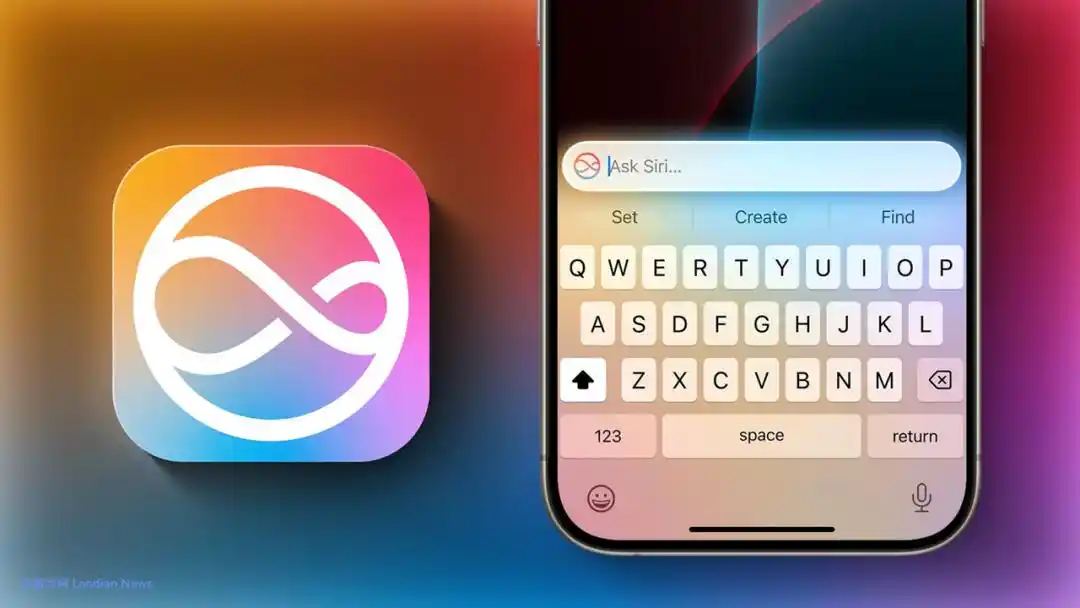
The answer might be that over the past year, AI coding assistants like Anthropic's Claude Code and OpenAI's Codex have completely rewritten the underlying logic of the software engineering industry. The experience these engineers once prided themselves on is becoming visibly obsolete.
Experienced developers, empowered by AI, are seeing an exponential explosion in code output.
Other departments within Apple have already felt this shift. Software engineering teams quickly embraced AI tools, even securing a massive budget specifically for Claude Code. The Siri team, clearly, was a step behind.
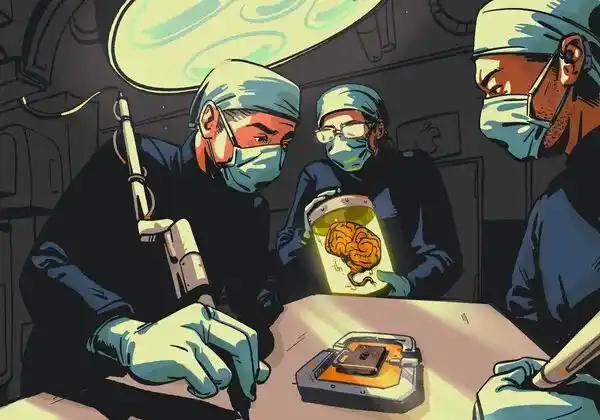
The pressure from AI is spreading across Silicon Valley.
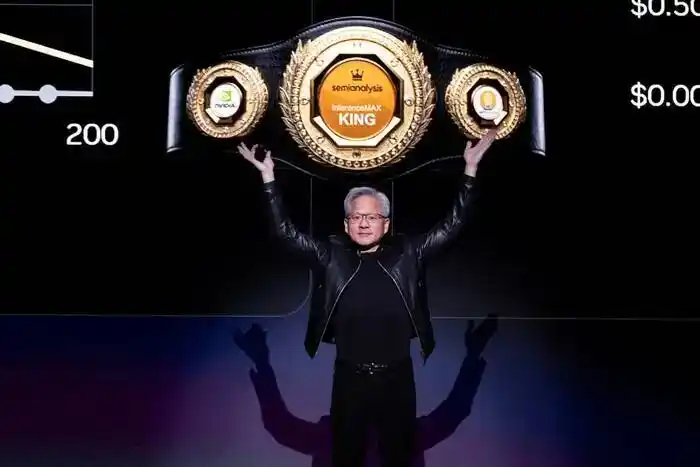
Meta's CTO Bosworth publicly stated that the cost of the AI tokens used by his best engineers is equivalent to their salaries, but their productivity has increased 5 to 10 times. Nvidia's CEO Jensen Huang offered a more specific, bold take: he would be 'deeply worried' if a $500,000-a-year engineer wasn't using at least $250,000 worth of tokens.
To this end, an internal dashboard called 'Claudeonomics' even emerged at Meta, tracking the AI usage of all 85,000+ employees and awarding titles like 'Token Legend' and 'Cache Wizard' to the top 250 consumers.
In 30 days, Meta's total token consumption exceeded 60 trillion.
There's no harm without comparison. While the practice of quantifying AI usage into KPIs for ranking and competition is debatable, the cost of being a step behind is clear for all to see. Learning to code with AI and keeping pace with modern software development is now the only option.
The New Story of AI Siri
If you're an Apple ecosystem user, you've probably cursed at Siri at some point in the past few years. In fact, Apple had planned to release a new Siri in early 2025, but it was subsequently delayed in an internally embarrassing setback.
To solve this problem彻底, Apple conducted a series of drastic power reshuffles over the past year. The most critical step was剥离 the Siri team from former AI chief John Giannandrea and placing it directly under the command of the decisive software engineering SVP, Craig Federighi.
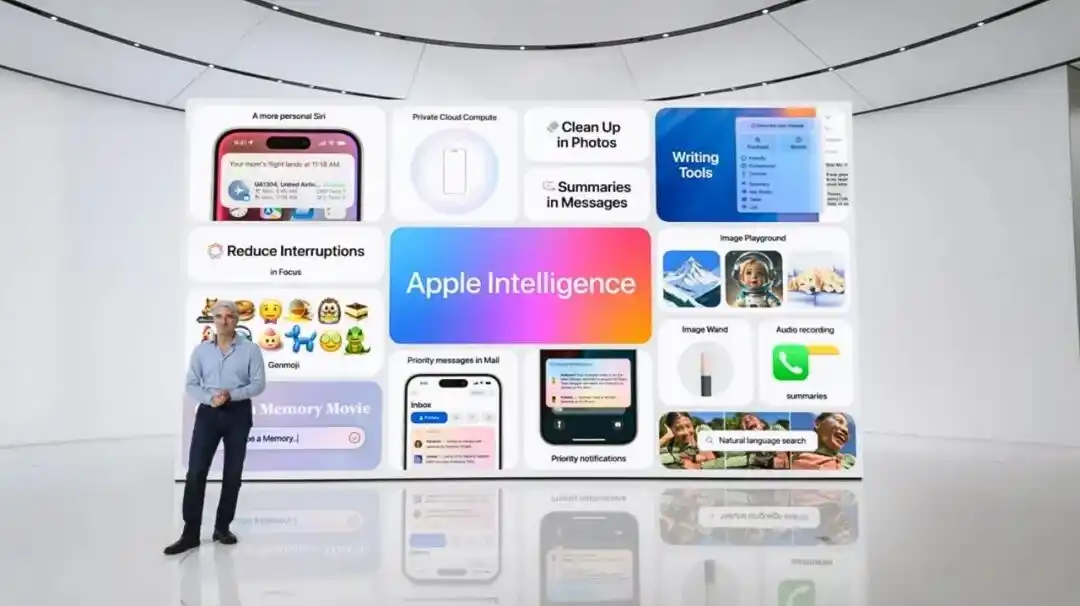
Not only that, Apple also dispatched Mike Rockwell, a core figure behind the Vision Pro, to directly lead Siri product development under Federighi. Giannandrea, who announced his retirement last December, will also formally end his advisory tenure at Apple this week.
The old guard departs, a new king ascends. Apple has finally下定决心, applying the iron-fisted standards used for its top-tier software and hardware to remake Siri for the AI era. However, even Apple cannot conjure up a large language model capable of rivaling ChatGPT, Claude, or Gemini in a short time.
With the 2025 release plan already delayed, to have a sufficiently impressive revamp ready for WWDC this June, Apple had to seek cooperation with its competitor, Google.
According to leaks, the new Siri will be powered by Google's AI model, Gemini. With Gemini integrated, the new Siri will no longer be a simple command executor for setting alarms or checking the weather, but will become a truly capable conversational AI assistant.
Furthermore, it's revealed that the new Siri will not only be able to answer complex logical questions directly, but is even designed to provide 'emotional support' to users and can directly help you complete complex, multi-step, cross-application tasks like 'booking a complete trip'.
Of course, cooperation doesn't mean Apple has abandoned its principles. The two sides are still engaged in difficult negotiations, with the core dispute being: Apple wants Google to provide the servers hosting the new Siri's operation, but must ensure it all complies with Apple's strict privacy and data security standards.
When we step back from Apple's rumors and re-examine the event of 'Siri programmers being sent back to programming school' with its dark humor, a real chill runs down the spine.
Even programmers at the world's top tech companies earning million-dollar salaries can be marginalized and sent for retraining for not mastering AI-assisted programming. So what about ordinary knowledge workers?
AI isn't directly replacing programmers, but programmers who master AI are ruthlessly replacing those who don't. Tools like Claude Code and Codex are turning the craft of coding, once full of 'artisan spirit', into an industrial standard that can be mass-produced on an assembly line.
It's worth noting that this logic isn't flawless. On the 'Claudeonomics' leaderboard created by Meta employees themselves, there have already been instances of employees letting AI agents run tasks for hours on end just to inflate the token numbers.
Tokens are the traces of tool usage, productivity is the result of tool usage, and the two are not always equal. But even so, in an industry where everyone is using AI to amplify output, choosing not to use it is actively diminishing your own value.
The plight of the Siri team is an extremely vivid metaphor: seniority accumulated in the past, the halo of a big tech company, even the coding skills you were once proud of, can all become worthless assets overnight.
At June's WWDC, we might witness the rebirth of a new Siri from the ashes. But behind that发布会 are hundreds of engineers frantically cramming in bootcamp, and a new workplace order where value is being re-weighed and measured by AI.
But think about it from another angle, the Siri team is actually quite lucky.
After all, in this era of using AI for efficiency and cost-cutting, discovering that employees can't keep up but still being willing to spend money and time to send you for 'remedial lessons' and retraining—looking around, perhaps only a company like Apple would do that.
This article is from the WeChat public account "APPSO", author: Discovering Tomorrow's Products