Who Will Take the Flag? How Ethereum Will Navigate the Post-Foundation Era After Losing Its 'Big Brother'

marsbitPublicado a 2026-05-26Actualizado a 2026-05-26

Resumen

**Summary:** Ethereum Foundation (EF) is transitioning to a less central role, prompting debates about its future influence and Ethereum's path forward. Vitalik Buterin has clarified that EF, holding only 0.16% of ETH supply, will focus on core protocol research and public goods, not on supporting ETH's price. He outlined a strategy of organizational streamlining and emphasized technology development around the "CROPS" principles (Censorship-Resistance, Robustness, Openness, Privacy, Security), rather than engaging in direct performance wars with chains like Solana. The article contrasts EF's "long-termist," non-profit model with the more aggressive, fund-driven approaches of newer foundations (e.g., Solana, Aptos) or corporate-backed models like Coinbase's Base. It notes challenges for Ethereum, including talent drain to better-funded competitors and community frustration over ETH's market performance. Despite EF stepping back, Ethereum's mainstream adoption is advancing, highlighted by the potential inclusion of Ethereum DAT companies in major Russell indexes. The piece suggests Ethereum's next phase will rely more on ecosystem self-drive and large external stakeholders (like BitMine, a major ETH holder) for growth, moving into a "post-foundation era." Ultimately, the core question remains how Ethereum can reignite positive momentum through its unique value proposition while navigating this new, less centrally guided landscape.

Author:Nancy,PANews

While leading public chains like Solana and Base are fully engaged in competing for developers, traffic, and ecosystem expansion, the Ethereum Foundation (EF) has chosen to actively take a back seat.

Persistent loss of core talent, combined with multiple rounds of ETH selling pressure, has continuously fueled FUD sentiment surrounding the EF. This seemingly passive strategy is steadily eroding market trust in the EF.

On May 25, Vitalik Buterin published a lengthy response to recent controversies. He proposed that the EF is merely a special node with a specific mission, outlined the EF's future streamlining strategy and technical roadmap, and explicitly stated that maintaining the ETH price does not fall within the EF's responsibility.

After losing its 'leading big brother,' how will Ethereum continue forward in the post-foundation era?

From Executionism to Long-Termism: Diverging Styles of Public Chain Foundations

Recently, controversies over the loss of core foundation members, frequent ETH sales, and debates about ecosystem execution capability have been fermenting, intensifying external skepticism towards the EF, even sparking discussions about starting anew.

Meanwhile, Vitalik's latest disclosure reveals that the EF currently holds only about 0.16% of the total ETH supply, far lower than the common 10%—50% range for many public chain foundations.
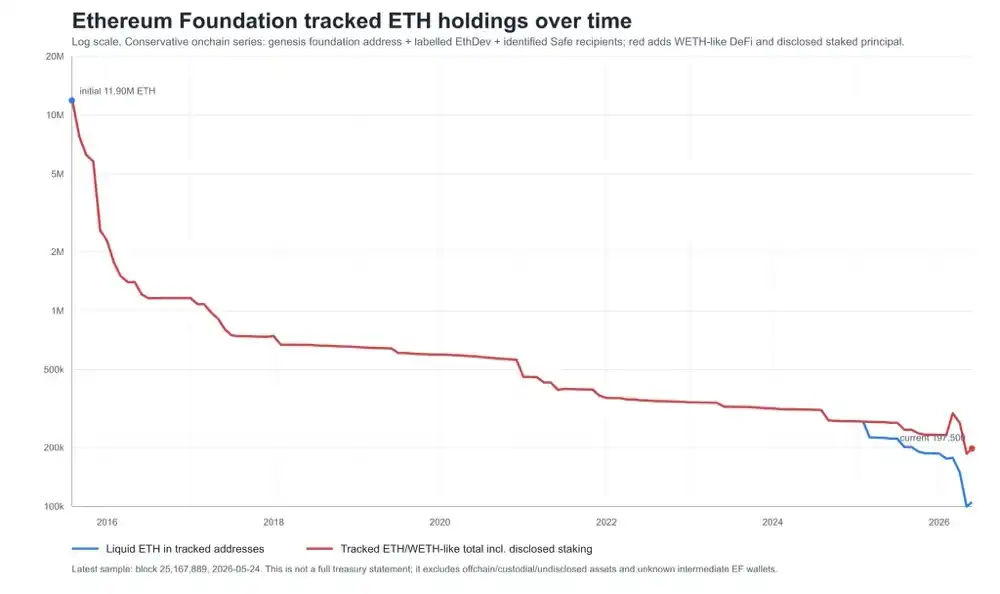
In other words, the EF's initial allocation of approximately 6 million ETH (8.3% of the initial total supply) has been largely depleted over the past decade, leaving around 100,000 ETH. Today, the EF can no longer sustain the role of supporting the vast ecosystem's high-speed operation, whether in terms of financial reserves, personnel scale, or organizational execution capability.

As one of the industry's most representative pure foundations, the EF has long focused on protocol research, public goods development, and open-source ecosystem support. Although the EF does not directly control the Ethereum network, its early accumulation of ETH reserves and the sustained influence of key developers like Vitalik have long positioned it as a crucial coordinating and driving force within the Ethereum ecosystem.

However, as the Ethereum ecosystem matures, the EF and Vitalik are intentionally diminishing their centralized influence, transitioning to a more low-key, backstage supporting role. This shift stems from adherence to neutrality and long-termism on one hand, and is constrained by practical pressures on the other.

As the EF's role within Ethereum diminishes, the singular growth path that ecosystem projects once relied on—heavily dependent on foundation resources and support—is gradually becoming obsolete. Ecosystem expansion is shifting towards community-driven innovation and diverse external collaboration.

Indeed, the foundation models of different public chains not only shape their respective governance cultures but also determine the ecosystem's maturity, degree of decentralization, and long-term evolutionary path.

In contrast, other emerging public chains are still in a phase of intense expansion, where foundations play a more aggressive and dominant role. For example, emerging chains like Solana, Aptos, and TON adopt more flexible foundation-driven models. By holding a high proportion of tokens early on, they implement high-intensity resource investment, continuous incentive programs, and support from DAT companies, sometimes with founding teams directly involved, to maintain high execution efficiency and growth speed.

Base represents another path. As a Coinbase-supported L2, it does not rely on a traditional independent foundation structure. Instead, it leverages parent company resources and commercial networks to drive ecosystem development, supplemented by ecosystem funds to promote developer and application integration. The advantage of this model lies in its high resource integration efficiency, enabling rapid user growth and product implementation.

Chains like Polygon and Avalanche employ a hybrid architecture with both a foundation and Labs. The foundation is responsible for governance transparency and community public affairs, while Labs focuses on product development and commercial execution. This avoids excessive centralization in a single entity while enhancing decision-making and implementation speed. The Hyperliquid Foundation follows a more financially-native governance path, deeply integrating governance rights, economic incentives, and ecosystem development funds through token mechanisms. It also allocates some resources for policy research and external communication, enhancing the ecosystem's self-sustainability and adaptability.

More importantly, as emerging public chains are still in fierce expansion and competition, they generally offer high cash salaries and substantial token incentives to aggressively attract developer resources, holding a clear advantage in the short-term talent war. In comparison, Ethereum is not competitive in terms of compensation. It relies more on developers' idealism, open-source culture identification, and the long-term ecosystem reputation to sustain contributions. Meanwhile, many core developers who entered the Ethereum ecosystem early have already gained considerable financial returns during the last bull market. Some members have gradually stepped back from frontline development and maintenance roles, leading to a noticeable shortage of sustained execution manpower within the ecosystem.

It can be said that the EF's transformation is both a result of Ethereum's developmental evolution and a long-term survival choice made under constraints of funding and execution capability.

Foundation to Reduce Token Sales; ETH Value Growth Needs More Major Holders

"The Ethereum Foundation has done a lot of technical work, but the market views it as a company, so this expectation gap leads to dissatisfaction. In other words, it's all about the price," the crypto KOL Lanhu Notes pinpointed the crux of the issue.

For the Ethereum community, almost all controversies eventually circle back to the issue of ETH's stagnant price.
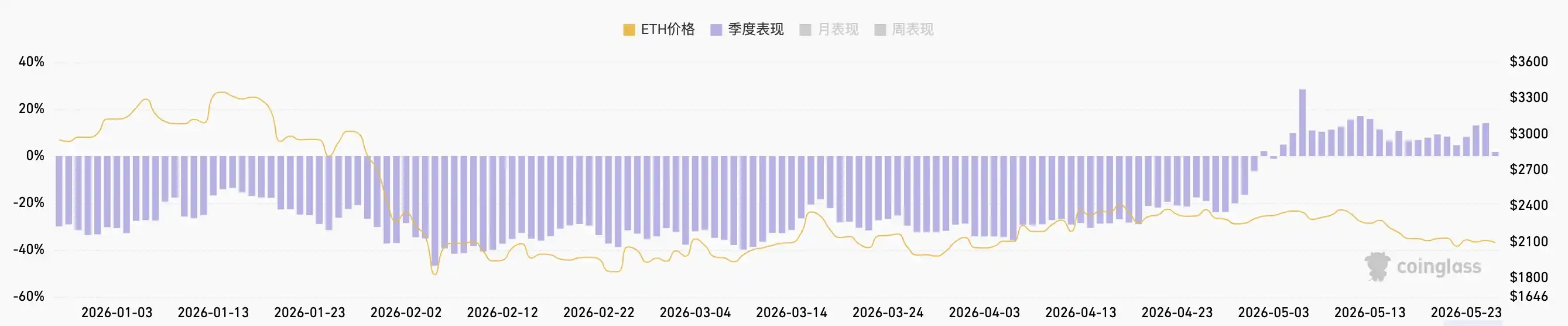
Crypto journalist Laura Shin pointed out that since the Dencun upgrade, Ethereum's series of roadmap choices have consistently lacked sufficient consideration for tokenomics, overly focusing on ideology while neglecting capital markets and price performance, leading to dissatisfaction within the community and among investors. Having external organizations participate can only aid business expansion, not fundamentally solve market issues at the asset level of ETH.

More importantly, the competition has just begun. Laura Shin believes we are currently at a critical stage for real-world adoption. However, compared to competitors actively capturing market share, attracting developers, and capital, the Ethereum Foundation seems increasingly reliant on past successes. Especially when the most competitive talents within the ecosystem continue to leave, this laissez-faire attitude may ultimately help competitors grow stronger and even give rise to new challengers.

Vitalik also responded to market skepticism in his long post. He emphasized that ETH is Ethereum's most valuable product, and the scale of ETH value currently carried and secured by the Ethereum network has reached approximately $250 billion. He disclosed that over 90% of his personal net worth is allocated to ETH, with the remainder primarily consisting of about $40 million in on-chain fiat assets, which he has fully invested in open-source biotech, software, and hardware projects.

However, Vitalik also stated that although the foundation will reduce ETH sales in the future, maintaining the ETH price is not within the EF's scope of responsibility. In his view, the Ethereum ecosystem already contains numerous individuals and institutions with financial resources far exceeding the EF. To truly drive ETH asset value growth, more ecosystem 'heroes' need to work together. The EF is also planning to establish connections with such organizations, providing them with necessary initial support.

Blockchain researcher William Mougayar expressed a similar view. He believes ETH is essentially an asset, Ethereum is a shared computing infrastructure, and the Ethereum Foundation is merely a non-profit organization responsible for promoting protocol development. One of its long-term goals is even to "gradually make the founders themselves less important."

As the EF actively recedes into the background, ETH is entering a new stage that relies more on ecosystem self-drive.

While the community is anxious about ETH's price, Ethereum's mainstream adoption is accelerating. Two Ethereum DAT companies, BitMine and Sharplink, are expected to be included in the US Russell Indexes on June 29 this year. Specifically, BMNR will be included in the Russell 1000 Index and Russell 3000 Index, while SBET will be included in the Russell 2000 Index and Russell 3000 Index.

According to BitMine Chairman Tom Lee, based on BitMine's current market capitalization of $107.5 billion, if successfully included, BitMine would attract at least $2.15 billion in buying funds.

Lanhu Notes further pointed out that global funds tracking the Russell 2000 and Russell 3000 indexes are in the trillions of dollars. Once officially included, relevant index funds are compelled to allocate the corresponding stocks. This opens the floodgates of passive funds for SBET and BMNR, allowing a large number of ordinary investors who previously had no exposure to the crypto market to automatically hold these stocks, pushing Ethereum into the mainstream channel of traditional finance. Passive fund buying creates real demand, often providing short-term support for stock prices around the inclusion date, and in the long term, increases stock liquidity and institutional holding ratios. It should be noted that while these funds are buying stocks, not ETH itself, it may indirectly strengthen market demand for ETH.

In the post-foundation era, who might be the next leader of the Ethereum community? Tom Lee has begun volunteering. His affiliated Fundstrat and BitMine are seen by the community as the best candidates. BitMine holds approximately 5.28 million ETH, accounting for 4.37% of the total supply, making it the largest ETH treasury globally.

Rejecting the Performance War, Adhering to CROPS Values

Beyond the new positioning of the Ethereum Foundation, Vitalik also shared his personal thoughts on Ethereum's future technical roadmap.

In Vitalik's view, Ethereum must build unique and hard-to-replicate competitiveness. With AI technology rapidly evolving and the entire tech industry experiencing explosive growth, if Ethereum merely clings to the existing EVM architecture and only meets short-term user demands through periodic hard forks, it will gradually lose its appeal.

He believes that simply chasing high-speed scaling, with only a slight advantage in decentralization over other chains, will ultimately relegate Ethereum to mediocrity. Ethereum needs to scale while also focusing on CROPS: the five dimensions of censorship resistance, liveness & protection against economic capture, open, privacy, and security.

Indeed, over the past few years, market attention on public chain competition has almost entirely focused on performance, cost, and user growth. Whether it's Solana, Sui, or various modular narratives, the competition essentially revolves around being "faster, cheaper, and easier to use."

However, Vitalik clearly does not want Ethereum to continue being drawn into this performance race. Because, looking at realistic outcomes, it's difficult for Ethereum to completely outperform the new generation of high-performance public chains in terms of performance. And if it continuously sacrifices its own characteristics for performance, it will gradually lose its core value foundation.

Vitalik specifically emphasized that for underlying infrastructure-level public chains like Ethereum and Bitcoin, even if 34% of nodes go offline, they absolutely cannot rely on social consensus or hard forks to 'bail out.' This might be acceptable for chains like Hyperledger, BNB, or Solana, but it is unacceptable for Ethereum, Bitcoin, Zcash, and others.

Simultaneously, state scaling is also a key research direction for Ethereum. And well-designed L2 networks can continue to provide value for the ecosystem. Especially in vertical scenarios like transactions and privacy, dedicated L2s still hold significant importance. Furthermore, with the advancement of erasure code P2P technology and other optimization solutions, Ethereum's future block intervals are also expected to be shortened further.

Compared to ecosystem prosperity, the current Vitalik seems more concerned with Ethereum maintaining its irreplaceability—a technical roadmap imbued with Vitalik's values.

In Vitalik's view, if a company appears too dogmatic in adhering to its principles, the worst outcome is merely a slowdown in its own development, while technological progress will continue to be driven by other companies. The best outcome, however, is that a company truly aligned with the community's values can gain spontaneous support, talent, and marketing resources from the community—support that is difficult to obtain through money alone. He believes that some AI companies have previously attempted to achieve similar effects through effective altruism, but due to the corruptibility of consequentialism, the results were limited.

In the post-foundation era, even as the EF gradually recedes from the center stage of Ethereum under the banner of neutrality and long-termism, whether it can truly quell negative market sentiment remains unknown. A more critical question is how Ethereum, caught in a downtrend cycle, can initiate an upward trajectory through roadmap reforms—a topic of greater concern to the market.

Lecturas Relacionadas

On-chain Analyst: Why Are Most Zcash Transactions Still Traceable?

Title: Why Most Zcash Transactions Remain Traceable Zcash, a privacy-focused cryptocurrency launched in 2016, was designed to offer anonymity by hiding transaction details like sender, receiver, and amount using zero-knowledge proof technology (zk-SNARKs). However, in practice, a significant portion of ZEC transactions are still traceable on-chain. The key reason is Zcash's dual-address system. It features transparent addresses (t-addresses), which work like standard Bitcoin addresses with all data public, and shielded addresses (z-addresses) that encrypt transaction details. There are four transaction types with varying privacy levels: fully transparent (t→t), partially shielded (t→z and z→t), and fully private (z→z). Despite its privacy capabilities, most real-world Zcash activity involves transparent addresses, primarily because major exchanges and institutions use them for regulatory compliance. As a result, blockchain analytics platforms like Arkham can track and attribute a substantial volume of Zcash transactions. Arkham reports it has identified entities behind over $420 billion in ZEC transaction volume. Case studies highlight this traceability: the U.S. government holds seized Zcash from a dark web case, visible via its transparent wallet, and individual traders' profitable moves are trackable from purchase to exchange deposit. In conclusion, Zcash's privacy is not inherent but user-dependent. While purely shielded (z→z) transactions remain cryptographically private, the prevalence of transparent address usage makes much of the network's activity traceable. The actual privacy protection offered depends entirely on how users choose to transact.

marsbitHace 16 min(s)

On-chain Analyst: Why Are Most Zcash Transactions Still Traceable?

marsbitHace 16 min(s)

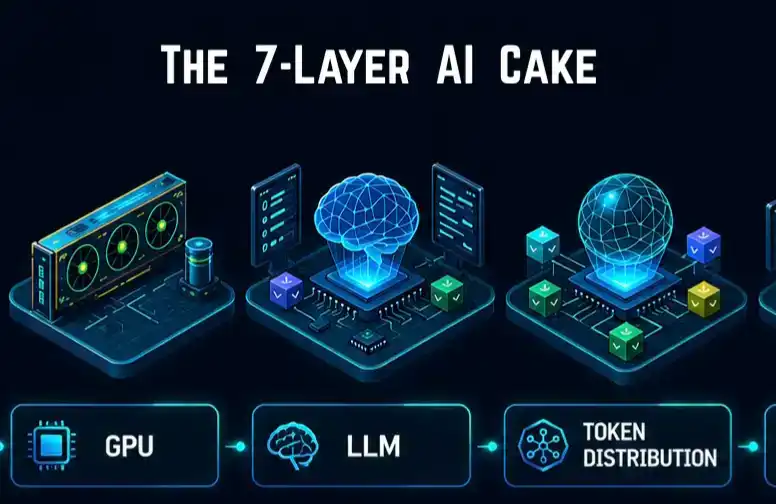
From Power Infrastructure to Token Economy: The 'Seven-Layer Cake' of the AI Industry Chain

From Power Grid to Token Economy: The AI Industry's "Seven-Layer Cake" The AI industry is shifting from a "model-centric" paradigm focused on massive training to a "token-centric" industrial era driven by inference demand. This new phase revolves around the production, distribution, scheduling, and consumption of tokens—the units of computation used by AI agents for every interaction and task. The article proposes a "seven-layer cake" framework for the AI economy: 1. **Power**: The foundational energy source, with competition shifting to securing stable, low-cost electricity. 2. **AIDC (AI Data Centers)**: Large-scale "Token factories." A trend toward smaller, modular, and regionally deployed AI Factories is emerging for efficiency and proximity to users. 3. **GPU**: The core production hardware for tokens. While NVIDIA dominates, competition exists from AMD, ASIC makers, and Chinese chipmakers, with a growing focus on inference efficiency. 4. **LLMs**: The "engines" that generate tokens. The competition is evolving beyond model size to prioritize factors like token cost, inference efficiency, and operational synergy with infrastructure. 5. **Token Distribution**: The "grid" that allocates and rents out compute resources, led by cloud giants and specialized AI-native platforms. 6. **Token Optimization & Intelligent Scheduling**: The critical "brain" layer that intelligently routes tasks (e.g., to local, cloud, or edge models) for optimal cost, latency, and privacy—maximizing the value of each token. 7. **AI Agents & Models**: The end consumers of tokens. The vision involves billions of AI agents working and interacting concurrently, consuming vast amounts of tokens. Currently, the industry faces fragmentation and inefficiencies between these layers. The true "mass adoption era" of AI will begin only when this seven-layer infrastructure is fully integrated and operates as a cohesive, intelligent network—transforming AI from a software tool into a global industrial system spanning energy, hardware, and compute logistics.

marsbitHace 37 min(s)

From Power Infrastructure to Token Economy: The 'Seven-Layer Cake' of the AI Industry Chain

marsbitHace 37 min(s)

Semiconductors up 78% annually, software down 12% annually: The 'Liquidity Siphon' is playing out within tech stocks

Semiconductor ETFs like SOXX have surged 78.5% year-to-date, while software ETFs like IGV have dropped 12.5%, creating a record performance gap exceeding 90 percentage points. This reflects a major "liquidity suction" within tech stocks, with capital flooding into semiconductors as software faces selling pressure. Driving the semiconductor boom are staggering capital expenditure plans from hyperscalers like Microsoft, Alphabet, Amazon, and Meta, whose combined 2026 capex is projected near $700 billion. This fuels demand for chips, with companies like SanDisk (up 426%), Intel (up 222%), and Micron (up 154%) leading the S&P 500. In contrast, major software firms like Microsoft, Adobe, and Salesforce are all down over 17% year-to-date. The software sector faces a dual challenge: capital is being redirected to semiconductors, and the rise of AI agents like Claude Code threatens traditional SaaS business models, triggering a narrative of AI displacement. Key unanswered questions remain: How long can hyperscalers sustain their massive capex, given potential free cash flow pressures? And will capital eventually rotate back into the deeply oversold software sector? While some analysts warn of a potential semiconductor bubble akin to the dot-com era, the sector's powerful momentum continues, making market timing exceptionally difficult.

marsbitHace 37 min(s)

Semiconductors up 78% annually, software down 12% annually: The 'Liquidity Siphon' is playing out within tech stocks

marsbitHace 37 min(s)

Trading

Spot
Futuros

Artículos destacados

Qué es ETH 2.0

ETH 2.0: Una Nueva Era para Ethereum Introducción ETH 2.0, conocido ampliamente como Ethereum 2.0, marca una actualización monumental para la blockchain de Ethereum. Esta transición no es solo una mejora superficial; busca mejorar fundamentalmente la escalabilidad, seguridad y sostenibilidad de la red. Con un cambio del mecanismo de consenso intensivo en energía Prueba de Trabajo (PoW) a una Prueba de Participación (PoS) más eficiente, ETH 2.0 promete un enfoque transformador para el ecosistema blockchain. ¿Qué es ETH 2.0? ETH 2.0 es un conjunto de actualizaciones interconectadas y distintivas centradas en optimizar las capacidades y el rendimiento de Ethereum. La reestructuración está diseñada para abordar desafíos críticos que el mecanismo actual de Ethereum ha enfrentado, particularmente en lo que respecta a la velocidad de transacción y la congestión de la red. Objetivos de ETH 2.0 Los objetivos principales de ETH 2.0 giran en torno a mejorar tres aspectos clave: Escalabilidad: Con el objetivo de aumentar significativamente el número de transacciones que la red puede manejar por segundo, ETH 2.0 busca superar la limitación actual de aproximadamente 15 transacciones por segundo, potencialmente alcanzando miles. Seguridad: Las medidas de seguridad mejoradas son fundamentales para ETH 2.0, particularmente a través de una mejor resistencia contra ciberataques y la preservación del ethos descentralizado de Ethereum. Sostenibilidad: El nuevo mecanismo PoS está diseñado no solo para mejorar la eficiencia, sino también para reducir drásticamente el consumo de energía, alineando el marco operativo de Ethereum con consideraciones ambientales. ¿Quién es el Creador de ETH 2.0? La creación de ETH 2.0 se puede atribuir a la Fundación Ethereum. Esta organización sin fines de lucro, que desempeña un papel crucial en el apoyo al desarrollo de Ethereum, es liderada por el notable cofundador Vitalik Buterin. Su visión de un Ethereum más escalable y sostenible ha sido la fuerza motriz detrás de esta actualización, involucrando contribuciones de una comunidad global de desarrolladores y entusiastas dedicados a mejorar el protocolo. ¿Quiénes son los Inversores de ETH 2.0? Si bien los detalles sobre los inversores de ETH 2.0 no se han hecho públicos, se sabe que la Fundación Ethereum recibe apoyo de varias organizaciones e individuos en el ámbito de blockchain y tecnología. Estos socios incluyen firmas de capital de riesgo, compañías tecnológicas y organizaciones filantrópicas que comparten un interés mutuo en apoyar el desarrollo de tecnologías descentralizadas e infraestructura blockchain. ¿Cómo Funciona ETH 2.0? ETH 2.0 se distingue por introducir una serie de características clave que lo diferencian de su predecesor. Prueba de Participación (PoS) La transición a un mecanismo de consenso PoS es uno de los cambios más destacados de ETH 2.0. A diferencia de PoW, que se basa en la minería intensiva en energía para la verificación de transacciones, PoS permite a los usuarios validar transacciones y crear nuevos bloques de acuerdo con la cantidad de ETH que apuestan en la red. Esto conduce a una mayor eficiencia energética, reduciendo el consumo en aproximadamente un 99.95%, convirtiendo a Ethereum 2.0 en una alternativa considerablemente más verde. Cadenas Shard Las cadenas shard son otra innovación crítica de ETH 2.0. Estas cadenas más pequeñas operan en paralelo con la cadena principal de Ethereum, lo que permite que múltiples transacciones sean procesadas simultáneamente. Este enfoque mejora la capacidad general de la red, abordando las preocupaciones de escalabilidad que han afectado a Ethereum. Cadena Beacon En el núcleo de ETH 2.0 se encuentra la Cadena Beacon, que coordina la red y gestiona el protocolo PoS. Funciona como un organizador de cierta manera: supervisa a los validadores, asegura que los shards permanezcan conectados a la red y monitorea la salud general del ecosistema blockchain. Cronología de ETH 2.0 El viaje de ETH 2.0 ha estado marcado por varios hitos clave que trazan la evolución de esta importante actualización: Diciembre 2020: El lanzamiento de la Cadena Beacon marcó la introducción de PoS, preparándose para la migración hacia ETH 2.0. Septiembre 2022: La finalización de “La Fusión” representa un momento crucial en el que la red Ethereum se trasladó exitosamente de un marco PoW a uno PoS, anunciando una nueva era para Ethereum. 2023: El lanzamiento esperado de cadenas shard tiene como objetivo mejorar aún más la escalabilidad de la red Ethereum, consolidando a ETH 2.0 como una plataforma robusta para aplicaciones y servicios descentralizados. Características Clave y Beneficios Escalabilidad Mejorada Una de las ventajas más significativas de ETH 2.0 es su escalabilidad mejorada. La combinación de PoS y cadenas shard permite que la red expanda su capacidad, permitiendo acomodar un volumen mucho mayor de transacciones en comparación con el sistema heredado. Eficiencia Energética La implementación de PoS representa un gran paso hacia la eficiencia energética en la tecnología blockchain. Al reducir drásticamente el consumo de energía, ETH 2.0 no solo disminuye los costos operativos, sino que también se alinea más estrechamente con los objetivos de sostenibilidad global. Seguridad Mejorada Los mecanismos actualizados de ETH 2.0 contribuyen a mejorar la seguridad en toda la red. El despliegue de PoS, junto con las medidas de control innovadoras establecidas a través de cadenas shard y la Cadena Beacon, asegura un mayor grado de protección contra posibles amenazas. Costos Más Bajos para los Usuarios A medida que la escalabilidad mejora, los efectos sobre los costos de transacción también serán evidentes. Se espera que una mayor capacidad y una menor congestión se traduzcan en tarifas más bajas para los usuarios, haciendo que Ethereum sea más accesible para transacciones cotidianas. Conclusión ETH 2.0 marca una evolución significativa en el ecosistema blockchain de Ethereum. A medida que aborda problemas fundamentales como la escalabilidad, el consumo de energía, la eficiencia en las transacciones y la seguridad general, la importancia de esta actualización no puede ser subestimada. La transición a la Prueba de Participación, la introducción de cadenas shard y el trabajo fundamental de la Cadena Beacon son indicativos de un futuro donde Ethereum puede satisfacer las crecientes demandas del mercado descentralizado. En una industria impulsada por la innovación y el progreso, ETH 2.0 se erige como un testimonio de las capacidades de la tecnología blockchain para allanar el camino hacia una economía digital más sostenible y eficiente.

166 Vistas totalesPublicado en 2024.04.04Actualizado en 2024.12.03

Qué es ETH 2.0

Qué es ETH 3.0

ETH3.0 y $eth 3.0: Un Examen Profundo del Futuro de Ethereum Introducción En el paisaje en rápida evolución de las criptomonedas y la tecnología blockchain, ETH3.0, a menudo denotado como $eth 3.0, ha surgido como un tema de considerable interés y especulación. El término abarca dos conceptos principales que merecen aclaración: Ethereum 3.0: Esto representa una posible actualización futura destinada a aumentar las capacidades de la blockchain existente de Ethereum, enfocándose particularmente en mejorar la escalabilidad y el rendimiento. ETH3.0 Meme Token: Este proyecto de criptomoneda distinto busca aprovechar la blockchain de Ethereum para crear un ecosistema centrado en memes, promoviendo la participación dentro de la comunidad de criptomonedas. Comprender estos aspectos de ETH3.0 es esencial no solo para los entusiastas de las criptomonedas, sino también para aquellos que observan tendencias tecnológicas más amplias en el espacio digital. ¿Qué es ETH3.0? Ethereum 3.0 Ethereum 3.0 se presenta como una actualización propuesta para la red de Ethereum ya establecida, que ha sido la columna vertebral de muchas aplicaciones descentralizadas (dApps) y contratos inteligentes desde su inicio. Las mejoras previstas se concentran principalmente en la escalabilidad, integrando tecnologías avanzadas como sharding y pruebas de conocimiento cero (zk-proofs). Estas innovaciones tecnológicas tienen como objetivo facilitar un número sin precedentes de transacciones por segundo (TPS), potencialmente alcanzando millones, abordando así una de las limitaciones más significativas que enfrenta la tecnología blockchain actual. La mejora no es meramente técnica, sino también estratégica; está destinada a preparar la red de Ethereum para su adopción generalizada y utilidad en un futuro marcado por una mayor demanda de soluciones descentralizadas. ETH3.0 Meme Token En contraste con Ethereum 3.0, el ETH3.0 Meme Token se aventura en un ámbito más ligero y juguetón al combinar la cultura de memes de internet con la dinámica de las criptomonedas. Este proyecto permite a los usuarios comprar, vender e intercambiar memes en la blockchain de Ethereum, proporcionando una plataforma que fomenta la participación comunitaria a través de la creatividad y los intereses compartidos. El ETH3.0 Meme Token tiene como objetivo demostrar cómo la tecnología blockchain puede intersectarse con la cultura digital, creando casos de uso que son tanto entretenidos como financieramente viables. ¿Quién es el Creador de ETH3.0? Ethereum 3.0 La iniciativa hacia Ethereum 3.0 es impulsada principalmente por un consorcio de desarrolladores e investigadores dentro de la comunidad de Ethereum, incluyendo notablemente a Justin Drake. Conocido por sus ideas y contribuciones a la evolución de Ethereum, Drake ha sido una figura prominente en las discusiones sobre la transición de Ethereum a una nueva capa de consenso, denominada “Beam Chain.” Este enfoque colaborativo para el desarrollo significa que Ethereum 3.0 no es el producto de un creador singular, sino más bien una manifestación de ingenio colectivo centrado en avanzar la tecnología blockchain. ETH3.0 Meme Token Los detalles sobre el creador del ETH3.0 Meme Token son actualmente inidentificables. La naturaleza de los tokens de memes a menudo conduce a una estructura más descentralizada y dirigida por la comunidad, lo que podría explicar la falta de atribución específica. Esto se alinea con la ética de la comunidad cripto más amplia, donde la innovación a menudo surge de esfuerzos colaborativos en lugar de individuales. ¿Quiénes son los Inversores de ETH3.0? Ethereum 3.0 El apoyo a Ethereum 3.0 proviene principalmente de la Fundación Ethereum junto con una entusiasta comunidad de desarrolladores e inversores. Esta asociación fundamental proporciona un grado significativo de legitimidad y mejora la perspectiva de una implementación exitosa, ya que aprovecha la confianza y credibilidad construidas a lo largo de años de operaciones en la red. En el clima cambiando rápidamente de las criptomonedas, el apoyo de la comunidad juega un papel crucial en impulsar el desarrollo y la adopción, posicionando a Ethereum 3.0 como un contendiente serio para futuros avances en blockchain. ETH3.0 Meme Token Si bien las fuentes actualmente disponibles no proporcionan información explícita sobre las fundaciones o organizaciones de inversión que respaldan el ETH3.0 Meme Token, es indicativo del modelo de financiamiento típico para tokens de memes, que a menudo depende del apoyo de base y la participación comunitaria. Los inversores en tales proyectos suelen consistir en individuos motivados por el potencial de innovación impulsada por la comunidad y el espíritu de cooperación que se encuentra dentro de la comunidad cripto. ¿Cómo Funciona ETH3.0? Ethereum 3.0 Las características distintivas de Ethereum 3.0 radican en su implementación propuesta de sharding y tecnología zk-proof. Sharding es un método de particionamiento de la blockchain en piezas más pequeñas y manejables o “shards,” que pueden procesar transacciones de manera concurrente en lugar de secuencial. Esta descentralización del procesamiento ayuda a prevenir la congestión y asegura que la red permanezca receptiva incluso bajo una carga pesada. La tecnología de prueba de conocimiento cero (zk-proof) contribuye con otra capa de sofisticación al permitir la validación de transacciones sin revelar los datos subyacentes involucrados. Este aspecto no solo mejora la privacidad, sino que también aumenta la eficiencia general de la red. También se habla de incorporar una Máquina Virtual de Ethereum de conocimiento cero (zkEVM) en esta actualización, amplificando aún más las capacidades y utilidad de la red. ETH3.0 Meme Token El ETH3.0 Meme Token se distingue al capitalizar la popularidad de la cultura de memes. Establece un mercado para que los usuarios participen en el comercio de memes, no solo por entretenimiento sino también por el posible beneficio económico. Al integrar características como staking, provisión de liquidez y mecanismos de gobernanza, el proyecto fomenta un entorno que incentiva la interacción y participación de la comunidad. Al ofrecer una mezcla única de entretenimiento y oportunidad económica, el ETH3.0 Meme Token tiene como objetivo atraer a una audiencia diversa, que abarca desde entusiastas de las criptomonedas hasta conocedores casuales de memes. Línea de Tiempo de ETH3.0 Ethereum 3.0 11 de noviembre de 2024: Justin Drake insinúa la próxima actualización de ETH 3.0, centrada en mejoras de escalabilidad. Este anuncio significa el comienzo de las discusiones formales sobre la futura arquitectura de Ethereum. 12 de noviembre de 2024: Se espera que la propuesta anticipada para Ethereum 3.0 se desvele en Devcon en Bangkok, preparando el escenario para una mayor retroalimentación de la comunidad y posibles próximos pasos en el desarrollo. ETH3.0 Meme Token 21 de marzo de 2024: El ETH3.0 Meme Token se lista oficialmente en CoinMarketCap, marcando su incursión en el dominio público de las criptomonedas y mejorando la visibilidad de su ecosistema basado en memes. Puntos Clave En conclusión, Ethereum 3.0 representa una evolución significativa dentro de la red de Ethereum, enfocándose en superar las limitaciones en términos de escalabilidad y rendimiento a través de tecnologías avanzadas. Sus actualizaciones propuestas reflejan un enfoque proactivo hacia las demandas y la usabilidad futura. Por otro lado, el ETH3.0 Meme Token encapsula la esencia de la cultura impulsada por la comunidad en el espacio de las criptomonedas, aprovechando la cultura de memes para crear plataformas atractivas que fomentan la creatividad y participación del usuario. Comprender los distintos propósitos y funcionalidades de ETH3.0 y $eth 3.0 es fundamental para cualquiera interesado en los desarrollos en curso dentro del espacio cripto. Con ambas iniciativas abriendo caminos únicos, subrayan colectivamente la naturaleza dinámica y multifacética de la innovación en blockchain.

178 Vistas totalesPublicado en 2024.04.04Actualizado en 2024.12.03

Qué es ETH 3.0

Cómo comprar ETH

¡Bienvenido a HTX.com! Hemos hecho que comprar Ethereum (ETH) sea simple y conveniente. Sigue nuestra guía paso a paso para iniciar tu viaje de criptos.Paso 1: crea tu cuenta HTXUtiliza tu correo electrónico o número de teléfono para registrarte y obtener una cuenta gratuita en HTX. Experimenta un proceso de registro sin complicaciones y desbloquea todas las funciones.Obtener mi cuentaPaso 2: ve a Comprar cripto y elige tu método de pagoTarjeta de crédito/débito: usa tu Visa o Mastercard para comprar Ethereum (ETH) al instante.Saldo: utiliza fondos del saldo de tu cuenta HTX para tradear sin problemas.Terceros: hemos agregado métodos de pago populares como Google Pay y Apple Pay para mejorar la comodidad.P2P: tradear directamente con otros usuarios en HTX.Over-the-Counter (OTC): ofrecemos servicios personalizados y tipos de cambio competitivos para los traders.Paso 3: guarda tu Ethereum (ETH)Después de comprar tu Ethereum (ETH), guárdalo en tu cuenta HTX. Alternativamente, puedes enviarlo a otro lugar mediante transferencia blockchain o utilizarlo para tradear otras criptomonedas.Paso 4: tradear Ethereum (ETH)Tradear fácilmente con Ethereum (ETH) en HTX's mercado spot. Simplemente accede a tu cuenta, selecciona tu par de trading, ejecuta tus trades y monitorea en tiempo real. Ofrecemos una experiencia fácil de usar tanto para principiantes como para traders experimentados.

4.1k Vistas totalesPublicado en 2024.12.10Actualizado en 2025.03.21

Cómo comprar ETH

Discusiones

Bienvenido a la comunidad de HTX. Aquí puedes mantenerte informado sobre los últimos desarrollos de la plataforma y acceder a análisis profesionales del mercado. A continuación se presentan las opiniones de los usuarios sobre el precio de ETH (ETH).

活动图片