You've Never Heard of These Equipment Companies, and They're Appearing in Batches
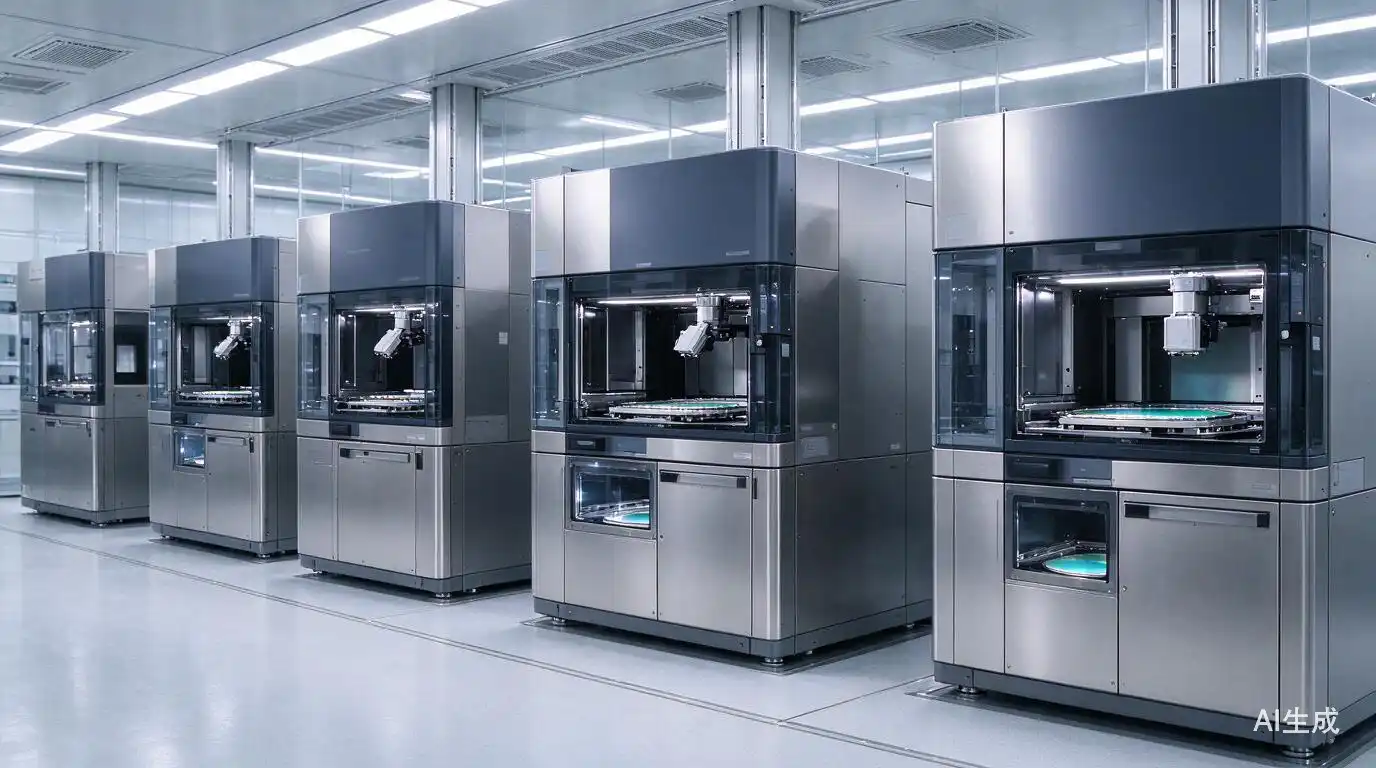
A wave of new Chinese semiconductor equipment companies has emerged since 2024—names like Egram, Shenwei Zhichuang, Hengsheng Tianji, and others—most backed by state capital or major industrial players rather than traditional VCs. Registered capital ranges from tens of millions to 5.566 billion yuan, and many are targeting low-domesticated segments such as lithography, metrology, light sources, and advanced etching. Three common traits stand out: state or corporate dominance, a consistent focus on hard-to-localize links, and capital arriving before products.
The core challenge in semiconductor equipment is not building a prototype but securing fab validation. Fabs are reluctant to risk yield on unproven tools, creating a vicious cycle: no machine time means no process data, no data means no orders, and no orders means no funding for iteration. This round of change centers on solving that validation bottleneck.
A multi-layered validation ecosystem has formed. Public pilot lines for third-generation semiconductors, silicon photonics, MEMS, and specialty processes offer low-cost, high-tolerance machine time—Pinghu Laboratory's 8-inch line, for example, has validated hundreds of domestic tools. New fabs reserve isolated validation slots during planning, as Huarun Micro does for power devices. Risk-sharing mechanisms, such as Xiamen's 50% cost subsidy (up to 5 million yuan per firm) and national first-unit insurance covering up to 80% of premiums, reduce downstream trial costs.
Demand has also diversified. AI-driven HBM and server expansion boosted fab capex, while export controls and 12–18 month lead times for foreign tools forced fabs to try domestic alternatives. Many new fab projects—new storage IDMs, specialty process plants, power and compound semiconductor lines, advanced packaging—are independent from established players and motivated to adopt domestic suppliers. Local funds often invest in both fabs and equipment firms, coordinating validation slots internally, though hard metrics like particle control and MTBF remain strict.
Talent and capital conditions matured only recently. The 2018–2022 expansion trained a pool of engineers skilled in complete tools, process, vacuum RF, precision motion, and optics. Investors now accept years without revenue, betting on narrow segments—electron-beam metrology, light sources, vacuum subsystems, specialty cleaning, bonding—that avoid direct competition with established leaders and fit the new validation ecosystem.
The industry is shifting from isolated breakthroughs by a few leaders to cluster-wide supply chain filling. Yet risks abound: multiple teams crowd the same niche, pilot-line success may not survive mass-production stability tests, over-reliance on affiliated lines can lead to customization traps, and new fab delays can abruptly halt validation.
marsbit25m ago