City of Baltimore goes after prediction markets for sports betting

cointelegraphPublicado a 2026-08-13Actualizado a 2026-08-13

Resumen

The City of Baltimore and Mayor Brendan Scott have filed lawsuits against prediction market platforms Kalshi and Polymarket. The city alleges these companies operate illegal, unlicensed sports-betting platforms that mislead users about the legality of their products. Officials argue that event contracts traded on these platforms constitute unlawful wagers under Maryland state law, not legitimate financial instruments. The complaint also names Robinhood, Webull, and Coinbase as partners in these alleged deceptive practices. This action represents a significant clash between state authorities and the U.S. Commodity Futures Trading Commission (CFTC), which asserts regulatory jurisdiction over such markets, classifying event contracts as "swaps." A Polymarket spokesperson countered that the city's lawsuit contradicts the established federal regulatory framework. Legal experts anticipate the conflict may ultimately require a Supreme Court resolution.

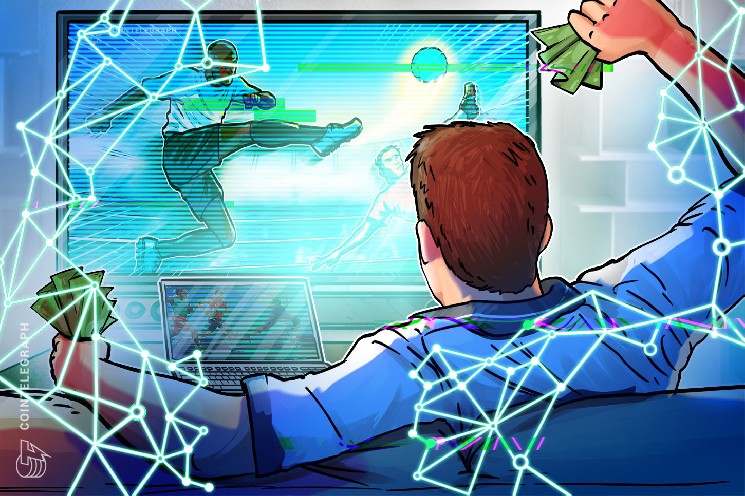
The City of Baltimore and its mayor, Brendan Scott, filed lawsuits against Kalshi and Polymarket over allegations that the companies violated local gambling laws.

In a Thursday notice, the Baltimore mayor’s office said that the two prediction market companies operated “illegal, unlicensed sports-betting platforms” and misled users about the ”legality and regulatory status of their products.” The lawsuits are centered on claims disputing Kalshi’s and Polymarket’s characterization of event contracts, arguing that the trades amount to unlawful wagers under state laws.

“These companies are running sportsbooks without licenses and betting that a new label will put them above the law,” said Scott. “It won’t. Baltimore will not let multibillion-dollar companies put profits over people and harm our communities through illegal gambling.”

Notably, the city’s complaint against Kalshi included Robinhood, Webull and Coinbase as partners with the prediction market platform. All companies were accused of deceptive practices by marketing sports contracts as something that can ”lawfully be purchased and traded in Maryland.”

The legal action against prediction market companies was the latest conflict between US state and federal authorities, and many experts expect it to end with an appeal to the Supreme Court. The US Commodity Futures Trading Commission (CFTC), under Chair Michael Selig, and companies have argued that event contracts on prediction markets amount to “swaps” within its purview, while both Baltimore lawsuits and other state-level authorities dispute that claim.

“City-specific action runs counter to the CFTC’s established framework for regulating prediction markets,“ a Polymarket spokesperson told Cointelegraph in response to the lawsuit. “As courts have recognized, prediction markets on CFTC-registered exchanges are governed by federal law, not a patchwork of state and local rules.”

Related: Judge stays CFTC’s case against US soldier over prediction market bets

Preguntas relacionadas

QWhat is the main legal allegation against Kalshi and Polymarket by the City of Baltimore?

AThe City of Baltimore alleges that Kalshi and Polymarket operated illegal, unlicensed sports-betting platforms and misled users about the legality and regulatory status of their products, arguing that their event contracts constitute unlawful wagers under state laws.

QWhich companies were named as partners of Kalshi in the city's complaint?

AThe city's complaint against Kalshi named Robinhood, Webull, and Coinbase as partners with the prediction market platform.

QWhat core regulatory argument do prediction market companies and the CFTC make in their defense?

APrediction market companies and the CFTC argue that event contracts on these platforms amount to 'swaps,' which fall under federal regulatory purview and the CFTC's established framework, not state or local gambling laws.

QAccording to Mayor Brendan Scott, what motivates the city's legal action against these companies?

AMayor Brendan Scott stated that the city will not let multibillion-dollar companies put profits over people and harm communities through illegal gambling, implying the action is to protect the public from unlicensed gambling operations.

QWhat broader legal conflict does the article suggest this case is a part of?

AThe article suggests this case is part of the latest conflict between US state/federal authorities over the classification and regulation of prediction markets, with many experts expecting it could ultimately be appealed to the Supreme Court.

Lecturas Relacionadas

Trezor Customer Data Leak: Coins Are Safe, But Phishing Is Inevitable

Trezor, a hardware cryptocurrency wallet manufacturer, reported a data breach at its logistics partner, ShipMonk, affecting around 13,689 customers. The incident, confirmed on August 13, 2026, involved unauthorized access to ShipMonk's systems, which stored order information from May 10 to August 8, 2026. Trezor's own systems and user crypto assets were not compromised. The leaked data varies: for 11,742 customers, full names, email addresses, phone numbers, and delivery addresses were exposed. For 1,947 others, only name, city, and email were leaked. The breach was limited to customers in the US, UK, Sweden, Colombia, Brazil, Italy, and Portugal. Trezor warns affected users of an increased risk of phishing attacks, where malicious actors may use the stolen contact details to impersonate Trezor, banks, or exchanges to steal wallet recovery phrases. All impacted customers have been notified via email. In response, Trezor announced a planned "Anonymous Delivery" feature for the EU (September 2026) and the US (end of 2026), aiming to anonymize logistics data. ShipMonk has not yet issued a public statement on its official website. The analysis highlights this as a recurring industry pattern where third-party logistics vendors become weak links in the supply chain, storing data longer than necessary. Similar incidents, like the 2020 Ledger breach, led to prolonged phishing campaigns. A key question remains whether hardware wallets can ever fully decouple from external logistics risks.

cryptonews.ruHace 2 hora(s)

Trezor Customer Data Leak: Coins Are Safe, But Phishing Is Inevitable

cryptonews.ruHace 2 hora(s)

Token Buyback Volumes Continue to Rise, But Price Lows Keep Falling

The volume of token buybacks continues to grow, but the minimum price level is constantly declining, according to an internal memo by Bitwise CIO Matt Hogan. He argues that most crypto tokens, except Bitcoin, are undervalued as investors are unaware of the revenue now being returned to holders. He highlights the example of Hyperliquid, which has bought back and burned $1.3 billion worth of its $HYPE token. Hogan posits that tokens are beginning to trade based on revenue, similar to stocks and bonds, marking the end of an era where scaling networks provided little token utility. He links token valuation to strengthening protocol revenue, noting that Hyperliquid has earned over $800 million in the past year and spends nearly all fees on $HYPE buybacks. Following this model, protocols like Uniswap and Aave have implemented fee mechanisms to buy back and burn their own tokens. The trend has also affected base chains like Solana and Aptos, which have proposed or enacted higher fee burns. However, the memo acknowledges that reducing token supply has not reliably boosted prices. A Cryptopolitan report found many tokens with regular buybacks still underperformed the market. Even Hyperliquid's upward trend broke, and Pump.fun conducted significant buybacks near token lows. Hogan cautions that token buybacks differ from stock buybacks due to the lack of contractual claims on profits or assets, as governance rules can always be rewritten.

cryptonews.ruHace 3 hora(s)

Token Buyback Volumes Continue to Rise, But Price Lows Keep Falling

cryptonews.ruHace 3 hora(s)

Trading

Spot
活动图片