BIP-110 Controversy Intensifies: Bitcoin May Face Its Most Divisive Hard Fork Battle in Years

Foresight NewsPublicado a 2026-06-12Actualizado a 2026-06-12

Resumen

Bitcoin is approaching a critical block height of 961,632, which could activate the controversial BIP-110 proposal. This proposal aims to restrict the amount of non-financial data, such as inscriptions and other large data payloads, within Bitcoin transactions. Supporters, including some node operators and Bitcoin purists, argue that BIP-110 is necessary to preserve Bitcoin's core function as a monetary settlement layer by reducing network congestion and node operational burdens caused by non-essential data. They frame it as a correction to keep the network true to its original purpose. However, critics, including prominent figures like Blockstream's Adam Back and developer Jameson Lopp, warn that the proposal's implementation mechanism is dangerously flawed. They highlight that its low 55% miner signaling threshold, coupled with a contentious enforcement mechanism allowing nodes to unilaterally reject non-compliant blocks, significantly increases the risk of a chain split. Opponents argue this sets a dangerous precedent for transaction censorship, undermines Bitcoin's protocol neutrality, and creates excessive uncertainty for developers and businesses, especially since the rule is proposed as a temporary one-year measure. Market analysts, such as those from Bitfinex, suggest a full-scale network split is unlikely due to a lack of broad economic consensus. Major mining pools remain neutral, and adoption of the new rules is minimal. They view the situation more as a governa...


Written by: Oluwapelumi Adejumo

Compiled by: Saoirse, Foresight News


Core Summary


  • Bitcoin's block height is approaching 961632, at which point the BIP-110 proposal may restrict non-financial data within transactions.
  • Proponents claim this adjustment will allow Bitcoin to refocus on its core function of settlement, alleviating network strain caused by inscriptions and other applications consuming significant on-chain data.
  • Critics warn that the proposal's miner voting threshold is too low and lacks an accompanying enforcement mechanism, potentially leading to a mainnet split and forcing major exchanges and node operators into defensive measures.


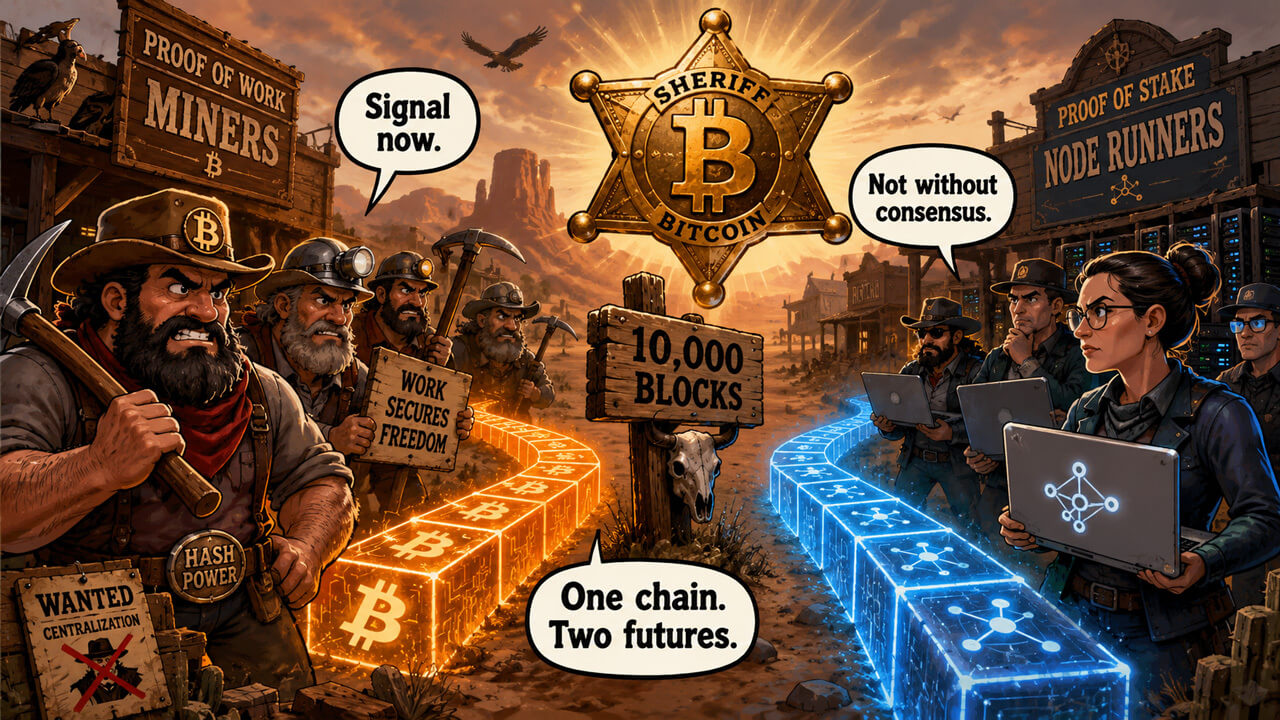
Bitcoin is approaching a critical juncture where a long-standing ideological divide may escalate into the network's most severe governance conflict in years. At the heart of this dispute is Bitcoin Improvement Proposal (BIP) 110, which aims to limit the total amount of non-financial data that can be embedded in Bitcoin transactions. With the network just under 10,000 blocks away from the mandatory activation window at block height 961632, what began as a technical disagreement over network "spam transactions" has transformed into a high-stakes confrontation.


Supporters of BIP-110 view this restriction as crucial for preserving Bitcoin's core value as a monetary settlement layer. Opponents warn that such an aggressive implementation risks fracturing the entire ecosystem, potentially freezing user assets in transit and eroding market trust in the neutrality of the Bitcoin protocol.


Although the proposal currently lacks the widespread miner and institutional backing typically required for major protocol changes, this imminent flashpoint will serve as a significant stress test for Bitcoin's decentralized power structure. The proposal pits network developers and node operators against miners and market makers—the core groups that ultimately determine the economic value trajectory of the entire blockchain.


A Battle Over What Bitcoin Should Carry


BIP-110 plans to temporarily restrict arbitrary data storage on the Bitcoin blockchain by adding a new consensus rule to the transaction structure. In simple terms, nodes running the proposal's code would treat transactions carrying large amounts of data as invalid. The proposal targets applications such as ordinal inscriptions, runes, and other activities that directly inscribe text, images, or token data onto Bitcoin's base layer.


While these applications have attracted new users and increased miner fee revenue, they have also drawn criticism from Bitcoin purists who argue that the blockchain should not be used as a permanent storage medium.


Proponents frame the change as an effort to safeguard Bitcoin's core functionality. They argue that non-financial data excessively consumes block space, burdens node operations, and deviates from Bitcoin's fundamental purpose as sound money. In their view, filtering high-capacity data payloads is not censorship of payments but a restoration of rule-based boundaries to refocus the network on its original purpose.


This perspective has gained support among some node operators and Bitcoin users who have long resisted the inscription craze. To them, the upcoming activation window proves that when users perceive Bitcoin's rules drifting from their original intent, the node operators responsible for validating the chain still have the power to check miners and commercial entities.


Bitcoin analyst Luis Marcano, a supporter of the proposal, suggests that the actual scenario post-BIP-110 activation might not be as dire as critics predict. His view is that nodes running the new rules will reject blocks filled with irrelevant data, and mining power will gradually shift to the blockchain with stronger economic value that adheres to the new rules.


Some supporters take an even harder line, portraying opponents as a small group of social media influencers, token investors, and businesses profiting from on-chain data ventures. They claim that thousands of node operators are already prepared to enforce the new rules, and miners will not tolerate the negative impacts of prolonged network uncertainty.


However, the market does not share this optimistic assessment.


Critics Warn: Implementation Mechanism Significantly Increases Conflict Risk


The sharpest conflict over BIP-110 centers on its implementation design. Previous large-scale protocol upgrades required near-unanimous consensus among the miners securing the network to activate. BIP-110 completely changes this model: it sets a miner signaling threshold of only 55% and pairs it with a highly controversial enforcement fallback mechanism.


Even if miners fail to meet the minimum voting threshold, proponents of the proposal code still plan for nodes to unilaterally reject all blocks that do not comply with the new rules. This aggressive architecture transforms what was a technical disagreement over block space allocation into a fundamental governance crisis.


Blockstream CEO Adam Back has outright rejected the proposal, citing serious technical flaws. He warns that forcing code changes without achieving economic consensus will almost certainly result in a forked chain with very little adoption.


Adam Back also explicitly opposes proponents comparing this proposal to the 2017 Segregated Witness (SegWit) upgrade. He notes that while SegWit was contentious before implementation, it ultimately achieved broad consensus among developers, miners, and various infrastructure providers—a foundation BIP-110 currently completely lacks.


Veteran Bitcoin developer and security lead Jameson Lopp calls the proposal a dangerous overreach disguised as governance over spam transactions.


Beyond the immediate risk of a chain split, Jameson Lopp warns that the code could break some niche wallet functionalities, indirectly rendering user assets inoperable. Furthermore, he argues the restriction is a band-aid solution: determined users will simply find other transaction fields to hide irrelevant data. Ultimately, Bitcoin would bear all the systemic risks of a contentious hard fork without eradicating the behavior the proposal aims to curb.


Yet the most fundamental divide tearing at the industry's fabric remains ideological. Bitcoin's core value proposition rests on absolute neutrality: as long as a sender pays the market rate for fees, the network processes any compliant transaction.


Critics warn that modifying consensus rules to actively punish "unwanted" on-chain behavior sets an extremely dangerous precedent. If the protocol can be changed today to filter inscription data, future factions or national regulators could use the same logic to demand the network block privacy-enhancing coin mixing transactions, gambling payments, or transfers containing politically sensitive information.


Proponents dismiss this "slippery slope" concern, arguing the network has historically distinguished between purely monetary use and abuse of on-chain storage. They emphasize that BIP-110 is a precise tweak, with the code explicitly setting an automatic expiration date of approximately one year.


However, this "temporary adjustment" explanation has done little to placate the opposition.


Bitcoin Core developers like Jameson Lopp argue that a rule change lasting only one year could cause more disruption than a permanent one. Various enterprise wallets, cryptographic libraries, and smart contract protocols would need to build and maintain two sets of infrastructure adapted to different rules.


More critically, Bitcoin as a settlement network relies heavily on stable, predictable rules. A one-year temporary change introduces significant long-term uncertainty. Developers cannot predict whether the restriction will simply expire, be extended, or replaced with stricter control rules.


Market May Downplay BIP-110 Impact Unless Exchanges Forced into Contingency Measures


Despite escalating rhetoric between core developers and node operators, market analysts generally believe the activation point in early August will not trigger a catastrophic network split.


In commentary provided to CryptoSlate, Bitfinex analysts stated that the entire BIP-110 situation looks more like a "governance stress test" than a genuine crisis likely to cause a chain split.


This pragmatic judgment stems from the clear lack of economic consensus: nodes actively running the restrictive rules currently number in the single-digit percentages, all major mining pools are taking a wait-and-see approach, and there are no signs of the broader crypto industry urgently adjusting supporting systems to differentiate between two potential chains.


All indicators suggest the proposal will most likely fail to activate; at worst, it would only spawn a niche forked chain with minimal liquidity and recognition.


The crypto market has established patterns for resolving such disputes. Following the contentious 2017 fork that gave rise to Bitcoin Cash, liquidity, exchange support, and user activity quickly consolidated on the main chain that retained the original economic scale and the BTC ticker.


Furthermore, the maturation of Bitcoin's market structure in recent years provides a buffer against panic from protocol disputes. Unlike past cycles dominated by retail investors, the core forces influencing price action today are sustained spot ETF inflows, professional derivatives positioning, and institutional allocation. In this mature market environment, a route dispute among a subset of developers is unlikely to trigger a long-term fundamental revaluation of the asset.


The real tail risk lies with market infrastructure. If a contingent of nodes adhering to the new rules persistently supports a niche forked chain during the activation window, centralized exchanges and custodians would be forced to initiate defensive contingency plans.


To guard against replay attacks, ensure sufficient fund liquidity, and assess the overall stability of both chains, major trading platforms would likely temporarily suspend Bitcoin on-chain deposits and withdrawals.


While such operations are familiar to crypto industry veterans, many new investors from traditional finance are unaccustomed to operational disruptions caused by decentralized consensus conflicts, which could easily trigger market sentiment swings.


In summary, BIP-110 currently lacks sufficient industry-wide economic backing to shake the position of the existing main chain. However, in the lead-up to block height 961632, the market is destined to experience short-term volatility driven by related news, see a surge in hedging orders in derivatives markets, and witness the entire industry's custodial infrastructure undergo a critical stress test.


Preguntas relacionadas

QWhat is the core objective of the BIP-110 proposal?

AThe core objective of the BIP-110 proposal is to limit the amount of non-financial data that can be embedded in Bitcoin transactions. It aims to curb applications like Ordinals inscriptions and Runes that store large amounts of arbitrary data (e.g., text, images) on-chain, in order to reduce network congestion and refocus Bitcoin on its primary role as a monetary settlement layer.

QWhat are the main criticisms against the activation mechanism of BIP-110?

AThe main criticisms against BIP-110's activation mechanism are its low miner signaling threshold (55%) and its controversial enforcement fallback. Critics warn that even if miners don't meet the threshold, node operators supporting the proposal plan to unilaterally reject non-compliant blocks. This design is seen as a radical shift from requiring broad consensus, significantly increasing the risk of a chain split and a governance crisis.

QWhy do critics argue that BIP-110 could set a dangerous precedent for Bitcoin?

ACritics argue that BIP-110 sets a dangerous precedent because it would establish that the Bitcoin network's consensus rules can be changed to actively filter out 'unwanted' on-chain activities. They warn that this could later be used as a basis to censor other types of transactions, such as privacy-enhancing coin mixes, gambling payments, or politically sensitive transfers, undermining Bitcoin's core principle of neutrality.

QAccording to market analysts like those at Bitfinex, why is BIP-110 unlikely to cause a major chain split?

AMarket analysts believe BIP-110 is unlikely to cause a major chain split because it lacks broad economic consensus. Key indicators include only single-digit percentages of nodes running the new rules, major mining pools remaining neutral, and no widespread industry preparation to support a forked chain. The most likely outcome is activation failure or the creation of a minor, low-liquidity fork, similar to past governance disputes.

QWhat potential operational disruption is highlighted as a key risk if the BIP-110 conflict escalates?

AA key operational risk if the conflict escalates is that centralized exchanges and custody providers may be forced to temporarily suspend Bitcoin deposits and withdrawals as a defensive measure. This would be necessary to protect user funds from replay attacks, ensure sufficient liquidity, and assess the stability of potentially competing chains. Such disruptions could cause market volatility, especially among new institutional investors unfamiliar with consensus conflicts.

Lecturas Relacionadas

Popular Interaction Collection | Interstate Launches Points Event; Flip Early Waitlist Application (June 12)

**Interstate Launches Points Event, Flip Opens Early Waitlist Applications** *Originally published by Odaily Planet Daily, author Asher.* **Interstate**, an infrastructure platform integrating on-chain transactions for assets like Meme tokens, prediction markets, and xStocks, has launched a points event. Each trade on the platform now rewards users with points. The project has completed a $1.5 million seed round from investors including MH Ventures, Alchemy Ventures, and Marshland Capital. Users can visit the official website to connect their wallets and start earning points through trading tasks (note: the site may experience high traffic). **Flip**, an AI-powered financial assistant, has opened applications for its early waitlist. The platform allows users to manage finances via chat, helping with spending tracking, bill management, investment portfolio monitoring (including stocks and crypto), and more. Flip recently raised $1.4 million in a pre-seed round led by The House Fund and participated in a16z's Speedrun accelerator. Interested users can join the waitlist via the official website. **ArcNova**, an AI-native infrastructure platform for short-form video and entertainment, continues to offer tasks for earning points. Users can sign in daily, complete social and app tasks, and refer friends to accumulate points. The project announced a $15 million funding round in May, backed by Adaverse Ventures, Animoca Brands, and others. The task portal is accessible through the ArcNova website. These updates highlight ongoing opportunities for user engagement and potential rewards across emerging crypto and AI projects.

Odaily星球日报Hace 1 hora(s)

Popular Interaction Collection | Interstate Launches Points Event; Flip Early Waitlist Application (June 12)

Odaily星球日报Hace 1 hora(s)

MoneyGram: Why Did We Launch Our Own Stablecoin?

MoneyGram, a global leader in cross-border remittances for over 80 years, has launched its own stablecoin, MGUSD. The initiative aims to evolve from single-transaction services to becoming a more integral part of users' financial lives. By allowing customers to hold a stable US dollar balance within the MoneyGram app, MGUSD enables not only remittances but also everyday spending, currency exchange, cash access, and future financial services. Targeting the billions globally who face challenges like currency volatility or lack of bank accounts, MGUSD leverages Stellar blockchain technology with a self-custody wallet architecture. This gives users control over their assets while providing a secure, compliant experience through a trusted brand. The approach focuses on solving existing customer pain points within MoneyGram's established network, rather than competing for broad crypto market liquidity. A key advantage is MoneyGram's hybrid model, combining digital services with the world's largest physical network for crypto-to-cash conversions. The stablecoin also modernizes the company's internal infrastructure, streamlining treasury management and partner settlements, with annual forex volume via stablecoins already reaching $2 billion. The project was delivered in about a year, driven by a reorganization into agile, cross-functional teams that operate with startup-like speed while leveraging decades of institutional expertise. Partners include Stablecoin (issuance), Crossmint (wallet APIs), Fireblocks (enterprise treasury), m0 (smart contracts), and the Stellar network. MoneyGram emphasizes that enhancing direct consumer offerings strengthens its partner ecosystem. The future direction is clear: to provide users worldwide with stable value storage, better financial tools, and greater control over their funds through a trusted, existing network.

Foresight NewsHace 2 hora(s)

MoneyGram: Why Did We Launch Our Own Stablecoin?

Foresight NewsHace 2 hora(s)

Trading

Spot
Futuros

Artículos destacados

Qué es BITCOIN

Entendiendo HarryPotterObamaSonic10Inu (ERC-20) y Su Posición en el Espacio Cripto En los últimos años, el mercado de criptomonedas ha sido testigo de un aumento en la popularidad de las monedas meme, capturando el interés no solo de los comerciantes, sino también de aquellos que buscan compromiso comunitario y valor de entretenimiento. Entre estos tokens únicos se encuentra HarryPotterObamaSonic10Inu (ERC-20), un proyecto intrigante que mezcla referencias culturales en el tejido de las criptomonedas. Este artículo profundiza en los aspectos clave de HarryPotterObamaSonic10Inu, explorando sus mecanismos, ethos impulsado por la comunidad y su relación con el paisaje cripto más amplio. ¿Qué es HarryPotterObamaSonic10Inu (ERC-20)? Como su nombre sugiere, HarryPotterObamaSonic10Inu es una moneda meme construida sobre la blockchain de Ethereum, clasificada bajo el estándar ERC-20. A diferencia de las criptomonedas tradicionales que pueden enfatizar la utilidad práctica o el potencial de inversión, este token prospera en el valor de entretenimiento y la fuerza de su comunidad. El proyecto tiene como objetivo fomentar un entorno donde los usuarios comprometidos puedan reunirse, compartir ideas y participar en actividades inspiradas por diversos fenómenos culturales. Una característica notable de HarryPotterObamaSonic10Inu es su cero impuestos en las transacciones. Este atractivo elemento tiene como objetivo incentivar el comercio y la participación comunitaria, sin cargos adicionales que puedan disuadir a los comerciantes de pequeña escala. El suministro total de la moneda está establecido en mil millones de tokens, una cifra que marca su intención de mantener una circulación sustancial dentro de la comunidad. Creador de HarryPotterObamaSonic10Inu (ERC-20) Los orígenes de HarryPotterObamaSonic10Inu están algo envueltos en misterio; los detalles sobre el creador siguen siendo desconocidos. El desarrollo de este token carece de un equipo identificable o de un plan explícito, lo cual no es inusual dentro del sector de monedas meme. En cambio, el proyecto ha surgido de manera orgánica, con su progreso muy dependiente del entusiasmo y la participación de su comunidad. Inversores de HarryPotterObamaSonic10Inu (ERC-20) En cuanto a inversiones externas y respaldo, HarryPotterObamaSonic10Inu también sigue siendo ambiguo. El token no lista ninguna fundación de inversión conocida o apoyo organizacional significativo. En cambio, la savia del proyecto es su comunidad de base, que informa su crecimiento y sostenibilidad a través de la acción colectiva y el compromiso en el espacio cripto. ¿Cómo Funciona HarryPotterObamaSonic10Inu (ERC-20)? Como una moneda meme, HarryPotterObamaSonic10Inu opera principalmente fuera de los marcos tradicionales que a menudo rigen el valor de los activos. Hay varios aspectos distintivos que definen cómo funciona el proyecto: Transacciones Sin Impuestos: Sin tarifas impositivas en las transacciones, los usuarios pueden comprar y vender el token libremente sin preocuparse por costos ocultos. Compromiso Comunitario: El proyecto prospera en la interacción comunitaria, aprovechando plataformas de redes sociales para crear entusiasmo y facilitar la participación. Las discusiones, el intercambio de contenido y el compromiso son elementos cruciales que ayudan a expandir su alcance y fomentar la lealtad entre los seguidores. Sin Utilidad Práctica: Cabe señalar que HarryPotterObamaSonic10Inu no ofrece utilidad concreta dentro del ecosistema financiero. Más bien, se clasifica como un token principalmente para actividades de entretenimiento y comunitarias. Referencia Cultural: El token incorpora astutamente elementos de la cultura popular para atraer interés, conectando con entusiastas de los memes y seguidores de las criptomonedas por igual. HarryPotterObamaSonic10Inu ejemplifica cómo las monedas meme operan de manera diferente a los proyectos de criptomonedas más tradicionales, ingresando al mercado como construcciones sociales innovadoras en lugar de activos utilitarios. Cronología de HarryPotterObamaSonic10Inu (ERC-20) La historia de HarryPotterObamaSonic10Inu está marcada por varios hitos notables: Creación: El token surgió de un meme viral, capturando la imaginación de muchos entusiastas de las criptomonedas. Las fechas específicas de creación no están disponibles, subrayando su ascenso orgánico. Listado en Exchanges: HarryPotterObamaSonic10Inu ha llegado a varios exchanges, permitiendo un acceso y comercio más fácil por parte de la comunidad. Iniciativas de Compromiso Comunitario: Actividades continuas destinadas a mejorar la interacción comunitaria, incluyendo concursos, campañas en redes sociales y generación de contenido por parte de fanáticos y defensores. Planes de Expansión Futuros: La hoja de ruta del proyecto incluye el lanzamiento de una colección de NFT, mercancía y un sitio de comercio electrónico relacionado con sus temas culturales, involucrando aún más a la comunidad e intentando añadir más dimensiones a su ecosistema. Puntos Clave Sobre HarryPotterObamaSonic10Inu (ERC-20) Naturaleza Impulsada por la Comunidad: El proyecto prioriza la participación colectiva y la creatividad, asegurando que la involucración de los usuarios esté a la vanguardia de su desarrollo. Clasificación como Moneda Meme: Representa la epítome de las criptomonedas basadas en el entretenimiento, diferenciándose de los vehículos de inversión tradicionales. Sin Afiliación Directa con Bitcoin: A pesar de la similitud en el nombre del ticker, HarryPotterObamaSonic10Inu es distinto y no tiene relación con Bitcoin u otras criptomonedas establecidas. Enfoque en la Colaboración: HarryPotterObamaSonic10Inu está diseñado para crear un espacio para la colaboración y el intercambio de historias entre sus poseedores, proporcionando una vía para la creatividad y el vínculo comunitario. Perspectivas Futuras: La ambición de expandirse más allá de su premisa inicial hacia NFTs y mercancías describe un camino para que el proyecto potencialmente ingrese a avenidas más tradicionales dentro de la cultura digital. A medida que las monedas meme continúan capturando la imaginación de la comunidad de criptomonedas, HarryPotterObamaSonic10Inu (ERC-20) se destaca debido a sus lazos culturales y su enfoque centrado en la comunidad. Si bien puede no encajar en el molde típico de un token impulsado por la utilidad, su esencia radica en la alegría y la camaradería fomentadas entre sus seguidores, destacando la naturaleza en evolución de las criptomonedas en una era cada vez más digital. A medida que el proyecto continúa desarrollándose, será importante observar cómo las dinámicas comunitarias influyen en su trayectoria en el cambiante paisaje de la tecnología blockchain.

1.7k Vistas totalesPublicado en 2024.04.01Actualizado en 2024.12.03

Qué es BITCOIN

Cómo comprar BTC

¡Bienvenido a HTX.com! Hemos hecho que comprar Bitcoin (BTC) sea simple y conveniente. Sigue nuestra guía paso a paso para iniciar tu viaje de criptos.Paso 1: crea tu cuenta HTXUtiliza tu correo electrónico o número de teléfono para registrarte y obtener una cuenta gratuita en HTX. Experimenta un proceso de registro sin complicaciones y desbloquea todas las funciones.Obtener mi cuentaPaso 2: ve a Comprar cripto y elige tu método de pagoTarjeta de crédito/débito: usa tu Visa o Mastercard para comprar Bitcoin (BTC) al instante.Saldo: utiliza fondos del saldo de tu cuenta HTX para tradear sin problemas.Terceros: hemos agregado métodos de pago populares como Google Pay y Apple Pay para mejorar la comodidad.P2P: tradear directamente con otros usuarios en HTX.Over-the-Counter (OTC): ofrecemos servicios personalizados y tipos de cambio competitivos para los traders.Paso 3: guarda tu Bitcoin (BTC)Después de comprar tu Bitcoin (BTC), guárdalo en tu cuenta HTX. Alternativamente, puedes enviarlo a otro lugar mediante transferencia blockchain o utilizarlo para tradear otras criptomonedas.Paso 4: tradear Bitcoin (BTC)Tradear fácilmente con Bitcoin (BTC) en HTX's mercado spot. Simplemente accede a tu cuenta, selecciona tu par de trading, ejecuta tus trades y monitorea en tiempo real. Ofrecemos una experiencia fácil de usar tanto para principiantes como para traders experimentados.

5.1k Vistas totalesPublicado en 2024.12.12Actualizado en 2026.06.02

Cómo comprar BTC

Qué es $BITCOIN

ORO DIGITAL ($BITCOIN): Un Análisis Integral Introducción al ORO DIGITAL ($BITCOIN) ORO DIGITAL ($BITCOIN) es un proyecto basado en blockchain que opera en la red Solana, cuyo objetivo es combinar las características de los metales preciosos tradicionales con la innovación de las tecnologías descentralizadas. Aunque comparte un nombre con Bitcoin, a menudo referido como “oro digital” debido a su percepción como un refugio de valor, ORO DIGITAL es un token separado diseñado para crear un ecosistema único dentro del paisaje Web3. Su meta es posicionarse como un activo digital alternativo viable, aunque los detalles sobre sus aplicaciones y funcionalidades aún están en desarrollo. ¿Qué es ORO DIGITAL ($BITCOIN)? ORO DIGITAL ($BITCOIN) es un token de criptomoneda diseñado explícitamente para su uso en la blockchain de Solana. A diferencia de Bitcoin, que proporciona un papel de almacenamiento de valor ampliamente reconocido, este token parece centrarse en aplicaciones y características más amplias. Aspectos notables incluyen: Infraestructura Blockchain: El token está construido sobre la blockchain de Solana, conocida por su capacidad para manejar transacciones de alta velocidad y bajo costo. Dinámicas de Suministro: ORO DIGITAL tiene un suministro máximo limitado a 100 cuatrillones de tokens (100P $BITCOIN), aunque los detalles sobre su suministro circulante no se han divulgado actualmente. Utilidad: Si bien las funcionalidades precisas no están delineadas explícitamente, hay indicios de que el token podría ser utilizado para diversas aplicaciones, potencialmente involucrando aplicaciones descentralizadas (dApps) o estrategias de tokenización de activos. ¿Quién es el Creador de ORO DIGITAL ($BITCOIN)? En la actualidad, la identidad de los creadores y el equipo de desarrollo detrás de ORO DIGITAL ($BITCOIN) sigue siendo desconocida. Esta situación es típica entre muchos proyectos innovadores dentro del espacio blockchain, particularmente aquellos alineados con las finanzas descentralizadas y fenómenos de monedas meme. Si bien tal anonimato puede fomentar una cultura impulsada por la comunidad, intensifica las preocupaciones sobre la gobernanza y la responsabilidad. ¿Quiénes son los Inversores de ORO DIGITAL ($BITCOIN)? La información disponible indica que ORO DIGITAL ($BITCOIN) no tiene patrocinadores institucionales conocidos ni inversiones destacadas de capital de riesgo. El proyecto parece operar en un modelo de peer-to-peer centrado en el apoyo y la adopción de la comunidad en lugar de rutas de financiamiento tradicionales. Su actividad y liquidez se sitúan principalmente en intercambios descentralizados (DEX), como PumpSwap, en lugar de plataformas de trading centralizadas establecidas, lo que resalta aún más su enfoque de base. Cómo Funciona ORO DIGITAL ($BITCOIN) Los mecanismos operativos de ORO DIGITAL ($BITCOIN) pueden elaborarse en función de su diseño blockchain y atributos de red: Mecanismo de Consenso: Al aprovechar el único proof-of-history (PoH) de Solana combinado con un modelo de proof-of-stake (PoS), el proyecto asegura una validación de transacciones eficiente que contribuye al alto rendimiento de la red. Tokenómica: Si bien los mecanismos deflacionarios específicos no se han detallado extensamente, el vasto suministro máximo de tokens implica que podría atender microtransacciones o casos de uso nicho que aún están por definirse. Interoperabilidad: Existe el potencial de integración con el ecosistema más amplio de Solana, incluyendo varias plataformas de finanzas descentralizadas (DeFi). Sin embargo, los detalles sobre integraciones específicas permanecen no especificados. Cronología de Eventos Clave Aquí hay una cronología que destaca hitos significativos relacionados con ORO DIGITAL ($BITCOIN): 2023: El despliegue inicial del token ocurre en la blockchain de Solana, marcado por su dirección de contrato. 2024: ORO DIGITAL gana visibilidad al estar disponible para trading en intercambios descentralizados como PumpSwap, permitiendo a los usuarios comerciar contra SOL. 2025: El proyecto presencia actividad de trading esporádica y potencial interés en compromisos liderados por la comunidad, aunque no se han documentado asociaciones notables o avances técnicos hasta el momento. Análisis Crítico Fortalezas Escalabilidad: La infraestructura subyacente de Solana soporta altos volúmenes de transacciones, lo que podría mejorar la utilidad de $BITCOIN en varios escenarios de transacción. Accesibilidad: El potencial bajo precio de trading por token podría atraer a inversores minoristas, facilitando una participación más amplia debido a oportunidades de propiedad fraccionada. Riesgos Falta de Transparencia: La ausencia de patrocinadores, desarrolladores o un proceso de auditoría conocidos públicamente puede generar escepticismo sobre la sostenibilidad y confiabilidad del proyecto. Volatilidad del Mercado: La actividad de trading depende en gran medida del comportamiento especulativo, lo que puede resultar en una volatilidad de precios significativa y en incertidumbre para los inversores. Conclusión ORO DIGITAL ($BITCOIN) surge como un proyecto intrigante pero ambiguo dentro del ecosistema de Solana en rápida evolución. Si bien intenta aprovechar la narrativa del “oro digital”, su alejamiento del papel establecido de Bitcoin como refugio de valor subraya la necesidad de una diferenciación más clara de su utilidad y estructura de gobernanza previstas. La aceptación y adopción futura dependerán probablemente de abordar la actual opacidad y de definir sus estrategias operativas y económicas de manera más explícita. Nota: Este informe abarca información sintetizada disponible hasta octubre de 2023, y pueden haber ocurrido desarrollos más allá del período de investigación.

83 Vistas totalesPublicado en 2025.05.13Actualizado en 2025.05.13

Qué es $BITCOIN

Discusiones

Bienvenido a la comunidad de HTX. Aquí puedes mantenerte informado sobre los últimos desarrollos de la plataforma y acceder a análisis profesionales del mercado. A continuación se presentan las opiniones de los usuarios sobre el precio de BTC (BTC).

活动图片