Polygon Labs announces second round of 2026 layoffs as it targets profitability in 2027

ambcryptoPublicado a 2026-07-16Actualizado a 2026-07-16

Resumen

On July 16, 2026, Polygon Labs CEO Marc Boiron announced the company's second round of layoffs for the year. This move, described as "difficult, but necessary," is part of a strategic shift to transition into a "blockchain-enabled payments company" as it finalizes its acquisition of Coinme. These layoffs mark the fourth workforce reduction since February 2023, following earlier cuts of 60 staff after the $250 million acquisitions of Coinme and Sequence in January 2026. The restructuring aims to support the vision for the Polygon Open Stack, focusing on enabling seamless on-chain money transfers. Polygon Labs clarified its distinction from the Polygon Foundation, which handles network upgrades and the ecosystem. Meanwhile, the native token POL has struggled, down approximately 94% from its all-time high and 56% from a January peak. While some technical indicators showed short-term buying pressure in July, a sustained price recovery is contingent on increased network utility and organic token demand, requiring a move above $0.095 to shift the longer-term bearish trend.

On Thursday, July 16, Polygon Labs [POL] CEO Marc Boiron announced the second round of layoffs for 2026.

Polygon was in the final stages of completing the Coinme acquisition, and this move will help transition the blockchain company towards a “blockchain-enabled payments company”, the CEO wrote in a post on X.
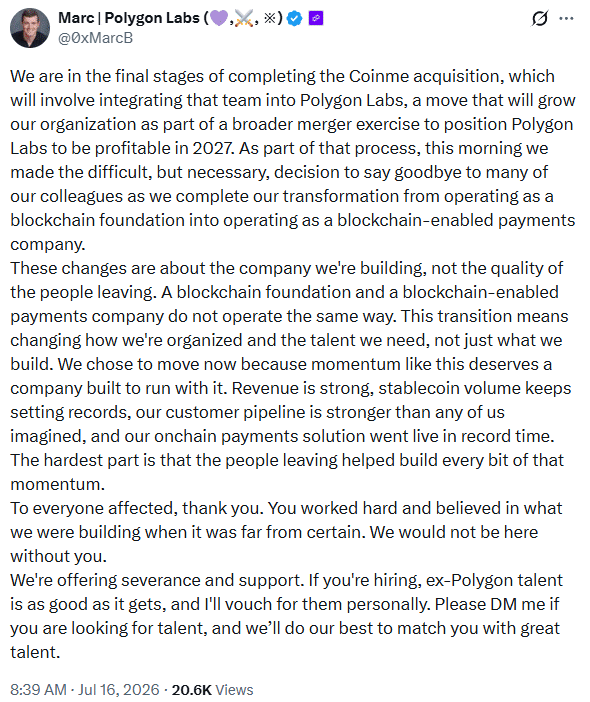
Source: Marc Boiron on X

Hence, the “difficult, but necessary” decision to let people go was made. This was the company’s fourth wave of reductions dating back to February 2023.

Coinme, the crypto exchange, and Sequence, the wallet infrastructure firm, were acquired for $250 million in January 2026. Layoffs of 60 staff members back then had been because the company was pivoting to a payment focused blockchain. They were part of restructuring after the acquisitions, a spokesperson had said.

The vision for the Polygon Open Stack is to enable seamless money transfers onchain, explaining the need for these acquisitions and their integrations.

Specific figures were not shared for Thursday’s layoffs.

The path ahead for POL

It was reported that a Polygon representative observed that the Polygon Labs and Polygon Foundation were legally and structurally distinct entities. The acquisitions and commercial vision of the former has been laid out.

Meanwhile, the Foundation is tasked with network upgrades, treasury, and ecosystem. POL, the network’s native token, was down nearly 94% from its all-time highs. Its holders have no equity and no claim in Polygon Labs’ future profits.

As such, the token’s bearish price action could be set to continue in the long-run, unless network utility picks up, creating more demand and forcing more token burns through the deflationary mechanic.
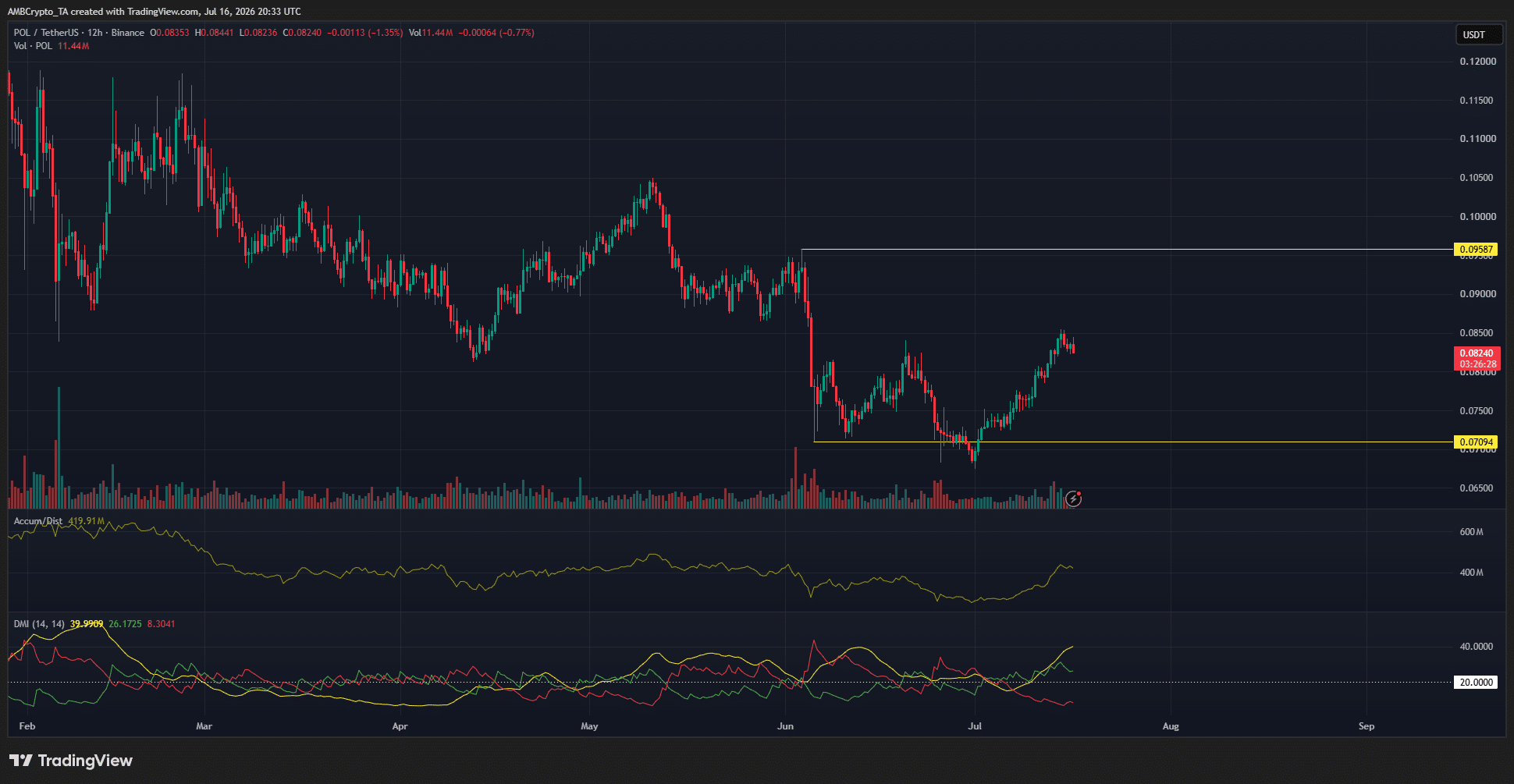
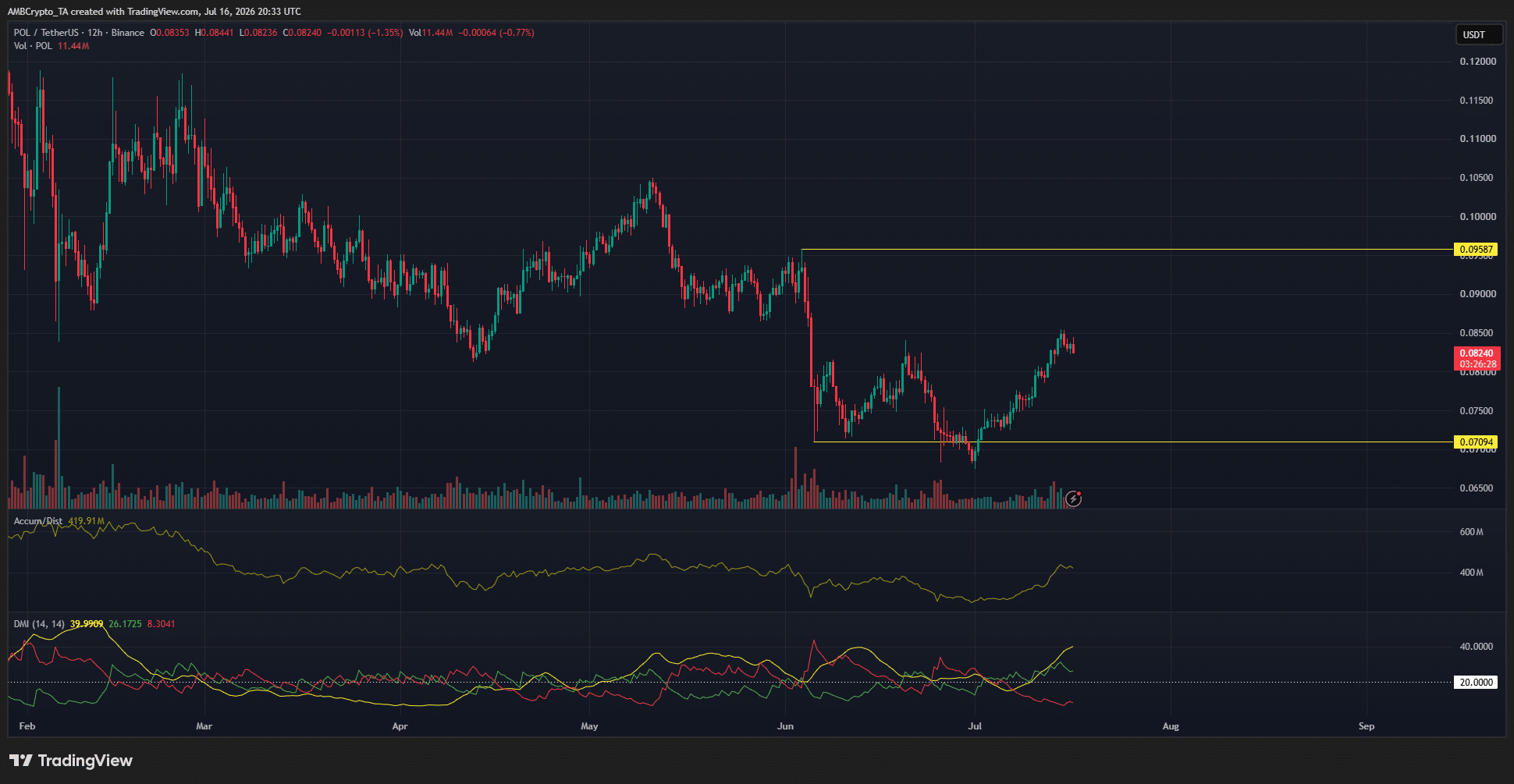
Source: POL/USDT on TradingView

The A/D indicator signaled buying pressure in July, and the DMI showed an uptrend in progress. Yet, the technical indicators did not capture the longer-term downtrend.

POL was down 56% since making a high of $0.186 in January earlier this year. The gains in July were not enough to shift the trend bullishly. A price move beyond $0.095 is needed.

Beyond the price action of the past six weeks, increased network usage and organic POL demand is needed to drive its recovery.


Final Summary

  • Polygon Labs CEO Marc Boiron announced the second round of layoffs for 2026, as the firm moved to finalize the Coinme acquisition.
  • The Polygon Open Money Stack vision envisioned as a seamless, global, blockchain-based payments platform.


Preguntas relacionadas

QWhat was the main reason provided by Polygon Labs CEO for the second round of layoffs in 2026?

AThe main reason was to help transition the blockchain company towards becoming a 'blockchain-enabled payments company' as it finalizes the Coinme acquisition.

QWhich two companies did Polygon acquire for $250 million in January 2026, and how many staff were laid off at that time?

APolygon acquired the crypto exchange Coinme and the wallet infrastructure firm Sequence for $250 million, and laid off 60 staff members as part of restructuring after the acquisitions.

QWhat is the stated vision for the Polygon Open Stack, and how does it relate to the recent acquisitions?

AThe vision for the Polygon Open Stack is to enable seamless money transfers onchain. This vision explains the need for the acquisitions of Coinme and Sequence and their subsequent integrations to build a global, blockchain-based payments platform.

QAccording to the article, what are the key distinctions between Polygon Labs and the Polygon Foundation?

APolygon Labs and the Polygon Foundation are legally and structurally distinct entities. Polygon Labs handles acquisitions and commercial vision, while the Polygon Foundation is tasked with network upgrades, treasury management, and ecosystem development.

QWhat does the article identify as a necessary condition for reversing POL's long-term bearish price trend?

ATo reverse POL's long-term bearish trend, the article states that increased network utility, creating more organic POL demand, and forcing more token burns through the deflationary mechanic are needed.

Lecturas Relacionadas

Li Shanyou: The World Is Getting More Competitive, But We Can Choose to Be Slower, Go Deeper, and Turn Inward

**Title:** Li Shanyou: The World Is Moving Faster and More Chaotically; We Can Choose to Be Slower, Deeper, and More Inward **Summary:** In an era where AI evolves weekly and past experiences often fail, the article argues for returning to First Principles. It shifts focus from "cognition" (knowledge/content), which AI has disrupted, to "consciousness" or "the capacity to know"—the foundational ability that enables cognition and determines its scope and depth. The piece uses Zhang Yiming (founder of ByteDance) as a case study for the "second-order consciousness" of the mobile internet era: success through rational logic, modeling, and deduction, which allowed him to surpass earlier "first-order" entrepreneurs reliant on copying experiences. However, the author suggests that the AI era demands a further leap to "third-order consciousness"—operating from a place of inner inspiration, vision, or "ideas," beyond pure rationality. Figures like Elon Musk and Steve Jobs are cited as examples, with DeepSeek's Liang Wenfeng presented as a potential representative of this new, AI-native wave of entrepreneurs driven by curiosity and innovation rather than just commercial logic. For the majority who may not become such visionary leaders, the author proposes an alternative path: the "Path of Quality" or "Work as Art." This involves turning inward, focusing on the immediate task at hand, and imbuing one's work with care and dedication—creating a "quality" product not as a means to an end, but as an end in itself. This process refines both the work and the individual's own consciousness. In a hyper-competitive, fast-paced world, this path offers a counterpoint: to be slower, go deeper, and focus inward, finding meaning by creating quality in everyday endeavors, regardless of scale.

marsbitHace 1 hora(s)

Li Shanyou: The World Is Getting More Competitive, But We Can Choose to Be Slower, Go Deeper, and Turn Inward

marsbitHace 1 hora(s)

1inch Co-founder Anton Bukov Leaves, Launches New Project Second Tier

Anton Bukov, co-founder of the decentralized exchange aggregator protocol 1inch, has announced his departure from the company's daily operations. Bukov, who was instrumental in designing core 1inch architectures like the Router, Fusion, and cross-chain Swap, ceased involvement in November 2025 due to strategic and leadership disagreements, though he retains his co-founder title and 50% equity stake. Concurrently, Bukov unveiled his new venture, Second Tier (tier.xyz), describing it as infrastructure to "shorten the distance between economic intent and on-chain execution." He explicitly stated it is not a DEX or aggregator. The project's public-facing material is currently a manifesto criticizing systemic financial friction and advocating for building new architectural categories rather than competing within existing ones. No product details, team, or funding have been disclosed. The split highlights a strategic divergence within 1inch. While CEO Sergej Kunz has steered the company toward traditional finance integration—evidenced by a 2025 brand refresh and a major Coinbase partnership—Bukov emphasized a commitment to decentralized, permissionless DeFi principles. Bukov's exit coincides with a challenging period for 1inch. Q1 2026 data shows a 60.3% quarterly drop in its daily average trading volume to $97.1 million, underperforming the broader DEX aggregator market decline. Its market share fell from 25.2% to 17.0%, dropping it to fourth place among competitors. Key questions remain regarding Bukov's future role as a major 1inch shareholder, the timeline for Second Tier's product development, and whether 1inch's institutional-focused strategy can reverse its declining trading metrics.

Foresight NewsHace 1 hora(s)

1inch Co-founder Anton Bukov Leaves, Launches New Project Second Tier

Foresight NewsHace 1 hora(s)

Meituan Leads Investment, New Unicorn in Dexterous Hands Born

Xynova, a full-stack provider of dexterous hand solutions for embodied intelligence, has officially become a unicorn after securing a 500 million yuan Series A+ round led by Meituan. This marks the company's third major funding in 2024, bringing the total raised in four months to approximately 1.5 billion yuan. The investment lineup features a prominent group of industrial and internet giants, including repeat investors like Xiaomi and new backers such as NIO Capital and China Merchants Capital. With total market capitalization of its industrial shareholders exceeding 5 trillion yuan, the backing represents a strategic positioning across the new energy manufacturing, smart logistics, and last-mile delivery sectors. Founded in 2024 by CEO Xia Yuxuan, Xynova focuses on the critical "last centimeter" of robot interaction—the dexterous hand. Moving beyond traditional technical debates, the company adopts a full-stack, self-developed approach, integrating hardware and algorithms. Its flagship product, the Flex 2, is a hybrid tendon-and-direct-drive hand with 23 degrees of freedom, weighing under 400 grams and boasting a key component lifespan of over 1.5 million cycles. The industry narrative is shifting from robot mobility to practical utility, making reliable, mass-producible components crucial. Xynova has established a 5,400-square-meter factory in Hangzhou, with annual capacity expected to reach 10,000 units by year-end. The company believes embodied robots will see large-scale real-world adoption within three years, potentially as soon as 18 months.

marsbitHace 1 hora(s)

Meituan Leads Investment, New Unicorn in Dexterous Hands Born

marsbitHace 1 hora(s)

Trading

Spot
活动图片