Japan is preparing a real-time settlement system for stock and government bond transactions based on blockchain. The authorities aim to have a project plan ready by the beginning of 2027, writes Nikkei.
Settlements Without Delay
The project will involve the FSA, the Ministry of Finance, the Bank of Japan, and representatives from the financial sector. As early as this summer, they plan to establish a working group to determine the blockchain system's architecture, the responsibilities among participants, and the further development plan.
If the project receives final approval, the infrastructure could become operational in the early 2030s.
Currently, stock settlements in Japan occur two days after a trade is executed, and Japanese government bond settlements take place the next day. Blockchain is expected to virtually eliminate this delay: the seller will be able to receive funds and reinvest them almost immediately after the transaction.
Blockchain Already Under Testing
This is not the first experiment with the technology for the Japanese financial market. In February, the FSA reported supporting a demonstration project where rights to government and corporate bonds, investment funds, and stocks will be recorded on a blockchain, and settlements will be conducted using stablecoins.
The Bank of Japan is also conducting its own experiment on using tokenized central bank reserves for blockchain settlements. The regulator is considering scenarios including securities settlements.
The new initiative could elevate these experiments to the level of national infrastructure. In the future, Japanese authorities are also considering the possibility of using the system for international transfers.
Nikkei noted: The US and Europe are leading in the tokenization of real-world assets, and there is a risk that foreign investors and funds may abandon Japanese securities markets if the technology in the country lags behind.
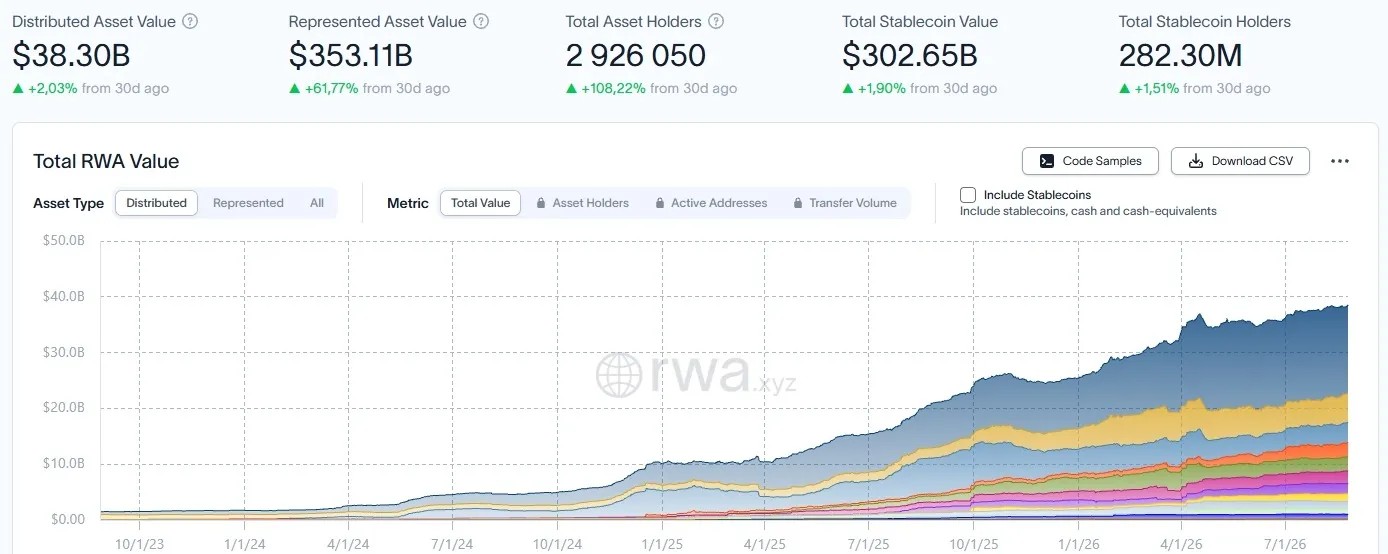
The total volume of the RWA segment (excluding stablecoins) is $38.3 billion, of which $15.6 billion is accounted for by United States government bonds.
Recall that in the UK, it was forecasted that tokenization could add up to £33 billion per year to the economy over a 10-year horizon.
end-content