Is Satoshi in Legal Trouble? $83.7 Billion Worth of BTC Might Be 'Legally Claimed'

Odaily星球日报Publicado a 2026-06-01Actualizado a 2026-06-01

Resumen

An anonymous plaintiff, “Noah Doe,” and two shell companies have filed a lawsuit in New York Supreme Court, seeking a declaratory judgment granting them ownership of 39,069 dormant Bitcoin addresses containing approximately 3.8 million BTC (worth ~$293.5 billion). Their claim is based on New York’s lost property law, arguing these addresses are abandoned assets. The plaintiff “found” the addresses, stored them on a USB drive, and delivered it to a police station, followed by chain notifications (OP_RETURN) and a press release. Notably, the list includes addresses linked to Bitcoin creator Satoshi Nakamoto (holding ~1.1 million BTC), a Mt. Gox hacker address, a provably unspendable burn address, and other long-inactive wallets. The plaintiff’s “independent expert” controversially values each address at under $10 to invoke a fast-track legal process. Critical issues question the lawsuit's validity: the lost property law is designed for physical items, not publicly viewable blockchain addresses; the valuation is implausible; and the plaintiff’s anonymity is contested. Even if successful, the plaintiff would only receive a paper judgment, not the private keys. However, such a ruling could create a “title defect,” allowing them to challenge future transactions of these coins on regulated platforms, potentially freezing assets and forcing anonymous holders to reveal themselves in legal disputes. The court is unlikely to grant a broad default judgment given the novel and high-stak...

Originally fromGalaxy

Compiled / Odaily Planet Daily Golem(@web 3_golem)
Who would have thought that Bitcoin creator Satoshi Nakamoto would one day face a lawsuit, with the 'ownership' of wallet addresses potentially being taken away. And you, reading this article right now, might also be one of the 'defendants,' as long as you have dormant Bitcoin addresses.

In March of this year, the New York State Supreme Court accepted a lawsuit: the plaintiff is attempting to confirm their ownership of over 3.7 million Bitcoins (approximately $274 billion) associated with 39,069 Bitcoin addresses. The plaintiff goes by the pseudonym Noah Doe and two unnamed Wyoming limited liability companies (pseudonyms 'ABC Company' and 'XYZ Company').

The plaintiff is requesting the New York State Supreme Court to confirm their ownership of these dormant assets through a declaratory judgment action based on New York State's lost and found laws. More importantly, among these 39,069 addresses are addresses suspected to belong to Bitcoin creator Satoshi Nakamoto (a total of 21,744 addresses, holding approximately 1.09 million Bitcoins, valued at about $83.7 billion at current prices).

Simply put, an anonymous individual and their company registered in Wyoming are trying to get a New York court to rule that Satoshi Nakamoto's Bitcoins (and many other cryptocurrencies) are lost property, and they should legally own them for 'finding' these Bitcoins. Galaxy analyzed the plaintiff's potential motives and identity, the impact on Bitcoin, and the plaintiff's likelihood of success.

Odaily Planet Daily has condensed and compiled the full text as follows, enjoy~

Case Overview and Analysis of Plaintiff's Strategy

The plaintiff has filed an application with the New York State Supreme Court, asking the court to declare that they own 39,069 dormant Bitcoin addresses and all assets within them. The legal basis is the declaratory judgment for confirming ownership under Article 3001 of the New York Civil Practice Law and Rules (CPLR), which is fundamentally based on New York State's lost and found law, specifically Article 7-B of the Personal Property Law. This provision states that a finder of lost property who turns it over to the police and does not face a denial from the owner within a specified waiting period may ultimately acquire ownership of the lost item. The plaintiff is attempting to apply this old framework to Bitcoin.

The specific strategy is: Noah Doe, as the finder, delivered a USB drive containing the addresses (not the private keys or proof of holding the addresses, just the public addresses) to the New York City Police Department's 17th Precinct, substituting this for turning over the lost property to the police; then issued notifications via OP_RETURN on the Bitcoin blockchain and published press releases, substituting this for contacting the owner; finally, had an expert appraise each address's value at under $10, allowing the entire case to enter the fastest process stipulated by that provision.

It is necessary to clarify that even if the plaintiff wins completely, they will only receive a piece of paper—a court declaration—nothing more. They will not receive any private keys, nor can they transfer any Bitcoin.

The real value of a New York judgment lies elsewhere. It would serve as a 'title defect': if any of these Bitcoins appear in any regulated venue in the future, the plaintiff could present this document to contest exchanges or custodians. This is the potential risk this case poses to Bitcoin holders and why this seemingly absurd lawsuit still warrants careful scrutiny.

Case Timeline

The following timeline consists of two parts: one is the plaintiff's factual narrative of discovering the addresses, and the other is the procedural history of the case in court.

  • October 2024: Noah Doe claims he discovered 'security issues' with certain addresses and developed an 'algorithm' to tag abandoned addresses. (In reality, these addresses do not have 'security issues');
  • December 26, 2024: Noah Doe first 'found' approximately 1,625 addresses. A USB drive containing the addresses was delivered to NYPD's 17th Precinct on January 1, 2025;
  • February 2025: Noah Doe hired Solomon Brothers Strategic Advisors as a consultant;
  • March 31 and April 14, 2025: Noah Doe again 'found' 546 addresses and 39,911 addresses respectively, delivering USB drives with addresses to the police precinct each time;
  • June 30 to July 10, 2025: Noah Doe sent 'abandonment notices' to each address via OP_RETURN;
  • August 7, 2025: Issued a press release to global media. CoinDesk, Bitcoinist, Yahoo Finance, Investing.com, and Galaxy Digital's research report all covered it;
  • August 2025 to February 2026: Solomon Brothers received threatening emails, including over 50 emails containing only '4 8 15 16 23 42', demanding $1.5 million and 50 Bitcoins;
  • October 10, 2025: The 90-day period for owner claims ended;
  • December 2025: Noah Doe transferred these addresses to ABC Company and placed 98% of its interests into an irrevocable trust; ABC Company transferred 17.7% of its interests to XYZ Company;
  • March 11, 2026: Original summons and complaint filed. Judge Arlene P. Bruce annotated the original order to show cause;
  • March 23, 2026: Judge Emily Morales-Minerva recused herself from the case;
  • March 25 to April 17, 2026: Judge Carlos J. Voltron signed the order to show cause (allowing use of pseudonyms) and an order authorizing alternative service via OP_RETURN (without notice to the opposing party);
  • May 1, 2026: First amended complaint expanded the defendant scope to 1 to 39,069 individuals and attached a full list of addresses;
  • May 21-22, 2026: On-chain service execution: 98 batch transactions in Bitcoin blocks 950,446 to 950,576;
  • May 22, 2026: Carlos J. Voltron filed the affidavit of service, including verification reports for each batch and 39,069 lines of verification details (Documents 27-29).

Legal Basis and Strategy Proposed by Plaintiff

Article 7-B of the New York Personal Property Law (Sections 251-258) establishes a brief lost and found regime. It provides two distinct pathways for a finder to acquire ownership, both of which the plaintiff in this case invokes.

  • Pathway A: Custody (Sections 252, 253/254, 257(1)). Section 252 requires a person who finds lost property worth $20 or more to return it to the owner or deliver it to police custody within 10 days; Sections 253(7) and 254 stipulate different police custody periods based on property value: under $100 for 3 months, $100-$500 for 6 months, $500-$5,000 for 1 year, and $5,000 or more for 3 years.
  • Pathway B: The Under-$10 Shortcut (Section 257(2)). For lost property valued under $10, if the finder 'has made reasonable efforts to find the owner and return it, but has been unsuccessful,' ownership vests in the finder one year after finding, without requiring police delivery.

The complaint's (unnamed) 'independent expert' appraised the 'as-is' value of each address at under $10, citing low likelihood of recovery. This valuation determines the entire procedural progression of the case, as it places every address under the uniform one-year vesting period of Section 257(2). It also makes Pathway A's process shorter, as property valued under $100 requires only a three-month police hold per Section 254.

Plaintiff's Arguments

The complaint lists several arguments by the plaintiff, each must hold for the next to follow, forming a chain of logic.

  • These addresses are lost property. Addresses are treated as property, akin to bank accounts. Under this view, losing a private key does not destroy the property; thus, its contents are merely 'lost' and can be reclaimed by a finder.
  • Noah Doe is the finder, and NYPD's custody complies with the relevant statute. Section 252 of Article 7-B requires the finder to deliver the property to the police. The plaintiff argues that the USB drive containing address information delivered to the 17th Precinct satisfies this.
  • Ownership has vested in the finder. For property valued under $10, Section 257(2) states ownership vests in the finder one year after finding if the finder has made reasonable efforts to locate the owner but failed. OP_RETURN notifications, press releases, and the 90-day claim period are considered reasonable efforts.
  • These addresses have been abandoned. Noah Doe's 'algorithm' flags addresses that are in self-custody, unused for at least five years, and inactive during significant price increases. About 424 owners who reacted by moving tokens were removed from the list; the remaining 39,069 non-responsive owners became defendants.
  • Service via OP_RETURN notification is lawful. Since the owners are allegedly unknown and cannot be located, the court authorized alternative service under CPLR 308(5) by sending an on-chain notice pointing to the complaint to each address.
  • The plaintiff can proceed anonymously. Given the known kidnapping risks for large Bitcoin holders, the plaintiff was permitted to use pseudonyms in the lawsuit.

Who Are the Owners?

Galaxy analyzed the addresses claimed to be 'found' by plaintiff Noah Doe using their Bitcoin full node and internal research database.

As of May 25, 2026, the 39,069 'Noah Doe addresses' hold 3,799,629 Bitcoins, valued at approximately $293.5 billion at $77,245 per Bitcoin. This value is not evenly distributed but concentrated in several distinct clusters, each telling a different story.
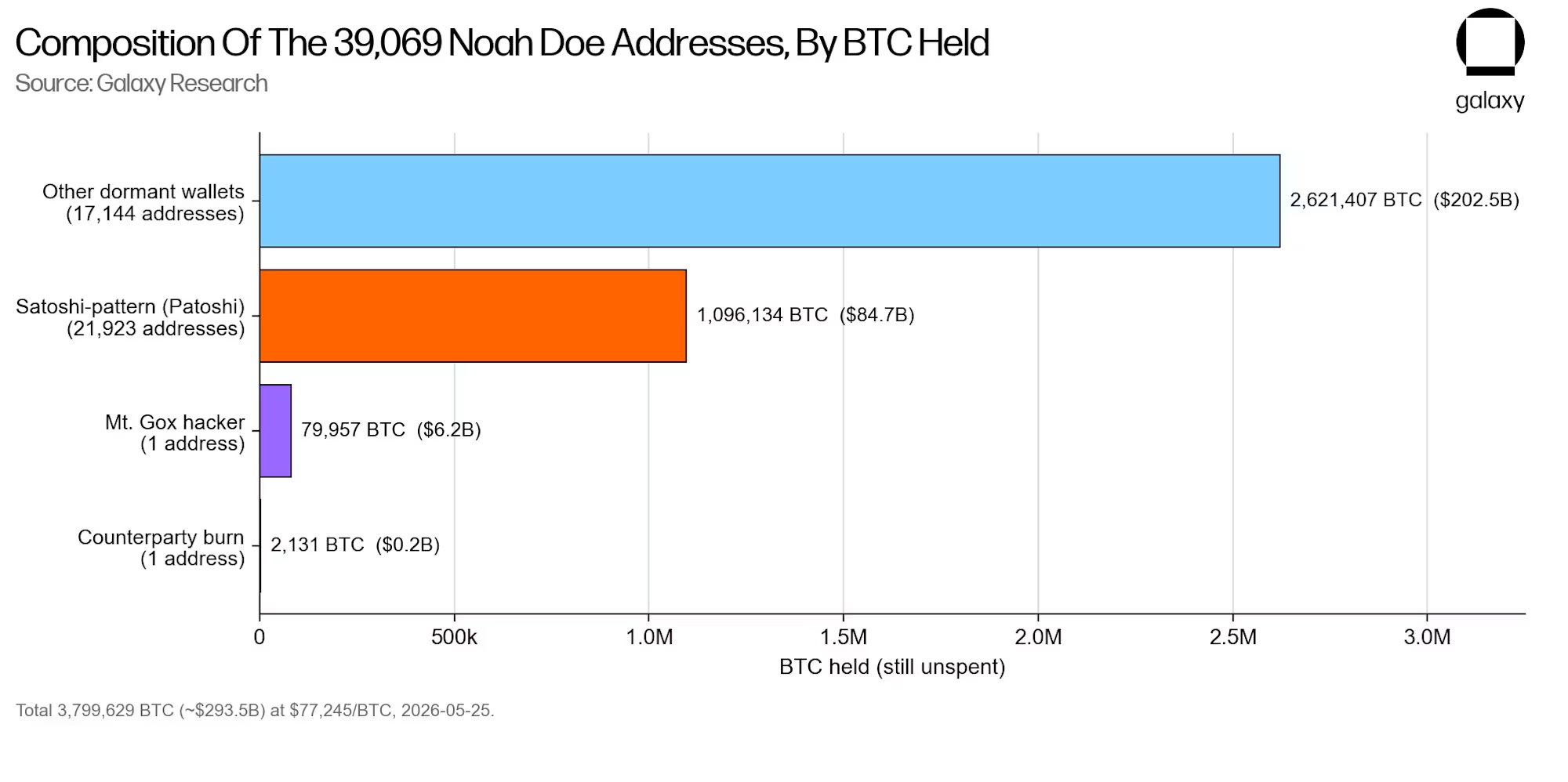
Composition of Addresses 'Found' by Noah Doe

Satoshi (Patoshi) Addresses

Comprising 21,923 addresses, approximately 1,096,134 Bitcoins (about $84.7 billion). These are early-mined Bitcoins linked to Bitcoin's creator through the 'Patoshi' nonce pattern. They have never moved.

Mt. Gox Hacker Address

Only 1 address, approximately 79,957 Bitcoins (about $6.2 billion). This is John Doe #1. These Bitcoins were stolen from the early Bitcoin exchange Mt. Gox and have been untouched since 2011. They are disputed property that investigators have tracked for years.

Counterparty Burn Address

Only 1 address, approximately 2,131 Bitcoins (about $160 million). This is John Doe #104, a provably unspendable 'burn' address. No one has ever held its key because, by design, such a key does not exist.

Other Dormant Addresses

7,144 addresses, approximately 2,621,407 Bitcoins (about $202.5 billion). These addresses contain a large number of early holders and exchange-era Bitcoins that have not moved for many years.

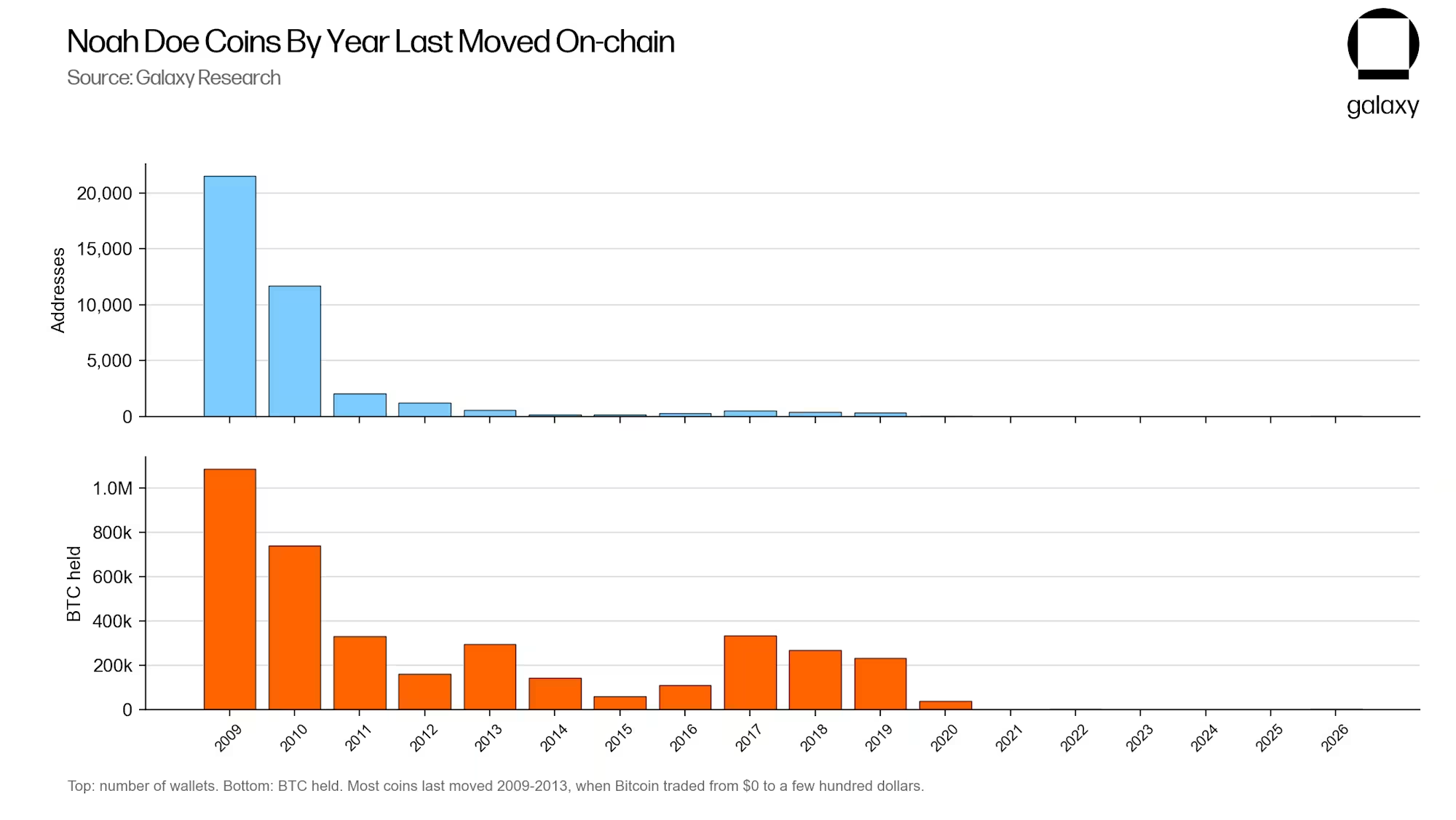
This dormancy is long-standing. If we sort each address by the year its Bitcoins last moved on-chain, we find most of the Bitcoins last moved in Bitcoin's early years. The vast majority of these Bitcoins last transacted between 2009 and 2013, during which Bitcoin's price soared from nearly zero to several hundred dollars.
But many of these addresses have been claimed before. In Kleiman v. Wright (Southern District of Florida, 2018), Australian businessman Craig Wright submitted a list of 16,404 early-block addresses he claimed belonged to him as part of his later-dismissed claim to be Satoshi Nakamoto.

We compared the Bitcoin addresses Wright claimed to own in the Kleiman litigation with Noah Doe's addresses to see their overlap.
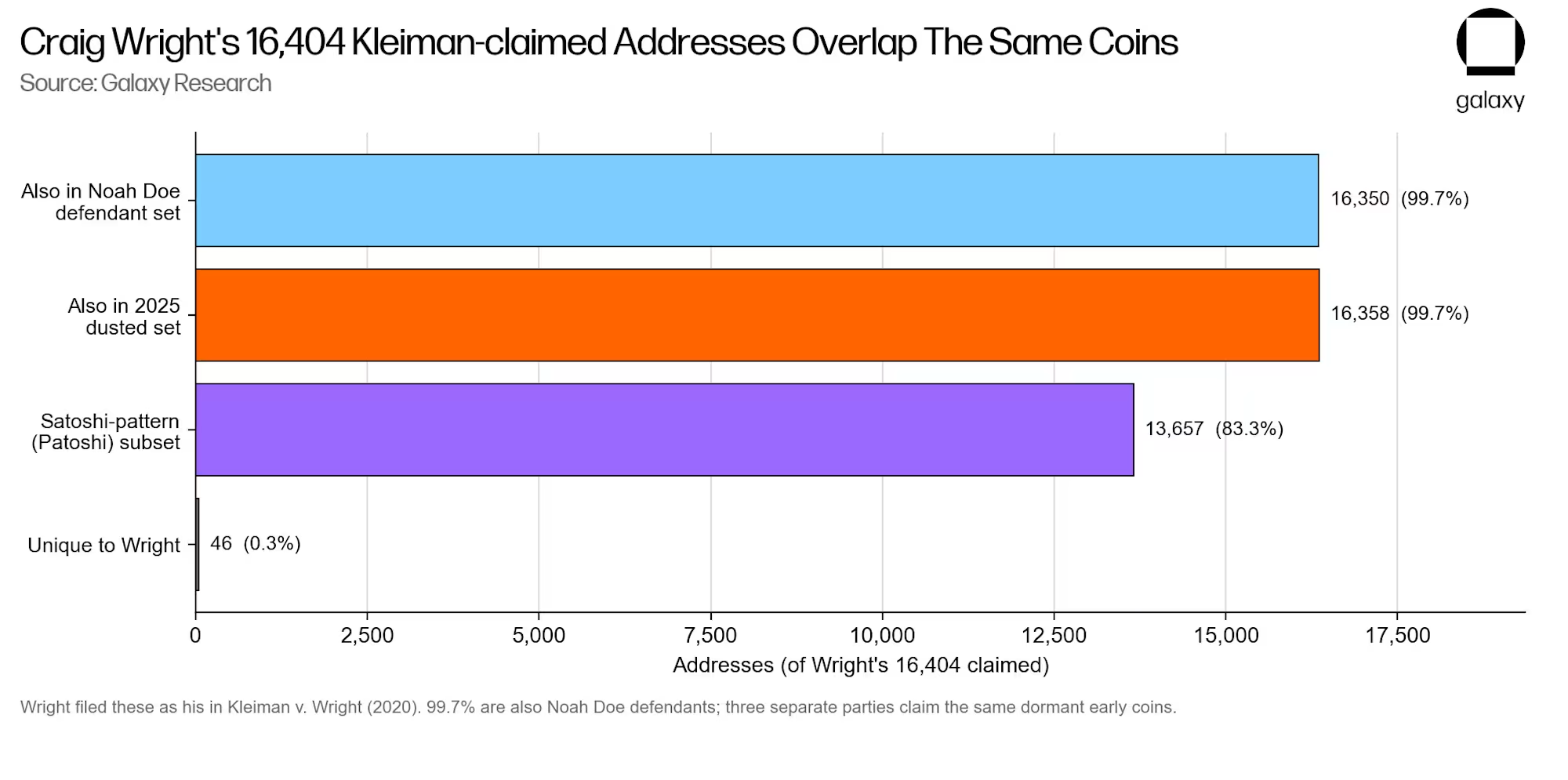
Address Overlap Between Noah Doe and Craig Wright

The overlap is almost identical. Of the 16,404 addresses Wright claimed, 16,350 (99.7%) are also claimed by Noah Doe's defendants, holding approximately 817,513 Bitcoins. We cannot determine if Craig Wright has any connection to the Noah Doe case, but the overlap is notable. Craig Wright has attempted for years to claim these Bitcoins through litigation but was found in contempt of court by a UK court in 2024.

Questionable Aspects of the Case

While we are not lawyers, just looking at the court record and relevant statutes, this case is full of doubts.

Does the Lost and Found Law Apply?

Before any valuation or service issues, there's a more fundamental question: the lost and found law was designed for physical objects that a finder picks up, holds, and delivers to the police. Noah Doe never held these coins or keys. He merely looked at public addresses on a ledger that anyone can read. Viewing a public address is far from holding lost property. Delivering a USB drive with listed addresses to the police is also different from actually delivering the lost item.

The statute envisions a finder who can return the item if the owner comes forward. But in this case, the finder never held the coins and could not possibly deliver them to anyone—neither to the police who allegedly have custody, nor to a claiming owner. The core issue goes beyond ownership; losing a private key does not deprive the true owner of any rights. The Bitcoin remains on-chain; the true key holder can move it at any time, which is exactly what hundreds of owners who lost their Bitcoin have done.

It seems clear that ownership cannot effectively transfer to a finder who can never touch the asset.

Valuation Is Not Credible

The average holding of a Noah Doe address is 97.25 Bitcoins, worth about $7.5 million; the median is 50.00 Bitcoins, worth about $3.86 million. Compared to these figures, the claim that each address is worth less than $10 is untenable. This appears to be a tactic to push these assets through the legal process at the fastest speed.

Two other details further undermine this valuation. The expert proposing the 'under $10' figure is not named in the filings, so this single number dictating the entire timeline cannot be examined or challenged. If the 'as-is recoverable' logic is applied universally, then almost all self-custodied Bitcoin would be valued near zero, which is diametrically opposed to how any user, especially one going through the trouble of filing this lawsuit, treats their Bitcoin.

Anonymity of the Parties

Noah Doe's use of anonymity in this case is also highly questionable. He seeks anonymity to avoid being targeted as a large holder, yet the rights he seeks would force the actual address holders to reveal their identities to defend their cryptocurrency. The protection the plaintiff wants for himself is precisely what he seeks to strip from all defendants.

Even if an individual could present a genuine personal safety theory, that theory exists to protect natural persons. ABC Company and XYZ Company are shell LLCs. A corporation has no physical entity to be threatened and no privacy to expose, so the logic of fearing extortion does not apply. Allowing two companies to claim trillions in property under shell names is astounding.

Moreover, New York State does not favor anonymous entities. New York courts rarely allow pseudonyms. While New York historically permitted anonymous LLC ownership, the state's LLC Transparency Act now mandates disclosure of beneficial ownership, though federal law has narrowed its scope to foreign-formed LLCs.

Potential Development of Subsequent Litigation

Even setting aside these details, the 'audacity' of this lawsuit becomes apparent. It is unthinkable that a New York court would award legal ownership of approximately $293 billion worth of Bitcoin (including some belonging to Satoshi Nakamoto) to anonymous individuals based on a dubious 'lost and found' theory with an under-$10 valuation. Courts are typically reluctant to entertain such novel and far-reaching cases, especially when property is disputed and judgments could have broad implications.

Since this is a declaratory action about property ownership, under CPLR 1012(a)(3), the true owners of the addresses have the right to intervene directly in the lawsuit; non-owners with a related interest may apply for permission to intervene under CPLR 1013. However, while the principle allows intervention, there is a massive practical obstacle. To intervene, an owner must come forward and prove control over the registered address, which is precisely the de-anonymization that cautious Bitcoin whales have spent a lifetime trying to avoid.

The defendant addresses are all pseudonymous and deliberately not publicly listed. Therefore, by the end of June 2026, about 30 days after service, a technical default judgment is almost certain to occur. A motion for default judgment will likely be filed in the summer. However, for many reasons, the court is unlikely to swiftly grant a default judgment fully satisfying all plaintiff's demands.

First, a declaration of ownership is not a default service provided by the clerk for a fixed sum; it requires an application to the court, and the court retains discretion to require a hearing and demand actual evidence. Second, the theory is novel and the stakes are enormous—factors that often trigger judicial skepticism, not 'rubber-stamp' approval. Furthermore, the validity of OP_RETURN service itself is debatable, and a questionable affidavit of service gives the court reason to proceed cautiously. Finally, any actual holder who intervenes could turn a previously uncontested case into a real contest.

Galaxy estimates the likelihood of the court granting a full ownership declaration in a default judgment is low, and even if it does rule, it's more likely to be after a hearing and in a narrowed scope.

What if the Plaintiff Wins?

Even if the plaintiff wins completely, they still cannot seize any Bitcoin. All they would hold is a New York State declaration, not a set of private keys. The principle 'Not your keys, not your coins' applies to them as well.

Therefore, the danger is not that the plaintiff could seize Satoshi's Bitcoin or any other Bitcoin mentioned in the Noah Doe defendant addresses. The danger is that if any of these Bitcoins are transferred to a centralized exchange or custodian, the plaintiff could present their New York judgment to that institution and attempt to place a lien on those Bitcoins. Such action could freeze assets, spark years of litigation, and force the holder who moved the Bitcoin decades later to come forward to prove ownership, thereby compromising their own anonymity.

The paper ownership certificate is leverage against regulated intermediaries and those who rely on them. This almost certainly explains why, even though a judgment may never directly affect the Bitcoin itself, it is still worth pursuing for those behind this case.


Preguntas relacionadas

QWhat is the core legal strategy used by 'Noah Doe' to claim ownership of the dormant Bitcoin addresses?

AThe core legal strategy is to apply New York State's lost property law, specifically Article 7-B of the Personal Property Law, to Bitcoin addresses. The plaintiff argues that these dormant addresses constitute 'lost property.' They physically delivered a USB drive listing the addresses to a police precinct, sent notifications via Bitcoin's OP_RETURN function, and published news releases as 'reasonable efforts' to find the owners. Crucially, they had an unnamed 'independent expert' value each address's 'as-is' worth at less than $10, which allows the fastest procedural pathway under the law for claiming ownership after a one-year period without the owner coming forward.

QAccording to the article, what is the potential risk to Bitcoin holders if the plaintiffs win the lawsuit?

AThe primary risk is not the direct seizure of the Bitcoins, as the plaintiffs would not gain the private keys. The risk is that the New York court judgment would act as a 'title defect' or a cloud on the title. If any of the Bitcoin from these addresses is later transferred to a regulated institution like a centralized exchange or custodial service, the plaintiffs could present the judgment to that institution and attempt to place a lien or freeze on those assets. This could force the actual owner to engage in lengthy litigation and potentially reveal their identity to defend their ownership, compromising their anonymity.

QWhat significant overlap does the article highlight between the addresses claimed by 'Noah Doe' and another controversial figure in the crypto space?

AThe article highlights a near-total overlap between the addresses claimed by 'Noah Doe' and those previously claimed by Craig Wright in the *Kleiman v. Wright* case. Craig Wright submitted a list of 16,404 early Bitcoin addresses, claiming they belonged to him as part of his (since discredited) claim to be Satoshi Nakamoto. Of those 16,404 addresses, 16,350 (99.7%) also appear on 'Noah Doe's' list of claimed addresses. These overlapping addresses hold approximately 817,513 Bitcoin.

QWhat are the main arguments presented in the article against the validity of the plaintiffs' case?

AThe article raises several key arguments against the case's validity: 1) **Misapplication of Law:** Lost property laws are designed for physical items one can pick up and hand over. The plaintiffs never possessed the Bitcoins or private keys; they only looked at publicly available address lists. 2) **Incredible Valuation:** Claiming each multi-million dollar address is worth 'less than $10' is a transparent procedural maneuver to speed up the legal process and is not credible. 3) **Hypocritical Anonymity:** The plaintiffs argue for anonymity for their own safety but seek a judgment that would force the actual address owners to potentially reveal their identities to defend their assets. 4) **Corporate Shells:** The involvement of anonymous LLCs (ABC and XYZ companies) further complicates the legitimacy, as corporations cannot claim the same personal safety risks as individuals.

QWhat does the article suggest is the most likely outcome of the lawsuit, and why?

AThe article, citing Galaxy's analysis, suggests it is unlikely the court will grant a full default judgment declaring complete ownership to the plaintiffs. The novelty of the legal theory, the astronomical sums involved, the questionable valuation and service of process (OP_RETURN notifications), and the court's likely caution all make a quick, rubber-stamp approval improbable. Instead, the court might require a hearing or issue a narrower ruling if it grants any judgment at all. Furthermore, any actual owner of the addresses who comes forward to intervene in the case could turn it into a contested proceeding, further reducing the chance of an easy win for the plaintiffs.

Lecturas Relacionadas

The Midlife Crisis of Crypto GPs: No PMF, No Next Check from LPs

The article "The Midlife Crisis of Crypto GPs: No PMF, No Next LP Check" analyzes the shifting crypto fundraising landscape. It argues the era of selling grand visions to LPs is over; GPs must now offer products with clear Product-Market Fit (PMF). The author categorizes crypto fundraising products into three types: Primary (VC funds), Liquid (trading strategies), and CeFi/DeFi Native Yield. This summary focuses on the Primary market. Key points include: * **Market Shift:** LPs are impatient, demand immediate returns, and are skeptical of future promises. The "easy money" narrative has faded. * **GP Value Erosion:** LP learning curves have shortened (aided by AI), reducing the value of a GP's basic "crypto knowledge." Superior judgment is now rare. * **Weakened LP Motivations:** Traditional reasons for LPs to invest in crypto VC funds (capturing industry beta, gaining access, leveraging GP judgment) have weakened due to new products like ETFs and increased LP sophistication. * **Surviving in Primary:** The primary market will likely persist for: 1) large funds in endowment mandates treating it as a lottery ticket, 2) family offices/HNWIs using proprietary capital, 3) a few funds with proven recent outperformance, and 4) funds with strong ecosystem "deal-making" capabilities. * **Conclusion:** For most GPs, rebuilding trust requires starting over in a niche, demonstrating alpha-generating ability, or providing concrete value/services to LPs.

marsbitHace 3 hora(s)

The Midlife Crisis of Crypto GPs: No PMF, No Next Check from LPs

marsbitHace 3 hora(s)

Crypto GPs' Midlife Crisis: No PMF, No LP's Next Check

The article "The Midlife Crisis of Crypto GPs: No PMF, No LP's Next Check" analyzes the shifting crypto fundraising landscape. It argues that the era of LPs funding vague "vision" is over; GPs must now offer products with clear Product-Market Fit (PMF) to secure capital. The market has matured. LPs, disillusioned by the last cycle's failures and wary of long lock-up periods, now demand tangible, near-term returns rather than speculative narratives. The proliferation of accessible crypto ETFs and other liquid products has reduced the need for VC blind pools as an entry point. The author categorizes crypto fundraising products into three types: Primary (VC funds, with blind pools or clear pipelines), Liquid (alpha/beta, directional/market-neutral strategies), and CeFi/DeFi Native Yield (crypto-specific mechanisms like staking, farming). Focusing on the Primary market, the piece details why traditional LP rationales for investing in crypto VCs have weakened: easier beta access via ETFs, diminished "access" and "judgement" premiums as LPs build internal teams, and a widespread lack of proven superior returns from GPs. Ultimately, only specific players are likely to remain at the primary VC table: large funds with access to patient endowment capital, family offices/HNWIs investing proprietary capital, the few funds with demonstrable excess returns from the last cycle, and those with clear "deal-making" or ecosystem resource advantages. For others, the path forward is to rebuild trust by proving alpha-generation capability in a niche or providing concrete, valuable services.

链捕手Hace 3 hora(s)

Crypto GPs' Midlife Crisis: No PMF, No LP's Next Check

链捕手Hace 3 hora(s)

Trading

Spot
Futuros

Artículos destacados

Qué es BITCOIN

Entendiendo HarryPotterObamaSonic10Inu (ERC-20) y Su Posición en el Espacio Cripto En los últimos años, el mercado de criptomonedas ha sido testigo de un aumento en la popularidad de las monedas meme, capturando el interés no solo de los comerciantes, sino también de aquellos que buscan compromiso comunitario y valor de entretenimiento. Entre estos tokens únicos se encuentra HarryPotterObamaSonic10Inu (ERC-20), un proyecto intrigante que mezcla referencias culturales en el tejido de las criptomonedas. Este artículo profundiza en los aspectos clave de HarryPotterObamaSonic10Inu, explorando sus mecanismos, ethos impulsado por la comunidad y su relación con el paisaje cripto más amplio. ¿Qué es HarryPotterObamaSonic10Inu (ERC-20)? Como su nombre sugiere, HarryPotterObamaSonic10Inu es una moneda meme construida sobre la blockchain de Ethereum, clasificada bajo el estándar ERC-20. A diferencia de las criptomonedas tradicionales que pueden enfatizar la utilidad práctica o el potencial de inversión, este token prospera en el valor de entretenimiento y la fuerza de su comunidad. El proyecto tiene como objetivo fomentar un entorno donde los usuarios comprometidos puedan reunirse, compartir ideas y participar en actividades inspiradas por diversos fenómenos culturales. Una característica notable de HarryPotterObamaSonic10Inu es su cero impuestos en las transacciones. Este atractivo elemento tiene como objetivo incentivar el comercio y la participación comunitaria, sin cargos adicionales que puedan disuadir a los comerciantes de pequeña escala. El suministro total de la moneda está establecido en mil millones de tokens, una cifra que marca su intención de mantener una circulación sustancial dentro de la comunidad. Creador de HarryPotterObamaSonic10Inu (ERC-20) Los orígenes de HarryPotterObamaSonic10Inu están algo envueltos en misterio; los detalles sobre el creador siguen siendo desconocidos. El desarrollo de este token carece de un equipo identificable o de un plan explícito, lo cual no es inusual dentro del sector de monedas meme. En cambio, el proyecto ha surgido de manera orgánica, con su progreso muy dependiente del entusiasmo y la participación de su comunidad. Inversores de HarryPotterObamaSonic10Inu (ERC-20) En cuanto a inversiones externas y respaldo, HarryPotterObamaSonic10Inu también sigue siendo ambiguo. El token no lista ninguna fundación de inversión conocida o apoyo organizacional significativo. En cambio, la savia del proyecto es su comunidad de base, que informa su crecimiento y sostenibilidad a través de la acción colectiva y el compromiso en el espacio cripto. ¿Cómo Funciona HarryPotterObamaSonic10Inu (ERC-20)? Como una moneda meme, HarryPotterObamaSonic10Inu opera principalmente fuera de los marcos tradicionales que a menudo rigen el valor de los activos. Hay varios aspectos distintivos que definen cómo funciona el proyecto: Transacciones Sin Impuestos: Sin tarifas impositivas en las transacciones, los usuarios pueden comprar y vender el token libremente sin preocuparse por costos ocultos. Compromiso Comunitario: El proyecto prospera en la interacción comunitaria, aprovechando plataformas de redes sociales para crear entusiasmo y facilitar la participación. Las discusiones, el intercambio de contenido y el compromiso son elementos cruciales que ayudan a expandir su alcance y fomentar la lealtad entre los seguidores. Sin Utilidad Práctica: Cabe señalar que HarryPotterObamaSonic10Inu no ofrece utilidad concreta dentro del ecosistema financiero. Más bien, se clasifica como un token principalmente para actividades de entretenimiento y comunitarias. Referencia Cultural: El token incorpora astutamente elementos de la cultura popular para atraer interés, conectando con entusiastas de los memes y seguidores de las criptomonedas por igual. HarryPotterObamaSonic10Inu ejemplifica cómo las monedas meme operan de manera diferente a los proyectos de criptomonedas más tradicionales, ingresando al mercado como construcciones sociales innovadoras en lugar de activos utilitarios. Cronología de HarryPotterObamaSonic10Inu (ERC-20) La historia de HarryPotterObamaSonic10Inu está marcada por varios hitos notables: Creación: El token surgió de un meme viral, capturando la imaginación de muchos entusiastas de las criptomonedas. Las fechas específicas de creación no están disponibles, subrayando su ascenso orgánico. Listado en Exchanges: HarryPotterObamaSonic10Inu ha llegado a varios exchanges, permitiendo un acceso y comercio más fácil por parte de la comunidad. Iniciativas de Compromiso Comunitario: Actividades continuas destinadas a mejorar la interacción comunitaria, incluyendo concursos, campañas en redes sociales y generación de contenido por parte de fanáticos y defensores. Planes de Expansión Futuros: La hoja de ruta del proyecto incluye el lanzamiento de una colección de NFT, mercancía y un sitio de comercio electrónico relacionado con sus temas culturales, involucrando aún más a la comunidad e intentando añadir más dimensiones a su ecosistema. Puntos Clave Sobre HarryPotterObamaSonic10Inu (ERC-20) Naturaleza Impulsada por la Comunidad: El proyecto prioriza la participación colectiva y la creatividad, asegurando que la involucración de los usuarios esté a la vanguardia de su desarrollo. Clasificación como Moneda Meme: Representa la epítome de las criptomonedas basadas en el entretenimiento, diferenciándose de los vehículos de inversión tradicionales. Sin Afiliación Directa con Bitcoin: A pesar de la similitud en el nombre del ticker, HarryPotterObamaSonic10Inu es distinto y no tiene relación con Bitcoin u otras criptomonedas establecidas. Enfoque en la Colaboración: HarryPotterObamaSonic10Inu está diseñado para crear un espacio para la colaboración y el intercambio de historias entre sus poseedores, proporcionando una vía para la creatividad y el vínculo comunitario. Perspectivas Futuras: La ambición de expandirse más allá de su premisa inicial hacia NFTs y mercancías describe un camino para que el proyecto potencialmente ingrese a avenidas más tradicionales dentro de la cultura digital. A medida que las monedas meme continúan capturando la imaginación de la comunidad de criptomonedas, HarryPotterObamaSonic10Inu (ERC-20) se destaca debido a sus lazos culturales y su enfoque centrado en la comunidad. Si bien puede no encajar en el molde típico de un token impulsado por la utilidad, su esencia radica en la alegría y la camaradería fomentadas entre sus seguidores, destacando la naturaleza en evolución de las criptomonedas en una era cada vez más digital. A medida que el proyecto continúa desarrollándose, será importante observar cómo las dinámicas comunitarias influyen en su trayectoria en el cambiante paisaje de la tecnología blockchain.

1.5k Vistas totalesPublicado en 2024.04.01Actualizado en 2024.12.03

Qué es BITCOIN

Cómo comprar BTC

¡Bienvenido a HTX.com! Hemos hecho que comprar Bitcoin (BTC) sea simple y conveniente. Sigue nuestra guía paso a paso para iniciar tu viaje de criptos.Paso 1: crea tu cuenta HTXUtiliza tu correo electrónico o número de teléfono para registrarte y obtener una cuenta gratuita en HTX. Experimenta un proceso de registro sin complicaciones y desbloquea todas las funciones.Obtener mi cuentaPaso 2: ve a Comprar cripto y elige tu método de pagoTarjeta de crédito/débito: usa tu Visa o Mastercard para comprar Bitcoin (BTC) al instante.Saldo: utiliza fondos del saldo de tu cuenta HTX para tradear sin problemas.Terceros: hemos agregado métodos de pago populares como Google Pay y Apple Pay para mejorar la comodidad.P2P: tradear directamente con otros usuarios en HTX.Over-the-Counter (OTC): ofrecemos servicios personalizados y tipos de cambio competitivos para los traders.Paso 3: guarda tu Bitcoin (BTC)Después de comprar tu Bitcoin (BTC), guárdalo en tu cuenta HTX. Alternativamente, puedes enviarlo a otro lugar mediante transferencia blockchain o utilizarlo para tradear otras criptomonedas.Paso 4: tradear Bitcoin (BTC)Tradear fácilmente con Bitcoin (BTC) en HTX's mercado spot. Simplemente accede a tu cuenta, selecciona tu par de trading, ejecuta tus trades y monitorea en tiempo real. Ofrecemos una experiencia fácil de usar tanto para principiantes como para traders experimentados.

4.9k Vistas totalesPublicado en 2024.12.12Actualizado en 2026.06.01

Cómo comprar BTC

Qué es $BITCOIN

ORO DIGITAL ($BITCOIN): Un Análisis Integral Introducción al ORO DIGITAL ($BITCOIN) ORO DIGITAL ($BITCOIN) es un proyecto basado en blockchain que opera en la red Solana, cuyo objetivo es combinar las características de los metales preciosos tradicionales con la innovación de las tecnologías descentralizadas. Aunque comparte un nombre con Bitcoin, a menudo referido como “oro digital” debido a su percepción como un refugio de valor, ORO DIGITAL es un token separado diseñado para crear un ecosistema único dentro del paisaje Web3. Su meta es posicionarse como un activo digital alternativo viable, aunque los detalles sobre sus aplicaciones y funcionalidades aún están en desarrollo. ¿Qué es ORO DIGITAL ($BITCOIN)? ORO DIGITAL ($BITCOIN) es un token de criptomoneda diseñado explícitamente para su uso en la blockchain de Solana. A diferencia de Bitcoin, que proporciona un papel de almacenamiento de valor ampliamente reconocido, este token parece centrarse en aplicaciones y características más amplias. Aspectos notables incluyen: Infraestructura Blockchain: El token está construido sobre la blockchain de Solana, conocida por su capacidad para manejar transacciones de alta velocidad y bajo costo. Dinámicas de Suministro: ORO DIGITAL tiene un suministro máximo limitado a 100 cuatrillones de tokens (100P $BITCOIN), aunque los detalles sobre su suministro circulante no se han divulgado actualmente. Utilidad: Si bien las funcionalidades precisas no están delineadas explícitamente, hay indicios de que el token podría ser utilizado para diversas aplicaciones, potencialmente involucrando aplicaciones descentralizadas (dApps) o estrategias de tokenización de activos. ¿Quién es el Creador de ORO DIGITAL ($BITCOIN)? En la actualidad, la identidad de los creadores y el equipo de desarrollo detrás de ORO DIGITAL ($BITCOIN) sigue siendo desconocida. Esta situación es típica entre muchos proyectos innovadores dentro del espacio blockchain, particularmente aquellos alineados con las finanzas descentralizadas y fenómenos de monedas meme. Si bien tal anonimato puede fomentar una cultura impulsada por la comunidad, intensifica las preocupaciones sobre la gobernanza y la responsabilidad. ¿Quiénes son los Inversores de ORO DIGITAL ($BITCOIN)? La información disponible indica que ORO DIGITAL ($BITCOIN) no tiene patrocinadores institucionales conocidos ni inversiones destacadas de capital de riesgo. El proyecto parece operar en un modelo de peer-to-peer centrado en el apoyo y la adopción de la comunidad en lugar de rutas de financiamiento tradicionales. Su actividad y liquidez se sitúan principalmente en intercambios descentralizados (DEX), como PumpSwap, en lugar de plataformas de trading centralizadas establecidas, lo que resalta aún más su enfoque de base. Cómo Funciona ORO DIGITAL ($BITCOIN) Los mecanismos operativos de ORO DIGITAL ($BITCOIN) pueden elaborarse en función de su diseño blockchain y atributos de red: Mecanismo de Consenso: Al aprovechar el único proof-of-history (PoH) de Solana combinado con un modelo de proof-of-stake (PoS), el proyecto asegura una validación de transacciones eficiente que contribuye al alto rendimiento de la red. Tokenómica: Si bien los mecanismos deflacionarios específicos no se han detallado extensamente, el vasto suministro máximo de tokens implica que podría atender microtransacciones o casos de uso nicho que aún están por definirse. Interoperabilidad: Existe el potencial de integración con el ecosistema más amplio de Solana, incluyendo varias plataformas de finanzas descentralizadas (DeFi). Sin embargo, los detalles sobre integraciones específicas permanecen no especificados. Cronología de Eventos Clave Aquí hay una cronología que destaca hitos significativos relacionados con ORO DIGITAL ($BITCOIN): 2023: El despliegue inicial del token ocurre en la blockchain de Solana, marcado por su dirección de contrato. 2024: ORO DIGITAL gana visibilidad al estar disponible para trading en intercambios descentralizados como PumpSwap, permitiendo a los usuarios comerciar contra SOL. 2025: El proyecto presencia actividad de trading esporádica y potencial interés en compromisos liderados por la comunidad, aunque no se han documentado asociaciones notables o avances técnicos hasta el momento. Análisis Crítico Fortalezas Escalabilidad: La infraestructura subyacente de Solana soporta altos volúmenes de transacciones, lo que podría mejorar la utilidad de $BITCOIN en varios escenarios de transacción. Accesibilidad: El potencial bajo precio de trading por token podría atraer a inversores minoristas, facilitando una participación más amplia debido a oportunidades de propiedad fraccionada. Riesgos Falta de Transparencia: La ausencia de patrocinadores, desarrolladores o un proceso de auditoría conocidos públicamente puede generar escepticismo sobre la sostenibilidad y confiabilidad del proyecto. Volatilidad del Mercado: La actividad de trading depende en gran medida del comportamiento especulativo, lo que puede resultar en una volatilidad de precios significativa y en incertidumbre para los inversores. Conclusión ORO DIGITAL ($BITCOIN) surge como un proyecto intrigante pero ambiguo dentro del ecosistema de Solana en rápida evolución. Si bien intenta aprovechar la narrativa del “oro digital”, su alejamiento del papel establecido de Bitcoin como refugio de valor subraya la necesidad de una diferenciación más clara de su utilidad y estructura de gobernanza previstas. La aceptación y adopción futura dependerán probablemente de abordar la actual opacidad y de definir sus estrategias operativas y económicas de manera más explícita. Nota: Este informe abarca información sintetizada disponible hasta octubre de 2023, y pueden haber ocurrido desarrollos más allá del período de investigación.

83 Vistas totalesPublicado en 2025.05.13Actualizado en 2025.05.13

Qué es $BITCOIN

Discusiones

Bienvenido a la comunidad de HTX. Aquí puedes mantenerte informado sobre los últimos desarrollos de la plataforma y acceder a análisis profesionales del mercado. A continuación se presentan las opiniones de los usuarios sobre el precio de BTC (BTC).

活动图片