How the GBTC premium trade ruined Barry Silbert, his DCG empire

cryptoslatePublicado a 2023-01-09Actualizado a 2023-01-09

Resumen

DCG struggles as Grayscale trusts face steep discounts and increased competition from ETFs.

Introduction to Digital Currency Group

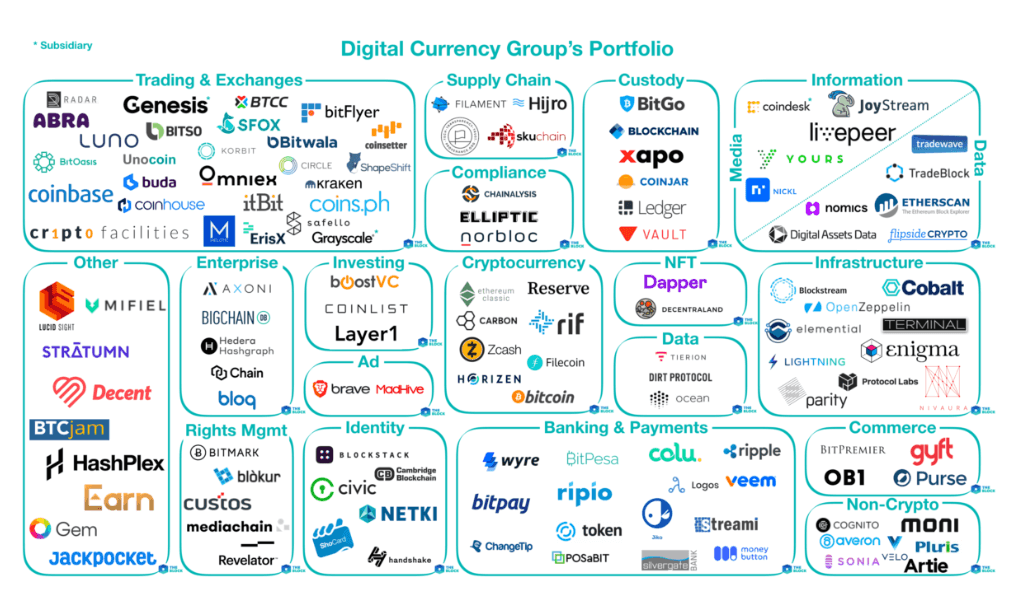
Digital Currency Group was founded by Barry Silbert in 2015, who subsequently created the DCG empire by investing in hundreds of projects and companies.

Digital Currency Portfolio: (Source: DCG)

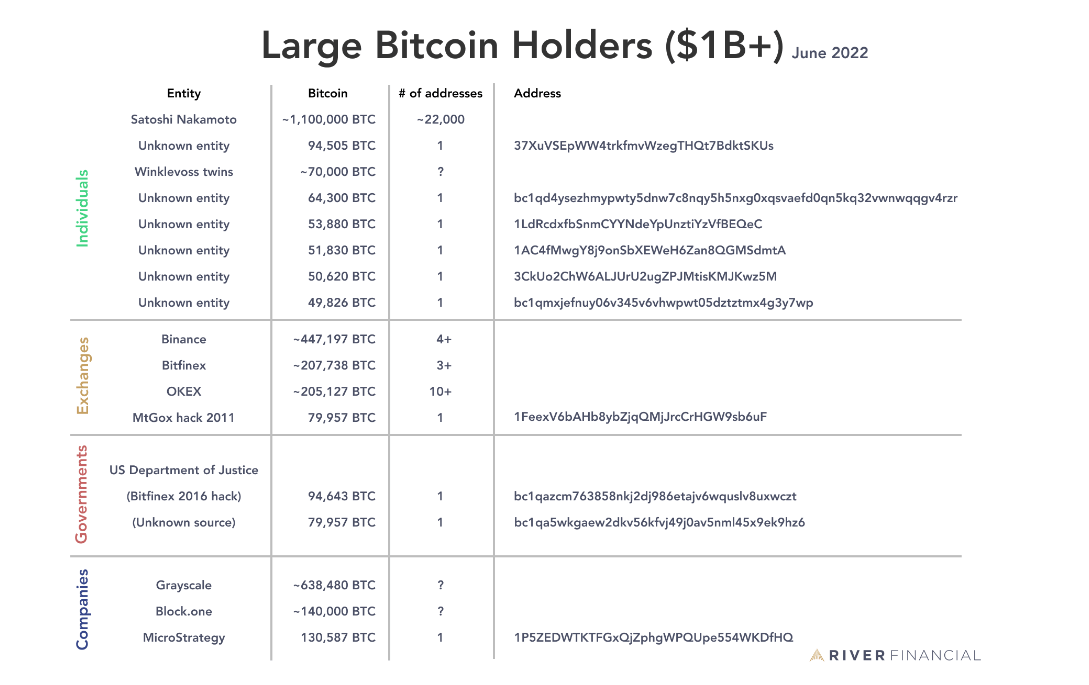
However, the most important company within DCG’s portfolio is Grayscale Investments, the largest holder of Bitcoin in the world, other than Satoshi Nakomoto.

Large Bitcoin Holders: (Source: River Financial)

GBTC holds the equivalent of 633K BTC, just over 3% of the Bitcoin circulating supply. The trust’s Net Asset Value (NAV) is roughly $10.5 billion at the time of writing.

The custody of the BTC is held with Coinbase Custody. However, Coinbase is yet to verify if they have control of the BTC. Yet, as Coinbase is traded as a public company in the U.S. and is therefore subject to audits, it like probable that the BTC is stored under standard practices.

How does DCG make money?

DCG charges a 2% management fee for the underlying Bitcoin held in the trust.

According to SEC filings in Q3 2022, DCG earned $68 million from this fee while bringing in around $230m in revenue annually. The income represents a large percentage of the $800 million it generates annually. Barry Silbert corroborated these numbers in a letter to shareholders on November 22nd.

GBTC, for some time, was the only way U.S. investors could get exposure into their IRAs or 401k accounts, which is one of the reasons it traded at a premium for so many years, as high as 40%.

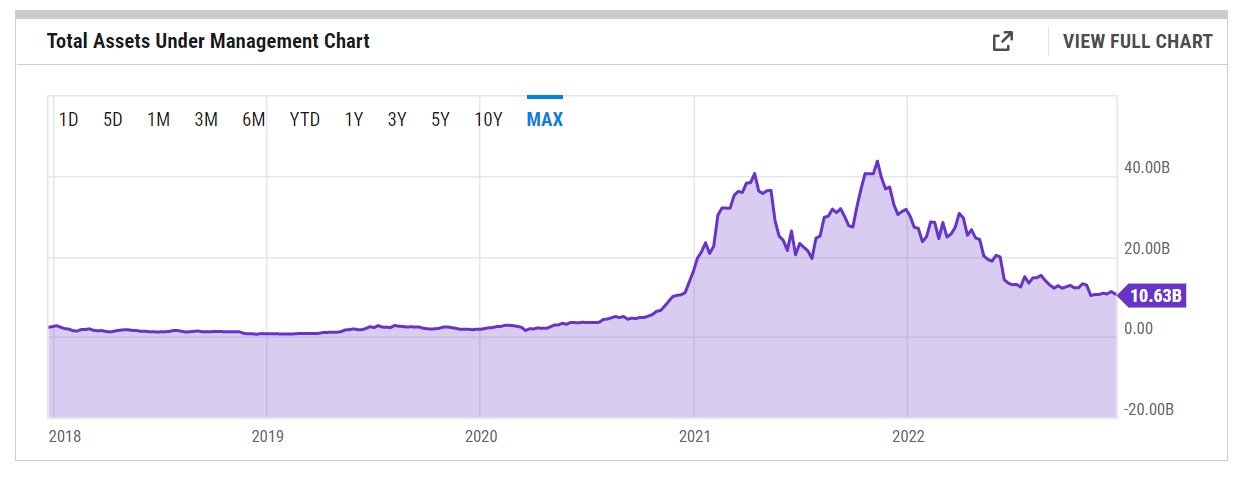
Even though GBTC was deemed a security, it doesn’t have the self-custody risks attributed to holding your keys for BTC. As demand grew, so did assets under management, which topped out at over $40bn during the 2021 bull run.

Total Assets Under Management: (Source: YCharts)

Premium and discount

GBTC trades at a premium when shares are changing hands at a higher price than the underlying BTC. Conversely, if GBTC shares are trading below the NAV, GBTC is deemed at a discount.

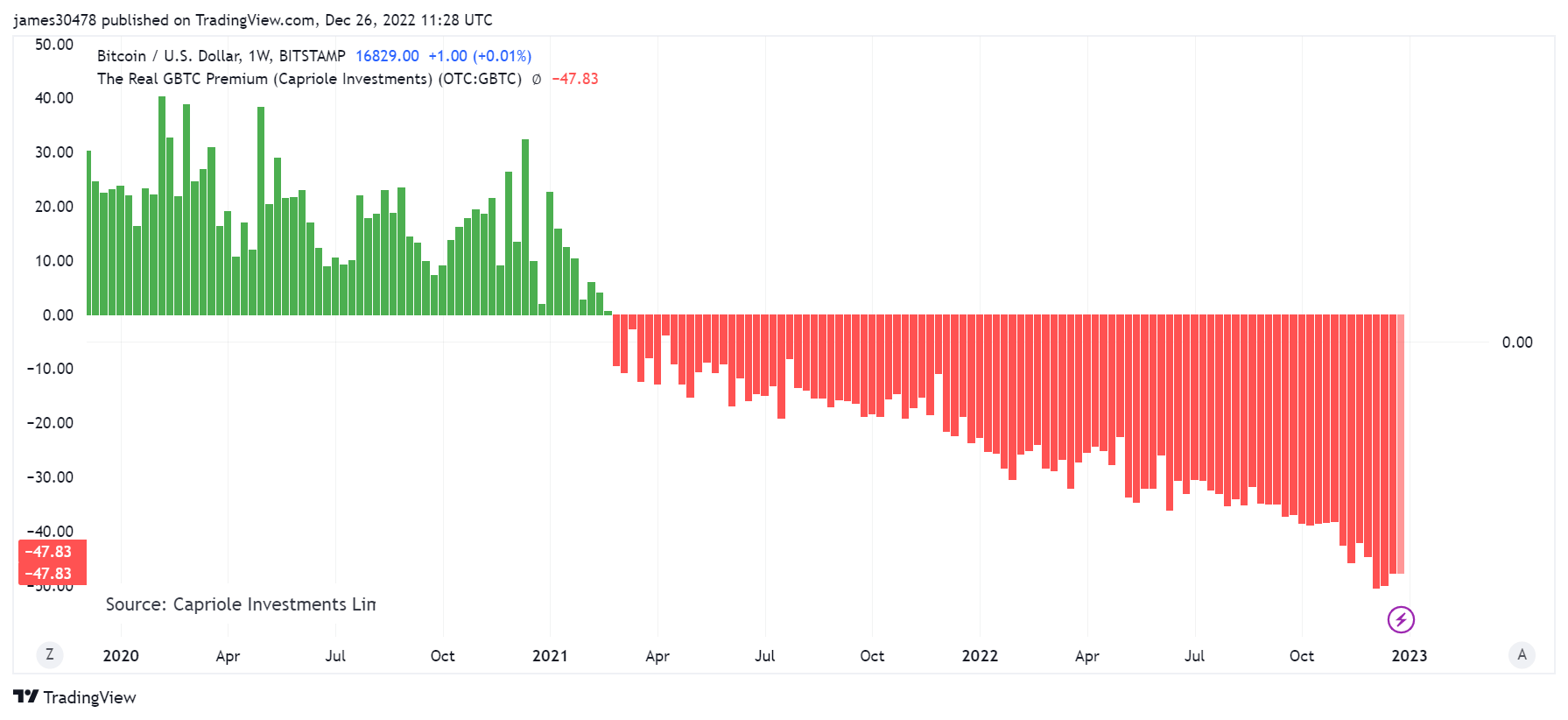
On Feb. 24, 2021, GBTC flipped from a premium to a discount to its net asset value (NAV.) Unfortunately, it has never returned to a premium, and the discount has only deepened.

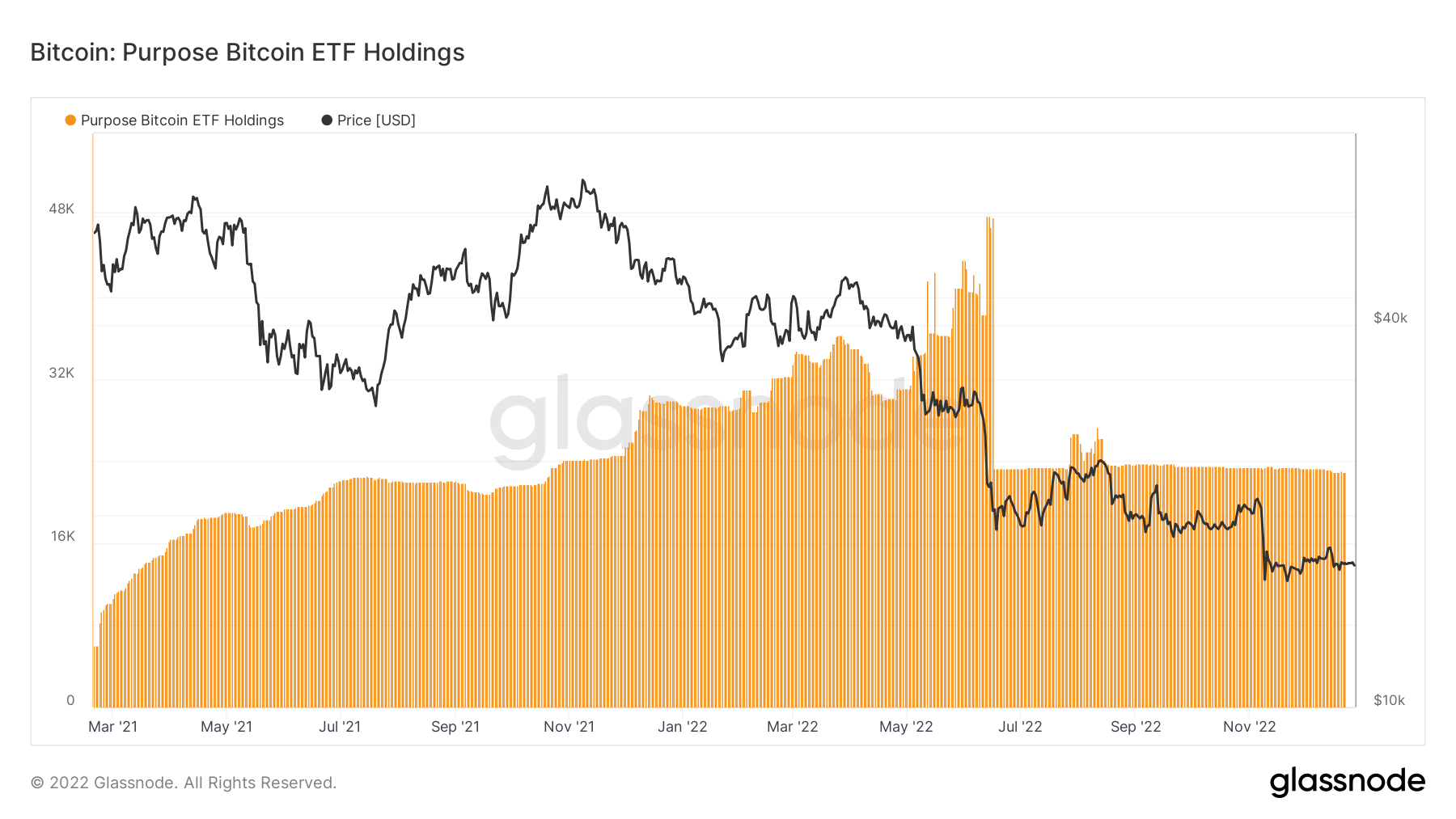
A reason for the discount can be seen in the increased competition from Bitcoin futures ETFs. The Valkyrie Bitcoin Strategy future ETF (BTF) launched during the November 2021 bull run, and the Purpose Bitcoin ETF holdings in Canada are two of the main competitors. The Purpose Bitcoin ETF held 50k BTC in June 2022 but now only has around 24k BTC. In addition, these funds and others tend to offer a smaller management fee, which removes demand from GBTC.

Purpose Bitcoin ETF Holdings: (Source: Glassnode)

The discount for GBTC is currently a whopping 48%, following a fall as low as 50%, which was the most significant discount on record. The issue with holding GBTC is the mandatory 6-month lock-up of GBTC shares, making it highly illiquid. Further, when the discount grows, investors cannot redeem shares. Moreover, holders don’t own the actual BTC as it is a paper derivative of BTC.

GBTC Premium/Discount: (Source: TradingView)

From March 2021 to June 2022, Digital Currency Group bought nearly $800 million worth of GBTC shares after they began trading at a discount to NAV. As a result, the firm owned roughly 10% of the trust’s outstanding shares.

The purchases of GBTC mitigated institutional sell pressure and artificially propped up the fund’s NAV. DCG issued GBTC and attempted to defend the GBTC price by acquiring GBTC using leverage.

One may ask whether this differs from FTX issuing FTT tokens and attempting to defend the token using leverage. FTT and GBTC were large parts of the FTX and DCG balance sheets, respectively.

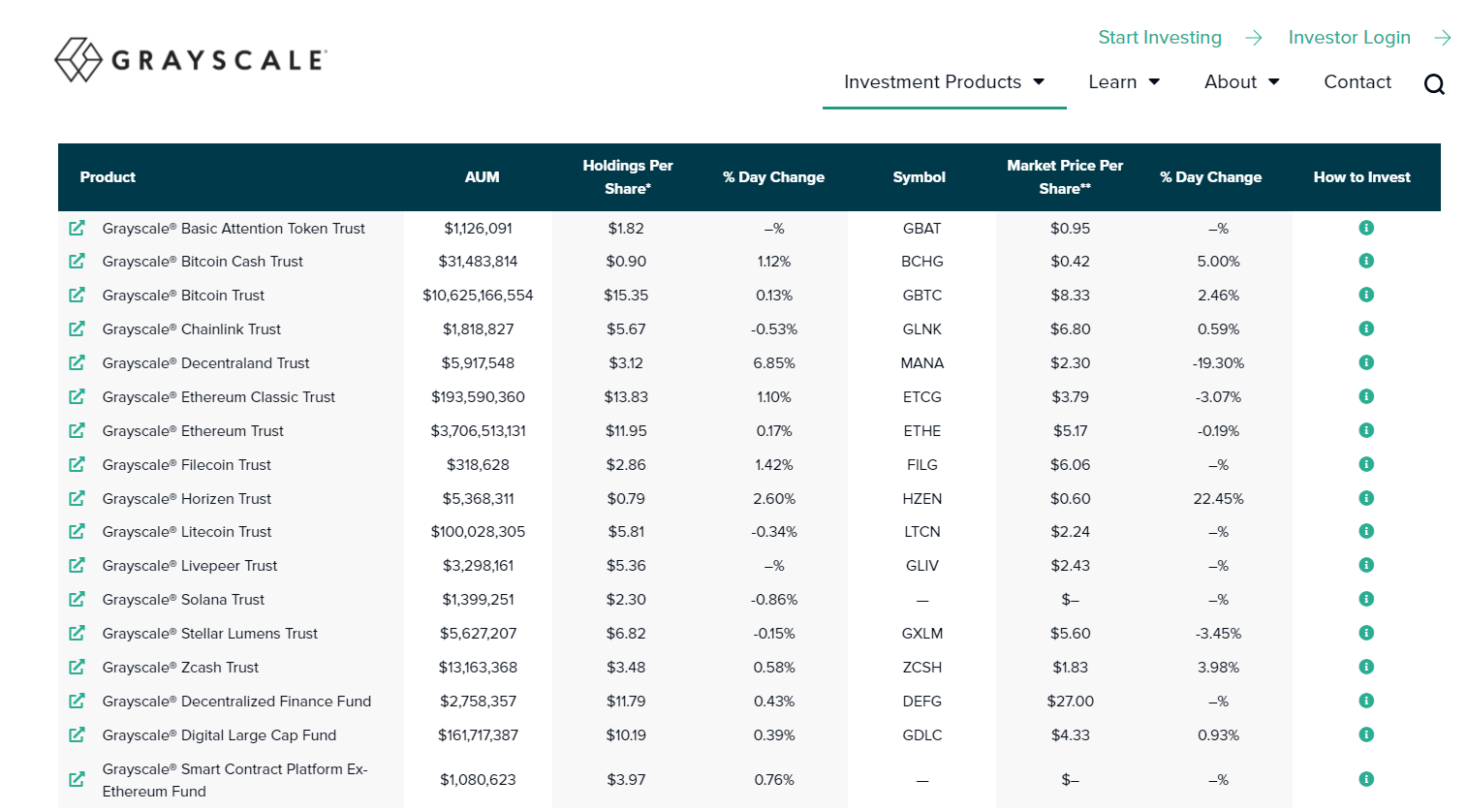
Grayscale offers other similar trusts for alternative crypto assets. For example, the Grayscale Ethereum Trust (ETHE) is currently trading at a steep discount, and as of Jan. 3, the fund’s discount to NAV has plunged to a record 60%.

Grayscale Investment Products: (Source: DCG)

Genesis and lending platforms

Several failed crypto companies, like 3AC and BlockFi, had significant exposure to GBTC shares.

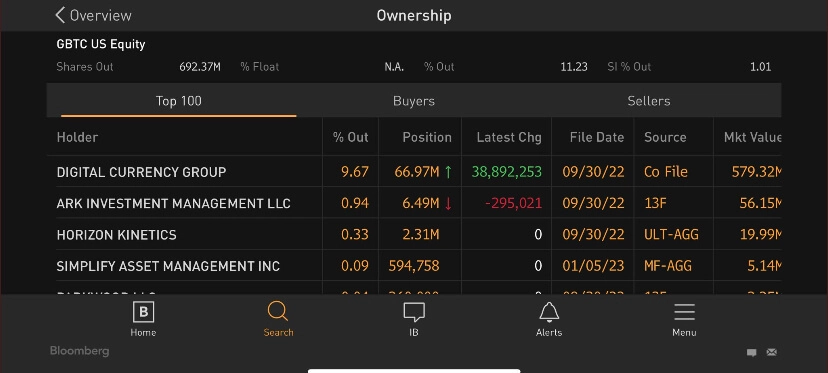
During 2021, 3AC had the most significant position of GBTC shares at almost 40 million, amounting to a value of $1.3bn. To put it into perspective, Ark Invest is now the largest shareholder outside of DCG, with just under 1% of the supply, equivalent to 6.5 million shares.

GBTC Holdings: (Source: Bloomberg Terminal)

As the GBTC premium rose as high as 40%, companies like 3AC and BlockFi leveraged returns to speculate in the market. This is how BlockFi was allowed to offer such high yields to clients. As the lock-up expired every six months, it allowed these companies to keep continuing to roll on profits, while Genesis was happy to keep loaning money to companies like 3AC.

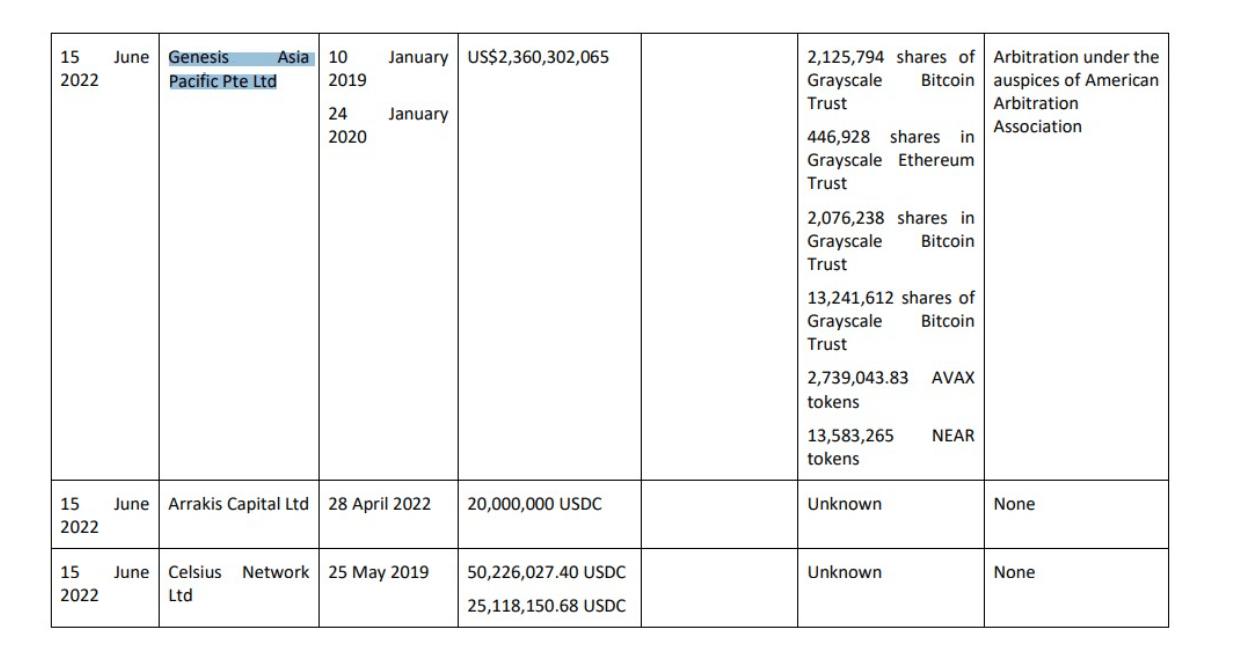
3AC took a $2.36 billion loan from Genesis, another DCG company, which made up almost 50% of the entire Genesis loan book. The loan was made up of illiquid cryptocurrencies and paper derivatives of Bitcoin and Ether.

In total, Genesis’ loan to 3AC was backed by 17 million shares from GBTC. Grayscale is a DCG subsidiary with 446,000 shares in the Grayscale Ethereum Trust, 2 million Avalanche (AVAX) native tokens, and 13 million NEAR tokens.

Genesis loan to 3AC: (Source: Bitcoinist)

ETF

Barry Silbert and DCG have pleaded for many years with the SEC to convert GBTC into an ETF. An ETF would track the underlying product, and there would be no premiums or discounts as the shares would be redeemed to NAV, plus management fees would be considerably less.

The SEC has continued to decline a spot ETF, which would have protected investors. The conversion into a spot ETF would see any investor who bought at a discount make a profit as it would trade to NAV.

ETFs are safer than a closed-ended fund and are more transparent, with no premiums or discounts and lower fees. However, the SEC has approved futures ETFs and a short Bitcoin strategy ETF (BITI).

Grayscale is now suing the SEC, but the SEC has rejected Grayscale, NYDIG, Wisdom Tree, and other institutions. As a result, many countries worldwide have seen spot ETFs approved in Europe, Canada, and Africa.

Grayscale’s ongoing lawsuit with the SEC related to ETFs has a final brief deadline of Feb. 3 before a ruling will occur.

SEC have failed to help investors

As the premium for the GBTC ended, the crypto ecosystem saw blow up after blow up of crypto lending platforms as these funds and lenders had to go further out onto the risk curve to make a profit and make their consumers whole.

The SEC repeatedly failed to approve a spot ETF for GBTC, which would ultimately have prevented this from day one and might have avoided such leverage being wiped out. As a result, the GBTC premium would not have existed, and these firms would not have grown in size and taken on as much leverage as they did.

Grayscale had been doing everything they possibly could have done for a spot ETF to have been approved.

The SEC has rejected the spot ETF due to the possibility of spot bitcoin manipulation. However, approving a CME Bitcoin futures ETF that doesn’t track the underlying spot price can arguably be subject to manipulation and fraud just as quickly.

As outlined above, there are multiple spot ETFs worldwide in Europe and Africa, for example. This has undoubtedly seen capital flow out of America and into these jurisdictions.

Where are we now, heading into 2023?

If DCG were to enter bankruptcy, the company could be forced to liquidate its assets and see sizeable sales in GBTC and ETHC. This would put considerable sell pressure on Bitcoin and Ethereum.

However, according to Ryan Selkis, CEO of blockchain research firm Messari, Grayscale Bitcoin Trust’s (GBTC) controlling shareholders Genesis Global and Digital Currency Group cannot simply “dump” their holdings to raise more capital.

“restrictions are due to Rule 144A of the U.S. Securities Act of 1933, which forces issuers of over-the-counter, or OTC, traded entities to give advance notice of proposed sales, as well as a quarterly cap on sale of either 1% of outstanding shares or weekly traded volume”

One notable option DCG could take is to initiate a Reg M, which would allow investors to redeem shares at NAV, narrowing the current discount gap.

On Jan. 2, Cameron Winklevoss published an open letter to DCG’s CEO Barry Silbert, who questioned Barry on his delay tactics as Genesis owes Gemini Earn users $900m. In addition, Cameron accuses Barry of using NAV trade tactics, which Barry personally benefits from. The letter ended with Cameron Winklevoss telling Barry Silbert to find a solution by Jan. 8.

However, the letter did not reveal if DCG and Barry responded; a scenario that could prevail would be for DCG to file Chapter 11.

On Dec. 28, investment advisor Valkyrie presented a proposal to become the new sponsor and manager of the GBTC while also launching a fund to take advantage of the discounted crypto..

As rumors continue circulating, DCG/Genesis is under active investigation by the SEC. Sources confirmed that multiple whistle-blowers have come forward.

The current DCG situation

Genesis is currently considering bankruptcy

DCG shuts down wealth management subsidiary

DCG Owes $2.025B

Genesis can call their $1.675B loan

Genesis owes $900M to Gemini

What can we learn from all of this?

Bitcoin is a non-bearing digital asset with no counterparty risk; if self custodied correctly, no leverage or yield occurs. However, investors have the personal responsibility of managing their finances.

The number one issue with human beings is often greed, which, as history tells us, usually leads to fraud, manipulation, and centralization. By correct custody of your Bitcoin, you hold Bitcoin, not an IOU or paper derivative.

As we saw in 2022, with the counterparty risk that occurs due to funds chasing high yields and using Bitcoin to chase yield, these companies will take the ‘any means’ approach.

Lessons will be learned from this, but it is crucial always to do your due diligence, which is why the phrase “Not your keys, not your coins” is paramount in the Bitcoin ecosystem.

Criptos en tendencia

Lecturas Relacionadas

a16z: In the AI Era, Company Competition for Talent Starts with Job Title Naming

The article discusses how companies in the AI era are competing for talent through strategic "title arbitrage," or the renaming of key roles to reflect and attract new, high-value capabilities. It uses Palantir's creation of the "Forward-Deployed Engineer" (FDE) as a prime example. This title reframed client-facing technical work from a peripheral "implementation" role into a core, high-status engineering function. The move was strategic, allowing Palantir to attract talent that blended technical skill with business acumen and to dominate the market's perception of this capability. The piece argues that job titles are an organizational language that signals the value and authority of certain work. Effective new titles, like "Data Scientist" or "Site Reliability Engineer," emerge when a role's strategic importance genuinely outgrows its old name. Conversely, mere title inflation without substantive change is ineffective. For AI companies, particularly in B2B, this is a crucial strategy. AI transformation creates new high-leverage roles (e.g., "Legal Engineer," "GTM Engineer") that combine domain expertise with technical automation. By naming these roles, a company can help clients internally legitimize these change-makers. This, in turn, builds market mindshare, associating the company with the new capability. In conclusion, as AI blurs the lines between product and service, the ability to accurately name and organize the critical, client-adjacent work that defines product learning will be a key competitive advantage. The first to define this new organizational language plants a flag in the market's mind.

marsbitHace 27 min(s)

a16z: In the AI Era, Company Competition for Talent Starts with Job Title Naming

marsbitHace 27 min(s)

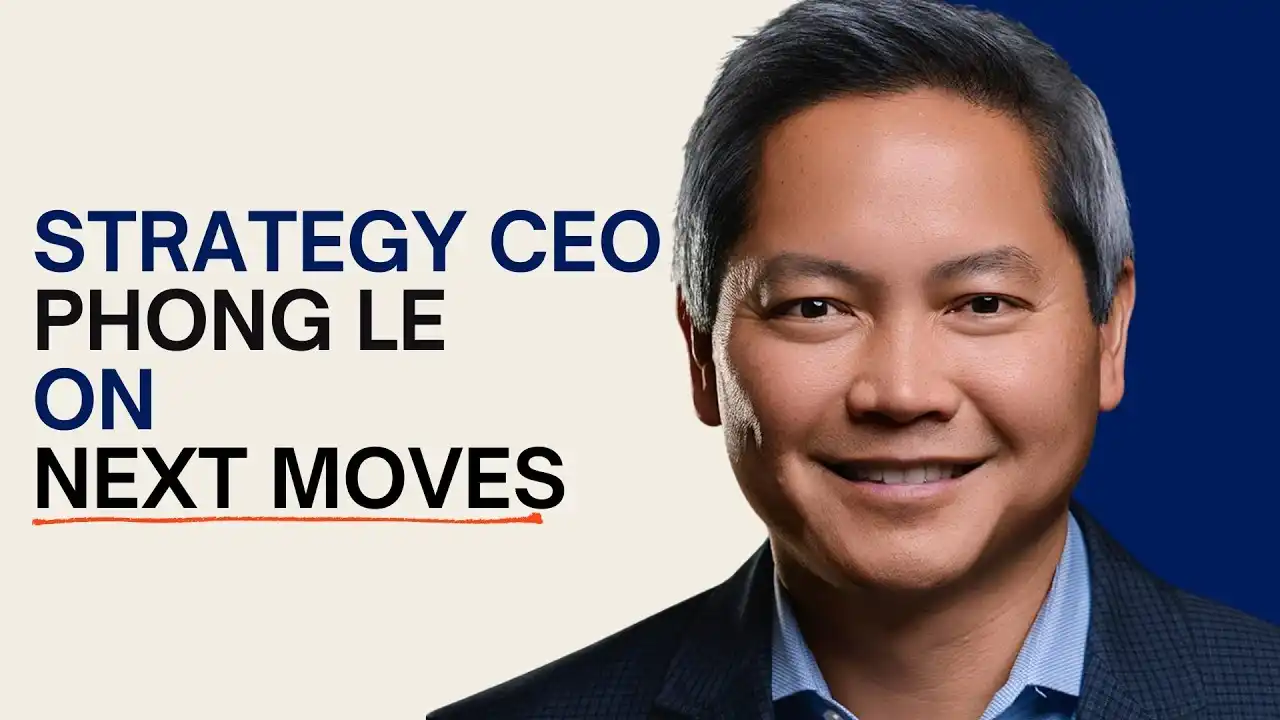
Interview with Strategy CEO: Can STRC Recover After Selling Bitcoin?

Interview with Strategy CEO Phong Le on the recent sale of 32 Bitcoin and its impact. He clarifies the move was a small, strategic action to demonstrate liquidity to debt holders, test internal processes, and prove operational discipline—not a response to fears of a "death spiral" from DeFi protocols leveraging STRC (Strategy's preferred stock product), which he notes holds less than 10% of STRC. Le emphasizes Strategy’s long-term focus as the largest corporate Bitcoin holder, using the adage that markets are a "voting machine" short-term but a "weighing machine" long-term. Decision-making is data-driven, involving the board, complex modeling, and multiple stakeholder considerations, moving beyond a founder-centric model. He outlines various capital options but stresses the strategic importance of "doing nothing" as a valid choice, citing resilience built during the 2022 bear market. Le expresses unwavering belief in Bitcoin's foundational value for global sovereignty and its future role in an AI-driven economy with trillions of autonomous agents. Addressing STRC's current price below its $100 face value, Le explains recent pressure was due to using dollar reserves for bond buybacks. He expects STRC to return to par as reserves are replenished and its semi-monthly dividend payments begin, noting the product is heavily over-collateralized. Finally, Le confirms the company sold Bitcoin the week prior to May 31st, as disclosed in an 8-K filing, leaving prediction market interpretations to others. The overarching philosophy remains "Spread Bitcoin with love," embracing all methods of gaining Bitcoin exposure.

marsbitHace 1 hora(s)

Interview with Strategy CEO: Can STRC Recover After Selling Bitcoin?

marsbitHace 1 hora(s)

IOSG Founder: Ethereum Doesn't Need Another Leap of Technical Faith, It Needs a Musk-style Compromise

Jocy, founder of IOSG Ventures, argues that Ethereum does not need renewed technological faith but a "Musk-like compromise." The recent formation of ETHLabs—funded by major ETH holders like BitMine and Lubin—highlights a market-driven move to fill a gap left by the Ethereum Foundation (EF), signaling a loss of confidence in its decentralized, hands-off approach. The core critique contrasts Vitalik Buterin's (V) idealistic, technology-first vision with Elon Musk's pragmatic, business-driven execution. The author asserts Ethereum's current shortage is not another technical roadmap but a clear, real-world application narrative and a leader willing to engage directly with commercial realities—like Musk. Internal issues are emphasized, citing EF's management problems and talent drain. While the new decentralized model with independent nodes like ETHLabs addresses the single foundation's limitations, it risks fragmentation without cohesive direction. True cohesion, the author suggests, must come from a shared, compelling narrative around ETH's value, not just from aligned financial interests. Independence claims for new entities are seen as aspirational, needing years of transparency to build trust. The ultimate threat is not competitors like Solana, but the broader shift of attention and talent toward AI. Ethereum has a limited window—12 to 18 months—to recapture focus by delivering tangible, real-world applications. The conclusion urges V to shift from abstract ideals to grounded, pragmatic leadership. The time for this crucial pivot is running out.

marsbitHace 2 hora(s)

IOSG Founder: Ethereum Doesn't Need Another Leap of Technical Faith, It Needs a Musk-style Compromise

marsbitHace 2 hora(s)

Trading

Spot
Futuros

Artículos destacados

Qué es BITCOIN

Entendiendo HarryPotterObamaSonic10Inu (ERC-20) y Su Posición en el Espacio Cripto En los últimos años, el mercado de criptomonedas ha sido testigo de un aumento en la popularidad de las monedas meme, capturando el interés no solo de los comerciantes, sino también de aquellos que buscan compromiso comunitario y valor de entretenimiento. Entre estos tokens únicos se encuentra HarryPotterObamaSonic10Inu (ERC-20), un proyecto intrigante que mezcla referencias culturales en el tejido de las criptomonedas. Este artículo profundiza en los aspectos clave de HarryPotterObamaSonic10Inu, explorando sus mecanismos, ethos impulsado por la comunidad y su relación con el paisaje cripto más amplio. ¿Qué es HarryPotterObamaSonic10Inu (ERC-20)? Como su nombre sugiere, HarryPotterObamaSonic10Inu es una moneda meme construida sobre la blockchain de Ethereum, clasificada bajo el estándar ERC-20. A diferencia de las criptomonedas tradicionales que pueden enfatizar la utilidad práctica o el potencial de inversión, este token prospera en el valor de entretenimiento y la fuerza de su comunidad. El proyecto tiene como objetivo fomentar un entorno donde los usuarios comprometidos puedan reunirse, compartir ideas y participar en actividades inspiradas por diversos fenómenos culturales. Una característica notable de HarryPotterObamaSonic10Inu es su cero impuestos en las transacciones. Este atractivo elemento tiene como objetivo incentivar el comercio y la participación comunitaria, sin cargos adicionales que puedan disuadir a los comerciantes de pequeña escala. El suministro total de la moneda está establecido en mil millones de tokens, una cifra que marca su intención de mantener una circulación sustancial dentro de la comunidad. Creador de HarryPotterObamaSonic10Inu (ERC-20) Los orígenes de HarryPotterObamaSonic10Inu están algo envueltos en misterio; los detalles sobre el creador siguen siendo desconocidos. El desarrollo de este token carece de un equipo identificable o de un plan explícito, lo cual no es inusual dentro del sector de monedas meme. En cambio, el proyecto ha surgido de manera orgánica, con su progreso muy dependiente del entusiasmo y la participación de su comunidad. Inversores de HarryPotterObamaSonic10Inu (ERC-20) En cuanto a inversiones externas y respaldo, HarryPotterObamaSonic10Inu también sigue siendo ambiguo. El token no lista ninguna fundación de inversión conocida o apoyo organizacional significativo. En cambio, la savia del proyecto es su comunidad de base, que informa su crecimiento y sostenibilidad a través de la acción colectiva y el compromiso en el espacio cripto. ¿Cómo Funciona HarryPotterObamaSonic10Inu (ERC-20)? Como una moneda meme, HarryPotterObamaSonic10Inu opera principalmente fuera de los marcos tradicionales que a menudo rigen el valor de los activos. Hay varios aspectos distintivos que definen cómo funciona el proyecto: Transacciones Sin Impuestos: Sin tarifas impositivas en las transacciones, los usuarios pueden comprar y vender el token libremente sin preocuparse por costos ocultos. Compromiso Comunitario: El proyecto prospera en la interacción comunitaria, aprovechando plataformas de redes sociales para crear entusiasmo y facilitar la participación. Las discusiones, el intercambio de contenido y el compromiso son elementos cruciales que ayudan a expandir su alcance y fomentar la lealtad entre los seguidores. Sin Utilidad Práctica: Cabe señalar que HarryPotterObamaSonic10Inu no ofrece utilidad concreta dentro del ecosistema financiero. Más bien, se clasifica como un token principalmente para actividades de entretenimiento y comunitarias. Referencia Cultural: El token incorpora astutamente elementos de la cultura popular para atraer interés, conectando con entusiastas de los memes y seguidores de las criptomonedas por igual. HarryPotterObamaSonic10Inu ejemplifica cómo las monedas meme operan de manera diferente a los proyectos de criptomonedas más tradicionales, ingresando al mercado como construcciones sociales innovadoras en lugar de activos utilitarios. Cronología de HarryPotterObamaSonic10Inu (ERC-20) La historia de HarryPotterObamaSonic10Inu está marcada por varios hitos notables: Creación: El token surgió de un meme viral, capturando la imaginación de muchos entusiastas de las criptomonedas. Las fechas específicas de creación no están disponibles, subrayando su ascenso orgánico. Listado en Exchanges: HarryPotterObamaSonic10Inu ha llegado a varios exchanges, permitiendo un acceso y comercio más fácil por parte de la comunidad. Iniciativas de Compromiso Comunitario: Actividades continuas destinadas a mejorar la interacción comunitaria, incluyendo concursos, campañas en redes sociales y generación de contenido por parte de fanáticos y defensores. Planes de Expansión Futuros: La hoja de ruta del proyecto incluye el lanzamiento de una colección de NFT, mercancía y un sitio de comercio electrónico relacionado con sus temas culturales, involucrando aún más a la comunidad e intentando añadir más dimensiones a su ecosistema. Puntos Clave Sobre HarryPotterObamaSonic10Inu (ERC-20) Naturaleza Impulsada por la Comunidad: El proyecto prioriza la participación colectiva y la creatividad, asegurando que la involucración de los usuarios esté a la vanguardia de su desarrollo. Clasificación como Moneda Meme: Representa la epítome de las criptomonedas basadas en el entretenimiento, diferenciándose de los vehículos de inversión tradicionales. Sin Afiliación Directa con Bitcoin: A pesar de la similitud en el nombre del ticker, HarryPotterObamaSonic10Inu es distinto y no tiene relación con Bitcoin u otras criptomonedas establecidas. Enfoque en la Colaboración: HarryPotterObamaSonic10Inu está diseñado para crear un espacio para la colaboración y el intercambio de historias entre sus poseedores, proporcionando una vía para la creatividad y el vínculo comunitario. Perspectivas Futuras: La ambición de expandirse más allá de su premisa inicial hacia NFTs y mercancías describe un camino para que el proyecto potencialmente ingrese a avenidas más tradicionales dentro de la cultura digital. A medida que las monedas meme continúan capturando la imaginación de la comunidad de criptomonedas, HarryPotterObamaSonic10Inu (ERC-20) se destaca debido a sus lazos culturales y su enfoque centrado en la comunidad. Si bien puede no encajar en el molde típico de un token impulsado por la utilidad, su esencia radica en la alegría y la camaradería fomentadas entre sus seguidores, destacando la naturaleza en evolución de las criptomonedas en una era cada vez más digital. A medida que el proyecto continúa desarrollándose, será importante observar cómo las dinámicas comunitarias influyen en su trayectoria en el cambiante paisaje de la tecnología blockchain.

1.8k Vistas totalesPublicado en 2024.04.01Actualizado en 2024.12.03

Qué es BITCOIN

Cómo comprar BTC

¡Bienvenido a HTX.com! Hemos hecho que comprar Bitcoin (BTC) sea simple y conveniente. Sigue nuestra guía paso a paso para iniciar tu viaje de criptos.Paso 1: crea tu cuenta HTXUtiliza tu correo electrónico o número de teléfono para registrarte y obtener una cuenta gratuita en HTX. Experimenta un proceso de registro sin complicaciones y desbloquea todas las funciones.Obtener mi cuentaPaso 2: ve a Comprar cripto y elige tu método de pagoTarjeta de crédito/débito: usa tu Visa o Mastercard para comprar Bitcoin (BTC) al instante.Saldo: utiliza fondos del saldo de tu cuenta HTX para tradear sin problemas.Terceros: hemos agregado métodos de pago populares como Google Pay y Apple Pay para mejorar la comodidad.P2P: tradear directamente con otros usuarios en HTX.Over-the-Counter (OTC): ofrecemos servicios personalizados y tipos de cambio competitivos para los traders.Paso 3: guarda tu Bitcoin (BTC)Después de comprar tu Bitcoin (BTC), guárdalo en tu cuenta HTX. Alternativamente, puedes enviarlo a otro lugar mediante transferencia blockchain o utilizarlo para tradear otras criptomonedas.Paso 4: tradear Bitcoin (BTC)Tradear fácilmente con Bitcoin (BTC) en HTX's mercado spot. Simplemente accede a tu cuenta, selecciona tu par de trading, ejecuta tus trades y monitorea en tiempo real. Ofrecemos una experiencia fácil de usar tanto para principiantes como para traders experimentados.

5.2k Vistas totalesPublicado en 2024.12.12Actualizado en 2026.06.02

Cómo comprar BTC

Qué es $BITCOIN

ORO DIGITAL ($BITCOIN): Un Análisis Integral Introducción al ORO DIGITAL ($BITCOIN) ORO DIGITAL ($BITCOIN) es un proyecto basado en blockchain que opera en la red Solana, cuyo objetivo es combinar las características de los metales preciosos tradicionales con la innovación de las tecnologías descentralizadas. Aunque comparte un nombre con Bitcoin, a menudo referido como “oro digital” debido a su percepción como un refugio de valor, ORO DIGITAL es un token separado diseñado para crear un ecosistema único dentro del paisaje Web3. Su meta es posicionarse como un activo digital alternativo viable, aunque los detalles sobre sus aplicaciones y funcionalidades aún están en desarrollo. ¿Qué es ORO DIGITAL ($BITCOIN)? ORO DIGITAL ($BITCOIN) es un token de criptomoneda diseñado explícitamente para su uso en la blockchain de Solana. A diferencia de Bitcoin, que proporciona un papel de almacenamiento de valor ampliamente reconocido, este token parece centrarse en aplicaciones y características más amplias. Aspectos notables incluyen: Infraestructura Blockchain: El token está construido sobre la blockchain de Solana, conocida por su capacidad para manejar transacciones de alta velocidad y bajo costo. Dinámicas de Suministro: ORO DIGITAL tiene un suministro máximo limitado a 100 cuatrillones de tokens (100P $BITCOIN), aunque los detalles sobre su suministro circulante no se han divulgado actualmente. Utilidad: Si bien las funcionalidades precisas no están delineadas explícitamente, hay indicios de que el token podría ser utilizado para diversas aplicaciones, potencialmente involucrando aplicaciones descentralizadas (dApps) o estrategias de tokenización de activos. ¿Quién es el Creador de ORO DIGITAL ($BITCOIN)? En la actualidad, la identidad de los creadores y el equipo de desarrollo detrás de ORO DIGITAL ($BITCOIN) sigue siendo desconocida. Esta situación es típica entre muchos proyectos innovadores dentro del espacio blockchain, particularmente aquellos alineados con las finanzas descentralizadas y fenómenos de monedas meme. Si bien tal anonimato puede fomentar una cultura impulsada por la comunidad, intensifica las preocupaciones sobre la gobernanza y la responsabilidad. ¿Quiénes son los Inversores de ORO DIGITAL ($BITCOIN)? La información disponible indica que ORO DIGITAL ($BITCOIN) no tiene patrocinadores institucionales conocidos ni inversiones destacadas de capital de riesgo. El proyecto parece operar en un modelo de peer-to-peer centrado en el apoyo y la adopción de la comunidad en lugar de rutas de financiamiento tradicionales. Su actividad y liquidez se sitúan principalmente en intercambios descentralizados (DEX), como PumpSwap, en lugar de plataformas de trading centralizadas establecidas, lo que resalta aún más su enfoque de base. Cómo Funciona ORO DIGITAL ($BITCOIN) Los mecanismos operativos de ORO DIGITAL ($BITCOIN) pueden elaborarse en función de su diseño blockchain y atributos de red: Mecanismo de Consenso: Al aprovechar el único proof-of-history (PoH) de Solana combinado con un modelo de proof-of-stake (PoS), el proyecto asegura una validación de transacciones eficiente que contribuye al alto rendimiento de la red. Tokenómica: Si bien los mecanismos deflacionarios específicos no se han detallado extensamente, el vasto suministro máximo de tokens implica que podría atender microtransacciones o casos de uso nicho que aún están por definirse. Interoperabilidad: Existe el potencial de integración con el ecosistema más amplio de Solana, incluyendo varias plataformas de finanzas descentralizadas (DeFi). Sin embargo, los detalles sobre integraciones específicas permanecen no especificados. Cronología de Eventos Clave Aquí hay una cronología que destaca hitos significativos relacionados con ORO DIGITAL ($BITCOIN): 2023: El despliegue inicial del token ocurre en la blockchain de Solana, marcado por su dirección de contrato. 2024: ORO DIGITAL gana visibilidad al estar disponible para trading en intercambios descentralizados como PumpSwap, permitiendo a los usuarios comerciar contra SOL. 2025: El proyecto presencia actividad de trading esporádica y potencial interés en compromisos liderados por la comunidad, aunque no se han documentado asociaciones notables o avances técnicos hasta el momento. Análisis Crítico Fortalezas Escalabilidad: La infraestructura subyacente de Solana soporta altos volúmenes de transacciones, lo que podría mejorar la utilidad de $BITCOIN en varios escenarios de transacción. Accesibilidad: El potencial bajo precio de trading por token podría atraer a inversores minoristas, facilitando una participación más amplia debido a oportunidades de propiedad fraccionada. Riesgos Falta de Transparencia: La ausencia de patrocinadores, desarrolladores o un proceso de auditoría conocidos públicamente puede generar escepticismo sobre la sostenibilidad y confiabilidad del proyecto. Volatilidad del Mercado: La actividad de trading depende en gran medida del comportamiento especulativo, lo que puede resultar en una volatilidad de precios significativa y en incertidumbre para los inversores. Conclusión ORO DIGITAL ($BITCOIN) surge como un proyecto intrigante pero ambiguo dentro del ecosistema de Solana en rápida evolución. Si bien intenta aprovechar la narrativa del “oro digital”, su alejamiento del papel establecido de Bitcoin como refugio de valor subraya la necesidad de una diferenciación más clara de su utilidad y estructura de gobernanza previstas. La aceptación y adopción futura dependerán probablemente de abordar la actual opacidad y de definir sus estrategias operativas y económicas de manera más explícita. Nota: Este informe abarca información sintetizada disponible hasta octubre de 2023, y pueden haber ocurrido desarrollos más allá del período de investigación.

96 Vistas totalesPublicado en 2025.05.13Actualizado en 2025.05.13

Qué es $BITCOIN

Discusiones

Bienvenido a la comunidad de HTX. Aquí puedes mantenerte informado sobre los últimos desarrollos de la plataforma y acceder a análisis profesionales del mercado. A continuación se presentan las opiniones de los usuarios sobre el precio de BTC (BTC).

活动图片