Crypto adoption in 2022: What events moved the industry forward?

CointelegraphPublicado a 2023-01-04Actualizado a 2023-01-04

Resumen

While the crypto market in 2022 was hit by a slew of insolvencies and daily volatility, adoption seems to have continued apace on the global level.

It’s no secret that the crypto market was gripped by bearish pressure for the entirety of 2022. However, amid all the volatility and chaos, many positive news stories appeared as well — especially regarding the global adoption of digital assets and crypto-related technologies in general.

Looking back at 2022, here are some key adoption-related events that helped drive the industry last year.

Polygon accrues 200 million addresses despite challenging 2022

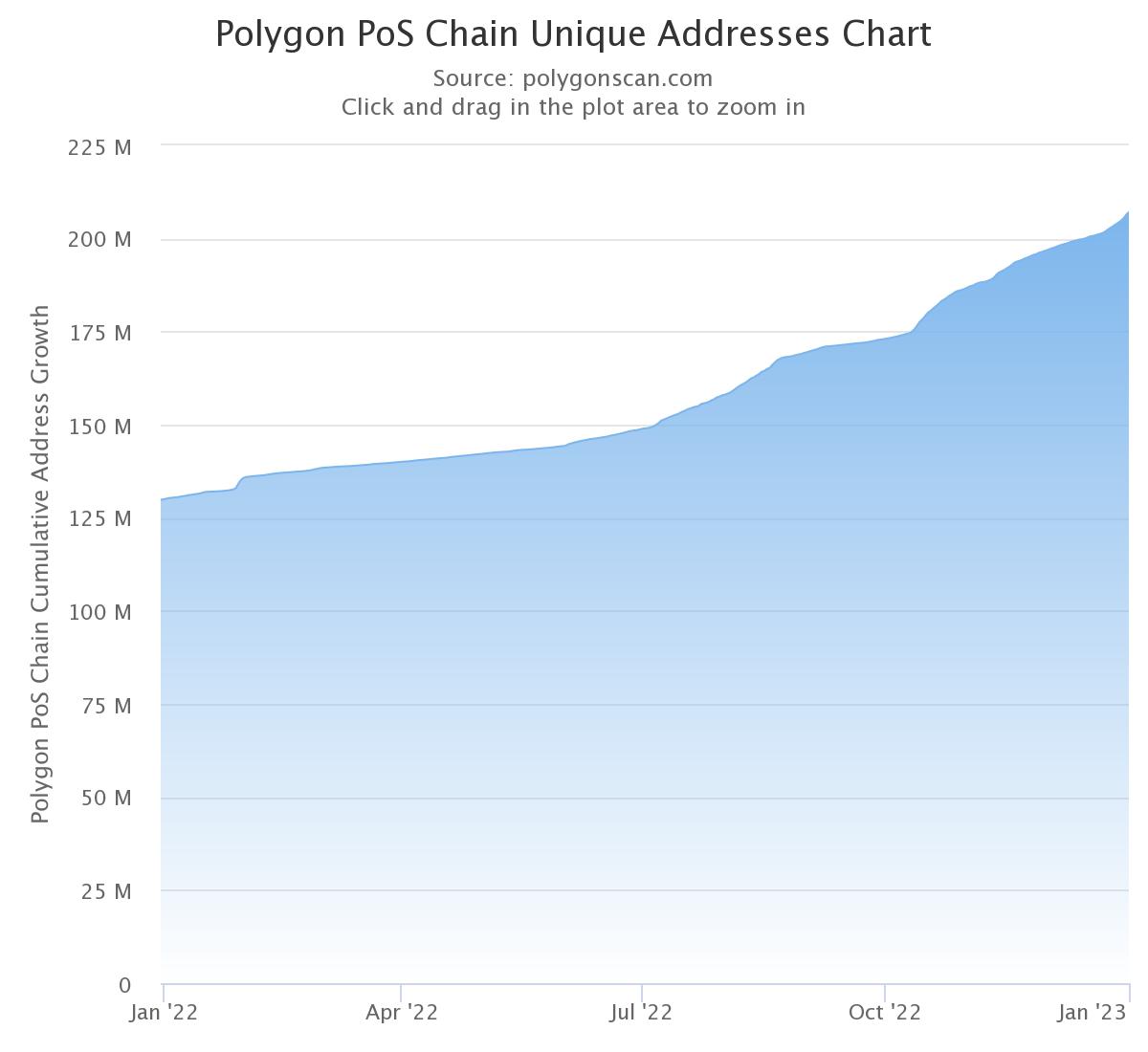
Even though an air of financial uncertainty has shrouded the crypto market since the end of 2021, Polygon — a layer-2 scaling solution running alongside the Ethereum blockchain, allowing for speedy transactions and low fees — continued to witness a lot of growth in 2022. To this point, the network’s unique address count recently surpassed the 200 million mark, reaching a new all-time high of 205,420,908 on Dec. 31.

Additionally, the Polygon ecosystem saw its unique address count surge by a whopping 8,783,568 between Dec. 1 and Dec. 31, suggesting that over the last month of 2022 alone, an average of 283,340 new Polygon-related network addresses came into existence daily. Moreover, it bears mentioning that the number of transactions taking place within the network has continued to hover around the 3 million mark.

Growth in Polygon address count throughout 2022. Source: PolygonScan

Lastly, the proof-of-stake project recently announced the release of its final testnet, an improved iteration of its zero-knowledge Ethereum Virtual Machine.

Major brands continue to enter the Web3 arena

The nonfungible token (NFT) market and the metaverse industry have continued to pique the interest of several fashion and luxury brands. For example, in October, Rolex — a popular watch matchmaker with a global presence — filed for multiple NFT-related trademarks in addition to one for a cryptocurrency exchange. Popular sporting goods giants such as Reebok, Nike and Adidas also made similar moves.

Nike launched a metaverse venture called .Swoosh, a Web3-enabled platform where customers can buy and sell virtual products. The platform will reportedly initially look at community building while hosting the launch of the company’s first virtual collection — comprising footwear, apparel and accessories — sometime during January 2023. Upon its launch, the platform will only allow the use of cash, not digital currencies, with all transactions recorded on the Polygon blockchain.

Adidas released a new line of virtual gear last year along with a picture-for-proof dressing tool allowing avatars from compatible partner collections, such as Bored Ape Yacht Club, to be dressed up with their gear. Reebok filed numerous trademark applications in the United States for a wide range of virtual apparel, including footwear, headwear and sports equipment.

Lastly, luxury car manufacturer BMW announced that it, too, had decided to enter the metaverse fray by applying for a trademark for its logo that will be used in relation to its upcoming virtual vehicles, digital retail and other related services.

Total volume of staked Ether continues to grow

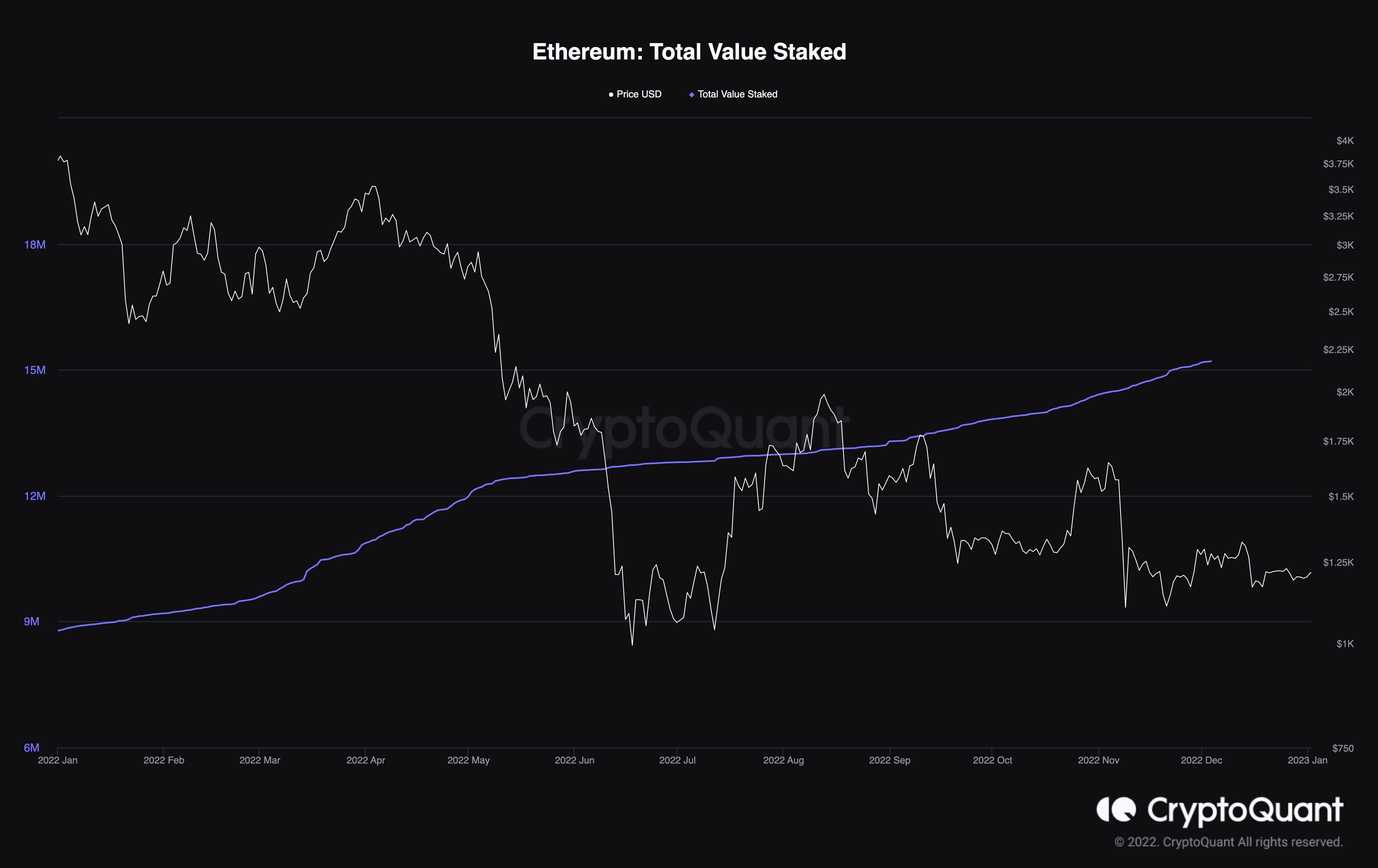
Throughout 2022, the total volume of Ether locked within the Ethereum ecosystem has continued to climb steadily. Between February and June, the amount of staked ETH rose from just over 9 million to nearly 13 million. As seen from the chart below, the trend plateaued between June and September, only to muster steam once again around mid-September, just before Ethereum’s much-awaited transition to proof-of-stake.

Total value of ETH staked. Source: CryptoQuant

Within the context of the Ethereum network, staking refers to the act of depositing 32 ETH into the network, which allows individuals to accrue validator rights and affords them the ability to earn additional ETH. As a validator, users must perform several duties, such as storing data, processing transactions and adding new blocks to the blockchain to help protect the network for all participants.

Meta integrates support for NFTs

Earlier in May, social media behemoth Instagram revealed its testing program for sharing NFTs for select users across the United States. At the time, a representative for the firm stated that it would create more monetization opportunities for influencers on the platform while introducing NFTs to a larger customer base. A few months later, in August, Instagram decided to expand its NFT operations to over 100 countries across Africa, North America and Asia.

Meta also announced that it would integrate support for third-party projects, including Coinbase Wallet and Dapper Wallet, while extending its NFT offerings to its other core social media platform, Facebook. In November, Instagram’s development team announced that it was testing the ability to mint and sell NFTs with a select group of digital creators. The feature will go live on the Polygon network, with creators and collectors not having to shell out any gas fees initially.

Starbucks’ blockchain-based loyalty program goes live

Starbucks announced the launch of its blockchain-based loyalty program and NFT community, Starbucks Odyssey, to a group of testers in the United States in September. The initiative builds upon the company’s existing loyalty program but uses a decentralized structure built atop the Polygon blockchain.

Starbucks Odyssey is a rewards program that allows users to earn perks and whose scope extends beyond the realm of simply earning free drinks. Odyssey allows customers to interact with a wide array of game-style offerings, allowing them to earn NFTs (referred to as Journey Stamps) in the process. These assets can later be traded and redeemed.

VCs continue to pour money into the Web3 ecosystem

During Q4 2022, Animoca Brands — the firm behind several successful crypto projects, including The Sandbox — created a multibillion-dollar fund to invest in various metaverse projects.

According to Animoca co-founder Yat Siu, the fund will spur the utility of the metaverse and blockchain gaming market. “More people are joining crypto every day, especially in gaming,” he stated, adding: “I’m hoping that this will also drive a scenario where digital property will be recognized like physical property in the legal system.”

In addition to Animoca, other popular firms that have invested heavily in the burgeoning metaverse economy include South Korean venture capital giant Daesung Private Equity. The company recently announced that it had allocated a total of 110 South Korean won ($83.9 million) toward its metaverse-centric fund.

JPMorgan partners with Ripple

American banking giant JPMorgan Chase joined with core Ripple partner Al Fardan Exchange in 2022 in an effort to provide users across the United Arab Emirates access to faster transaction settlement and transfer services.

Al Fardan’s clients will be able to conduct crypto transactions via several popular fiat assets, including the U.S. dollar, British pound and euro.

It is worth highlighting that this partnership comes amid Ripple’s ongoing lawsuit with the United States Securities and Exchange Commission. The regulatory agency continues to allege that the project’s associated crypto offering, XRP, is a security and, therefore, subject to the legal and regulatory implications associated with such assets.

Reddit users mint 5 million-plus NFT avatars

Social sharing website Reddit saw its users continue to adopt NFTs at a furious pace last year, even though its sales declined immensely. It is estimated that the Polygon-backed initiative has already witnessed the minting of more than 5 million collectibles to date.

Moreover, it bears mentioning that these avatars aren’t concentrated among high-value NFT collectors (ala whales) and are instead spread out among more than 4 million unique wallets. Lastly, a vast majority of the aforementioned minted NFTs have been offered to Reddit’s high-value users free of cost.

Tiffany enters the crypto sphere

Luxury jewelry and specialty retailer Tiffany & Co. announced in August that it was releasing a limited NFT collection called NFTiff, each of which would be available for a base price of 30 ETH (approximately $36,000). In all, a total of 250 of these NFTs were produced.

Earlier in March, Tiffany purchased an Okapi NFT from Tom Sachs for a reported sum of $380,000. The image has been the company’s Twitter profile photo ever since.

Positive legislation continued to gain traction

Late in 2022, Brazil’s Congress approved a bill seeking to regulate the use of digital currencies for daily payments within its borders, thereby potentially boosting the adoption of crypto within the South American nation. The bill provides legal status to payments made in cryptocurrencies for goods and services but does not grant them status as legal tender.

In a somewhat similar vein, Abdellatif Jouahri, the governor of Morocco’s central bank — Bank Al-Maghrib (BAM) — announced that his country’s key regulatory agencies would soon finalize a comprehensive crypto governance framework. The relevant agencies include the Moroccan Capital Markets Authority and the Supervisory Authority of Insurance and Social Welfare.

Jouahri revealed that the BAM worked on the document alongside the World Bank and the International Monetary Fund.

Other countries that have either tabled favorable regulations in 2022 or are planning to do so in the near future include India, Germany, Australia and the United Kingdom, among others.

Crypto adoption soars across MENA, Asia and Latin America

According to a study conducted by blockchain analytics firm Chainalysis, the Middle East and North Africa (MENA) region was the fastest-growing market for cryptocurrency adoption last year.

Between July 2021 and June 2022, the region received $566 billion in crypto transactions, a rise of nearly 49% from the year prior. To put things into perspective, there were increases of 40% in Europe, 36% across North America, and 35% across Central and South Asia.

Similarly, Latin America made up 9.1% of the total crypto value received during 2022, reaching a cumulative total of $562 billion while showcasing a growth of 40% between Q3 2021 and Q3 2022. Also, a total of four Latin American countries entered Chainalysis’ top crypto adopters list.

Lastly, Vietnam currently has the world’s highest crypto adoption rate, followed by the Philippines and Ukraine. Other emerging nations that dominated Chainalysis’ adoption index in 2022 include India, Brazil, Thailand and Pakistan.

Criptos en tendencia

Lecturas Relacionadas

Interview with Strategy CEO: Can STRC Recover After Selling Bitcoin?

Interview with Strategy CEO Phong Le on the recent sale of 32 Bitcoin and its impact. He clarifies the move was a small, strategic action to demonstrate liquidity to debt holders, test internal processes, and prove operational discipline—not a response to fears of a "death spiral" from DeFi protocols leveraging STRC (Strategy's preferred stock product), which he notes holds less than 10% of STRC. Le emphasizes Strategy’s long-term focus as the largest corporate Bitcoin holder, using the adage that markets are a "voting machine" short-term but a "weighing machine" long-term. Decision-making is data-driven, involving the board, complex modeling, and multiple stakeholder considerations, moving beyond a founder-centric model. He outlines various capital options but stresses the strategic importance of "doing nothing" as a valid choice, citing resilience built during the 2022 bear market. Le expresses unwavering belief in Bitcoin's foundational value for global sovereignty and its future role in an AI-driven economy with trillions of autonomous agents. Addressing STRC's current price below its $100 face value, Le explains recent pressure was due to using dollar reserves for bond buybacks. He expects STRC to return to par as reserves are replenished and its semi-monthly dividend payments begin, noting the product is heavily over-collateralized. Finally, Le confirms the company sold Bitcoin the week prior to May 31st, as disclosed in an 8-K filing, leaving prediction market interpretations to others. The overarching philosophy remains "Spread Bitcoin with love," embracing all methods of gaining Bitcoin exposure.

marsbitHace 6 min(s)

Interview with Strategy CEO: Can STRC Recover After Selling Bitcoin?

marsbitHace 6 min(s)

IOSG Founder: Ethereum Doesn't Need Another Leap of Technical Faith, It Needs a Musk-style Compromise

Jocy, founder of IOSG Ventures, argues that Ethereum does not need renewed technological faith but a "Musk-like compromise." The recent formation of ETHLabs—funded by major ETH holders like BitMine and Lubin—highlights a market-driven move to fill a gap left by the Ethereum Foundation (EF), signaling a loss of confidence in its decentralized, hands-off approach. The core critique contrasts Vitalik Buterin's (V) idealistic, technology-first vision with Elon Musk's pragmatic, business-driven execution. The author asserts Ethereum's current shortage is not another technical roadmap but a clear, real-world application narrative and a leader willing to engage directly with commercial realities—like Musk. Internal issues are emphasized, citing EF's management problems and talent drain. While the new decentralized model with independent nodes like ETHLabs addresses the single foundation's limitations, it risks fragmentation without cohesive direction. True cohesion, the author suggests, must come from a shared, compelling narrative around ETH's value, not just from aligned financial interests. Independence claims for new entities are seen as aspirational, needing years of transparency to build trust. The ultimate threat is not competitors like Solana, but the broader shift of attention and talent toward AI. Ethereum has a limited window—12 to 18 months—to recapture focus by delivering tangible, real-world applications. The conclusion urges V to shift from abstract ideals to grounded, pragmatic leadership. The time for this crucial pivot is running out.

marsbitHace 1 hora(s)

IOSG Founder: Ethereum Doesn't Need Another Leap of Technical Faith, It Needs a Musk-style Compromise

marsbitHace 1 hora(s)

Google Starts Selling TPUs, Big Tech Aims to Produce "Low-Cost Tokens" with AI Chips

Google has begun selling its proprietary TPU chips and AI computing hardware directly to third-party data centers and clients, marking a strategic shift. Previously only accessible via cloud rentals, TPUs are specialized processors designed for the matrix and tensor operations central to AI models. By combining thousands into supercomputing clusters managed by CPUs, Google achieves high-efficiency AI processing. This move enables Google’s Gemini AI to offer competitive token pricing, challenging rivals like OpenAI. It also signals a broader industry trend where AI compute is becoming a commoditized resource like electricity. While NVIDIA remains dominant with its CUDA ecosystem and high-performance GPUs, the focus is shifting from raw power to cost efficiency and system integration. Google’s approach mirrors NVIDIA’s by selling an entire ecosystem—hardware, software, and data center expertise—rather than just chips. This threatens NVIDIA’s grip on the mid-range inference market, where lower-cost, efficient solutions are increasingly demanded. Similarly, cloud providers like Huawei Cloud and Alibaba Cloud in China are developing their own AI chip ecosystems (e.g., Ascend, Zhenwu), packaging chips, clusters, and tools into full-stack solutions. They aim to reduce token costs and capture market share through integrated systems. In summary, the AI infrastructure race is evolving from a competition for the strongest chips to a contest for the most efficient and cost-effective systems. Google’s TPU sales highlight this transition, emphasizing that future success lies in delivering affordable, scalable AI compute as a foundational service.

marsbitHace 1 hora(s)

Google Starts Selling TPUs, Big Tech Aims to Produce "Low-Cost Tokens" with AI Chips

marsbitHace 1 hora(s)

Trading

Spot
Futuros

Artículos destacados

Qué es XRP 2.0

XRP 2.0: Una Nueva Frontera en el Panorama de las Criptomonedas Introducción a XRP 2.0 En el siempre cambiante ámbito de las criptomonedas, nuevos proyectos surgen continuamente, compitiendo por atención y adopción. Una de estas iniciativas prometedoras es XRP 2.0, un nuevo proyecto de criptomoneda diseñado para aprovechar la tecnología blockchain avanzada y metodologías de encriptación robustas. Aunque el nombre establece paralelismos con el XRP de Ripple, es crucial señalar que XRP 2.0 opera de manera independiente, enfocándose en mejorar la seguridad de las transacciones, la privacidad y la escalabilidad. A medida que el panorama financiero digital abraza cada vez más soluciones descentralizadas, XRP 2.0 busca contribuir de manera significativa a web3 y a la expansión general de los proyectos de criptomonedas. ¿Qué es XRP 2.0? En esencia, XRP 2.0 es un proyecto de criptomoneda que busca crear un ecosistema de moneda digital seguro y descentralizado. Su tecnología fundamental integra principios avanzados de blockchain con técnicas de encriptación de vanguardia. El objetivo principal de XRP 2.0 es establecerse como una plataforma confiable y eficiente que permita la ejecución rápida de transacciones mientras prioriza la protección de la privacidad de sus usuarios. El proyecto se promociona como una solución a muchas limitaciones enfrentadas por las criptomonedas existentes, proponiendo un sistema que puede manejar un mayor volumen de transacciones con mejor velocidad y privacidad. Esta versatilidad posiciona a XRP 2.0 como un competidor significativo en un mercado plagado de diversas monedas digitales. ¿Quién es el Creador de XRP 2.0? La identidad del creador detrás de XRP 2.0 ha sido señalada como 'Wilbur.' Sin embargo, los detalles completos sobre Wilbur o su entidad asociada siguen siendo elusivos. La anonimidad de muchos creadores de criptomonedas no es un fenómeno poco común en la industria, a menudo diseñado para mantener un grado de privacidad y seguridad. ¿Quiénes son los Inversores de XRP 2.0? Hasta ahora, la información específica relacionada con las fundaciones o organizaciones de inversión que apoyan a XRP 2.0 no está disponible públicamente. En el sector de las criptomonedas, el respaldo de inversores respetables puede influir significativamente en la credibilidad y el éxito de un proyecto, sin embargo, la transparencia sobre los patrocinadores financieros de XRP 2.0 no se ha establecido. ¿Cómo Funciona XRP 2.0? XRP 2.0 se destaca al emplear una combinación de tecnología blockchain y algoritmos de encriptación avanzados que aseguran transacciones seguras y descentralizadas. Su estructura innovadora incluye características únicas diseñadas para fomentar el compromiso del usuario y ampliar las funcionalidades más allá de las transacciones convencionales de criptomonedas. Entre estas características, XRP 2.0 incorpora capacidades impulsadas por IA, como funcionalidades de texto a imagen y de texto a voz. Estas adiciones están diseñadas para mejorar la experiencia interactiva de los usuarios, promoviendo una mayor aplicabilidad en diversos sectores. Al unir avances tecnológicos con un diseño centrado en el usuario, XRP 2.0 busca captar la atención de una amplia gama de individuos y empresas que buscan integrar soluciones de criptomonedas en sus marcos operativos. Cronología de XRP 2.0 Entender XRP 2.0 requiere examinar los hitos que han definido su viaje hasta ahora: 23 de julio de 2023: Se presenta XRP 2.0 como un nuevo proyecto de criptomonedas, con el objetivo de revolucionar las capacidades de transacciones seguras y descentralizadas en el ámbito de blockchain. 8 de septiembre de 2023: Se lanza otro proyecto, XRP20, marcando la aparición de un token ERC-20 en la blockchain de Ethereum que no guarda relación con XRP 2.0. 13 de noviembre de 2023: El Libro Mayor de XRP experimenta una actualización significativa con el lanzamiento de la versión 2.0.0 del software del servidor rippled. Es esencial señalar que este desarrollo está desconectado del proyecto de criptomonedas XRP 2.0. Puntos Clave sobre XRP 2.0 Para destilar la esencia de XRP 2.0, surgen varios factores críticos: Características Únicas: La inclusión de características como texto a imagen y texto a voz impulsadas por IA diversifica aún más las aplicaciones potenciales de XRP 2.0. Tecnología Blockchain: El marco utiliza mecanismos avanzados de blockchain y protocolos de encriptación, asegurando un entorno seguro y descentralizado para las transacciones. Escalabilidad y Privacidad: XRP 2.0 prioriza la protección mejorada de la privacidad en los procesos de transacción y la escalabilidad necesaria para acomodar una base de usuarios creciente. No Afiliación con Ripple: Es importante destacar que, a pesar de su nombre, XRP 2.0 no tiene ninguna lealtad ni colaboración con el XRP de Ripple, diferenciando su marco operativo y objetivos dentro del ecosistema de criptomonedas. Conclusión XRP 2.0 representa una ambiciosa aventura en la esfera de las criptomonedas, buscando ofrecer una combinación de seguridad, privacidad y eficiencia en las transacciones digitales. Al integrar tecnologías sofisticadas y características amigables para el usuario, el proyecto se propone ampliar los horizontes de lo que la criptomoneda puede lograr en la economía digital de hoy. Si bien la anonimidad de su creador y la falta de inversores revelados pueden generar cuestionamientos para algunos, el enfoque de XRP 2.0 en funcionalidades avanzadas y descentralización realza su atractivo en un mercado de criptomonedas cada vez más abarrotado. A medida que el paisaje de las criptomonedas sigue evolucionando, XRP 2.0 podría emerger como un jugador crucial en la expansión de soluciones blockchain seguras y escalables.

188 Vistas totalesPublicado en 2024.04.05Actualizado en 2024.12.03

Qué es XRP 2.0

Cómo comprar XRP

¡Bienvenido a HTX.com! Hemos hecho que comprar XRP (XRP) sea simple y conveniente. Sigue nuestra guía paso a paso para iniciar tu viaje de criptos.Paso 1: crea tu cuenta HTXUtiliza tu correo electrónico o número de teléfono para registrarte y obtener una cuenta gratuita en HTX. Experimenta un proceso de registro sin complicaciones y desbloquea todas las funciones.Obtener mi cuentaPaso 2: ve a Comprar cripto y elige tu método de pagoTarjeta de crédito/débito: usa tu Visa o Mastercard para comprar XRP (XRP) al instante.Saldo: utiliza fondos del saldo de tu cuenta HTX para tradear sin problemas.Terceros: hemos agregado métodos de pago populares como Google Pay y Apple Pay para mejorar la comodidad.P2P: tradear directamente con otros usuarios en HTX.Over-the-Counter (OTC): ofrecemos servicios personalizados y tipos de cambio competitivos para los traders.Paso 3: guarda tu XRP (XRP)Después de comprar tu XRP (XRP), guárdalo en tu cuenta HTX. Alternativamente, puedes enviarlo a otro lugar mediante transferencia blockchain o utilizarlo para tradear otras criptomonedas.Paso 4: tradear XRP (XRP)Tradear fácilmente con XRP (XRP) en HTX's mercado spot. Simplemente accede a tu cuenta, selecciona tu par de trading, ejecuta tus trades y monitorea en tiempo real. Ofrecemos una experiencia fácil de usar tanto para principiantes como para traders experimentados.

1.4k Vistas totalesPublicado en 2024.12.10Actualizado en 2026.06.02

Cómo comprar XRP

Discusiones

Bienvenido a la comunidad de HTX. Aquí puedes mantenerte informado sobre los últimos desarrollos de la plataforma y acceder a análisis profesionales del mercado. A continuación se presentan las opiniones de los usuarios sobre el precio de XRP (XRP).

活动图片