Data from on-chain analytics firm Glassnode confirms that on Dec. 21, Bitcoin’s network value to transaction (NVT) signal reached levels not seen since April.
⠀
Bitcoin activity may not support $17,000 BTC price
⠀
Created by statistician Willy Woo, NVT essentially measures the ratio between on-chain activity and the price of Bitcoin.
⠀
NVT signal modifies its readings by using a 90-day moving average of daily transaction volume instead of raw data, something Glassnode says “improves” NVT and allows it “to better function as a leading indicator.”
⠀
On Dec. 21, the NVT signal hit 18.58, a level that last appeared as Bitcoin declined in the final days of April. At the time, BTC/USD traded at just over $40,000.
⠀
Fast forward to year-end, and NVT is flashing a warning. Despite Bitcoin being worth less than 50% of its April levels, network volume has declined to such an extent that even the current $16,800 valuation might not last.
⠀
As Woo explained in a description of NVT ratio on his analytics site:
⠀
“When Bitcoin’s NVT is high, it indicates that its network valuation is outstripping the value being transmitted on its payment network, this can happen when the network is in high growth and investors are valuing it as a high return investment, or alternatively when the price is in an unsustainable bubble.”
⠀
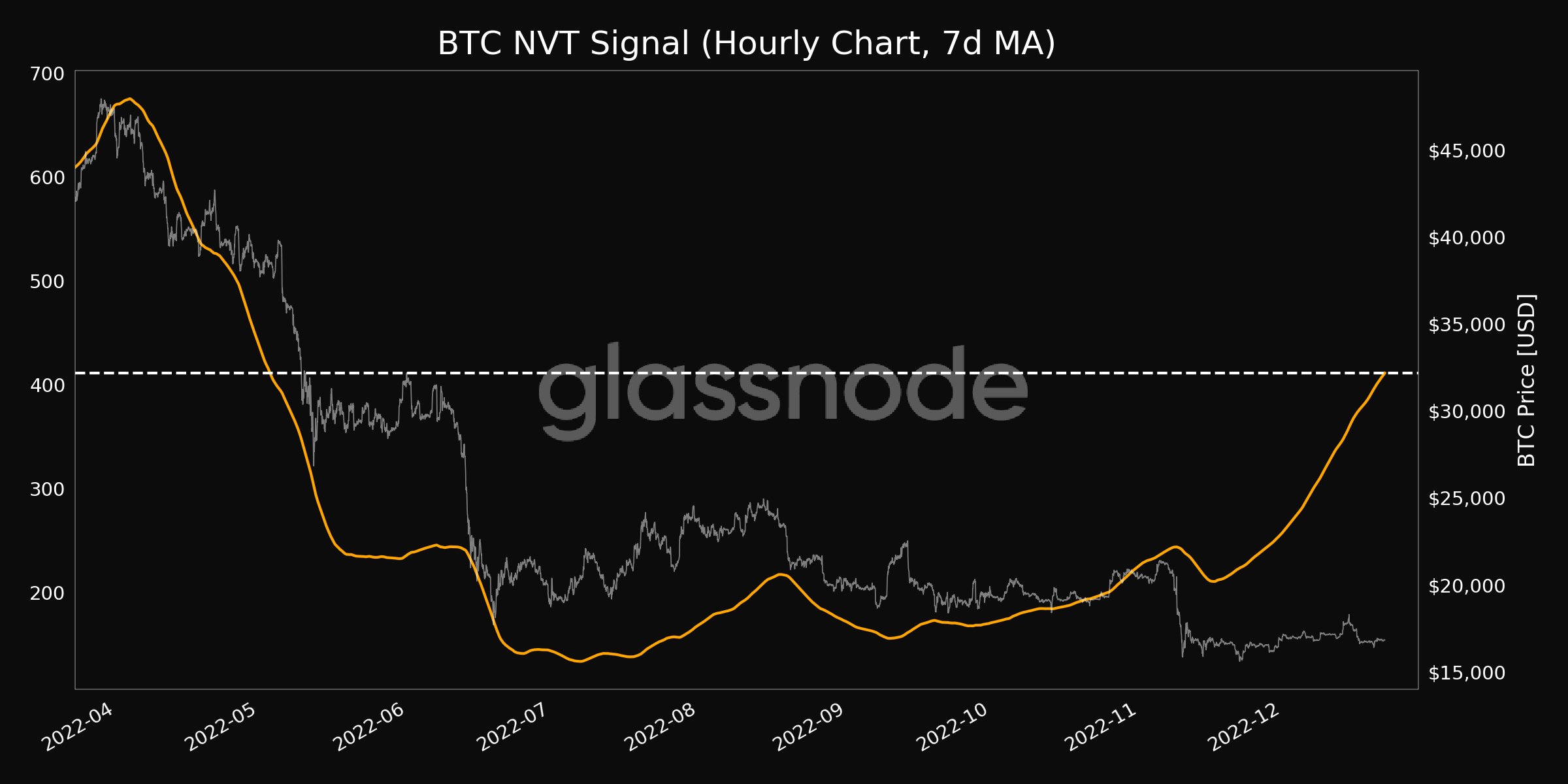
Bitcoin NVT signal annotated chart. Source: Glassnode/Twitter
⠀
A tale of two NVT signals
⠀
There is a catch to NVT, however. As noted by various analysts, including Woo, the constantly changing nature of the Bitcoin network means that transactions are increasingly moving off-chain.
⠀
Together with other phenomena, this impacts on-chain transaction data to the extent that NVT may produce an overly bearish picture of value-to-transactions.
⠀
This is addressed with an addition to the indicator called dynamic range NVT (DRNVT). Created by Charles Edwards, CEO of asset manager Capriole, DRNVT uses standard deviations to measure NVT divergence from the mean. It also supplies value zones for easier determination of entry points based on its readings.
⠀
Currently, DRNVT is in that value zone, data from TradingView shows — a key contrast to the standard model.
⠀
“The NVT Signal with a dynamic fair value range must be used with care,” Edwards nonetheless cautioned in an introduction to the indicator in 2019:
⠀
“As with all markets, an asset can remain ‘expensive’ or ‘cheap’ for extended periods or time and continue to get even more expensive or cheaper.”
⠀
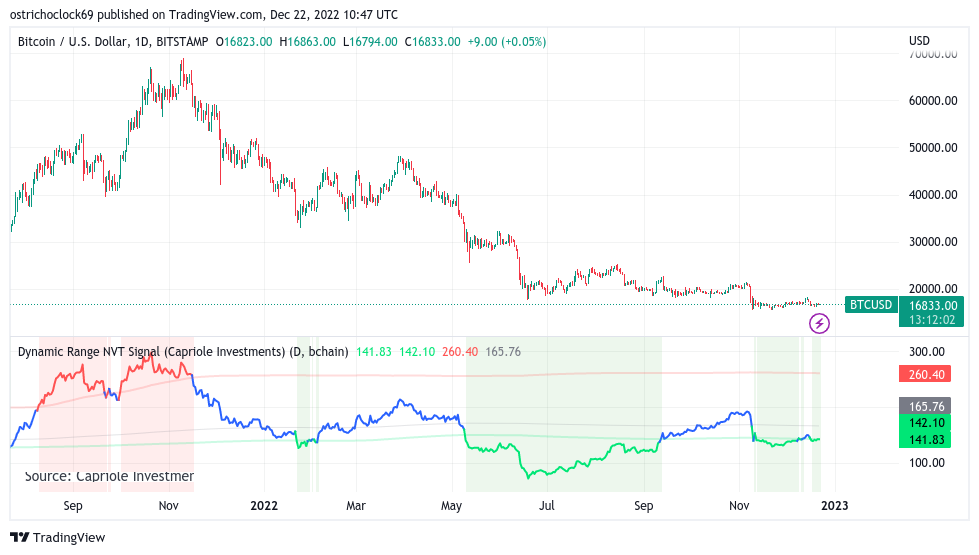
BTC/USD 1-day candle chart (Bitstamp) with dynamic range NVT signal. Source: TradingView