Победа на ЧМ 2022 не спасла фан-токен команды Аргентины от падения на 70%

NewsBTCPublicado a 2022-12-20Actualizado a 2022-12-20

Resumen

Несмотря на грандиозную победу над Францией, фанатский токен футбольной команды Аргентины, ARG, потерял почти 70% стоимости со своего максимума

Победив Францию в напряженном финальном матче Чемпионата мира по футболу 2022 года в Катаре в понедельник, Аргентина завоевала свой третий титул чемпиона мира. Победа, которой добилась Аргентина, войдет в историю как знаменательное событие.

Но, несмотря на грандиозную победу, фанатский токен футбольной команды страны ARG потерял почти 70% стоимости со своего максимума – цена упала до 2,81 долл. США с более чем 8 долл. США, свидетельствуют данные Coinmarketcap.

Прямо перед турниром цена токена взлетела до 8,64 долл. США, однако затем, после шокирующего поражения Аргентины от Саудовской Аравии цена токена начала пикировать вниз, достигнув отметки 2,60 долл. США.

Победа команды над футболистами из Франции в моменте вновь повысила цену актива – до 6,42 долл. США, однако, цена не смогла удержаться на данном уровне и рухнула до 2,81 долл. США.

Такое снижение стоимости криптоактива стало для многих сюрпризом, поскольку ожидали, что победа команды станет устойчивым драйвером роста ARG.

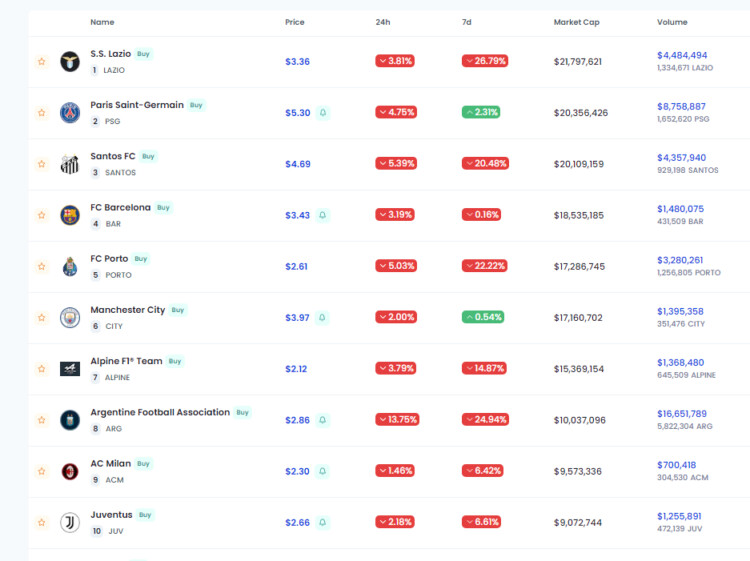
В данный момент, ценовые показатели токена ARG после Чемпионата мира по футболу сопоставимы с показателями других фан-токенов. Большинство из них в течение последних 24 часов показывают выраженную негативную динамику.

Источник: FanMarketCap

Фан-токены унесли «багровые реки»

Согласно данным FanMarketCap, большинство из 10 ведущих фан-токенов снизились в цене. ARG, занимающий 8-е место, потерял 24,45% своей стоимости за последнюю неделю.

Фан-токены – это уникальная форма криптовалюты, которая предоставляет доступ к различным видам бонусов, контента и событиям, ориентированным на спортивных фанатов.

Токен ARG был выпущен в июле 2021 года с помощью платформы Socios.com, который предлагает владельцам токенов различного рода бонусы и цифровой контент для болельщиков аргентинской команды.

Среди футбольный клубов пионерами в данной области выступили такие команды, как «Милан», «Сантос», «Интер», «Порту» и другие. Во время пандемии коронавируса популярность фан-токенов возросла.

⠀⠀

Из-за санитарных ограничений доход спортивных организаций сильно упал, и выпуск фан-токенов смог частично обеспечить выпавший приток средств.

Автор: Christian Encila. Источник: NewsBTC.
Lecturas Relacionadas

A 380% Soar, Shenzhen’s 100-Billion-Yuan IPO Rings the Bell

HKC Holdings, a major Chinese display panel manufacturer, has successfully listed on the Shenzhen Stock Exchange's main board. The company's shares surged over 380% on its debut, pushing its market capitalization to around 350 billion yuan (formerly reaching 500 billion yuan). Founded by Wang Zhiyong in Shenzhen's Huaqiangbei electronics market nearly three decades ago, HKC evolved from assembling monitors to becoming a global top-tier supplier of semiconductor display panels for TVs, monitors, and smartphones. The IPO marks a significant milestone for HKC and its backers. The company's growth into the capital-intensive panel manufacturing sector was supported through partnerships with state-owned capital from regions like Chongqing, Mianyang, and Chuzhou. Its shareholder list also includes BOE Technology's investment arm. In recent years, HKC reported strong financials, with core panel business contributing over 70% of revenue and clients including Samsung, TCL, and Xiaomi. This listing is seen as part of a broader trend in Shenzhen's evolving tech landscape. Beyond established giants, the city is nurturing clusters of leading companies in specialized sectors like robotics—exemplified by the "Shenzhen Robot Valley"—and storage chips, where a group of firms dubbed the "Storage Five Tigers" has achieved a combined trillion-yuan market valuation. Shenzhen's strategic focus on emerging industries such as AI terminals, low-altitude economy, and humanoid robotics aims to build new industrial depth and foster the next generation of tech champions.

marsbitHace 6 min(s)

A 380% Soar, Shenzhen’s 100-Billion-Yuan IPO Rings the Bell

marsbitHace 6 min(s)

Domestic First Explosion-Proof Certification, World's First Fueling Brain Solution: How Did They Secure Two 'Firsts'?

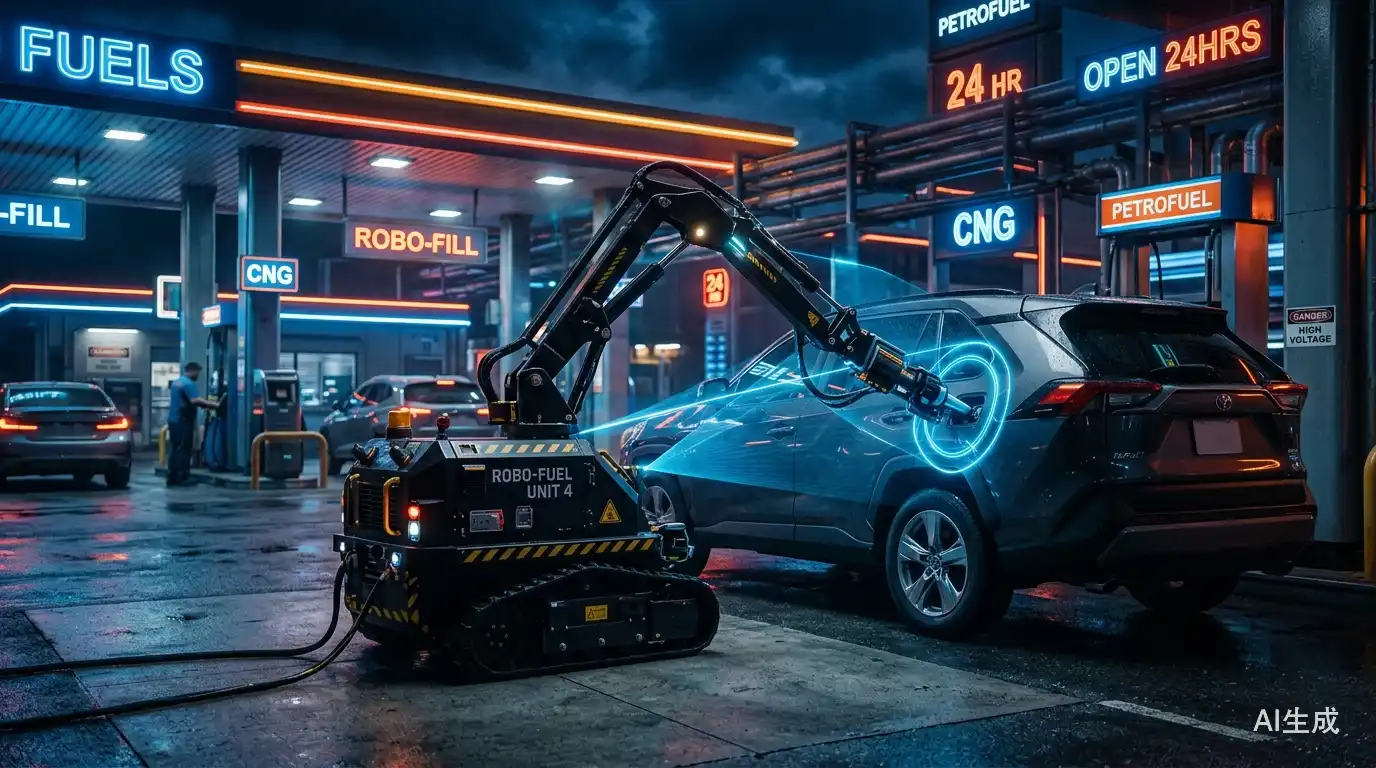
China's embodied AI sector is booming, with over ¥37 billion in funding this year. The focus has shifted decisively to real-world application, particularly in hazardous, repetitive tasks humans should avoid. A key, often prohibitive, barrier to entry for robots in environments like gas stations and oil fields is obtaining explosion-proof certification, requiring meticulous hardware and circuit design from the ground up. The article explores three main application areas. At gas stations, the challenge lies in executing a long, precise sequence of actions (opening caps, handling the fuel nozzle) with millimeter accuracy across diverse car models. For facility inspections, robots need sustained autonomous patrols combined with real-time anomaly detection and response. Port scenarios introduce the complexity of multi-robot coordination. Addressing the core challenge of long-horizon tasks, the piece highlights a technical breakthrough: a "world model"-driven approach. This enables predictive planning, allowing the AI to visualize the desired end-state (e.g., nozzle returned, cap closed) and work backward to synthesize intermediate visual frames. This "imagination" of the task trajectory, as implemented in the H-GAR architecture, guides action generation, significantly reducing cumulative error in multi-step operations. The three-step H-GAR process involves generating a coarse action draft, synthesizing target-conditioned observation frames, and then refining actions based on visual context and a memory of past successful motions. The conclusion emphasizes that success in specialized, safety-critical fields requires long-term commitment and deep integration of the "embodied brain" (AI) with a purpose-built, certified physical "body." Mastering this brain-body-data闭环 (closed-loop) is positioned as a crucial competitive advantage for commercialization.

marsbitHace 54 min(s)

Domestic First Explosion-Proof Certification, World's First Fueling Brain Solution: How Did They Secure Two 'Firsts'?

marsbitHace 54 min(s)

Bitcoin Bear Market Triggers Crypto Layoffs, Yet Fuels Industry's Most Aggressive M&A Wave Ever

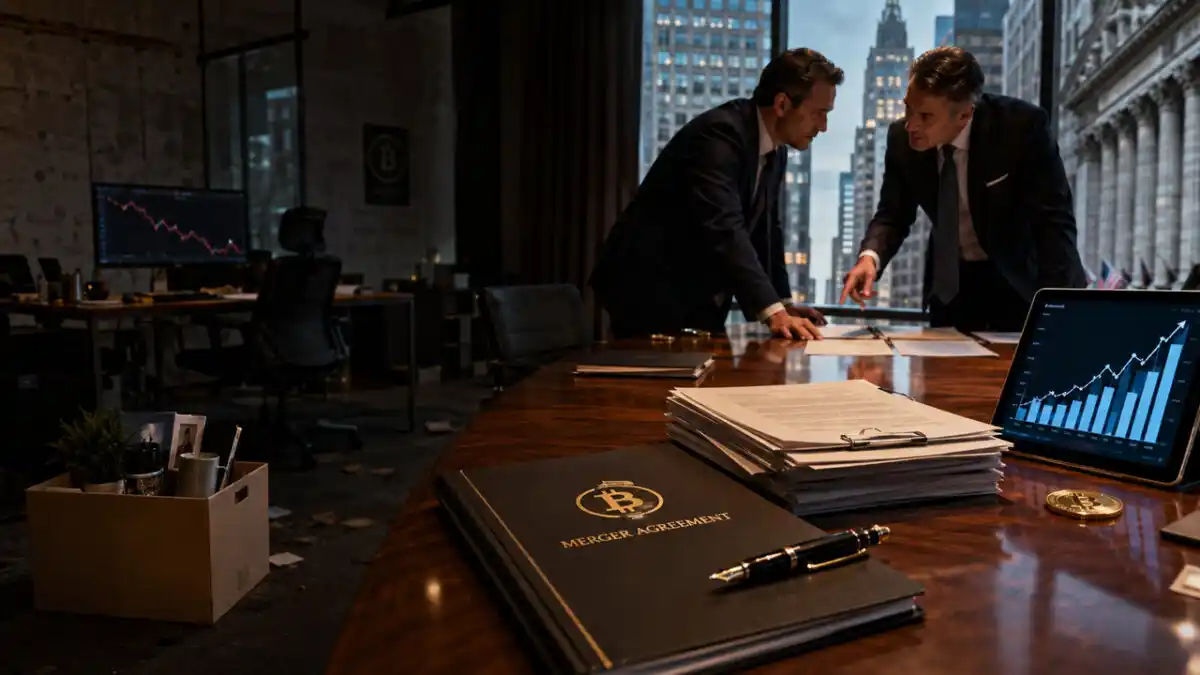
A prolonged Bitcoin downturn is forcing crypto companies to lay off employees and automate operations, but has simultaneously triggered the industry's most aggressive wave of mergers and acquisitions (M&A). In the first half of 2026, crypto M&A deal value reached $93.7 billion, 26 times higher than the same period last year. This activity is primarily driven by traditional financial institutions—banks, payment processors, and asset managers—who are acquiring compliant crypto infrastructure like custody solutions, payment rails, and regulatory licenses instead of building them internally. Examples include Mastercard's acquisition of stablecoin firm BVNK and Franklin Templeton's launch of a dedicated crypto division via acquisition. This consolidation contrasts sharply with a shrinking crypto labor market, where active job openings have plummeted. Companies like Coinbase are restructuring to become "AI-native," leading to a sharp increase in roles requiring AI skills, while engineering and compliance positions now dominate hiring. Financially pressured crypto firms, such as Messari which was acquired at a fraction of its prior valuation, are becoming prime targets. Capital remains available but is highly selective, flowing overwhelmingly into businesses that bridge digital assets with traditional finance, such as tokenization platforms and regulated trading venues. The trend indicates a market where capital is rewarding compliant, utility-focused infrastructure while weaker models consolidate or downsize.

marsbitHace 55 min(s)

Bitcoin Bear Market Triggers Crypto Layoffs, Yet Fuels Industry's Most Aggressive M&A Wave Ever

marsbitHace 55 min(s)

Trading

Spot
Futuros
活动图片