发现NFT的艺术:如何通过数据找到艺术家?

The SeeDAOPublicado a 2022-12-14Actualizado a 2022-12-14

Resumen

本文探讨了如何通过对 NFT 数据的分析和整理来实现对艺术家更合理的推荐机制以及更艺术化的呈现形式。
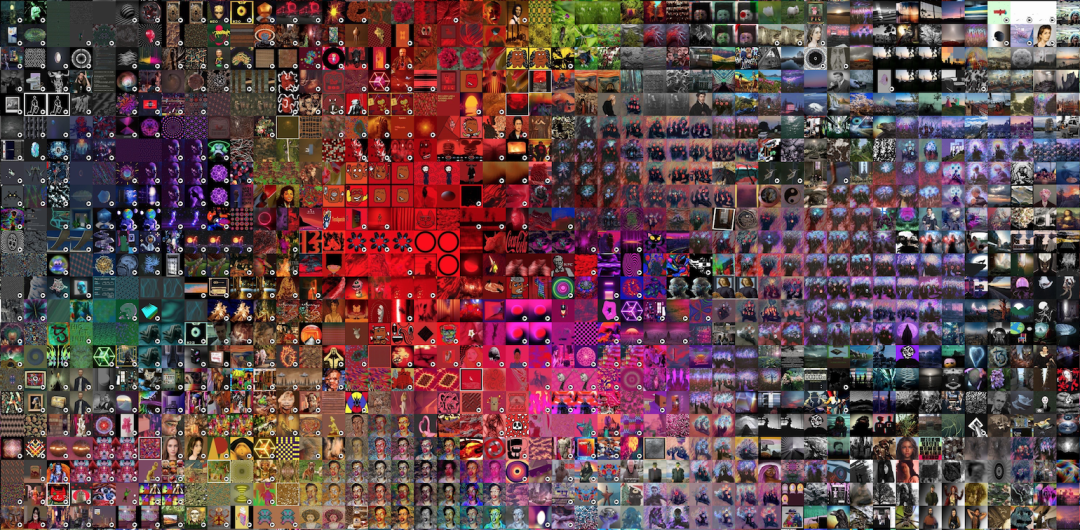
本文探讨了如何通过对 NFT 数据的分析和整理来实现对艺术家更合理的推荐机制以及更艺术化的呈现形式。

创作者:Mario Klingemann、Hic et Nunc - State of the Art - 2021 年 3 月 18 日(细节)、2021 年。由艺术家本人提供。

如今,数百万种 NFT、数万份 ERC-721 智能合约和数十个交易平台横跨多个区块链。结果,NFT 生态中到处都是噪音和碎片。无论你是刚入圈的收藏者还是经验丰富的加密老炮,想找到吸引人的新作品都不容易。但内容推荐并不是Web3所独有的问题。

多亏他们积累的数据、多年的测试和训练,像 Netflix 和 Spotify 之类的 Web2 公司已经精通了发现的艺术。但对 NFT 这种为「发现」带来独特新挑战的东西,他们的做法可以移植吗?

我在此研究了几种发现 NFT 的可选方法。
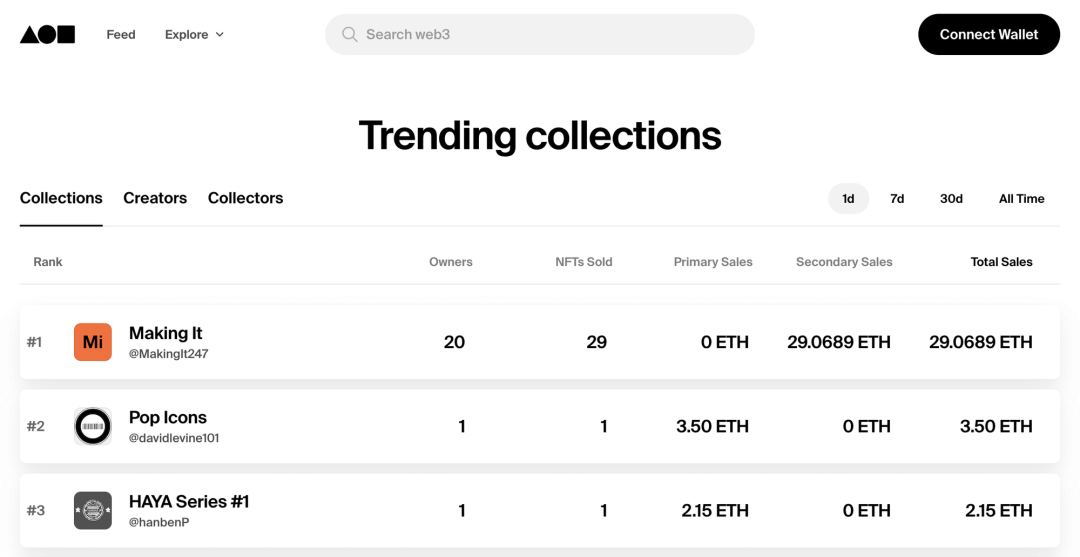
图片由Foundation.app 提供

1、跟踪数据‍

根据销量来发现 NFT 可能是最简单的方法。无论如何,排名和排行榜都是确定最流行收藏品的实用数据点。它们也是收藏者自然侧重的数据,这些人经常根据销量来进行筛选。这种做法的好处之一就是它有可验证性 —— 区块链数据轻易就能获取,通过运行以太坊节点,任何人都可以独立验证排名并亲自收集数据。

排行榜天生就是一个排序的机制,只是没有根据个人的喜好做微调。

毕竟,区块链数据让我们得以一窥艺术家和收藏者的复杂网络。网络科学家立刻意识到了 NFT 数据在揭示这种新兴所有权模式上的力量。

然而,刷量(收藏者通过把作品卖给自己来让它们看起来有销量并受人欢迎)仍然是 NFT 交易市场的棘手问题。一些独立加密研究者,比如 takenstheorem ,会通过可视化的方式呈现出相互交易的账号间的联系。
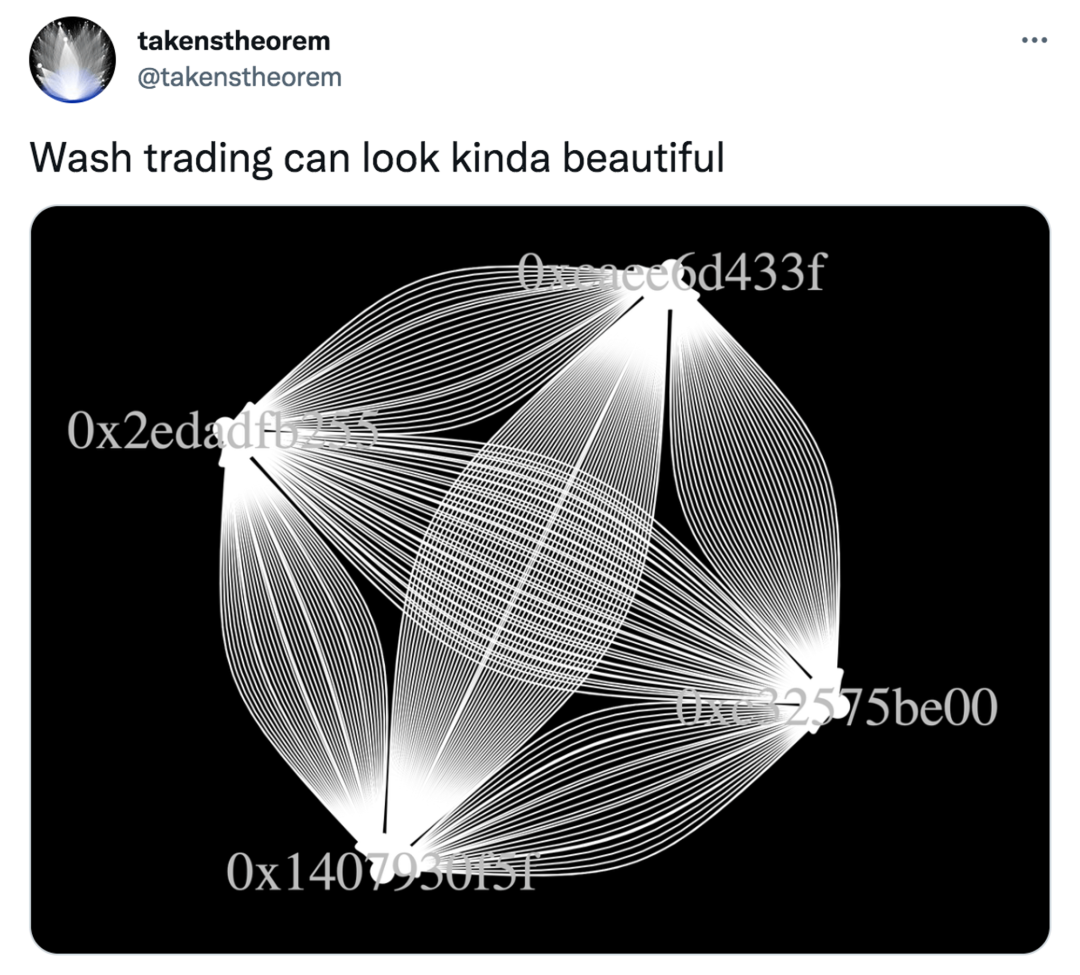
takenstheorem:刷量行为有时看着还挺漂亮

2、其他收藏者也喜‍欢

另一种发现 NFT 的方法是分析和你相似的收藏者。这种做法假设,如果两个收藏者拥有同一组艺术家的作品,那么他们就很可能就有着相似的品味,也许会从其中一人收藏而另一人没有收藏的艺术家那里发现新大陆。这用的是 Facebook「共同好友」的逻辑。

通过透明、分布式、实时的「谁拥有啥」的记录,区块链丰富的数据尤其适合做成网络分析图。任何时候 NFT 被转移,它的数据就被写入相关公链的公共账本,在两个加密钱包间建立起新的联系。这个数据随后就能被用于拓展收藏者的社交图谱。下图是我使用网络可视化工具分析 SuperRare 上 Jason Bailey 的收藏者网络。这个工具也可以把艺术家的收藏者社区可视化,所以我把生成艺术家 Manoloide 的社交图谱也加入进来。
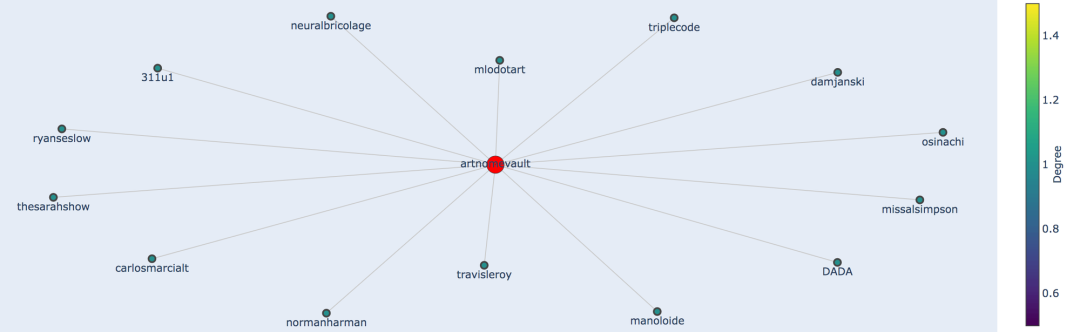
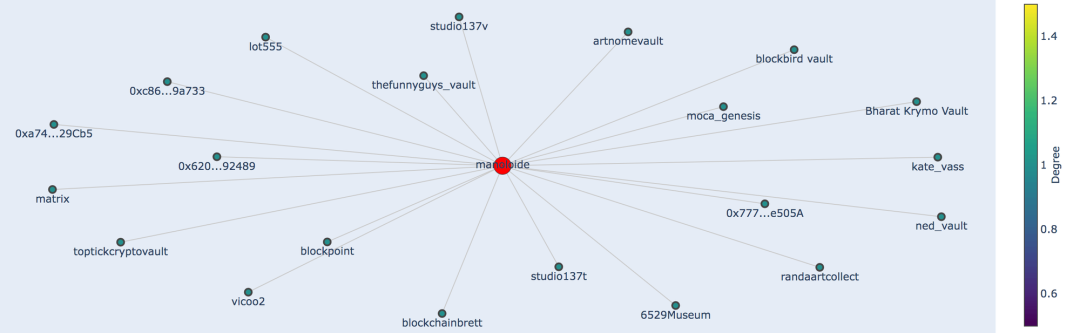
与 Jason Bailey (artnomevault) 和 Manoloide 有联系的 SuperRare 用户。2022 年 8 月 6 日的数据。由 Kyle Waters 提供

图一展示了 Jason 收藏的艺术家,图二展示了 Jason 在 SuperRare 上的「共同收藏者」, 他们共同的特征就在于拥有 Manoloide 创作的作品。如果我们放大 Manoloide 的某个收藏者,就能够搜寻 Jason 尚未收藏的艺术家。让我们以化名 punk6529 的收藏者的藏品 6529Museum 为例。下图展示了一大堆 Jason 可以考虑的新艺术家。基于这份网络分析,他可能会愿意了解一下 Seerlight。
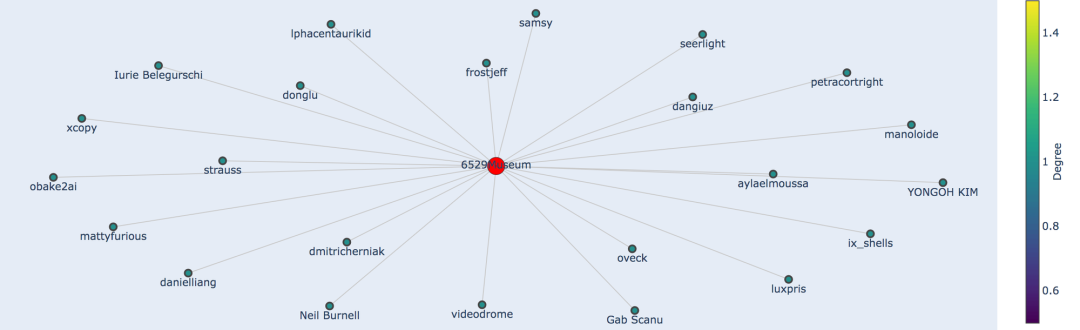
与 6529Museum 有联系的 SuperRare 用户。2022 年 8 月 6 日的数据。由 Kyle Waters 提供。

尽管这是个过度简化的大致模型,但它展示了这种基于网络的方法的力量。更精细的模型可能会基于 Jason 的共同收藏者中有多少人拥有某个特定艺术家的作品的准确数据来排名。将这种做法在多条链上拓展开来(比如以太坊和 Tezos),会需要把艺术家的钱包链接起来以掌握跨链出处的轨迹。

ClubNFT 的探索工具是第一个纯粹基于区块链网络数据做推荐的工具。然而,通过合并额外网络层、代币元数据甚至超越区块链本身,还有把该算法从当前范围进一步拓展的空间。
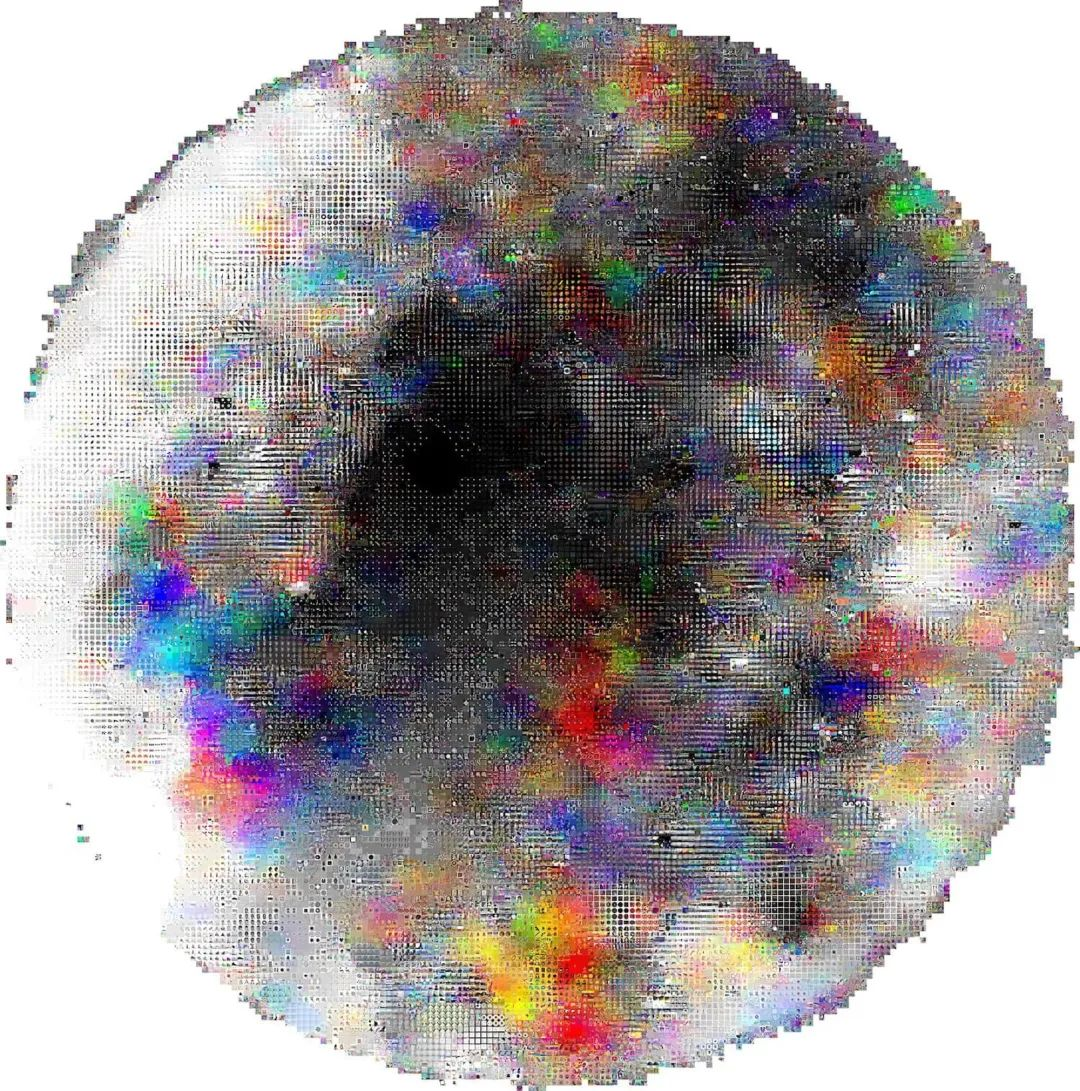
Mario Klingemann、Hic et Nunc - State of the Art - 2021 年 3 月 18 日、2021年。由艺术家本人提供。

3、给我更多这样的艺作

还有一种方法则是从 NFT 层面本身来处理这类问题。上图是艺术家 Mario Klingemann 于 2021 年 4 月所作,基于颜色相似度,他将来自 Tezos Hic Et Nunc 交易市场上的超过 25,000 份 NFT 汇集到了一起。还有很多高级计算机视觉技术也能用来基于主题寻找好的匹配作品。

NFT 元数据(代币指向的任何信息块)也有可能给推荐帮上忙。对于加密艺术,元数据一般包括一个托管在 IPFS(星际文件传输系统)上的 JSON 文件。元数据通常包含标签、描述和其他与作品内容有关的属性。对这类元数据进行分析或许会帮助收藏者发现新作品。然而,没有清晰的标准会让这类信息的统一规范极其困难。

元数据能够提供详细的描述、标签和其他信息,但有时无法提供同样的信息丰富度,这可能削弱 Web3 推荐引擎的效力。

另一个问题是「抄袭挖矿」,即某人通过复制和铸造别人的内容来假冒真正的创作者。这个问题最近已经升级到让 OpenSea 使用图像识别技术来防止伪作的程度。任何视觉推荐引擎都可能需要确保艺术家的作品出处以避免推荐抄袭的 NFT。尽管 ClubNFT 的探索工具没有将移除抄袭作品作为明确诉求,但它的确要求这些作品需要有真实的收藏者,以此为恶意的推荐结果提供某种程度的防范。欲了解「抄袭挖矿」的作品都有哪些迹象,请观看 ClubNFT 安全课程中关于欺诈的 短视频。

Seerlight、High-Rise、2022年。由艺术家本人提供。

结论

成功的推荐引擎的共同点在于拥有海量的数据。基于 NFT 生态中的可用数据,显然有机会构建出能够帮助收藏者纵横市场的各种发现系统,也可以开发出让艺术家崭露头角(或重振雄风)的各类工具。无论选择哪种方式,我们都必须留意 Web2 带来的教训,防止产生算法偏见,避免再次制造出独霸一方的权力结构。Web3 工具也必须避免对某些艺术家厚此薄彼式的反复推荐,这只会让一部分人轻而易举地获得特权。站在一名数据分析师的角度,发现藉藉无名的艺术家是一项巨大的挑战,但只要我们通过对新艺术家的支持来代替追星文化,这个问题就能够得以解决。


Lecturas Relacionadas

Uncovering the Truth About Agent Commerce, Payments, and Infrastructure

Decoding Agent Commerce, Payments, and Infrastructure: The Reality Over the past year, I've been building infrastructure for the Agent economy, engaging with major players like Stripe, Visa, Coinbase, Google, and dozens of startups. A clear conclusion emerges: true, large-scale demand does not yet exist. Startups face structural challenges. Data points illustrate this gap. Stripe's Agent commerce platform has over 1,000 merchants but only single-digit transacting agents. Visa's Agent payment token requires 9-month KYC and a $250M revenue threshold, accessible only to giants like Amazon. On-chain analysis reveals actual daily Agent transaction volume is around $17k, half of which are test transactions. The article analyzes four potential markets: **1. Agent-to-Merchant (A2M):** Current AI shopping UX is often inferior to traditional e-commerce for visual, comparison-heavy purchases (clothing, electronics). Chat interfaces are a step back. Real merchant interest is defensive "Agent Engine Optimization," fearing future obsolescence, not current demand. Potential exists in high-frequency, low-decision purchases (e.g., food delivery) or simplifying terrible UX (complex checkouts, non-native shoppers), but these require massive consumer distribution channels dominated by giants like DoorDash and Amazon. **2. Agent-to-API (A2A):** Developers already have subscriptions and billing for core APIs (compute, data). The argument for micro-payments via crypto for sub-dollar API calls is addressed by pre-paid balances today. The deeper issue is supplier resistance; major SaaS firms rely on enterprise contracts, not fractional cent pricing. Opportunity lies in the long tail of niche services, but this is a smaller market catering to developers, a historically low-paying group. **3. Agent-to-Agent (A2A):** This remains a theoretical long-term vision with near-zero current transaction volume. It involves unique challenges: discovery, trust, negotiation, dispute resolution. When it materializes, it will require a fundamentally new settlement infrastructure for high-speed, variable-value, multi-party transactions. It's a real long-term bet, but not the current market. **4. Agent-to-Finance (A2F):** This is the only category with existing, paying demand. Integrating AI into financial workflows (trading, portfolio management) is a natural evolution and enables new capabilities like autonomous rebalancing. However, competition favors incumbents with regulatory licenses, compliance infrastructure, and existing client relationships. **The Real Issue:** Why is infrastructure still being built? Incumbents can afford long-term bets, and payment companies see every problem as a nail for their payment hammer. However, payment is just one piece. The core challenge is *coordination*—orchestrating work between Agents and humans, verifying outcomes, and settling results. Payment is part of settlement, which is part of coordination. Companies that solve the coordination problem will subsume payments, not the other way around. Startups lack the infinite runway of giants and must find today's real market, which, after a year of exploration, lies outside these four categories—in an area with real, growing, and underserved activity.

marsbitHace 2 hora(s)

Uncovering the Truth About Agent Commerce, Payments, and Infrastructure

marsbitHace 2 hora(s)

Trading

Spot
Futuros

Artículos destacados

Cómo comprar XTZ

¡Bienvenido a HTX.com! Hemos hecho que comprar Tezos (XTZ) sea simple y conveniente. Sigue nuestra guía paso a paso para iniciar tu viaje de criptos.Paso 1: crea tu cuenta HTXUtiliza tu correo electrónico o número de teléfono para registrarte y obtener una cuenta gratuita en HTX. Experimenta un proceso de registro sin complicaciones y desbloquea todas las funciones.Obtener mi cuentaPaso 2: ve a Comprar cripto y elige tu método de pagoTarjeta de crédito/débito: usa tu Visa o Mastercard para comprar Tezos (XTZ) al instante.Saldo: utiliza fondos del saldo de tu cuenta HTX para tradear sin problemas.Terceros: hemos agregado métodos de pago populares como Google Pay y Apple Pay para mejorar la comodidad.P2P: tradear directamente con otros usuarios en HTX.Over-the-Counter (OTC): ofrecemos servicios personalizados y tipos de cambio competitivos para los traders.Paso 3: guarda tu Tezos (XTZ)Después de comprar tu Tezos (XTZ), guárdalo en tu cuenta HTX. Alternativamente, puedes enviarlo a otro lugar mediante transferencia blockchain o utilizarlo para tradear otras criptomonedas.Paso 4: tradear Tezos (XTZ)Tradear fácilmente con Tezos (XTZ) en HTX's mercado spot. Simplemente accede a tu cuenta, selecciona tu par de trading, ejecuta tus trades y monitorea en tiempo real. Ofrecemos una experiencia fácil de usar tanto para principiantes como para traders experimentados.

151 Vistas totalesPublicado en 2024.12.10Actualizado en 2026.06.02

Cómo comprar XTZ

Discusiones

Bienvenido a la comunidad de HTX. Aquí puedes mantenerte informado sobre los últimos desarrollos de la plataforma y acceder a análisis profesionales del mercado. A continuación se presentan las opiniones de los usuarios sobre el precio de XTZ (XTZ).

活动图片












