小狐狸收集隐私引热议,起底全球最大钱包的开发商

白话区块链Publicado a 2022-11-30Actualizado a 2022-11-30

Resumen

要知道小狐狸钱包MetaMask,是现在主流且受欢迎的以太坊钱包。随着加密市场的爆发,其活跃用户量在今年3月份已达到3000万。

11 月 23 日,ConsenSys 更新关于收集用户IP的声明。声明说当用户在 MetaMask 中使用 Infura 作为默认 RPC (远程过程调用协议Remote Procedure Call,一种无需了解底层网络技术就能从远程计算机程序上请求服务的协议)时,将在用户发送交易时收集对应的 IP 地址和 ETH 地址。但如果用户使用第三方 RPC,那么 Infura 和 MetaMask 就不会收集这些私人信息。

此事引发热议,毕竟Web3的最大特色就是用户可以掌握自己的数据使用权,打破Web2由科技巨头把持资料的局面,实现去中心化。

要知道小狐狸钱包MetaMask,是现在主流且受欢迎的以太坊钱包。随着加密市场的爆发,其活跃用户量在今年3月份已达到3000万。

那它是如何发展起来的?

据说在早期寻求投资期间差点因为资金不足而夭折,幸好ConsenSys前来救场,才有了今天MetaMask独当一面的局面。

而作为MetaMask的开发商,ConsenSys经历过哪些不为人知的故事?今天白话区块链就带大家一起来了解一下ConsenSys和其创始人背后的故事。

始于以太坊联合创始人

ConsenSys,创立于2016年,是一家区块链软件技术公司。总部位于纽约布鲁克林,并在华盛顿特区和旧金山设有办事处。创始人Joseph Lubin 是一名 50 多岁的程序员,同时他也是以太坊联合创始人之一。
作为和V神齐名的以太坊联合创始人之一,V神大家耳熟能详,但大家对Lubin却知道的不多。

其实Lubin出生在加拿大,大学学的是电气工程和计算机科学。刚毕业的他从事与专业相关的工作,在一家研究机器人的公司上班,到了上世纪九十年代末期,随着新千年的临近,Lubin开始向金融业过渡,然后他谋得一份金融咨询相关的工作,之后他与朋友一起参与对冲基金的创建。Lubin还曾担任纽约一家软件咨询公司的董事,并最终成为高盛私人财管理部门的技术副总裁。

在目睹2008全球货币体系的崩溃后,Lubin对金融业的发展感到力不从心。在2009年偶然发现比特币白皮书,这就像突然打开的一扇窗,他看到一个全新的金融可能性世界。然而,当时的Lubin对加密领域的兴趣仅限于投资,所以止步于比特币财富的积累阶段。

到了2014年,Joseph Lubin 正好50岁,也是那时他第一次遇到以太坊。虽然他对加密货币和区块链技术有一些了解,但真正加入这个行业始于2014年。

V神于2013年11月撰写以太坊白皮书,Lubin于2014年1月首次与他联系,探讨该技术的潜力。Lubin随后开始勾勒能允许部署这种网络的具体机制。

Lubin博客文章对这结晶的一刻有过描述:

"2013年11月,Vitalik Buterin撰写以太坊白皮书的第一个版本。2014年1月1日,我与Vitalik进行交谈,并收到一份副本",他写道。"那是我飘渺的时刻。我感觉自己又回来了,我想全力以赴。"

从那天起,Lubin开始在以太坊周围召集经验丰富且具有前瞻性思维的人,Lubin在2018年表示,以太坊白皮书是他读过的最好的白皮书。

"Consensys黑帮"启动

在2016 年的夏天,Lubin召集了一群来自美联储的中央银行家们,也许是出于对Lubin的信任,也许是对加密行业的好奇,总之,他们离开了他们在华尔街的分部办公室,到达 Bogart 街上一个被涂鸦覆盖的仓库,来到这家名为 ConsenSys 的小公司。

在这里他们进行了一次非常热烈的且深度的谈话,他们讨论了很多问题,包括:谁可以访问这些新的金融平台?他们如何避免受到黑客攻击?中央银行在加密货币的金融世界中的作用是什么?等等。

Lubin一直想让他们相信:"你们所认知的、身在其中的现实,将在几年内被完全颠覆。"

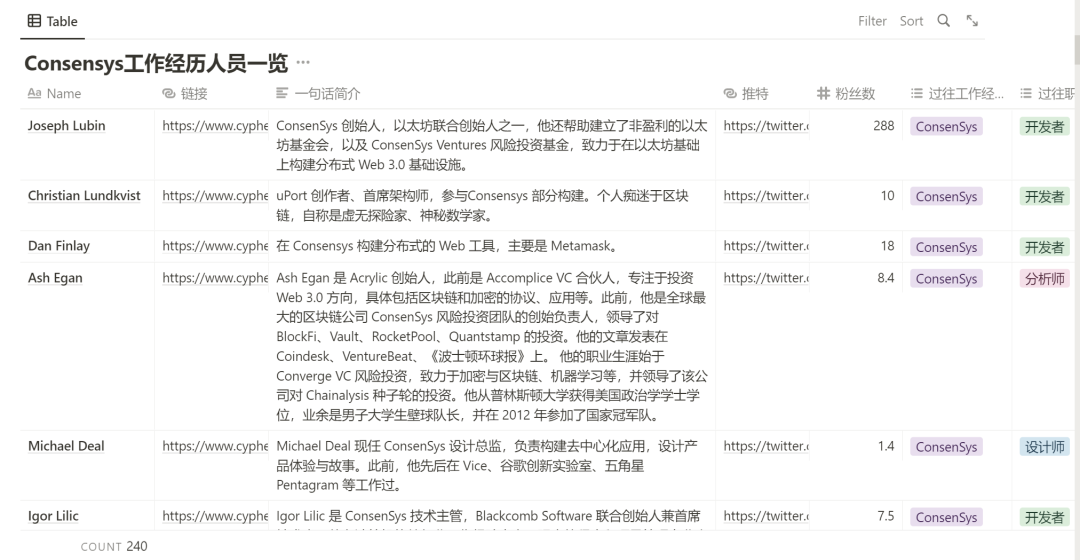
事实证明也确实如此。后来,正是那一年那样一个小公司,吸引到很多大咖过来。相关数据统计了240名在职和前员工的情况,可谓是"Consensys黑帮"说法也毫不过分。在分为开发/创投/产品设计/商务/编辑五个分类中,人才济济,随便拎出来一个都是厉害的人物。

比如ConsenSys 的现任设计总监Michael Deal曾先后在 Vice、谷歌创新实验室、五角星 Pentagram 等工作过;ConsenSys 的现任技术主管Igor Lilic,是Blackcomb Software 联合创始人兼首席技术官。他在计算机软件行业工作经验丰富,且精通区块链技术、技术运维、敏捷软件开发与交付等。
历经危机变得强大

作为以太坊区块链基础设施和应用程序开发独角兽,ConsenSys 目前是领先的以太坊和去中心化协议软件公司。

自成立以来就一直在欧洲经济区发挥主导作用,还与领先的金融服务和技术公司组建了多家合资企业,其中就包括微软的合资企业。2018年,ConsenSys的业务范围已经扩大至包括学院、资本、孵化器等多个部门。并且员工也从最初的80人在两年之内增加到1000人。

员工众多,不同部门的岗位之间就很难对应起来,所以公司经常需要进行职员重组。而这也成为了后来ConsenSys花销大于收入的原因之一。所以2018年ConsenSys裁员13%。

根据当时的福布斯报道称,这一戏剧性事件的主要原因是Lubin资助了一系列项目,却几乎没有做好监督或跟进,以确保交付成果得到实现,所以这些投资的获得的收入相对较少,而仅靠公司的另一部分咨询业务来维持运转。

2020年2月5日,ConsenSys宣布对其核心业务模式进行重大重组,使公司有效地将其业务一分为二,一部分专注于软件产品的开发,另一部分专注于对初创企业的投资,并且表示还要裁员14%。

而ConsenSys业务拆分的原因主要是,难以为一家同时参与投资和软件开发的公司筹集资金。在当时,ConsenSys正在寻求2亿美元的融资,但因为其2019的财务报告收入仅2100万美元而难以执行这项融资计划。

在宣布重组核心业务后,Consensys也打入市政债券市场,并披露了对经纪自营商Heritage Financial Systems的收购,这也使得Consensys同时具备咨询和经纪自营商能力。

2020年8月25日,ConsenSys又宣布收购摩根大通旗下的区块链平台Quorum,而作为交易的一部分,摩根大通需对ConsenSys进行战略投资。

与之相应的,ConsenSys内部也进行变革重组。随后ConsenSys的动向也开始专注于以太坊2.0,和其他基础设施的发展中。

然而好景不长在2021年 2 月份和 4 月份ConsenSys 又经历两轮裁员。相关负责人说,在Covid-19危机面前,这是对"经济现实"和"巨大的全球不确定性"的自然反应。

而且当时对2020年的收入预测几乎是2019年的两倍。在缩减之后,ConsenSys预计2021年的收入将与2020年相比"持平"。

在前后历经多重裁员之后, ConsenSys似乎变得更强大、更精简,套用创始人Lubin说的一句话就是:"其运作就像是上油的橄榄球队。我们经常吵架,但每个人都朝着同一个方向前进。"

去中心化基础设施蓝图

就其本身而论,Lubin 不仅是区块链技术专家,也是去中心化金融(DeFi)的积极倡导者。

2021年11月9日,有报道说MetaMask可能即将发Token。对此,Lubin当时表示:"ConsenSys的资产负债表上有许多Token。ConsenSys受到包括我在内员工的有力控制。我们正在推动旗下的几个项目实现去中心化,什么时候发行MASK Token不确定,请保持关注。"

关于未来,Lubin认为,毫无疑问ConsenSys的未来将往"金融化"方向发展。未来去中心化平台上的一些开发工作将与治理更加紧密地联系在一起,而且Token是未来治理的一部分,一切都将以Token为中心,资产Token化。

总体来说,在多年的发展下,ConsenSys已成功孵化了50多个助力以太坊生态成长的项目,涵盖开发工具、基础设施、核心组件、平台应用以及各种服务等等,其中就包括小狐狸钱包和Infura(一套帮助开发人员创建以太坊应用程序的工具)这样的基础设施项目。

另外ConsenSys还与很多政府机构都有合作,包括美洲开发银行、欧洲委员会、南非储备银行等等。这些合作联系可以统分为两大类,行业联系和软实力。除此之外,ConsenSys还参与多个国家的CBDC(中央数字货币)的发行计划。ConsenSys通过为企业提供解决方案的部门为许多行业参与者提供服务,并且还是企业以太坊联盟等加密行业委员会的领导成员。这些都对其自身发展与政府监管之间的平衡发挥着重要作用。

ConsenSys 使世界各地的开发人员、企业和人们能够构建下一代应用程序、启动现代金融基础设施并访问去中心化网络。ConsenSys 产品套件,由Infura、Quorum、Codefi、MetaMask、Truffle、Diligence和NFT 平台组成,为数百万用户提供服务,为客户支持数十亿基于区块链的查询,并处理了数十亿美元的数字资产。

小结

在当前的数字资产发展背景下,ConsenSys官网显示,小狐狸钱包的月活跃用户已超3000万。ConsenSys预计小狐狸钱包在2022的年化收入有望增至10亿美元。

目前,ConsenSys 的大部分收入来自在 MetaMask 上交易不同Token的费用。尽管如此,鉴于所有这些增长,Lubin 和 ConsenSys 仍然需要应对这样一个事实,即以太坊面临的竞争环境比几年前要激烈得多。像Cardano、Algorand等许多公司也宣布相关激励计划,来促进增长、活跃度和用户,以迎头赶上。

尽管 ConsenSys 不支持这些网络,但现在以太坊完成了POS过渡,从吞吐量的角度来看,以太坊更有竞争力。ConsenSys也在支持其他一些与以太坊兼容的网络,比如对 Polygon 和 Avalanche已经提供了更高的吞吐量。

不过未来发展究竟如何,还需要拭目以待。

Criptos en tendencia

Lecturas Relacionadas

OpenAI's "Most Open" Move: Codex No Longer Exclusively Favors GPT

OpenAI has significantly opened up its Codex programming agent by introducing a "model provider" configuration layer that allows users to connect it with various open-source models, not just its proprietary GPT. Through a configuration file or a simple `--oss` command-line flag, Codex can now route requests to local services like Ollama or LM Studio, or to third-party APIs such as Mistral or DeepSeek. This move is seen as one of OpenAI's most "open" steps, potentially lowering costs and enhancing privacy for developers who can run code generation offline. However, integration isn't seamless for all models. Codex primarily uses OpenAI's newer Responses API, while many open-source models rely on the older Chat Completions interface. This creates compatibility issues, especially for advanced features like function calling. The developer community is already building "routing" or adapter layers (e.g., CC Switch, LiteLLM) to translate between these protocols, enabling hybrid setups where GPT handles planning and open-source models handle execution. Analysts interpret this as a strategic shift for OpenAI: from competing solely on model superiority to controlling the platform and interface standards. By making Codex a flexible, pluggable entry point for AI-assisted programming, OpenAI aims to become the central hub in the developer toolchain ecosystem, even as users gain the freedom to switch underlying models.

marsbitHace 16 min(s)

OpenAI's "Most Open" Move: Codex No Longer Exclusively Favors GPT

marsbitHace 16 min(s)

When 500 Million People Abandon ChatGPT

ChatGPT's Global AI Assistant Market Share Drops Below 50% Three and a half years after its groundbreaking launch, ChatGPT faces a pivotal moment. While it remains the largest AI assistant globally, its market share has fallen below 50% for the first time, reaching 46.4% as of May, according to Sensor Tower's 2026 AI landscape report. Google's Gemini (27.7%) and Anthropic's Claude (10.3%) are now its main competitors, with Grok, Perplexity, and others also gaining ground. The market has evolved from awe and initial adoption into a phase of product comparison, ecosystem integration, and commercialization. User behavior has matured significantly. Loyalty is low; users readily switch between assistants for specific tasks. Gemini benefits from deep integration within Google's ecosystem (Search, Gmail, Android), while Claude has carved a niche among productivity-focused users with strong retention, nearly matching ChatGPT's. User choice is now influenced by a complex mix of capability, ecosystem, price, use case, and even brand trust. Commercialization is accelerating. AI app downloads continue but growth is slowing, while user spending is rising. Over $4.2 billion was spent in-app during H1 2026. Claude leads in premium subscription conversion rates (13%). OpenAI is expanding its revenue streams, testing ads shown to 17% of ChatGPT users daily by May. This shift highlights the immense financial pressure of model training and inference costs. Despite revenue growth, OpenAI's cash burn is intense, reaching $3.7 billion in Q1 2026. The company projects this could rise to $25-57 billion in the coming years, underscoring the industry-wide challenge of scaling profitably. The symbolism is clear: ChatGPT no longer defines the AI assistant market alone. The era of a single dominant product is over. Gemini, Claude, and specialized tools are collectively shaping user habits and business models. As AI assistants move from novelty to utility—judged on accuracy, efficiency, and value—they are becoming embedded in everyday digital life. ChatGPT may have lost its majority, but AI as a whole is winning, entering a mature, competitive, and diverse new phase.

marsbitHace 18 min(s)

When 500 Million People Abandon ChatGPT

marsbitHace 18 min(s)

Trading

Spot
Futuros

Artículos destacados

Cómo comprar UNI

¡Bienvenido a HTX.com! Hemos hecho que comprar Uniswap (UNI) sea simple y conveniente. Sigue nuestra guía paso a paso para iniciar tu viaje de criptos.Paso 1: crea tu cuenta HTXUtiliza tu correo electrónico o número de teléfono para registrarte y obtener una cuenta gratuita en HTX. Experimenta un proceso de registro sin complicaciones y desbloquea todas las funciones.Obtener mi cuentaPaso 2: ve a Comprar cripto y elige tu método de pagoTarjeta de crédito/débito: usa tu Visa o Mastercard para comprar Uniswap (UNI) al instante.Saldo: utiliza fondos del saldo de tu cuenta HTX para tradear sin problemas.Terceros: hemos agregado métodos de pago populares como Google Pay y Apple Pay para mejorar la comodidad.P2P: tradear directamente con otros usuarios en HTX.Over-the-Counter (OTC): ofrecemos servicios personalizados y tipos de cambio competitivos para los traders.Paso 3: guarda tu Uniswap (UNI)Después de comprar tu Uniswap (UNI), guárdalo en tu cuenta HTX. Alternativamente, puedes enviarlo a otro lugar mediante transferencia blockchain o utilizarlo para tradear otras criptomonedas.Paso 4: tradear Uniswap (UNI)Tradear fácilmente con Uniswap (UNI) en HTX's mercado spot. Simplemente accede a tu cuenta, selecciona tu par de trading, ejecuta tus trades y monitorea en tiempo real. Ofrecemos una experiencia fácil de usar tanto para principiantes como para traders experimentados.

443 Vistas totalesPublicado en 2024.12.12Actualizado en 2026.06.02

Cómo comprar UNI

Discusiones

Bienvenido a la comunidad de HTX. Aquí puedes mantenerte informado sobre los últimos desarrollos de la plataforma y acceder a análisis profesionales del mercado. A continuación se presentan las opiniones de los usuarios sobre el precio de UNI (UNI).

活动图片