[Key interpretation] LTC's short position broke $5.18 million, and BTC's turnover rate soared

JinsPublicado a 2022-11-23Actualizado a 2022-11-24

Resumen

BTC rebounded in the short term and hit the bottom.

1. BTC rebounds easily

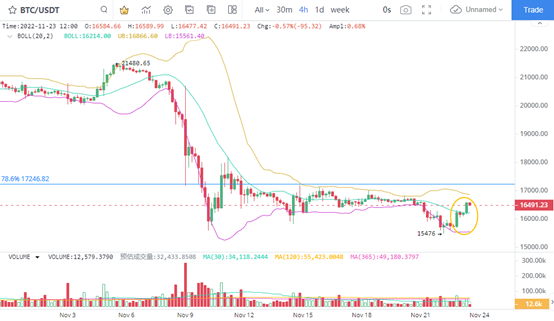
BTC's short-term rebound efficiency is very high. The 4-hour K line chart is hours. After the completion of the two clear K lines, BTC bounces from $15476 to around $16400 for you. On the rise, the BTC range rebounded by 7%. From the perspective of price performance, BTC did not break down significantly again during the adjustment period after breaking down on November 10. Therefore, the support is temporarily effective. At the same time, we can pay attention to the pressure level performance of $17246 corresponding to 78.6% of Fibonacci.
2. BTC average transfer quantity high order operation

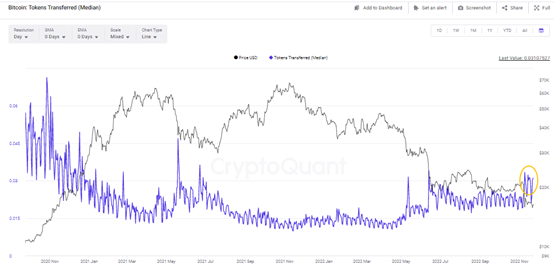
At present, the average number of single transfers of BTC is at a high level. In other words, the real turnover rate of BTCs is still rising, and it is near the peak in the past year. The number of BTCs has reached 0.031. Compared with the peak in 2021 and the performance before November 2020, the average number of BTCs transferred can reach 0.046 BTCs and 0.05 BTCs respectively. At present, the turnover rate of BTC has rebounded significantly during the decline period, which helps to confirm the true bottom of the price.
3. ETH short line retreats to support position

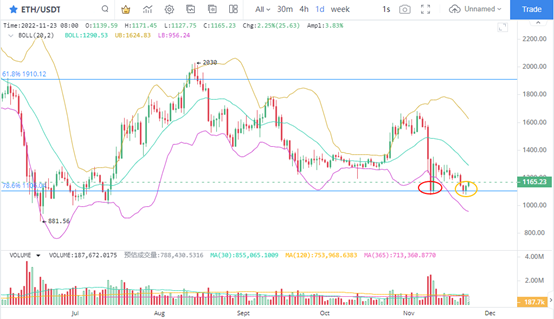
After the ETH price retreated to $1106 corresponding to 78.6% of Fibonacci, the technical rebound trend and the second time appeared. The first rebound occurred on November 10. After the second rebound, ETH is confirming 78.6% of the bull strength of Fibonacci, the typical support line. So far, ETH has tested the strength of bottom long protection in June, July and this November. The rebound may continue until prices reach a new low.
4. ETH contract position short-term stop falling

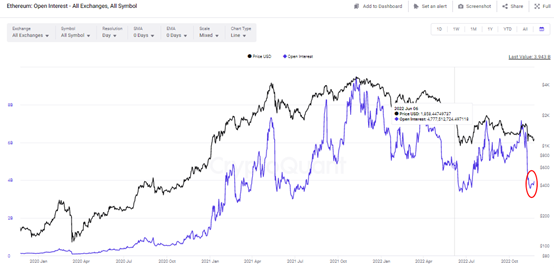
The number of contract positions of ETH has been operating at a low level. On November 23, the number of contracts reached US $3.93 billion, and the low level was US $3.56 billion on November 14. The number of contracts at the bottom of this contract is higher than the USD 3.36 billion on June 22, and also higher than the corresponding USD 3.02 billion on June 26, 2021. According to this judgment, the ETH contract position has shown signs of a bottom. Although it is not clear whether the ETH contract position will continue to decline. Only from the ETH price performance and the corresponding contract position, the strong supporting effect has been verified.
5. Large amount of short positions of LTC

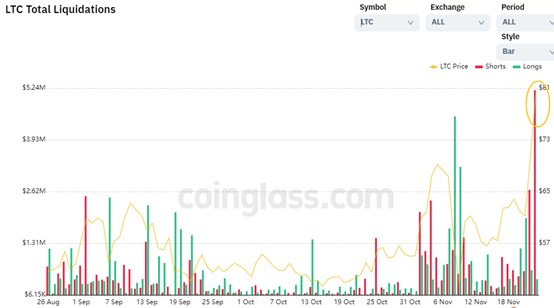
Due to the good performance of financing interest rate, the strength of LTC bulls has been recognized as effective and has been reflected in the price. On November 23, LTC's 24-hour increase reached more than 28%. During this period, short-term short positions soared significantly, with the amount of USD 5.18 million, higher than the USD 2.66 million on November 22. LTC's long position explosion has reached new highs on October 25, November 2, November 4, November 22 and November 23. From the perspective of market performance, LTC has continued to strengthen during the period of a large number of short positions.

Lecturas Relacionadas

Crypto.com, Backed by Citadel Securities, Transfers XYO and XL1 into Regulated Custody

Crypto.com, with backing from Citadel Securities, has placed XYO and XL1 tokens into regulated custody. This move provides eligible institutions and high-net-worth clients with a regulated mechanism for storing, managing, and exchanging these tokens without first having to transfer assets onto an exchange. The custody structure utilizes segregated MPC wallets managed by a bankruptcy-remote entity, with private keys secured via multi-party computation. Clients benefit from cold storage, audit trails, and direct access to Crypto.com's institutional liquidity while their assets are custodied, removing the operational step of pre-trade transfers. Company leadership positioned this as a strategic step to provide "unmatched security and seamless liquidity" for digital asset organizations, and to protect and scale the XYO ecosystem. The partnership builds on an existing relationship since XYO's initial listing on the exchange. This development follows Citadel Securities' $400 million investment in Crypto.com and comes as the company expands its regulatory standing, having received conditional approval to establish a national trust bank. For institutional investors, this custody agreement addresses a key barrier by demonstrating that smaller market-cap assets like XYO and XL1 can be held under the same regulatory and security standards as larger tokens. XYO operates a large DePIN network generating real-world data for AI and robotics, with XL1 handling its blockchain transactions and infrastructure.

cryptonews.ruHace 18 min(s)

Crypto.com, Backed by Citadel Securities, Transfers XYO and XL1 into Regulated Custody

cryptonews.ruHace 18 min(s)

Less Than Two Weeks Left — Bitcoin's BIP-110 Countdown Begins as Miner Support Grows Ahead of Decisive Moment

The BIP-110 activation process for Bitcoin, which proposes a temporary soft fork to limit specific data-heavy transaction types (like Ordinals inscriptions), is entering its critical final phase. As of July 27, 2026, there are roughly 1,790 blocks remaining until the mandatory signaling window begins at block 961,632 (estimated for August 9). Starting then, nodes enforcing BIP-110 will reject blocks not signaling for the proposal. While support from miners has grown from below 1% to around 3% recently, it remains concentrated among smaller pools and independent miners, with major pools like Foundry, Antpool, ViaBTC, and F2Pool largely not signaling. Foundry's stance is particularly decisive, as it holds a large share of the network's hashrate and has tied its signaling to a client vote. Without a major pool's shift, widespread activation is unlikely. If the current low signaling levels persist after the window opens, nodes enforcing BIP-110 will follow a slower, minority chain, potentially creating a chain split from the majority chain followed by legacy (e.g., Bitcoin Core) nodes. This activation mechanism differs from past soft forks like SegWit, resembling the 2017 UASF BIP-148 more closely. Proponents argue BIP-110 is necessary to curb spam-like data transactions that increase node costs and distort fee markets, framing opposition as a contentious hard fork. Critics, however, view the activation method as a radical overreaction to a minor issue. The final outcome in the coming two weeks hinges on whether a major pool switches support, if major exchanges clarify their chain preference, and how miners actually behave once the mandatory window is open.

cryptonews.ruHace 19 min(s)

Less Than Two Weeks Left — Bitcoin's BIP-110 Countdown Begins as Miner Support Grows Ahead of Decisive Moment

cryptonews.ruHace 19 min(s)

Trading

Spot
活动图片