Justin Sun Put Forth Three Strategies at Huobi Rebranding Launch Event, Vying to Help Huobi Return to World’s Top Three Exchanges

mediumPublicado a 2022-11-22Actualizado a 2022-11-23

Resumen

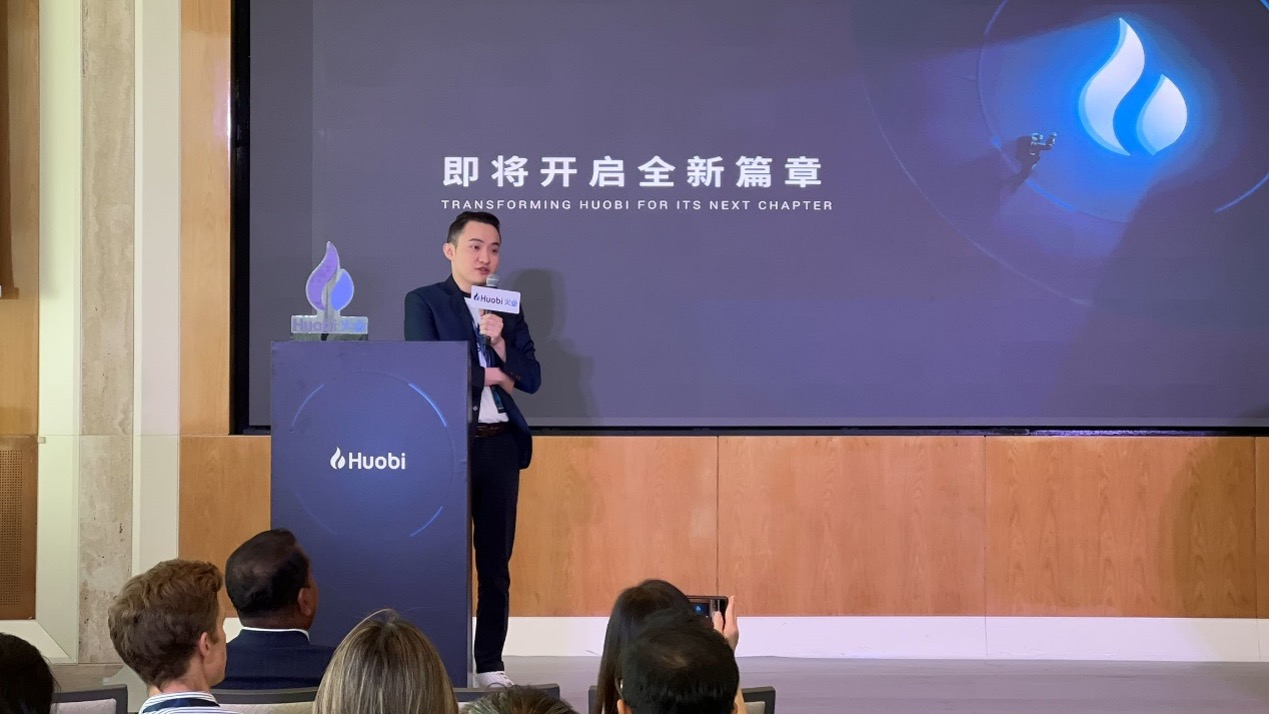
2022年11月22日,火币全球顾问委员会成员、TRON创始人、格林纳达常驻世贸组织特命全权大使孙宇晨阁下出席了在新加坡举行的火币全新品牌发布会。孙宇晨对火币未来发展提出了三大战略:全球发展战略、科技驱动发展、科技向善,并与其他顾问委员会成员一起全力支持火币发展,助力火币重返行业前三,打造全球Web3.0网关。

On November 22, 2022, His Excellency Justin Sun, TRON Founder, Huobi’s global advisory board member, and Ambassador Extraordinary and Plenipotentiary, Permanent Representative of Grenada to the WTO, attended the Huobi’s refreshed branding launch event held in Singapore. Justin Sun put forth three major strategies for Huobi’s future growth:global development strategy, technology drives development and technology for good, and offering full support to Huobi’s development with other advisory board members to help Huobi to return to the top 3 positions in the industry,building a global Web3.0 gateway.

Huobi Global is launching a refreshed brand, Huobi . Heeding advice from Justin Sun, Huobi’s advisory board member and a leading figure in the crypto industry, will give full play to the two parties’ advantages and help Huobi reposition itself for a bright new stage of development. More importantly, Huobi aims to help restore confidence and build unity amid the current downturn in the industry.

Huobi launched its refreshed branding strategy, which will be known simply as “Huobi” instead of “Huobi Global”, according to information from the rebranding launch event. “Beyond a virtual asset trading platform, Huobi also stands for safety, convenience, and friendliness, which the shortened name will more fully demonstrate”, said Justin Sun.

The new name consists of two Chinese characters, “火” and “必”. In Chinese culture, the first character represents the perpetual vitality that can be passed down to future generations. The second one means the determination to win, which represents our ambition to return to the top 3 positions in the industry.
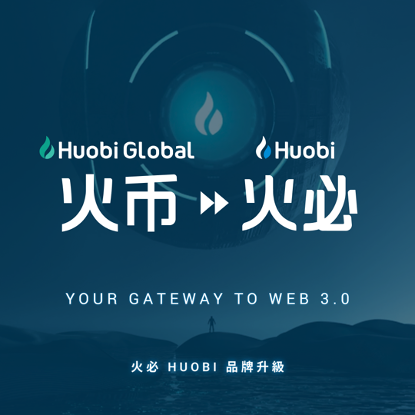
In Chinese, the character “必” can also be seen as an amalgamation of the characters “心” and “义”, which mean “heart” and “righteousness”, respectively. The symbolism behind the two Chinese characters means the new Huobi will serve from its heart in providing professional digital asset management services to global users. This spirit is also reflected in new Huobi’s mission—”Enhancing Asset Safety, Promoting Financial Inclusion”.

Meanwhile, the new name also upholds the traditional Chinese virtue of “righteousness”, implements the brand’s philosophy of “Science and Technology for Good”, contributes to the innovation and development of global blockchain and virtual asset technology, and realizes Huobi’s vision of “Technology Changes the World.”

On October 10, Justin Sun was appointed as a member of the Global Advisory Board of Huobi Global. Sun stated on his social media account that he would work with industry, academic, and policy leaders to help guide and grow this innovative, vibrant, and resilient organization in its latest chapter of global expansion. In September 2017, Justin Sun founded TRON, which has quickly grown into one of the world’s top three public chains. In December 2021, the Government of Grenada announced the appointment of Justin Sun as its new Ambassador and Permanent Representative to the WTO.
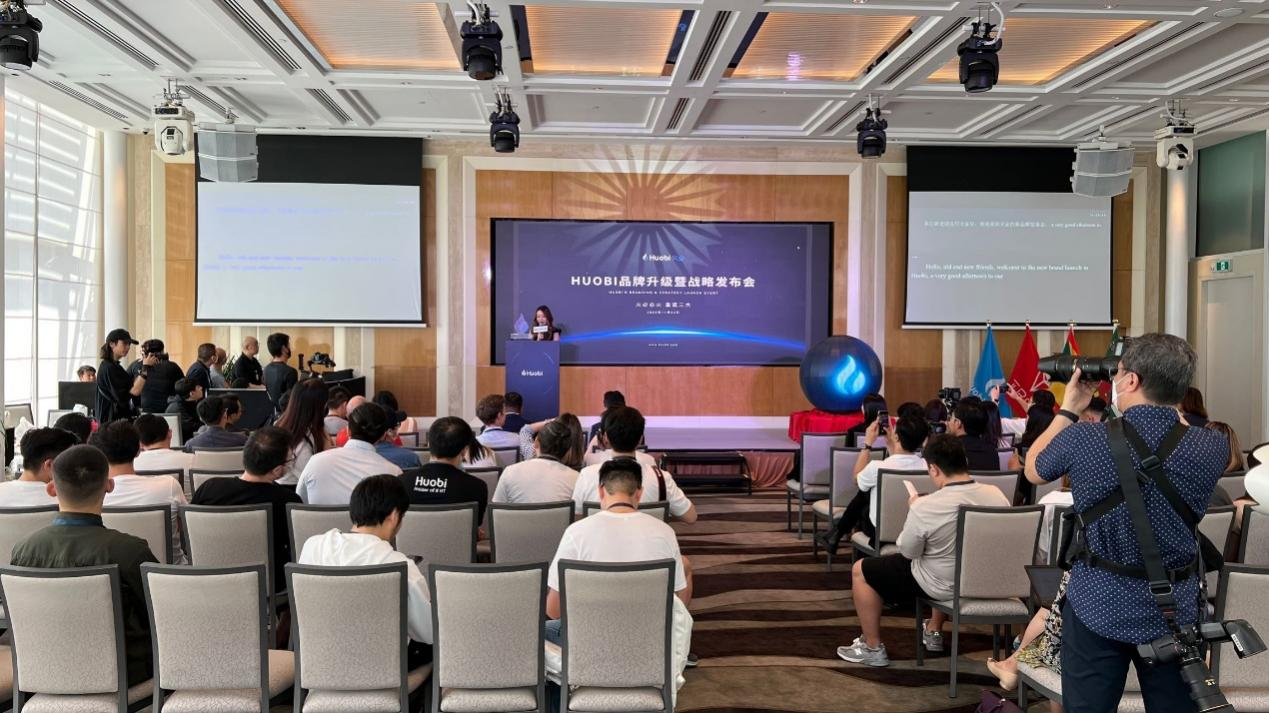
The conference announced three major future development strategies of Huobi, including global development strategy, technology drives development and technology for good. Justin Sun had also previously said in a media interview that he would vigorously strenthen HT and bring into play HT’s important strategic attributes, and would return the power of HT voting on coins to the user community.

Also, Huobi will fully implement its global expansion strategy. On October 7, the Commonwealth of Dominica, a Caribbean country, entered into a series of in-depth cooperation with TRON, which blazed a trail for blockchain companies to collaborate with sovereign nations. Sun suggested that Huobi intends to “venture into the Caribbean” and that the exchange will likely move its headquarter to the Caribbean. Meanwhile, Huobi will ramp up its investments in South-East Asia, Europe, and other regions to build a robust global ecosystem. Huobi will continue to comply with regional regulations and strengthen its cooperation with countries.

In the nine years since it was founded, Huobi has become a household name in the virtual assets market as one of the most established players. “With its refreshed branding, new roadmap and the guidance of its global advisory board, I am confident Huobi can strengthen its market leadership and reclaim its top rankings alongside other industry heavyweights,” he added.


Lecturas Relacionadas

Yang Ge Gary: Agent Economy and AI Sub-Microeconomics

"Agent Economy and AI Submicroeconomics" by Gary Yang discusses the evolution of AI Agent economies, written from Singapore in June 2026. The author observes a significant "civilizational generational gap" in AI development, particularly highlighted by events in Silicon Valley. The article identifies a current bottleneck in the transition from Human-to-Agent (H2A) economies to true Agent-to-Agent (A2A) ecosystems. While AI Payment protocols are rapidly emerging, many implementations remain non-AI-native, focusing on traditional human decision-making models rather than leveraging autonomous Agent decision-making. A core thesis is the inevitable formation of an **Agent Economy**, defined as a system where autonomous AI Agents create, exchange, and capitalize value independently. This requires new infrastructure: **AI Protocols**, which are the foundational rules and standards for Agent interaction. The piece explores the relationship and current gap between AI Protocols and Crypto Protocols, suggesting political and regulatory factors from traditional finance are temporarily constraining development. However, a future fusion into a mature Digital Protocol system is deemed inevitable based on first principles. The author introduces **AI Agent Submicroeconomics**, contrasting it with human economics. Key differences include higher transaction frequency, lower value per transaction, efficiency-driven (not emotion-driven) decisions, task-oriented (not consumption-oriented) behavior, and near-zero organizational and communication costs. A biological analogy is drawn, comparing an Agent to a cell, its LLM to a nucleus, and its protocol stack to a cell membrane. The rise of **AIFi** (AI Finance) is presented as a natural consequence, where value originates from AI-native activities and is subsequently tokenized and financialized. This contrasts with DeFi/TradFi, where finance is the source of value. The concept of a **Financial Chip (FinChip)**—an autonomous AI Agent integrated with a crypto smart contract—is highlighted as key infrastructure for this new economy. The conclusion emphasizes that **AI-Native** thinking represents a paradigm shift distinct from "Internet+" upgrades. It requires reasoning from first principles, focusing on energy-value shortest paths and maximum efficiency, which presents a steep learning curve and significant challenge for all participants in this rapidly evolving field.

marsbitHace 20 min(s)

Yang Ge Gary: Agent Economy and AI Sub-Microeconomics

marsbitHace 20 min(s)

ViaBTC CEO Haipo Yang: Looking Back at the Decade, Re-understanding the Value of Crypto

In "A Decade in Retrospect: Re-evaluating the Value of Crypto," ViaBTC & CoinEx CEO Haipo Yang reflects on the cryptocurrency industry's evolution since founding ViaBTC in 2016. Initially a niche interest, Crypto has fundamentally transformed key financial infrastructures like market making, trading, settlement, and issuance through open protocols, as seen with Uniswap and GMX, and enabled efficient cross-border transfers via stablecoins. While acknowledging speculation's role in fueling innovation and liquidity, Yang warns it often overshadows real demand. He distinguishes between blockchain (a trust-minimizing technology), Web3 (an application model requiring genuine utility), and Crypto assets. The latter's value derives from block space as a commodity (e.g., gas fees) and "sovereign liquidity premium" (e.g., Bitcoin's censorship resistance), with most tokens lacking such dual support. Looking ahead, Yang argues the next decade's focus should shift from "open participation" to "sustainable participation," emphasizing reliable infrastructure. He predicts consolidation towards networks with strong security and liquidity (like Bitcoin and Ethereum), and sees DeFi becoming a specialized tool rather than a mass replacement for traditional finance. Crypto will integrate into traditional finance (e.g., via Bitcoin ETFs) but may sacrifice some decentralization for mainstream adoption. Real future demand may come from AI agents and machine economies needing permissionless settlement. Ultimately, Yang believes Crypto's enduring value lies not in hype or replacing everything, but in verifiably reducing trust costs, increasing efficiency, and providing stable, transparent services across market cycles.

marsbitHace 20 min(s)

ViaBTC CEO Haipo Yang: Looking Back at the Decade, Re-understanding the Value of Crypto

marsbitHace 20 min(s)

Trading

Spot
Futuros
活动图片