[Анализ рынка от Huobi] BTC закрепляется выше 16 тыс. долларов, TWT вырос на 80%

HTX NewsPublicado a 2022-11-14Actualizado a 2022-11-14

Resumen

BTC закрепляется выше 16 тыс. долларов, TWT вырос на 80%

1. BTC немного отскочил

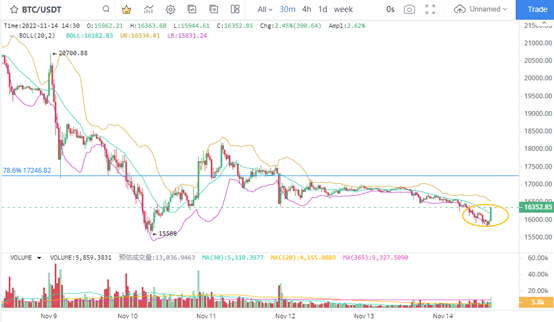
Сегодня давление покупателей увеличилось, и биткоин вновь вернулся над трендовую линию поддержки на уровне 16 000 долл. США, что указывает на возможность продолжения восходящего движения. Прошлая неделя закрылась под длительной зоной консолидации, которая происходила в течении 147 дней, и первой преградой на пути восстановления актива станет её нижняя граница в районе 17 800 долл. США.

Ситуация остаётся шаткой, и цена во многом будет определиться макрофакторами, такими как изменение процентной ставки ФРС США и покупательная сила долгосрочных инвесторов на рынке.

2. Ликвидация длинных позиций по BTC

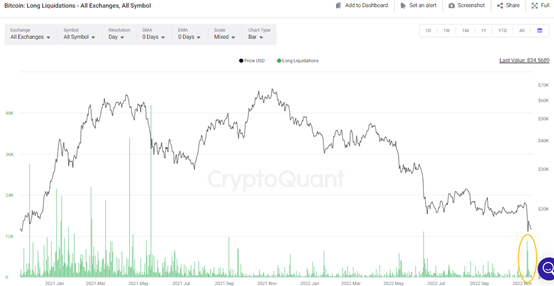
Длинные позиции общим объемом 10598 BTC были ликвидированы 8 ноября – это максимальный дневной объём ликвидаций в этом году. Таким образом, быки на какое-то время отступят, что может указывать на краткосрочный риск снижения цены BTC.

3. Процентная ставка финансирования BTC остается низкой

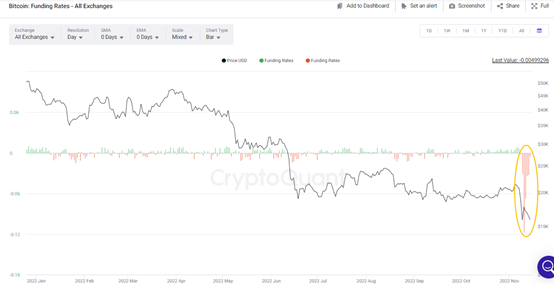
С 9 ноября процентная ставка финансирования BTC снова упала до -0,03. Недавняя ценовая тенденция с 9 по 13 ноября относительно слабая, или связана с активной продажей инвесторов. Поскольку купить BTC по низкой цене менее сложно, но покупка не привела к активному росту цены BTC, в результате чего корректировка BTC все еще не имеет признаков окончания. В краткосрочной перспективе BTC имеет тенденцию к формированию локальной поддержки в районе 16 000 долларов. С точки зрения уровня давления, мы можем сосредоточиться на уровне 17 246 долл. США, где проходит 78,6% Фибо.

4. Процентная ставка финансирования ETH также снизилась

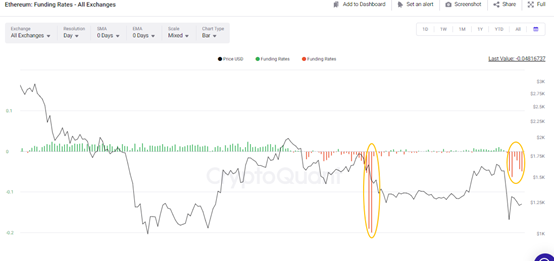
Процентная ставка финансирования ETH резко упала второй раз за год. Она оставалась ниже -0,04 в течение нескольких торговых дней. При этом, за последние 24 часа стоимость эфира в паре к биткоину увеличилась на 0,8%. Актив спустился к отметке 1175 долларов, от которой произошел разворот ценового движения, инструмент преодолел уровень сопротивления на отметке 1235 долларов, закрепление над которым позволит продолжить рост к следующему в район 1345 долларов.

5. TWT вырос на 80%

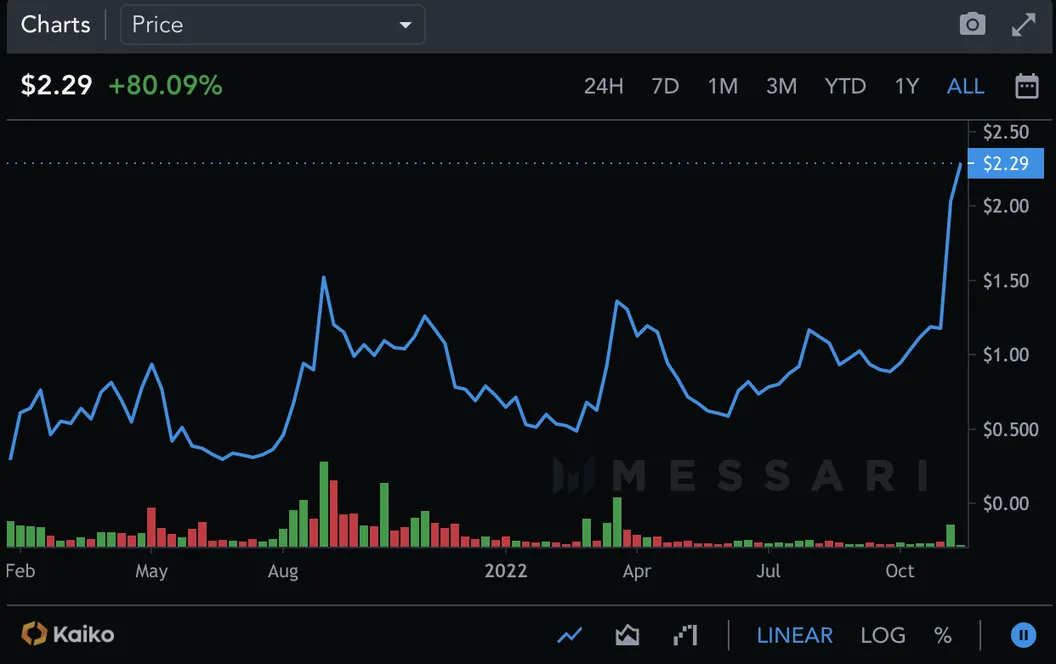
На фоне банкротства FTX и проблем ряда других централизованных платформ котировки TWT. Trust Wallet Token (TWT) – это официальный токен одноименного криптовалютно кошелька, позволяющий его владельцам участвовать в принятии решений, связанных с функциями и обновлениями приложения. По данным источника данных Messari, за последние 24 часа цна токена взлетел на 80% до рекордных 2,3 долл. США.

Дальнейшее движение цены данного токена в краткосрочной перспективе будет во многом определяться новостным фоном о том, как биржи справляются с нынешним кризисом.

Lecturas Relacionadas

Jensen Huang: Prompts are Becoming Obsolete, Loops are the New Paradigm

Jensen Huang, alongside AI leaders like Peter Norvig, Boris Cherny, and Andrew Ng, is advocating for a shift from "prompt engineering" to "loop engineering" as the new paradigm for AI development. Instead of manually crafting individual prompts, the focus is now on designing autonomous loops—systems where AI agents execute tasks, self-validate results, and iterate until completion without constant human oversight. A loop is a management framework that enables agents to operate independently. Key implementations are seen in Claude Code (with features like /loop, /goal, and /schedule) and OpenAI Codex, which employ multiple agents working in parallel within isolated environments. A core principle is the separation of roles: one agent (or model) performs the task, while an independent agent (or a smaller, separate model) validates the output to ensure objectivity. The article outlines a practical roadmap for implementing loops, starting with a "four-condition test" to assess suitability, building a minimal viable loop, and emphasizing critical pitfalls to avoid, such as lacking hard stop conditions or allowing loops to handle tasks requiring human judgment. This evolution is framed as the fourth major shift in AI interaction: from Prompt Engineering (crafting instructions) to Context Engineering (providing background information), then to Harness Engineering (building tool-enabled environments), and finally to Loop Engineering (creating self-sustaining systems). This progression reflects a consistent trend of increasing abstraction, moving human involvement from direct instruction to system design and rule-setting. The concept has academic roots in frameworks like ReAct, which formalized the "reason-act-observe" cycle. While loop engineering promises greater automation, experts caution about managing token costs and warn against outsourcing understanding—AI can assist, but deep problem comprehension remains essential.

marsbitHace 1 hora(s)

Jensen Huang: Prompts are Becoming Obsolete, Loops are the New Paradigm

marsbitHace 1 hora(s)

GPT Designs GPT

OpenAI has unveiled its first custom AI chip, Jalapeño, a move signaling a strategic shift beyond being a mere model company. While many see it as a challenge to NVIDIA, its core aim is to control the entire intelligent production pipeline—from models and chips to data centers and energy. The key driver is the evolving competitive landscape: model advantages are shrinking, while the computational gap in areas like cost-per-token, system throughput, and energy efficiency is becoming the true long-term barrier. Jalapeño is primarily an inference chip, targeting the massive and growing "inference tax"—the daily operational cost of generating tokens for services like ChatGPT and APIs. By designing its own hardware optimized for its specific workloads and future product roadmaps (even using AI to aid the chip design process), OpenAI aims to drastically reduce token generation costs and improve system efficiency. This creates a potential flywheel: better models help design better chips, which lower costs for running next-generation models, supporting more users and products, which in turn provides more data to refine future chips. The strategy mirrors Apple’s integrated approach, building a closed loop where hardware, software, and applications are co-optimized. In the long term, OpenAI is not trying to become the next NVIDIA (a supplier of "shovels" to all AI companies) but to own and operate the entire "mine"—selling the end product of intelligence itself. This move marks OpenAI's ambition to evolve from creating the smartest models to controlling the foundational infrastructure of AI production.

marsbitHace 1 hora(s)

GPT Designs GPT

marsbitHace 1 hora(s)

Trading

Spot
Futuros
活动图片