加密律师解读:FTX 申请破产重组,这意味着什么?

吴说区块链Publicado a 2022-11-12Actualizado a 2022-11-12

Resumen

2022 年 11 月 11 日,FTX 发布公告称 FTX 集团公司已根据《美国破产法》第11章在特拉华州地区执行破产程序。加密律师 @wassielawyer 发推解释这一举措对于 FTX 本身以及平台用户来说,意味着什么?

2022 年 11 月 11 日,FTX 发布公告称 FTX 集团公司已根据《美国破产法》第11章在特拉华州地区执行破产程序。加密律师 @wassielawyer 发推解释这一举措对于 FTX 本身以及平台用户来说,意味着什么?吴说编译整理如下:

“”

申请破产法第 11 章为 FTX 提供了自动暂停的保护。这意味着债权人在未经法院许可的情况下,不能强制执行债务要求或对任何证券或抵押品强制执行权利。它经常被用来提供“喘息的空间”。

“”

我和其他很多熟悉这种情况的律师从一开始就怀疑,任何与币安的交易都更有可能通过破产保护,而不是 “收购FTX”。这是因为当一家公司进入破产保护程序时,你可以挑选你想要的资产和负债。正如我此前所提到的,FTX 有一大堆东西是任何理智的收购者都不想要的。

“”

根据破产法第 11 章的规定,潜在的收购者可以浏览 FTX 的资产,只收购他们真正想要的资产。这些资产可以是(1)客户/商誉,(2)技术,(3)剩余的加密资产,(4)许可证,(5)可收回的贷款。

“”

所以,如果玩家真的考虑“救助” FTX 用户,那么在破产法第 11 章的程序中这么做更有意义,因为你可以不要任何 SBF 自己搞出来的烫手山芋。对用户来说,目前最好的情况是达成“ 类似 Voyager 的交易”,具有讽刺意味的是,这正是 FTX-Alameda 提出的方案:收购 FTX 的用户债务和目前的加密货币(可能还有其他“好”资产),同时把燃烧的火车残骸抛在后面(或暗指 FTX 公司主体运营)。

“”

包含 FTX US 很有意思,因为 FTX US、FTX Intl 和 Alameda 在 "结构上是分开的",而且根据 SBF 的说法,FTX US 的业务很好,完全没有受到 FTX Intl/Alameda 的影响。
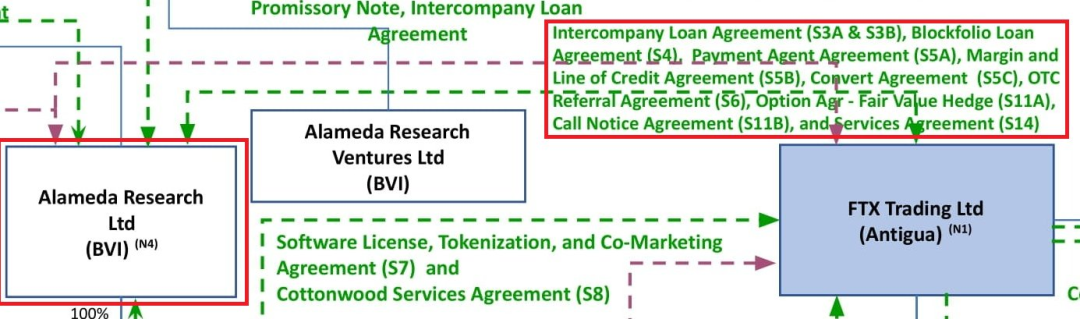
FTX US 与 SBF 对 FTX Intl/Alameda 所做的事情完全隔离开来。在我看来,这是用来美化任何可能的救助协议的 “皇冠上的宝石”。希望现在还是这样,但我们还是需要存疑,特别是在 BlockFi 现在已经暂停取款的情况下。BlockFi 最初表示,它的风险敞口是在 FTX US,而不是 FTX/Alameda 集团的其他部门,但可能比预期的要多。也许,尽管直接交易对手是 FTX US,但融资或信贷支持来自 Alameda/FTX Intl?我们只能祈祷 FTX US 仍有价值,而且据报道,SBF 在寻求出售 FTX US 以填补FTX Intl 漏洞时是真心的。

“”

实际上,我认为第 11 章在这件事上是件好事,因为它冻结了公司,停止了任何附带的诡计(巴哈马漏洞、为波场行便利等),给了它一些时间来真正找到合理的解决方案。同样令人欣慰的是,SBF 没有继续担任该公司 CEO(根据破产法第 11 章,他可以继续担任),而是把这个职位留给了专业人士。第 11 章是昂贵的,但替代方案(漏洞和有问题的交易)将消耗更多的价值。

“”

顺便说一下为波场行便这点,我不知道这是怎么合法的,这很可能给交易过程带来了很多复杂性,因为当时 FTX 已经资不抵债。对于孙宇晨来说,现在来安排这样的交易可能会好得多。

“”

那现在,我们可以预期些什么吗?明天马上能提现是不可能的,在不远的将来,如果达成类似Voyager 的交易,客户就可以开始提款。鉴于 FTX 的潜在监管责任和不正当交易,CZ 在破产保护之外收购 FTX 也几乎是不可能的。现在对他来说,买断客户的负债和清理 FTX 的资产并留下这些烂摊子是非常可行的。他也可以带着 Alameda 的贷款,寻求清算 Alameda 的资产,以收回他投入的任何资本投资。理想情况下,我们要避免对 FTX Intl 和 FTX US 的清算,因为用户的资金就在那里,这是最可怕的情况,我们几乎什么都收不到。

“”

无论如何,在我们听到 FTX 的任何消息之前,还需要一段时间。新的管理层可能正在掌握情况并考虑他们的选择。我们期待着阅读他们更详细的声明。在那之前,我们只能靠泄密、传言和谣言生存。

“”

另外,附上目前关于 FTX 的常见问答:

“”

Q:如果我持有 BTC\ETH 等而非美元稳定币,到时候偿还的是啥?

“”

A:这取决于过程中发生了什么。如果用户的债权被买断,收购方可能会以原生面额归还资金。如果没有,在清算中,就是归还美元了。

“”

Q:我还可以在 FTX 上交易吗?如果在其申请破产保护之前,我进行了交易,怎么办?

“”

A:鉴于该公司很可能正在确定截至申报日的资产和负债,目前的交易可能不算数。申请破产保护之前的交易可能就算数。

“”

Q:现在我应该怎么办?我需要请一名律师吗?应该再去告 FTX 吗?应该去搞 SBF 吗?

“”

A:除非你在 FTX 中有 8、9 位数的资产,否则我建议等待更多的信息出来。新的管理层可能需要时间来了解发生了什么,可能要等几周后才会有更新的消息。之后再决定下一步行动。对于 SBF,如果以后没有集体诉讼或代表人索赔,我将感到非常惊讶,如果人们没有得到补偿,我们先等等看。

Lecturas Relacionadas

Rented Faith: How Much of the Bitcoin ETF Inflows Is Real Money?

"Rented Conviction: How Much of Bitcoin ETF Flows Is Real Money" The weekly inflows into Bitcoin ETFs are often interpreted as a gauge of institutional belief. However, a significant portion of this activity is driven by a hidden arbitrage trade, not directional conviction. The core mechanism is a cash-and-carry arbitrage: traders buy spot Bitcoin (often via ETFs) while simultaneously shorting CME futures to lock in the price difference, or "basis." This delta-neutral trade is essentially an interest rate play. In weekly data, about half the fluctuation in ETF flows can be explained by new short positions added by leveraged funds (hedge funds), with a correlation of 0.70. Bitcoin's price movement in a given week shows no statistical power in predicting these flows. While this arbitrage trade drives weekly *volatility*, it is not the main component of the cumulative *stock*. Of the total ~$55 billion in net ETF inflows, the current net arbitrage position is only about $1 billion. The remainder is steady, directional buying averaging ~$400 million per week, which constitutes the vast majority of the accumulated "mountain" over two years. Thus, ETF flow data overstates the *volatility* of conviction, not its *level*. This arbitrage trade has been unwinding for nearly two years. Leveraged fund short positions peaked at ~$14 billion in late 2024 and have since declined to ~$4.5 billion. When the basis compresses to unprofitable levels, ETF inflows and short positions retreat together. Recent outflows should not be mistaken for a loss of faith but rather the routine unwinding of this rate trade. For Ethereum ETFs, the pattern is weaker. Accounting for staking yield makes the basis often negative, so neither strong conviction buying nor robust arbitrage supports its flows. To interpret ETF flows correctly, monitor the CME basis versus T-bill rates and leveraged fund net shorts. They reveal how much of the next "demand" headline is real. The real, patient buy-and-hold demand is what constitutes the enduring bulk of ETF assets.

marsbitHace 2 min(s)

Rented Faith: How Much of the Bitcoin ETF Inflows Is Real Money?

marsbitHace 2 min(s)

Soaring Over Tenfold Within the Year: The Frenzy Over SK Hynix Leveraged Products

South China Morning Post The leveraged ETF tracking SK Hynix has surged over tenfold year-to-date, fueled by intense market speculation on the memory chip sector. By June 22, the value of the 'South Korea 2x Long SK Hynix ETF' listed in Hong Kong had skyrocketed by more than 1,061% since the start of the year, while its asset size exploded over twenty times from the end of last year. The rally is driven by AI-driven demand for high-bandwidth memory (HBM), with SK Hynix recently sampling its next-generation HBM4E product. However, industry professionals warn of significant risks. Leveraged ETFs magnify both gains and losses. During a recent market correction, while the underlying SK Hynix stock fell 19.1%, its double-leveraged ETF dropped nearly 38%. Korean regulators noted that such products could theoretically lose 60% in a single day. Additionally, these ETFs face risks like time decay in volatile markets, liquidity spirals during mass redemptions, and extreme price dislocations from market-making failures, as seen in early June when an ETF moved opposite to its underlying stock. The trading is predominantly driven by retail investors, with institutional capital largely absent due to the products' high volatility. Analysts caution that with the semiconductor sector at elevated valuations and facing geopolitical and supply chain uncertainties, leveraged ETFs pose a substantial threat of amplified losses for uninformed investors.

marsbitHace 1 hora(s)

Soaring Over Tenfold Within the Year: The Frenzy Over SK Hynix Leveraged Products

marsbitHace 1 hora(s)

18 Months, Over 50x Surge: KIOXIA's Epic Comeback

KIOXIA, a NAND flash memory giant, staged a dramatic comeback driven by AI demand. After a period of significant losses, a failed merger, and missed HBM opportunities, its 2024 IPO began modestly. However, fueled by explosive demand for AI data storage, its stock price skyrocketed over 50 times within 18 months, making it Japan's most valuable company, surpassing Toyota. Its Q1 FY2026 profit guidance soared 30-fold year-over-year, with 2026 NAND capacity already sold out. Key to its success is its 3D NAND technology, BiCS FLASH. As the inventor of NAND, KIOXIA advanced its technology through generations, reaching over 200 layers by 2023. Key innovations include CBA (CMOS directly Bonded to Array), which separately manufactures control circuits and memory arrays for better performance, and OPS (On Pitch Select Gate) to increase density. The company is now developing high-capacity packages like an 8TB solution stacking 32 dies. Looking beyond NAND, KIOXIA is exploring 3D DRAM with its OCTRAM technology, using oxide semiconductor transistors for ultra-low leakage to reduce power consumption. This fundamental research differs from HBM and represents a long-term bet to extend its 3D expertise from NAND into future DRAM architectures. KIOXIA's story highlights how technological assets and shifting market cycles can rapidly transform a company's fortunes. While questions remain about sustaining growth beyond the current AI boom, its resurgence demonstrates that in semiconductors, being down does not necessarily mean being out.

marsbitHace 1 hora(s)

18 Months, Over 50x Surge: KIOXIA's Epic Comeback

marsbitHace 1 hora(s)

Market Trends in U.S. Stocks (June 23): Peak at Listing? SpaceX Loses Over $800 Billion in Three Days, Tech Stocks Experience Severe Internal Divergence

Stock Market Trends (June 23): Did SpaceX Peak at IPO? The company loses over $800 billion in market value in three days as a sharp divergence unfolds within the tech sector. SpaceX's post-IPO decline of over 20%, falling below its first-day close, reflects a swift market repricing. The catalyst is a clear shift in narrative from "AI platform potential" to concerns over rising capital costs, as its $8.57 billion IPO and subsequent $20 billion debt offering are earmarked for acquisitions and refinancing existing bridge loans rather than de-leveraging. While high-valuation tech stocks like Google, Meta, Amazon, and Microsoft faced pressure, Micron surged nearly 7% to a record high following a strategic supply deal with Anthropic for HBM and memory, highlighting robust, tangible demand in AI infrastructure. The broader market saw funds rotate into more defensive industrial and financial names. Macro factors included a dip in oil prices to a three-month low on news of a US-Iran framework deal, though logistical hurdles for resuming full Strait of Hormuz shipments remain. Key events ahead include Nvidia's shareholder meeting, Micron's earnings, and the May PCE inflation data. The latter will be crucial in determining whether the sell-off in high-valuation growth stocks, which appears to have just begun, will persist.

marsbitHace 1 hora(s)

Market Trends in U.S. Stocks (June 23): Peak at Listing? SpaceX Loses Over $800 Billion in Three Days, Tech Stocks Experience Severe Internal Divergence

marsbitHace 1 hora(s)

Trading

Spot
Futuros
活动图片