3 key Solana metrics explain exactly why SOL price is down

CointelegraphPublicado a 2022-10-20Actualizado a 2022-10-20

Resumen

The past eighty days have been moderately bearish for cryptocurrencies as the altcoin market capitalization declined by 16%.

The past eighty days have been moderately bearish for cryptocurrencies as the altcoin market capitalization declined by 16%. The downside movement can be partially explained by the U.S. Federal Reserve’s quantitative tightening, rising interest rates and halting of asset purchases. Although they are aimed at curbing inflationary pressure, the policy also increases the borrowing costs for consumers and businesses.
Solana's (SOL) downfall has been even more brutal, with the altcoin facing a 29% correction since August. The smart contract network focuses on low fees and speed, but the frequent outages highlight a centralization issue.

Solana/USD price (blue) vs. altcoin capitalization (orange). Source: TradingViewThe latest setback occurred on Sept. 30 after a misconfigured validator halted the blockchain transactions. A duplicate node instance caused the network to fork, as the remaining nodes could not agree on the correct chain version.
Recently, Solana's co-founder Anatoly Yakovenko placed his bets on Firedancer, a scaling solution developed by Jump Crypto in partnership with the Solana Foundation. Dubbed the long-term fix to the network outage problem, the mechanism should be ready for testing in the coming months.
On Oct. 11, Solana-based decentralized finance exchange Mango Markets was hit with an exploit of over $115 million. The attacker successfully manipulated the value of MNGO native token collateral, taking out "massive loans" from Mango's treasury.
Solana’s TVL and the number of active addresses dropped
Solana's primary decentralized application metric started to display weakness earlier in November. The network's total value locked (TVL), which measures the amount deposited in its smart contracts, broke to its lowest level since Sept. 2021 at 30.4 million SOL.

Solana network Total Value Locked, SOL. Source: Defi LlamaThere are other factors which influence Solana’s decrease in value and TVL. To confirm whether DApp use has effectively decreased, investors should also analyze the number of active addresses within the ecosystem.

Solana dApps 30-day on-chain data. Source: DappRadarOct. 19 data from DappRadar shows that the number of Solana network addresses interacting with decentralized applications declined in 13 of the top 20 DApps. The reduced interest was also reflected in SOL's futures markets.
Fixed-month contracts usually trade at a slight premium to spot markets because investors demand more money to withhold the settlement. Whenever this indicator fades or turns negative, this is an alarming, bearish red flag signaling a situation known as backwardation.

Solana 3-month futures annualized basis. Source: Laevitas.chThe above chart shows how Solana futures have been trading at a 7% discount versus the current spot price. This data is concerning since it signals a lack of interest from leverage buyers.
SOL will continue to underperform until it flips these metrics
It's difficult to pinpoint the exact reason for Solana's price drop, but it is clear that centralization issues, a decrease in the network's DApp use and fading interest from derivatives traders certainly played a role.
Should the sentiment flip, there should be an inflow of deposits, increasing Solana's TVL and the number of active addresses. Consequently, the above data suggest that Solana holders should not expect a price bounce anytime soon because the network health metrics remain under pressure.

Lecturas Relacionadas

Research Report Analysis: Is Intel Making a Comeback with Apple? Bernstein's Calculations Show the Right Direction, but the Price Is Already Overvalued

Bernstein analyst Stacy A. Rasgon published a report on June 18 regarding Intel, assessing the potential impact of recent political support for a US-based PC chip design and manufacturing collaboration between Apple and Intel. The report views this as a significant signal for the foundry landscape shift but concludes the initial financial contribution would be minimal. Key conclusions: 1) An Apple deal is seen as a small-scale "proof of concept." Even if Intel wins 40% of Apple's premium notebook chip orders (~5 million units/year), Bernstein estimates it would generate only about $500M in annual revenue and ~$0.03 EPS, negligible against Intel's ~$55B revenue. 2) Political encouragement is not equivalent to enforceable mandates. Winning orders ultimately depends on Intel demonstrating competitive technology (like its 18A node), cost, and reliable supply. 3) The path from validation to large-scale production involves significant challenges, capital investment, and time. Due to these uncertainties, Bernstein maintains a Market-Perform (Hold) rating with a $100 price target, implying potential downside from the ~$121.10 price at the report date. The analysis highlights the tension between near-term validation value—serving as a crucial trust signal for Intel's foundry ambitions and US supply chain resilience—and the long-term opportunity to attract larger cloud and AI chip customers. The investment thesis hinges on successful 18A execution and sustained policy support, not on immediate financial gains from Apple.

marsbitHace 23 min(s)

Research Report Analysis: Is Intel Making a Comeback with Apple? Bernstein's Calculations Show the Right Direction, but the Price Is Already Overvalued

marsbitHace 23 min(s)

27-Year Reign Ends: SK Hynix Market Cap Surpasses Samsung for First Time, an AI-Driven Reshuffle of Korean Chip Power

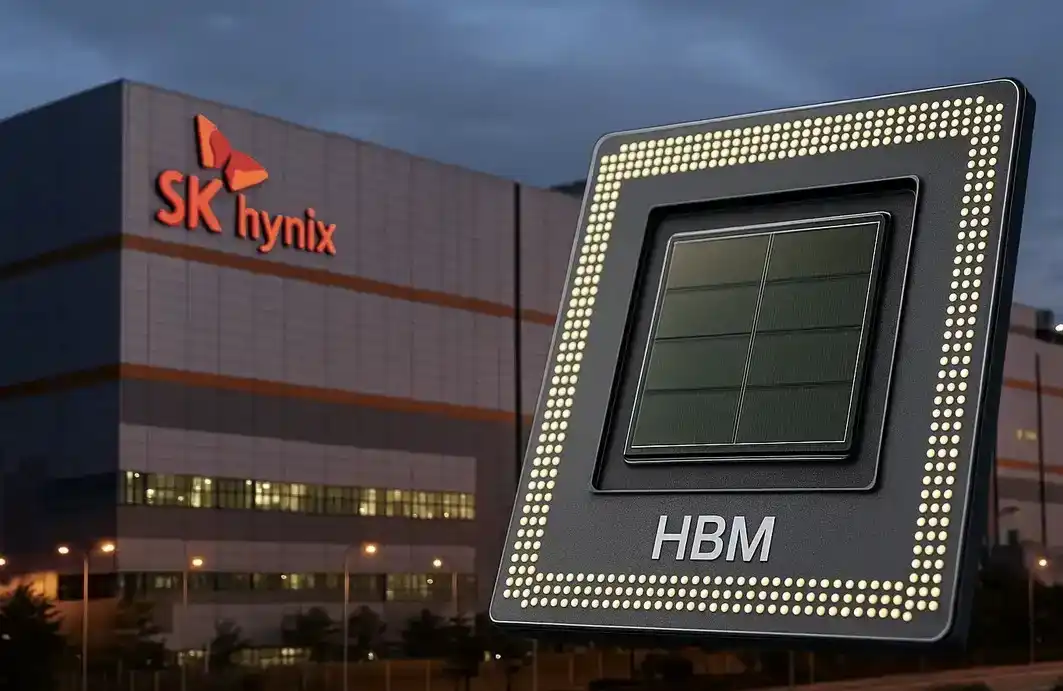
On June 22, 2026, SK Hynix made history by surpassing Samsung Electronics in market capitalization, ending Samsung's 27-year reign as South Korea's most valuable company. This dramatic reversal is powered by the AI boom and SK Hynix's dominant position in High Bandwidth Memory (HBM), a critical component for AI model training. Once a heavily indebted firm on the brink of bankruptcy, SK Hynix bet early on HBM, which has evolved from a niche product to essential AI infrastructure. It now commands a 59% share of the global HBM market. Its financial performance is staggering, with Q1 2026 net profit soaring nearly fourfold year-over-year to KRW 40.35 trillion, translating to over 2 billion RMB in daily net profit. HBM now drives roughly 40% of its revenue with exceptionally high margins. In contrast, Samsung, with its broad portfolio spanning memory chips, smartphones, and foundry services, has lagged in the HBM race while facing headwinds in other divisions. This shift signifies a deeper restructuring of South Korea's economy, moving from consumer electronics to AI-driven growth. However, the future remains competitive. With major capacity expansions planned industry-wide by 2028 and Samsung aiming to catch up in HBM technology, the new market leader cannot afford complacency. This event marks a pivotal moment in the global semiconductor industry's ongoing power realignment.

marsbitHace 34 min(s)

27-Year Reign Ends: SK Hynix Market Cap Surpasses Samsung for First Time, an AI-Driven Reshuffle of Korean Chip Power

marsbitHace 34 min(s)

Why Does 'AGI Godfather' Ben Goertzel Believe the Future of AI Relies on Blockchain?

Ben Goertzel, known as the "AGI Godfather," argues that the future of Artificial General Intelligence (AGI) must be built on blockchain to prevent its control by a few corporations or venture capital firms. He believes the core AGI code should be free and open-source, but that this alone is insufficient without a decentralized infrastructure to run it affordably. His blockchain project, SingularityNET, and the broader Artificial Superintelligence Alliance aim to create a user-owned, decentralized network for hosting and deploying AGI, contrasting with the closed models of companies like OpenAI and Anthropic. Goertzel criticizes the shift of other labs from open to closed development. He argues that while a closed path is simpler, an open, decentralized model—akin to Linux and the internet—is both possible and ultimately better for humanity. He envisions an "Agent economy" where individuals orchestrate teams of AI agents to perform tasks, including transactions, on an open network rather than corporate clouds. While his current model relies on cryptocurrency, plans include offering paid AI services to businesses with the decentralized blockchain as the backend. Goertzel predicts human-level AGI could arrive by 2029 and warns that a gap in understanding and access to AGI could drastically worsen inequality. The first test of his decentralized approach will be the upcoming release of the Agent Omega Claw.

Foresight NewsHace 1 hora(s)

Why Does 'AGI Godfather' Ben Goertzel Believe the Future of AI Relies on Blockchain?

Foresight NewsHace 1 hora(s)

Trading

Spot
Futuros
活动图片