80% of Oil Revenue Settled in USDT, Stablecoin Becomes Venezuela's 'Second Dollar'

比推Publicado a 2026-01-13Actualizado a 2026-01-13

Resumen

Summary: Venezuela's state oil company PDVSA now uses Tether's USDT stablecoin to settle approximately 80% of its oil export revenue, a strategic shift to circumvent U.S. sanctions. This move has cemented USDT's role as a "second dollar" in the country's economy. While it serves as a critical financial lifeline for citizens grappling with hyperinflation and the collapse of the bolivar, it also functions as a tool for the government to bypass traditional banking systems. The dual-use nature of stablecoins is highlighted: they provide essential stability for everyday transactions and remittances for the populace, yet simultaneously enable sanctioned entities to evade financial oversight. Despite the recent arrest of former President Nicolás Maduro, the pervasive use of USDT is expected to continue due to Venezuela's ongoing economic instability.

Author: Vicky Ge Huang, the Wall Street Journal

Compiled by: Peggy, BlockBeats

Original title: 80% of Oil Revenue Settled in Stablecoin, Venezuela Turns USDT into a Second Dollar


Editor's Note: From the "stablecoin of outlaws" to attempting to enter the U.S. compliant market, the role of USDT in Venezuela reveals the most real and contradictory aspect of stablecoins: they serve both as a settlement tool for oil exports to bypass sanctions and the traditional banking system, and as a financial lifeline for ordinary people to sustain their lives amid the collapse of the bolivar and capital controls.

When nearly 80% of a country's oil revenue is taken over by stablecoins, and even the elderly pay property fees with USDT, this is not only an extreme example of crypto penetrating the real economy but also a reminder that the core controversy of stablecoins has never been just about "how well they work," but rather their inherent "dual use": becoming a lifeline where institutions fail, and an escape route in regulatory vacuums.

Below is the original text:
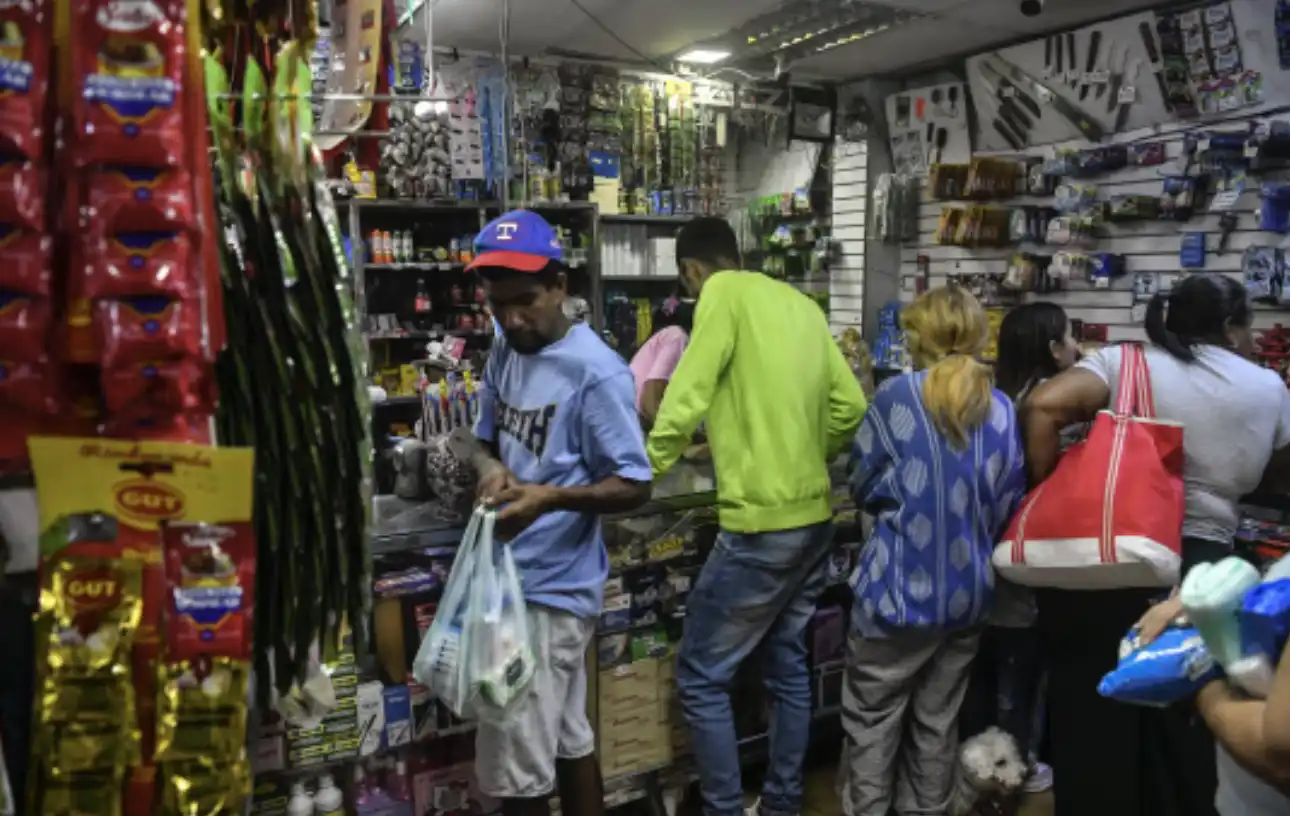
Nicolás Maduro has, in a way, contributed to USDT becoming the world's most dominant stablecoin. And now, as the former Venezuelan leader is held in a Brooklyn prison, the central role of this cryptocurrency in Venezuela's economy is once again in the spotlight.

For Venezuela's state-owned oil company, USDT has become a crucial tool to evade sanctions and is used as a payment currency for settling oil transactions. At the same time, Tether provides a financial "lifeline" for ordinary Venezuelans amid the ongoing devaluation of the national currency, the bolivar. Like most major stablecoins, USDT maintains a 1:1 peg to the U.S. dollar.

According to crypto industry analysts, Maduro's arrest and removal as Venezuela's president may not necessarily weaken USDT's presence in the country—after all, hyperinflation remains a long-term challenge. Meanwhile, the financial ties between Tether and Venezuela also place the cryptocurrency company in a critical position: it could become a key ally for U.S. authorities as they attempt to trace the whereabouts of funds allegedly embezzled by the Maduro regime.

Adam Zarazinski, CEO of crypto intelligence firm Inca Digital, stated: "The use of cryptocurrency in Venezuela will continue and is likely to expand in the short term. For ordinary users, it is a self-help mechanism to cope with economic failure and institutional collapse. But the same governance failures also create space for evading sanctions—if there is no credible improvement in governance, this outcome will not change."

Maduro pleaded not guilty to drug trafficking charges in his arraignment in U.S. federal court last week.

This new phase comes as cryptocurrency company Tether and its token—once stigmatized as the "stablecoin of choice for outlaws"—are seeking acceptance in the U.S. market. Last year, legislation was passed to pave the way for broader use of stablecoins, and Tether announced plans to launch a stablecoin open to U.S. investors. If realized, this would put it on a level playing field with competitors like Circle Internet Group and Paxos. Otherwise, Tether risks being marginalized in the U.S. market.

Just last week, U.S. Energy Secretary Chris Wright stated that the U.S. would indefinitely sell blocked Venezuelan oil. He said the proceeds from the sales would be deposited into accounts controlled by the U.S. government and eventually transferred to the Latin American country to "benefit the Venezuelan people." A senior Trump administration official also told The Wall Street Journal that the government is selectively rolling back some sanctions to allow crude oil and petroleum products to be transported and sold to global markets.

Faced with escalating U.S. sanctions in 2020, Venezuela's state-owned oil company Petroleos de Venezuela (PdVSA) began requiring payments in USDT to bypass the traditional banking system. Oil export revenues are settled either by directly transferring USDT to a wallet address or by converting cash proceeds into USDT through intermediaries.

This shift has been "transformative" for the country's oil economy. Venezuelan local economist Asdrúbal Oliveros recently stated in a podcast that, according to one estimate, nearly 80% of Venezuela's oil revenue is received in the form of stablecoins like USDT.

Subsequently, Tether cooperated with U.S. authorities to freeze dozens of wallets identified as being involved in Venezuelan oil trade. A Tether spokesperson did not respond to requests for comment.

Soon after the sanctions took effect, Tether, with the ticker USDT, also became a viable alternative currency for many Venezuelans. They use this stablecoin for cross-border remittances, savings preservation, and daily payments.

Tether CEO Paolo Ardoino said at a recent crypto industry conference: "Over the past 10 years, the Venezuelan bolivar has depreciated by 99.8% against the U.S. dollar, the Turkish lira by 80%, and the Argentine peso by about 94.5%. This simple chart alone is enough to explain why USDT has succeeded."

Mauricio Di Bartolomeo, a crypto entrepreneur born and raised in Venezuela, said that two months ago, his 71-year-old aunt called him because she needed to buy some USDT to pay her apartment's homeowners association fee.

"You pay the gardener, you pay for a haircut—everything is paid this way. Basically, you can use USDT for anything," said Di Bartolomeo, co-founder of crypto lending platform Ledn. "The penetration of stablecoins in Venezuela is so deep that even without regulated, compliant channels to buy and sell stablecoins, people still choose stablecoins over the local banking system."

Researchers say it was almost inevitable that USDT would play a major role in Venezuela—due to a lack of trust in the country's banking system and strict capital controls that limit access to physical dollars. A prime example: the Venezuelan government attempted to launch an oil-backed cryptocurrency called Petro in 2018, but it failed due to lack of public trust and international recognition.

Ari Redbord, global head of policy at blockchain analytics firm TRM Labs, said: "The issue is not with USDT itself, but with the inherent 'dual-use' reality of stablecoins." TRM Labs has partnered with Tether to track the use of stablecoins on the Tron blockchain in illegal activities. "They can be a lifeline for ordinary people and also serve as a tool to evade sanctions under pressure."



Original link: https://www.bitpush.news/articles/7602350

Preguntas relacionadas

QWhat percentage of Venezuela's oil revenue is settled using USDT, according to the article?

ANearly 80% of Venezuela's oil revenue is settled using USDT and other stablecoins.

QWhy has USDT become a crucial tool for Venezuela's state oil company, PDVSA?

AUSDT has become a crucial tool for PDVSA to circumvent international sanctions and bypass the traditional banking system for settling oil transactions.

QWhat dual role does USDT play in the Venezuelan economy, as described in the article?

AUSDT serves a dual role: it acts as a financial lifeline for ordinary citizens coping with hyperinflation and capital controls, while also being used as a tool to evade sanctions for oil exports.

QWhat was the outcome of the Venezuelan government's attempt to launch its own oil-backed cryptocurrency, the Petro?

AThe government's attempt to launch the Petro failed due to a lack of public trust and international recognition.

QHow is Tether, the company behind USDT, attempting to gain legitimacy in the US market?

ATether is attempting to gain legitimacy in the US market by announcing plans to launch a stablecoin that will be open to US investors, following new legislation that paves the way for wider stablecoin use.

Lecturas Relacionadas

Cerebras IPO: A $48.8 Billion Valuation—Is the 'Nvidia Challenger' a Bubble or a New King?

Cerebras Systems, positioning itself as an NVIDIA challenger, is going public with a $48.8 billion valuation despite several underlying paradoxes revealed in its S-1 filing. While 2025 revenue grew 76% to $510M and GAAP net income was $237.8M, this profitability relies heavily on a one-time, non-cash accounting gain. Adjusting for this, the company's non-GAAP net loss actually widened to $75.7M. Furthermore, customer concentration remains extreme: 86% of 2025 revenue came from two Abu Dhabi-based entities, MBZUAI (62%) and G42 (24%). Its landmark deal with OpenAI, valued at over $20 billion, creates a complex, nested relationship where OpenAI is simultaneously a major customer, lender, warrant holder, and strategic partner with exclusivity clauses. Cerebras's technical edge in latency-sensitive AI inference is real, with its wafer-scale chip outperforming competitors in benchmarks. However, this advantage is confined to a specific niche, not the broader AI training market dominated by NVIDIA's CUDA ecosystem. With a 95x price-to-sales ratio, the valuation demands flawless execution of the OpenAI contract and massive future revenue growth. Key long-term risks include intense competition from giants like NVIDIA and AMD, a dual-class share structure granting insiders near-total voting control, and ongoing geopolitical uncertainties regarding export controls. The IPO is a pivotal capital markets event for AI infrastructure. As an investment, it represents a high-risk, high-reward bet on the "inference-first" narrative and Cerebras's ability to dominate its specialized segment, underpinned by a valuation that highlights the current fervor in the sector.

marsbitHace 26 min(s)

Cerebras IPO: A $48.8 Billion Valuation—Is the 'Nvidia Challenger' a Bubble or a New King?

marsbitHace 26 min(s)

What Happens to Ethereum Developer Tools After the Grants Run Out?

On February 27th, the Ethereum Foundation (EF) announced Project Odin, a structured sustainability support program designed for a select group of strategic, previously grant-funded teams. Unlike a standard grant, Odin offers a long-term advisory mechanism focused on helping these teams establish credible, sustainable paths within a two-year framework, thereby reducing long-term dependence on single funding sources. The program addresses a critical post-grant challenge: how essential public goods, especially major developer tools, can achieve financial sustainability beyond initial funding. While grants from EF and programs like Gitcoin or RetroPGF remain vital for startups and research, they often fall short for mature, widely-used infrastructure. Tools like compilers, languages, and network stacks are deeply embedded but struggle with monetization, trapped between being too foundational to lose and too public to generate natural revenue. Project Odin provides teams with a dedicated Strategic Advisor to guide them through a three-phase process: 1) analyzing current funding and realistic options, 2) validating potential paths with stakeholders, and 3) executing plans, which may include crafting support contracts, service agreements, or other recurring revenue models. The first pilot participant is Vyper, a critical smart contract language for the EVM, highlighting the need for sustainable models for core infrastructure. The initiative reframes the public goods conversation from "who should be funded" to "how do already-proven teams avoid perpetual funding crises?" It encourages ecosystem participants—protocols and projects that depend on these tools—to view sustainable support not just as charity, but as essential risk management for their own operational supply chains.

marsbitHace 56 min(s)

What Happens to Ethereum Developer Tools After the Grants Run Out?

marsbitHace 56 min(s)

MARA Reports Q1 Revenue Below Expectations, Net Loss of $1.3 Billion, Stock Plunges After Hours

Bitcoin mining firm MARA Holdings reported disappointing Q1 2024 results, causing its stock to erase all daily gains and fall 3.44% in after-hours trading. Revenue dropped 18% year-over-year to $174.6 million, missing Wall Street estimates of $192.7 million. The company posted a net loss of $1.3 billion, a significant increase from a $533.4 million loss a year ago, primarily driven by unrealized losses on its holdings of 38,689 Bitcoin, which depreciated in value during the quarter. MARA also sold over 15,100 BTC in late March to repurchase debt at a discount. The broader mining environment remains challenging due to a 35% decline in Bitcoin's price from its all-time high and a nearly 30% increase in mining difficulty over the past year. MARA's market cap ranking among U.S. miners has slipped to seventh. Critically, the company announced a strategic pivot away from Bitcoin mining expansion. It stated it has no plans to purchase new mining equipment and is fully transitioning toward AI data centers. Its strategy involves retrofitting existing mining sites for AI and high-performance computing (HPC) and leveraging its recent $1.5 billion acquisition of Long Ridge Energy & Power, a gas-fired power plant and data center. This infrastructure could eventually support 600 MW of AI compute capacity, allowing MARA to redeploy up to 90% of its non-custodial mining power for AI and IT workloads.

marsbitHace 56 min(s)

MARA Reports Q1 Revenue Below Expectations, Net Loss of $1.3 Billion, Stock Plunges After Hours

marsbitHace 56 min(s)

Trading

Spot
Futuros
活动图片



