Polygon’s QuickSwap Considers Token Split, Why It Could Be Bullish For QUICK

newsbtcPublicado a 2022-03-09Actualizado a 2022-03-09

Resumen

On a positive trajectory over the last 24 hours and moving along with the general sentiment in the market, Polygon decentralize exchange (DEX) QuickSwap could boost its fundamentals. According to...

On a positive trajectory over the last 24 hours and moving along with the general sentiment in the market, Polygon decentralize exchange (DEX) QuickSwap could boost its fundamentals. According to a recent announcement, the project could split its native governance token QUICK.
Dubbed the “most important governance discussion to date” on the platform’s official social media channel, a fierce debate has taken place between Polygon users. This process is critical, and could precede a voting on the token split, depending on its result.
The main argument behind the proposal is supported by the potential expansion of the Polygon token, QUICK, supply. The project is currently planning changes on its tokenomics. A change in QUICK’s supply stands as the first and one of the most important.
If approve, the community will vote on possibly splitting the Polygon token on a 1:100 or 1:1,000 relation. The team behind QuickSwap clarified the following:
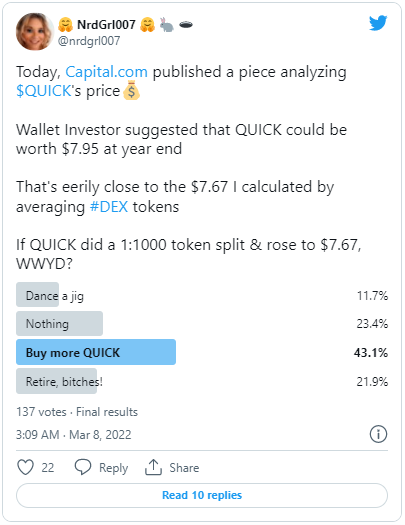
This would mean that for every 1 QUICK you now hold, you would hold 100 QUICK or 1000 QUICK after the split. QUICK’s maximum supply would increase from 1 million to 100 million or 1 billion.
The split would attempt to “open up” QuickSwap to new users, particularly those with intention to invest but that consider QUICK “too expensive” or with “small chances” of future appreciation. The proposal has managed to secure support from a portion of QUICK holders, others remain skeptical.
5/ One concern is that the split could be deemed a taxable event💸
💰We know how much dragons value their treasure & wouldn't want you to part with yours
🪙We aren't tax experts & can't give tax advice, but stock splits aren't taxable events & token splits shouldn't be either
— QuickSwap (@QuickswapDEX) March 5, 2022
QuickSwap’s Co-Founder Roc Zacharias commented the following on the potential implications of the token split on the DEX ecosystem, and its capacity to improve the platform’s components, such as its treasury:
If this split DOES work out like we think it might, it could strengthen the treasury (which is owned by all of you the community, it could increase reward value which can increase liquidity and indirectly volume etc, and most importantly, it can bring new users! Please think hard about this.
Polygon QuickSwap Token Split And The Polkadot Case
Many users, including the team behind the Polygon decentralize exchange platform, have compared this potential token split with the stock market. In the legacy financial system is “common” for companies to issue more stocks via a similar process addressing a concept called Unit Bias.
This idea indicates, as explained by the team behind QuickSwap, that an investors might be willing to own “more of a less scarce asset”. In the crypto industry, other projects have conducted token splits in the past often leading to price appreciation.
The team behind token swap mentioned Polkadot (DOT), as an example. Via their official Twitter handle, QuickSwap said:
(…) when Polkadot did a 1:100 redenomination, $DOT rose from a sub-100 market cap to the 7 position. More recently, Gains Network did a 1:1000 token split & migrated from GFARM2 to GNS. In dismal conditions, GNS did a 6x.
Remains to be seen if history will repeat itself with QUICK. However, Polygon, and second layer solution on Ethereum, seem to be attracting a lot of attention as they provide users with a cost efficient and more scalable gateway into the DeFi sector.
At the time of writing, Polygon (MATIC) trades at $1.43 with a 1.7% profit in the last day.

Polygon MATIC MATICUSDT QuickSwap

MATIC trends to the downside on the daily chart. Source: MATICUSDT Tradingview Tags:

Lecturas Relacionadas

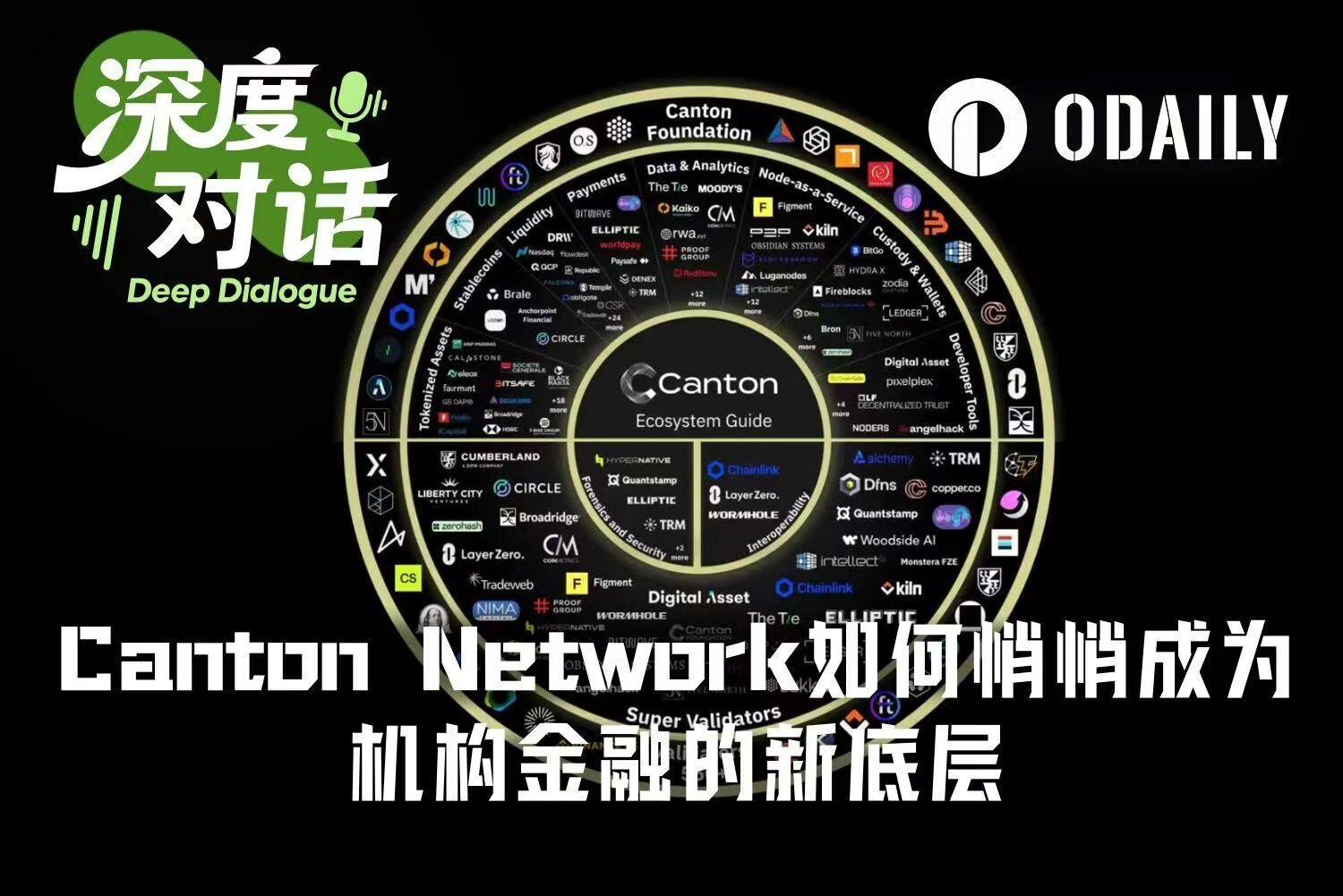
Putting Markets On-Chain: Canton Network Quietly Becoming the New Backbone for Institutional Finance

Canton Network: A New Institutional Financial Infrastructure Emerges Visa's rapid three-day approval as a super-validator on Canton Network in March 2026 marks a significant institutional endorsement. Unlike public blockchains like Ethereum, which prioritize transparency, Canton is designed for regulated financial institutions. Its core innovation is built-in data visibility control, where transaction details are only visible to direct participants. This enables institutions like Goldman Sachs, JPMorgan, and DTCC to conduct private, secure business on-chain without exposing sensitive strategies or positions. Canton, developed by Wall Street-focused Digital Asset, emphasizes slow, methodical development to meet stringent institutional requirements. Current on-chain activity, exceeding $9 trillion monthly, involves real balance-sheet operations like tokenized repos, treasury settlements, and collateral movement—not retail speculation. Key applications include JPMorgan's deposit token (JPM Coin), DTCC's U.S. Treasury tokenization, and Visa-enabled atomic settlement, aiming to synchronize asset delivery and payment instantly. The network's CC token is a utility asset, with value tied to real financial activity volume. It features no pre-mine or VC allocations, aligning with institutional preferences for transparency. Canton's 3–5 year vision is to become an "invisible" foundational layer for global finance—facilitating real-time cross-border capital flows, institutional stablecoin settlement, and native on-chain operations for major asset classes. While regulatory harmonization and legacy system integration remain challenges, Canton represents a pragmatic shift towards embedding markets themselves into blockchain infrastructure.

Odaily星球日报Hace 13 min(s)

Putting Markets On-Chain: Canton Network Quietly Becoming the New Backbone for Institutional Finance

Odaily星球日报Hace 13 min(s)

USDC Begins Nested Issuance, Coinbase Launches Custom Stablecoin Branding Service

Coinbase has launched its "Custom Stablecoins" platform, enabling businesses to offer branded stablecoins. The first client is Flipcash, a social payments app, which has introduced USDF. USDF is a Solana-based stablecoin, pegged 1:1 to USDC, and is designed to serve as a stable pricing and settlement unit for Flipcash's user-created community currencies. This move shifts the focus of stablecoins from being standalone assets or investment products to becoming embedded payment and settlement components within broader applications. For businesses like Flipcash, the core need is not to become a stablecoin issuer, but to integrate stable, reliable digital cash functionality—handling pricing, payments, and settlements—without managing the complex underlying infrastructure of issuance, reserves, on-chain contracts, fiat on-ramps, and compliance. Coinbase's platform provides this infrastructure as a service, positioning the exchange as a stablecoin infrastructure provider. While USDC remains the foundational reserve asset, the branded token (e.g., USDF) offers applications a tailored, user-facing financial tool. This development highlights a potential path for stablecoins to become ubiquitous backend utilities in social, gaming, and e-commerce applications, though it also brings significant regulatory and operational complexities associated with handling real user funds.

链捕手Hace 2 hora(s)

USDC Begins Nested Issuance, Coinbase Launches Custom Stablecoin Branding Service

链捕手Hace 2 hora(s)

Trading

Spot
Futuros

Artículos destacados

Cómo comprar SNT

¡Bienvenido a HTX.com! Hemos hecho que comprar Status Network Token (SNT) sea simple y conveniente. Sigue nuestra guía paso a paso para iniciar tu viaje de criptos.Paso 1: crea tu cuenta HTXUtiliza tu correo electrónico o número de teléfono para registrarte y obtener una cuenta gratuita en HTX. Experimenta un proceso de registro sin complicaciones y desbloquea todas las funciones.Obtener mi cuentaPaso 2: ve a Comprar cripto y elige tu método de pagoTarjeta de crédito/débito: usa tu Visa o Mastercard para comprar Status Network Token (SNT) al instante.Saldo: utiliza fondos del saldo de tu cuenta HTX para tradear sin problemas.Terceros: hemos agregado métodos de pago populares como Google Pay y Apple Pay para mejorar la comodidad.P2P: tradear directamente con otros usuarios en HTX.Over-the-Counter (OTC): ofrecemos servicios personalizados y tipos de cambio competitivos para los traders.Paso 3: guarda tu Status Network Token (SNT)Después de comprar tu Status Network Token (SNT), guárdalo en tu cuenta HTX. Alternativamente, puedes enviarlo a otro lugar mediante transferencia blockchain o utilizarlo para tradear otras criptomonedas.Paso 4: tradear Status Network Token (SNT)Tradear fácilmente con Status Network Token (SNT) en HTX's mercado spot. Simplemente accede a tu cuenta, selecciona tu par de trading, ejecuta tus trades y monitorea en tiempo real. Ofrecemos una experiencia fácil de usar tanto para principiantes como para traders experimentados.

99 Vistas totalesPublicado en 2024.12.12Actualizado en 2025.03.21

Cómo comprar SNT

Discusiones

Bienvenido a la comunidad de HTX. Aquí puedes mantenerte informado sobre los últimos desarrollos de la plataforma y acceder a análisis profesionales del mercado. A continuación se presentan las opiniones de los usuarios sobre el precio de SNT (SNT).

活动图片