Crypto winter teaches tough lessons about custody and taking control

CointelegraphPublicado a 2022-09-02Actualizado a 2022-09-02

Resumen

Many agree that digital assets should be held in hard wallets, but recent actions in the EU and the U.S. may make that more difficult, not easier.

The crypto winter has pumped new life into the adage “Not your keys, not your coins,” particularly after the collapse of some high-profile enterprises like the Celsius Network, whose funds were frozen in June. Just last week, Ledger CEO Pascal Gauthier hammered home the point further, warning: “Don’t trust your coins and your private keys to anyone because you don’t know what they’re going to do with it.”

The basic idea behind the adage, familiar to many crypto veterans, is that if you don’t personally hold your private keys (i.e., passwords) in an offline “cold wallet,” then you don’t really control your digital assets. But, Gauthier was also framing the issue in a larger context as the world moves from Web2 to Web3:

“A lot of people are still in Web2 [...] because they want to stay in the matrix where they’re being controlled, because it’s easier, it’s you know just click yes yes yes and then someone else is going to deal with your problems.”

But, giving away control won’t set you free. “Taking responsibility is how you become free.”

Admittedly, Gauthier has a self-interest here — Ledger is one of the world’s largest cold-wallet providers. Then, too, he may have been stating the obvious. In May, Coinbase acknowledged in an SEC 10-Q filing that if it ever went bankrupt, customers that entrusted their digital assets to the exchange “could be treated as our general unsecured creditors,” i.e., could find themselves standing at the back of the creditors’ line in bankruptcy proceedings.

“It doesn’t matter that the exchange’s contract with you says you ‘own’ the currency,” Georgetown University law professor Adam Levitin told Barron's at the time, “That’s not determinative of what will happen in bankruptcy.”

But, Gauthier’s statement raises other questions, too. This notion of seizing “control” of one’s keys and coins could become more complicated given recent regulatory proposals in Europe, as well as a key government agency interpretation in the United States. Moreover, as the world transitions from Web2 to Web3, is it really so certain that centralized solutions like Coinbase and others might still not have an important role to play with regard to custody and, yes, even privacy?

Learning the hard way

Generally speaking, it appears that consumers still do not understand the potential risks when they turn their crypto private keys over to centralized platforms and exchanges.

“It’s been made abundantly clear that even the most seemingly trustworthy custodians can still make grave missteps with user funds,” Nick Saponaro, CEO at the Divi Project, told Cointelegraph. “The promise of self-sovereign ownership of your money is immediately obliterated when users hand over their private keys to any third-party, regardless of that third-party's genuine intent.”

“All crypto users should learn and be responsible for the security of their own coins by storing them securely on hardware wallets,” Bobby Ong, co-founder and chief operating officer at CoinGecko, told Cointelegraph.“However, this is not a popular move because for most crypto users, it is probably more convenient to store them on centralized exchanges.”

Still, a centralized exchange (CEX) can be useful at times and maybe we should expect to live in a hybrid cryptoverse for a while, with both cold and hot wallets, centralized and decentralized exchanges (DEXs).

“There is a case for using centralized exchanges for sending funds to others to not doxx your crypto addresses,” said Ong. “This is because when you send a transaction to someone else, they will know your address and can see your balance, historical transactions, and all future transactions.”

Indeed, Ong tweeted recently: “The basic advice now is to have multiple wallets for various purposes and to fund these wallets using centralized exchanges. This works well but it’s not good enough. If you use FTX or Binance, Uncle Sam and Changpeng Zao will know all your wallets and they can profile you instead.”

Continued Ong, “To get full privacy for your new wallet, a service like Tornado Cash is needed. Granted, it’s probably more expensive, slow and tedious,” but having such an option would ensure privacy and make crypto behave more like cash, he added.

Justin d’Anethan, institutional sales director at Amber Group, agreed that trade-offs remain. “You can’t do as many sophisticated trades from a private wallet as you can on a centralized platform, or at least not as easily and efficiently,” he told Cointelegraph. Large, sophisticated traders will always need to have some of their holdings on exchanges to optimize returns. In his personal case:

“I hold a chunk of my core holdings in private wallets, but I definitely hold some assets on centralized platforms for yield generation, some rebalancing, etc.”

Corporate entities, especially, may not want to handle the operational side of a trade, including investment and custody, and they may also want to interact with a recognized and established centralized entity that can perform due diligence. Also, corporations may want to have an identifiable and liquid entity to sue “in the event of an error,” added d’Anethan.

On the retail side, setting up a private wallet can still be daunting, which may explain why so many entrust private keys to CEXs and the like, even if it isn’t always the best way. As d’Anethan told Cointelegraph:

“You might not know how — or have the motivation — to buy a private wallet, set it up to hold your private key and bear the risk of losing it. So, the path of least resistance wins.”

Do regulators still not “get it?”

Elsewhere, self-hosted wallet providers may soon face tough regulations in Europe if and when the EU’s Transfer of Funds Regulation (TFR) proposal takes hold. It could overturn this whole notion about taking control of one’s private keys and coins.

“Effectively, it would amount to a ‘de facto’ ban on self-hosted wallets by enforcing to connect personal identities with self-hosted wallets,” wrote Philipp Sandner and Agata Ferreira.

Mikolaj Barczentewicz, associate professor at the United Kingdom’s University of Surrey, told Cointelegraph:

“The TFR proposal doesn’t ban self-custodied wallets, but it does incentivize service providers to treat them as ‘high risk’ for money laundering.[…] It may become practically very difficult to transact using self-hosted wallets.”

Defenders of the TFR might respond that it’s not regulators’ fault that businesses are not better at risk-based analysis and at distinguishing situations of genuinely high risk of criminality, but “I don’t think that answer works,” continued Barczentewicz. “It shows a lack of understanding — or care — for the fact that regulations need to be designed to be workable in the real world. The EU is basically saying to businesses: ‘You figure it out.’”

However, the biggest threat to self-custodied wallets in Barczentewicz’s view “is something like the scenario we’ve been watching in reaction to Tornado Cash being sanctioned by the U.S.: Businesses are afraid and engaging in over-compliance, doing more than the law requires.”

As reported, on Aug. 8, the United States Department of the Treasury’s Office of Foreign Assets Control (OFAC) issued legal sanctions against digital currency mixer Tornado Cash for its role in laundering over $455 million worth of cryptocurrency stolen by the North Korean-linked hacking organization Lazarus Group.

According to data analytics firm Chainalysis, the obligations of non-custodial crypto wallet providers are now unclear under OFAC’s recent designation: “An extreme interpretation could mean that non-custodial wallet providers might also need to block transfers to the sanctioned addresses, though this would be unprecedented.”

At a minimum, government actions like these suggest that cold-wallet solutions to help crypto users take control of their private keys could become more problematic — not less — at least in the immediate future.

An education imperative?

Overall, does the crypto industry face an education challenge here i.e., to explain the importance of cold storage and individual “responsibility” to both individuals and policymakers?

“I think we have to be honest with ourselves,” answered Saponaro. “Yes, education can help some individuals avoid the pitfalls we’ve witnessed in recent months, but most people will not read every article, watch every video or take the time to educate themselves.” Developers have a responsibility to develop products that guide users “into learning by doing.”

“The crypto community, including in the EU, can still do much more to educate policymakers,” added Barczentewicz. “But this education cannot be limited to just explaining how crypto works. It is a mistake to think that once policymakers ‘get it,’ they will come up with sensible rules on their own.”

The crypto community needs to be proactive in proposing detailed technical and regulatory notions of how to fight crime and malfeasance without giving up key benefits of crypto, like self-custody, he said. “It is not enough just to mention buzzwords like ‘zero knowledge proofs’ and then expect the policymakers to do the hard work.”

Is taking “control” really important?

What about Gauthier’s larger point that people simply have to learn to take "responsibility" for their assets — digital and otherwise — because “taking responsibility is how you become free?”

“Crypto is a game-changer because we now have full control of our money without the need to trust any third-party,” said Ong. That said, some people “may choose to pass on the responsibility and trust a third-party custodian who may be better equipped to store their coins safely — and that is acceptable too,” he told Cointelegraph.

“In the crypto space, you typically have very binary opinions about how things can grow from here. I think the truth is somewhat in the middle,” said d’Anethan, adding:

“One is delusional if one thinks every individual and corporate is going full DeFi tomorrow. But, one would also be delusional if one thinks the growing digital world will forever stay within the Web2 infrastructure.”

What may be best is to have both centralized and decentralized platforms, “so that the user base can gradually shift where it sees the most value — however long that takes,” he said.

Criptos en tendencia

Lecturas Relacionadas

How Does Codex Use a Computer? Three Entry Points and Permission Boundaries

This article explains the three primary methods for Codex to interact with a computer, each with distinct use cases, permission boundaries, and trust levels. **1. Computer Use:** This offers the broadest access, allowing Codex to visually control and interact with the graphical user interface of authorized macOS/Windows apps, system settings, and even iOS simulators. It's ideal for tasks lacking APIs or structured tools, such as operating legacy software or multi-app workflows. However, it's the slowest method and has the widest permission scope, requiring careful supervision for sensitive actions. **2. Chrome Extension:** This grants Codex access to the user's logged-in Chrome browser state, including cookies, profiles, and open tabs. It's best for tasks requiring user identity across websites like Gmail, LinkedIn, Salesforce, or internal dashboards. Its key advantage is multi-tab control for complex workflows. While more powerful for browser-based tasks than Computer Use, it carries higher sensitivity as actions are performed under the user's identity. **3. In-App Browser:** This is a browser isolated within the Codex thread, separate from the user's personal browsing data. It excels in web development and debugging scenarios—previewing local servers, testing responsive layouts, or annotating designs directly on the page. Its isolation is a strength for development but a limitation for tasks requiring login sessions. The core principle is to choose the narrowest, safest, and most structured interface for the task. Use plugins or MCPs first, resort to visual control (Computer Use) only for GUI-dependent tasks, employ the Chrome extension for identity-reliant browser work, and prefer the In-App Browser for isolated development. **Appshots** are clarified as a fourth, complementary tool for *inputting* context—capturing a screenshot of a window to point Codex to something—rather than a method for Codex to *act*. Together, this layered approach highlights a key to AI agent productization: not granting unlimited permissions, but constraining them within clear boundaries for specific tasks while preserving user oversight.

marsbitHace 34 min(s)

How Does Codex Use a Computer? Three Entry Points and Permission Boundaries

marsbitHace 34 min(s)

The "Iron Rule" of Chip Equipment Is Being Broken

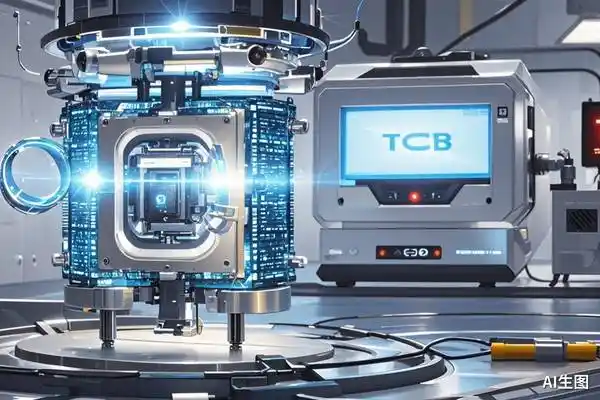
For years, the semiconductor equipment industry followed an unwritten "iron rule": suppliers offered steep discounts for new tool introductions (Design-in) and faced consistent price pressure during repeat orders, especially during market downturns. This long-standing buyer's market dynamic is now being upended. Recently, SK Hynix's primary equipment suppliers have reportedly requested a 3-4% price *increase*, a nearly unprecedented move. This shift is driven by a severe supply-demand imbalance fueled by the AI compute boom. Securing equipment has become an urgent arms race as chipmakers' expansion speed dictates their ability to fulfill massive AI chip orders. Key areas feeling the strain include: **TCB (Thermal Compression Bonding) Equipment:** Demand is exploding, driven by the simultaneous needs of HBM4 memory stacking, AI chip Chip-on-Substrate (C2S), and logic Chiplet Chip-on-Wafer (C2W) packaging. Players like Hanmi Semiconductor, Hanwha Semitech, and ASMPT are receiving major orders. While hybrid bonding is seen as the future, TCB remains the pragmatic choice for HBM4 mass production, with its lifecycle extended by relaxed specifications and ongoing technological upgrades. **Test Equipment Bottlenecks:** Ironically, AI-driven shortages are now crippling test equipment manufacturing. Critical components like FPGAs, Driver ICs, and CPUs face severe shortages and extended lead times (up to 52 weeks for FPGAs), as AI data center and server vendors prioritize supply. This creates a paradoxical cycle: AI chip shortages drive fab expansion, which requires more test equipment, whose production is delayed because its key parts are diverted to make AI chips. The industry is entering a broad, AI-powered upcycle. SEMI forecasts global semiconductor equipment sales to hit a record $156 billion by 2027, fueled by investment in advanced logic/foundry, HBM-driven DRAM, and advanced packaging (like CoWoS). Major players like TSMC, SK Hynix, and Micron are aggressively ramping capital expenditure. In conclusion, leading equipment vendors are no longer just selling tools; they are selling the critical capability to deliver AI-era capacity. Pricing power is shifting decisively to those with indispensable technology in key process nodes like advanced logic, HBM, and advanced packaging, rewriting the industry's traditional power structure.

marsbitHace 47 min(s)

The "Iron Rule" of Chip Equipment Is Being Broken

marsbitHace 47 min(s)

Trading

Spot
Futuros

Artículos destacados

Qué es BITCOIN

Entendiendo HarryPotterObamaSonic10Inu (ERC-20) y Su Posición en el Espacio Cripto En los últimos años, el mercado de criptomonedas ha sido testigo de un aumento en la popularidad de las monedas meme, capturando el interés no solo de los comerciantes, sino también de aquellos que buscan compromiso comunitario y valor de entretenimiento. Entre estos tokens únicos se encuentra HarryPotterObamaSonic10Inu (ERC-20), un proyecto intrigante que mezcla referencias culturales en el tejido de las criptomonedas. Este artículo profundiza en los aspectos clave de HarryPotterObamaSonic10Inu, explorando sus mecanismos, ethos impulsado por la comunidad y su relación con el paisaje cripto más amplio. ¿Qué es HarryPotterObamaSonic10Inu (ERC-20)? Como su nombre sugiere, HarryPotterObamaSonic10Inu es una moneda meme construida sobre la blockchain de Ethereum, clasificada bajo el estándar ERC-20. A diferencia de las criptomonedas tradicionales que pueden enfatizar la utilidad práctica o el potencial de inversión, este token prospera en el valor de entretenimiento y la fuerza de su comunidad. El proyecto tiene como objetivo fomentar un entorno donde los usuarios comprometidos puedan reunirse, compartir ideas y participar en actividades inspiradas por diversos fenómenos culturales. Una característica notable de HarryPotterObamaSonic10Inu es su cero impuestos en las transacciones. Este atractivo elemento tiene como objetivo incentivar el comercio y la participación comunitaria, sin cargos adicionales que puedan disuadir a los comerciantes de pequeña escala. El suministro total de la moneda está establecido en mil millones de tokens, una cifra que marca su intención de mantener una circulación sustancial dentro de la comunidad. Creador de HarryPotterObamaSonic10Inu (ERC-20) Los orígenes de HarryPotterObamaSonic10Inu están algo envueltos en misterio; los detalles sobre el creador siguen siendo desconocidos. El desarrollo de este token carece de un equipo identificable o de un plan explícito, lo cual no es inusual dentro del sector de monedas meme. En cambio, el proyecto ha surgido de manera orgánica, con su progreso muy dependiente del entusiasmo y la participación de su comunidad. Inversores de HarryPotterObamaSonic10Inu (ERC-20) En cuanto a inversiones externas y respaldo, HarryPotterObamaSonic10Inu también sigue siendo ambiguo. El token no lista ninguna fundación de inversión conocida o apoyo organizacional significativo. En cambio, la savia del proyecto es su comunidad de base, que informa su crecimiento y sostenibilidad a través de la acción colectiva y el compromiso en el espacio cripto. ¿Cómo Funciona HarryPotterObamaSonic10Inu (ERC-20)? Como una moneda meme, HarryPotterObamaSonic10Inu opera principalmente fuera de los marcos tradicionales que a menudo rigen el valor de los activos. Hay varios aspectos distintivos que definen cómo funciona el proyecto: Transacciones Sin Impuestos: Sin tarifas impositivas en las transacciones, los usuarios pueden comprar y vender el token libremente sin preocuparse por costos ocultos. Compromiso Comunitario: El proyecto prospera en la interacción comunitaria, aprovechando plataformas de redes sociales para crear entusiasmo y facilitar la participación. Las discusiones, el intercambio de contenido y el compromiso son elementos cruciales que ayudan a expandir su alcance y fomentar la lealtad entre los seguidores. Sin Utilidad Práctica: Cabe señalar que HarryPotterObamaSonic10Inu no ofrece utilidad concreta dentro del ecosistema financiero. Más bien, se clasifica como un token principalmente para actividades de entretenimiento y comunitarias. Referencia Cultural: El token incorpora astutamente elementos de la cultura popular para atraer interés, conectando con entusiastas de los memes y seguidores de las criptomonedas por igual. HarryPotterObamaSonic10Inu ejemplifica cómo las monedas meme operan de manera diferente a los proyectos de criptomonedas más tradicionales, ingresando al mercado como construcciones sociales innovadoras en lugar de activos utilitarios. Cronología de HarryPotterObamaSonic10Inu (ERC-20) La historia de HarryPotterObamaSonic10Inu está marcada por varios hitos notables: Creación: El token surgió de un meme viral, capturando la imaginación de muchos entusiastas de las criptomonedas. Las fechas específicas de creación no están disponibles, subrayando su ascenso orgánico. Listado en Exchanges: HarryPotterObamaSonic10Inu ha llegado a varios exchanges, permitiendo un acceso y comercio más fácil por parte de la comunidad. Iniciativas de Compromiso Comunitario: Actividades continuas destinadas a mejorar la interacción comunitaria, incluyendo concursos, campañas en redes sociales y generación de contenido por parte de fanáticos y defensores. Planes de Expansión Futuros: La hoja de ruta del proyecto incluye el lanzamiento de una colección de NFT, mercancía y un sitio de comercio electrónico relacionado con sus temas culturales, involucrando aún más a la comunidad e intentando añadir más dimensiones a su ecosistema. Puntos Clave Sobre HarryPotterObamaSonic10Inu (ERC-20) Naturaleza Impulsada por la Comunidad: El proyecto prioriza la participación colectiva y la creatividad, asegurando que la involucración de los usuarios esté a la vanguardia de su desarrollo. Clasificación como Moneda Meme: Representa la epítome de las criptomonedas basadas en el entretenimiento, diferenciándose de los vehículos de inversión tradicionales. Sin Afiliación Directa con Bitcoin: A pesar de la similitud en el nombre del ticker, HarryPotterObamaSonic10Inu es distinto y no tiene relación con Bitcoin u otras criptomonedas establecidas. Enfoque en la Colaboración: HarryPotterObamaSonic10Inu está diseñado para crear un espacio para la colaboración y el intercambio de historias entre sus poseedores, proporcionando una vía para la creatividad y el vínculo comunitario. Perspectivas Futuras: La ambición de expandirse más allá de su premisa inicial hacia NFTs y mercancías describe un camino para que el proyecto potencialmente ingrese a avenidas más tradicionales dentro de la cultura digital. A medida que las monedas meme continúan capturando la imaginación de la comunidad de criptomonedas, HarryPotterObamaSonic10Inu (ERC-20) se destaca debido a sus lazos culturales y su enfoque centrado en la comunidad. Si bien puede no encajar en el molde típico de un token impulsado por la utilidad, su esencia radica en la alegría y la camaradería fomentadas entre sus seguidores, destacando la naturaleza en evolución de las criptomonedas en una era cada vez más digital. A medida que el proyecto continúa desarrollándose, será importante observar cómo las dinámicas comunitarias influyen en su trayectoria en el cambiante paisaje de la tecnología blockchain.

1.8k Vistas totalesPublicado en 2024.04.01Actualizado en 2024.12.03

Qué es BITCOIN

Cómo comprar BTC

¡Bienvenido a HTX.com! Hemos hecho que comprar Bitcoin (BTC) sea simple y conveniente. Sigue nuestra guía paso a paso para iniciar tu viaje de criptos.Paso 1: crea tu cuenta HTXUtiliza tu correo electrónico o número de teléfono para registrarte y obtener una cuenta gratuita en HTX. Experimenta un proceso de registro sin complicaciones y desbloquea todas las funciones.Obtener mi cuentaPaso 2: ve a Comprar cripto y elige tu método de pagoTarjeta de crédito/débito: usa tu Visa o Mastercard para comprar Bitcoin (BTC) al instante.Saldo: utiliza fondos del saldo de tu cuenta HTX para tradear sin problemas.Terceros: hemos agregado métodos de pago populares como Google Pay y Apple Pay para mejorar la comodidad.P2P: tradear directamente con otros usuarios en HTX.Over-the-Counter (OTC): ofrecemos servicios personalizados y tipos de cambio competitivos para los traders.Paso 3: guarda tu Bitcoin (BTC)Después de comprar tu Bitcoin (BTC), guárdalo en tu cuenta HTX. Alternativamente, puedes enviarlo a otro lugar mediante transferencia blockchain o utilizarlo para tradear otras criptomonedas.Paso 4: tradear Bitcoin (BTC)Tradear fácilmente con Bitcoin (BTC) en HTX's mercado spot. Simplemente accede a tu cuenta, selecciona tu par de trading, ejecuta tus trades y monitorea en tiempo real. Ofrecemos una experiencia fácil de usar tanto para principiantes como para traders experimentados.

5.2k Vistas totalesPublicado en 2024.12.12Actualizado en 2026.06.02

Cómo comprar BTC

Qué es $BITCOIN

ORO DIGITAL ($BITCOIN): Un Análisis Integral Introducción al ORO DIGITAL ($BITCOIN) ORO DIGITAL ($BITCOIN) es un proyecto basado en blockchain que opera en la red Solana, cuyo objetivo es combinar las características de los metales preciosos tradicionales con la innovación de las tecnologías descentralizadas. Aunque comparte un nombre con Bitcoin, a menudo referido como “oro digital” debido a su percepción como un refugio de valor, ORO DIGITAL es un token separado diseñado para crear un ecosistema único dentro del paisaje Web3. Su meta es posicionarse como un activo digital alternativo viable, aunque los detalles sobre sus aplicaciones y funcionalidades aún están en desarrollo. ¿Qué es ORO DIGITAL ($BITCOIN)? ORO DIGITAL ($BITCOIN) es un token de criptomoneda diseñado explícitamente para su uso en la blockchain de Solana. A diferencia de Bitcoin, que proporciona un papel de almacenamiento de valor ampliamente reconocido, este token parece centrarse en aplicaciones y características más amplias. Aspectos notables incluyen: Infraestructura Blockchain: El token está construido sobre la blockchain de Solana, conocida por su capacidad para manejar transacciones de alta velocidad y bajo costo. Dinámicas de Suministro: ORO DIGITAL tiene un suministro máximo limitado a 100 cuatrillones de tokens (100P $BITCOIN), aunque los detalles sobre su suministro circulante no se han divulgado actualmente. Utilidad: Si bien las funcionalidades precisas no están delineadas explícitamente, hay indicios de que el token podría ser utilizado para diversas aplicaciones, potencialmente involucrando aplicaciones descentralizadas (dApps) o estrategias de tokenización de activos. ¿Quién es el Creador de ORO DIGITAL ($BITCOIN)? En la actualidad, la identidad de los creadores y el equipo de desarrollo detrás de ORO DIGITAL ($BITCOIN) sigue siendo desconocida. Esta situación es típica entre muchos proyectos innovadores dentro del espacio blockchain, particularmente aquellos alineados con las finanzas descentralizadas y fenómenos de monedas meme. Si bien tal anonimato puede fomentar una cultura impulsada por la comunidad, intensifica las preocupaciones sobre la gobernanza y la responsabilidad. ¿Quiénes son los Inversores de ORO DIGITAL ($BITCOIN)? La información disponible indica que ORO DIGITAL ($BITCOIN) no tiene patrocinadores institucionales conocidos ni inversiones destacadas de capital de riesgo. El proyecto parece operar en un modelo de peer-to-peer centrado en el apoyo y la adopción de la comunidad en lugar de rutas de financiamiento tradicionales. Su actividad y liquidez se sitúan principalmente en intercambios descentralizados (DEX), como PumpSwap, en lugar de plataformas de trading centralizadas establecidas, lo que resalta aún más su enfoque de base. Cómo Funciona ORO DIGITAL ($BITCOIN) Los mecanismos operativos de ORO DIGITAL ($BITCOIN) pueden elaborarse en función de su diseño blockchain y atributos de red: Mecanismo de Consenso: Al aprovechar el único proof-of-history (PoH) de Solana combinado con un modelo de proof-of-stake (PoS), el proyecto asegura una validación de transacciones eficiente que contribuye al alto rendimiento de la red. Tokenómica: Si bien los mecanismos deflacionarios específicos no se han detallado extensamente, el vasto suministro máximo de tokens implica que podría atender microtransacciones o casos de uso nicho que aún están por definirse. Interoperabilidad: Existe el potencial de integración con el ecosistema más amplio de Solana, incluyendo varias plataformas de finanzas descentralizadas (DeFi). Sin embargo, los detalles sobre integraciones específicas permanecen no especificados. Cronología de Eventos Clave Aquí hay una cronología que destaca hitos significativos relacionados con ORO DIGITAL ($BITCOIN): 2023: El despliegue inicial del token ocurre en la blockchain de Solana, marcado por su dirección de contrato. 2024: ORO DIGITAL gana visibilidad al estar disponible para trading en intercambios descentralizados como PumpSwap, permitiendo a los usuarios comerciar contra SOL. 2025: El proyecto presencia actividad de trading esporádica y potencial interés en compromisos liderados por la comunidad, aunque no se han documentado asociaciones notables o avances técnicos hasta el momento. Análisis Crítico Fortalezas Escalabilidad: La infraestructura subyacente de Solana soporta altos volúmenes de transacciones, lo que podría mejorar la utilidad de $BITCOIN en varios escenarios de transacción. Accesibilidad: El potencial bajo precio de trading por token podría atraer a inversores minoristas, facilitando una participación más amplia debido a oportunidades de propiedad fraccionada. Riesgos Falta de Transparencia: La ausencia de patrocinadores, desarrolladores o un proceso de auditoría conocidos públicamente puede generar escepticismo sobre la sostenibilidad y confiabilidad del proyecto. Volatilidad del Mercado: La actividad de trading depende en gran medida del comportamiento especulativo, lo que puede resultar en una volatilidad de precios significativa y en incertidumbre para los inversores. Conclusión ORO DIGITAL ($BITCOIN) surge como un proyecto intrigante pero ambiguo dentro del ecosistema de Solana en rápida evolución. Si bien intenta aprovechar la narrativa del “oro digital”, su alejamiento del papel establecido de Bitcoin como refugio de valor subraya la necesidad de una diferenciación más clara de su utilidad y estructura de gobernanza previstas. La aceptación y adopción futura dependerán probablemente de abordar la actual opacidad y de definir sus estrategias operativas y económicas de manera más explícita. Nota: Este informe abarca información sintetizada disponible hasta octubre de 2023, y pueden haber ocurrido desarrollos más allá del período de investigación.

96 Vistas totalesPublicado en 2025.05.13Actualizado en 2025.05.13

Qué es $BITCOIN

Discusiones

Bienvenido a la comunidad de HTX. Aquí puedes mantenerte informado sobre los últimos desarrollos de la plataforma y acceder a análisis profesionales del mercado. A continuación se presentan las opiniones de los usuarios sobre el precio de BTC (BTC).

活动图片