大摩研报解读:黄金提前触及 4450 美元目标价,央行购金提供底部支撑

marsbitPublicado a 2026-08-21Actualizado a 2026-08-21

Resumen

黄金已触及摩根士丹利第四季度目标价4450美元/盎司。7-8月,因美联储加息概率下降,黄金ETF转为净流入。中国、波兰等国央行持续购金,提供底部支撑。摩根士丹利预计金价2027年可能突破5000美元。 近期金价走势与实际利率框架脱钩,开始为收益率上行背后的财政担忧定价。未来主导因素中,美联储政策路径仍影响ETF资金流向,而央行购金、期货空头头寸处于低位及财政担忧等结构性因素正构成新的支撑。 通往5000美元的路径已打开,但短期波动仍是常态。美国通胀数据可能引发对加息路径的重新定价,导致金价回调。当前黄金ETF流入是对加息概率下降的反应,持续性有待观察。基准判断是,在美联储按兵不动、央行购金持续及财政担忧深化的叠加作用下,金价中枢将上移。

撰文:Rita

黄金已触及摩根士丹利第四季度目标价4450美元/盎司,比预期更快。

8月20日,大摩发布大宗商品快评。7月至8月,美联储加息概率下降带动黄金ETF净流入70吨,逆转了5月至6月93吨的净流出。

央行同样在行动。中国央行年内购金60吨,为2023年以来最高;波兰增持82吨,总持仓达632吨,正接近700吨的目标。

大摩预计金价2027年可突破5000美元/盎司。上行路径存在波动风险。

金价走势正在脱离实际利率框架

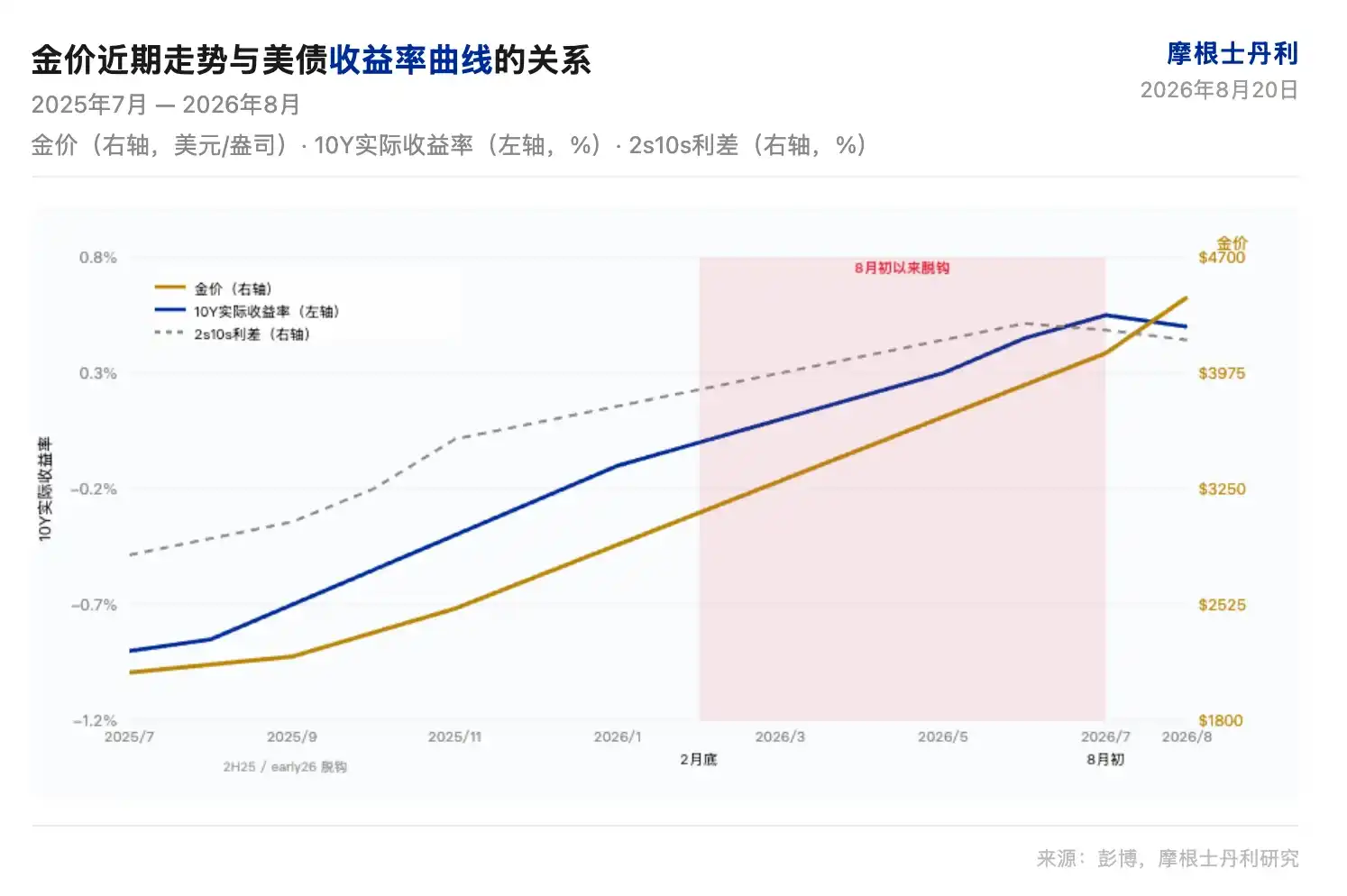
2月底至8月初,黄金与10年期实际利率保持稳定的负相关。8月初开始,金价在长端利率持平时继续上行。类似脱钩在2025年下半年和2026年初曾出现过。

当时美联储降息压低短端利率,政府债务上升、货币贬值担忧和通胀预期共同支撑了长端利率,收益率曲线陡峭化,金价同步走强。这一次,长端利率上升更多受油价和科技债发行推动,但市场对政府债务的关注同样在回升。

大摩判断,金价正在为收益率上行背后的财政担忧定价,而非收益率本身。
美联储路径仍是主导,结构性因素正成为新支撑

美联储政策路径主导ETF资金流向。即将公布的美国通胀数据和美联储官员沟通信号,将决定加息预期走向。大摩美国经济学家预计美联储2026年全年按兵不动,利率侧的压力有限。

黄金的驱动因素正在变化。除实际利率框架外,三个结构性因素构成新支撑:央行购金持续,2026年上半年全球央行净买入345吨,与大摩全年700吨预测一致;COMEX(纽约商品交易所)黄金期货空头头寸降至2020年4月以来最低,短期空头回补空间收窄,但空头力量已被充分消化;收益率曲线陡峭化背后的财政担忧,正在成为金价的隐形催化剂。

5000美元路径已打开,短期波动是常态

美国通胀数据是短期波动的主要来源。若通胀超预期,市场可能重新定价美联储加息路径,触发金价回调。COMEX空头头寸处于历史低位,意味着短期空头回补驱动的快速上涨空间有限。黄金ETF流入更多是对加息概率下降的反应,而非对降息的预期。这与降息周期的典型模式不同,流入的持续性存在不确定性。

大摩的基准判断:美联储按兵不动、央行购金持续、财政担忧定价深化,三者叠加将推动金价中枢上移。短期波动不会改变这一方向。
免责声明

本文系潮向研究对第三方券商研究报告(摩根士丹利,2026年8月20日)的整理与解读,结合公开市场信息的整理。文中引述的评级、目标价、盈利预测及相关判断,均为该券商分析师的观点,仅代表其所属机构立场,不代表潮向研究的观点,也不构成任何投资建议。

市场有风险,决策需独立。本文不应作为买卖任何证券的依据。

Criptos en tendencia

Preguntas relacionadas

Q摩根士丹利对金价设定的第四季度目标价是多少?为何说提前触及?

A摩根士丹利设定的第四季度目标价是4450美元/盎司。文章指出,黄金价格在报告发布前已经达到了这一水平,速度快于该机构的预期,因此称为“提前触及”。

Q根据大摩的报告,近期推动黄金ETF资金流向变化的主要因素是什么?

A根据报告,推动近期黄金ETF资金流向变化的主要因素是市场对美联储加息概率的预期变化。7月至8月,因加息概率下降,黄金ETF转为净流入70吨,逆转了5月至6月的净流出态势。

Q文章中提到,金价正在脱离实际利率框架。当前金价上行为何种因素定价?

A文章指出,当前金价的上行并非由实际利率本身驱动,而是在为长端收益率上行背后的财政担忧定价。具体来说,是对政府债务上升、货币贬值担忧和通胀预期等因素的担忧在支撑金价。

Q大摩报告认为,除了实际利率,目前对黄金构成新支撑的三个结构性因素是什么?

A摩根士丹利报告提出的三个结构性新支撑因素是:1. 全球央行持续购金(如2026年上半年净买入345吨);2. COMEX黄金期货空头头寸已降至历史低位,空头力量被消化;3. 收益率曲线陡峭化背后反映的财政担忧,成为金价的隐形催化剂。

Q大摩对于金价的中长期展望(2027年)是什么?短期面临的主要波动风险是什么?

A摩根士丹利预计,金价在2027年可能突破5000美元/盎司。短期面临的主要波动风险来自美国通胀数据,如果通胀超预期,可能引发市场对美联储加息路径的重新定价,从而触发金价回调。同时,黄金ETF流入的持续性也存在不确定性。

Lecturas Relacionadas

Is RWA Still Meaningful Without DeFi?

The article "Would RWA Still Matter Without DeFi?" argues that tokenizing real-world assets (RWA) alone, like putting a barcode on a container, is not transformative. True value emerges when these tokenized assets are integrated into decentralized finance (DeFi) ecosystems, enabling valuation, financing, hedging, trading, and loss management in a programmable, automated manner. Tokenization provides digital representation, but DeFi provides utility through leverage, liquidity, and composability. The core challenge lies in aligning the different "time clocks" of blockchain (fast, 24/7), traditional markets (limited hours), and asset redemption (slow processes), which creates liquidation risks and gaps. Effective RWA integration requires more than a token; it needs a full stack: legally enforceable rights, reliable data oracles, clear transfer rules, executable secondary liquidity, appropriate collateral parameters, and credible loss resolution paths. Liquidity is defined not by total value locked (TVL) but by the ability to exit a position under stress within a required timeframe. Risk management for RWAs must be modeled as a dependency graph, monitoring interconnected nodes like issuers, custodians, oracles, and liquidity pools for early warning signs beyond just price data. While tokenized government bonds serve as an initial "ping test," the future lies in more complex assets like computing power and energy, which require bespoke risk models. Tokenized stocks paired with perpetual futures present a major test, combining global equity ownership with crypto-native leverage, necessitating robust architectural safeguards like isolation and dynamic collateral rules. The conclusion is that without DeFi, RWA tokenization offers limited value—improving distribution and transparency. The significant opportunity arises when tokenized assets become functional components within open, programmable capital markets, where they can be used as collateral and facilitate complex financial strategies. The token is merely the barcode; the market operating system is the real machine.

marsbitHace 8 min(s)

Is RWA Still Meaningful Without DeFi?

marsbitHace 8 min(s)

Government Intervention in the Bond Market: What Does It Mean?

On August 19, 2026, the U.S. Treasury unexpectedly announced it would at least double the size of its long-term Treasury buyback operations, starting September 9. The move triggered an immediate market reaction, with the 30-year yield falling 9 basis points. This intervention came against a backdrop of the 30-year yield hitting a 19-year high of 5.34% the previous day, driven by persistent inflation, high oil prices, deteriorating U.S. fiscal health with public debt surpassing $40 trillion, and a global "buyers' strike" for long-dated bonds. Treasury buybacks involve the government repurchasing older, less liquid bonds from the market via reverse auctions to improve market functioning, not to reduce overall debt. While the action provided tactical relief and signaled the Treasury's willingness to intervene, analysts caution it does not address core structural issues: massive fiscal deficits, high borrowing needs, and fading demand from traditional buyers like foreign central banks. For investors, the announcement offered short-term support for long-duration bond ETFs and boosted assets like gold, which rose 2.7%. However, it's unlikely to significantly lower mortgage rates or alter the challenging environment for long-term bonds. The key takeaway is the distinction between a tactical market operation and the unresolved structural pressures that continue to push yields higher, requiring close monitoring of upcoming economic data, Treasury auctions, and potential signals of more aggressive policy measures.

marsbitHace 12 min(s)

Government Intervention in the Bond Market: What Does It Mean?

marsbitHace 12 min(s)

After 'Bessent Put', How Far Is the U.S. from Restarting QE?

Following an unscheduled announcement from the U.S. Treasury Department on August 19th, investor discussions have intensified regarding the potential for future policy interventions in long-term bond markets. The Treasury increased the maximum size of its regular buyback operations for 10-to-30 year bonds from $2 billion to $4 billion, citing a desire to improve liquidity. This move came shortly after a surge in long-term yields, with the 30-year Treasury yield briefly touching 5.34%. Market analysts, rather than focusing on the modest operational size, have interpreted the timing—outside the normal quarterly communication window—as a significant signal. The move has been dubbed the "Bessent Put," implying the market's growing expectation that Treasury officials, led by Deputy Secretary Josh Bessent, may act to prevent a disorderly rise in long-term borrowing costs. This perception represents a potential shift in the market's view of the government's "policy reaction function." The underlying pressures on long-term bonds are multifaceted, including large fiscal deficits, increased Treasury supply, a rise in corporate debt issuance for AI infrastructure (creating a "crowding out" effect), and uncertainty around foreign holdings, particularly from Japan. Geopolitical risks in the Middle East further complicate the policy landscape, potentially creating conflicting pressures between fighting inflation and managing financing costs. However, the article clarifies that this Treasury buyback program is distinct from Quantitative Easing (QE). It is a debt management operation, not a Federal Reserve balance sheet expansion. While the announcement opens the door for market speculation about more forceful tools like Yield Curve Control (YCC) or a return to QE, analysts note that conditions would need to deteriorate significantly for such measures to be implemented. For now, the "Bessent Put" reflects a change in market expectations about possible policy boundaries, not an imminent launch of new monetary stimulus.

marsbitHace 13 min(s)

After 'Bessent Put', How Far Is the U.S. from Restarting QE?

marsbitHace 13 min(s)

Is Stablecoin Really Necessary for Cross-border Payments?

"Is Stablecoin Truly Necessary for Cross-Border Payments? While stablecoins are often praised as superior for cross-border transfers—especially if the recipient desires crypto—their advantage is less clear in traditional cross-currency scenarios (e.g., USD to Mexican Peso). The existing correspondent banking system is slow and costly (≈15% fees) due to multiple intermediaries. Modern fintech solutions like Wise have dramatically improved this by using a netting model: they hold local currency pools and settle payments domestically, avoiding actual cross-border fund movement. This offers near-instant transfers with low, transparent fees (averaging ~0.52%). The 'stablecoin sandwich' model (convert fiat to stablecoin, transfer on-chain, convert to local fiat) offers similar user experience but doesn't inherently provide major cost or speed advantages over fintech. Its on-chain transfer is cheap, but fiat conversion spreads remain. Stablecoin's real innovation is 'unbundling' the cross-border payment stack. Instead of requiring a proprietary global network like Wise, businesses only need reliable on- and off-ramps in specific corridors. This lowers market entry barriers, fosters competition among local providers, and can drive down costs, particularly for niche or underserved corridors (e.g., US to Africa). While vertical integration may reoccur, the open, permissionless nature of the underlying blockchain layer makes monopolistic pricing difficult. The long-term benefit is the potential redistribution of value—previously captured as intermediary rents—to consumers through lower costs."

marsbitHace 17 min(s)

Is Stablecoin Really Necessary for Cross-border Payments?

marsbitHace 17 min(s)

Ethereum Finally 'Bounces Back'! ETH Returns to the Golden Line, What's Different About This Rally?

Ethereum has surged above $2,300, a level not seen in over three months, marking a significant recovery and technical breakthrough by reclaiming key resistance levels, including the weekly EMA50 for the first time in the current bear market. The rally has been fueled by a combination of factors: improved market risk appetite, positive regulatory sentiment, and a major short squeeze where over 88% of recent ETH liquidations were short positions. The ETH/BTC ratio has also broken its long-term downtrend, indicating renewed strength for Ethereum relative to Bitcoin. Fundamentally, Ethereum spot ETFs have shown strong inflows, outperforming their Bitcoin counterparts in recent months. Wall Street institutions like Morgan Stanley and JPMorgan have notably increased their ETH exposure, while several banks have added or expanded positions in ETH ETFs. On-chain fundamentals remain robust, with the proportion of staked ETH reaching a new all-time high of nearly 33.7%. Data indicates long-term holding sentiment, as small wallet holdings increased while large outflows were often directed towards staking or contracts, not selling. However, potential headwinds include declining staking yields and community debate over proposals to adjust staking rewards at high participation levels. The upcoming Glamsterdam upgrade, featuring improvements to validator exit efficiency, could enhance liquidity and further attract institutional stakers. While the rebound is supported by sentiment, capital flows, and fundamentals, its sustainability hinges on continued positive developments.

marsbitHace 17 min(s)

Ethereum Finally 'Bounces Back'! ETH Returns to the Golden Line, What's Different About This Rally?

marsbitHace 17 min(s)

Trading

Spot

Artículos destacados

Qué es $BANK

Banco AI: Un Paso Revolucionario en el Futuro de la Banca Introducción En una era marcada por avances rápidos en tecnología, Banco AI se sitúa en la intersección de la inteligencia artificial (IA) y los servicios bancarios. Este proyecto innovador busca redefinir el panorama financiero, mejorando la eficiencia operativa, las medidas de seguridad y las experiencias del cliente a través del poder de la IA. Al embarcarnos en esta exploración de Banco AI, profundizaremos en lo que implica el proyecto, sus dinámicas operativas, su contexto histórico y hitos significativos. ¿Qué es Banco AI? En su esencia, Banco AI representa una iniciativa transformadora destinada a integrar la inteligencia artificial en varias operaciones bancarias. Este proyecto aprovecha las capacidades de la IA para automatizar procesos, mejorar los protocolos de gestión de riesgos y mejorar la interacción con los clientes a través de servicios personalizados. Los objetivos principales de Banco AI incluyen: Automatización de Funciones Bancarias: Al aprovechar las tecnologías de IA, Banco AI tiene como objetivo automatizar tareas rutinarias, reduciendo la carga sobre los recursos humanos y mejorando la eficiencia. Mejora en la Gestión de Riesgos: El proyecto utiliza algoritmos de IA para predecir e identificar riesgos, fortaleciendo así las medidas de seguridad contra fraudes y otras amenazas. Personalización de Servicios Bancarios: Banco AI se centra en ofrecer productos y servicios financieros a medida al analizar datos y comportamientos de los clientes. Mejoramiento de la Experiencia del Cliente: La implementación de soluciones impulsadas por IA, como chatbots y asistentes virtuales, tiene como objetivo proporcionar a los usuarios interacciones más humanas, revolucionando la forma en que los clientes se relacionan con los bancos. Con estos objetivos, Banco AI se posiciona como un jugador crucial para hacer que la banca sea más eficiente, segura y centrada en el usuario. ¿Quién es el Creador de Banco AI? Los detalles sobre el creador de Banco AI siguen siendo desconocidos. Como tal, no se ha identificado a ninguna persona u organización específica en la información disponible. El anonimato que rodea el inicio del proyecto plantea preguntas, pero no resta valor a su ambiciosa visión y objetivos. ¿Quiénes Son los Inversores de Banco AI? Al igual que con el creador del proyecto, no se ha divulgado información específica sobre los inversores u organizaciones que apoyan a Banco AI. Sin esta información, es un desafío delinear el respaldo financiero y el apoyo institucional que podrían estar impulsando el proyecto hacia adelante. No obstante, la importancia de contar con una sólida base de inversión es fundamental para sostener el desarrollo en un campo tan innovador. ¿Cómo Funciona Banco AI? Banco AI opera en múltiples frentes innovadores, centrándose en factores únicos que lo diferencian de los marcos bancarios tradicionales. A continuación, se presentan las características operativas clave: Automatización: Al aplicar algoritmos de aprendizaje automático, Banco AI automatiza varios procesos manuales dentro de los bancos. Esto resulta en la reducción de costos operativos y permite que los trabajadores humanos redirijan sus esfuerzos hacia actividades más estratégicas. Gestión Avanzada de Riesgos: La integración de la IA en las prácticas de gestión de riesgos equipa a los bancos con herramientas para predecir con precisión amenazas potenciales como el fraude, garantizando que la información y los activos de los clientes permanezcan seguros. Recomendaciones Financieras Personalizadas: A través del aprendizaje continuo a partir de las interacciones con los clientes, los sistemas de IA desarrollan una comprensión matizada de las necesidades del usuario, lo que les permite ofrecer consejos adaptados sobre decisiones financieras. Interacciones Mejoradas con los Clientes: Al utilizar chatbots y asistentes virtuales impulsados por IA, Banco AI permite una experiencia más atractiva para el cliente, permitiendo a los usuarios resolver sus consultas rápidamente, reduciendo así los tiempos de espera y mejorando los niveles de satisfacción. En conjunto, estas características operativas posicionan a Banco AI como un pionero en el sector bancario, estableciendo nuevos parámetros para la entrega de servicios y la excelencia operativa. Línea de Tiempo de Banco AI Entender la trayectoria de Banco AI requiere mirar su contexto histórico. A continuación, se presenta una línea de tiempo que destaca hitos y desarrollos importantes: Inicios de 2010: La conceptualización de la integración de la IA en los servicios bancarios comenzó a ganar atención a medida que las instituciones bancarias reconocieron los posibles beneficios. 2018: Se produjo un aumento notable en la implementación de tecnologías de IA cuando los bancos comenzaron a utilizar herramientas de IA como chatbots para el servicio al cliente básico y sistemas de gestión de riesgos para mejorar la seguridad. 2023: La sofisticación de la IA continuó avanzando, con la introducción de IA generativa para tareas más complejas como el procesamiento de documentos y análisis de inversiones en tiempo real. Este año marcó un salto significativo en las capacidades que la tecnología de IA otorgó a los bancos. 2024-Estatus Actual: A partir de este año, Banco AI se encuentra en una trayectoria ascendente, con investigaciones y desarrollos en curso que pronto mejorarán las capacidades en las operaciones bancarias. La continua exploración de las aplicaciones de IA sugiere emocionantes desarrollos aún por venir. Puntos Clave Sobre Banco AI Integración de la IA en la Banca: Banco AI se centra en adoptar inteligencia artificial para optimizar los procesos bancarios y mejorar la experiencia del usuario. Enfoque en Automatización y Gestión de Riesgos: El proyecto enfatiza fuertemente estas áreas, con el objetivo de desplazar la carga de tareas rutinarias mientras mejora los marcos de seguridad a través de análisis predictivos. Soluciones Bancarias Personalizadas: Al aprovechar los datos de los clientes, Banco AI permite servicios bancarios adaptados a las necesidades individuales de los usuarios. Compromiso con el Desarrollo: Banco AI se mantiene comprometido con esfuerzos de investigación y desarrollo continuos, asegurando su adaptabilidad y relevancia continua a medida que la tecnología sigue evolucionando. Conclusión En resumen, Banco AI ejemplifica un paso crucial hacia adelante en la industria bancaria, aprovechando la inteligencia artificial para redefinir los paradigmas operativos, mejorar la seguridad y promover la satisfacción del cliente. A pesar de las lagunas en la información sobre el creador y los inversores, los objetivos claros y los mecanismos funcionales de Banco AI proporcionan una sólida base para su evolución continua. A medida que la tecnología de IA sigue avanzando y fusionándose con el sector bancario, Banco AI está bien posicionado para impactar significativamente el futuro de los servicios financieros, mejorando la forma en que entendemos e interactuamos con la banca.

310 Vistas totalesPublicado en 2024.04.06Actualizado en 2024.12.03

Qué es $BANK

Cómo comprar BANK

¡Bienvenido a HTX.com! Hemos hecho que comprar Lorenzo Protocol (BANK) sea simple y conveniente. Sigue nuestra guía paso a paso para iniciar tu viaje de criptos.Paso 1: crea tu cuenta HTXUtiliza tu correo electrónico o número de teléfono para registrarte y obtener una cuenta gratuita en HTX. Experimenta un proceso de registro sin complicaciones y desbloquea todas las funciones.Obtener mi cuentaPaso 2: ve a Comprar cripto y elige tu método de pagoTarjeta de crédito/débito: usa tu Visa o Mastercard para comprar Lorenzo Protocol (BANK) al instante.Saldo: utiliza fondos del saldo de tu cuenta HTX para tradear sin problemas.Terceros: hemos agregado métodos de pago populares como Google Pay y Apple Pay para mejorar la comodidad.P2P: tradear directamente con otros usuarios en HTX.Over-the-Counter (OTC): ofrecemos servicios personalizados y tipos de cambio competitivos para los traders.Paso 3: guarda tu Lorenzo Protocol (BANK)Después de comprar tu Lorenzo Protocol (BANK), guárdalo en tu cuenta HTX. Alternativamente, puedes enviarlo a otro lugar mediante transferencia blockchain o utilizarlo para tradear otras criptomonedas.Paso 4: tradear Lorenzo Protocol (BANK)Tradear fácilmente con Lorenzo Protocol (BANK) en HTX's mercado spot. Simplemente accede a tu cuenta, selecciona tu par de trading, ejecuta tus trades y monitorea en tiempo real. Ofrecemos una experiencia fácil de usar tanto para principiantes como para traders experimentados.

1.0k Vistas totalesPublicado en 2025.05.09Actualizado en 2026.06.02

Cómo comprar BANK

Discusiones

Bienvenido a la comunidad de HTX. Aquí puedes mantenerte informado sobre los últimos desarrollos de la plataforma y acceder a análisis profesionales del mercado. A continuación se presentan las opiniones de los usuarios sobre el precio de BANK (BANK).

活动图片