Recent Bitcoin Surge Fails to Convince Peter Schiff: "The Upward Move is a Deception, Recent Events Have Nothing to Do with Bitcoin..."

cryptonews.ruPublicado a 2026-08-20Actualizado a 2026-08-20

Resumen

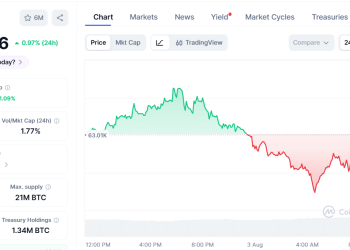
Bitcoin's sharp rise above $72,000 failed to convince prominent gold advocate and Bitcoin critic Peter Schiff, who dismissed the rally as a "false breakout" and a "fake-out." Schiff attributed the price surge to the unexpected announcement from the U.S. Treasury Department regarding bond buybacks, which fueled short-term market optimism by reinforcing expectations of easier financial conditions. While acknowledging that increased liquidity can support gold prices, Schiff argued this effect would not be sustainable for Bitcoin. He maintains that investors in BTC are only "half right" in believing loose monetary policy will boost both assets, reiterating his stance that investors should sell Bitcoin and buy gold instead.

The sharp rise of Bitcoin above $72,000, which once again captured investor attention, has not convinced the well-known $BTC critic and gold proponent Peter Schiff. Schiff argues that the recent surge does not mark the beginning of a sustainable upward trend and urges investors to sell Bitcoin and buy gold.

Economist Schiff, long known for his criticism of Bitcoin, stated in a post on his X account today that Bitcoin's rise above $72,000 was "not a breakout, but a false move."

Schiff attributed the sudden price increase of $BTC to the unexpected announcement from the U.S. Treasury Department regarding bond buybacks. He stated that this move by the Treasury strengthened expectations for easier financial conditions, creating short-term optimism in the cryptocurrency market.

"Bitcoin's climb above $72,000 is not a breakout but a false start. The Treasury's announcement of bond buybacks caught the markets off guard," said Schiff, adding that Bitcoin investors have long believed that easier monetary policy would fuel the rise of both gold and Bitcoin.

Schiff: "Easy Money Benefits Gold, Not Bitcoin"

According to Schiff, this investor expectation is only partially correct. While acknowledging that easing financial conditions and increasing liquidity can support gold prices, Schiff argues that a similar effect will not be permanent for Bitcoin.

Schiff stated in his post: "$BTC investors have long believed that a return to 'easy money' policy will be a catalyst for both gold and Bitcoin. They are only half right. Sell Bitcoin, buy gold."

*This is not investment advice.

end-content

Criptos en tendencia

Preguntas relacionadas

QWhat is Peter Schiff's view on Bitcoin's recent surge above $72,000?

APeter Schiff believes the recent surge of Bitcoin above $72,000 is not the start of a sustained upward trend but a 'fake breakout' or 'false move'.

QAccording to Peter Schiff, what caused the sudden price increase in Bitcoin?

ASchiff attributed the sudden price increase in Bitcoin to the U.S. Treasury's unexpected announcement of a bond buyback, which strengthened expectations for easier financial conditions and created short-term optimism in the crypto market.

QWhat does Peter Schiff advise investors to do regarding Bitcoin and gold?

APeter Schiff advises investors to sell Bitcoin and buy gold. He argues that while easier monetary policy may support gold prices, it will not have a lasting positive effect on Bitcoin.

QHow does Peter Schiff characterize the belief among Bitcoin investors about easy money policies?

APeter Schiff states that Bitcoin investors are only 'half right' in their belief that a return to 'easy money' policies will be a catalyst for growth in both gold and Bitcoin. He argues that such policies benefit gold, not Bitcoin.

QWhat disclaimer is provided at the end of the article's content?

AThe disclaimer provided at the end of the article's content is: '*This is not investment advice.'

Lecturas Relacionadas

After Two and a Half Years of Entrepreneurship and Full AI Adoption, the Company Has Actually Become More 'Traditional'

"After 2.5 years of running my company, achieving near 100% AI adoption with Agents in roles like finance, HR, and operations, we've paradoxically become more 'traditional.' We learned that establishing a thick AI middle layer creates bottlenecks. Instead, we advocate for a 'thin platform, thick frontline' model, empowering employees closest to problems to use AI tools themselves, fostering ownership and initiative. The true foundation isn't the AI models, but the unique data and context a company accumulates—our most vital, irreplaceable asset, requiring diligent governance. As AI handles repetitive, describable tasks, human roles revert to their core: building genuine relationships, trust, and brand reputation through authentic communication, which AI cannot accelerate. A critical question is where the time saved by AI goes. It must be returned—to clients, to creative work, to employees' own lives—rather than just fueling higher output demands. For managers, AI strips away execution-focused busywork, exposing the necessity to define clear goals, make tough judgments, and take ultimate responsibility. Onboarding newcomers presents a challenge: while AI can generate 80% solutions instantly, we must deliberately design paths for them to develop judgment, understand context, and safely learn from mistakes. Ultimately, AI's organizational value isn't about replacing people but removing unnecessary friction, allowing more meaningful human connection. The real test of an 'AI-era' company isn't its tech stack, but how it treats people: delegating creative power, returning saved time, fostering growth, and upholding accountability. The core luxury and purpose of our work remains authentic human relationships."

marsbitHace 3 min(s)

After Two and a Half Years of Entrepreneurship and Full AI Adoption, the Company Has Actually Become More 'Traditional'

marsbitHace 3 min(s)

US Stock Market Trends (August 21): Long-Term Bond Repo Fails, Walmart's Warning Drags Dow Down 700 Points

**U.S. Market Trends (Aug 21): Long-Term Bond Relief Fizzles, Walmart Drags Dow Down 700 Points** U.S. stocks fell sharply, with the Dow plunging over 700 points, as relief from the Treasury's long-term bond buyback plan proved fleeting. Major indexes declined as long-end Treasury yields and oil prices resumed their upward climb, reigniting inflation fears and pressure on high-valuation assets. The key catalyst was the rapid reversal in the bond market. The Treasury's expanded buyback program briefly calmed markets, but 30-year yields quickly rebounded near 5.26%, approaching recent 20-year highs. This signaled that liquidity interventions cannot overcome structural pressures from massive U.S. debt, fiscal deficits, and competing capital demands from AI infrastructure spending. Simultaneously, rising oil prices (WTI +2.3%) on geopolitical tensions renewed inflation concerns, squeezing consumer spending power. This pressure was highlighted by Walmart's 9% stock plunge. Despite beating earnings estimates, its weak U.S. same-store sales growth and lowered annual guidance exposed caution among lower-income consumers. Tech stocks faced broad pressure. The "Magnificent Seven" giants broadly declined, with Moderna crashing over 23% a day after a massive rally on vaccine trial news, exemplifying swift profit-taking. However, select semiconductor names (e.g., Marvell, Micron) gained on specific AI-related catalysts, indicating a more discerning market moving beyond hype to scrutinize real cash flows and capital expenditure sustainability. Bitcoin surged past $72,000, while gold seesawed near $4,500/oz. Alibaba's earnings showed strong AI cloud revenue growth but significant cash outflow due to infrastructure investments. The market's core takeaway is that Treasury actions provide only temporary relief, not a trend reversal. Focus now shifts to whether long-term yields can stabilize below 5.3% and to upcoming Federal Reserve commentary for clues on the rate path. Sustainable equity recovery hinges on the bond market calming and major tech stocks showing concurrent strength.

marsbitHace 4 min(s)

US Stock Market Trends (August 21): Long-Term Bond Repo Fails, Walmart's Warning Drags Dow Down 700 Points

marsbitHace 4 min(s)

547 Million OP Tokens Transferred from User Airdrop to Ecosystem Fund: DAO Voting Becoming Sham Democracy

An Optimism governance vote approved the controversial transfer of 546.9 million OP tokens (12.7% of total supply, ~24% of circulating supply) from the remaining "User Airdrop" allocation to the Foundation-controlled "Strategic Ecosystem Fund." The vote passed with a decisive 849,000 OP vote from "Test in Prod," a core development team fully funded by the Optimism Collective, cast just 17 minutes before the deadline. The Foundation argued that broad user airdrops are ineffective for the current institutional expansion phase and that the funds are needed as a flexible "war chest" to secure enterprise clients like Bitpanda and Dunamu. Critics, including L2BEAT and researcher Polynya, opposed the move. They cited the Foundation's overly broad mandate, a lack of clear link to token holder interests, insufficient assessment of past ecosystem fund expenditures (~686M OP spent), and the rewriting of the original distribution promise made to users. The incident highlights deeper governance concerns beyond low voter turnout. It raises questions about the independence of votes from entities financially dependent on the Foundation and the ethical limits of DAO governance—specifically, whether a majority vote can legitimately redefine foundational promises and minority expectations. The move signals a shift from community-focused airdrops to enterprise-driven strategy, eroding user trust amid OP's significant price decline.

marsbitHace 24 min(s)

547 Million OP Tokens Transferred from User Airdrop to Ecosystem Fund: DAO Voting Becoming Sham Democracy

marsbitHace 24 min(s)

The Impact of Treasury Buybacks Lasts Only 24 Hours? Beston: We Have Many Tools, Just Wait and See

U.S. Treasury Secretary Besant, addressing market concerns on August 20, signaled that the Treasury's toolkit for intervening in the bond market is far from exhausted. This follows the previous day's announcement to double the size of long-term Treasury buyback operations to at least $40 billion per session, a move that only briefly lowered yields before they climbed again. Besant dismissed the short-lived market reaction as "noise," asserting that yields do not reflect underlying economic fundamentals, especially for illiquid 30-year bonds. He revealed that President Trump has tasked him with leading a new fiscal consolidation plan, expected to be announced soon, aimed at addressing high long-term borrowing costs. Concurrently, Besant announced a press conference for the following Monday to detail aggressive U.S. economic actions against Iran, suggesting that maximum economic pressure could reduce the likelihood of large-scale military conflict. On other topics, Besant reiterated a strong dollar policy, expressed confusion over a recent oil price surge (which he expects U.S. actions will curb), and noted that AI investment prospects are making corporations largely insensitive to yield levels when issuing debt, as they anticipate future productivity gains. Market analysts remain skeptical that Treasury operations alone can durably alter the trajectory of long-term yields, which are driven by broader concerns over fiscal deficits, debt supply, and inflation.

marsbitHace 1 hora(s)

The Impact of Treasury Buybacks Lasts Only 24 Hours? Beston: We Have Many Tools, Just Wait and See

marsbitHace 1 hora(s)

Trading

Spot

Artículos destacados

Cómo comprar MOVE

¡Bienvenido a HTX.com! Hemos hecho que comprar Movement (MOVE) sea simple y conveniente. Sigue nuestra guía paso a paso para iniciar tu viaje de criptos.Paso 1: crea tu cuenta HTXUtiliza tu correo electrónico o número de teléfono para registrarte y obtener una cuenta gratuita en HTX. Experimenta un proceso de registro sin complicaciones y desbloquea todas las funciones.Obtener mi cuentaPaso 2: ve a Comprar cripto y elige tu método de pagoTarjeta de crédito/débito: usa tu Visa o Mastercard para comprar Movement (MOVE) al instante.Saldo: utiliza fondos del saldo de tu cuenta HTX para tradear sin problemas.Terceros: hemos agregado métodos de pago populares como Google Pay y Apple Pay para mejorar la comodidad.P2P: tradear directamente con otros usuarios en HTX.Over-the-Counter (OTC): ofrecemos servicios personalizados y tipos de cambio competitivos para los traders.Paso 3: guarda tu Movement (MOVE)Después de comprar tu Movement (MOVE), guárdalo en tu cuenta HTX. Alternativamente, puedes enviarlo a otro lugar mediante transferencia blockchain o utilizarlo para tradear otras criptomonedas.Paso 4: tradear Movement (MOVE)Tradear fácilmente con Movement (MOVE) en HTX's mercado spot. Simplemente accede a tu cuenta, selecciona tu par de trading, ejecuta tus trades y monitorea en tiempo real. Ofrecemos una experiencia fácil de usar tanto para principiantes como para traders experimentados.

419 Vistas totalesPublicado en 2024.12.13Actualizado en 2026.06.02

Cómo comprar MOVE

Discusiones

Bienvenido a la comunidad de HTX. Aquí puedes mantenerte informado sobre los últimos desarrollos de la plataforma y acceder a análisis profesionales del mercado. A continuación se presentan las opiniones de los usuarios sobre el precio de MOVE (MOVE).

活动图片