巴尔的摩市对体育博彩预测市场采取法律行动

cointelegraphPublicado a 2026-08-13Actualizado a 2026-08-13

Resumen

巴尔的摩市及市长布伦丹·斯科特对预测市场平台Kalshi和Polymarket提起诉讼,指控其违反当地赌博法律。市政府指出,这两家公司运营“非法、未经许可的体育博彩平台”,并在产品“合法性及监管状态”上误导用户。诉讼核心争议在于这些事件合约是否构成州法律下的非法投注。 市长斯科特强调,这些公司无牌照经营体育博彩业务,试图以新标签规避法律,但巴尔的摩不会允许大企业将利润置于公众利益之上,通过非法赌博危害社区。起诉书还将Robinhood、Webull和Coinbase列为Kalshi的合作方,指控它们通过将体育合约宣传为“在马里兰州可合法买卖”进行欺骗性推广。 此次诉讼是美国州、联邦机构与预测市场公司间的最新冲突,专家预计案件可能上诉至最高法院。美国商品期货交易委员会(CFTC)认为事件合约属于其监管范围内的“互换”产品,但巴尔的摩及其他州级监管机构对此提出异议。Polymarket发言人回应称,城市单独行动违背了CFTC既定的预测市场监管框架,并强调在CFTC注册的交易所应受联邦法律管辖,而非各州零散法规的约束。

巴尔的摩市及其市长布伦丹·斯科特对Kalshi和Polymarket提起诉讼,指控这两家公司违反了当地的赌博法律。

在周四的一份公告中,巴尔的摩市长办公室表示,这两家预测市场公司运营着“非法、未经许可的体育博彩平台”,并在其产品的“合法性和监管状态”方面误导用户。诉讼的核心在于对Kalshi和Polymarket关于事件合约性质的表述提出异议,辩称其交易行为根据州法律构成了非法赌注。

“这些公司在没有许可证的情况下经营体育博彩,并赌上一个新标签就能让他们凌驾于法律之上,”斯科特说。“这是行不通的。巴尔的摩不会让价值数十亿美元的公司将利润置于人民之上,通过非法赌博危害我们的社区。”

值得注意的是,该市对Kalshi的起诉书中将Robinhood、Webull和Coinbase列为该预测市场平台的合作伙伴。所有这些公司都被指控存在欺骗行为,将体育合约宣传为“在马里兰州可以合法购买和交易”的产品。

针对预测市场公司的法律行动是美国州和联邦当局之间的最新冲突,许多专家预计此事最终将上诉至最高法院。美国商品期货交易委员会(CFTC)在其主席迈克尔·塞利格的领导下,以及相关公司辩称,预测市场上的事件合约属于其管辖范围内的“掉期交易”,而巴尔的摩的诉讼及其他州级当局则对此提出异议。

“针对城市的法律行动与CFTC建立的预测市场监管框架背道而驰,”Polymarket的一位发言人就此次诉讼向Cointelegraph回应道。“正如法院所承认的那样,在CFTC注册的交易所上的预测市场受联邦法律管辖,而不是零散的州和地方规则。”

相关阅读:法官暂缓CFTC对美国士兵预测市场投注的诉讼

Preguntas relacionadas

Q巴尔的摩市对哪两家预测市场公司提起了诉讼?

A巴尔的摩市对Kalshi和Polymarket两家预测市场公司提起了诉讼。

Q巴尔的摩市指控这两家公司违反了哪些规定?

A巴尔的摩市指控这两家公司运营“非法、无执照的体育博彩平台”,并误导用户关于其产品的“合法性和监管状态”,其交易行为违反了州赌博法。

Q巴尔的摩市长布伦丹·斯科特如何批评这些公司?

A巴尔的摩市长布伦丹·斯科特批评这些公司“在没有执照的情况下运营博彩业务,并试图通过一个新标签将自己置于法律之上”,并表示巴尔的摩不会让这些数十亿美元的公司将利润置于人民之上,通过非法赌博危害社区。

Q针对Kalshi的诉讼中还提到了哪几家合作公司?

A针对Kalshi的诉讼中还提到了Robinhood、Webull和Coinbase作为该预测市场平台的合作伙伴。

Q关于预测市场的监管,美国商品期货交易委员会(CFTC)与巴尔的摩等地方当局的主要分歧是什么?

A主要分歧在于:美国商品期货交易委员会(CFTC)及其主席迈克尔·塞利格认为,预测市场的事件合约属于其监管范围内的“互换”产品;而巴尔的摩等州和地方当局则对此提出异议,认为这些合约属于非法的体育博彩,应受州和地方赌博法规制。

Lecturas Relacionadas

Jameson Lopp's BIP-110 Postmortem: Bitcoin Is Driven by Game Theory, Not Morality

Jameson Lopp's analysis concludes that BIP-110, a proposal to restrict arbitrary data (like inscriptions) on Bitcoin, failed due to economic and technical realities, not moral arguments. The proposal, championed by Luke Dashjr and others, aimed to "cleanse" the chain but never reached its 55% miner activation threshold. Upon its forced signaling deadline in August, only the OCEAN pool (with ~1% hash rate) supported it, creating a short-lived fork that quickly died as miners faced unredeemable block rewards. Lopp's earlier predictions about its economic infeasibility were proven correct. Technically, BIP-110 was flawed; workarounds to embed data compliant with its rules were demonstrated almost immediately, proving it couldn't achieve its stated goal. The debate often devolved into moralistic rhetoric, with supporters accusing opponents of supporting child exploitation material—a tactic Lopp criticizes as ineffective for building consensus. Lopp argues Bitcoin is driven by incentives and game theory, not morality. Past forks like Bitcoin Cash promised economic benefits, while BIP-110 offered only restrictions and reduced miner fees, gaining no substantial support from major economic players. He predicts the "puritans" behind the failed fork will continue complaining but their new chain will remain insignificant. The episode reaffirms that attempting to censor data on a permissionless, anti-censorship network like Bitcoin is a futile battle.

marsbitHace 23 min(s)

Jameson Lopp's BIP-110 Postmortem: Bitcoin Is Driven by Game Theory, Not Morality

marsbitHace 23 min(s)

Tokenization Scale Soars to $4.3 Billion, But Why Did Securitize Incur a $5.5 Million Loss?

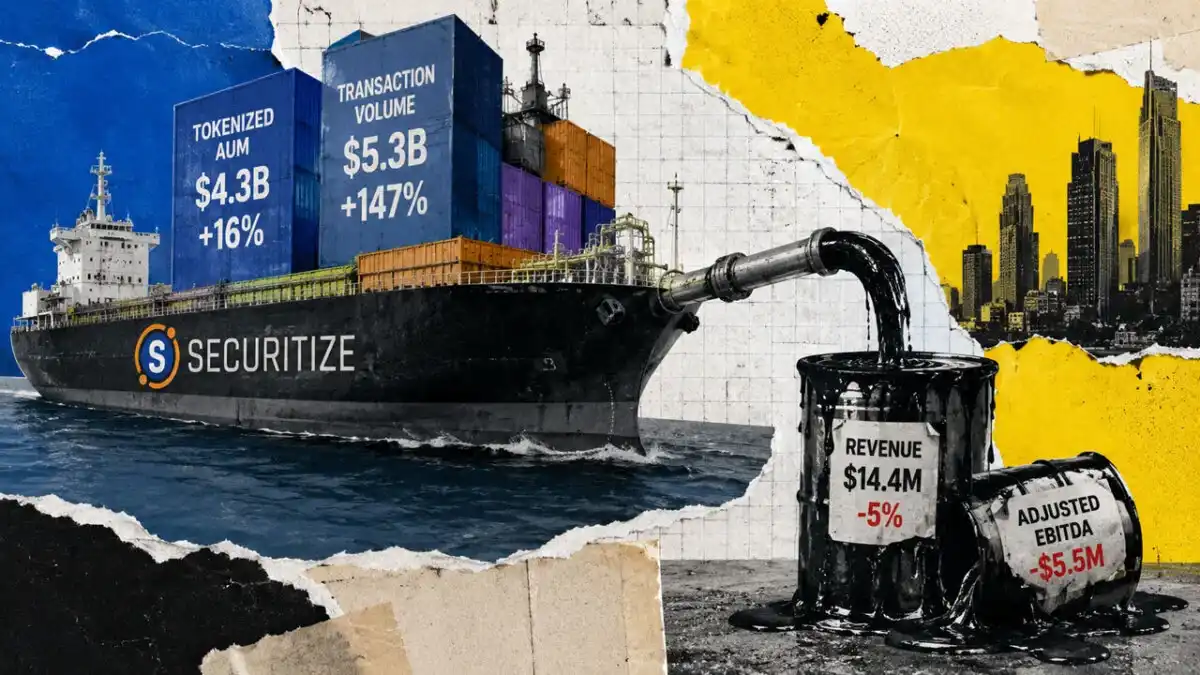
Securitize's first quarterly report post-IPO reveals a paradox: while its tokenized assets under management hit a record $4.3 billion (up 16% YoY) and platform trading volume surged 147% to $5.3 billion, total revenue fell 5% to $14.4 million. Tokenization revenue specifically dropped ~12% to $7.8 million, leading to an adjusted EBITDA loss of $5.5 million. CFO Francisco Flores explained that most trading volume is not yet monetized, with the majority of tokenization revenue still coming from one-time projects like new protocol integrations. In contrast, asset servicing revenue, a more recurring stream, grew slightly to $6.6 million. The company has lowered its full-year revenue guidance to $70-$80 million from an initial projection of $110 million. Industry experts note this highlights a structural challenge for the tokenization sector. Scaling assets on-chain doesn't automatically scale a profitable business model. Current implementations often rely on costly, customized projects for each new asset or jurisdiction. The future, they argue, lies in building standardized infrastructure that generates recurring "infrastructure revenue" from post-issuance activities like compliance, distributions, and secondary trading—similar to enterprise software. Analysts caution against misinterpreting high trading volumes as indicative of a mature fee-based model, as Securitize's broad volume metric includes many non-monetized actions. The key test for the industry is whether adding billions in new assets can generate sustainable revenue without constant new custom projects.

marsbitHace 26 min(s)

Tokenization Scale Soars to $4.3 Billion, But Why Did Securitize Incur a $5.5 Million Loss?

marsbitHace 26 min(s)

The Five Paradoxes of Artificial Intelligence

**Five Paradoxes of Artificial Intelligence** Artificial intelligence (AI) is an era filled with paradoxes, which we navigate as we advance. **1. The Prediction Paradox** AI experts, from pioneers like Marvin Minsky to contemporary figures like Geoffrey Hinton and Demis Hassabis, have a history of inaccurate forecasts regarding AI's capabilities and timelines, such as achieving human-level machine intelligence or surpassing radiologists. Predictions about Artificial General Intelligence (AGI) vary wildly between optimistic entrepreneurs and skeptical academics, highlighting the inherent unpredictability of technological futures. **2. The Employment Quantification Paradox** Despite numerous studies from institutions like the OECD, IMF, and McKinsey attempting to quantify AI's impact on jobs, estimates of affected employment range from 0.4% to 67%, revealing vast inconsistencies. This paradox arises because isolating AI's effect from other economic, social, and technological factors is virtually impossible, and forecasts depend on static assumptions about a dynamically evolving technology. **3. The Productivity Paradox** While AI is a transformative General Purpose Technology, significant productivity growth has not yet materialized in major economies like the EU and has only matched historical averages in the US. This disconnect between rapid innovation and slow productivity gains, reminiscent of the "Solow Paradox" from the computer age, is often explained by time lags. History shows it takes decades for such technologies to diffuse and trigger complementary innovations that boost productivity. **4. The Data Value Paradox** Data is hailed as the "new oil" and critical for AI, yet its economic value is paradoxical. Its worth is realized only in use, not in straightforward trade. Despite policy emphasis and initiatives for data asset recognition on corporate balance sheets in China, the monetized value remains negligible—accounting for only about 0.06% of major telecom operators' total assets—highlighting the gap between perceived utility and financial valuation. **5. The Industrial Revolution Paradox** For decades, nearly every major new technology, from the internet and nanotechnology to blockchain and now AI, has been proclaimed as the driver of a "Fourth Industrial Revolution." This constant reassignment suggests prior labels were premature. True industrial revolutions are typically identified in hindsight, not in real-time. Furthermore, the coexistence of such a proclaimed transformative revolution with ongoing economic crises would be historically anomalous. Whether AI truly defines a new industrial revolution remains a narrative for the future to decide.

marsbitHace 28 min(s)

The Five Paradoxes of Artificial Intelligence

marsbitHace 28 min(s)

Trading

Spot
活动图片