Thượng viện Mỹ sẽ bỏ phiếu về dự luật tiền điện tử CLARITY 'một cách chắc chắn' trong tuần này: Tim Scott

cointelegraphPublicado a 2026-08-06Actualizado a 2026-08-06

Resumen

Thượng nghị sĩ Tim Scott, Chủ tịch Ủy ban Ngân hàng Thượng viện Mỹ, tuyên bố Thượng viện sẽ bỏ phiếu thông qua Đạo luật Minh bạch Thị trường Tài sản Kỹ thuật số (CLARITY) trước kỳ nghỉ tháng 8, chỉ còn vài ngày để hành động. Trong một cuộc phỏng vấn, Scott nhấn mạnh Thượng viện "nên có cuộc bỏ phiếu đầu tiên" về dự luật này trước khi các nhà lập pháp nghỉ hè. Ông lạc quan rằng vẫn còn thời gian để Lãnh đạo Đa số Thượng viện John Thune lên lịch bỏ phiếu. Tuyên bố của Scott đồng vọng với lời kêu gọi của Thượng nghị sĩ Cynthia Lummis về việc tiến hành bỏ phiếu sớm. Để thông qua, dự luật cần ít nhất 60 phiếu ủng hộ tại Thượng viện. Tuy nhiên, vẫn còn những vấn đề tranh luận, bao gồm lo ngại của nhiều Đảng viên Dân chủ về các khoản đầu tư tiền mã hóa của cựu Tổng thống Donald Trump và yêu cầu từ ngành ngân hàng về quy định cấp phép, hạn chế cho các công ty tiền mã hóa xử lý stablecoin. Nếu các nhà lập pháp có thể thống nhất về các điều chỉnh và lịch trình, vẫn có cơ hội để tổ chức bỏ phiếu trước kỳ nghỉ.

Thượng nghị sĩ Tim Scott, Chủ tịch Ủy ban Ngân hàng Thượng viện, cho biết Thượng viện sẽ bỏ phiếu về Đạo luật Minh bạch Thị trường Tài sản Kỹ thuật số (CLARITY) trước khi tạm nghỉ hè vào tháng Tám, để lại cho các nhà lập pháp chỉ vài ngày để hành động đối với dự luật tiền điện tử này.

Trong một cuộc phỏng vấn với Fox Business hôm thứ Năm, Scott nói rằng Thượng viện "nên có cuộc bỏ phiếu đầu tiên" về Đạo luật CLARITY trước khi các nhà lập pháp rời đi cho các kỳ nghỉ công tác tại bang trong tuần này. Ông nói thêm rằng Lãnh đạo Đa số Thượng viện John Thune, người có thẩm quyền lập chương trình nghị sự và lịch bỏ phiếu tại nghị trường, vẫn còn thời gian để thông báo về một cuộc bỏ phiếu kết thúc tranh luận đối với dự luật tiền điện tử trong vài ngày tới.

"Tin tốt là chúng ta có thời gian để hoàn thành việc này," Scott nói.

Tuyên bố của nhà lập pháp bang South Carolina này vang vọng nhận xét của Thượng nghị sĩ Cynthia Lummis, người vào thứ Tư đã thúc giục Thượng viện tiến hành bỏ phiếu về CLARITY trước kỳ nghỉ tháng Tám của Thượng viện. Nếu các nhà lãnh đạo Đảng Cộng hòa sắp xếp một cuộc bỏ phiếu, dự luật sẽ cần sự ủng hộ từ 60 nhà lập pháp để thông qua Thượng viện và tiến tới trong Quốc hội.

Trong số các vấn đề vẫn đang được thảo luận tính đến thứ Năm là mối quan ngại từ nhiều đảng viên Dân chủ liên quan đến các khoản đầu tư tiền điện tử của Tổng thống Mỹ Donald Trump và các người đứng đầu ngành ngân hàng kêu gọi dự luật giải quyết vấn đề cấp phép và hạn chế đối với các công ty tiền điện tử xử lý stablecoin. Nếu các nhà lập pháp đạt được thỏa thuận về cách thức có thể điều chỉnh Đạo luật CLARITY cho các điều khoản này và cách xử lý chương trình nghị sự của Thượng viện trước kỳ nghỉ, vẫn có thể còn thời gian để sắp xếp một cuộc bỏ phiếu.

Bài liên quan: Dù có CLARITY hay không, tiền điện tử sẽ không thể bị gói lại: Bitwise

Criptos en tendencia

Preguntas relacionadas

QThượng nghị sĩ Tim Scott cho biết Thượng viện Hoa Kỳ sẽ làm gì với dự luật CLARITY trong tuần này?

AThượng viện Hoa Kỳ sẽ tiến hành một cuộc bỏ phiếu về Đạo luật Minh bạch Thị trường Tài sản Kỹ thuật số (CLARITY) trước kỳ nghỉ tháng Tám.

QAi là người có thẩm quyền quyết định lịch trình và các cuộc bỏ phiếu tại Thượng viện để dự luật CLARITY có thể được đưa ra bỏ phiếu?

ALãnh đạo Đa số Thượng viện John Thune là người có thẩm quyền thiết lập chương trình nghị sự và lên lịch các cuộc bỏ phiếu tại Thượng viện.

QDự luật CLARITY cần bao nhiêu phiếu ủng hộ để thông qua Thượng viện?

ADự luật CLARITY cần có sự ủng hộ của ít nhất 60 nhà lập pháp để thông qua Thượng viện.

QMối quan tâm của nhiều đảng viên Dân chủ liên quan đến dự luật CLARITY là gì?

ANhiều đảng viên Dân chủ bày tỏ lo ngại liên quan đến các khoản đầu tư tiền điện tử của Tổng thống Hoa Kỳ Donald Trump.

QNgành công nghiệp ngân hàng kêu gọi dự luật CLARITY giải quyết vấn đề gì đối với các công ty tiền điện tử?

ANgành công nghiệp ngân hàng kêu gọi dự luật CLARITY giải quyết các vấn đề về cấp phép và hạn chế đối với các công ty tiền điện tử xử lý stablecoin.

Lecturas Relacionadas

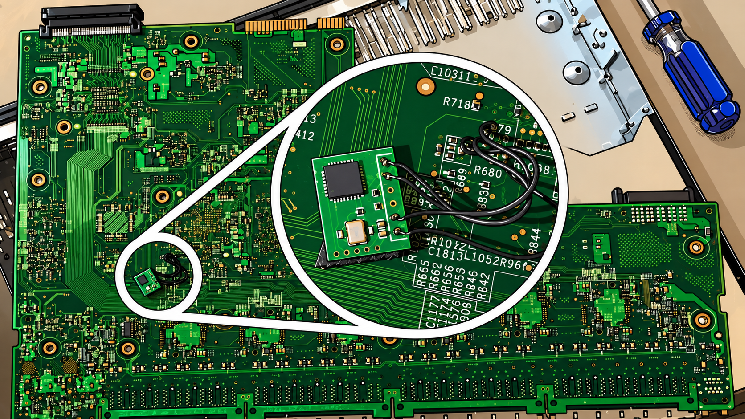
Inside a Fake Ledger: How a 4G Modem is Secretly Embedded in a Hardware Wallet

In a presentation at Hardwear.io 2026, hardware security expert Joe Grand detailed a sophisticated spy chip discovered inside counterfeit Ledger Nano X hardware wallets. Initially reported in 2021, these tampered devices reached victims through data leaked from Ledger in 2020 and subsequent phishing campaigns. The implanted board connects to the internal SPI bus, passively intercepting data between the Secure Element and the OLED display. Using pattern recognition, it "reads" the seed phrase words displayed during wallet setup or recovery, stores them in its flash memory, and then exfiltrates the data via a built-in 4G modem and eSIM, independent of the victim's computer. To fit the extra hardware, the attackers reduced the battery size and replaced a thermal sensor with a fixed resistor to fake a 100% charge reading. Grand noted this is not an isolated incident, with similar supply-chain attacks previously targeting Trezor devices where compromised firmware generated predictable seed phrases. The researcher plans to intercept and decrypt the chip's cellular traffic to learn more about the attackers. Ledger advises users to purchase devices directly from the manufacturer or authorized resellers, not third-party marketplaces, and to compare devices against official photos. The company is also considering enhanced physical security for future products. The article questions whether Ledger Live's Secure Element authentication would detect such a passive hardware implant and highlights that the core risk lies in the physical supply chain, not just software.

cryptonews.ruHace 21 min(s)

Inside a Fake Ledger: How a 4G Modem is Secretly Embedded in a Hardware Wallet

cryptonews.ruHace 21 min(s)

Google's Decade-Long AI Power Struggle Concludes, Pichai Gracefully Consolidates Control

A decade of internal AI rivalry at Google has concluded with CEO Sundar Pichai consolidating power through a masterful, bloodless reorganization. The key moves saw Demis Hassabis, DeepMind's visionary founder, step down as CEO of Google DeepMind to become Alphabet's Chief Scientist, focusing on long-term AGI. Concurrently, Google's legendary technical leader Jeff Dean departed with his team to start a new venture, in which Google invested. This restructuring marks the end of a long-standing divide between the research-focused DeepMind and the product-oriented Google Brain. Pichai's strategy, beginning with their 2023 merger under Hassabis, gradually centralized control. While Hassabis gained public acclaim for Gemini's progress and a Nobel Prize, Pichai quietly elevated Koray Kavukcuoglu, a pragmatic engineering veteran, to oversee daily operations. The catalyst was mounting pressure in 2026 as Gemini's development timelines slipped, causing stock declines. Hassabis, more passionate about pure research and his AI drug discovery company Isomorphic Labs, grew weary of the commercial grind. His graceful "promotion" effectively removed him from operational control. Pichai handled both transitions with characteristic finesse: granting Hassabis a prestigious, future-focused role to prevent a defection to rivals (as happened with former DeepMind co-founder Mustafa Suleyman), and investing in Dean's new company to keep his pioneering work within Google's orbit. The outcome is a fundamental shift: control of Google's AI future has passed from brilliant scientist-visionaries to professional managers and engineers like Kavukcuoglu and Pichai himself. It signals Pichai's bet that the AI race has entered an industrial phase won by systemic execution, organizational efficiency, and stable delivery, rather than lone genius. The era of scientists directly managing core AI is over at Google, replaced by a machine-like division of labor where the CEO decides who decides.

marsbitHace 3 hora(s)

Google's Decade-Long AI Power Struggle Concludes, Pichai Gracefully Consolidates Control

marsbitHace 3 hora(s)

Trading

Spot

Artículos destacados

Cómo comprar BILL

¡Bienvenido a HTX.com! Hemos hecho que comprar Billions Network (BILL) sea simple y conveniente. Sigue nuestra guía paso a paso para iniciar tu viaje de criptos.Paso 1: crea tu cuenta HTXUtiliza tu correo electrónico o número de teléfono para registrarte y obtener una cuenta gratuita en HTX. Experimenta un proceso de registro sin complicaciones y desbloquea todas las funciones.Obtener mi cuentaPaso 2: ve a Comprar cripto y elige tu método de pagoTarjeta de crédito/débito: usa tu Visa o Mastercard para comprar Billions Network (BILL) al instante.Saldo: utiliza fondos del saldo de tu cuenta HTX para tradear sin problemas.Terceros: hemos agregado métodos de pago populares como Google Pay y Apple Pay para mejorar la comodidad.P2P: tradear directamente con otros usuarios en HTX.Over-the-Counter (OTC): ofrecemos servicios personalizados y tipos de cambio competitivos para los traders.Paso 3: guarda tu Billions Network (BILL)Después de comprar tu Billions Network (BILL), guárdalo en tu cuenta HTX. Alternativamente, puedes enviarlo a otro lugar mediante transferencia blockchain o utilizarlo para tradear otras criptomonedas.Paso 4: tradear Billions Network (BILL)Tradear fácilmente con Billions Network (BILL) en HTX's mercado spot. Simplemente accede a tu cuenta, selecciona tu par de trading, ejecuta tus trades y monitorea en tiempo real. Ofrecemos una experiencia fácil de usar tanto para principiantes como para traders experimentados.

456 Vistas totalesPublicado en 2026.05.07Actualizado en 2026.06.02

Cómo comprar BILL

Discusiones

Bienvenido a la comunidad de HTX. Aquí puedes mantenerte informado sobre los últimos desarrollos de la plataforma y acceder a análisis profesionales del mercado. A continuación se presentan las opiniones de los usuarios sobre el precio de BILL (BILL).

活动图片