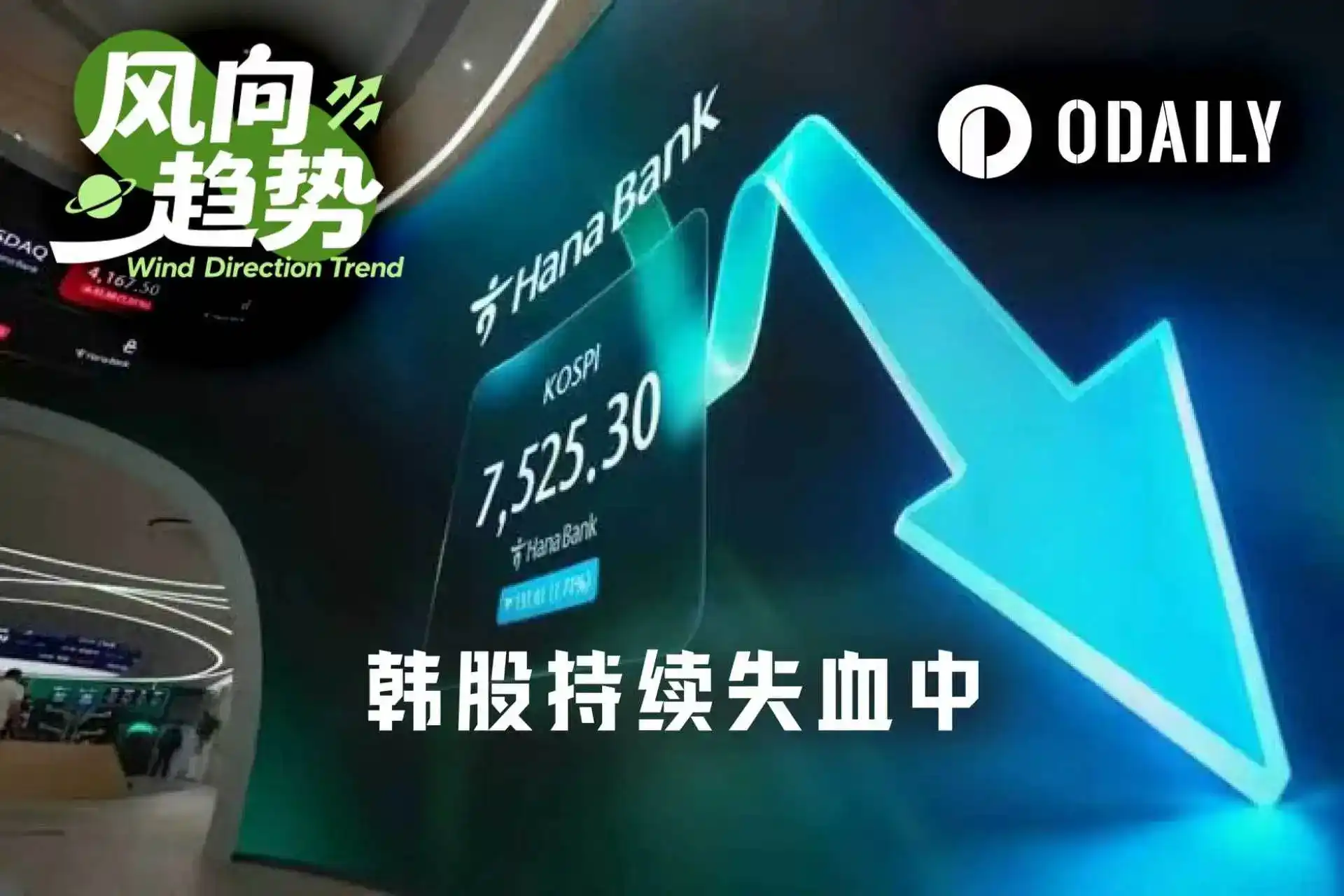
China's Tech Industry Is Crossing the 'Visibility Threshold' in Bulk

marsbitPublicado a 2026-08-03Actualizado a 2026-08-03

Resumen

China's tech industries are successively crossing a "visibility threshold" into the global market spotlight. This wave, exemplified by AI, robotics, and innovative pharmaceuticals (the "new-new three"), differs from past waves like garments/appliances or EVs/batteries/solar panels. Earlier industries met existing demand, but these new sectors are helping to *define* emerging markets and applications. Crossing this threshold signifies an industry has achieved scale, competitive advantages, rapid growth, and the ability to drive its supply chain. Recent data shows China's AI sector growing over 30%, producing 80% of certain intelligent robots, and a surge in new drug approvals. This acceleration stems from China's industrial evolution from "completeness" to "density": different sectors now share technologies, talent, and infrastructure, enabling capabilities (e.g., from EVs) to rapidly migrate to adjacent fields (e.g., robotics). This dense ecosystem, combined with improved system integration and faster market access, acts as an infrastructure for generating new industries. The nature of competition is also evolving. The visible product is just an interface; long-term advantage lies in the underlying patents, standards, and open ecosystems. While building this "moat," China's approach emphasizes openness—through open-source models and collaborative R&D—to foster wider adoption and iterative improvement. Crossing the visibility line marks the start of market validation. The ...

A recent phenomenon is noteworthy: China's tech industries across different fields are successively entering the global market and the view of international media.

In the past July, Chinese large model company Moonshot AI released Kimi K3; the official version API of DeepSeek-V4-Flash went live for public beta testing. Beyond these two model updates, China's advanced robotics equipment has also become one of the focal points of attention in the international community. Not long before this, American biopharmaceutical company Pfizer reached a cooperation agreement with China's Innovent Biologics on 12 early-stage oncology and pioneering R&D projects, with an upfront payment of $650 million.

Behind this is the accumulated industrial capacity of China over the long term, now collectively crossing the 'visibility threshold'.

Why are more and more competitive Chinese tech industries collectively crossing this line? What does this indicate about the stage China's sci-tech innovation has reached?

01

To answer these questions, we need to extend the observation period a bit longer.

Over the past decades, the labels the international community uses to understand China's industries have been constantly changing, with different industries successively crossing the 'visibility threshold' of the global market and international media.

||In the 1980s and 1990s, the 'old three staples'—garments, furniture, and home appliances—formed the main impression of 'Made in China' for the world. By 1995, the export share of mechanical and electrical products had risen to 29.4%, surpassing textiles and garments to become the largest category of China's exports. Since then, computer and communication equipment manufacturing and equipment manufacturing have continuously become the main drivers of exports.

||By 2023, mechanical and electrical products already accounted for 58.6% of China's total export value. In recent years, the 'new three staples'—new energy vehicles (NEVs), lithium-ion batteries, and photovoltaic products—have become representatives of China's march into the global market.

||Today, artificial intelligence, robotics, and innovative drugs are beginning to enter the view of the global market and international media. These industries are also called the 'new new three staples'.

They belong to different fields and face different markets. However, Tan Zhu's analysis finds that whenever a new batch of Chinese industries becomes the focus of global attention, several common characteristics typically have already emerged:

||First, scale formation. The industry's output value, exports, orders, or technology transactions reach a scale of billions or tens of billions, beginning to have a noticeable impact on economic growth and export structure.

||Second, prominent advantages. Products rank among the global leaders in terms of market share, technical performance, cost-effectiveness, etc., starting to influence the choices of international customers.

||Third, accelerated growth. The industry is in a phase of rapid growth, representing the main direction of China's industrial upgrading.

||Fourth, driving industrial chain development. What goes global is not just a single product; it also drives the joint development of components, equipment, software, and services.

This boundary, from 'the capability already exists' to 'being consistently visible to the global market', is what we refer to as the 'visibility threshold'.

The concentrated appearance of these characteristics also signals a transformation occurring within an industry:

Before crossing this dividing line, technology R&D, product testing, and supply chain construction primarily occur within the industry; after crossing it, the industry begins to influence the judgments and choices of the international market.

A set of data recently released by the National Development and Reform Commission (NDRC) can be observed in relation to this line:

In the first half of this year, China's artificial intelligence-related industries maintained growth exceeding 30%; out of every 10 humanoid and quadruped intelligent robots sold globally, 8 are produced in China; 38 innovative drugs were approved for marketing in the first half, of which 31 are domestic innovative drugs, with the total value of outbound technology licensing reaching approximately $100 billion.

This set of data indicates that artificial intelligence, robotics, and innovative drugs have become the latest batch of representative industries crossing the 'visibility threshold'.

However, the ways in which these rounds of industries crossed the 'visibility threshold' differ.

When garments, furniture, and home appliances went global, global demand was relatively mature. China mainly solved the problem of how to produce products stably with higher efficiency and lower costs. Demand came first, capacity followed.

When new energy vehicles, lithium-ion batteries, and photovoltaic products rose, global green transition demand was forming. At the same time, price and large-scale application remained obstacles. China reduced costs through manufacturing capabilities and economies of scale, bringing many demands that stayed in planning and intent into the real market.

By the stage of artificial intelligence, robotics, and innovative drugs, the product forms, application scenarios, and even market rules are still forming, while Chinese enterprises have already entered the stages of R&D, verification, and deployment.

China is no longer merely waiting for a mature market to emerge; instead, it is creating both the product and the market by lowering application thresholds, opening technical interfaces, and building industrial ecosystems.

This means the relationship between China's industries and the 'visibility threshold' has also changed.

In the past, the world first defined what it needed, then decided which Chinese industries would be seen first. Consequently, China could only be narrated and defined.

Today, this relationship is beginning to change. China's technological progress itself is starting to lead global demand, thereby influencing the global market. In other words, China is beginning to lead the narrative, even prompting external markets and public opinion to react following China's actions.

China is no longer merely entering a pre-defined market but is also beginning to participate in defining new products, new demands, and new industrial directions. The cost for the world to ignore China's innovation is also rising.

Simultaneously, the intervals between successive rounds of representative industries crossing the 'visibility threshold' are shortening.

Decades passed from when garments, furniture, and home appliances formed export scale in the last century to when the exports of new energy vehicles, lithium-ion batteries, and photovoltaic products exceeded 1.06 trillion yuan in 2023.

Yet, after the 'new three staples' gained global influence, artificial intelligence, robotics, and innovative drugs entered the global market's view within just a few years.

Jiang Zhao, Deputy Researcher at the Institute of Circulation and Consumption Research of the Chinese Academy of International Trade and Economic Cooperation (CAITEC) under the Ministry of Commerce, told Tan Zhu that the shortening industrial iteration cycles stem, on the one hand, from the accelerated breakthroughs in the global technological revolution, speeding up the transformation of technological achievements into industries; on the other hand, it also indicates a change in China's industrial innovation capability, beginning to evolve in sync with the global frontier, with the speed and initiative of independent iteration significantly enhanced.

An industry crossing the 'visibility threshold' also conversely changes the industry itself.

It sends a signal to global customers that the technology is ready for use, attracting suppliers, talent, and capital. Customers bring demand, scenarios generate data, suppliers follow up with supporting facilities; these resources then cycle back into R&D and production.

Therefore, 'visibility' is not just the result of innovation; it also forms new expectations, which in turn drive innovation. Of course, expectations may also run ahead of real demand.

The role of the 'visibility threshold' is to help us judge which industries have already moved from internal accumulation to market validation, which capabilities remain unseen by the outside world, and where the next batch of industries might emerge from.

But being seen only explains the outcome. To explain why these industries can emerge collectively, we need to look at the characteristics of China's innovation behind the 'visibility threshold'.

02

These new industries do not appear randomly. They are highly adjacent to China's existing industrial capabilities.

The accumulated capabilities in batteries, motors, electronic controls, sensors, and precision manufacturing from China's new energy vehicle industry are migrating to the robotics industry.

Behind artificial intelligence lies connections to chips, servers, communication networks, and power systems.

Hu Yanping, a professor at the Digital Economy Research Institute of Shanghai University of Finance and Economics, observes that computing power demand not only drives GPUs, various ASIC chips including TPUs, but also an entire industrial chain involving storage, optical communication, PCBs, cluster technology, and cooling systems.

Innovative drugs are also built upon long-term accumulation in the chemical industry, clinical resources, and production processes. With AI entering drug R&D, computing power, data, and algorithms are beginning to connect with life sciences.

This also answers a question: China established a complete industrial system very early on, so why have these innovative industries only begun to emerge densely in recent years?

What was called 'complete' in the past mainly referred to the ability to produce the vast majority of industrial products. The change happening today is that this industrial system is moving from 'complete' to 'dense': different industries are beginning to share technologies, talent, suppliers, and infrastructure; the capabilities accumulated in one industry can rapidly migrate to another.

Industry observer Xiao Lei told Tan Zhu that the large model-led artificial intelligence did not grow independently of existing industries; it is built upon the long-term development and iteration of the chip industry. Technological products like chips also do not have a technical endpoint of 'finishing once made'; they must continuously iterate, operate, and promote themselves in the market.

Solving the problem of going from zero to one is only the first step. Whether a sustainable, updating supply chain and market system can be formed determines both whether a technology can enter the next stage and whether it can provide a foundation for new technological breakthroughs.

The distance between production and R&D is also shortening. As robots enter factories and AI enters manufacturing, problems exposed in real-world use can be fed back to the R&D stage more quickly. Large-scale application is no longer just the result of innovation but has become part of innovation itself.

This change is also reflected in system organization capability.

Industry insider Wang Wuyang summarized China's computing power construction as a 'system efficiency' route: organizing different chips into coordinated working systems through high-speed interconnection, heterogeneous computing, and cluster scheduling. The commissioning of China's first fully domestically produced 100,000-card AI supercluster is one practical verification of this route.

Institutional reforms are also shortening the time for technologies to enter the market.

When industrial capabilities can migrate, real-world applications can feed back to R&D, and single-point technologies can be organized into systems, the original industrial scale changes in nature: it is no longer just a production advantage but has become an infrastructure that continuously generates new industries.

This is the internal cause for the ability of more and more industries to cross the 'visibility threshold'.

03

What does such innovation capability signify?

An important change is that the competitive advantage of China's industries is extending from 'making the product' to establishing knowledge and organizational systems capable of continuously generating value.

Today, industries crossing the 'visibility threshold' share a characteristic: they are increasingly difficult to fully measure using traditional goods trade metrics. Tangible products increasingly resemble the visible interface of an industrial system.

||Beyond the robot body, there is software, algorithms, data, and their operating environment.

||As artificial intelligence goes global, some provide model services via cloud APIs, and some enter developer ecosystems by opening weights.

||Outbound technology licensing for innovative drugs does not just trade a compound.

The product is only the most visible part of these systems. What truly determines whether an industry can obtain long-term gains are often the patents, standards, and ecosystems behind the product.

This is the industrial moat.

In the past, some U.S. tech companies, even without directly undertaking all production stages, could still occupy a larger share of value chain benefits by relying on patents, operating systems, technical standards, and platform ecosystems.

For China's tech industries to continue advancing, manufacturing capability alone is not enough; the ability to master core technologies and industrial ecosystems is also needed.

However, possessing a moat does not equate to building walls. China needs the ability to master core knowledge and ecosystems but does not need to replicate the closed and exclusionary path.

Open-source models, open interfaces, local deployment, and joint R&D can allow more enterprises and users to enter China's technological ecosystem. A broader application scope, in turn, brings data, demand, and suggestions for improvement, driving continuous technological iteration.

Openness is not abandoning core capabilities but expanding the ecosystem to give technology a broader and more lasting impact.

Jiang Zhao believes that the changes across several rounds of representative industries reflect the continuous upgrading of what China provides to the world: from good and inexpensive daily commodities, to the production capacity and systemic solutions needed for the green transition, and further to more inclusive and accessible innovative results and development capabilities.

How can such an industrial moat be built more solidly?

The 15th Five-Year Plan (FYP) has already proposed developing strategic emerging industries such as robotics, biopharmaceuticals, and aerospace, while also planning for future industries like embodied AI, brain-computer interfaces, quantum technology, bio-manufacturing, and the sixth-generation mobile communication (6G).

In the process of building these industries, technology determines whether an industry can continuously move forward; application scenarios determine whether technology can withstand real-world testing; the ecosystem determines whether a single technological breakthrough can be transformed into a long-term operational system.

Of course, whether the moat is truly formed ultimately depends on whether products can continuously obtain orders, whether technology can iteratively improve, whether revenue can support long-term R&D, and whether the industrial ecosystem can attract more participants.

Crossing the 'visibility threshold' is only the beginning of market validation.

China is entering a stage: pushing more and more new industries into market validation and continuously improving the industrial system through this validation.

One industry crossing the 'visibility threshold' might be just a single-point breakthrough. But successive generations of industries crossing it means a country is forming the ability to continuously generate new industries.

Above the 'visibility threshold', new industries and new things constantly emerge and flourish; below it, China's long-term accumulated capabilities are continuously connecting, growing, and moving forward.

This article is from WeChat Official Account: Yuyuan Tantian , Author: Tan Zhu

Criptos en tendencia

Preguntas relacionadas

QWhat is the core concept of the 'visible line' discussed in the article regarding China's tech industries?

AThe 'visible line' refers to the boundary between an industry having existing internal capabilities and becoming continuously visible to the global market. Crossing this line indicates that a Chinese industry has reached a scale and competitive advantage where it significantly influences global market choices and perceptions, moving beyond internal R&D to shape international demand and narratives.

QAccording to the article, what are the four common characteristics of Chinese industries that successfully cross the 'visible line'?

AThe four common characteristics are: 1) Scale: The industry reaches significant output, export, or transaction volumes (hundreds of billions). 2) Distinct Advantage: Its products lead globally in market share, technical performance, or cost-effectiveness. 3) Accelerated Growth: It is in a high-growth phase, representing a major direction for China's industrial upgrade. 4) Industrial Chain Development: Its global expansion drives the development of related components, equipment, software, and services.

QHow has the relationship between Chinese industries and the global 'visible line' evolved across different generations of products?

AThe relationship has fundamentally shifted. For the 'old three' (apparel, furniture, appliances), China entered mature global markets defined by others. For the 'new three' (EVs, lithium batteries, solar), China used scale to meet emerging green demand. For the 'new new three' (AI, robotics, innovative drugs), China is now participating in defining new products, markets, and industry directions from the R&D stage, influencing global demand and narratives rather than just reacting to them.

QWhat internal factor, as explained in the article, enables the dense emergence of new innovative industries like AI and robotics in China?

AThe key internal factor is the evolution of China's industrial system from being 'complete' to being 'dense.' This means different industries now deeply share technologies, talent, suppliers, and infrastructure. Capabilities accumulated in one sector (e.g., batteries and sensors from EVs) rapidly migrate to adjacent ones (e.g., robotics). This dense network, coupled with shortened feedback loops between production/R&D and enhanced system organization capabilities, acts as infrastructure that continuously generates new industries.

QWhat does the article suggest is the true 'moat' or long-term competitive advantage for Chinese tech industries crossing the 'visible line,' beyond just manufacturing products?

AThe article argues that the true industrial 'moat' lies not in the tangible products but in the underlying knowledge and organizational systems: patents, technical standards, software ecosystems, and platform architectures. While products are the visible interface, sustainable value and competitiveness come from the ability to master core technologies and build open, evolving ecosystems that attract global participants, ensuring continuous iteration and wider impact.

Lecturas Relacionadas

Soaring 20% Then Dropping 5%: When Will the Bottom of the Korean Stock Market Be?

"South Korean stocks face a turbulent period as the KOSPI index, after a 20% surge, fell 5% to 6257 points. The market is grappling with severe issues: over 500,000 leveraged retail accounts have been liquidated, and more than 24 trillion won has flowed from stocks into bank deposits for safety. This reflects a significant loss of market liquidity and shaken investor confidence. In response, Korean financial regulators are taking action. They have tripled the minimum保证金 (margin) requirement for single-stock leveraged ETF trades to 30 million won and are considering granting themselves "emergency intervention" powers. These could include capping leverage ratios and setting investment limits on these ETFs, seen by many as amplifying market volatility. Initial results show a 75% drop in these products' trading volume post-regulation. The market downturn has political repercussions, pushing President Yoon Suk-yeol's approval rating to a new low. Meanwhile, foreign investors made a record net purchase of 7.18 trillion won during a recent rebound, while domestic retail investors sold off massively. Morgan Stanley has upgraded South Korean stocks to "overweight," citing the ongoing "leverage unwinding" and potential for a 36% upside, with giants like Samsung Electronics and SK Hynix providing valuation support. However, analysts caution that the market's structure remains vulnerable to foreign capital flows, and the current low may not be the bottom."

marsbitHace 15 min(s)

Soaring 20% Then Dropping 5%: When Will the Bottom of the Korean Stock Market Be?

marsbitHace 15 min(s)

Goldman Sachs Stakes a Clear Position: This Is the Largest Capital Demand Cycle in Human History, and the Fed Is Just an Observer

Goldman Sachs argues that the world is entering the most capital-intensive investment cycle in history, driven by concurrent massive demands from AI infrastructure, reindustrialization, defense reinvestment, power grid rebuilding, supply chain realignment, and sovereign debt financing. This structural competition for capital is pushing its cost higher, fundamentally altering investment paradigms. Goldman's Mark Wilson states that the Federal Reserve is merely a "passenger, not the driver" in this shift, with rising yields rooted in these real economy demands rather than just monetary policy. While major indices appeared calm in July, underlying market movements were historic, featuring extreme stock dispersion and a severe momentum factor crash, leading to significant de-risking by fund managers. Wilson cautions against expecting a quick reversal in August, citing ongoing digestion of higher rates, disrupted risk models, and typically muted market performance ahead of US midterm elections. Corporate fundamentals remain robust with strong earnings, though growth rates are peaking in the US while accelerating in Europe. Notably, hyperscale cloud companies like Amazon and Microsoft are announcing staggering capital expenditure projections for 2027-2028, justified by explosive AI-related revenue growth and high returns. Amazon revealed its AI revenue run-rate exceeds $25 billion, growing triple-digits annually, and expressed confidence that AWS could become a trillion-dollar revenue business. The report concludes that a transitional period is underway, marked by a growing tension between aggressively investing private tech giants and increasingly capital-constrained sovereign governments. The AI super-cycle continues, with August likely being a consolidation phase.

marsbitHace 20 min(s)

Goldman Sachs Stakes a Clear Position: This Is the Largest Capital Demand Cycle in Human History, and the Fed Is Just an Observer

marsbitHace 20 min(s)

Outflow of Stablecoins from South Korea Continues for 18 Consecutive Months, Exceeding $360 Million in June

In June 2026, South Korea experienced a net outflow of stablecoins to overseas crypto exchanges, amounting to 560.3 billion won ($367 million). This represents approximately 78% of the net value of foreign stocks purchased by Korean investors in the same period. According to the Financial Supervisory Service (FSS), this marks the 18th consecutive month of net outflows, a trend ongoing since January 2025. The FSS reported that 2.76 trillion won ($1.8+ billion) in stablecoins were withdrawn from the country's five major exchanges to foreign platforms in June, while 2.2 trillion won ($1.4 billion) flowed back in. The second quarter of 2026 saw a significant net outflow of 1.69 trillion won (~$1.1 billion), surpassing net sales of foreign stocks in the same period. Analysts cite access to unavailable domestic financial instruments as a primary driver. Foreign platforms offer crypto derivatives, spot and futures products tied to major Korean stocks like Samsung and Hyundai, along with RWA tokenization, DeFi, staking, and leveraged products. Lawmaker Lee Jong-wook warned that the stablecoin outflows constitute capital flight, exposing investors to risks on unregulated foreign platforms. He called for accelerated regulatory reform and enhanced investor protection measures. The government is reportedly working on a digital assets law to foster the blockchain sector.

cryptonews.ruHace 25 min(s)

Outflow of Stablecoins from South Korea Continues for 18 Consecutive Months, Exceeding $360 Million in June

cryptonews.ruHace 25 min(s)

Trading

Spot

Artículos destacados

Qué es $S$

Entendiendo SPERO: Una Visión General Completa Introducción a SPERO A medida que el panorama de la innovación continúa evolucionando, la aparición de tecnologías web3 y proyectos de criptomonedas juega un papel fundamental en la configuración del futuro digital. Un proyecto que ha atraído la atención en este campo dinámico es SPERO, denotado como SPERO,$$s$. Este artículo tiene como objetivo reunir y presentar información detallada sobre SPERO, para ayudar a entusiastas e inversores a comprender sus fundamentos, objetivos e innovaciones dentro de los dominios web3 y cripto. ¿Qué es SPERO,$$s$? SPERO,$$s$ es un proyecto único dentro del espacio cripto que busca aprovechar los principios de descentralización y tecnología blockchain para crear un ecosistema que promueva la participación, la utilidad y la inclusión financiera. El proyecto está diseñado para facilitar interacciones de igual a igual de nuevas maneras, proporcionando a los usuarios soluciones y servicios financieros innovadores. En su esencia, SPERO,$$s$ tiene como objetivo empoderar a los individuos al proporcionar herramientas y plataformas que mejoren la experiencia del usuario en el espacio de las criptomonedas. Esto incluye habilitar métodos de transacción más flexibles, fomentar iniciativas impulsadas por la comunidad y crear caminos para oportunidades financieras a través de aplicaciones descentralizadas (dApps). La visión subyacente de SPERO,$$s$ gira en torno a la inclusividad, buscando cerrar brechas dentro de las finanzas tradicionales mientras aprovecha los beneficios de la tecnología blockchain. ¿Quién es el Creador de SPERO,$$s$? La identidad del creador de SPERO,$$s$ sigue siendo algo oscura, ya que hay recursos públicos limitados que proporcionan información de fondo detallada sobre su(s) fundador(es). Esta falta de transparencia puede derivarse del compromiso del proyecto con la descentralización, una ética que muchos proyectos web3 comparten, priorizando las contribuciones colectivas sobre el reconocimiento individual. Al centrar las discusiones en torno a la comunidad y sus objetivos colectivos, SPERO,$$s$ encarna la esencia del empoderamiento sin señalar a individuos específicos. Como tal, comprender la ética y la misión de SPERO sigue siendo más importante que identificar a un creador singular. ¿Quiénes son los Inversores de SPERO,$$s$? SPERO,$$s$ cuenta con el apoyo de una diversa gama de inversores que van desde capitalistas de riesgo hasta inversores ángeles dedicados a fomentar la innovación en el sector cripto. El enfoque de estos inversores generalmente se alinea con la misión de SPERO, priorizando proyectos que prometen avances tecnológicos sociales, inclusión financiera y gobernanza descentralizada. Estas fundaciones de inversores suelen estar interesadas en proyectos que no solo ofrecen productos innovadores, sino que también contribuyen positivamente a la comunidad blockchain y sus ecosistemas. El respaldo de estos inversores refuerza a SPERO,$$s$ como un contendiente notable en el dominio de proyectos cripto que evoluciona rápidamente. ¿Cómo Funciona SPERO,$$s$? SPERO,$$s$ emplea un marco multifacético que lo distingue de los proyectos de criptomonedas convencionales. Aquí hay algunas de las características clave que subrayan su singularidad e innovación: Gobernanza Descentralizada: SPERO,$$s$ integra modelos de gobernanza descentralizada, empoderando a los usuarios para participar activamente en los procesos de toma de decisiones sobre el futuro del proyecto. Este enfoque fomenta un sentido de propiedad y responsabilidad entre los miembros de la comunidad. Utilidad del Token: SPERO,$$s$ utiliza su propio token de criptomoneda, diseñado para servir diversas funciones dentro del ecosistema. Estos tokens permiten transacciones, recompensas y la facilitación de servicios ofrecidos en la plataforma, mejorando la participación y la utilidad general. Arquitectura en Capas: La arquitectura técnica de SPERO,$$s$ apoya la modularidad y escalabilidad, permitiendo la integración fluida de características y aplicaciones adicionales a medida que el proyecto evoluciona. Esta adaptabilidad es fundamental para mantener la relevancia en el cambiante paisaje cripto. Participación de la Comunidad: El proyecto enfatiza iniciativas impulsadas por la comunidad, empleando mecanismos que incentivan la colaboración y la retroalimentación. Al nutrir una comunidad sólida, SPERO,$$s$ puede abordar mejor las necesidades de los usuarios y adaptarse a las tendencias del mercado. Enfoque en la Inclusión: Al ofrecer tarifas de transacción bajas e interfaces amigables para el usuario, SPERO,$$s$ busca atraer a una base de usuarios diversa, incluyendo a individuos que anteriormente pueden no haber participado en el espacio cripto. Este compromiso con la inclusión se alinea con su misión general de empoderamiento a través de la accesibilidad. Cronología de SPERO,$$s$ Entender la historia de un proyecto proporciona información crucial sobre su trayectoria de desarrollo y hitos. A continuación se presenta una cronología sugerida que mapea eventos significativos en la evolución de SPERO,$$s$: Fase de Conceptualización e Ideación: Las ideas iniciales que forman la base de SPERO,$$s$ fueron concebidas, alineándose estrechamente con los principios de descentralización y enfoque comunitario dentro de la industria blockchain. Lanzamiento del Whitepaper del Proyecto: Tras la fase conceptual, se lanzó un whitepaper completo que detalla la visión, los objetivos y la infraestructura tecnológica de SPERO,$$s$ para generar interés y retroalimentación de la comunidad. Construcción de Comunidad y Primeras Interacciones: Se realizaron esfuerzos de divulgación activa para construir una comunidad de primeros adoptantes y posibles inversores, facilitando discusiones en torno a los objetivos del proyecto y obteniendo apoyo. Evento de Generación de Tokens: SPERO,$$s$ llevó a cabo un evento de generación de tokens (TGE) para distribuir sus tokens nativos a los primeros seguidores y establecer liquidez inicial dentro del ecosistema. Lanzamiento de la dApp Inicial: La primera aplicación descentralizada (dApp) asociada con SPERO,$$s$ se puso en marcha, permitiendo a los usuarios interactuar con las funcionalidades centrales de la plataforma. Desarrollo Continuo y Alianzas: Actualizaciones y mejoras continuas a las ofertas del proyecto, incluyendo alianzas estratégicas con otros actores en el espacio blockchain, han moldeado a SPERO,$$s$ en un jugador competitivo y en evolución en el mercado cripto. Conclusión SPERO,$$s$ se erige como un testimonio del potencial de web3 y las criptomonedas para revolucionar los sistemas financieros y empoderar a los individuos. Con un compromiso con la gobernanza descentralizada, la participación comunitaria y funcionalidades diseñadas de manera innovadora, allana el camino hacia un paisaje financiero más inclusivo. Como con cualquier inversión en el espacio cripto que evoluciona rápidamente, se anima a los posibles inversores y usuarios a investigar a fondo y participar de manera reflexiva con los desarrollos en curso dentro de SPERO,$$s$. El proyecto muestra el espíritu innovador de la industria cripto, invitando a una mayor exploración de sus innumerables posibilidades. Mientras el viaje de SPERO,$$s$ aún se desarrolla, sus principios fundamentales pueden, de hecho, influir en el futuro de cómo interactuamos con la tecnología, las finanzas y entre nosotros en ecosistemas digitales interconectados.

236 Vistas totalesPublicado en 2024.12.17Actualizado en 2024.12.17

Qué es $S$

Qué es AGENT S

Agent S: El Futuro de la Interacción Autónoma en Web3 Introducción En el paisaje en constante evolución de Web3 y las criptomonedas, las innovaciones están redefiniendo constantemente cómo los individuos interactúan con las plataformas digitales. Uno de estos proyectos pioneros, Agent S, promete revolucionar la interacción humano-computadora a través de su marco agente abierto. Al allanar el camino para interacciones autónomas, Agent S busca simplificar tareas complejas, ofreciendo aplicaciones transformadoras en inteligencia artificial (IA). Esta exploración detallada profundizará en las complejidades del proyecto, sus características únicas y las implicaciones para el dominio de las criptomonedas. ¿Qué es Agent S? Agent S se presenta como un marco agente abierto innovador, diseñado específicamente para abordar tres desafíos fundamentales en la automatización de tareas informáticas: Adquisición de Conocimiento Específico del Dominio: El marco aprende inteligentemente de diversas fuentes de conocimiento externas y experiencias internas. Este enfoque dual le permite construir un rico repositorio de conocimiento específico del dominio, mejorando su rendimiento en la ejecución de tareas. Planificación a Largo Plazo de Tareas: Agent S emplea planificación jerárquica aumentada por la experiencia, un enfoque estratégico que facilita la descomposición y ejecución eficiente de tareas complejas. Esta característica mejora significativamente su capacidad para gestionar múltiples subtareas de manera eficiente y efectiva. Manejo de Interfaces Dinámicas y No Uniformes: El proyecto introduce la Interfaz Agente-Computadora (ACI), una solución innovadora que mejora la interacción entre agentes y usuarios. Utilizando Modelos de Lenguaje Multimodal de Gran Escala (MLLMs), Agent S puede navegar y manipular diversas interfaces gráficas de usuario sin problemas. A través de estas características pioneras, Agent S proporciona un marco robusto que aborda las complejidades involucradas en la automatización de la interacción humana con las máquinas, preparando el terreno para una multitud de aplicaciones en IA y más allá. ¿Quién es el Creador de Agent S? Si bien el concepto de Agent S es fundamentalmente innovador, la información específica sobre su creador sigue siendo elusiva. El creador es actualmente desconocido, lo que resalta ya sea la etapa incipiente del proyecto o la elección estratégica de mantener a los miembros fundadores en el anonimato. Independientemente de la anonimidad, el enfoque sigue siendo en las capacidades y el potencial del marco. ¿Quiénes son los Inversores de Agent S? Dado que Agent S es relativamente nuevo en el ecosistema criptográfico, la información detallada sobre sus inversores y patrocinadores financieros no está documentada explícitamente. La falta de información disponible públicamente sobre las bases de inversión u organizaciones que apoyan el proyecto plantea preguntas sobre su estructura de financiamiento y hoja de ruta de desarrollo. Comprender el respaldo es crucial para evaluar la sostenibilidad del proyecto y su posible impacto en el mercado. ¿Cómo Funciona Agent S? En el núcleo de Agent S se encuentra una tecnología de vanguardia que le permite funcionar de manera efectiva en diversos entornos. Su modelo operativo se basa en varias características clave: Interacción Humano-Computadora Similar a la Humana: El marco ofrece planificación avanzada de IA, esforzándose por hacer que las interacciones con las computadoras sean más intuitivas. Al imitar el comportamiento humano en la ejecución de tareas, promete elevar las experiencias de los usuarios. Memoria Narrativa: Empleada para aprovechar experiencias de alto nivel, Agent S utiliza memoria narrativa para hacer un seguimiento de las historias de tareas, mejorando así sus procesos de toma de decisiones. Memoria Episódica: Esta característica proporciona a los usuarios una guía paso a paso, permitiendo que el marco ofrezca apoyo contextual a medida que se desarrollan las tareas. Soporte para OpenACI: Con la capacidad de ejecutarse localmente, Agent S permite a los usuarios mantener el control sobre sus interacciones y flujos de trabajo, alineándose con la ética descentralizada de Web3. Fácil Integración con APIs Externas: Su versatilidad y compatibilidad con varias plataformas de IA aseguran que Agent S pueda encajar sin problemas en ecosistemas tecnológicos existentes, convirtiéndolo en una opción atractiva para desarrolladores y organizaciones. Estas funcionalidades contribuyen colectivamente a la posición única de Agent S dentro del espacio cripto, ya que automatiza tareas complejas y de múltiples pasos con una intervención humana mínima. A medida que el proyecto evoluciona, sus posibles aplicaciones en Web3 podrían redefinir cómo se desarrollan las interacciones digitales. Cronología de Agent S El desarrollo y los hitos de Agent S pueden encapsularse en una cronología que resalta sus eventos significativos: 27 de septiembre de 2024: El concepto de Agent S fue lanzado en un documento de investigación integral titulado “Un Marco Agente Abierto que Usa Computadoras Como un Humano”, mostrando las bases del proyecto. 10 de octubre de 2024: El documento de investigación fue puesto a disposición del público en arXiv, ofreciendo una exploración profunda del marco y su evaluación de rendimiento basada en el benchmark OSWorld. 12 de octubre de 2024: Se lanzó una presentación en video, proporcionando una visión visual de las capacidades y características de Agent S, involucrando aún más a posibles usuarios e inversores. Estos marcadores en la cronología no solo ilustran el progreso de Agent S, sino que también indican su compromiso con la transparencia y la participación comunitaria. Puntos Clave Sobre Agent S A medida que el marco Agent S continúa evolucionando, varios atributos clave destacan, subrayando su naturaleza innovadora y potencial: Marco Innovador: Diseñado para proporcionar un uso intuitivo de las computadoras similar a la interacción humana, Agent S aporta un enfoque novedoso a la automatización de tareas. Interacción Autónoma: La capacidad de interactuar de manera autónoma con las computadoras a través de GUI significa un salto hacia soluciones informáticas más inteligentes y eficientes. Automatización de Tareas Complejas: Con su metodología robusta, puede automatizar tareas complejas y de múltiples pasos, haciendo que los procesos sean más rápidos y menos propensos a errores. Mejora Continua: Los mecanismos de aprendizaje permiten a Agent S mejorar a partir de experiencias pasadas, mejorando continuamente su rendimiento y eficacia. Versatilidad: Su adaptabilidad en diferentes entornos operativos como OSWorld y WindowsAgentArena asegura que pueda servir a una amplia gama de aplicaciones. A medida que Agent S se posiciona en el paisaje de Web3 y criptomonedas, su potencial para mejorar las capacidades de interacción y automatizar procesos significa un avance significativo en las tecnologías de IA. A través de su marco innovador, Agent S ejemplifica el futuro de las interacciones digitales, prometiendo una experiencia más fluida y eficiente para los usuarios en diversas industrias. Conclusión Agent S representa un audaz avance en la unión de la IA y Web3, con la capacidad de redefinir cómo interactuamos con la tecnología. Aunque aún se encuentra en sus primeras etapas, las posibilidades para su aplicación son vastas y atractivas. A través de su marco integral que aborda desafíos críticos, Agent S busca llevar las interacciones autónomas al primer plano de la experiencia digital. A medida que nos adentramos más en los reinos de las criptomonedas y la descentralización, proyectos como Agent S sin duda desempeñarán un papel crucial en la configuración del futuro de la tecnología y la colaboración humano-computadora.

640 Vistas totalesPublicado en 2025.01.14Actualizado en 2025.01.14

Qué es AGENT S

Cómo comprar S

¡Bienvenido a HTX.com! Hemos hecho que comprar Sonic (S) sea simple y conveniente. Sigue nuestra guía paso a paso para iniciar tu viaje de criptos.Paso 1: crea tu cuenta HTXUtiliza tu correo electrónico o número de teléfono para registrarte y obtener una cuenta gratuita en HTX. Experimenta un proceso de registro sin complicaciones y desbloquea todas las funciones.Obtener mi cuentaPaso 2: ve a Comprar cripto y elige tu método de pagoTarjeta de crédito/débito: usa tu Visa o Mastercard para comprar Sonic (S) al instante.Saldo: utiliza fondos del saldo de tu cuenta HTX para tradear sin problemas.Terceros: hemos agregado métodos de pago populares como Google Pay y Apple Pay para mejorar la comodidad.P2P: tradear directamente con otros usuarios en HTX.Over-the-Counter (OTC): ofrecemos servicios personalizados y tipos de cambio competitivos para los traders.Paso 3: guarda tu Sonic (S)Después de comprar tu Sonic (S), guárdalo en tu cuenta HTX. Alternativamente, puedes enviarlo a otro lugar mediante transferencia blockchain o utilizarlo para tradear otras criptomonedas.Paso 4: tradear Sonic (S)Tradear fácilmente con Sonic (S) en HTX's mercado spot. Simplemente accede a tu cuenta, selecciona tu par de trading, ejecuta tus trades y monitorea en tiempo real. Ofrecemos una experiencia fácil de usar tanto para principiantes como para traders experimentados.

1.3k Vistas totalesPublicado en 2025.01.15Actualizado en 2026.06.02

Cómo comprar S

Discusiones

Bienvenido a la comunidad de HTX. Aquí puedes mantenerte informado sobre los últimos desarrollos de la plataforma y acceder a análisis profesionales del mercado. A continuación se presentan las opiniones de los usuarios sobre el precio de S (S).

活动图片