BIS Project Agorá settles $1 million in tokenized cross-border payment trials

cointelegraphPublicado a 2026-07-31Actualizado a 2026-07-31

Resumen

The Bank for International Settlements (BIS) has announced the completion of initial real-value trials for Project Agorá, a tokenized cross-border payment system. The trials involved 28 central and commercial banks settling approximately $1 million (800,000 Swiss francs) across 17 different transaction scenarios. The system successfully used tokenized central bank reserves and commercial bank deposits to process payments in six major currencies, with average settlement times of around 80 seconds. Participants included major central banks such as the Bank of England and Bank of Japan, alongside global commercial institutions like JPMorgan Chase and Citi. Launched in 2024, Project Agorá aims to explore how tokenization can improve wholesale cross-border payments, with this phase marking a key milestone. The BIS confirmed testing will continue as the project develops.

The Bank for International Settlements (BIS) said Project Agorá completed real-value testing of tokenized wholesale cross-border payments, with 28 financial institutions and central banks settling about 800,000 Swiss francs (about $1 million) across 17 transaction scenarios.

The BIS said Thursday that the tests used tokenized central bank reserves and commercial bank deposits to settle payments in Swiss francs, euros, pounds sterling, Japanese yen, South Korean won and US dollars, with an average settlement time of about 80 seconds.

Participants included the Bank of England, Bank of France, Bank of Japan, Bank of Korea and the Swiss National Bank, alongside commercial banks including JPMorgan Chase, Citi, Deutsche Bank, BNP Paribas, UBS, Standard Chartered and MUFG.

Project Agorá is a BIS initiative launched in 2024 to explore how tokenized commercial bank deposits and central bank reserves can improve cross-border wholesale payments. In May, the project reported that its prototype demonstrated atomic settlement across multiple currencies and jurisdictions.

The BIS said the July trials marked an important milestone and that testing will continue as Project Agorá progresses.

Related: Former BIS chief softens stance on stablecoins, backs coexistence with fiat

Criptos en tendencia

Preguntas relacionadas

QWhat is the main achievement announced by the BIS regarding Project Agorá?

AProject Agorá successfully completed real-value testing of tokenized wholesale cross-border payments, settling about 800,000 Swiss francs (approximately $1 million) across 17 different transaction scenarios.

QWhich currencies were used in the settlement trials conducted by Project Agorá?

AThe trials settled payments using Swiss francs, euros, pounds sterling, Japanese yen, South Korean won, and US dollars.

QWhat was the average settlement time for the tokenized payments in the BIS trials?

AThe average settlement time for the tokenized payments was about 80 seconds.

QName some of the participating central banks and commercial banks in the Project Agorá trials.

ACentral banks included the Bank of England, Bank of France, Bank of Japan, Bank of Korea, and the Swiss National Bank. Commercial banks included JPMorgan Chase, Citi, Deutsche Bank, BNP Paribas, UBS, Standard Chartered, and MUFG.

QWhat is the primary goal of Project Agorá, launched by the BIS in 2024?

AProject Agorá aims to explore how tokenized commercial bank deposits and central bank reserves can improve cross-border wholesale payments.

Lecturas Relacionadas

PA Graphics Explanation | One Chart to Understand the Major Web3 Events in August 2026

**PANews Crypto Calendar: Key Web3 Events in August 2026** PANews introduces its revamped crypto calendar, featuring comprehensive coverage, flexible filtering, and easy export options. The market in August will be shaped by multiple key events across macroeconomics, regulation, tokenomics, and project developments: * **Macro & Policy:** Key US economic data releases (July Non-Farm Payrolls, CPI), the Federal Reserve meeting minutes, and the Jackson Hole Economic Symposium will be in focus. On the regulatory front, the US Senate plans to release a new draft of the *CLARITY Act*, while the EU's expanded crypto ban against Belarus comes into effect. * **Token Unlocks:** Significant token unlocks are scheduled for assets including ENA, AVAX, CONX, ZRO, and KAITO, which may influence market volatility. * **Project Updates & Shutdowns:** Several services, including Exchange Art, Ctrl Wallet, Zapper, NFTfi, and Summer.fi, are set to cease operations or undergo major adjustments. Users are advised to manage their assets accordingly. * **Corporate Activity:** Q2 earnings reports from companies like SpaceX, Circle, and Nvidia are due. Unitree Robotics will initiate its IPO subscription on the STAR Market, and Moonshot AI plans to begin a Pre-IPO financing round. * **Industry Events:** Major conferences such as Bitcoin Asia 2026 and the 2026 Digital Expo will take place. The overarching market narrative for August will revolve around macroeconomic expectations, regulatory developments, token unlock schedules, and ongoing industry consolidation.

marsbitHace 7 min(s)

PA Graphics Explanation | One Chart to Understand the Major Web3 Events in August 2026

marsbitHace 7 min(s)

Wall Street's Most Famous 'Cassandra' Now Has His Sights Set on Nvidia

Michael Burry, the famed "Big Short" investor, has once again captured Wall Street's attention with a series of short positions against major tech and semiconductor stocks, most notably Nvidia. In late June and July, through his "Cassandra Unchained" newsletter, Burry disclosed short bets against Nvidia, Tesla, Applied Materials, Caterpillar, the SOXX semiconductor ETF, and later, Micron Technology. His core thesis revolves around potential distortions in the AI infrastructure boom, specifically questioning whether extended depreciation schedules (e.g., 6 years vs. a realistic 2-3 years for AI chips) by cloud giants like Microsoft and Google artificially inflate profits. He also raises concerns about possible "off-balance-sheet circular financing," where chip demand might be propped up by vendor-backed funding to clients. Nvidia's stock experienced volatility following these disclosures, briefly dipping but largely holding near Burry's reported entry points, leaving his positions roughly flat or slightly underwater as of late July. This move is part of a pattern for Burry, whose track record since his legendary 2008 bet is mixed. He has faced notable losses, such as on Tesla in 2021, while scoring on broader market turns like the 2020 pandemic crash. His methodology focuses intensely on free cash flow and scrutinizing original financial documents to spot overvaluation and structural risks, but it often struggles with timing the market. The article contrasts Burry's stance with other prominent investors. Steve Eisman, another "Big Short" figure, is not shorting Nvidia, citing strong fundamentals but expressing nervousness about sustainability. Jim Chanos agrees with the broad "accounting mismatch" concern—comparing it to the dot-com bubble—but targets financial leverage in private equity firms rather than the chip stocks themselves. While Nvidia's short interest remains relatively low at 1.3-1.4% of float, the massive stock size means absolute short losses have been significant, exceeding $5 billion earlier this year. The piece concludes that for ordinary investors, the key takeaway is not replicating specific short bets but learning from the critical frameworks these investors use: questioning rosy accounting, identifying structural vulnerabilities, and maintaining skepticism during market euphoria, even if pinpointing the exact catalyst for a downturn remains elusive.

marsbitHace 32 min(s)

Wall Street's Most Famous 'Cassandra' Now Has His Sights Set on Nvidia

marsbitHace 32 min(s)

Weekly Selection丨Epic Stock Market Volatility, Changxin Tech's IPO Reshapes Storage Landscape, Saylor Aims to Re-Anchor STRC Around September 8th

PANews Weekly Digest: Market Turmoil, Tech Breakthroughs, and Crypto Developments. The week saw significant volatility across global markets. South Korea's KOSPI index experienced extreme turbulence, including multiple trading halts, largely driven by sharp declines in AI hardware stocks like SK Hynix. In contrast, China's Changxin Xinqiao (CXC) achieved a landmark IPO with a market cap surpassing 4 trillion yuan, marking a major success for the domestic DRAM industry after a decade of losses. In the crypto and Web3 space, several key narratives emerged. AI is driving demand for new infrastructure, with projects like AI agent wallets and programmable payments gaining traction, attracting interest from firms like Coinbase. The Bitcoin mining sector is pivoting, with companies like MARA focusing on energy management as electricity becomes a core AI-era asset. Meanwhile, the RWA (Real World Assets) sector faces a "utilization puzzle," with hundreds of billions in on-chain assets remaining dormant. Notable market movements included a historic single-day surge of over 17% for the KOSPI index and a significant migration of $16.5 billion in staked ETH within the Lido ecosystem. Michael Saylor announced a target to re-peg the STRC stablecoin around September 8th. Other highlights include discussions on Ethereum's ambitious 2030 roadmap for scaling and privacy, analysis showing high protocol revenues not always translating to token price gains, and warnings from Citi about potential extreme commodity price shocks by late 2026.

marsbitHace 37 min(s)

Weekly Selection丨Epic Stock Market Volatility, Changxin Tech's IPO Reshapes Storage Landscape, Saylor Aims to Re-Anchor STRC Around September 8th

marsbitHace 37 min(s)

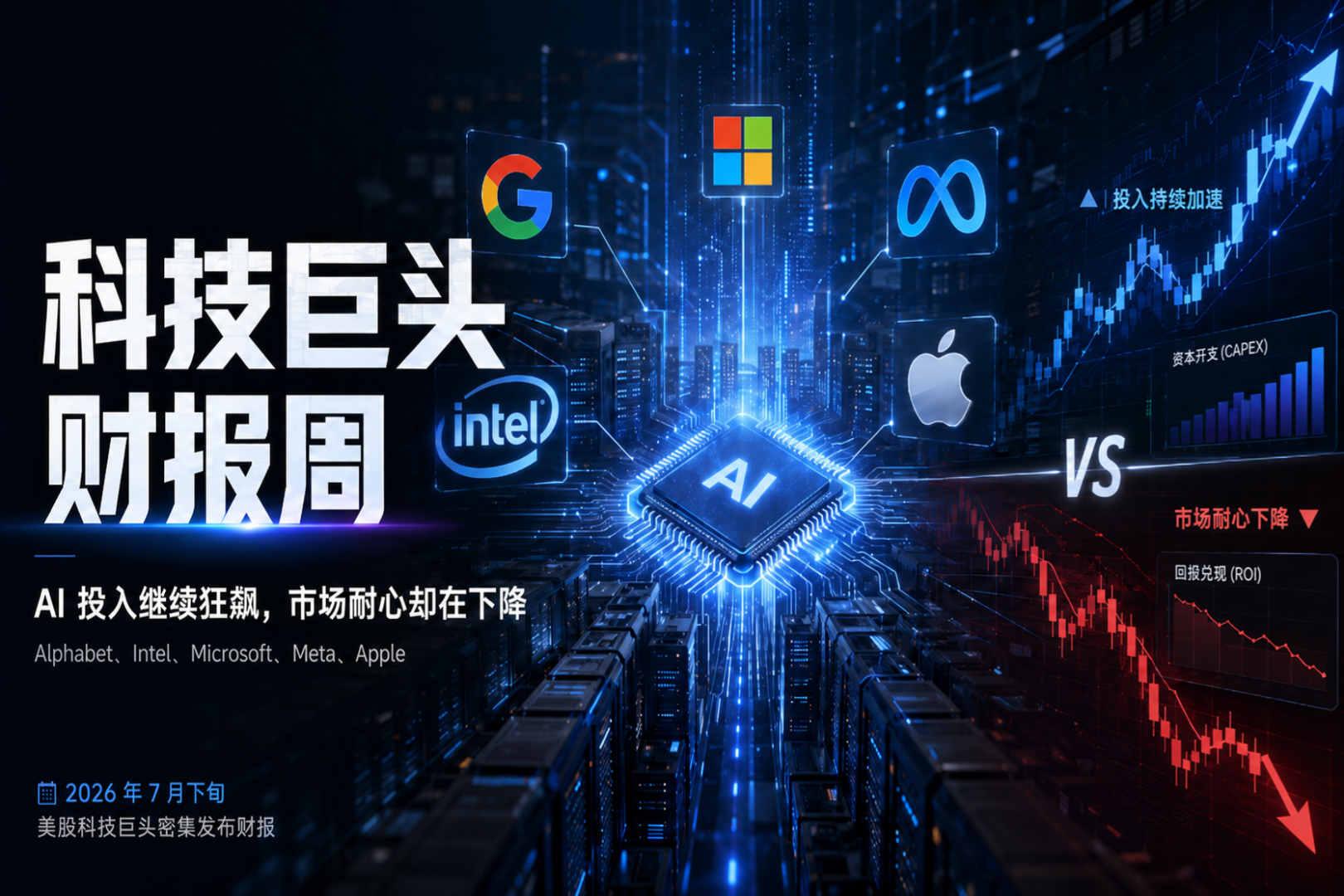
When the Market Begins to Question AI Capex: A Full Analysis of Q2 Earnings Reports from Five Tech Giants

In late July 2026, five major US tech giants—Alphabet, Intel, Microsoft, Meta, and Apple—released their Q2 earnings reports. While all companies exceeded revenue and profit expectations, driven by strong AI-related business growth, investor reactions diverged sharply due to concerns over escalating AI capital expenditures (capex) and their impact on free cash flow. Alphabet reported strong revenue growth and a surging cloud business, but its stock fell after announcing a doubled year-on-year capex and negative quarterly free cash flow for the first time. Intel posted its strongest revenue growth in over 15 years, but its stock experienced volatile trading after significantly raising its full-year capex guidance. Microsoft saw its stock surge after beating estimates and, crucially, lowering its capex forecast while projecting positive free cash flow. Meta faced the most severe sell-off as its profits declined despite revenue beats, with free cash flow plunging over 90% and its capex guidance raised. Apple reported record June-quarter results, but its stock plummeted after providing Q4 revenue guidance that fell short of expectations, citing supply chain constraints and forex headwinds. The overall takeaway is that the market's focus has shifted from validating AI demand to scrutinizing the timeline for returns on massive AI investments. Companies demonstrating a clearer path to managing capex and preserving free cash flow, like Microsoft, were rewarded, while those signaling continued aggressive spending faced investor skepticism.

Odaily星球日报Hace 46 min(s)

When the Market Begins to Question AI Capex: A Full Analysis of Q2 Earnings Reports from Five Tech Giants

Odaily星球日报Hace 46 min(s)

a16z: From Companies to DAOs, DUNA May Become the Next Generation Organizational Form

This article, "From Companies to DAOs: How DUNA Could Become the Next Organizational Form," traces the 500-year evolution of business collaboration. It begins with medieval structures like the *commenda* and Florentine *compagnia*, which exposed partners to personal risk. The modern corporation, exemplified by the Dutch East India Company (VOC), was a revolutionary leap, enabling large-scale, capital-intensive ventures by offering limited liability and reducing coordination costs. However, corporations introduced new challenges like principal-agent problems and bureaucratic overhead. The piece argues that software and internet-native protocols are now reducing these traditional overheads. Decentralized Autonomous Organizations (DAOs) emerged as a new model for coordination without centralized management. Yet, DAOs face a significant legal vacuum: they lack legal recognition, leaving members exposed to unlimited personal liability, and their tokens are vulnerable to being classified as securities under unclear regulations (e.g., the Howey Test). This has forced projects into suboptimal workarounds like offshore foundations. The article identifies the Decentralized Unincorporated Nonprofit Association (DUNA) as a potential solution. Recently legalized in states like Wyoming, the DUNA provides a legal wrapper for decentralized networks. It grants key protections—legal personality, limited liability, and perpetual existence—to a group without imposing a traditional hierarchical management structure. This allows token-holder communities to govern, hold assets, and contract as a single legal entity, aligning with their decentralized nature. While DUNA doesn't solve all governance challenges or magically resolve securities law questions, it represents a crucial step. It fills the legal recognition gap, offering a native legal form for internet-scale, decentralized collaboration and extending the separation of personal risk from organizational venture into a new domain.

marsbitHace 1 hora(s)

a16z: From Companies to DAOs, DUNA May Become the Next Generation Organizational Form

marsbitHace 1 hora(s)

Trading

Spot

Artículos destacados

Qué es $BANK

Banco AI: Un Paso Revolucionario en el Futuro de la Banca Introducción En una era marcada por avances rápidos en tecnología, Banco AI se sitúa en la intersección de la inteligencia artificial (IA) y los servicios bancarios. Este proyecto innovador busca redefinir el panorama financiero, mejorando la eficiencia operativa, las medidas de seguridad y las experiencias del cliente a través del poder de la IA. Al embarcarnos en esta exploración de Banco AI, profundizaremos en lo que implica el proyecto, sus dinámicas operativas, su contexto histórico y hitos significativos. ¿Qué es Banco AI? En su esencia, Banco AI representa una iniciativa transformadora destinada a integrar la inteligencia artificial en varias operaciones bancarias. Este proyecto aprovecha las capacidades de la IA para automatizar procesos, mejorar los protocolos de gestión de riesgos y mejorar la interacción con los clientes a través de servicios personalizados. Los objetivos principales de Banco AI incluyen: Automatización de Funciones Bancarias: Al aprovechar las tecnologías de IA, Banco AI tiene como objetivo automatizar tareas rutinarias, reduciendo la carga sobre los recursos humanos y mejorando la eficiencia. Mejora en la Gestión de Riesgos: El proyecto utiliza algoritmos de IA para predecir e identificar riesgos, fortaleciendo así las medidas de seguridad contra fraudes y otras amenazas. Personalización de Servicios Bancarios: Banco AI se centra en ofrecer productos y servicios financieros a medida al analizar datos y comportamientos de los clientes. Mejoramiento de la Experiencia del Cliente: La implementación de soluciones impulsadas por IA, como chatbots y asistentes virtuales, tiene como objetivo proporcionar a los usuarios interacciones más humanas, revolucionando la forma en que los clientes se relacionan con los bancos. Con estos objetivos, Banco AI se posiciona como un jugador crucial para hacer que la banca sea más eficiente, segura y centrada en el usuario. ¿Quién es el Creador de Banco AI? Los detalles sobre el creador de Banco AI siguen siendo desconocidos. Como tal, no se ha identificado a ninguna persona u organización específica en la información disponible. El anonimato que rodea el inicio del proyecto plantea preguntas, pero no resta valor a su ambiciosa visión y objetivos. ¿Quiénes Son los Inversores de Banco AI? Al igual que con el creador del proyecto, no se ha divulgado información específica sobre los inversores u organizaciones que apoyan a Banco AI. Sin esta información, es un desafío delinear el respaldo financiero y el apoyo institucional que podrían estar impulsando el proyecto hacia adelante. No obstante, la importancia de contar con una sólida base de inversión es fundamental para sostener el desarrollo en un campo tan innovador. ¿Cómo Funciona Banco AI? Banco AI opera en múltiples frentes innovadores, centrándose en factores únicos que lo diferencian de los marcos bancarios tradicionales. A continuación, se presentan las características operativas clave: Automatización: Al aplicar algoritmos de aprendizaje automático, Banco AI automatiza varios procesos manuales dentro de los bancos. Esto resulta en la reducción de costos operativos y permite que los trabajadores humanos redirijan sus esfuerzos hacia actividades más estratégicas. Gestión Avanzada de Riesgos: La integración de la IA en las prácticas de gestión de riesgos equipa a los bancos con herramientas para predecir con precisión amenazas potenciales como el fraude, garantizando que la información y los activos de los clientes permanezcan seguros. Recomendaciones Financieras Personalizadas: A través del aprendizaje continuo a partir de las interacciones con los clientes, los sistemas de IA desarrollan una comprensión matizada de las necesidades del usuario, lo que les permite ofrecer consejos adaptados sobre decisiones financieras. Interacciones Mejoradas con los Clientes: Al utilizar chatbots y asistentes virtuales impulsados por IA, Banco AI permite una experiencia más atractiva para el cliente, permitiendo a los usuarios resolver sus consultas rápidamente, reduciendo así los tiempos de espera y mejorando los niveles de satisfacción. En conjunto, estas características operativas posicionan a Banco AI como un pionero en el sector bancario, estableciendo nuevos parámetros para la entrega de servicios y la excelencia operativa. Línea de Tiempo de Banco AI Entender la trayectoria de Banco AI requiere mirar su contexto histórico. A continuación, se presenta una línea de tiempo que destaca hitos y desarrollos importantes: Inicios de 2010: La conceptualización de la integración de la IA en los servicios bancarios comenzó a ganar atención a medida que las instituciones bancarias reconocieron los posibles beneficios. 2018: Se produjo un aumento notable en la implementación de tecnologías de IA cuando los bancos comenzaron a utilizar herramientas de IA como chatbots para el servicio al cliente básico y sistemas de gestión de riesgos para mejorar la seguridad. 2023: La sofisticación de la IA continuó avanzando, con la introducción de IA generativa para tareas más complejas como el procesamiento de documentos y análisis de inversiones en tiempo real. Este año marcó un salto significativo en las capacidades que la tecnología de IA otorgó a los bancos. 2024-Estatus Actual: A partir de este año, Banco AI se encuentra en una trayectoria ascendente, con investigaciones y desarrollos en curso que pronto mejorarán las capacidades en las operaciones bancarias. La continua exploración de las aplicaciones de IA sugiere emocionantes desarrollos aún por venir. Puntos Clave Sobre Banco AI Integración de la IA en la Banca: Banco AI se centra en adoptar inteligencia artificial para optimizar los procesos bancarios y mejorar la experiencia del usuario. Enfoque en Automatización y Gestión de Riesgos: El proyecto enfatiza fuertemente estas áreas, con el objetivo de desplazar la carga de tareas rutinarias mientras mejora los marcos de seguridad a través de análisis predictivos. Soluciones Bancarias Personalizadas: Al aprovechar los datos de los clientes, Banco AI permite servicios bancarios adaptados a las necesidades individuales de los usuarios. Compromiso con el Desarrollo: Banco AI se mantiene comprometido con esfuerzos de investigación y desarrollo continuos, asegurando su adaptabilidad y relevancia continua a medida que la tecnología sigue evolucionando. Conclusión En resumen, Banco AI ejemplifica un paso crucial hacia adelante en la industria bancaria, aprovechando la inteligencia artificial para redefinir los paradigmas operativos, mejorar la seguridad y promover la satisfacción del cliente. A pesar de las lagunas en la información sobre el creador y los inversores, los objetivos claros y los mecanismos funcionales de Banco AI proporcionan una sólida base para su evolución continua. A medida que la tecnología de IA sigue avanzando y fusionándose con el sector bancario, Banco AI está bien posicionado para impactar significativamente el futuro de los servicios financieros, mejorando la forma en que entendemos e interactuamos con la banca.

198 Vistas totalesPublicado en 2024.04.06Actualizado en 2024.12.03

Qué es $BANK

Cómo comprar BANK

¡Bienvenido a HTX.com! Hemos hecho que comprar Lorenzo Protocol (BANK) sea simple y conveniente. Sigue nuestra guía paso a paso para iniciar tu viaje de criptos.Paso 1: crea tu cuenta HTXUtiliza tu correo electrónico o número de teléfono para registrarte y obtener una cuenta gratuita en HTX. Experimenta un proceso de registro sin complicaciones y desbloquea todas las funciones.Obtener mi cuentaPaso 2: ve a Comprar cripto y elige tu método de pagoTarjeta de crédito/débito: usa tu Visa o Mastercard para comprar Lorenzo Protocol (BANK) al instante.Saldo: utiliza fondos del saldo de tu cuenta HTX para tradear sin problemas.Terceros: hemos agregado métodos de pago populares como Google Pay y Apple Pay para mejorar la comodidad.P2P: tradear directamente con otros usuarios en HTX.Over-the-Counter (OTC): ofrecemos servicios personalizados y tipos de cambio competitivos para los traders.Paso 3: guarda tu Lorenzo Protocol (BANK)Después de comprar tu Lorenzo Protocol (BANK), guárdalo en tu cuenta HTX. Alternativamente, puedes enviarlo a otro lugar mediante transferencia blockchain o utilizarlo para tradear otras criptomonedas.Paso 4: tradear Lorenzo Protocol (BANK)Tradear fácilmente con Lorenzo Protocol (BANK) en HTX's mercado spot. Simplemente accede a tu cuenta, selecciona tu par de trading, ejecuta tus trades y monitorea en tiempo real. Ofrecemos una experiencia fácil de usar tanto para principiantes como para traders experimentados.

836 Vistas totalesPublicado en 2025.05.09Actualizado en 2026.06.02

Cómo comprar BANK

Discusiones

Bienvenido a la comunidad de HTX. Aquí puedes mantenerte informado sobre los últimos desarrollos de la plataforma y acceder a análisis profesionales del mercado. A continuación se presentan las opiniones de los usuarios sobre el precio de BANK (BANK).

活动图片