Saeed Al-Marri: How Tokenization Unlocks New Opportunities for Shipping Funds

cryptonews.ruPublicado a 2026-07-31Actualizado a 2026-07-31

Resumen

Said Al-Marri: How Tokenization Opens New Opportunities for Shipping Funds For centuries, commercial shipping has been a capital-intensive asset class limited to institutional funds and shipping dynasties. Said bin Saleh Al-Marri, CEO of Ethra Invest and Ethra Ship, aims to break down these barriers by combining Real World Asset (RWA) tokenization with conservative private equity principles. This bridges decentralized finance (DeFi) with the physical realities of global trade. Tokenization allows fractional ownership of ships on a blockchain, giving smaller investors access to previously inaccessible markets. However, Al-Marri warns it is not a regulatory loophole or a cure for asset illiquidity. The core physical risks are isolated in Special Purpose Vehicles (SPVs) for qualified investors. While tokenization enhances transparency and ownership record-keeping, Al-Marri stresses that a liquid secondary market depends on transparent asset valuation and must not interfere with ship operations managed by professionals. Regarding legal enforcement, smart contracts cannot physically seize a ship. Legal recourse still relies on traditional maritime courts, ship mortgages, and flag state laws, with blockchain records needing to mirror legal ownership in the SPV perfectly. Beyond ownership, the industry faces administrative hurdles like paper-based bills of lading. Al-Marri argues the bottleneck is legal and operational standardization, not technology. He advocates for a hybrid m...

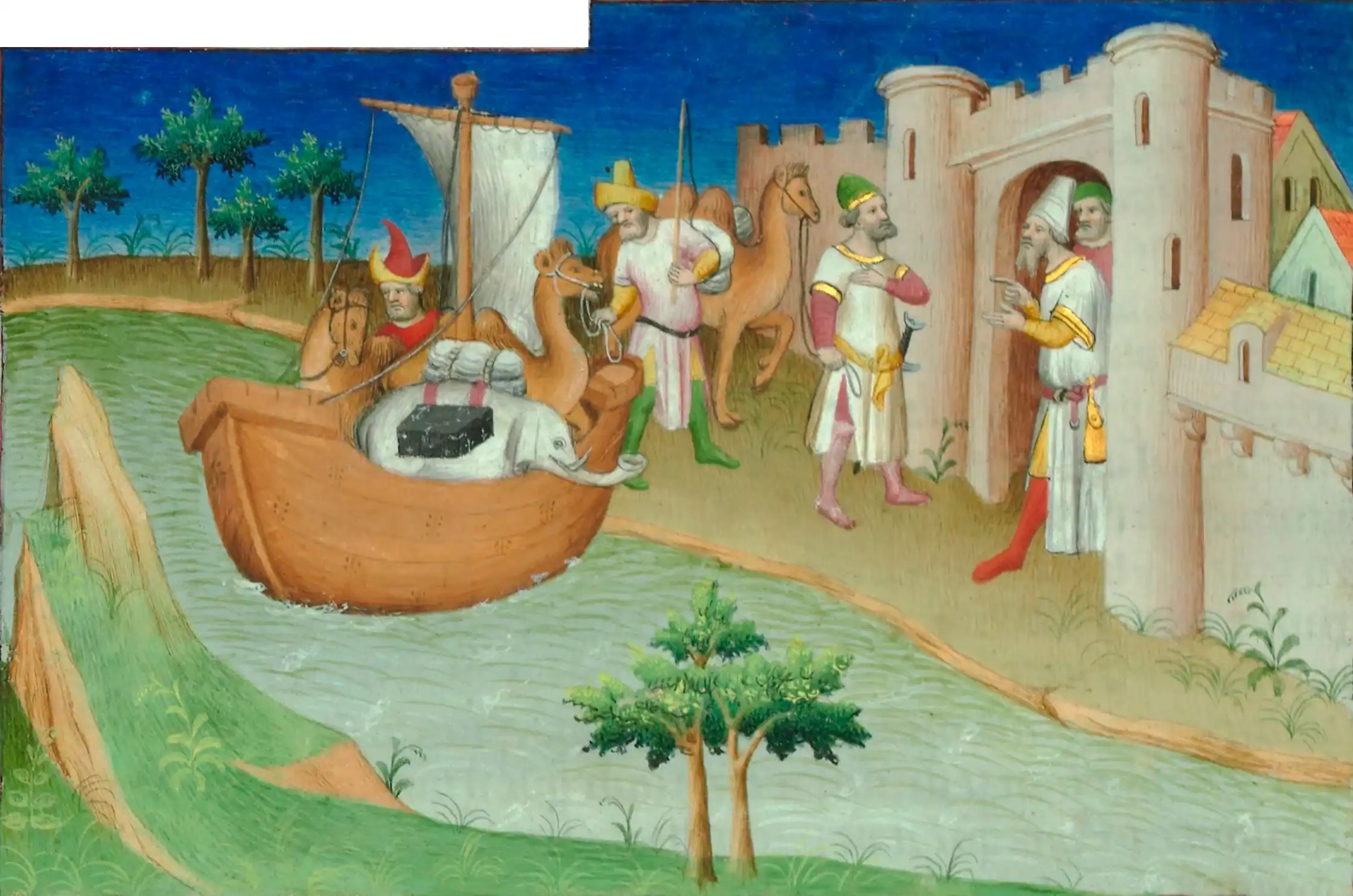
For centuries, commercial maritime shipping has remained one of the most capital-intensive and exclusive asset classes in the global financial system. With the cost of a single dry bulk carrier or container ship ranging from $30 million to over $100 million, ship ownership has traditionally been confined to institutional funds, state-backed syndicates, and historic shipping dynasties.

Saeed Bin Saleh Al-Marri, CEO of Ethra Invest and Ethra Ship, is working to remove these barriers by combining real-world asset (RWA) tokenization with the conservative principles of private capital management. By bridging decentralized finance (DeFi) with the physical realities of global trade, Al-Marri is paving the way for everything from on-chain asset ownership and trade settlement to decarbonizing the multi-trillion dollar global fleet.

By fractionalizing physical assets on the blockchain, Al-Marri's approach allows retail investors access to previously inaccessible markets. However, Al-Marri cautions that tokenization is neither a loophole around regulatory constraints nor a magic solution for asset illiquidity.

"Traditionally, it has been difficult for retail investors to access shipping," Al-Marri explains. "Tokenization allows the ownership interest in a properly structured shipping investment vehicle to be broken down into smaller digital units. This lowers the barrier to entry, improves efficiency in recording ownership rights, and provides better transparency regarding vessel usage, freight revenue, expenses, and profit distribution."

Importantly, Ethra separates its utility and governance tokens from the regulated investment layer. Physical risks associated with the ships are ring-fenced within special purpose vehicles (SPVs) designed for qualified investors. When it comes to secondary market liquidity, Al-Marri urges realism over hype:

"Tokenization cannot automatically turn an illiquid ship into a perfectly liquid one. Any platform claiming otherwise is setting false expectations. A robust secondary market relies on transparent asset valuation... And most crucially, secondary market trading must never interfere with operational activities. A professional manager remains fully responsible for chartering, maintenance, insurance, and financing—regardless of how often the tokens change hands."

In practice, tokenizing a vessel operating in international waters presents significant legal complexities: in the event of default, how can a blockchain smart contract enforce claims on a physical ship located thousands of miles offshore?

Yet, according to Al-Marri, code alone cannot override centuries of established maritime law.

"A smart contract cannot be physically enforced against a ship. Legal enforcement still relies on recognized property rights, security documentation, and courts. The vessel is owned by an SPV, and the legal, corporate, and blockchain records must fully mirror identical investor rights."

While smart contracts can automate administrative holds or on-chain transaction pauses, physical enforcement actions—such as vessel arrest or sale—still require traditional maritime courts, ship mortgages, and flag-state legislation.

Overcoming Trade Documentation Hurdles

Beyond equity ownership, global shipping remains hampered by administrative barriers. Despite billions lost annually to delays from bulky paper documentation, demurrage fees, and trade finance bottlenecks, the industry has struggled to achieve widespread adoption of digital bills of lading. For Al-Marri, the bottleneck is more legal than technical.

"The greater challenge is getting governments, banks, carriers, insurers, customs authorities, and cargo owners to adopt the same legal and operational standards. A bill of lading is more than a receipt: it evidences title to the cargo and serves as collateral for banks."

Replacing paper silos with digital ones—where platforms operate in isolation—doesn't solve the core issue. True digital transformation requires global legal recognition and open, cross-border standards.

While round-the-clock stablecoin settlements offer instant liquidity, Al-Marri dismisses the idea that smart contracts will completely displace traditional Letters of Credit (LC). He notes that shipping involves complex real-world contingencies that simple payment mechanisms cannot address.

"A Letter of Credit represents an obligation by a regulated bank to make payment upon fulfillment of documentary conditions. Stablecoins accelerate payment execution, but shipping depends on physical verification: is the cargo loaded correctly, does its quality meet standards, are the documents authentic, and are sanctions applicable?"

Instead of a full crypto displacement, Al-Marri's Ethra advocates for a hybrid model combining electronic trade documents and programmable settlements with legal backing from regulated financial institutions.

The paramount challenge for the maritime sector is achieving net-zero emissions by 2050. Transitioning to clean fuels like green ammonia, methanol, and hydrogen requires enormous upfront capital for unproven propulsion technologies and developing port infrastructure.

For private equity fund managers, financing this transition requires balancing environmental imperatives with capital preservation.

"Decarbonization is undoubtedly the direction of travel, but we must be realistic," notes Al-Marri. "It would be irresponsible to expose investors to all these risks at once. We take a holistic view: vessel technology, fuel availability along routes, safety certifications, crew requirements, operating costs, and resale value."

To protect capital while funding green fleets, Ethra Invest relies on conservative underwriting, long-term charters, dual-fuel capability, and dedicated SPVs.

"The investment must make sense even under conservative projections," Al-Marri emphasizes. "We do not back projects that will only be profitable if fuel prices, carbon emission norms, and subsidies all align in their favor."

By blending pragmatic risk management with digital infrastructure, leaders like Saeed Bin Saleh Al-Marri demonstrate that the evolution of maritime finance goes beyond simply putting ships on a blockchain—it's about mobilizing capital to build a modernized and sustainable global fleet.

end-content

Criptos en tendencia

Preguntas relacionadas

QAccording to Said Al-Marri, what is the primary benefit of tokenization for maritime shipping funds?

ATokenization allows small investors to access previously inaccessible markets by breaking down ownership in maritime shipping assets into smaller digital units, lowering entry barriers, improving record-keeping efficiency, and enhancing transparency regarding vessel use, freight revenues, expenses, and profit distribution.

QWhat is Al-Marri's key warning about tokenization and asset liquidity?

AAl-Marri warns that tokenization is not a magic solution to turn an illiquid physical asset like a ship into a fully liquid one. A robust secondary market depends on transparent asset valuation, and trading should not interfere with the vessel's core operational management.

QWhat is the main challenge for global digital transformation in shipping, particularly regarding bills of lading, according to the article?

AThe main challenge is legal and operational standardization, not technical. It requires governments, banks, carriers, insurers, customs, and cargo owners to adopt common legal and operational standards, as a bill of lading is a title document and bank collateral, not just a receipt.

QHow does Ethra approach the funding of decarbonization (e.g., green fuel transition) in the shipping industry?

AEthra takes a conservative underwriting approach. It balances environmental goals with capital preservation by thoroughly assessing vessel technology, fuel availability, safety, operational costs, and resale value. They rely on long-term charters, dual-fuel capabilities, and targeted SPVs, rejecting projects that are only profitable under overly optimistic scenarios.

QAccording to Al-Marri, what role do smart contracts and traditional legal systems play in enforcing claims on a tokenized vessel?

AWhile smart contracts can automate administrative functions on-chain, they cannot physically enforce claims on a ship. Legal enforcement for actions like ship arrest or sale still depends on traditional maritime courts, ship mortgages, and flag state legislation. Legal, corporate, and blockchain records must fully align to reflect identical investor rights.

Lecturas Relacionadas

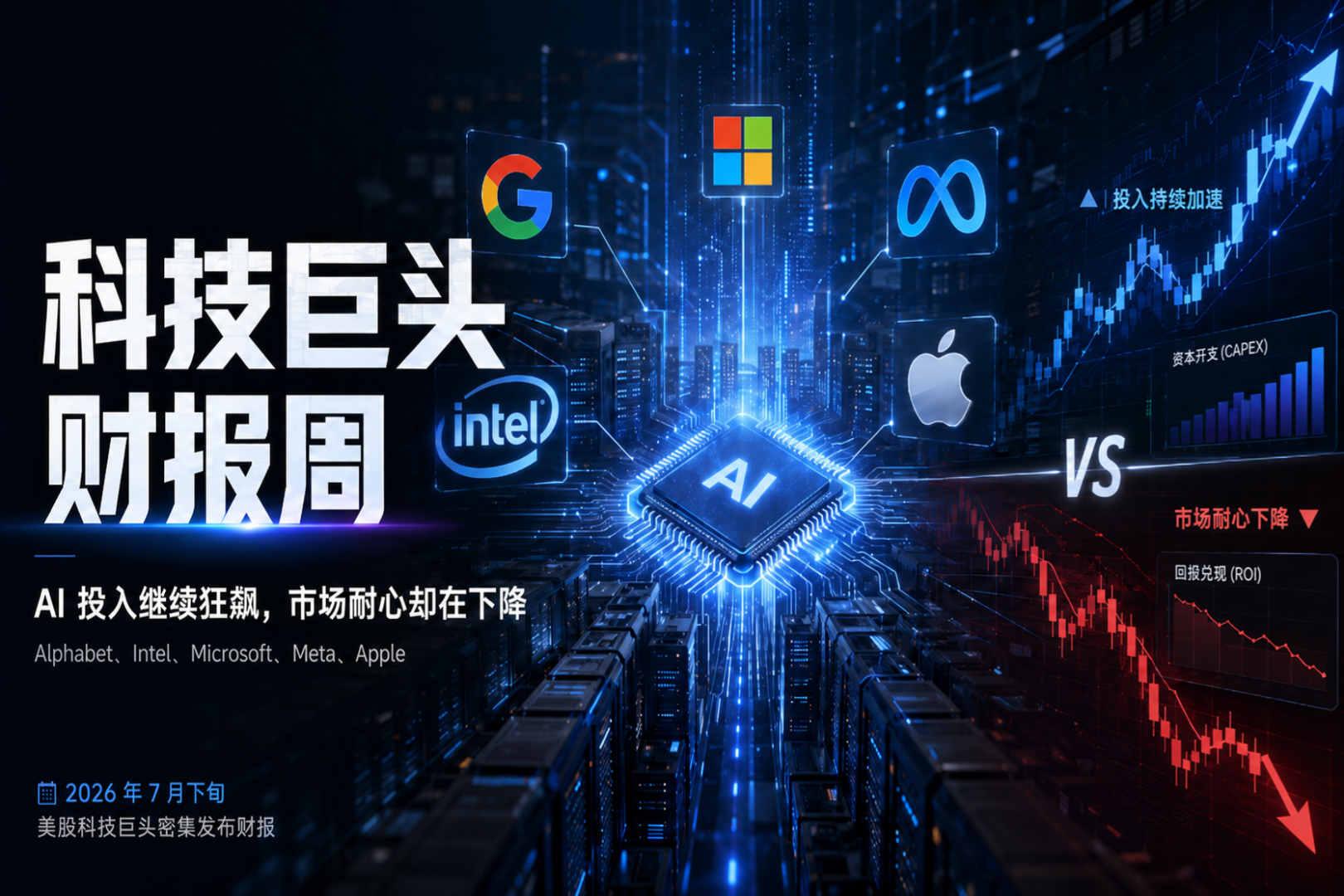
When the Market Begins to Question AI Capex: A Full Analysis of Q2 Earnings Reports from Five Tech Giants

In late July 2026, five major US tech giants—Alphabet, Intel, Microsoft, Meta, and Apple—released their Q2 earnings reports. While all companies exceeded revenue and profit expectations, driven by strong AI-related business growth, investor reactions diverged sharply due to concerns over escalating AI capital expenditures (capex) and their impact on free cash flow. Alphabet reported strong revenue growth and a surging cloud business, but its stock fell after announcing a doubled year-on-year capex and negative quarterly free cash flow for the first time. Intel posted its strongest revenue growth in over 15 years, but its stock experienced volatile trading after significantly raising its full-year capex guidance. Microsoft saw its stock surge after beating estimates and, crucially, lowering its capex forecast while projecting positive free cash flow. Meta faced the most severe sell-off as its profits declined despite revenue beats, with free cash flow plunging over 90% and its capex guidance raised. Apple reported record June-quarter results, but its stock plummeted after providing Q4 revenue guidance that fell short of expectations, citing supply chain constraints and forex headwinds. The overall takeaway is that the market's focus has shifted from validating AI demand to scrutinizing the timeline for returns on massive AI investments. Companies demonstrating a clearer path to managing capex and preserving free cash flow, like Microsoft, were rewarded, while those signaling continued aggressive spending faced investor skepticism.

Odaily星球日报Hace 9 min(s)

When the Market Begins to Question AI Capex: A Full Analysis of Q2 Earnings Reports from Five Tech Giants

Odaily星球日报Hace 9 min(s)

a16z: From Companies to DAOs, DUNA May Become the Next Generation Organizational Form

This article, "From Companies to DAOs: How DUNA Could Become the Next Organizational Form," traces the 500-year evolution of business collaboration. It begins with medieval structures like the *commenda* and Florentine *compagnia*, which exposed partners to personal risk. The modern corporation, exemplified by the Dutch East India Company (VOC), was a revolutionary leap, enabling large-scale, capital-intensive ventures by offering limited liability and reducing coordination costs. However, corporations introduced new challenges like principal-agent problems and bureaucratic overhead. The piece argues that software and internet-native protocols are now reducing these traditional overheads. Decentralized Autonomous Organizations (DAOs) emerged as a new model for coordination without centralized management. Yet, DAOs face a significant legal vacuum: they lack legal recognition, leaving members exposed to unlimited personal liability, and their tokens are vulnerable to being classified as securities under unclear regulations (e.g., the Howey Test). This has forced projects into suboptimal workarounds like offshore foundations. The article identifies the Decentralized Unincorporated Nonprofit Association (DUNA) as a potential solution. Recently legalized in states like Wyoming, the DUNA provides a legal wrapper for decentralized networks. It grants key protections—legal personality, limited liability, and perpetual existence—to a group without imposing a traditional hierarchical management structure. This allows token-holder communities to govern, hold assets, and contract as a single legal entity, aligning with their decentralized nature. While DUNA doesn't solve all governance challenges or magically resolve securities law questions, it represents a crucial step. It fills the legal recognition gap, offering a native legal form for internet-scale, decentralized collaboration and extending the separation of personal risk from organizational venture into a new domain.

marsbitHace 54 min(s)

a16z: From Companies to DAOs, DUNA May Become the Next Generation Organizational Form

marsbitHace 54 min(s)

2026 Mid-Year Report On-Chain RWA: Tokenized Stock Market Cap Doubles in a Year, But 90% of Rights Are Hollow Shells

The 2026 Mid-Year Report on On-Chain RWA highlights a significant growth in tokenized stock market capitalization, which nearly doubled from $951 million in March to $1.89 billion by July. However, the report reveals a fundamental contradiction in this "layer 2.5" ecosystem: products with the strongest legal foundation (like regulated U.S. infrastructure) lack liquidity and distribution, while freely tradable offshored wrapper products often lack substantive ownership rights. The increase is driven largely by a few products (SECZ, FGRS, STRCx) and platforms (Ondo, xStocks, Securitize collectively hold over 85% share). While distributed value across networks like Ethereum, Solana, and BNB Chain has grown, the market remains fragmented. Products referencing the same underlying asset (e.g., Apple stock) are distinct legal liabilities with different intermediaries and jurisdictional rules, offering varying degrees of legal claim. The report cautions that headline numbers are misleading, as they reflect changes in distributed token value—driven by issuance, conversions, and price movements—not pure investor inflows. True "canonical shares" with legal ownership, wide wallet distribution, institutional liquidity, and independent on-chain price discovery do not yet exist at scale. Tokenized treasuries show stronger product-market fit, and ETFs may be easier to scale than single stocks. The core takeaway is a trade-off: legal certainty versus liquidity and composability.

marsbitHace 1 hora(s)

2026 Mid-Year Report On-Chain RWA: Tokenized Stock Market Cap Doubles in a Year, But 90% of Rights Are Hollow Shells

marsbitHace 1 hora(s)

Trading

Spot

Artículos destacados

Cómo comprar ONE

¡Bienvenido a HTX.com! Hemos hecho que comprar Harmony (ONE) sea simple y conveniente. Sigue nuestra guía paso a paso para iniciar tu viaje de criptos.Paso 1: crea tu cuenta HTXUtiliza tu correo electrónico o número de teléfono para registrarte y obtener una cuenta gratuita en HTX. Experimenta un proceso de registro sin complicaciones y desbloquea todas las funciones.Obtener mi cuentaPaso 2: ve a Comprar cripto y elige tu método de pagoTarjeta de crédito/débito: usa tu Visa o Mastercard para comprar Harmony (ONE) al instante.Saldo: utiliza fondos del saldo de tu cuenta HTX para tradear sin problemas.Terceros: hemos agregado métodos de pago populares como Google Pay y Apple Pay para mejorar la comodidad.P2P: tradear directamente con otros usuarios en HTX.Over-the-Counter (OTC): ofrecemos servicios personalizados y tipos de cambio competitivos para los traders.Paso 3: guarda tu Harmony (ONE)Después de comprar tu Harmony (ONE), guárdalo en tu cuenta HTX. Alternativamente, puedes enviarlo a otro lugar mediante transferencia blockchain o utilizarlo para tradear otras criptomonedas.Paso 4: tradear Harmony (ONE)Tradear fácilmente con Harmony (ONE) en HTX's mercado spot. Simplemente accede a tu cuenta, selecciona tu par de trading, ejecuta tus trades y monitorea en tiempo real. Ofrecemos una experiencia fácil de usar tanto para principiantes como para traders experimentados.

369 Vistas totalesPublicado en 2024.12.12Actualizado en 2026.06.02

Cómo comprar ONE

Discusiones

Bienvenido a la comunidad de HTX. Aquí puedes mantenerte informado sobre los últimos desarrollos de la plataforma y acceder a análisis profesionales del mercado. A continuación se presentan las opiniones de los usuarios sobre el precio de ONE (ONE).

活动图片