Iran Launches 'Sudden Strike' on US Base in Jordan; Oil Prices Jump Nearly 4%, Threatening Bitcoin Rally

cryptonews.ruPublicado a 2026-07-29Actualizado a 2026-07-29

Resumen

Iran launched a "sudden strike" with ballistic missiles targeting a US base near Jordan's Muwaffaq Salti Air Base on July 28. US Central Command reported all missiles were intercepted by Patriot air defense systems, with no casualties. Iran claimed the attack was retaliation for perceived US actions against its interests. This strike broke a brief ceasefire that began after President Trump paused offensive operations against Iran days earlier. The attack triggered immediate financial market reactions. WTI crude oil prices surged nearly 4% to $83.08 per barrel, while Brent crude rose to $87.34. US stock index futures also saw gains as traders priced in renewed Middle East risks. This price jump reversed a significant portion of the oil price decline that followed the initial ceasefire announcement. Bitcoin's price movement mirrored this volatile cycle. It had recovered to around $65,200 as oil prices fell during the ceasefire, but dropped back to the $63,600-$63,800 range following news of the missile strike. While Bitcoin has shown some resilience compared to purely risk-on assets during the conflict, the July 28 attack directly challenged the "truce" narrative that had supported its recent stability. The pattern of price declines following escalations and recoveries during pauses has become familiar since the conflict began in February.

In a statement, CENTCOM reported that at 5:45 PM Eastern Time on July 28, Islamic Revolutionary Guard Corps forces launched several ballistic missiles from Iran as part of an "attempted surprise attack" against U.S. troops in the Middle East; the missiles were aimed at U.S. positions near Jordan's Muwaffaq Salti Air Base. The Command reported that Patriot air defense batteries intercepted all inbound missiles, and there were no casualties.
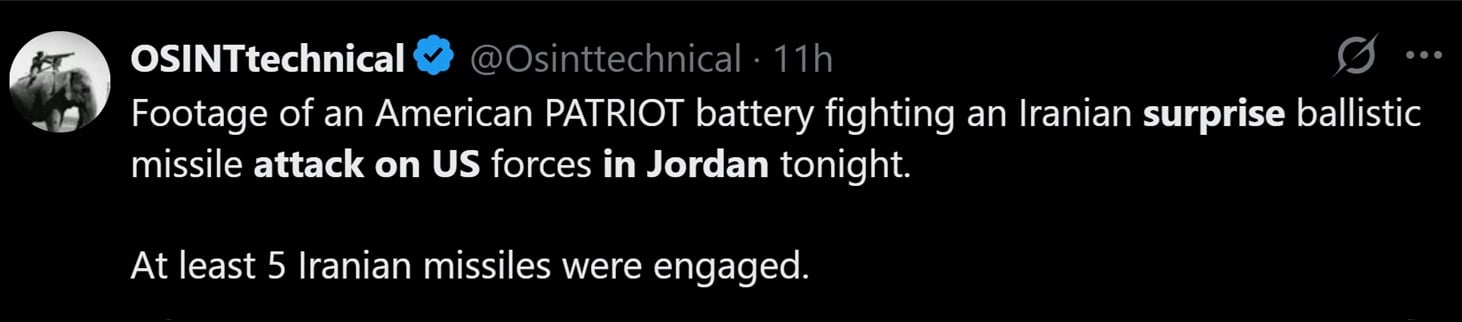
Iranian military forces claimed responsibility for the attack, calling it a response to what they identified as "illegal and malicious actions" by Washington against Iranian interests. This attack marks the first strike by Iranian ballistic missiles on a U.S. base in the region since President Trump paused offensive strikes against Iran several days ago to give diplomacy with Tehran a chance, thereby breaking a brief lull in the war that began on February 28.

That previous pause had already been tested, given that an Iranian strike on Jordan's Al-Azraq air base on July 18 resulted in the deaths of two U.S. service members, with a third listed as missing—this was one of several flare-ups that have accompanied the five-month-long conflict. Jordanian military officials reported that this time, they also shot down some of the projectiles flying toward them, with no damage or casualties recorded on their territory.

Oil Futures and Stocks Surge Sharply

Financial markets reacted within hours: the price of WTI crude oil rose by 3.95% to $83.08 per barrel, while the price of Brent crude, the global benchmark, increased by 3.86% to $87.34. Dow Jones futures rose by 63 points, or 0.12%, to 53,007, while S&P 500 futures gained 26 points, and Nasdaq 100 futures rose by nearly 133 points, as traders priced in a resumption of Middle East risks.
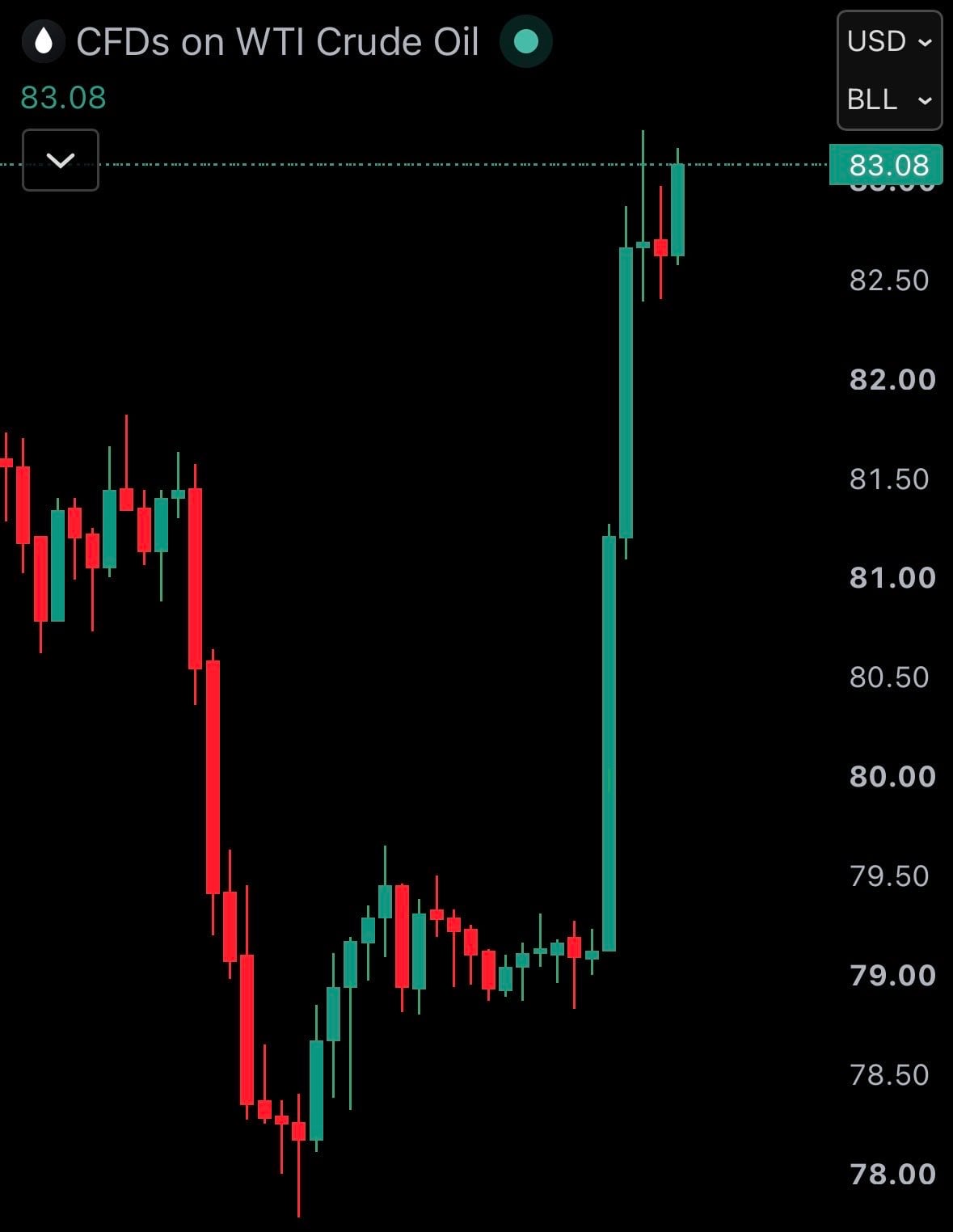
This rebound partially offset a sharp move in the opposite direction just days earlier. Oil prices had plunged by as much as 8% after the Trump administration first signaled the pause, with the price of Brent crude falling from above $100 per barrel to around $87 as mediators negotiated over the Strait of Hormuz. The July 28 attack erased a significant portion of that relief within hours—a pattern now familiar to traders tracking the start-stop rhythm of this conflict since February.

Bitcoin Rally Amid 'Truce' Faces Next Test

Cryptocurrency markets have moved in step with this same cycle, as by July 27 (when Brent crude collapsed to $87), Bitcoin had recovered to around $65,200, briefly reaching $65,600 at the start of futures trading. This recovery gave way to a decline the next day: by July 28, Bitcoin dropped to around $64,000 even before the evening strike, then continued to fall into the $63,600 to $63,800 range once news of the missile strike spread.

Bitcoin.com News previously reported that Bitcoin held near $63,000 during a previous escalation of the conflict in July—part of a trend where the network repeatedly recouped losses within days of each escalation, only to lose some of those gains again at the next flare-up.

Nevertheless, throughout this year, BTC has at times shown signs of decoupling from purely risk-on asset behavior amid the conflict, maintaining support even amid sharp swings in oil and stock prices (unlike the sharper and more consistent sell-offs observed for assets like Ether during the same periods). However, the July 28 strike posed the most direct challenge yet to the 'truce' narrative that underpinned last week's calm.

end-content


Criptos en tendencia

Preguntas relacionadas

QWhat did the Iranian attack on an American base in Jordan target, and what was the immediate military outcome according to CENTCOM?

AThe Iranian attack targeted American positions near Jordan's Muwaffaq Salti Air Base. According to CENTCOM, Patriot air defense batteries intercepted all of the incoming ballistic missiles, and there were no casualties reported.

QHow did the Iranian military justify their missile attack on the American base in Jordan?

AThe Iranian military claimed responsibility for the attack, justifying it as a response to what they identified as 'unlawful and malicious actions' by Washington against Iranian interests.

QWhat was the immediate impact of the July 28th attack on global oil prices?

AFollowing the attack, WTI crude oil prices rose by 3.95% to $83.08 per barrel, and Brent crude oil prices increased by 3.86% to $87.34 per barrel.

QHow did Bitcoin's price react in the hours surrounding the July 28th attack on the Jordanian base?

ABefore the evening attack on July 28th, Bitcoin had dropped to around $64,000. After news of the missile strike spread, its price fell further into the range of $63,600 to $63,800.

QWhat pattern has been observed regarding Bitcoin's price movements in relation to Middle East conflict escalations earlier in the year, according to the article?

AAccording to the article, Bitcoin has shown a pattern of repeatedly recovering losses within days after each escalation of the conflict, only to lose some of those gains again during the next escalation. However, it has also shown signs of decoupling from purely risk-on asset behavior, maintaining support even during sharp swings in oil and stock prices.

Lecturas Relacionadas

Luno Cuts 20% of Global Workforce as Cryptocurrency Exchange Shifts Priorities Towards Automation

Luno, a global cryptocurrency exchange owned by Digital Currency Group, is reducing its global workforce by 20% as part of a major operational restructuring driven by a downturn in retail crypto activity and increased automation. CEO James Lanigan announced the layoffs on July 28, stating it was a difficult but necessary decision to build a more sustainable structure for the long term. The company did not disclose the total number of affected employees, though South African staff are among those impacted, with formal consultations initiated there in line with local labor laws. This marks the second major round of layoffs in three and a half years, following a 35% staff reduction in January 2023. The company cites cyclical declines in retail user activity and ongoing investment in automated tools as key factors behind the restructuring, which has fundamentally changed the firm's resource needs. Concurrently, Luno is reorganizing into three unified divisions built on a single core platform: 1) a consolidated consumer and API platform serving over 16 million users in Africa and Asia-Pacific, 2) a stablecoin solutions unit focused on the zar-backed 'Zaru' stablecoin launched in February 2026, and 3) an institutional arm offering OTC services and cross-border settlement networks. This restructuring follows recent market withdrawals, with Luno discontinuing services in certain markets from September 1, 2026.

cryptonews.ruHace 1 hora(s)

Luno Cuts 20% of Global Workforce as Cryptocurrency Exchange Shifts Priorities Towards Automation

cryptonews.ruHace 1 hora(s)

Trading

Spot

Artículos destacados

Cómo comprar 4

¡Bienvenido a HTX.com! Hemos hecho que comprar 4 (4) sea simple y conveniente. Sigue nuestra guía paso a paso para iniciar tu viaje de criptos.Paso 1: crea tu cuenta HTXUtiliza tu correo electrónico o número de teléfono para registrarte y obtener una cuenta gratuita en HTX. Experimenta un proceso de registro sin complicaciones y desbloquea todas las funciones.Obtener mi cuentaPaso 2: ve a Comprar cripto y elige tu método de pagoTarjeta de crédito/débito: usa tu Visa o Mastercard para comprar 4 (4) al instante.Saldo: utiliza fondos del saldo de tu cuenta HTX para tradear sin problemas.Terceros: hemos agregado métodos de pago populares como Google Pay y Apple Pay para mejorar la comodidad.P2P: tradear directamente con otros usuarios en HTX.Over-the-Counter (OTC): ofrecemos servicios personalizados y tipos de cambio competitivos para los traders.Paso 3: guarda tu 4 (4)Después de comprar tu 4 (4), guárdalo en tu cuenta HTX. Alternativamente, puedes enviarlo a otro lugar mediante transferencia blockchain o utilizarlo para tradear otras criptomonedas.Paso 4: tradear 4 (4)Tradear fácilmente con 4 (4) en HTX's mercado spot. Simplemente accede a tu cuenta, selecciona tu par de trading, ejecuta tus trades y monitorea en tiempo real. Ofrecemos una experiencia fácil de usar tanto para principiantes como para traders experimentados.

807 Vistas totalesPublicado en 2025.10.20Actualizado en 2026.06.02

Cómo comprar 4

Discusiones

Bienvenido a la comunidad de HTX. Aquí puedes mantenerte informado sobre los últimos desarrollos de la plataforma y acceder a análisis profesionales del mercado. A continuación se presentan las opiniones de los usuarios sobre el precio de 4 (4).

活动图片