South Korean Giants LG CNS and POSCO International Implement Real-Time Trade Transaction Data on Injective Blockchain

cryptonews.ruPublicado a 2026-07-28Actualizado a 2026-07-28

Resumen

South Korean conglomerates POSCO International and LG CNS have launched a pilot project to tokenize real trade accounts receivable on the Injective blockchain, using actual commercial data from POSCO's overseas subsidiaries. POSCO International, a major trading firm with over $22 billion in revenue, and LG CNS, a leading IT services provider, are testing this as an advanced real-world asset (RWA) initiative in Korea. The pilot issues POSCO's receivables as permissioned tokens on Injective. Authorized parties can hold and transfer these assets, with settlements executed on-chain. This moves away from the current fragmented tracking by subsidiaries, banks, and counterparties—which slows reconciliation and delays cash access—to a single shared ledger. Compliance rules are embedded with the tokens, enabling uniform checks across jurisdictions. Injective was chosen for its native real-world asset module, which enforces regulatory compliance at the protocol level. Its fast transaction finality (under one second per block) and built-in order book designed to prevent front-running were cited as essential for tokenizing real monetary claims. The companies aim to build a unified infrastructure for inter-subsidiary trade, enabling faster settlements than the current multi-day cycle and border-agnostic compliance. POSCO plans to refine the pilot structure in the second half of the year for real business application. This project is part of a global acceleration in enterprise tokenizat...

POSCO International and LG CNS have launched a pilot project to tokenize existing trade receivables on the Injective blockchain, marking one of the most advanced real-world asset trials in South Korea. The companies reported that the project uses actual commercial data from POSCO International's overseas subsidiaries, not test data.

POSCO International, one of South Korea's largest trading companies, reported revenue of $22.2 billion and operates over 80 overseas branches in steel, energy, and battery materials. LG CNS, the IT arm of LG Group, is one of Korea's largest technology companies and conducted the country's largest IPO since 2022 in February 2025.

In the pilot project, POSCO International's receivables are issued as permissioned tokens on the Injective blockchain. Authorized parties can own and transfer these assets, and settlements are executed on-chain under the supervision of POSCO International's finance divisions.

According to a press release, receivables are currently tracked separately by subsidiaries, banks, and counterparties, slowing down the reconciliation process and delaying access to cash. By placing receivables on a shared ledger, the record becomes a single object, and compliance rules travel with the token, enabling uniform checks across different jurisdictions.

Injective was chosen over general-purpose blockchains because its real-world asset module ensures compliance at the protocol level. Identity verification and rules defining who can own or move an asset are enforced by the chain itself. The network finalizes transactions instantly, generates blocks in under a second, and uses a chain-native order book designed to prevent front-running—features the companies stated are necessary when tokenizing claims representing actual cash debts.

"This pilot is significant for having verified the applicability of AI and blockchain technologies based on real trade data and processes," said a POSCO International representative. "In the second half of this year, we plan to refine the pilot operation structure, focusing on areas where operational efficiency improvements were confirmed, and will gradually apply it to real business practices."

LG CNS has provided digital currency infrastructure for over 220 local governments, contributed to the Bank of Korea's central bank digital currency (CBDC) pilot, and manages security token platforms for KOSCOM and Mirae Asset Securities. In March 2026, it partnered with Palantir to deploy enterprise AI within the LG Group.

This year has seen a global acceleration of enterprise tokenization. JPMorgan's Kinexys platform has processed over $3 trillion in transactions, and Citi, together with Wellington Management and Wisdomtree, tested private market tokenization on a public chain. Korea remains one of the most active markets, with POSCO International and LG CNS extending this model to the receivables that underpin global trade.

The companies stated that their goal is to create a unified trade infrastructure across all subsidiaries, where settlements occur faster than the current multi-day cycle, and compliance is ensured regardless of borders.

"Injective was built for regulated financial operations to happen on-chain, and a pilot of this scale is exactly what it was designed for," said Injective co-founder Eric Chen. "The fact that South Korea's largest trading company and LG CNS have chosen Injective to work with real-world trade receivables demonstrates Injective's ability to bring real capital markets onto the blockchain."


Criptos en tendencia

Preguntas relacionadas

QWhat is the main purpose of the pilot project launched by POSCO International and LG CNS?

AThe main purpose of the pilot project is to tokenize existing trade receivables on the Injective blockchain, which is one of the most advanced real-world asset trials in South Korea, using real commercial data from POSCO International's overseas subsidiaries.

QWhy was the Injective blockchain specifically chosen for this project over other general-purpose blockchains?

AInjective was chosen because its Real-World Asset (RWA) module provides compliance enforcement at the protocol level, offering features like identity verification, rules governing asset ownership/transfer, sub-second block finality, and a built-in orderbook designed to prevent front-running, which are deemed essential for tokenizing real monetary obligations.

QWhat operational benefits does the tokenization of receivables on a shared ledger provide according to the article?

ATokenizing receivables on a shared ledger creates a single record, improves reconciliation speed, and provides faster access to cash by streamlining a process currently tracked separately by subsidiaries, banks, and counterparties. It also embeds compliance rules with the token, ensuring consistent checks across different jurisdictions.

QWhat are the future plans of POSCO International regarding this pilot project?

APOSCO International plans to refine the pilot structure in the second half of the year, focusing on areas where operational efficiency improvements were confirmed, and will implement it step by step in real business practice.

QWhat broader goal do the companies aim to achieve by scaling this model?

AThe companies aim to build a unified trade infrastructure for all subsidiaries, enabling settlements faster than the current multi-day cycle and ensuring compliance is enforced seamlessly across borders.

Lecturas Relacionadas

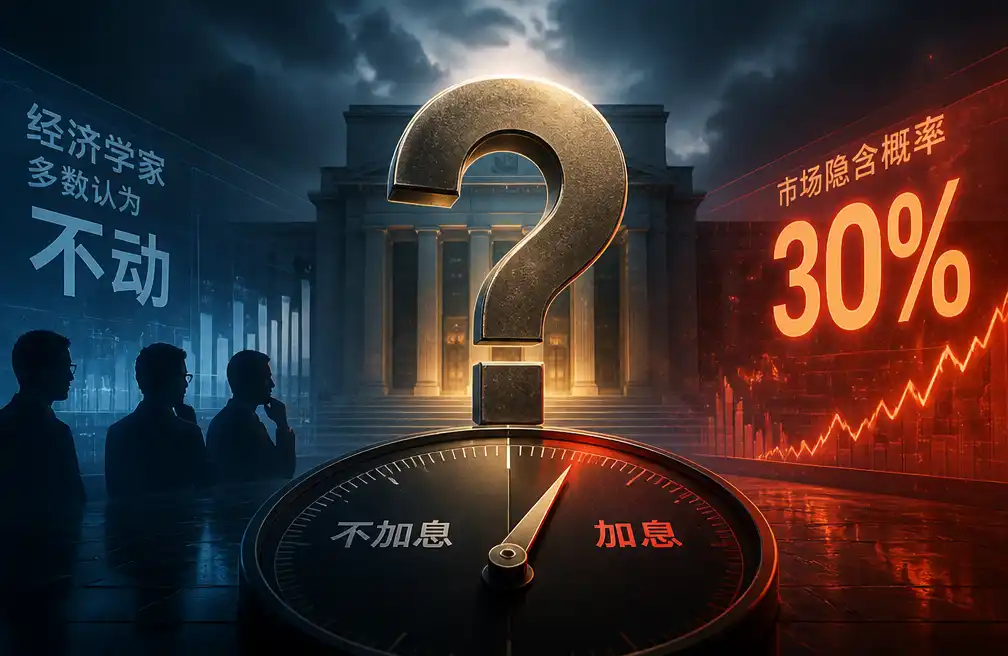
To Hike or Not Tonight: Economists Unanimous on 'No', Markets Price in a 30% Chance

Federal funds futures are repricing ahead of the July FOMC decision, as traders pay a higher premium for the risk of a surprise rate hike or more hawkish signals. This contrasts with economists, where a Reuters survey of 104 analysts unanimously expects rates to remain unchanged at 3.50%-3.75%, with 78 foreseeing no change through year-end. Yet, futures markets have priced in about a 30% probability of a 25-basis-point hike. The core debate, especially under new Fed Chair Kevin Warsh, centers on how the Fed will respond to the oil price shock from Middle East tensions. The market is not necessarily predicting a hike tonight but is hedging against two tail risks: an immediate rate increase, or a hold combined with communication that seriously opens the door for a September hike. This hedging activity has driven up open interest in Fed funds futures. Analysts are divided on how to weight the oil price surge in the Fed's reaction function. Hawkish voices (e.g., BofA) worry that completely dismissing the price pressure could challenge the Fed's inflation credibility in Warsh's first major test. Dovish views (e.g., Citi) argue the shock is primarily supply-driven and that overreacting with rate hikes could unnecessarily hurt growth, unless clear signs of secondary inflation emerge. Warsh's new tenure amplifies policy path uncertainty, as markets lack a stable baseline for his communication style. This environment forces traders to price in a wider range of outcomes, explaining the divergence between unanimous economist forecasts and market hedging. The key focus will be on Warsh's post-meeting commentary. If he downplays the oil shock and stresses anchored long-term expectations, hawkish pricing may recede. If he emphasizes the risk of broader price spillovers and prioritizes returning to 2% inflation, the market will interpret this as reopening the door for a September hike. This would sustain support for the USD, keep pressure on JPY (testing intervention thresholds), and challenge risk assets like stocks and crypto through higher discount rates and weaker sentiment. The baseline remains no action in July, but the communication will determine how far this repricing extends.

marsbitHace 30 min(s)

To Hike or Not Tonight: Economists Unanimous on 'No', Markets Price in a 30% Chance

marsbitHace 30 min(s)

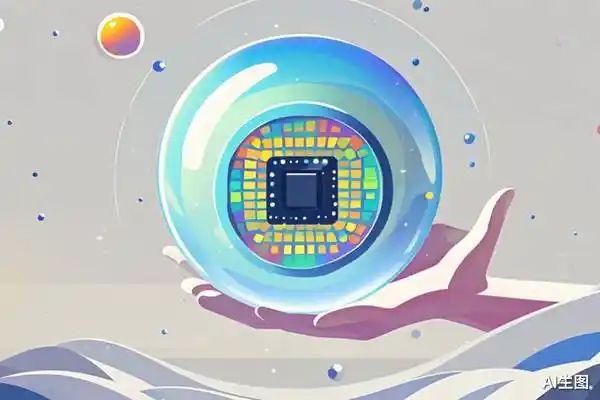
The Semiconductor Industry's Most Obscure Chokepoint Material: It Has Multiplied in Price Unnoticed, and China Just Banned Its Export

"Helium: The Silent Choke Point in Semiconductors" Helium, despite being the universe's second most abundant element, is critically scarce on Earth. It cannot be synthesized artificially and escapes Earth's gravity once released, making it a non-renewable resource. Yet, it is indispensable for advanced semiconductor manufacturing, requiring ultra-high purity (99.9999%) for processes like wafer etching, leak detection, and thermal management in lithography tools, with no viable substitutes. This low-profile resource, whose price has doubled unnoticed, suddenly gained attention when China imposed an export ban on July 10th. The ban is a response to a severe global shortage triggered months earlier. In March, missile attacks damaged the world's largest helium production hub in Qatar's Ras Laffan, halting a third of global supply with repairs expected to take 3-5 years. Concurrently, Russia tightened export controls, and the US sold off its federal helium reserve. Approximately 200 specialized transport containers, each worth ~$1 million, were stranded with perishable cargo. Global spot prices skyrocketed, and chipmakers like TSMC warned of potential impacts. China, which imports over 84% of its helium (primarily from Qatar and Russia), faces a severe squeeze. Despite being helium-poor, China has developed domestic extraction technology over five years, processing byproduct gases from LNG plants to produce ultra-pure helium. Domestic output, while still only covering less than 20% of demand, enabled the recent export ban aimed at securing domestic supply for its own expanding chip industry. The industry now faces "Helium Shortage 5.0." With key global sources constrained for years, this invisible gas—once wasted on party balloons—has become a critical, geopolitically charged bottleneck for chips, healthcare (MRI machines), and beyond, forcing the world to finally treat it as the finite strategic resource it is.

marsbitHace 1 hora(s)

The Semiconductor Industry's Most Obscure Chokepoint Material: It Has Multiplied in Price Unnoticed, and China Just Banned Its Export

marsbitHace 1 hora(s)

Early Investor of Unitree Bets on a Brain-Computer Interface Company

"Wabo Technologies, a brain-computer interface (BCI) startup, has secured new funding from Vertex Ventures (under Temasek), Hongtai Fund, Chengdu Future Industry Fund, and Huifengda Capital. Vertex Ventures is known for its early bet on Unitree Robotics. Inspired by the sci-fi film "Avatar," founder Zhang Xingzhi has pursued human-machine interaction for over a decade. He established Wabo in late 2025, coinciding with China's push for BCI as a future industry. Unlike companies focused solely on medical hardware, Wabo positions itself as a model company. Its core mission is to develop a "Human Neural Intent Model" that decodes EEG, EMG, and behavioral signals to understand a user's goals, confirmations, corrections, and stop intentions before physical action, translating them into standardized control signals for machines, robots, or smart devices. The young, full-stack team, backed by academic collaborators from Tianjin University and Fudan University, quickly attracted investors. The company had previously raised a seed round from Ceyuan Capital. Investors were impressed by Wabo's systematic capabilities in data collection, signal processing, and engineering, seeing potential beyond a single hardware product toward a reusable layer of human intent interpretation. Applications span medical rehabilitation, smart homes, embodied AI, and even space exploration, with Wabo partnering with Tianjin University on pioneering "space BCI" research. Wabo plans a dual-headquarters strategy, with Shanghai focusing on high-end R&D and model development, and Chengdu handling hardware, product development, and supply chain. The BCI sector in China is heating up, with over 30 financing deals in early 2026. Zhang believes future competition will center on who can build a sustainable data-model-scenario loop. He predicts industry consolidation within three years, with only companies that master this闭环 surviving. The vision from "Avatar" is inching closer to reality."

marsbitHace 1 hora(s)

Early Investor of Unitree Bets on a Brain-Computer Interface Company

marsbitHace 1 hora(s)

Trading

Spot

Artículos destacados

Cómo comprar DATA

¡Bienvenido a HTX.com! Hemos hecho que comprar DATA Network (DATA) sea simple y conveniente. Sigue nuestra guía paso a paso para iniciar tu viaje de criptos.Paso 1: crea tu cuenta HTXUtiliza tu correo electrónico o número de teléfono para registrarte y obtener una cuenta gratuita en HTX. Experimenta un proceso de registro sin complicaciones y desbloquea todas las funciones.Obtener mi cuentaPaso 2: ve a Comprar cripto y elige tu método de pagoTarjeta de crédito/débito: usa tu Visa o Mastercard para comprar DATA Network (DATA) al instante.Saldo: utiliza fondos del saldo de tu cuenta HTX para tradear sin problemas.Terceros: hemos agregado métodos de pago populares como Google Pay y Apple Pay para mejorar la comodidad.P2P: tradear directamente con otros usuarios en HTX.Over-the-Counter (OTC): ofrecemos servicios personalizados y tipos de cambio competitivos para los traders.Paso 3: guarda tu DATA Network (DATA)Después de comprar tu DATA Network (DATA), guárdalo en tu cuenta HTX. Alternativamente, puedes enviarlo a otro lugar mediante transferencia blockchain o utilizarlo para tradear otras criptomonedas.Paso 4: tradear DATA Network (DATA)Tradear fácilmente con DATA Network (DATA) en HTX's mercado spot. Simplemente accede a tu cuenta, selecciona tu par de trading, ejecuta tus trades y monitorea en tiempo real. Ofrecemos una experiencia fácil de usar tanto para principiantes como para traders experimentados.

147 Vistas totalesPublicado en 2026.07.01Actualizado en 2026.07.01

Cómo comprar DATA

Discusiones

Bienvenido a la comunidad de HTX. Aquí puedes mantenerte informado sobre los últimos desarrollos de la plataforma y acceder a análisis profesionales del mercado. A continuación se presentan las opiniones de los usuarios sobre el precio de DATA (DATA).

活动图片