Từ OpenSea Đến OpenRouter: Kịch Bản “Chốt Lời Đỉnh Cao” Của Alex Atallah Lại Lặp Lại?

链捕手Publicado a 2026-07-24Actualizado a 2026-07-24

Resumen

Tác giả: Nancy, PANews Hơn bốn năm trước, Alex Atallah rời đi trước đỉnh bong bóng NFT; giờ đây, anh lại tỏa sáng trong cơn sốt AI và chuẩn bị bán nền tảng tổng hợp mô hình AI OpenRouter với giá cao. Ngày 23/7, theo Wall Street Journal, gã khổng lồ thanh toán Stripe đang đàm phán mua lại OpenRouter, với định giá giao dịch có thể lên tới gần 100 tỷ USD. Nếu thành công, đây sẽ là lần thứ hai Alex Atallah xây dựng một công ty trị giá hàng trăm tỷ USD, sau sàn giao dịch NFT OpenSea. OpenRouter, được mô tả là "Stripe của lĩnh vực AI", đã kết nối hơn 400 mô hình AI, có khoảng 10 triệu người dùng và xử lý hơn 200 nghìn tỷ token mỗi tháng. Tuy nhiên, mô hình kinh doanh chủ yếu dựa vào phí dịch vụ nền tảng (5%-5.5%) từ việc gọi API, với doanh thu hàng năm khoảng 50 triệu USD (tính đến tháng 4/2026). Đây là một mô hình kênh dẫn có quy mô lớn nhưng biên lợi nhuận hạn chế, dễ bị ảnh hưởng bởi sự cạnh tranh, mô hình nguồn mở và áp lực giảm giá. Giá trị thực sự của OpenRouter đối với các nhà mua tiềm năng như Stripe có thể nằm ở kho dữ liệu sử dụng AI thực tế khổng lồ mà nó tích lũy được, cung cấp insights quý giá về hiệu suất mô hình, sở thích nhà phát triển và quan hệ thay thế trên thị trường. Từ NFT đến AI, Alex Atallah hai lần bắt đúng xu hướng thời đại. Việc OpenRouter được định giá 100 tỷ USD đặt ra câu hỏi: đây là sự định giá lại giá trị cơ sở hạ tầng AI hay một tín hiệu đỉnh chu kỳ mới? Thời gian sẽ trả lời.

Tác giả: Nancy, PANews

Hơn bốn năm trước, Alex Atallah đã rút lui khỏi OpenSea ngay trước đỉnh bong bóng NFT; giờ đây, ông lại một lần nữa bước lên đỉnh cao trong cơn sốt AI, và đang chuẩn bị bán nền tảng tổng hợp mô hình AI do mình sáng lập là OpenRouter với giá cao.

Ngày 23 tháng 7, theo tờ Wall Street Journal đưa tin, gã khổng lồ thanh toán Stripe đang đàm phán mua lại OpenRouter, giá trị giao dịch có thể lên tới gần 100 tỷ USD. Nếu thương vụ cuối cùng được thực hiện, đây sẽ là lần thứ hai Alex Atallah thành lập một công ty trị giá trăm tỷ USD, sau nền tảng NFT OpenSea.

Stripe Dự Kiến Mua Lại OpenRouter, Định Giá Có Thể Chạm 100 Tỷ USD

Tin đồn về việc OpenRouter “tìm chủ mới” đã kéo dài trong một thời gian.

Tuần trước, nhiều hãng truyền thông nước ngoài như The Information, Jawl đã đưa tin rằng OpenRouter đã nhận được ý định mua lại từ nhiều công ty công nghệ lớn, và đang thảo luận về việc bán. Quy mô giao dịch tiềm năng có thể lên tới hàng chục tỷ USD.
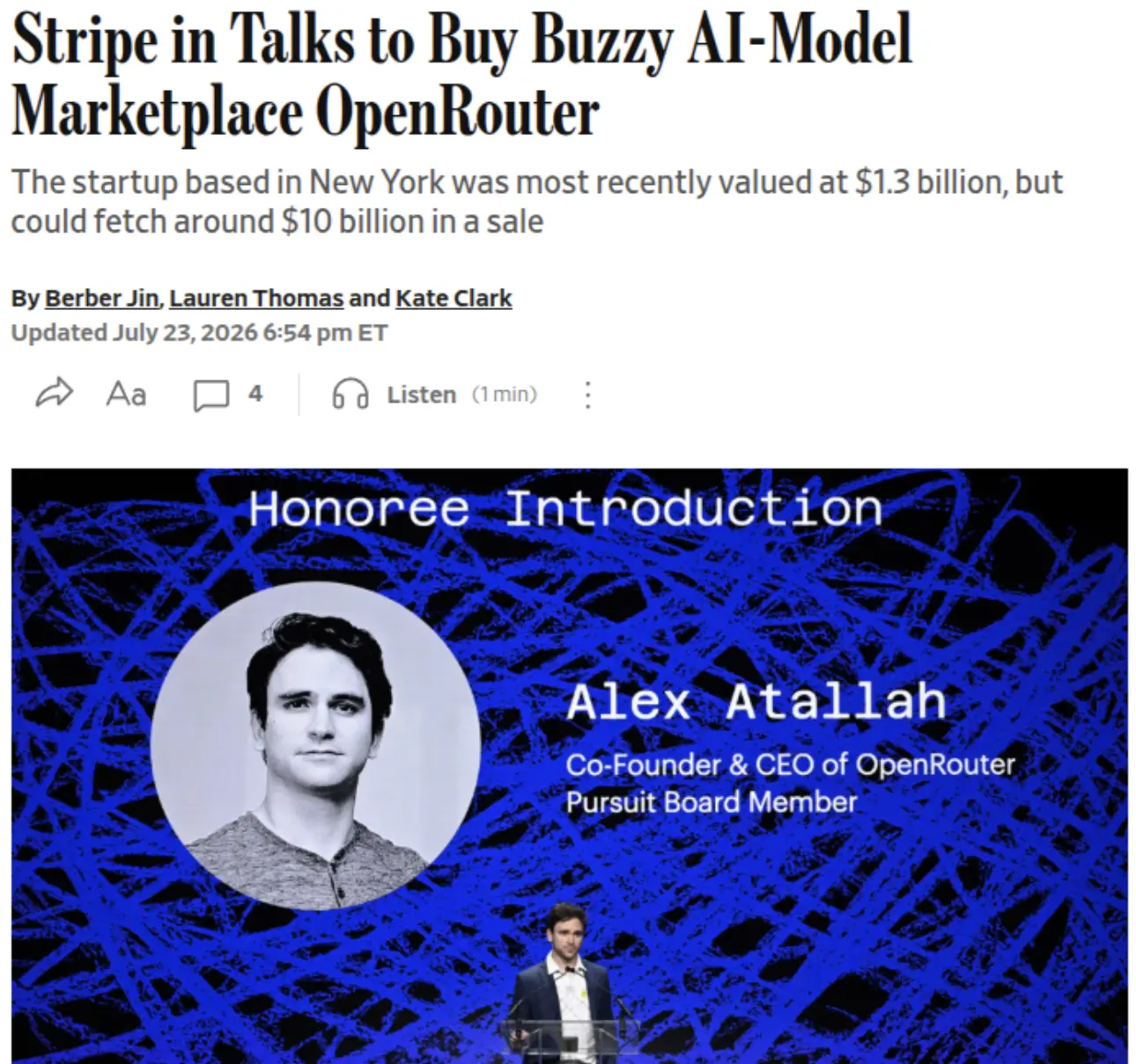
Theo tin mới nhất từ Wall Street Journal, Stripe đang xem xét mua lại nền tảng tổng hợp mô hình AI lớn nhất toàn cầu này. Nguồn tin tiết lộ, các cuộc đàm phán giao dịch giữa hai bên có thể sẽ sớm được công bố, nhưng hiện tại vẫn còn nhiều biến động, không loại trừ khả năng đàm phán tan vỡ hoặc các đối thủ mua tiềm năng khác tham gia cạnh tranh.

Thú vị là, Alex Atallah từng mô tả OpenRouter là "Stripe trong lĩnh vực AI". Theo quan điểm của ông, giống như Stripe giúp khách hàng xử lý các loại thanh toán khác nhau thông qua một cổng thống nhất, OpenRouter hy vọng trở thành cổng thống nhất cho doanh nghiệp truy cập vào các mô hình AI khác nhau, giảm chi phí chuyển đổi giữa nhiều nhà cung cấp AI, đồng thời tránh bị "khóa chặt" bởi một nhà cung cấp mô hình đơn lẻ.

Trên thực tế, OpenRouter và Stripe đã thiết lập quan hệ hợp tác từ lâu. Thương vụ tiềm năng lần này của hai bên, cũng được xem là bước bố trí quan trọng tiếp theo của gã khổng lồ hạ tầng thanh toán tiến sâu hơn vào lĩnh vực hạ tầng AI. Cần lưu ý rằng, đây có thể là một động thái mua lại quan trọng khác của Stripe trong thời gian gần đây, sau tin thị trường trước đó về kế hoạch mua lại PayPal của họ.

Hiện tại, hai bên chưa tiết lộ số tiền giao dịch cụ thể. Tuy nhiên, theo nguồn tin tiết lộ, nếu giao dịch cuối cùng được thực hiện, định giá của OpenRouter tại thời điểm bán có thể lên tới gần 100 tỷ USD.

Con số này sẽ vượt xa định giá của OpenRouter tại các vòng gọi vốn trước đây. Chỉ sau hơn ba năm thành lập, công ty hạ tầng AI này đã đạt được tốc độ tăng trưởng cao dưới sự thúc đẩy của làn sóng mô hình lớn.
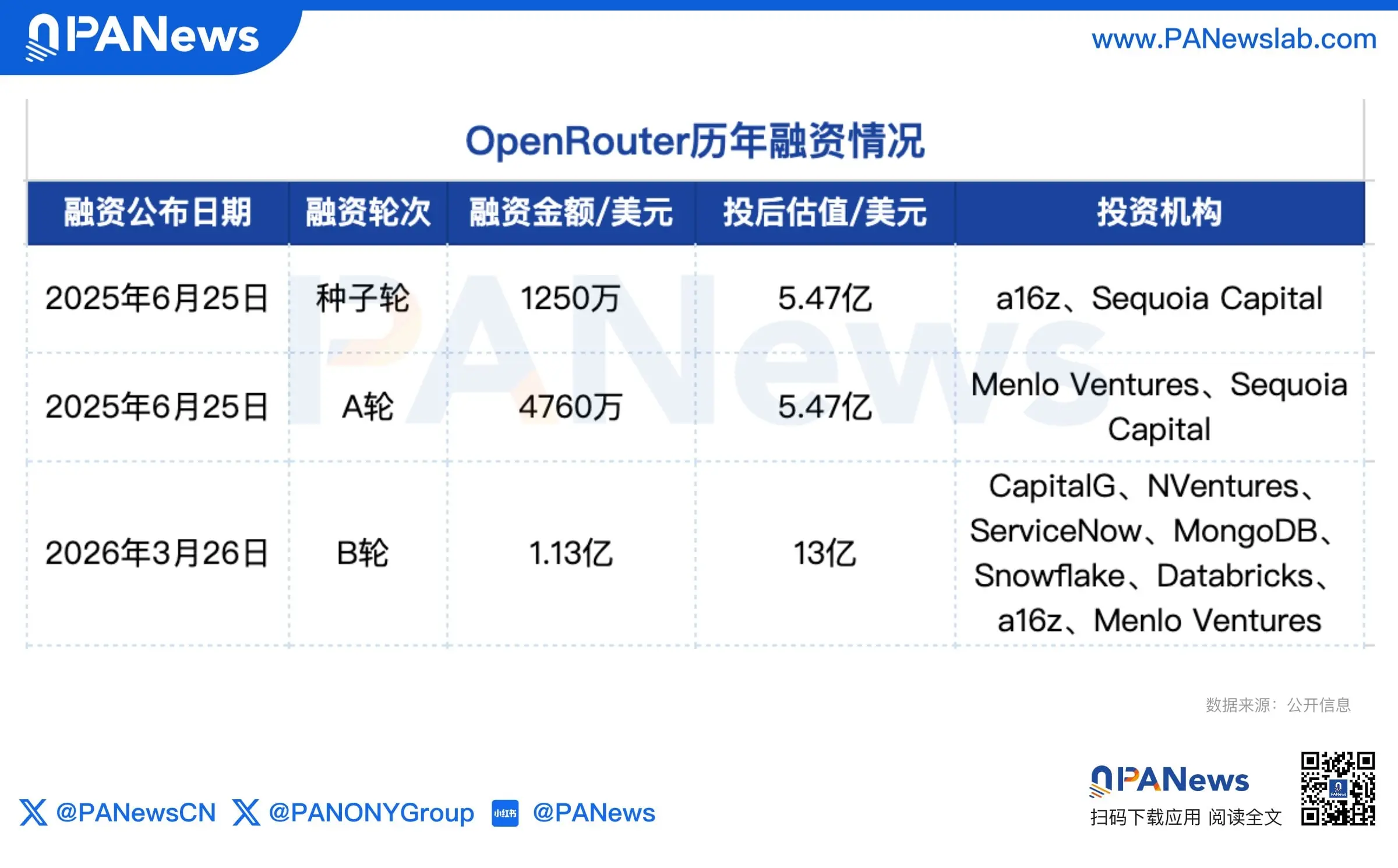
Số liệu công khai cho thấy, OpenRouter đã hoàn thành ba vòng gọi vốn, huy động tổng cộng hơn 150 triệu USD. Tháng 6/2025, OpenRouter thông báo hoàn thành vòng gọi vốn hạt giống và vòng A trị giá 40 triệu USD, với định giá sau đầu tư khoảng 547 triệu USD; Ngày 26/3/2026, OpenRouter thông báo hoàn thành vòng gọi vốn B trị giá 113 triệu USD, định giá sau đầu tư khoảng 1,3 tỷ USD.

Nếu giao dịch này cuối cùng được thực hiện, điều đó có nghĩa là định giá của OpenRouter có thể tăng gần gấp mười lần trong vòng vài tháng, và gia nhập câu lạc bộ kỳ lân trăm tỷ USD.

Đằng sau việc giá trị của OpenRouter tăng cao, không chỉ bắt nguồn từ sự bùng nổ nhu cầu do sự mở rộng nhanh chóng của mô hình lớn, mà còn nhờ vào việc phân khúc hạ tầng AI đang nhận được nhiều sự quan tâm hơn từ thị trường vốn.

Kịch Bản Rời Đi OpenSea Lặp Lại? Tại Sao OpenRouter Lại Chọn "Tìm Chủ Mới"

Đây không phải là lần đầu tiên Alex Atallah xây dựng một công ty trị giá trăm tỷ USD.

Trước đó, doanh nhân liên tiếp này đã đồng sáng lập OpenSea, đưa NFT từ tầng lớp nhỏ lẻ ra tầm mắt công chúng. Vào thời kỳ NFT cuồng nhiệt nhất, OpenSea đã từ một nền tảng ít người biết đến phát triển thành thị trường giao dịch NFT lớn nhất toàn cầu, định giá từng lên tới hơn 130 tỷ USD, và tài sản của hai nhà sáng lập cũng từng đạt khoảng 2,2 tỷ USD.

Tuy nhiên, trước khi thị trường NFT hạ nhiệt toàn diện vào năm 2022, Alex Atallah đã chọn rời khỏi OpenSea. Sau đó, khi bong bóng ngành tiêu tan, định giá của OpenSea đã giảm mạnh, và con kỳ lân NFT ngày xưa cũng dần mất đi ánh hào quang của thời kỳ đỉnh cao. Việc Alex Atallah rút lui sớm cũng từng được thị trường coi là một tín hiệu đỉnh quan trọng.

Sau đó, Alex Atallah chuyển hướng sang hạ tầng AI, và OpenRouter do ông sáng lập đã trở thành trạm trung chuyển lớn nhất trong thời đại AI.
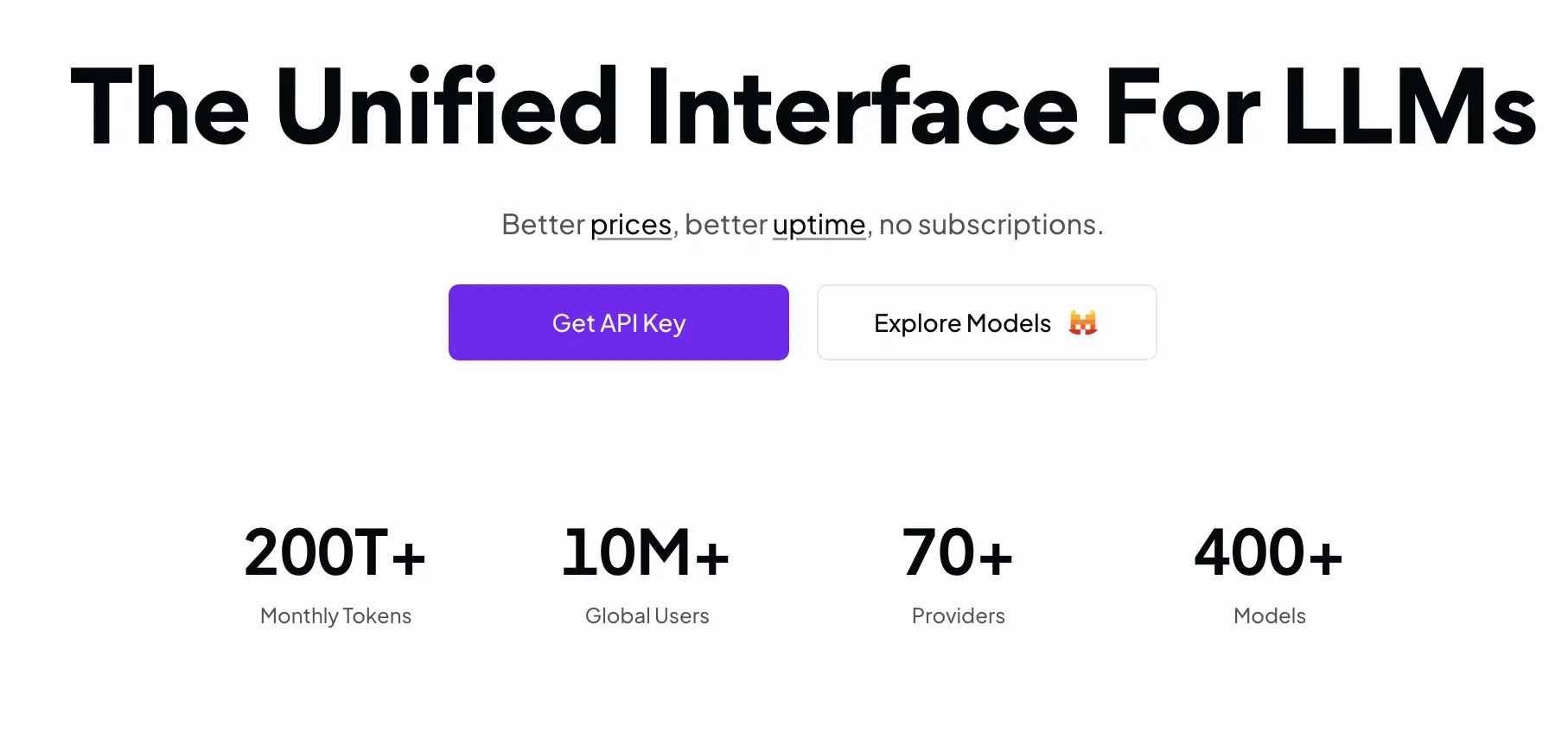
Hiện tại, OpenRouter đã tích hợp hơn 400 mô hình AI, có khoảng 10 triệu người dùng và xử lý hơn 200 nghìn tỷ Token mỗi tháng. Từ đầu năm đến nay, số lượng Token được xử lý thông qua API của nó đã tăng khoảng 10 lần.

Nhưng đáng chú ý là, trong khi tốc độ tăng trưởng kinh doanh cao, OpenRouter lại không chọn IPO, mà hướng tới con đường bán tiềm năng. Lý do nằm ở chỗ, đây là một mô hình kinh doanh kênh dẫn có quy mô lớn, nhưng tỷ suất lợi nhuận hạn chế.

Hiện tại, OpenRouter chủ yếu kiếm lợi nhuận thông qua việc thu phí dịch vụ nền tảng khi nhà phát triển gọi các mô hình AI, với tỷ lệ thu khoảng 5%-5.5%. Mặc dù quy mô tiêu thụ suy luận AI hàng năm của nó đã lên tới hàng tỷ USD, nhưng tính đến tháng 4/2026, doanh thu hàng năm của công ty ước tính khoảng 50 triệu USD.

Nói cách khác, OpenRouter kết nối một thị trường nhu cầu AI khổng lồ, nhưng lại không hoàn toàn nắm giữ chuỗi giá trị thượng nguồn. Khi khả năng mô hình dần được tiêu chuẩn hóa, nền tảng dễ bị ảnh hưởng bởi sự trỗi dậy của các mô hình mã nguồn mở, sự ràng buộc của hệ sinh thái nhà cung cấp đám mây, cũng như việc các nhà cung cấp mô hình trực tiếp giảm giá, dẫn đến không gian lợi nhuận có thể tiếp tục chịu áp lực. OpenRouter khó có thể kể câu chuyện tăng trưởng theo cấp số nhân và lợi nhuận siêu cao trên thị trường vốn.

Đồng thời, sự cạnh tranh trong phân khúc tổng hợp mô hình AI cũng đang gia tăng. Ví dụ, bộ ấp trứng AI nội bộ của Meta ở nước ngoài đang phát triển một dịch vụ điều phối tương đương với OpenRouter, nhằm cắt giảm chi phí điện toán phát triển mã; Trong nước cũng đã xuất hiện các nền tảng tổng hợp mô hình lớn bao gồm EasyRouter của Cheetah Mobile, ThinkFlow của NetEase Youdao.

Vì vậy, việc thị trường hiện tại định giá cao cho OpenRouter, phần lớn là định giá không gian tưởng tượng trong tương lai, chứ không phải là khả năng sinh lợi ở giai đoạn hiện tại.

Tuy nhiên, đối với người mua tiềm năng, tài sản thực sự hấp dẫn của OpenRouter có thể không phải là quy mô doanh thu hiện tại, mà là dữ liệu sử dụng AI thực tế tích lũy lâu dài của nó.

Bằng cách kết nối hàng trăm mô hình và hàng chục triệu người dùng, OpenRouter đã tích lũy một lượng lớn dữ liệu gọi từ môi trường sản xuất thực tế, bao gồm sự khác biệt về hiệu suất của các mô hình khác nhau trong nhiệm vụ thực tế, sở thích của nhà phát triển, độ nhạy cảm về giá cả, cũng như mối quan hệ thay thế giữa mô hình mã nguồn mở và đóng. So với dữ liệu thử nghiệm trong phòng thí nghiệm, những dữ liệu sử dụng AI trong thế giới thực này gần với nhu cầu thị trường hơn, và cũng khó sao chép nhanh chóng thông qua đầu tư ngắn hạn. Đây có lẽ cũng là lý do quan trọng khiến các công ty công nghệ lớn sẵn sàng trả giá cao cho OpenRouter.

Từ NFT đến AI, Alex Atallah đã hai lần bước vào cơn sốt của thời đại. Nếu OpenRouter cuối cùng được bán với định giá trăm tỷ USD, liệu điều đó có nghĩa là định giá lại giá trị của hạ tầng AI, hay lại là một tín hiệu đỉnh của một chu kỳ khác? Câu trả lời, có lẽ vẫn cần thời gian để kiểm chứng.


Criptos en tendencia

Preguntas relacionadas

QStripe đang cân nhắc mua lại OpenRouter với mức định giá khoảng bao nhiêu?

ATheo The Wall Street Journal, Stripe đang đàm phán mua lại OpenRouter với mức định giá có thể lên tới gần 100 tỷ USD.

QTại sao Alex Atallah được cho là đã 'thoát hàng ở đỉnh' với OpenSea?

AAlex Atallah đồng sáng lập OpenSea và rời đi trước khi thị trường NFT nguội lạnh vào năm 2022. Việc này được coi là một tín hiệu quan trọng vì sau đó, bong bóng NFT vỡ và định giá của OpenSea sụt giảm mạnh.

QOpenRouter kiếm tiền như thế nào và lợi nhuận ra sao?

AOpenRouter chủ yếu kiếm tiền bằng cách thu phí nền tảng (khoảng 5%-5.5%) khi các nhà phát triển gọi API sử dụng mô hình AI. Mặc dù quy mô tiêu thụ suy luận AI hàng năm đạt hàng tỷ USD, nhưng doanh thu hàng năm của công ty tính đến tháng 4/2026 chỉ vào khoảng 50 triệu USD, cho thấy biên lợi nhuận hạn chế.

QTài sản giá trị nhất của OpenRouter đối với các công ty công nghệ lớn là gì?

ATài sản giá trị nhất của OpenRouter là lượng dữ liệu sử dụng AI thực tế khổng lồ mà nó tích lũy được, bao gồm hiệu suất của các mô hình khác nhau trong nhiệm vụ thực tế, sở thích của nhà phát triển, độ nhạy cảm về giá và mối quan hệ thay thế giữa các mô hình nguồn mở và độc quyền. Những dữ liệu thế giới thực này rất khó sao chép và có giá trị chiến lược cao.

QSự tăng trưởng về định giá của OpenRouter từ các vòng gọi vốn đến thương vụ tiềm năng với Stripe ra sao?

AĐịnh giá của OpenRouter đã tăng trưởng đáng kể: tháng 6/2025 định giá sau gọi vốn là 547 triệu USD, tháng 3/2026 là 1.3 tỷ USD. Nếu thương vụ với Stripe thành công ở mức gần 100 tỷ USD, điều đó có nghĩa là định giá của công ty đã tăng gần 10 lần chỉ trong vài tháng.

Lecturas Relacionadas

On the Eve of Circle's Earnings Report, Wall Street Shows Major Divergence in CRCL Valuation

On the eve of Circle (CRCL) releasing its quarterly earnings report, Wall Street analysts are deeply divided over the company's valuation. Morgan Stanley downgraded Circle from "Equal Weight" to "Underweight," slashing its price target from $106 to $38. Analyst James Faucette argues the market overestimates the growth potential of Circle's core USDC stablecoin, noting its circulation hasn't increased since Q3 2025 and new use cases beyond remittances and card spending are limited. He warns that slowing USDC growth could pressure the crucial "reserve income" and shift revenue toward lower-margin transaction fees. In stark contrast, TD Cowen initiated coverage with a "Buy" rating and an $82 price target. Analyst Bryan Bergin believes the market underestimates Circle's potential to evolve from a stablecoin issuer into a broader digital financial infrastructure platform. He forecasts a ~31% annual growth rate for USDC through 2030 and expects faster growth in fee-based revenue from services like payments, RWA tokenization, and its Arc network. A key external factor adding uncertainty is the stalled progress of the CLARITY Act in the US Senate, whose delay could dampen institutional adoption expectations for stablecoins. The core disagreement lies in whether Circle's future hinges on USDC circulation growth or a successful platform-based transformation. The upcoming earnings report is keenly awaited for insights into reserve income trends and the progress of newer business verticals.

marsbitHace 1 hora(s)

On the Eve of Circle's Earnings Report, Wall Street Shows Major Divergence in CRCL Valuation

marsbitHace 1 hora(s)

Hong Kong Stock Market in July: Super IPOs Coexist with Wave of Breakings, Hard Tech Still the Main Theme

The Hong Kong IPO market in July presented a "two-tiered" scenario characterized by both a mega-IPO and a significant wave of new stock listings falling below their issue price ("breaking issue"). The highlight was Zhongji Innolight's (stock code: 03308.HK) listing on July 30, which raised approximately HK$53.41 billion. This marked the largest IPO on the Hong Kong exchange in nearly seven years since Alibaba's secondary listing. A prominent trend was the continued dominance of A+H listings, with companies like Luxshare (02475.HK) and others contributing significantly to the total monthly fundraising of around HK$116 billion. In stark contrast, the market saw a sharp rise in "broken issues." Out of 17 new listings for the month, 7 broke issue on their debut, with the rate climbing to 47% by month-end. Factors contributing to this included an intense concentration of listings (15 in one week), profit-taking by investors, and a market reassessment of valuations, particularly for companies with unclear commercial prospects. Despite the sell-off, hard tech remained the core theme, accounting for over 70% of July's listings. Key sectors were semiconductors and AI/autonomous driving. However, market enthusiasm became highly selective, with extreme over-subscription for certain niche players while others were heavily sold off. This signals a shift from speculative fervor towards a more value-driven assessment. Looking ahead, recent listing reforms by the Hong Kong Exchanges are expected to attract more tech firms. With a large pipeline of over 350 companies awaiting listing, including potential large offerings like SHEIN, the market is poised for continued activity. Analysts view July's correction not as a downturn but as a healthy valuation reset, emphasizing the need for investors to carefully discern company fundamentals.

marsbitHace 1 hora(s)

Hong Kong Stock Market in July: Super IPOs Coexist with Wave of Breakings, Hard Tech Still the Main Theme

marsbitHace 1 hora(s)

Wall Street Shows Sharp Divergence in CRCL Valuation on the Eve of Circle's Earnings Report

On the eve of its earnings report on August 5th, significant divergence emerged on Wall Street regarding the valuation of Circle (CRCL). Morgan Stanley downgraded Circle from "Equal Weight" to "Underweight," slashing its target price from $106 to $38. Analyst James Faucette argues that the market has overestimated the growth potential of USDC, noting stagnant circulation since Q3 2025 and a lack of major new use cases beyond remittances and card spending. He warns that slower USDC growth could pressure Circle's core "reserve income" and shift its revenue mix toward lower-margin transaction fees, making current valuations excessive. In contrast, TD Cowen initiated coverage with a "Buy" rating and an $82 target price. Analyst Bryan Bergin believes the market underestimates Circle's potential to evolve from a stablecoin issuer into a broader digital financial infrastructure platform. He focuses on future services like payments, asset management, RWA tokenization, and blockchain infrastructure, forecasting a ~31% CAGR for USDC circulation through 2030 and faster growth in fee-based revenues. A key external variable is the delayed progress of the CLARITY Act, whose uncertainty may pressure market sentiment by slowing regulatory clarity for stablecoins. Ultimately, the split centers on whether Circle's value hinges on USDC growth or its platform transformation. The upcoming earnings report will be scrutinized for details on reserve income, payment services, and RWA initiatives.

Odaily星球日报Hace 1 hora(s)

Wall Street Shows Sharp Divergence in CRCL Valuation on the Eve of Circle's Earnings Report

Odaily星球日报Hace 1 hora(s)

Trading

Spot

Artículos destacados

Qué es ₿O₿

Bitcoin Bob ($₿o₿): Pionero en DeFi Centrado en Bitcoin a Través de la Innovación Híbrida de Capa 2 En una era donde la economía digital está evolucionando rápidamente, Bitcoin Bob ($₿o₿) surge como un proyecto revolucionario que busca mejorar la utilidad de Bitcoin en el sector de las finanzas descentralizadas (DeFi). Lanzado oficialmente en mayo de 2024, Bitcoin Bob, también conocido como Build on Bitcoin (BOB), representa una solución híbrida de blockchain de Capa 2 que combina la reconocida seguridad e inmutabilidad de Bitcoin con la programabilidad de Ethereum. Esta iniciativa busca llenar un vacío crucial en el ecosistema de Bitcoin al facilitar la integración de contratos inteligentes y aplicaciones descentralizadas, manteniendo al mismo tiempo los principios fundamentales de confianza y seguridad inherentes a Bitcoin. Con un respaldo significativo de destacados capitalistas de riesgo, Bitcoin Bob está posicionado para redefinir el papel de Bitcoin en el paisaje DeFi, convirtiéndolo en una piedra angular de las operaciones financieras descentralizadas a nivel global. ¿Qué es Bitcoin Bob, $₿o₿? En su esencia, Bitcoin Bob es una solución de blockchain híbrida diseñada para mejorar la funcionalidad de Bitcoin. El objetivo principal del proyecto es habilitar las finanzas descentralizadas en Bitcoin, facilitando transacciones rápidas y sin problemas mientras se asegura altos niveles de seguridad. Bitcoin Bob emplea tecnología avanzada, específicamente una arquitectura híbrida de capa 2 que combina los atributos de seguridad de Bitcoin con la programabilidad y flexibilidad de la Máquina Virtual de Ethereum (EVM). Este enfoque pragmático permite que el proyecto opere de manera efectiva sin comprometer los valores fundamentales de Bitcoin, convirtiéndolo en un paso monumental para cerrar la brecha entre los tenedores tradicionales de Bitcoin y el emergente ecosistema DeFi. Una de las características destacadas de Bitcoin Bob es su papel en proporcionar un entorno minimizado en confianza a través de mecanismos innovadores, como los rollups optimistas que inicialmente dependen de Ethereum, y que eventualmente transicionan a una integración completa con Bitcoin. Este sistema híbrido está diseñado para asegurar que la vasta liquidez presente en Bitcoin no solo se preserve, sino que también se utilice de manera efectiva en varios protocolos DeFi. ¿Quién es el Creador de Bitcoin Bob, $₿o₿? La fuerza creativa detrás de Bitcoin Bob es el cofundador y CEO Alexei Zamyatin, quien aporta una gran experiencia y conocimiento de su extensa trayectoria en el espacio de las criptomonedas. Zamyatin tiene un doctorado en Ciencias de la Computación y ha estado involucrado activamente en el desarrollo de Bitcoin desde 2015. Su profundo entendimiento de los ecosistemas de Bitcoin y Ethereum juega un papel crucial en la formación de la visión y los fundamentos tecnológicos de Bitcoin Bob. Junto a Zamyatin está el cofundador Dominik Harz, quien se desempeña como Director de Tecnología (CTO). Juntos, el dúo ha cultivado un equipo de individuos talentosos con una pasión compartida por empujar los límites de la tecnología blockchain, asegurando el estatus innovador de Bitcoin Bob en el mercado. ¿Quiénes son los Inversores de Bitcoin Bob, $₿o₿? Bitcoin Bob ha logrado obtener apoyo de una variedad de inversores prominentes y firmas de capital de riesgo que reconocen su potencial para transformar el paisaje de Bitcoin. En marzo de 2024, el proyecto completó una robusta ronda de financiamiento inicial de $10 millones, liderada por Castle Island Ventures, con la notable participación de firmas como Coinbase Ventures y Bankless Ventures. Poco después, en julio de 2024, Bitcoin Bob aseguró un adicional de $1.6 millones en financiamiento estratégico. Esta ronda fue co-liderada por Ledger Ventures y contó con ángeles de varias firmas prominentes como BlackRock, Aave y Curve. El fuerte respaldo financiero refleja un reconocimiento en toda la industria del enfoque innovador de Bitcoin Bob para desbloquear el potencial de Bitcoin en el espacio DeFi. Este financiamiento es crucial no solo para el desarrollo continuo del proyecto, sino también para establecer un incubador que fomente aplicaciones descentralizadas (dApps) nativas de Bitcoin, dirigidas específicamente a satisfacer las necesidades de una base de usuarios en crecimiento. ¿Cómo Funciona Bitcoin Bob, $₿o₿? La mecánica operativa de Bitcoin Bob se basa en su arquitectura de rollup híbrido, que está diseñada para combinar los beneficios de la seguridad de Bitcoin con la versatilidad de la EVM de Ethereum. El proyecto emplea un modelo de seguridad por fases que describe su interacción con usuarios y desarrolladores de la siguiente manera: Fase 1 – La fase inicial opera como un rollup optimista en Ethereum, donde las transacciones se procesan con una expectativa prometedora de validez, allanando el camino para futuros desarrollos en Bitcoin. Fase 2 – A medida que el proyecto transiciona, integrará la finalización de Bitcoin a través de Staking de Bitcoin, aprovechando la Red Babylon para mejorar la seguridad. Este mecanismo requiere que los validadores bloqueen Bitcoin, verificando así las transacciones de BOB, lo que no solo mejora la seguridad, sino que también crea perspectivas de rendimiento para los participantes. Fase 3 – La visión a futuro para Bitcoin Bob es integrarse completamente con Bitcoin, utilizando tecnologías innovadoras como BitVM y pruebas de conocimiento cero para facilitar la computación fuera de la cadena mientras se mantiene la integridad de seguridad de Bitcoin. Innovaciones clave como BitVM2, un protocolo de puente minimizado en confianza co-autorado por Zamyatin, son críticas para la funcionalidad del proyecto, permitiendo depósitos y retiros de Bitcoin sin necesidad de una extensa dependencia de la red. Esto permite que el ecosistema se conecte de manera eficiente con Ethereum y otras cadenas compatibles, creando un modelo de interacción fluido y efectivo para usuarios y desarrolladores. Cronología de Bitcoin Bob, $₿o₿ Entender la evolución de Bitcoin Bob implica rastrear sus hitos importantes: 2019: Alexei Zamyatin y Dominik Harz establecen una firma de investigación enfocada en soluciones blockchain, sentando las bases para futuros proyectos. Marzo 2024: Bitcoin Bob recauda exitosamente $10 millones en una ronda de financiamiento inicial, marcando su entrada en el competitivo paisaje de blockchain. 1 de mayo de 2024: Ocurre el lanzamiento oficial de la mainnet, mostrando las capacidades del proyecto con una adopción significativa de usuarios y valor total bloqueado (TVL). Julio 2024: El proyecto atrae un adicional de $1.6 millones en financiamiento estratégico para establecer su incubadora, destinada a fomentar innovaciones impulsadas por Bitcoin. Octubre 2024: Bitcoin Bob publica un “Documento de Visión”, detallando su diseño de capa 2 híbrida y estrategias a futuro. 2025: Se espera el lanzamiento de las características de la Fase 2, enfocándose en la finalización de Bitcoin y puentes BitVM destinados a mejorar la funcionalidad general. Conclusión: Redefiniendo el Papel de Bitcoin en las Finanzas Descentralizadas Bitcoin Bob ($₿o₿) no es solo otro proyecto de blockchain; representa un cambio de paradigma en la forma en que Bitcoin puede interactuar con aplicaciones financieras más amplias. Al combinar meticulosamente la seguridad de Bitcoin con la flexibilidad de Ethereum, Bitcoin Bob busca remodelar el paisaje DeFi, cerrando la brecha entre la moneda digital y las aplicaciones descentralizadas. Con un robusto marco tecnológico, un liderazgo fuerte y financiamiento estratégico, Bitcoin Bob está bien posicionado para establecerse como un jugador fundamental en el ecosistema de criptomonedas, desbloqueando nuevas dimensiones de liquidez y utilidad para Bitcoin. A medida que el proyecto continúa evolucionando y expandiéndose, promete inaugurar una nueva era de innovación, demostrando que el potencial de Bitcoin se extiende mucho más allá de ser un mero almacén de valor, sino más bien como una piedra angular del futuro paisaje financiero. A medida que el proyecto avanza a través de sus fases anticipadas, todas las miradas estarán puestas en Bitcoin Bob, particularmente en lo que respecta a su compromiso de incorporar principios descentralizados y asegurar que los usuarios puedan disfrutar de todos los beneficios de DeFi anclados en Bitcoin.

74 Vistas totalesPublicado en 2025.06.30Actualizado en 2025.06.30

Qué es ₿O₿

Cómo comprar O

¡Bienvenido a HTX.com! Hemos hecho que comprar O1 exchange (O) sea simple y conveniente. Sigue nuestra guía paso a paso para iniciar tu viaje de criptos.Paso 1: crea tu cuenta HTXUtiliza tu correo electrónico o número de teléfono para registrarte y obtener una cuenta gratuita en HTX. Experimenta un proceso de registro sin complicaciones y desbloquea todas las funciones.Obtener mi cuentaPaso 2: ve a Comprar cripto y elige tu método de pagoTarjeta de crédito/débito: usa tu Visa o Mastercard para comprar O1 exchange (O) al instante.Saldo: utiliza fondos del saldo de tu cuenta HTX para tradear sin problemas.Terceros: hemos agregado métodos de pago populares como Google Pay y Apple Pay para mejorar la comodidad.P2P: tradear directamente con otros usuarios en HTX.Over-the-Counter (OTC): ofrecemos servicios personalizados y tipos de cambio competitivos para los traders.Paso 3: guarda tu O1 exchange (O)Después de comprar tu O1 exchange (O), guárdalo en tu cuenta HTX. Alternativamente, puedes enviarlo a otro lugar mediante transferencia blockchain o utilizarlo para tradear otras criptomonedas.Paso 4: tradear O1 exchange (O)Tradear fácilmente con O1 exchange (O) en HTX's mercado spot. Simplemente accede a tu cuenta, selecciona tu par de trading, ejecuta tus trades y monitorea en tiempo real. Ofrecemos una experiencia fácil de usar tanto para principiantes como para traders experimentados.

527 Vistas totalesPublicado en 2026.06.19Actualizado en 2026.06.29

Cómo comprar O

Discusiones

Bienvenido a la comunidad de HTX. Aquí puedes mantenerte informado sobre los últimos desarrollos de la plataforma y acceder a análisis profesionales del mercado. A continuación se presentan las opiniones de los usuarios sobre el precio de O (O).

活动图片