When the Largest BTC Buyer Becomes a Seller, Who's Buying After MicroStrategy Sells 3,588 Bitcoin?

marsbitPublicado a 2026-07-08Actualizado a 2026-07-08

Resumen

MicroStrategy, once the largest corporate buyer of Bitcoin, sold 3,588 BTC for approximately $216 million to fund its preferred stock dividends, marking a significant shift from buyer to seller. This move occurred after its market-to-NAV premium vanished, breaking its "print stock to buy Bitcoin" financial model. A roundtable discussion featuring Austin Campbell, Ram Ahluwalia, and Chris Perkins analyzed the implications. They noted that MicroStrategy's dominance has become a narrative bottleneck for the broader crypto market, with some speculating that Bitcoin's price might only surge significantly after the company's influence wanes. The conversation expanded to examine the capital structure conflict between traditional equity and crypto tokens, arguing that most current tokens will fail as they don't fit neatly into existing debt/equity frameworks. A "stablecoin war" was identified as a major trend, with entities like Tether, Robinhood, and the OUSD alliance competing. Tether's decision to abandon the European MiCA market highlights strategic divergences. The panelists argued that bank-issued stablecoins could revolutionize global finance by allowing US banks to capture net interest margins from international transactions, potentially making JPMorgan the first trillion-dollar bank. They concluded that while capital is currently being siphoned by AI/semiconductors, markets will eventually refocus on fundamentals and cash flow, which could benefit cryptocurrencies with real...

Compiled & Translated by: Deep Tide TechFlow
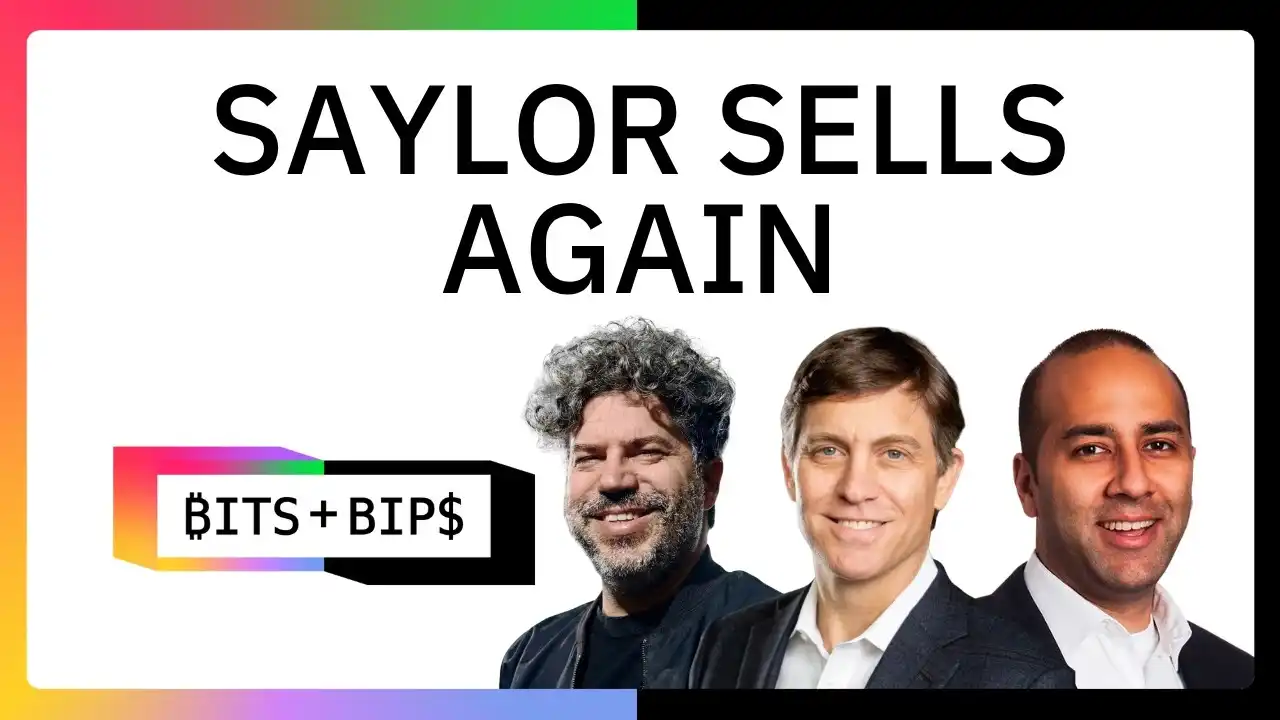
Hosts / Guests: Austin Campbell, Zero Knowledge Group; Ram Ahluwalia, Lumida Wealth CEO; Chris Perkins, Franklin Crypto
Podcast Source: Bits + Bips (Under Unchained)
Original Title: MicroStrategy Sells Bitcoin Again to Cover Dividends
Release Date: July 7, 2026

Key Takeaways

The background for this Bits + Bips roundtable is MicroStrategy's second Bitcoin sale within a month—3,588 BTC, cashed out for approximately $216 million to pay preferred stock dividends. The three resident guests (and co-hosts) Austin Campbell, Ram Ahluwalia, and Chris Perkins deconstruct this structural turning point from their professional perspectives: when the largest BTC buyer becomes a routine seller, the mNAV premium disappears, preferred stocks fall below par, and the "print stock to buy Bitcoin" cycle breaks, what cards does MicroStrategy have left?

Austin opens with a hedge fund friend's remark—"Saylor holds 5% of Bitcoin, maybe it will only truly surge after he blows up"—highlighting the crypto market's brutal logic: when someone becomes the protagonist, their collapse might be the catalyst. Ram, from a macro trader's view, analyzes the dilemma of two choices: selling BTC destroys the narrative, issuing new shares dilutes MSTR. He also mentions hearing Saylor speak twice in London, with Saylor vigorously defending the preferred dividend to rebuild confidence. Chris, from an investment banking background, points out that with mNAV gone, the foundation of financial engineering has crumbled.

But the discussion goes far beyond MicroStrategy. The three delve into the capital structure issue of tokens vs. equity—why there are no successful "token + equity coexistence" cases, the Pokémon card analogy, and the judgment that 99% of tokens will eventually go to zero. The stablecoin war is another major topic: Tether abandoning the European MiCA market, the "utility problem" of stablecoins (Can you buy a coffee with a stablecoin?), the governance black hole of the OUSD 140-member alliance, Robinhood entering government money markets. The latter half extends to the strategic significance of bank stablecoins—Scott Bessent's "Eurodollar market repatriation" thesis, JPMorgan possibly becoming the first trillion-dollar market cap bank, non-US bank dollar deposit businesses facing obsolescence—as well as a valuation breakdown of the Securitize IPO. Finally, the three touch on the capital siphoning effect of AI/semiconductors and the return to crypto market fundamentals.

Selected Highlights

On MicroStrategy Selling BTC and the "Three-Body Problem"

  • "A friend in global macro told me it's hard to see the next wave of institutional adoption from pensions, sovereign funds, central banks with Saylor holding 5% of Bitcoin there. His exact words: 'Maybe the best thing is for that guy to blow up, then this thing will really take off.'"
  • "Whenever someone becomes the protagonist in crypto, their demise is imminent. MicroStrategy has been the protagonist for a while."
  • "Crypto narrative is now stuck on this MicroStrategy thing. MicroStrategy is not crypto, crypto is not MicroStrategy, but we're all stuck here. It's like when Bloomberg only talked about PIGS (Portugal, Italy, Greece, Spain) every day; the market eventually moves on."
  • "His actions today speak clearly—he's protecting the dividend, hoping it brings back confidence."

On mNAV Disappearing and Broken Financial Engineering

  • "They have two paths: issue common stock diluting MSTR, or sell Bitcoin suffering narrative damage."
  • "When the mNAV premium disappears, the 'print stock to buy Bitcoin' cycle breaks. You can't issue at will anymore because the market no longer gives you a premium."
  • "BTC actually rose during the week of the sale—Josh Mandel and Pete Rizzo noted it. It acted like a buyback. But the bears will say: premium is dead, BTC hasn't really rallied, it's now a seller."

On Token vs. Equity

  • "We already have Delaware corporate law and centuries of capital structure. You can slice cash flows into different layers of debt, and what's left is called equity. There isn't a third thing called a 'token' that fits into this stack."
  • "If you have common equity, a token likely needs to function like preferred equity or debt to have separate meaning. If it's just another form of equity, you might as well tokenize your equity."
  • "The Pokémon card is a good analogy—the company issuing the cards and the cards themselves are two different things. You can tokenize the product, not necessarily the equity."
  • "Looking ahead ten years, 90% of today's top 500 tokens will be gone. I think it will be 99%."
  • "Druckenmiller said during the dot-com bubble: 'I've already learned that lesson, I don't need to learn it again.'"

On the Stablecoin War

  • "Stablecoins are the new net interest income. Everyone wants that interest. Tether makes so much money doing the most basic product—how do I do the same?"
  • "The biggest challenge for all stablecoins right now is utility. You can transfer, but what can you actually *do* with a stablecoin? Can you buy a coffee with it?"
  • "Tether's stance is clear: this is soccer not American football, they won't play by Europe's rules. BNP Paribas can't not do business in France, but Tether can just walk away from a market."
  • "OUSD is a 'plan to have a plan'. 140 members with completely different economic goals, details not filled in. The hardest part—governance—is skipped, push the tech out first."

On Bank Stablecoins and Market Landscape

  • "Stablecoins are essentially a repatriation of the Eurodollar market. If JPMorgan or Bank of America issues a stablecoin, they can earn NIM from Thai merchants or Chinese suppliers."
  • "JPMorgan could become the first trillion-dollar market cap bank. They're over $900 billion now, spending $13-16 billion annually on tech."
  • "The biggest losers might be non-US banks offering dollar deposit accounts. If I can just buy stablecoins, why go through a local bank with awful FX and fees?"
  • "Securitize currently trades more like a call option—you're betting on a 10% chance it's worth $18 billion and a 90% chance it's worthless or acquired cheaply."
  • "Last quarter, every S&P 500 sector underperformed the index except semiconductors. Capital is being massively siphoned by AI."

"Maybe After He Blows Up, This Thing Will Truly Take Off"

Austin Campbell: Before we dive in, I want to share a conversation. I was chatting with a friend in global macro, one of the best traders I know. I asked him about Bitcoin. He said it's hard to see the next wave of institutional adoption—pensions, sovereign funds, central banks—happening with Saylor holding 5% of Bitcoin and having such a large personal presence. His exact words: "Maybe the best thing is for that guy to blow up, then this thing will really take off, and then others will pile in." Whenever someone becomes the protagonist in crypto, their demise is imminent. MicroStrategy has been the protagonist for a while. I can't help but think, in a way, that makes them an obstacle to Bitcoin's rise—and that creates its own problems.

National Security, Export Controls, and the Crypto Industry

Austin Campbell: Before the main topic, I want to raise a broader issue. Governments are now trying to control crypto from a new angle—not by stopping code publication, but by controlling who can use it. They want to use export control laws to restrict access to something already published under the First Amendment. It's essentially picking winners and losers without applicable laws or due process.

National security matters, of course, but we can't just say "national security" and close our eyes to why. We can't tell people "use stablecoins, use crypto rails to build your financial life" and then cut it off one day for national security or export controls. The crypto industry isn't angry enough about this; this is our fight.

MicroStrategy Sells Again: 3,588 BTC, $216 Million

Austin Campbell: Onto the main topic. MicroStrategy sold 3,588 Bitcoin for about $216 million cash. This is the largest sale to date, following a smaller sale of 32 BTC to cover preferred stock dividends. The question is clear: after the MSTR premium evaporated, will selling Bitcoin to cover dividends become routine? Is MicroStrategy still an accumulator, or has it become a routine seller?

First, the facts. They broke their years-long no-sell streak, first selling 32, then 3,588 a month later. As of July 5, MicroStrategy holds 843,775 Bitcoin, $2.55 billion in USD reserves, cost basis $75,700 per coin—well above the current ~$60k trading price. MSTR broke below $1 for the first time on June 27, to 99 cents, later recovering. STRC fell to 74.57 at its lowest, back around 90 before we started. Dividend rate increased 50bps to 12%. New authorization framework allows sales of up to $1.25 billion in Bitcoin, plus an STRC buyback plan.

Chris, you're from banking; Ram, you do a lot of investing. Saylor has shifted to selling from the balance sheet rather than issuing more MSTR stock. What does that tell you?

Two Choices: Sell Bitcoin or Dilute Stock

Ram Ahluwalia: Two paths. Issue common stock—dilutes MSTR, stock falls. Or sell Bitcoin—destroys the narrative. Last week we mentioned a potential short squeeze in MSTR, and we saw it in the news. More constructively, STRC and STRF started moving towards par over the past few days. They need to push back to par. If they do, they can breathe; if not, it's a problem. I still view this as a trading asset, susceptible to violent short squeezes, possibly in the middle of one now. I also want to see the date they sold Bitcoin vs. the announcement date—if BTC held up or even rose during the sale, that's quite encouraging.

I was in London last week, first at a Goldman event—packed, severely oversold, institutional build undeniable. Then a Robinhood event, their DeFi stuff was impressive. Before that, I heard Saylor speak twice. On stage, he was very focused on defending and protecting the preferred dividend, trying to convince the audience of his commitment to Bitcoin. He's trying to navigate this three-body problem.

Austin Campbell: This also cuts to the bull/bear divergence. Bulls will say: mNAV back to 1.09, STRC recovering, BTC rising during the sale week—Josh Mandel and Pete Rizzo noted it, it acted like a buyback. Bears will say: premium is dead, BTC hasn't really rallied, it's now a seller. And Roland and Peter Schiff pointed this out. My question: even if preferred recovers a lot and Saylor can sit tight for a while, if BTC doesn't rise, are we back at square one a year from now?

Ram Ahluwalia: My guess is, last week fast-money traders bought the dip on volume collapse. That's fast money, not long-term holders. They'll likely sell for profit.

Chris Perkins: From a banking perspective, when the mNAV premium disappears, the "print stock to buy Bitcoin" cycle breaks. You can't issue at will because the market no longer gives you a premium. So you have to work the asset side. Selling Bitcoin works accounting-wise—cost $75,700, market price low $60k, book loss but cash in hand. The problem is the action itself tells the market: you no longer unconditionally believe your own thesis.

"Three-Body Problem": MicroStrategy-Bitcoin-Crypto Narrative Lock

Chris Perkins: Unfortunately, we're stuck. Crypto narrative is now stuck on this MicroStrategy thing. MicroStrategy is not crypto, crypto is not MicroStrategy, but we're all stuck here, feeling like we need to digest this before moving forward. It reminds me of opening Bloomberg before, only talking about PIGS—Portugal, Italy, Greece, Spain—every single day, and eventually the market moved on.

I'm ready for us to turn the page. What encourages me somewhat is BTC showing resilience today. There are also positive tail factors—like Trump saying he likes crypto the same day the Trump account launched. I look forward to us focusing less on this three-body problem and getting back to fundamentals and details of other projects. Crypto is Bitcoin, Bitcoin is crypto, so MicroStrategy is crypto—I want to break that equation.

Another related debate emerging: does value flow to tokens or equity? You see it in private and public markets. Some dismissively say "all value is in equity, the rest is nonsense." I think it's more nuanced.

Token vs. Equity: No Third Capital

Austin Campbell: I think both can work, but the hard part is having both—unless you carefully define their rights. We already have Delaware corporate law and centuries of capital structure. You can slice cash flows into different layers of debt, and what's left after employees and creditors is called equity. There isn't a third thing called a 'token' that fits into this stack. You can make a token act like equity or debt, but making it a new concept alongside debt and equity is difficult.

If you have common equity, a token likely needs to function like preferred equity or debt to have separate meaning. If it's just another form of equity, you might as well tokenize your equity. You can also tokenize products, services, commodities—the Pokémon card is a good analogy. The company issuing cards and the cards themselves are two different things; you can tokenize the product without tokenizing equity.

Ram Ahluwalia: It's case-specific. From a decentralized tech perspective, it might differ—you can pop up frontends everywhere, governance logic for equity and tokens can be separate. In some projects, value clearly flows to tokens, equity becomes a shell. VCs' approach is to invest in both—take tokens and equity, capture value wherever it ends up. But honestly, tokens and equity coexisting with stable value—I can't think of a clear success story.

Chris Perkins: Some ask: will this whole token experiment, in hindsight, be a product of the COVID $3 trillion stimulus and zero-interest-rate era? We created twenty thousand tokens, didn't know what they were, thought they were governance and economic rights, and then reverted to traditional capitalism?

I don't think so. You can't deny real utility emerging: stablecoins near ATH, perpetuals market innovating, prediction markets growing, RWA and tokenized equity landing. Goldman's event was packed, Robinhood built a DeFi app store—12 partners, more coming—backed by Lloyd's insurance, abstracting risk in the backend. The market is maturing.

Austin Campbell: Looking ahead ten years, 90% of today's top 500 tokens will be gone. Is that failure or success?

Ram Ahluwalia: If you invested money, it's failure. I think not 90%, but 99% will go to zero. The lesson hasn't changed. Druckenmiller said during the dot-com bubble he already knew the lesson, didn't need to learn it again. These tokens have no value capture, founding teams get liquidity too early, no incentive to stay and build.

Stablecoin War: Tether, Robinhood, OUSD

Austin Campbell: This set of dynamics—Circle being queried by securities regulators, Robinhood entering government money markets, Tether's moves, the OUSD alliance—what's your take?

Chris Perkins: I saw this coming. Institutional profit-seeking is endless. If you're an exchange, you make money several ways: data, trading fees, net interest income. Stablecoins are the new net interest income. Everyone looks at Tether saying, these guys make so much money doing the most basic product—how do I do the same?

But the biggest challenge is utility. You can transfer, but what can you actually *do* with a stablecoin? Can you buy a coffee with it? It's still "hot potato"—I want to swap my stablecoin for yours, you hold mine, I earn interest. The stablecoin war has begun, will get worse before better. Will see consolidation. Look back at the CLARITY Act; banks should push it over the line.

Austin Campbell: Stablecoins are often discussed as a single product, but they're entirely different. Robinhood tries to attract deposits and deploy to DeFi—an investment and retail product strategy. Europe is more a regulated payments strategy. Tether's response is direct—they'll make USAT (US Tether), interested in the US economy, but Europe? "No bid." Tether calls it soccer not American football, they won't play by Europe's rules. They completely exited a market. You see them being pushed off some exchanges, Revolut delisting them. Tether's response: as expected. BNP Paribas can't not do business in France, but Tether can.

OUSD is a "plan to have a plan." A 140-member alliance with completely different economic goals, details not filled in. You say issuers keep economic benefits, but how tracked? Who minted the token? On which platform? How handled in DeFi? If based on who minted, can I immediately build a trading team to redeem others' OUSD and issue my own? The hardest part—governance—is skipped, push the tech out first.

Coinbase is also in OUSD, but smartly not putting all eggs in Circle's basket. If this were a serious business alliance requiring OUSD as a primary product, Coinbase likely wouldn't join. So they have a foot in both camps.

Ram Ahluwalia: "Move fast and break things" is a winning formula in tech. Elon Musk blew up countless rockets to reach SpaceX today. But "move fast and break things" with other people's money? Isn't that criminal? OUSD launched like a torpedo, but some partners faced backlash before even boarding—that's the bad side of tech culture colliding with finance culture.

Bank Stablecoins: Repatriation of the Eurodollar Market

Austin Campbell: Will banks issue stablecoins? I think so. In an ideal world, banks keep deposits for domestic use—loans exist. Deposit rates might rise, but repo rates fall, net funding cost flat. But you'd also want stablecoins, because deposits and stablecoins do different things. Like stocks aren't bonds. A client has a deposit, wants to transfer to an international recipient outside the banking system—use a stablecoin, not a deposit.

Ironically—Bank of America could issue a stablecoin, with reserves being BofA deposits. Then you truly get the best of both worlds. If CLARITY doesn't limit proceeds, they'd be thankful.

Ram Ahluwalia: They'll rush in, and partner with clients who have distribution. Look at Zelle's success—Zelle gave big banks an edge. The stablecoin framework similarly advantages big banks over regional banks. Regional banks haven't made a competitive response yet.

More importantly, the point Scott Bessent made several times: Stablecoins are essentially a repatriation of the Eurodollar market. If JPMorgan or Bank of America issues a stablecoin, they can now earn NIM from Thai merchants or Chinese suppliers. Of the US big four—JPMorgan, Wells Fargo, Citi, Bank of America—only Citi has a real international distribution network. The other three don't earn from their clients' clients. Stablecoins change that.

Chris Perkins: Don't underestimate JPMorgan. Their e-commerce business is substantial, with distribution channels connecting to these platforms. They can do what Meta attempted with Diem and Libra—but with their own framework, bringing multiple banks onboard. If Democrats take the House, they'll have a friendly ear in Elizabeth Warren. JPMorgan could become the first trillion-dollar market cap bank. They're over $900 billion now, spending $13-16 billion annually on tech. They're sensitive to disruption—saw what fractional trading, zero-commission trading did to their margins.

Banks already have "stablecoins"—called deposits. People give you dollars, you keep most interest, occasionally give some back. But the issue is, bank deposits only work within their network. Stablecoins let JPMorgan earn from clients' clients globally, not just their own clients.

Non-US Banks: The Biggest Losers

Austin Campbell: ZUSD is already a registered code—they're working on a stablecoin. But I'll be more direct: The biggest losers from dollar stablecoins might be non-US banks offering dollar deposit accounts. If I can open a dollar account via a local bank—usually awful FX, high fees—and now I can just buy stablecoins, that business is obsolete. And it's no longer just for ultra-high-net-worth clients.

If we're naming losers, dollar stablecoins are good for US big four, losers are probably like UBS.

Chris Perkins: Any product where "you give me dollars, I give you dollars back, but I keep the interest forever" is a good product.

Securitize IPO: Trading Like a Call Option

Austin Campbell: Talk about Securitize just going public. Q1 revenue up 39% YoY, but lost $7 million. Market cap $1.8 billion. Your thoughts?

Chris Perkins: Securitize currently trades more like a call option. You're not saying "I think it's worth $1.8 billion now," you're saying "I think there's a 10% chance it's worth $18 billion in the future and a 90% chance it's worthless or acquired cheaply or dies." The high volatility is evidence.

Ram Ahluwalia: Looking at IPO trends, IPOs over $1 billion almost always have a 50% drawdown in the first year. If you want to own Securitize, the right move might be to put in a lowball bid and wait. Circle is also near lows, but has real moats. Meanwhile Ripple got a MiCA license—Luxembourg, with passporting—but short-term doesn't help XRP or RLUSD much.

Market Landscape: AI Siphoning and Return to Fundamentals

Ram Ahluwalia: Last quarter, every S&P 500 sector underperformed the index except semiconductors. Capital is being massively siphoned by AI. But the past two weeks you see quality stocks bouncing back—Progressive, Allstate, Berkshire Hathaway, S&P Global, Moody's. World-class businesses on sale.

Austin Campbell: That should be good for crypto. Back to fundamentals. Things with revenue are rising. BTC back to $64K, Hyperliquid at 71.35. Everything eventually returns to fundamentals and cash flow.


Criptos en tendencia

Preguntas relacionadas

QWhat are the three main options MicroStrategy faces according to the podcast discussion, and what are the consequences of each?

AAccording to the discussion, MicroStrategy faces a two-part (or three-body problem) dilemma: 1) Issue more common stock (MSTR), which would dilute existing shareholders and cause the stock price to fall. 2) Sell Bitcoin from its balance sheet, which damages the core narrative that the company is a perpetual 'buyer' and holder of Bitcoin. The discussion also framed it as a 'three-body problem' where the fates of MicroStrategy, Bitcoin, and the broader crypto narrative are intertwined, creating a complex situation that the market is currently 'stuck' on.

QAccording to the panelists, what is the fundamental challenge with most crypto tokens in relation to traditional capital structures?

AThe panelists argue that there is no natural place for a 'token' as a third, distinct component within traditional capital structures defined by centuries of corporate law (like Delaware law). Capital stacks consist of debt (various levels) and equity (what's left after all obligations). A token can be designed to function *like* equity or debt (e.g., similar to preferred stock), but it cannot be a fundamentally new, parallel claim on cash flows. If it merely acts as another form of equity, it's simpler to just tokenize the existing equity. They suggest tokenizing products or services (like Pokémon cards) might be a more viable model than trying to insert tokens into corporate capital stacks.

QWhat is identified as the biggest challenge for stablecoins' widespread adoption, beyond their use for transfers?

AThe biggest challenge identified for stablecoins is **utility**. While they are excellent for transfers and settlements, the panelists question what they can actually be used for in everyday economic life. Specifically, Chris Perkins asks: 'Can you buy a cup of coffee with it?' The current environment is described as somewhat of a 'hot potato' game where entities try to get users to hold their stablecoin to earn interest, rather than solving real-world payment and purchase utility.

QHow do the panelists view the strategic implication of major US banks (like JPMorgan) issuing their own stablecoins?

AThe panelists see it as a major strategic opportunity for large US banks. They frame stablecoins as a 'repatriation of the Eurodollar market.' Banks like JPMorgan, which have vast domestic deposit bases, could issue stablecoins to capture the net interest margin (NIM) from transactions involving their clients' *clients* globally (e.g., a Thai merchant or Chinese supplier), business they currently cannot access directly. This would allow them to monetize a much broader network. They predict JPMorgan, in particular, could become the first trillion-dollar market cap bank by leveraging this and its existing technological investments.

QWhat is the panel's outlook for the vast majority of existing crypto tokens over the next decade?

AThe outlook is extremely pessimistic. Austin Campbell suggests 90% of the current top 500 tokens will disappear in the next ten years. Ram Ahluwalia goes further, stating he believes **99% will go to zero**. He compares the situation to the dot-com bubble, citing investor Stanley Druckenmiller's lesson that most ventures fail because they lack sustainable value capture mechanisms, and founders often take early liquidity, reducing their incentive to build long-term value.

Lecturas Relacionadas

Former Huawei 'Genius Teen' Who Questioned DeepSeek Interview Lands in 'Crossfire' from Web3 Investor

Former Huawei "Genius Youth" Li Bojie recently drew public attention by criticizing his interview experience with DeepSeek. The controversy escalated when Du Jun, co-founder of Web3 investment firm ABCDE Capital, publicly accused Li of being "the founder with the least sense of contractual spirit" he had ever cooperated with, sparking a dispute over Li's startup project, Metagent. Li detailed a frustrating DeepSeek interview where he was accused of potential plagiarism, leading him to end the session. The spotlight then shifted to his venture, Metagent, a Web3+AI project aiming to tokenize AI agents. ABCDE invested $1.5 million, with an initial $500k disbursed. Du Jun claimed the project's progress was severely lacking, with a poor-quality demo and minimal social media activity. He alleged Li stopped communicating, deleted his Telegram, and failed to provide proper financial reporting. In response, Li argued the remaining $1 million was never received, crippling operations and forcing salary cuts. He stated he left Metagent in October 2024 due to family reasons and Web3 compliance concerns, with board approval. He claimed to have fulfilled disclosure duties and that his subsequent projects avoided conflicting fields. Other investors, including ArkStream Capital, shared negative due diligence experiences, citing unprofessional contracts and evasive answers on tokenomics. Metagent's social media went silent in June 2024, effectively stalling. Li has since moved to a new consumer AI agent platform, Pine AI (formerly Logenic AI), which has raised $25 million in Series A funding. He served as its Chief Scientist but recently left, clarifying he was not the founder and departed due to a shift in research interests.

Foresight NewsHace 24 min(s)

Former Huawei 'Genius Teen' Who Questioned DeepSeek Interview Lands in 'Crossfire' from Web3 Investor

Foresight NewsHace 24 min(s)

SemiAnalysis: Anthropic's Q3 Profit to Exceed $1 Billion

Research firm SemiAnalysis reveals that Anthropic is reshaping the AI commercialization landscape with profitability and growth rates far exceeding competitors. Leveraging a high-margin, API-centric business model, Anthropic has become a leader in the B2B AI market. The report projects that Anthropic will achieve a GAAP EBIT of $1 billion in Q3 2026, with a 6% margin. Its Annual Recurring Revenue (ARR) has surged from $9 billion at the end of 2025 to over $60 billion currently. If it maintains a Net New ARR (NNARR) of approximately $15 billion per month, its ARR could reach $300 billion by the end of 2027, implying a $6 trillion enterprise value and making it the world's most valuable company. Anthropic secretly filed for an IPO on June 1st. SemiAnalysis argues the timing is strategically urgent due to narrowing capital market windows as rivals like Alphabet and Meta secure major funding. The superior financials and business model suggest Anthropic should go public before OpenAI to seize the competitive initiative. The performance inflection stems from the explosive adoption of Claude Code, which now accounts for over 7% of all GitHub commits, driving monthly NNARR from $3 billion in January to $11 billion in March. Anthropic's revenue structure differs significantly from OpenAI's. Approximately 75-85% of Anthropic's ARR comes from usage-based API fees, with consumer subscriptions constituting only about 5%. In contrast, over 65% of OpenAI's Q1 2026 revenue was from subscriptions, with ~40% from consumers. The API model's key advantage is no per-user revenue cap, enabling growth within existing accounts. Anthropic's Net Revenue Retention (NRR) is an extraordinary 500%. This drives superior gross margins, now in the mid-60% range versus -94% in 2024, with API margins exceeding 80%. Core drivers are improved inference efficiency and a largely enterprise-focused model without the cost of serving hundreds of millions of free users. The report introduces "EBTIT" (Earnings Before Training & Interest & Taxes) to measure re-investment capacity, projecting Anthropic's cumulative EBTIT through 2028 will be $250 billion higher than OpenAI's. Over 65% of lab ARR currently comes from programming use cases. Cybersecurity is seen as the next major vertical, with upcoming model releases like Fable expected to further increase token pricing and expand NNARR. Indirect sales via hyperscaler platforms (AWS Bedrock, Azure Foundry) now account for 15-20% of ARR. A core constraint is compute supply. By 2030, combined unconstrained compute demand from Anthropic and OpenAI could exceed 100 GW, far outstripping projected new capacity. IPO proceeds are seen as crucial to lock in future compute resources. Key risks include potential price cuts by OpenAI, competitive pressure from Google DeepMind and Meta in coding models, potential government restrictions on frontier model releases, and margin dilution from growing indirect "Token-as-a-Service" sales. Regulatory actions that narrow the capability gap between open-source and proprietary models are highlighted as a fundamental threat to Anthropic's moat.

marsbitHace 37 min(s)

SemiAnalysis: Anthropic's Q3 Profit to Exceed $1 Billion

marsbitHace 37 min(s)

Trading

Spot

Artículos destacados

Qué es BITCOIN

Entendiendo HarryPotterObamaSonic10Inu (ERC-20) y Su Posición en el Espacio Cripto En los últimos años, el mercado de criptomonedas ha sido testigo de un aumento en la popularidad de las monedas meme, capturando el interés no solo de los comerciantes, sino también de aquellos que buscan compromiso comunitario y valor de entretenimiento. Entre estos tokens únicos se encuentra HarryPotterObamaSonic10Inu (ERC-20), un proyecto intrigante que mezcla referencias culturales en el tejido de las criptomonedas. Este artículo profundiza en los aspectos clave de HarryPotterObamaSonic10Inu, explorando sus mecanismos, ethos impulsado por la comunidad y su relación con el paisaje cripto más amplio. ¿Qué es HarryPotterObamaSonic10Inu (ERC-20)? Como su nombre sugiere, HarryPotterObamaSonic10Inu es una moneda meme construida sobre la blockchain de Ethereum, clasificada bajo el estándar ERC-20. A diferencia de las criptomonedas tradicionales que pueden enfatizar la utilidad práctica o el potencial de inversión, este token prospera en el valor de entretenimiento y la fuerza de su comunidad. El proyecto tiene como objetivo fomentar un entorno donde los usuarios comprometidos puedan reunirse, compartir ideas y participar en actividades inspiradas por diversos fenómenos culturales. Una característica notable de HarryPotterObamaSonic10Inu es su cero impuestos en las transacciones. Este atractivo elemento tiene como objetivo incentivar el comercio y la participación comunitaria, sin cargos adicionales que puedan disuadir a los comerciantes de pequeña escala. El suministro total de la moneda está establecido en mil millones de tokens, una cifra que marca su intención de mantener una circulación sustancial dentro de la comunidad. Creador de HarryPotterObamaSonic10Inu (ERC-20) Los orígenes de HarryPotterObamaSonic10Inu están algo envueltos en misterio; los detalles sobre el creador siguen siendo desconocidos. El desarrollo de este token carece de un equipo identificable o de un plan explícito, lo cual no es inusual dentro del sector de monedas meme. En cambio, el proyecto ha surgido de manera orgánica, con su progreso muy dependiente del entusiasmo y la participación de su comunidad. Inversores de HarryPotterObamaSonic10Inu (ERC-20) En cuanto a inversiones externas y respaldo, HarryPotterObamaSonic10Inu también sigue siendo ambiguo. El token no lista ninguna fundación de inversión conocida o apoyo organizacional significativo. En cambio, la savia del proyecto es su comunidad de base, que informa su crecimiento y sostenibilidad a través de la acción colectiva y el compromiso en el espacio cripto. ¿Cómo Funciona HarryPotterObamaSonic10Inu (ERC-20)? Como una moneda meme, HarryPotterObamaSonic10Inu opera principalmente fuera de los marcos tradicionales que a menudo rigen el valor de los activos. Hay varios aspectos distintivos que definen cómo funciona el proyecto: Transacciones Sin Impuestos: Sin tarifas impositivas en las transacciones, los usuarios pueden comprar y vender el token libremente sin preocuparse por costos ocultos. Compromiso Comunitario: El proyecto prospera en la interacción comunitaria, aprovechando plataformas de redes sociales para crear entusiasmo y facilitar la participación. Las discusiones, el intercambio de contenido y el compromiso son elementos cruciales que ayudan a expandir su alcance y fomentar la lealtad entre los seguidores. Sin Utilidad Práctica: Cabe señalar que HarryPotterObamaSonic10Inu no ofrece utilidad concreta dentro del ecosistema financiero. Más bien, se clasifica como un token principalmente para actividades de entretenimiento y comunitarias. Referencia Cultural: El token incorpora astutamente elementos de la cultura popular para atraer interés, conectando con entusiastas de los memes y seguidores de las criptomonedas por igual. HarryPotterObamaSonic10Inu ejemplifica cómo las monedas meme operan de manera diferente a los proyectos de criptomonedas más tradicionales, ingresando al mercado como construcciones sociales innovadoras en lugar de activos utilitarios. Cronología de HarryPotterObamaSonic10Inu (ERC-20) La historia de HarryPotterObamaSonic10Inu está marcada por varios hitos notables: Creación: El token surgió de un meme viral, capturando la imaginación de muchos entusiastas de las criptomonedas. Las fechas específicas de creación no están disponibles, subrayando su ascenso orgánico. Listado en Exchanges: HarryPotterObamaSonic10Inu ha llegado a varios exchanges, permitiendo un acceso y comercio más fácil por parte de la comunidad. Iniciativas de Compromiso Comunitario: Actividades continuas destinadas a mejorar la interacción comunitaria, incluyendo concursos, campañas en redes sociales y generación de contenido por parte de fanáticos y defensores. Planes de Expansión Futuros: La hoja de ruta del proyecto incluye el lanzamiento de una colección de NFT, mercancía y un sitio de comercio electrónico relacionado con sus temas culturales, involucrando aún más a la comunidad e intentando añadir más dimensiones a su ecosistema. Puntos Clave Sobre HarryPotterObamaSonic10Inu (ERC-20) Naturaleza Impulsada por la Comunidad: El proyecto prioriza la participación colectiva y la creatividad, asegurando que la involucración de los usuarios esté a la vanguardia de su desarrollo. Clasificación como Moneda Meme: Representa la epítome de las criptomonedas basadas en el entretenimiento, diferenciándose de los vehículos de inversión tradicionales. Sin Afiliación Directa con Bitcoin: A pesar de la similitud en el nombre del ticker, HarryPotterObamaSonic10Inu es distinto y no tiene relación con Bitcoin u otras criptomonedas establecidas. Enfoque en la Colaboración: HarryPotterObamaSonic10Inu está diseñado para crear un espacio para la colaboración y el intercambio de historias entre sus poseedores, proporcionando una vía para la creatividad y el vínculo comunitario. Perspectivas Futuras: La ambición de expandirse más allá de su premisa inicial hacia NFTs y mercancías describe un camino para que el proyecto potencialmente ingrese a avenidas más tradicionales dentro de la cultura digital. A medida que las monedas meme continúan capturando la imaginación de la comunidad de criptomonedas, HarryPotterObamaSonic10Inu (ERC-20) se destaca debido a sus lazos culturales y su enfoque centrado en la comunidad. Si bien puede no encajar en el molde típico de un token impulsado por la utilidad, su esencia radica en la alegría y la camaradería fomentadas entre sus seguidores, destacando la naturaleza en evolución de las criptomonedas en una era cada vez más digital. A medida que el proyecto continúa desarrollándose, será importante observar cómo las dinámicas comunitarias influyen en su trayectoria en el cambiante paisaje de la tecnología blockchain.

1.9k Vistas totalesPublicado en 2024.04.01Actualizado en 2024.12.03

Qué es BITCOIN

Cómo comprar BTC

¡Bienvenido a HTX.com! Hemos hecho que comprar Bitcoin (BTC) sea simple y conveniente. Sigue nuestra guía paso a paso para iniciar tu viaje de criptos.Paso 1: crea tu cuenta HTXUtiliza tu correo electrónico o número de teléfono para registrarte y obtener una cuenta gratuita en HTX. Experimenta un proceso de registro sin complicaciones y desbloquea todas las funciones.Obtener mi cuentaPaso 2: ve a Comprar cripto y elige tu método de pagoTarjeta de crédito/débito: usa tu Visa o Mastercard para comprar Bitcoin (BTC) al instante.Saldo: utiliza fondos del saldo de tu cuenta HTX para tradear sin problemas.Terceros: hemos agregado métodos de pago populares como Google Pay y Apple Pay para mejorar la comodidad.P2P: tradear directamente con otros usuarios en HTX.Over-the-Counter (OTC): ofrecemos servicios personalizados y tipos de cambio competitivos para los traders.Paso 3: guarda tu Bitcoin (BTC)Después de comprar tu Bitcoin (BTC), guárdalo en tu cuenta HTX. Alternativamente, puedes enviarlo a otro lugar mediante transferencia blockchain o utilizarlo para tradear otras criptomonedas.Paso 4: tradear Bitcoin (BTC)Tradear fácilmente con Bitcoin (BTC) en HTX's mercado spot. Simplemente accede a tu cuenta, selecciona tu par de trading, ejecuta tus trades y monitorea en tiempo real. Ofrecemos una experiencia fácil de usar tanto para principiantes como para traders experimentados.

5.3k Vistas totalesPublicado en 2024.12.12Actualizado en 2026.06.02

Cómo comprar BTC

Qué es $BITCOIN

ORO DIGITAL ($BITCOIN): Un Análisis Integral Introducción al ORO DIGITAL ($BITCOIN) ORO DIGITAL ($BITCOIN) es un proyecto basado en blockchain que opera en la red Solana, cuyo objetivo es combinar las características de los metales preciosos tradicionales con la innovación de las tecnologías descentralizadas. Aunque comparte un nombre con Bitcoin, a menudo referido como “oro digital” debido a su percepción como un refugio de valor, ORO DIGITAL es un token separado diseñado para crear un ecosistema único dentro del paisaje Web3. Su meta es posicionarse como un activo digital alternativo viable, aunque los detalles sobre sus aplicaciones y funcionalidades aún están en desarrollo. ¿Qué es ORO DIGITAL ($BITCOIN)? ORO DIGITAL ($BITCOIN) es un token de criptomoneda diseñado explícitamente para su uso en la blockchain de Solana. A diferencia de Bitcoin, que proporciona un papel de almacenamiento de valor ampliamente reconocido, este token parece centrarse en aplicaciones y características más amplias. Aspectos notables incluyen: Infraestructura Blockchain: El token está construido sobre la blockchain de Solana, conocida por su capacidad para manejar transacciones de alta velocidad y bajo costo. Dinámicas de Suministro: ORO DIGITAL tiene un suministro máximo limitado a 100 cuatrillones de tokens (100P $BITCOIN), aunque los detalles sobre su suministro circulante no se han divulgado actualmente. Utilidad: Si bien las funcionalidades precisas no están delineadas explícitamente, hay indicios de que el token podría ser utilizado para diversas aplicaciones, potencialmente involucrando aplicaciones descentralizadas (dApps) o estrategias de tokenización de activos. ¿Quién es el Creador de ORO DIGITAL ($BITCOIN)? En la actualidad, la identidad de los creadores y el equipo de desarrollo detrás de ORO DIGITAL ($BITCOIN) sigue siendo desconocida. Esta situación es típica entre muchos proyectos innovadores dentro del espacio blockchain, particularmente aquellos alineados con las finanzas descentralizadas y fenómenos de monedas meme. Si bien tal anonimato puede fomentar una cultura impulsada por la comunidad, intensifica las preocupaciones sobre la gobernanza y la responsabilidad. ¿Quiénes son los Inversores de ORO DIGITAL ($BITCOIN)? La información disponible indica que ORO DIGITAL ($BITCOIN) no tiene patrocinadores institucionales conocidos ni inversiones destacadas de capital de riesgo. El proyecto parece operar en un modelo de peer-to-peer centrado en el apoyo y la adopción de la comunidad en lugar de rutas de financiamiento tradicionales. Su actividad y liquidez se sitúan principalmente en intercambios descentralizados (DEX), como PumpSwap, en lugar de plataformas de trading centralizadas establecidas, lo que resalta aún más su enfoque de base. Cómo Funciona ORO DIGITAL ($BITCOIN) Los mecanismos operativos de ORO DIGITAL ($BITCOIN) pueden elaborarse en función de su diseño blockchain y atributos de red: Mecanismo de Consenso: Al aprovechar el único proof-of-history (PoH) de Solana combinado con un modelo de proof-of-stake (PoS), el proyecto asegura una validación de transacciones eficiente que contribuye al alto rendimiento de la red. Tokenómica: Si bien los mecanismos deflacionarios específicos no se han detallado extensamente, el vasto suministro máximo de tokens implica que podría atender microtransacciones o casos de uso nicho que aún están por definirse. Interoperabilidad: Existe el potencial de integración con el ecosistema más amplio de Solana, incluyendo varias plataformas de finanzas descentralizadas (DeFi). Sin embargo, los detalles sobre integraciones específicas permanecen no especificados. Cronología de Eventos Clave Aquí hay una cronología que destaca hitos significativos relacionados con ORO DIGITAL ($BITCOIN): 2023: El despliegue inicial del token ocurre en la blockchain de Solana, marcado por su dirección de contrato. 2024: ORO DIGITAL gana visibilidad al estar disponible para trading en intercambios descentralizados como PumpSwap, permitiendo a los usuarios comerciar contra SOL. 2025: El proyecto presencia actividad de trading esporádica y potencial interés en compromisos liderados por la comunidad, aunque no se han documentado asociaciones notables o avances técnicos hasta el momento. Análisis Crítico Fortalezas Escalabilidad: La infraestructura subyacente de Solana soporta altos volúmenes de transacciones, lo que podría mejorar la utilidad de $BITCOIN en varios escenarios de transacción. Accesibilidad: El potencial bajo precio de trading por token podría atraer a inversores minoristas, facilitando una participación más amplia debido a oportunidades de propiedad fraccionada. Riesgos Falta de Transparencia: La ausencia de patrocinadores, desarrolladores o un proceso de auditoría conocidos públicamente puede generar escepticismo sobre la sostenibilidad y confiabilidad del proyecto. Volatilidad del Mercado: La actividad de trading depende en gran medida del comportamiento especulativo, lo que puede resultar en una volatilidad de precios significativa y en incertidumbre para los inversores. Conclusión ORO DIGITAL ($BITCOIN) surge como un proyecto intrigante pero ambiguo dentro del ecosistema de Solana en rápida evolución. Si bien intenta aprovechar la narrativa del “oro digital”, su alejamiento del papel establecido de Bitcoin como refugio de valor subraya la necesidad de una diferenciación más clara de su utilidad y estructura de gobernanza previstas. La aceptación y adopción futura dependerán probablemente de abordar la actual opacidad y de definir sus estrategias operativas y económicas de manera más explícita. Nota: Este informe abarca información sintetizada disponible hasta octubre de 2023, y pueden haber ocurrido desarrollos más allá del período de investigación.

110 Vistas totalesPublicado en 2025.05.13Actualizado en 2025.05.13

Qué es $BITCOIN

Discusiones

Bienvenido a la comunidad de HTX. Aquí puedes mantenerte informado sobre los últimos desarrollos de la plataforma y acceder a análisis profesionales del mercado. A continuación se presentan las opiniones de los usuarios sobre el precio de BTC (BTC).

活动图片