Định giá 8 tỷ USD, tăng gấp 2 lần trong 8 tháng! Ngân hàng thân thiện với tiền mã hóa Erebor Bank dựa vào đâu?

marsbitPublicado a 2026-07-04Actualizado a 2026-07-04

Resumen

Erebor Bank, ngân hàng thân thiện với tiền mã hóa do Palmer Luckey sáng lập và được tỷ phú Peter Thiel hậu thuẫn, đang đàm phán vòng gọi vốn mới với định giá mục tiêu ít nhất 80 tỷ USD, gấp đôi so với mức 43,5 tỷ USD hồi tháng 12/2024. Sự tăng trưởng ngoạn mục này chủ yếu dựa vào tốc độ mở rộng nhanh chóng: số dư tiền gửi của ngân hàng tăng gần gấp 4 lần chỉ trong một quý, từ 1,1 tỷ USD cuối tháng 3 lên khoảng 4,05 tỷ USD vào cuối quý II. Mặc dù báo cáo tài chính quý I cho thấy lỗ ròng 6,01 triệu USD và chưa có hoạt động cho vay đáng kể, các nhà đầu tư đánh giá cao tiềm năng tương lai. Erebor hướng tới việc sử dụng nguồn tiền gửi này để phát triển mạnh nghiệp vụ cho vay, đặc biệt là cho các doanh nghiệp sản xuất và quốc phòng Mỹ, đồng thời tích hợp dịch vụ stablecoin và thanh toán trên chuỗi (on-chain). Ngân hàng này nắm giữ giấy phép quốc gia (OCC) mới, được cấp trong bối cảnh chính sách ngân hàng Mỹ cởi mở hơn với tài sản số. Đội ngũ điều hành kết hợp uy tín công nghệ của Luckey với kinh nghiệm tài chính Wall Street. Tuy nhiên, Erebor cũng đối mặt với nhiều rủi ro như cấu trúc khách hàng tập trung (công ty khởi nghiệp, quỹ đầu tư), sự biến động của thị trường tiền mã hóa, rủi ro chính sách và thách thức trong việc chứng minh nhu cầu thực tế cho các dịch vụ tích hợp của mình.

Tác giả:Chloe,ChainCatcher

Theo Bloomberg, Erebor, một ngân hàng kỹ thuật số được khởi xướng bởi nhà sáng lập Anduril Palmer Luckey và được tỷ phú đầu tư Peter Thiel hậu thuẫn, đang đàm phán vòng gọi vốn mới với các nhà đầu tư, mục tiêu định giá ít nhất 80 tỷ USD, gấp khoảng 2 lần so với vòng vào tháng 12 năm ngoái (huy động 3.5 tỷ USD, định giá 43.5 tỷ USD). Các cuộc đàm phán vẫn ở giai đoạn đầu, định giá chưa được chốt, người phát ngôn của Erebor không bình luận về nội dung thương lượng.

Một ngân hàng chỉ mới thành lập vài tháng, định giá nhảy vọt gấp đôi, là một trong những trường hợp tăng giá trị cao nhất trong số các ngân hàng mới nhận giấy phép ở Mỹ những năm gần đây, và thứ thực sự khiến các nhà đầu tư sẵn sàng trả giá lại, có lẽ là tốc độ mở rộng được thể hiện qua báo cáo tài chính của nó.

Nhà đầu tư đã thấy tiềm năng gì từ báo cáo tài chính?

Theo nguồn tin nội bộ, quy mô tiền gửi của Erebor từ 1.1 tỷ USD theo báo cáo cho cơ quan quản lý vào cuối tháng 3, đã tăng vọt lên khoảng 4.05 tỷ USD trong vòng ba tháng, tăng gần gấp bốn lần trong một quý. Đồng thời bổ sung gần 400 khách hàng mới, ngân hàng dự kiến sẽ có lãi trước cuối năm 2026.
Tốc độ tăng trưởng này cũng làm dấy lên nghi ngờ từ bên ngoài, liệu Erebor có quá gần gũi với giới công nghệ Thung lũng Silicon và giới quốc phòng chính phủ? Nghi ngờ đây là trò chơi "chuyền tay" nội bộ.

Luckey đã phản hồi trực tiếp điều này, nhấn mạnh rằng trong tăng trưởng quý, không có tỷ lệ nào đến từ công ty của chính ông, các khách hàng mới đều độc lập lựa chọn Erebor. Ông cũng bổ sung, phần lớn sự mở rộng gần đây tập trung vào các doanh nghiệp xây dựng lại năng lực sản xuất của Mỹ, ngân hàng cũng mở rộng tương ứng tài trợ thiết bị, tín dụng mạo hiểm, và hoạt động tín dụng hỗ trợ các doanh nghiệp công nghiệp và quốc phòng.

Nhìn lại báo cáo tài chính quý đầu, ta thấy tổng tài sản Erebor là 1.703 tỷ USD, tiền gửi 1.098 tỷ USD, vốn chủ sở hữu ngân hàng 600.6 triệu USD, trên sổ sách không có bất kỳ hoạt động cho vay hoặc cho thuê nào, cũng không có khoản vay nào khác ngoài tiền gửi (các khoản mục như tiền gửi liên ngân hàng liên bang, hợp đồng mua lại, các khoản vay khác, nợ thứ cấp đều bằng không). Cơ cấu tài sản cực kỳ nghiêng về tính thanh khoản: khoảng 1.411 tỷ USD là tiền mặt và tiền gửi tại các ngân hàng khác, khoảng 275 triệu USD là trái phiếu và chứng khoán vốn có thể bán được (trong đó trái phiếu 116 triệu USD, chứng khoán vốn 159 triệu USD).

Ngoài ra, thu nhập lãi thuần quý chỉ 3.36 triệu USD, chi phí không từ lãi 10.56 triệu USD, ghi nhận lỗ ròng 6.01 triệu USD, tuy nhiên đối với một ngân hàng mới hoạt động, vẫn đang khấu hao chi phí công nghệ, tuân thủ và vận hành, thì khoản lỗ này là chi phí cần thiết.

Nói cách khác, các nhà đầu tư sẵn sàng trả giá 80 tỷ USD, không phải nhìn vào tiềm năng sinh lời hiện tại của Erebor, mà là tốc độ tăng trưởng tiền gửi từ 1.1 tỷ lên 4.05 tỷ USD, và kỳ vọng rằng trong tương lai nó có thể sử dụng số tiền gửi này để cho vay, phát triển nghiệp vụ stablecoin.

Nhà sáng lập không quen thuộc với Phố Wall, nhưng lại có lai lịch không hề nhỏ

Để hiểu Erebor, trước tiên cần hiểu mô hình xây dựng sản phẩm lặp lại đằng sau nó.

Hành trình của nhà sáng lập Palmer Luckey trải dài từ Oculus VR đến Anduril, luôn tập trung vào các ngành công nghiệp thâm dụng vốn cao, nơi giao thoa giữa phần cứng, rào cản pháp lý và hệ sinh thái liền kề chính phủ. Năm 2012, ông thâm nhập thị trường VR chưa định hình, giải quyết vấn đề độ trễ và theo dõi không gian đã làm phiền ngành nhiều năm, năm 2014 bán Oculus cho Facebook với giá 2 tỷ USD. Khởi nghiệp lần thứ hai của ông, Anduril, áp dụng cùng phương pháp vào ngành công nghiệp quốc phòng: dùng tiền từ các quỹ mạo hiểm tư nhân để xây dựng hệ thống quốc phòng trước, sau đó bán cho chính phủ dưới dạng "sản phẩm" thay vì cách truyền thống "chi phí cộng thêm", từ đó xây dựng mối quan hệ sâu sắc với Bộ Quốc phòng và hệ thống tình báo. Luckey nói rõ, Erebor sẽ "hợp tác với hệ thống tình báo ngay từ ngày đầu tiên" để ngăn chặn gian lận, thực hiện tư thế tuân thủ chủ động.

Nhưng bản thân Luckey là người ngoài ngành ngân hàng. Thương hiệu Erebor một phần dựa vào danh tiếng của ông và Thiel, nhưng uy tín rốt cuộc không thể thay thế thành tích quản lý và vận hành thực tế, chỉ cần bước chân vào Phố Wall, ngân hàng này cuối cùng sẽ bị kiểm tra theo tiêu chuẩn của một tổ chức chịu sự giám sát.

Do đó, đội ngũ thực sự điều hành là những người có nền tảng tài chính vững chắc: Chủ tịch Michael Hagedorn đến từ mảng ngân hàng khu vực của Wells Fargo; Giám đốc điều hành Owen Rapaport có nền tảng kinh nghiệm tuân thủ tiền mã hóa thông qua Aer Compliance; Trưởng phòng Chiến lược Jacob Hirshman từng tham gia nghiệp vụ stablecoin tại Circle và hành nghề tại Sullivan & Cromwell; Phó chủ tịch phát triển Noah Pompan có kinh nghiệm tại MoonPay. Danh sách nhà đầu tư bao gồm 8VC của Joe Lonsdale, Founders Fund của Thiel, Lux Capital, và các quỹ liên kết với a16z.
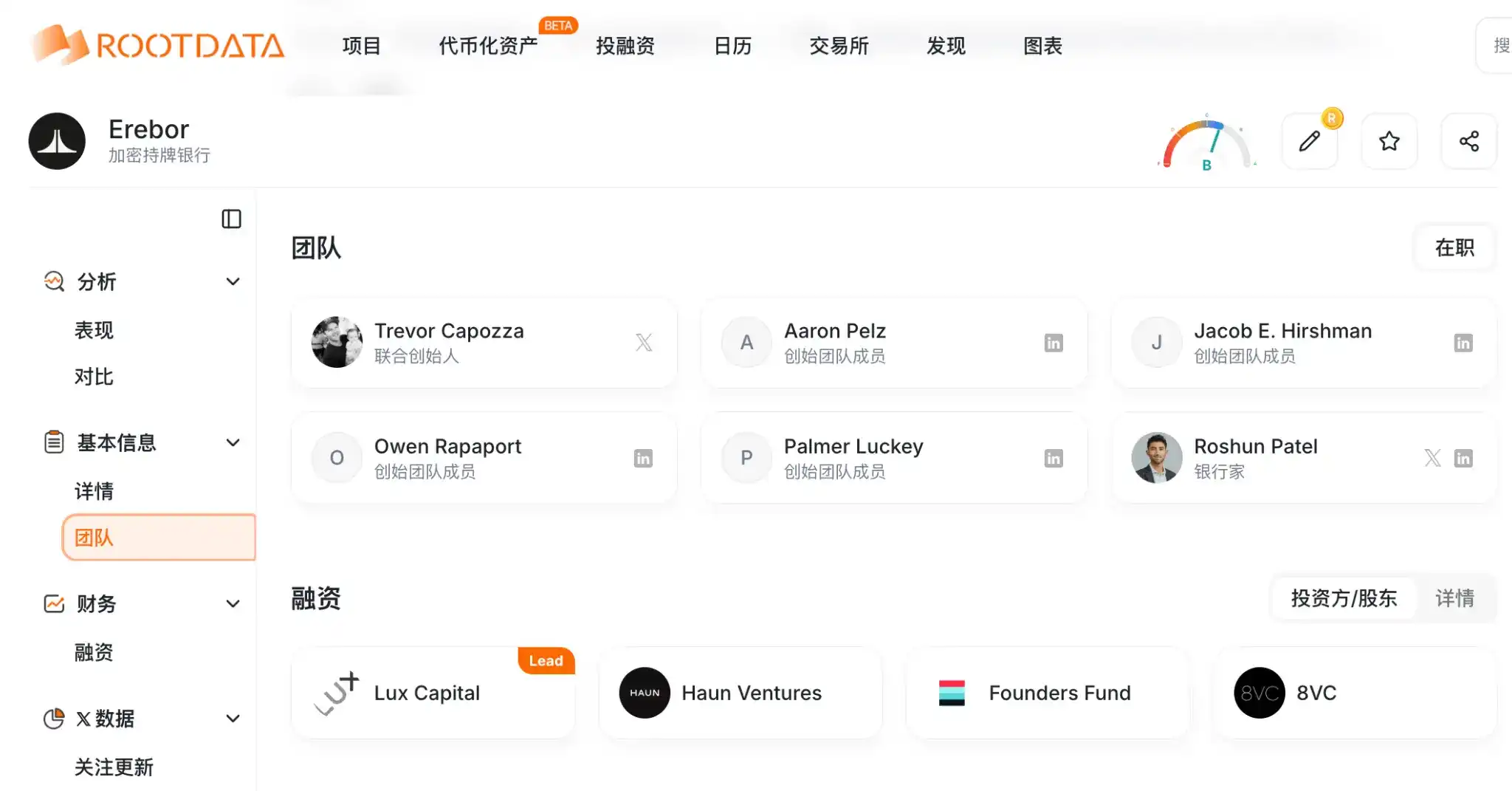
Nguồn ảnh:RootData

Ngoài ra, Erebor có một lựa chọn chiến lược then chốt là: kiên quyết tự mình xin giấy phép, chịu trách nhiệm về báo cáo tài chính, không như Mercury, Brex phụ thuộc vào ngân hàng hợp tác. Luận điểm của Luckey là, phụ thuộc vào cơ sở hạ tầng của bên thứ ba, đồng nghĩa với việc tự đặt mình vào rủi ro bị "gỡ nền tảng", áp lực chính sách và hạn chế sản phẩm; chỉ khi nắm giữ giấy phép và sổ sách, nó mới có thể thực hiện lời hứa về thanh toán trên chuỗi, đúc và mua lại stablecoin.

Nhìn lại điểm khởi đầu của Erebor, hầu như hoàn toàn gắn liền với sự sụp đổ của Silicon Valley Bank (SVB) năm 2023. Vụ phá sản đó khiến hàng loạt công ty khởi nghiệp và quỹ mạo hiếm mất đi đối tác ngân hàng chỉ trong một đêm, tiền gửi cũng mất bảo hiểm. Luckey và các nhà đầu tư cho rằng, điều này để lại một "khoảng trống cấu trúc", tức là ngân hàng chuyên phục vụ startup đã biến mất, trong khi các ngân hàng truyền thống lại quá bảo thủ hoặc chậm chạp đối với những startup nắm giữ tài sản không chuẩn (hợp đồng quốc phòng, phần cứng AI, token kỹ thuật số).

Erebor tuyên bố sẽ giải quyết bốn điểm đau chính: một là cung cấp tín dụng cho tài sản hữu hình, ngân hàng truyền thống giỏi cho vay dựa trên bất động sản hoặc khoản phải thu, nhưng không giỏi định giá "GPU" hoặc "nghiên cứu hàng không vũ trụ"; hai là xóa bỏ sự phân mảnh giữa trên chuỗi và ngoài chuỗi, đưa ngân hàng pháp định và thanh toán stablecoin vào cùng một bảng cân đối kế toán chịu sự giám sát; ba là đáp ứng nhu cầu thanh toán 24/7, thay thế SWIFT và ACH vẫn đang chạy theo lịch trình từ hàng chục năm trước; bốn là cung cấp kênh USD cho các doanh nghiệp quốc tế tăng trưởng cao, chống lại ma sát "mất ngân hàng" mà họ thường gặp phải.

Tất nhiên, tiềm năng vận hành này có bao nhiêu phần thực, bao nhiêu phần tiếp thị, vẫn còn không gian thảo luận. Các công ty được hậu thuẫn bởi quỹ mạo hiểm giờ đây thực sự có các lựa chọn thay thế như chủ nợ phi ngân hàng, cho vay DeFi, một số ngân hàng hiện có trước khi SVB sụp đổ cũng đã bắt đầu tranh giành thị phần công nghệ ngách. Nhà sáng lập Erebor rõ ràng tin rằng các tổ chức hiện có là không đủ, và việc nó có được một giấy phép ngân hàng đầy đủ, cho thấy cơ quan quản lý có lẽ cũng cho rằng đánh giá này có phần đúng?

Hơn nữa, tài sản kỹ thuật số là cốt lõi chiến lược dài hạn của Erebor. Nó có kế hoạch nhận tiền gửi và thanh toán stablecoin USD, cung cấp chuyển đổi tức thời giữa tiền pháp định và stablecoin, đường thanh toán hoạt động suốt ngày đêm, và dần hỗ trợ đúc và mua lại stablecoin trong khuôn khổ được quản lý. Giấy phép OCC của nó thậm chí cho phép rõ ràng việc nắm giữ một lượng nhỏ tài sản mã hóa trên sổ sách của chính mình, để thanh toán phí giao dịch trên chuỗi, thư quản lý định nghĩa việc nắm giữ này là hành vi "kèm theo" của nghiệp vụ ngân hàng, đây là một tiền lệ đáng chú ý về mặt tuân thủ.

Ngày 2 tháng 4, Quỹ Sui thông báo Erebor đã hỗ trợ mạng Sui, cho phép khách hàng thực hiện gửi và rút stablecoin, đây là một trong những bằng chứng công khai đầu tiên về việc nó kết nối cơ sở hạ tầng ngân hàng được quản lý với thanh toán trên chuỗi.

Tuy nhiên, thực tế cũng tồn tại khoảng cách. Theo nguồn tin nội bộ, nhu cầu về khoản vay thế chấp bằng tiền mã hóa thấp hơn kỳ vọng ban đầu của ngân hàng. Điều này tương đồng với báo cáo tài chính nêu trên: thứ thực sự thúc đẩy tăng trưởng gần đây, lại là các công ty xây dựng lại năng lực sản xuất của Mỹ, và tài trợ thiết bị cùng nợ mạo hiểm cho họ. Nói cách khác, Erebor hiện tại giống một hỗn hợp "Quốc phòng + Sản xuất tiên tiến + Tiền mã hóa" hơn là một ngân hàng tiền mã hóa thuần túy.

Thời cơ và địa lợi, ngay cả thời điểm nộp đơn xin giấy phép của Erebor cũng rất đúng lúc?

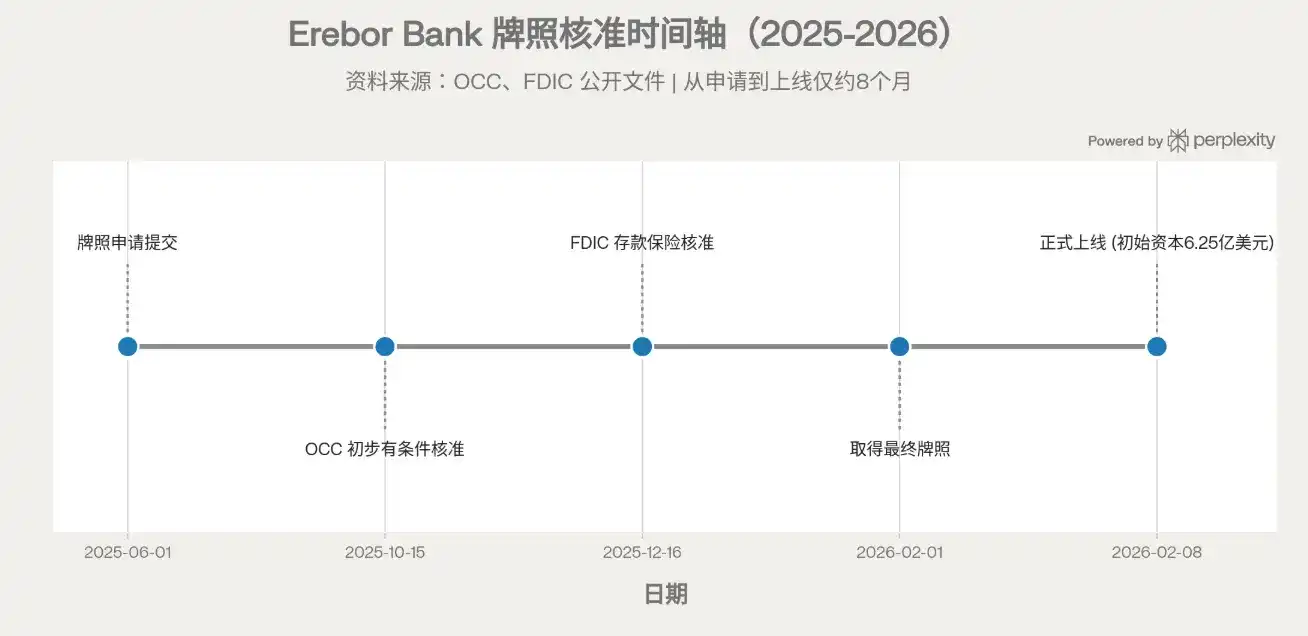
Phân tích phần giấy phép, Erebor nhận được phê duyệt có điều kiện sơ bộ từ OCC vào ngày 15 tháng 10 năm 2025, được FDIC phê duyệt bảo hiểm tiền gửi vào ngày 16 tháng 12, nhận giấy phép cuối cùng vào đầu tháng 2 năm 2026, và chính thức đi vào hoạt động vào ngày 8 tháng 2 với vốn ban đầu khoảng 625 triệu USD (tăng vốn đáng kể so với giai đoạn phê duyệt sơ bộ khoảng 275 triệu USD). Đây là giấy phép ngân hàng quốc gia mới được cấp (de novo) đầu tiên dưới chính phủ Mỹ hiện tại.
Tất cả điều này xảy ra trong bối cảnh chính sách ngân hàng Mỹ có sự chuyển hướng rõ rệt: dưới sự lãnh đạo của Giám đốc Jonathan Gould tại OCC, tư thế quản lý thể hiện rõ sự cởi mở với ngân hàng tài sản số, bản thân Gould cũng ca ngợi giấy phép này là ví dụ về "hệ thống tài chính năng động và đa dạng"; cùng với sự thúc đẩy của khung pháp lý stablecoin cấp liên bang (GENIUS Act), vùng pháp lý từng mờ mịt đã được làm rõ đáng kể.

Đáng chú ý, cơ quan quản lý cũng không hoàn toàn cho phép. Để đổi lấy sự phê duyệt, OCC và FDIC đã thêm các điều kiện nghiêm ngặt: trong ba năm đầu phải duy trì tỷ lệ đòn bẩy hạng nhất ít nhất 12% (gấp khoảng 2 lần ngưỡng "đủ vốn"), và kèm theo cam kết bổ sung vốn. Có thể nói, tính khả thi của Erebor một phần bị ràng buộc với chu kỳ chính trị hiện tại, nếu trong tương lai lập trường quản lý thay đổi, hoặc quy tắc stablecoin và chống rửa tiền trở nên nghiêm ngặt hơn, toàn bộ luận điểm của nó được xây dựng trên "quy tắc thân thiện với token" có thể đối mặt với gió ngược.

Cuối cùng, tổng hợp đánh giá từ truyền thông nước ngoài, mô hình của Erebor, hầu như mọi rủi ro đều đang sao chép bài học từ SVB năm xưa.

Nó phục vụ các công ty công nghệ giai đoạn đầu, tài sản thế chấp là tài sản phi truyền thống, nó phục vụ một số ít tài khoản lớn (startup, nhà sáng lập, quỹ đầu tư), chứ không phải hàng nghìn khách hàng nhỏ lẻ, bất kỳ thất bại hoặc rút tiền của một khách hàng duy nhất (biến động thị trường tiền mã hóa, quỹ mạo hiểm rút lui mạnh) đều có thể ảnh hưởng đáng kể đến thanh khoản; cơ quan quản lý từ lâu đã chỉ ra, cơ cấu khách hàng kiểu "độc canh" như của SVB, chính là một trong những tác nhân đẩy nhanh việc rút tiền ồ ạt.

Sự liên quan đến tiền mã hóa khiến vấn đề trở nên phức tạp hơn, nếu một stablecoin mà nó hỗ trợ mất neo, hoặc giá tiền mã hóa sụp đổ, nền tảng tiền gửi và tài sản thế chấp cho vay có thể đồng thời thu hẹp, xuống nữa, còn có rủi ro đảo ngược chính sách (toàn bộ luận điểm của nó đặt cược vào quy tắc token nới lỏng), rủi ro thực thi xây dựng hệ thống lõi và thanh toán trên chuỗi từ con số 0, và tiền đề chưa được chứng minh "liệu stablecoin có thực sự được khách hàng áp dụng rộng rãi". Cuối cùng là rủi ro danh tiếng và chính trị, sự liên kết chính trị gây tranh cãi cao của Luckey, cùng với sự mới lạ của bản thân "ngân hàng tiền mã hóa", đều có thể khuếch đại sự mất niềm tin của thị trường nếu ngân hàng gặp sự cố.

Có thể nói Erebor là một thử nghiệm gây chú ý cao độ diễn ra tại giao lộ giữa ngân hàng, tiền mã hóa và chính sách công nghiệp.

Nó đề xuất nhu cầu với thị trường chính là khoảng trống tài trợ sau khi SVB sụp đổ, và ma sát trong thanh toán tiền mã hóa, giờ đây, cơ quan quản lý đã chứng thực trên giấy tờ, đội ngũ cũng có cả uy tín công nghệ và nền tảng Phố Wall, việc thực thi mô hình mới này, tính liên tục của lập trường quản lý, và nhu cầu thực tế của thị trường đối với dịch vụ tích hợp của nó chính là những điểm thị trường đang xem xét kỹ lưỡng.


Criptos en tendencia

Preguntas relacionadas

QNgân hàng Erebor Bank có những yếu tố nào giúp định giá tăng gấp đôi lên 80 tỷ USD trong vòng 8 tháng?

ACác yếu tố chính bao gồm tốc độ tăng trưởng phi mã về quy mô tiền gửi (từ 1,1 tỷ lên 4,05 tỷ USD trong một quý), nền tảng khách hàng công nghệ và tiền mã hóa tiềm năng, cùng danh tiếng và sự hậu thuẫn từ nhà sáng lập Palmer Luckey (Oculus, Anduril) và các nhà đầu tư như Peter Thiel. Tuy nhiên, định giá cao này chủ yếu dựa trên kỳ vọng về tiềm năng tương lai (như cho vay, kinh doanh stablecoin) hơn là lợi nhuận hiện tại (ngân hàng vẫn đang lỗ).

QSự tăng trưởng mạnh mẽ về tiền gửi của Erebor Bank có thể mang lại rủi ro nào, dựa trên bài học từ sự sụp đổ của Silicon Valley Bank (SVB)?

ACó, sự tăng trưởng này có thể mang lại rủi ro tương tự SVB: (1) Cơ cấu khách hàng tập trung vào một số ít công ty khởi nghiệp và quỹ đầu tư mạo hiểm, nên việc rút tiền của một vài khách hàng lớn có thể gây mất thanh khoản nghiêm trọng. (2) Tài sản thế chấp cho các khoản vay tương lai có thể là các tài sản phi truyền thống (như hợp đồng quốc phòng, GPU, token mã hóa) khó định giá và thanh khoản. (3) Mối liên hệ với thị trường tiền mã hóa có thể làm trầm trọng thêm rủi ro nếu thị trường này biến động mạnh.

QChiến lược kinh doanh cốt lõi và lợi thế cạnh tranh của Erebor Bank là gì so với các đối thủ như Mercury hay Brex?

AChiến lược cốt lõi của Erebor là tự sở hữu giấy phép ngân hàng quốc gia (của OCC) thay vì phụ thuộc vào ngân hàng đối tác. Lợi thế cạnh tranh bao gồm: (1) Kiểm soát hoàn toàn cơ sở hạ tầng và sổ cái, giảm thiểu rủi ro bị 'hủy nền tảng'. (2) Có khả năng cung cấp các dịch vụ tích hợp sâu giữa ngân hàng pháp định và tiền mã hóa, như thanh toán stablecoin 24/7, chuyển đổi tức thì, và trong tương lai có thể là đúc và mua lại stablecoin ngay trên bảng cân đối kế toán của mình. (3) Tập trung vào các khách hàng có tài sản phi truyền thống (công nghệ, quốc phòng, tiền mã hóa) mà ngân hàng truyền thống thường phục vụ chậm hoặc bảo thủ.

QVai trò của tiền mã hóa và stablecoin trong mô hình kinh doanh dài hạn của Erebor Bank được mô tả như thế nào?

ATiền mã hóa và stablecoin là trọng tâm trong chiến lược dài hạn của Erebor. Ngân hàng này có kế hoạch: (1) Cung cấp dịch vụ gửi tiền và thanh toán bằng stablecoin (như USD stablecoin). (2) Cho phép chuyển đổi tức thời giữa tiền pháp định và stablecoin. (3) Cung cấp kênh thanh toán hoạt động 24/7, thay thế cho các hệ thống như SWIFT và ACH. (4) Giấy phép OCC của họ thậm chí cho phép giữ một lượng nhỏ tài sản mã hóa để trả phí giao dịch trên chuỗi, được coi là một tiền lệ quan trọng về mặt tuân thủ. Erebor đã bắt đầu tích hợp với mạng lưới Sui để hỗ trợ các dịch vụ stablecoin.

QCác điều kiện quản lý nghiêm ngặt nào được đặt ra cho Erebor Bank khi nhận được giấy phép, và điều này phản ánh điều gì về rủi ro?

ACơ quan quản lý OCC và FDIC đã đặt ra các điều kiện nghiêm ngặt: (1) Duy trì tỷ lệ đòn bẩy hạng 1 (Tier 1 Leverage Ratio) ít nhất 12% trong ba năm đầu, cao gấp đôi ngưỡng 'đủ vốn' thông thường. (2) Cam kết bổ sung vốn nếu cần. Những điều kiện này phản ánh nhận thức của cơ quan quản lý về các rủi ro cao tiềm ẩn trong mô hình kinh doanh mới mẻ và tập trung vào khách hàng chuyên biệt của Erebor. Chúng cũng cho thấy sự phê duyệt của cơ quan quản lý có phần thận trọng và có thể bị ảnh hưởng bởi môi trường chính sách hiện tại (ủng hộ tài sản số), tạo ra rủi ro nếu chính sách thay đổi trong tương lai.

Lecturas Relacionadas

MSTR Discloses Sale of 3,588 Bitcoins, Stock Price Drops Over 5% at One Point During Trading

MicroStrategy, the world's largest corporate holder of Bitcoin, has significantly shifted its business model. Between June 29 and July 5, the company sold 3,588 bitcoins for approximately $216 million to fund quarterly dividends for its preferred stock. This marks its largest-ever Bitcoin sale and signals a strategic pivot: Bitcoin is transitioning from a "buy-and-hold" reserve asset to a liquidity management tool for the company. This move follows a recent authorization allowing Bitcoin sales when equity fundraising is less attractive. The announcement contributed to a more than 5% intraday drop in MicroStrategy's stock price, while Bitcoin fell to around $61,800—below the company's average holding cost of roughly $75,700. The sale represents a major departure from MicroStrategy's long-standing "never sell" commitment, which saw its first minor breach in May with a $2.5 million sale. The latest, hundred-times-larger transaction underscores growing financial pressures. Analysts note the company faces about $1.5 billion in annual preferred dividend obligations, far exceeding cash flow from its software business. As of July 5, MicroStrategy holds 843,775 bitcoins. Its current operational logic involves buying Bitcoin during favorable financing conditions and selling portions to cover dividends when needed, creating a flexible capital management cycle amidst a challenging market environment.

华尔街日报Hace 6 hora(s)

MSTR Discloses Sale of 3,588 Bitcoins, Stock Price Drops Over 5% at One Point During Trading

华尔街日报Hace 6 hora(s)

Q-Day Countdown: Will Quantum Computing End Cryptocurrencies?

Quantum Computing's Threat to Cryptocurrency: A Countdown to Q-Day Quantum computing, specifically Shor's algorithm, poses a fundamental threat to the public-key cryptography (e.g., ECDSA, RSA) that secures blockchain networks like Bitcoin and Ethereum. This critical juncture, known as Q-Day, is estimated to occur potentially within the next 5-15 years. The core vulnerability stems from the public and immutable nature of blockchains. Assets in addresses where the public key is already exposed on-chain (e.g., spent outputs) are at direct risk, as a sufficiently powerful quantum computer could derive the private key. This threatens the very trust model of cryptocurrencies. The response lies in Post-Quantum Cryptography (PQC)—algorithms like lattice-based ML-DSA and hash-based SLH-DSA, which are resistant to quantum attacks. NIST has standardized key PQC algorithms (FIPS 203, 204, 205), providing a migration path. However, the primary challenge is not technical but socio-economic and involves complex governance: * **Bitcoin's** path is constrained by its conservative ethos. Migrating requires a soft-fork to new address types, facing hurdles like significantly larger signature sizes and, most critically, the divisive governance question of how to handle at-risk legacy UTXOs without violating core principles. * **Ethereum** is pursuing a "cryptographic agility" strategy, with a multi-layered roadmap. It leverages account abstraction for user accounts and is developing compressed hash-based signatures (e.g., leanXMSS) for its consensus layer, aiming for a full-stack upgrade over time. In conclusion, quantum computing does not spell an instant end for cryptocurrency but initiates a critical countdown. The industry has a limited "engineering comfort window" to orchestrate a coordinated, ecosystem-wide migration to PQC. The ultimate bottlenecks are the immense coordination efforts and governance decisions required for this foundational transition.

marsbitHace 7 hora(s)

Q-Day Countdown: Will Quantum Computing End Cryptocurrencies?

marsbitHace 7 hora(s)

Trump, the President Who Knows Best How to 'Trade Stocks'

Former US President Donald Trump reported a record-breaking $2.2 billion in personal income for 2025, the highest annual income ever disclosed by a sitting president. This figure, from a 927-page government ethics filing, represented a 3.5-fold increase from his $600 million income in 2024 and boosted his net worth to $6.5 billion. The primary drivers were cryptocurrency (64% of income, approximately $1.4 billion) and real estate (26%, approximately $575 million). His crypto earnings stemmed largely from the launch of his personal meme coin, $TRUMP, generating over $600 million in licensing fees, and substantial profits from the WLFI token and its parent company. Despite a sluggish property market, his Mar-a-Lago resort and associated golf clubs saw revenue surges of 50% and 27%, respectively, attributed to their use as venues for presidential events. Trump's financial disclosure also revealed an unprecedented level of stock market activity, with over 22,000 trades executed in 2025, averaging 87 trades per market day. Media analyses noted several instances where significant trading coincided with major policy announcements, such as proposed tariffs, raising questions about potential conflicts of interest. While the White House stated these trades were handled by a family-managed trust fund and not Trump directly, critics highlighted this as a departure from the blind trusts traditionally used by presidents post-Watergate. The report has intensified debate over the commercialization of the presidency. Supporters view it as a success story of a businessman-president, while critics argue it demonstrates an unprecedented conversion of public influence into private wealth, with policy decisions potentially linked to personal financial gains. The controversy centers on whether Trump's earnings represent innovative entrepreneurship or a fundamental conflict of interest, sparking renewed calls for stricter ethics reforms in US governance.

marsbitHace 7 hora(s)

Trump, the President Who Knows Best How to 'Trade Stocks'

marsbitHace 7 hora(s)

Trading

Spot

Artículos destacados

Qué es $S$

Entendiendo SPERO: Una Visión General Completa Introducción a SPERO A medida que el panorama de la innovación continúa evolucionando, la aparición de tecnologías web3 y proyectos de criptomonedas juega un papel fundamental en la configuración del futuro digital. Un proyecto que ha atraído la atención en este campo dinámico es SPERO, denotado como SPERO,$$s$. Este artículo tiene como objetivo reunir y presentar información detallada sobre SPERO, para ayudar a entusiastas e inversores a comprender sus fundamentos, objetivos e innovaciones dentro de los dominios web3 y cripto. ¿Qué es SPERO,$$s$? SPERO,$$s$ es un proyecto único dentro del espacio cripto que busca aprovechar los principios de descentralización y tecnología blockchain para crear un ecosistema que promueva la participación, la utilidad y la inclusión financiera. El proyecto está diseñado para facilitar interacciones de igual a igual de nuevas maneras, proporcionando a los usuarios soluciones y servicios financieros innovadores. En su esencia, SPERO,$$s$ tiene como objetivo empoderar a los individuos al proporcionar herramientas y plataformas que mejoren la experiencia del usuario en el espacio de las criptomonedas. Esto incluye habilitar métodos de transacción más flexibles, fomentar iniciativas impulsadas por la comunidad y crear caminos para oportunidades financieras a través de aplicaciones descentralizadas (dApps). La visión subyacente de SPERO,$$s$ gira en torno a la inclusividad, buscando cerrar brechas dentro de las finanzas tradicionales mientras aprovecha los beneficios de la tecnología blockchain. ¿Quién es el Creador de SPERO,$$s$? La identidad del creador de SPERO,$$s$ sigue siendo algo oscura, ya que hay recursos públicos limitados que proporcionan información de fondo detallada sobre su(s) fundador(es). Esta falta de transparencia puede derivarse del compromiso del proyecto con la descentralización, una ética que muchos proyectos web3 comparten, priorizando las contribuciones colectivas sobre el reconocimiento individual. Al centrar las discusiones en torno a la comunidad y sus objetivos colectivos, SPERO,$$s$ encarna la esencia del empoderamiento sin señalar a individuos específicos. Como tal, comprender la ética y la misión de SPERO sigue siendo más importante que identificar a un creador singular. ¿Quiénes son los Inversores de SPERO,$$s$? SPERO,$$s$ cuenta con el apoyo de una diversa gama de inversores que van desde capitalistas de riesgo hasta inversores ángeles dedicados a fomentar la innovación en el sector cripto. El enfoque de estos inversores generalmente se alinea con la misión de SPERO, priorizando proyectos que prometen avances tecnológicos sociales, inclusión financiera y gobernanza descentralizada. Estas fundaciones de inversores suelen estar interesadas en proyectos que no solo ofrecen productos innovadores, sino que también contribuyen positivamente a la comunidad blockchain y sus ecosistemas. El respaldo de estos inversores refuerza a SPERO,$$s$ como un contendiente notable en el dominio de proyectos cripto que evoluciona rápidamente. ¿Cómo Funciona SPERO,$$s$? SPERO,$$s$ emplea un marco multifacético que lo distingue de los proyectos de criptomonedas convencionales. Aquí hay algunas de las características clave que subrayan su singularidad e innovación: Gobernanza Descentralizada: SPERO,$$s$ integra modelos de gobernanza descentralizada, empoderando a los usuarios para participar activamente en los procesos de toma de decisiones sobre el futuro del proyecto. Este enfoque fomenta un sentido de propiedad y responsabilidad entre los miembros de la comunidad. Utilidad del Token: SPERO,$$s$ utiliza su propio token de criptomoneda, diseñado para servir diversas funciones dentro del ecosistema. Estos tokens permiten transacciones, recompensas y la facilitación de servicios ofrecidos en la plataforma, mejorando la participación y la utilidad general. Arquitectura en Capas: La arquitectura técnica de SPERO,$$s$ apoya la modularidad y escalabilidad, permitiendo la integración fluida de características y aplicaciones adicionales a medida que el proyecto evoluciona. Esta adaptabilidad es fundamental para mantener la relevancia en el cambiante paisaje cripto. Participación de la Comunidad: El proyecto enfatiza iniciativas impulsadas por la comunidad, empleando mecanismos que incentivan la colaboración y la retroalimentación. Al nutrir una comunidad sólida, SPERO,$$s$ puede abordar mejor las necesidades de los usuarios y adaptarse a las tendencias del mercado. Enfoque en la Inclusión: Al ofrecer tarifas de transacción bajas e interfaces amigables para el usuario, SPERO,$$s$ busca atraer a una base de usuarios diversa, incluyendo a individuos que anteriormente pueden no haber participado en el espacio cripto. Este compromiso con la inclusión se alinea con su misión general de empoderamiento a través de la accesibilidad. Cronología de SPERO,$$s$ Entender la historia de un proyecto proporciona información crucial sobre su trayectoria de desarrollo y hitos. A continuación se presenta una cronología sugerida que mapea eventos significativos en la evolución de SPERO,$$s$: Fase de Conceptualización e Ideación: Las ideas iniciales que forman la base de SPERO,$$s$ fueron concebidas, alineándose estrechamente con los principios de descentralización y enfoque comunitario dentro de la industria blockchain. Lanzamiento del Whitepaper del Proyecto: Tras la fase conceptual, se lanzó un whitepaper completo que detalla la visión, los objetivos y la infraestructura tecnológica de SPERO,$$s$ para generar interés y retroalimentación de la comunidad. Construcción de Comunidad y Primeras Interacciones: Se realizaron esfuerzos de divulgación activa para construir una comunidad de primeros adoptantes y posibles inversores, facilitando discusiones en torno a los objetivos del proyecto y obteniendo apoyo. Evento de Generación de Tokens: SPERO,$$s$ llevó a cabo un evento de generación de tokens (TGE) para distribuir sus tokens nativos a los primeros seguidores y establecer liquidez inicial dentro del ecosistema. Lanzamiento de la dApp Inicial: La primera aplicación descentralizada (dApp) asociada con SPERO,$$s$ se puso en marcha, permitiendo a los usuarios interactuar con las funcionalidades centrales de la plataforma. Desarrollo Continuo y Alianzas: Actualizaciones y mejoras continuas a las ofertas del proyecto, incluyendo alianzas estratégicas con otros actores en el espacio blockchain, han moldeado a SPERO,$$s$ en un jugador competitivo y en evolución en el mercado cripto. Conclusión SPERO,$$s$ se erige como un testimonio del potencial de web3 y las criptomonedas para revolucionar los sistemas financieros y empoderar a los individuos. Con un compromiso con la gobernanza descentralizada, la participación comunitaria y funcionalidades diseñadas de manera innovadora, allana el camino hacia un paisaje financiero más inclusivo. Como con cualquier inversión en el espacio cripto que evoluciona rápidamente, se anima a los posibles inversores y usuarios a investigar a fondo y participar de manera reflexiva con los desarrollos en curso dentro de SPERO,$$s$. El proyecto muestra el espíritu innovador de la industria cripto, invitando a una mayor exploración de sus innumerables posibilidades. Mientras el viaje de SPERO,$$s$ aún se desarrolla, sus principios fundamentales pueden, de hecho, influir en el futuro de cómo interactuamos con la tecnología, las finanzas y entre nosotros en ecosistemas digitales interconectados.

116 Vistas totalesPublicado en 2024.12.17Actualizado en 2024.12.17

Qué es $S$

Qué es AGENT S

Agent S: El Futuro de la Interacción Autónoma en Web3 Introducción En el paisaje en constante evolución de Web3 y las criptomonedas, las innovaciones están redefiniendo constantemente cómo los individuos interactúan con las plataformas digitales. Uno de estos proyectos pioneros, Agent S, promete revolucionar la interacción humano-computadora a través de su marco agente abierto. Al allanar el camino para interacciones autónomas, Agent S busca simplificar tareas complejas, ofreciendo aplicaciones transformadoras en inteligencia artificial (IA). Esta exploración detallada profundizará en las complejidades del proyecto, sus características únicas y las implicaciones para el dominio de las criptomonedas. ¿Qué es Agent S? Agent S se presenta como un marco agente abierto innovador, diseñado específicamente para abordar tres desafíos fundamentales en la automatización de tareas informáticas: Adquisición de Conocimiento Específico del Dominio: El marco aprende inteligentemente de diversas fuentes de conocimiento externas y experiencias internas. Este enfoque dual le permite construir un rico repositorio de conocimiento específico del dominio, mejorando su rendimiento en la ejecución de tareas. Planificación a Largo Plazo de Tareas: Agent S emplea planificación jerárquica aumentada por la experiencia, un enfoque estratégico que facilita la descomposición y ejecución eficiente de tareas complejas. Esta característica mejora significativamente su capacidad para gestionar múltiples subtareas de manera eficiente y efectiva. Manejo de Interfaces Dinámicas y No Uniformes: El proyecto introduce la Interfaz Agente-Computadora (ACI), una solución innovadora que mejora la interacción entre agentes y usuarios. Utilizando Modelos de Lenguaje Multimodal de Gran Escala (MLLMs), Agent S puede navegar y manipular diversas interfaces gráficas de usuario sin problemas. A través de estas características pioneras, Agent S proporciona un marco robusto que aborda las complejidades involucradas en la automatización de la interacción humana con las máquinas, preparando el terreno para una multitud de aplicaciones en IA y más allá. ¿Quién es el Creador de Agent S? Si bien el concepto de Agent S es fundamentalmente innovador, la información específica sobre su creador sigue siendo elusiva. El creador es actualmente desconocido, lo que resalta ya sea la etapa incipiente del proyecto o la elección estratégica de mantener a los miembros fundadores en el anonimato. Independientemente de la anonimidad, el enfoque sigue siendo en las capacidades y el potencial del marco. ¿Quiénes son los Inversores de Agent S? Dado que Agent S es relativamente nuevo en el ecosistema criptográfico, la información detallada sobre sus inversores y patrocinadores financieros no está documentada explícitamente. La falta de información disponible públicamente sobre las bases de inversión u organizaciones que apoyan el proyecto plantea preguntas sobre su estructura de financiamiento y hoja de ruta de desarrollo. Comprender el respaldo es crucial para evaluar la sostenibilidad del proyecto y su posible impacto en el mercado. ¿Cómo Funciona Agent S? En el núcleo de Agent S se encuentra una tecnología de vanguardia que le permite funcionar de manera efectiva en diversos entornos. Su modelo operativo se basa en varias características clave: Interacción Humano-Computadora Similar a la Humana: El marco ofrece planificación avanzada de IA, esforzándose por hacer que las interacciones con las computadoras sean más intuitivas. Al imitar el comportamiento humano en la ejecución de tareas, promete elevar las experiencias de los usuarios. Memoria Narrativa: Empleada para aprovechar experiencias de alto nivel, Agent S utiliza memoria narrativa para hacer un seguimiento de las historias de tareas, mejorando así sus procesos de toma de decisiones. Memoria Episódica: Esta característica proporciona a los usuarios una guía paso a paso, permitiendo que el marco ofrezca apoyo contextual a medida que se desarrollan las tareas. Soporte para OpenACI: Con la capacidad de ejecutarse localmente, Agent S permite a los usuarios mantener el control sobre sus interacciones y flujos de trabajo, alineándose con la ética descentralizada de Web3. Fácil Integración con APIs Externas: Su versatilidad y compatibilidad con varias plataformas de IA aseguran que Agent S pueda encajar sin problemas en ecosistemas tecnológicos existentes, convirtiéndolo en una opción atractiva para desarrolladores y organizaciones. Estas funcionalidades contribuyen colectivamente a la posición única de Agent S dentro del espacio cripto, ya que automatiza tareas complejas y de múltiples pasos con una intervención humana mínima. A medida que el proyecto evoluciona, sus posibles aplicaciones en Web3 podrían redefinir cómo se desarrollan las interacciones digitales. Cronología de Agent S El desarrollo y los hitos de Agent S pueden encapsularse en una cronología que resalta sus eventos significativos: 27 de septiembre de 2024: El concepto de Agent S fue lanzado en un documento de investigación integral titulado “Un Marco Agente Abierto que Usa Computadoras Como un Humano”, mostrando las bases del proyecto. 10 de octubre de 2024: El documento de investigación fue puesto a disposición del público en arXiv, ofreciendo una exploración profunda del marco y su evaluación de rendimiento basada en el benchmark OSWorld. 12 de octubre de 2024: Se lanzó una presentación en video, proporcionando una visión visual de las capacidades y características de Agent S, involucrando aún más a posibles usuarios e inversores. Estos marcadores en la cronología no solo ilustran el progreso de Agent S, sino que también indican su compromiso con la transparencia y la participación comunitaria. Puntos Clave Sobre Agent S A medida que el marco Agent S continúa evolucionando, varios atributos clave destacan, subrayando su naturaleza innovadora y potencial: Marco Innovador: Diseñado para proporcionar un uso intuitivo de las computadoras similar a la interacción humana, Agent S aporta un enfoque novedoso a la automatización de tareas. Interacción Autónoma: La capacidad de interactuar de manera autónoma con las computadoras a través de GUI significa un salto hacia soluciones informáticas más inteligentes y eficientes. Automatización de Tareas Complejas: Con su metodología robusta, puede automatizar tareas complejas y de múltiples pasos, haciendo que los procesos sean más rápidos y menos propensos a errores. Mejora Continua: Los mecanismos de aprendizaje permiten a Agent S mejorar a partir de experiencias pasadas, mejorando continuamente su rendimiento y eficacia. Versatilidad: Su adaptabilidad en diferentes entornos operativos como OSWorld y WindowsAgentArena asegura que pueda servir a una amplia gama de aplicaciones. A medida que Agent S se posiciona en el paisaje de Web3 y criptomonedas, su potencial para mejorar las capacidades de interacción y automatizar procesos significa un avance significativo en las tecnologías de IA. A través de su marco innovador, Agent S ejemplifica el futuro de las interacciones digitales, prometiendo una experiencia más fluida y eficiente para los usuarios en diversas industrias. Conclusión Agent S representa un audaz avance en la unión de la IA y Web3, con la capacidad de redefinir cómo interactuamos con la tecnología. Aunque aún se encuentra en sus primeras etapas, las posibilidades para su aplicación son vastas y atractivas. A través de su marco integral que aborda desafíos críticos, Agent S busca llevar las interacciones autónomas al primer plano de la experiencia digital. A medida que nos adentramos más en los reinos de las criptomonedas y la descentralización, proyectos como Agent S sin duda desempeñarán un papel crucial en la configuración del futuro de la tecnología y la colaboración humano-computadora.

519 Vistas totalesPublicado en 2025.01.14Actualizado en 2025.01.14

Qué es AGENT S

Cómo comprar S

¡Bienvenido a HTX.com! Hemos hecho que comprar Sonic (S) sea simple y conveniente. Sigue nuestra guía paso a paso para iniciar tu viaje de criptos.Paso 1: crea tu cuenta HTXUtiliza tu correo electrónico o número de teléfono para registrarte y obtener una cuenta gratuita en HTX. Experimenta un proceso de registro sin complicaciones y desbloquea todas las funciones.Obtener mi cuentaPaso 2: ve a Comprar cripto y elige tu método de pagoTarjeta de crédito/débito: usa tu Visa o Mastercard para comprar Sonic (S) al instante.Saldo: utiliza fondos del saldo de tu cuenta HTX para tradear sin problemas.Terceros: hemos agregado métodos de pago populares como Google Pay y Apple Pay para mejorar la comodidad.P2P: tradear directamente con otros usuarios en HTX.Over-the-Counter (OTC): ofrecemos servicios personalizados y tipos de cambio competitivos para los traders.Paso 3: guarda tu Sonic (S)Después de comprar tu Sonic (S), guárdalo en tu cuenta HTX. Alternativamente, puedes enviarlo a otro lugar mediante transferencia blockchain o utilizarlo para tradear otras criptomonedas.Paso 4: tradear Sonic (S)Tradear fácilmente con Sonic (S) en HTX's mercado spot. Simplemente accede a tu cuenta, selecciona tu par de trading, ejecuta tus trades y monitorea en tiempo real. Ofrecemos una experiencia fácil de usar tanto para principiantes como para traders experimentados.

1.1k Vistas totalesPublicado en 2025.01.15Actualizado en 2026.06.02

Cómo comprar S

Discusiones

Bienvenido a la comunidad de HTX. Aquí puedes mantenerte informado sobre los últimos desarrollos de la plataforma y acceder a análisis profesionales del mercado. A continuación se presentan las opiniones de los usuarios sobre el precio de S (S).

活动图片