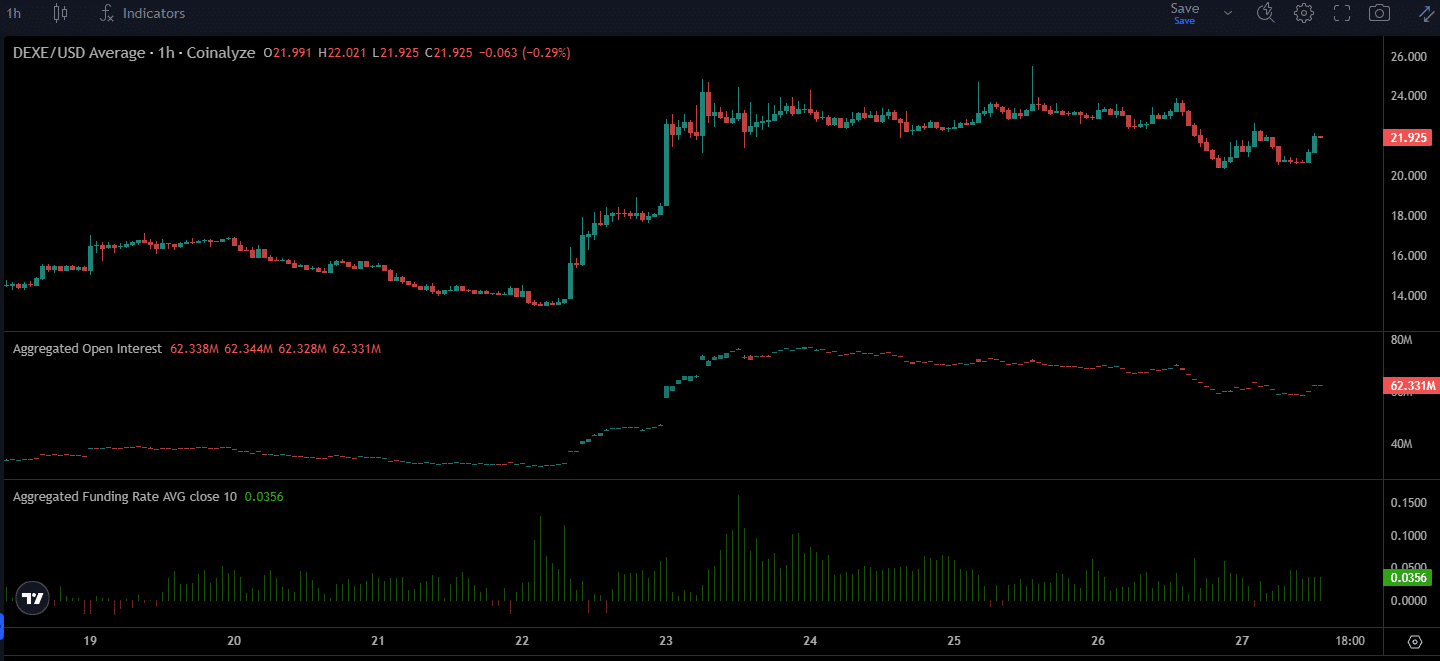
探究DEXE是否会继续与加密货币熊市脱钩

ambcryptoPublicado a 2026-06-27Actualizado a 2026-06-27

Resumen

过去几天加密货币市场经历艰难时期,6月21日以来累计约33亿美元杠杆仓位被清算,市场恐惧与贪婪指数处于17的低位。然而,DeXe(DEXE)是少数呈现长期看涨态势的山寨币之一。 数据显示,DEXE在5月从9.81美元涨至24.49美元后,回撤至12.95-15.42美元区间并获支撑反弹,有望再次挑战前高。日线图显示其价格结构保持看涨,MACD出现金叉,累积/派发指标也显示买盘力量。尽管6月25日出现短期回调,但20-21美元支撑区域的重新测试反而巩固了基础。 衍生品市场方面,资金费率从高位回落至健康水平,未平仓合约也有所下降,但资金费率仍为正,表明市场情绪有所降温但未转熊。清算热图显示,24美元上方的空头清算杠杆密集度远高于当前市价下方的多头清算杠杆,暗示价格若向25.5美元前高移动,可能引发空头挤压。 综合来看,DeXe在普跌市场中表现相对强势,技术结构与衍生品数据均暗示其具备进一步上行的潜力。

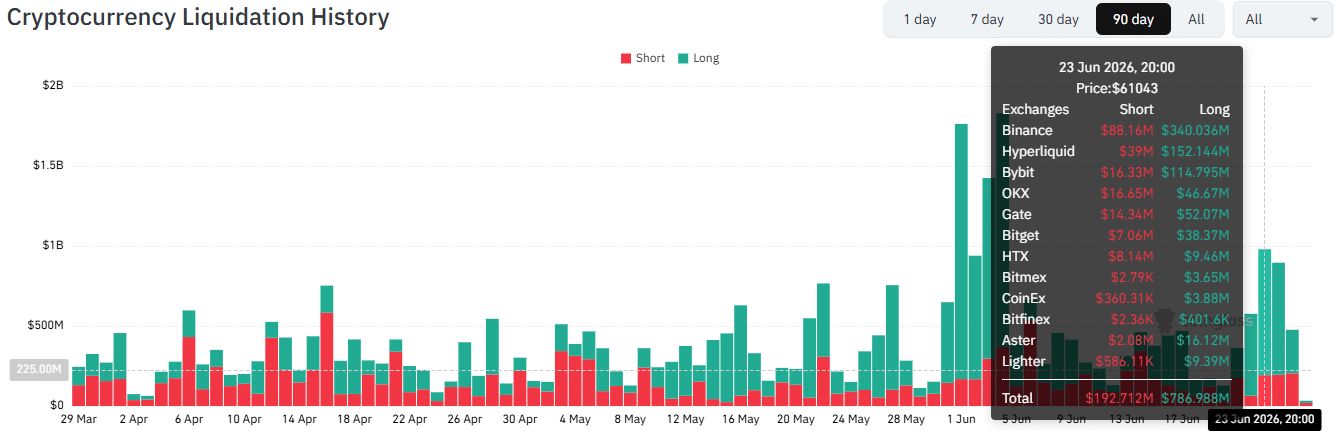
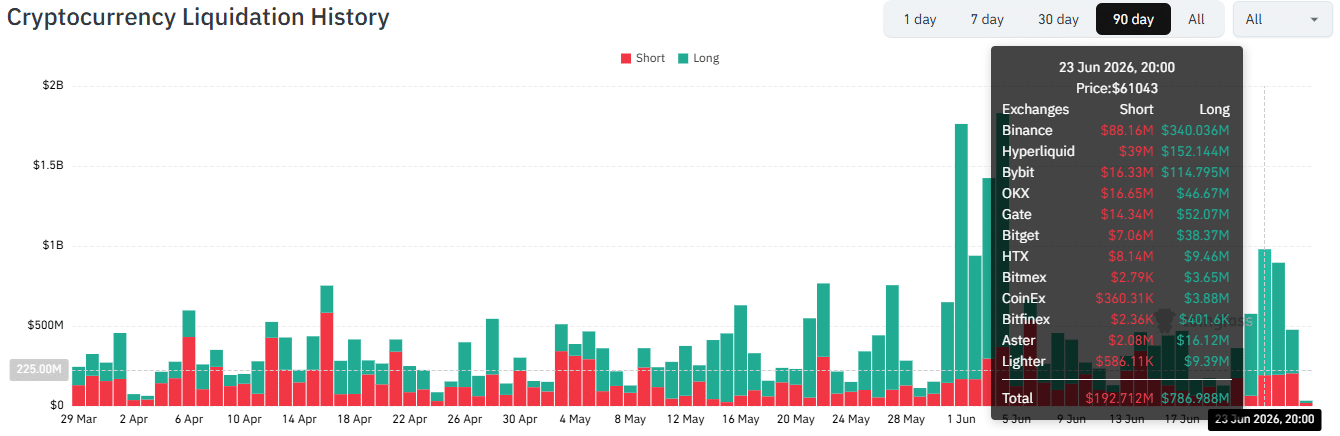
过去几天对加密货币市场来说是艰难的。自6月21日星期日以来,累计清算了价值约33亿美元的杠杆头寸。

来源:CoinGlass

6月23日星期二出现了最大规模的清算,全市场近7.87亿美元的多头头寸被抹去。即便如此,此次清算的规模仍小于本月早些时候发生的那些。

可以理解的是,加密货币恐惧与贪婪指数低至令人沮丧的17。在这场混乱中,DeXe [DEXE] 是为数不多呈现出长期看涨前景的山寨币之一。

DeXe价格飙升,而大多数加密资产正承受痛苦

在最近的一份报告中,AMBCrypto指出,鲸鱼的积累和网络活动处于历史高位是生态系统信心的标志。6月份的价格上涨也表达了这种看涨信念。

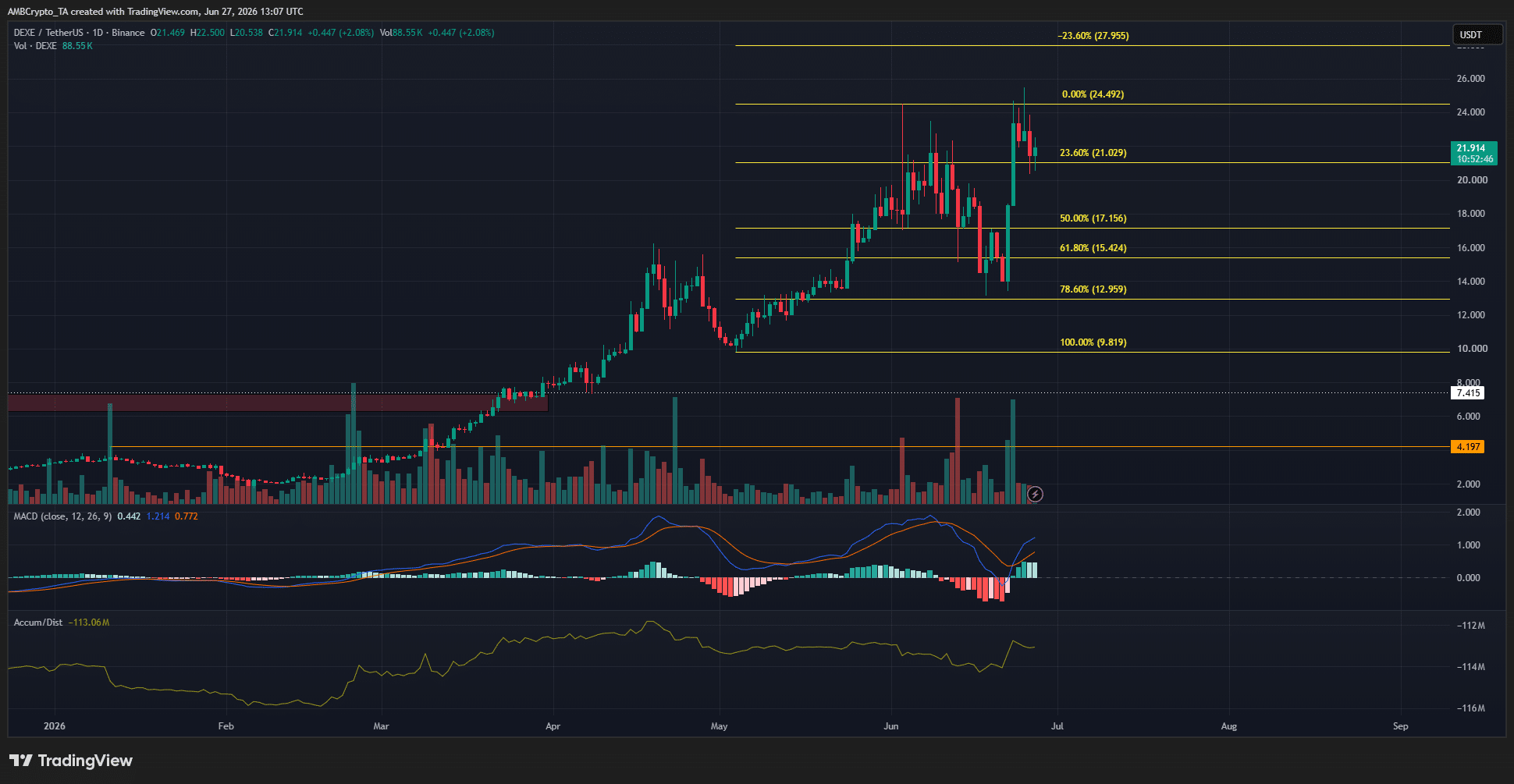
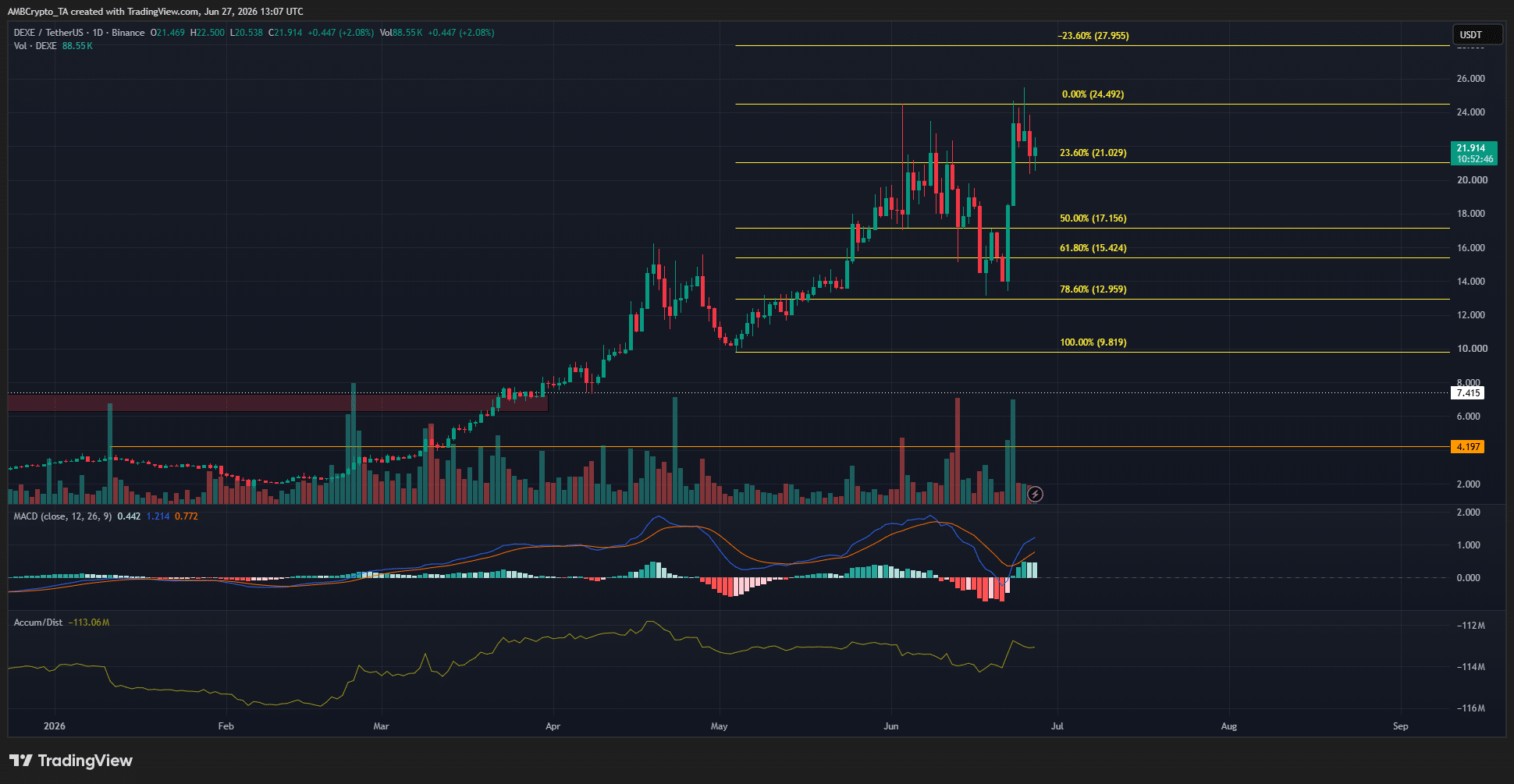
来源:TradingView上的DEXE/USDT图表

1日时间框架突显了该山寨币坚定看涨的价格结构。5月份从9.81美元上涨至24.49美元之后,价格回调至12.95美元和15.42美元回撤水平之间的黄金口袋区域。

这次回调已被买入,截至撰稿时,DEXE已准备好再次挑战24.49美元的高点。

6月25日星期四出现的短期受阻并非弱势迹象。相反,对20-21美元支撑区域的重新测试——该区域在本月早些时候曾是局部阻力位——是令人鼓舞的。

MACD指标的金叉突显了上升动能,而A/D指标则显示了价格从15美元下方回升过程中的买盘压力。

交易者的行动呼吁——谨慎看涨

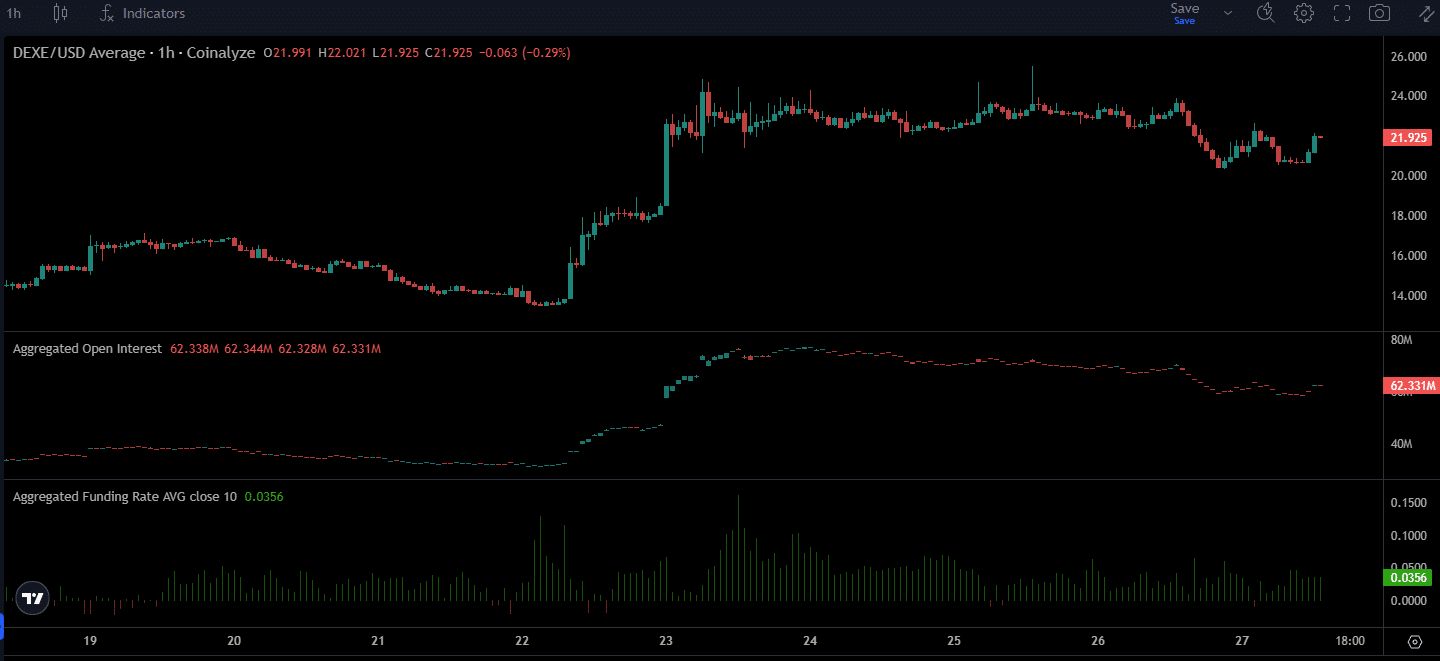
来源:Coinalyze

资金费率在本周早些时候达到峰值后已回落至健康水平。未平仓合约在最近几天也有所下降,但资金费率仍保持正值。

价格在20美元上方盘整,以及OI和资金费率的放缓,意味着DEXE的多头有机会重新集结。简单来说,价格可能尚未过度延伸。

过热的看涨情绪和仓位布局也已趋于平静,为下一轮上涨腾出了空间。

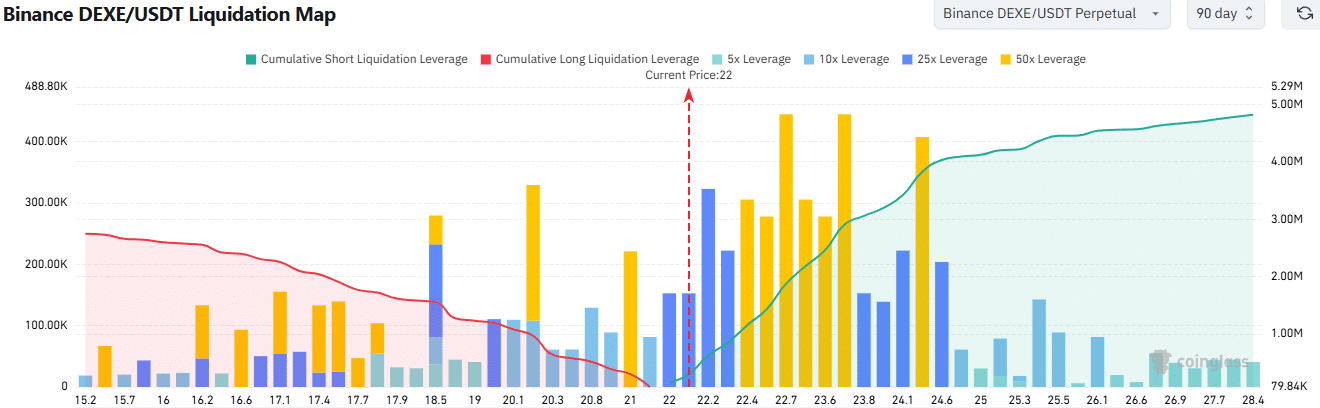
来源:CoinGlass

指向24美元价格水平的累积空头清算杠杆,远高于发稿时市价下方的累积多头清算杠杆。这可能是另一个迹象,表明价格可能很快会向25.5美元的局部高点移动。

看涨行情是否会持续还有待观察,但现有证据显示存在这种可能性。


最终总结

  • DeXe的长期价格趋势一直看涨,其基本面也一直很强劲。
  • 清算地图暗示,未来几天价格可能上涨以挤压杠杆空头头寸。

Criptos en tendencia

Preguntas relacionadas

Q根据文章,DEXE在过去一段时间内的价格表现与其他加密货币市场有何不同?

A在近期整个加密货币市场表现低迷、出现大规模清算的背景下,DEXE是为数不多的呈现出长期看涨局面的山寨币之一。其价格在6月上涨,挑战前高,而大多数加密资产则在承受下跌压力。

Q文章中提到哪些技术指标表明DEXE具有上涨动能?

A文章指出,移动平均收敛发散指标(MACD)出现了看涨交叉,显示了向上的动量。此外,涨跌指标(A/D)在价格从15美元下方回升期间也显示出买盘压力。

Q文章如何描述DEXE的未平仓合约和资金费率的变化?

A未平仓合约在近期有所下降,但资金费率始终保持正值。早些时候飙升的资金费率已经回落至健康水平。这表明狂热的看涨情绪和持仓已经平静下来,为下一次上涨留出了空间。

Q清算地图(Liquidation Map)揭示了关于DEXE价格的什么潜在信息?

A清算地图显示,在24美元价格水平上方的累积空头清算杠杆,远高于撰稿时市场价格下方的累积多头清算杠杆。这暗示着价格可能很快会向25.5美元的局部高点移动,以挤压杠杆空头头寸。

Q文章对于DEXE交易者给出了怎样的总体建议?

A文章给出的总体建议是“谨慎看涨”。虽然看涨趋势明显且基本面强劲,但最终的看涨延续是否会发生仍有待观察,不过现有证据表明存在上涨潜力。

Lecturas Relacionadas

You Use Claude and Codex Every Day, but Meta Has Restricted Internal Use

In May, Meta imposed internal restrictions on its engineers regarding the use of Claude Code and Codex, two widely used AI programming tools. Despite being a major client, Meta's guidelines, still in effect, prohibit these external models from being used for specific tasks to prevent potential "escalations with partners." The core concern is "distillation"—the risk that outputs from Claude or Codex could inadvertently contaminate the training data and evaluation processes for Meta's in-house AI coding assistant, MetaCode. If MetaCode is trained or evaluated using data generated by these external models, it risks learning their capabilities rather than developing its own, blurring the line of intellectual origin. The restrictions are precise: engineers cannot use the external models to generate test questions, debug source code, or suggest test cases. AI-generated content is also barred from environments accessible to MetaCode. However, AI can still assist with peripheral tasks like workflow setup and code organization, provided all outputs are manually reviewed. This caution reflects a broader industry dilemma. While distillation is a common technique, using a competitor's model output for training raises legal and ethical questions about the ownership of derived capabilities. Contractual terms from companies like OpenAI and Anthropic explicitly forbid using their outputs to build competing products, putting enforcement power in the hands of rivals. The move is also financially motivated, as Meta seeks to reduce its hefty internal AI spending, estimated in the billions this year. Meta's policy illustrates the delicate balance companies must strike: leveraging powerful external AI tools while safeguarding the integrity and independence of their own AI development. As AI systems increasingly help build other AIs, distinguishing the origin of capabilities becomes a fundamental challenge for the entire industry.

marsbitHace 2 hora(s)

You Use Claude and Codex Every Day, but Meta Has Restricted Internal Use

marsbitHace 2 hora(s)

Why Do We Need an AI Content Perspective Today?

The article "Why Do We Need an AI Content Perspective Today?" explores the complex and often contentious integration of AI into the cultural and creative industries, particularly film and television. It begins with the cancellation of Amazon's AI-generated animation "Punky Duck," highlighting the ethical debates surrounding AI content. AI's rapid advancement is transforming video production, enabling cost-effective, full-length AI films (e.g., "RAPHAEL," "Dreams of Violets") while sparking industry resistance over issues like "synthetic actors." The core debate has shifted from whether to use AI to how to use it responsibly. The article analyzes why AI's entry into film is uniquely unsettling. It distinguishes between "cultural fast food" (short-form, fast-paced content like micro-dramas) and "cultural main courses" (traditional, long-form film/TV). AI currently excels at the former, matching its fragmented narratives, shallow emotional needs, and free-to-consumer models. However, venturing into the latter challenges the human-centric essence of storytelling—creativity, emotional depth, and the unique value of human labor and experience. While AI can generate massive volumes of content and lower costs, it risks devaluing human creativity, leading to homogenized output, and creating unfair competition through potential intellectual property infringement. Its efficiency also amplifies content safety risks, making preemptive governance crucial. To counter these risks, the article proposes establishing clear boundaries guided by a human-centered AI content perspective. It outlines four principles: 1) Amplify, rather than displace, human creative space; 2) Respect and protect human creative output; 3) Ensure human creative control and responsibility remain paramount; and 4) Guarantee transparency and traceability in AI creation. The conclusion emphasizes that humans must act as the "helmsmen" of technology, steering AI development to enhance, not replace, the core human values at the heart of cultural expression.

marsbitHace 2 hora(s)

Why Do We Need an AI Content Perspective Today?

marsbitHace 2 hora(s)

Trading

Spot

Artículos destacados

Cómo comprar DEXE

¡Bienvenido a HTX.com! Hemos hecho que comprar DeXe (DEXE) sea simple y conveniente. Sigue nuestra guía paso a paso para iniciar tu viaje de criptos.Paso 1: crea tu cuenta HTXUtiliza tu correo electrónico o número de teléfono para registrarte y obtener una cuenta gratuita en HTX. Experimenta un proceso de registro sin complicaciones y desbloquea todas las funciones.Obtener mi cuentaPaso 2: ve a Comprar cripto y elige tu método de pagoTarjeta de crédito/débito: usa tu Visa o Mastercard para comprar DeXe (DEXE) al instante.Saldo: utiliza fondos del saldo de tu cuenta HTX para tradear sin problemas.Terceros: hemos agregado métodos de pago populares como Google Pay y Apple Pay para mejorar la comodidad.P2P: tradear directamente con otros usuarios en HTX.Over-the-Counter (OTC): ofrecemos servicios personalizados y tipos de cambio competitivos para los traders.Paso 3: guarda tu DeXe (DEXE)Después de comprar tu DeXe (DEXE), guárdalo en tu cuenta HTX. Alternativamente, puedes enviarlo a otro lugar mediante transferencia blockchain o utilizarlo para tradear otras criptomonedas.Paso 4: tradear DeXe (DEXE)Tradear fácilmente con DeXe (DEXE) en HTX's mercado spot. Simplemente accede a tu cuenta, selecciona tu par de trading, ejecuta tus trades y monitorea en tiempo real. Ofrecemos una experiencia fácil de usar tanto para principiantes como para traders experimentados.

140 Vistas totalesPublicado en 2024.12.12Actualizado en 2026.06.02

Cómo comprar DEXE

Discusiones

Bienvenido a la comunidad de HTX. Aquí puedes mantenerte informado sobre los últimos desarrollos de la plataforma y acceder a análisis profesionales del mercado. A continuación se presentan las opiniones de los usuarios sobre el precio de DEXE (DEXE).

活动图片