链上华尔街——普通人如何参与 HTX 的 TradFi 链上化大潮

投研日志Publicado a 2026-06-18Actualizado a 2026-06-18

Resumen

HTX TradFi的优势在于:所有标的都是永续合约形式,由平台统一提供流动性,不存在底层托管或跨链桥的额外风险,价格透明锚定国际市场。

2024年到2025年,传统金融领域发生了一个重要的变化:越来越多的传统资产开始以代币化的形式出现在链上。

比如,全球最大的资产管理公司贝莱德推出了自己的代币化基金,各大公链上部署的RWA项目总锁仓价值持续增长。高盛、摩根大通等华尔街巨头也纷纷启动了代币化试点项目。

什么意思呢?就是以前你要买美国国债,得去找银行、开账户、换美元,现在你可以直接在链上买到代表美国国债收益权的代币。以前你想投私募股权,门槛动辄百万美元,现在通过代币化,小额也可以参与。

代币化TradFi资产的四种形态

第一类:合规稳定币与国债代币

像USDC、USDT本身就是法币在链上的映射。而更新鲜的是国债代币——比如美国政府短期国债被代币化之后,持有者可以赚到约4-5%的无风险收益,这在DeFi收益波动巨大的今天显得格外有吸引力。

第二类:大宗商品代币化

黄金、白银等贵金属已经有多种链上代币版本,每个代币锚定一盎司的实物黄金,由托管机构持有实物并接受审计。这让你可以像交易山寨币一样交易实物黄金。

第三类:股票代币化(HTX TradFi正在做的事)

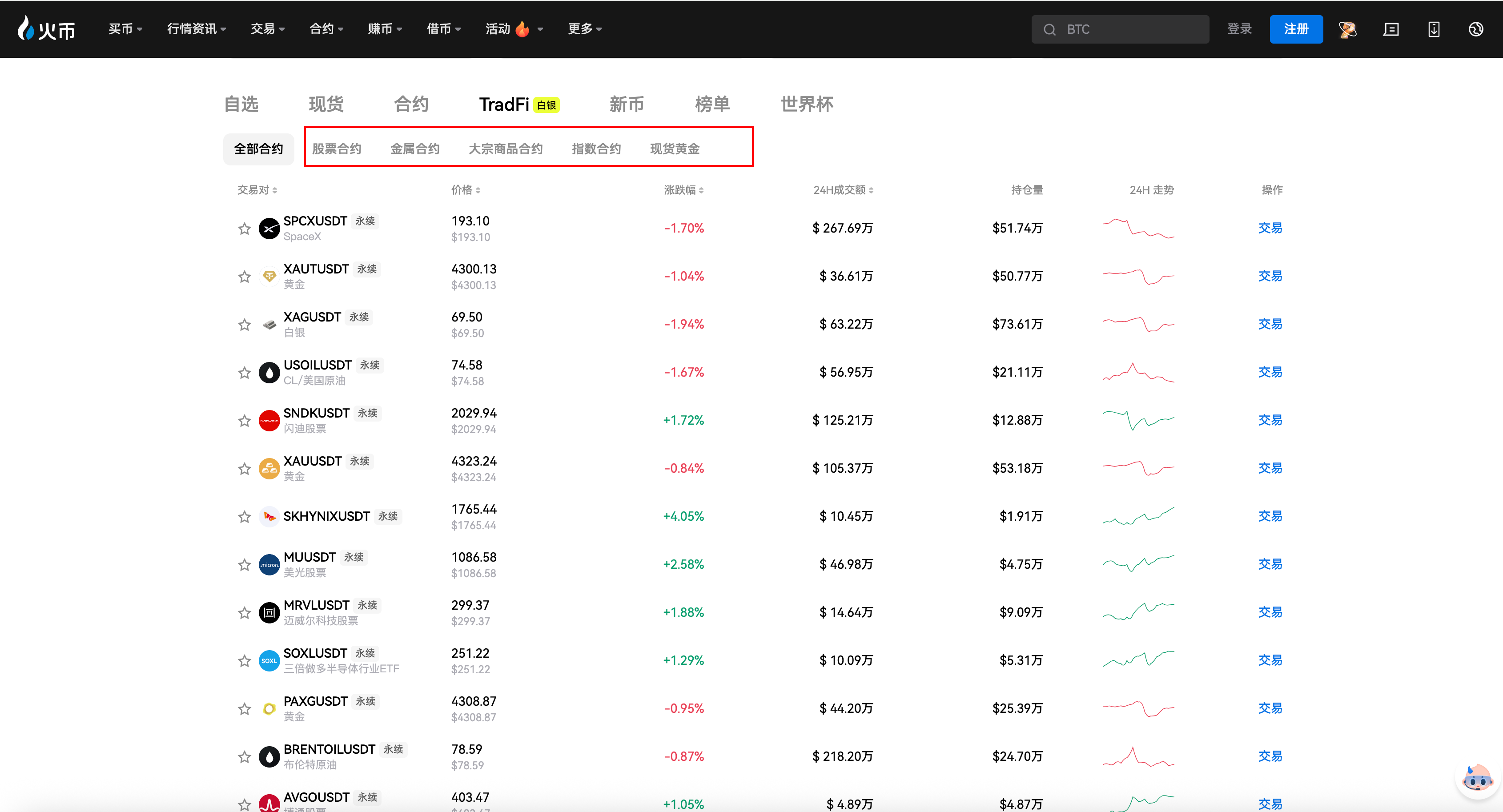
HTX的TradFi专区采取了“永续合约”形式,让用户可以用USDT作为保证金,交易SPX500、NVDA、TSLAX等标的的价格。虽然不是直接持有底层股票,但价格完全锚定对应资产,且拥有24小时交易、支持做多做空、操作体验与加密合约一致等优势。
第四类:私募信贷与另类资产

这部分更进阶一些——包括代币化的私募股权、房地产REITs、基础设施项目等。通过碎片化代币,原本需要百万美元起投的资产变成了普通人也能小额参与的机会。

为什么这很重要?

因为对于普通的Crypto用户来说:

第一,收益来源多元化。 不再只有“持币等涨”和“DeFi挖矿”两条路。你可以配置一部分资金在TradFi资产上,获取与传统经济挂钩的收益。

第二,风险分散工具。 当加密市场进入深熊时,TradFi资产往往表现出完全不同的走势。黄金可能在涨,国债收益可能在升,这些都可以对冲你Crypto仓位的风险。

第三,进入门槛大幅降低。 以前你要在传统券商开户,需要身份认证、银行转账、等待几个工作日。现在在HTX上,只要你有USDT,三秒钟就可以开始交易TradFi资产。

链上TradFi的潜在风险

任何新趋势都有风险,你需要了解这几点:

  • 流动性风险:部分代币化资产交易量较小,买卖价差可能较大
  • 托管风险:锚定实物资产的代币,依赖底层托管机构的信用
  • 监管不确定性:各国对RWA的监管政策仍在变化中
  • 协议风险:如果涉及跨链桥或智能合约,存在技术风险

HTX TradFi的优势在于:所有标的都是永续合约形式,由平台统一提供流动性,不存在底层托管或跨链桥的额外风险,价格透明锚定国际市场。

实操:如何在HTX体验TradFi链上交易?

第一步:打开HTX App,确保账户中有USDT

第二步:进入“合约”页面,点击顶部“TradFi”标签
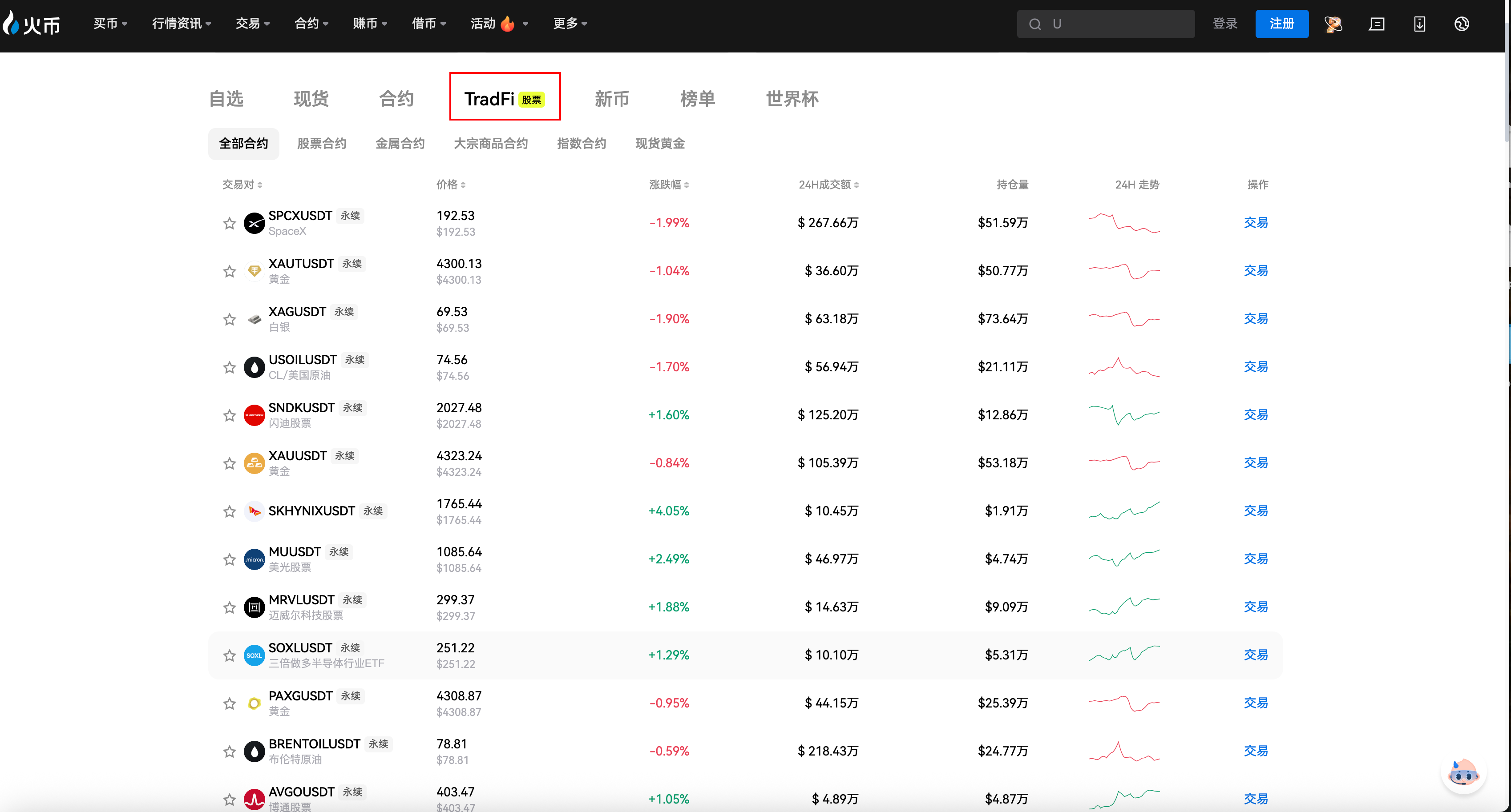
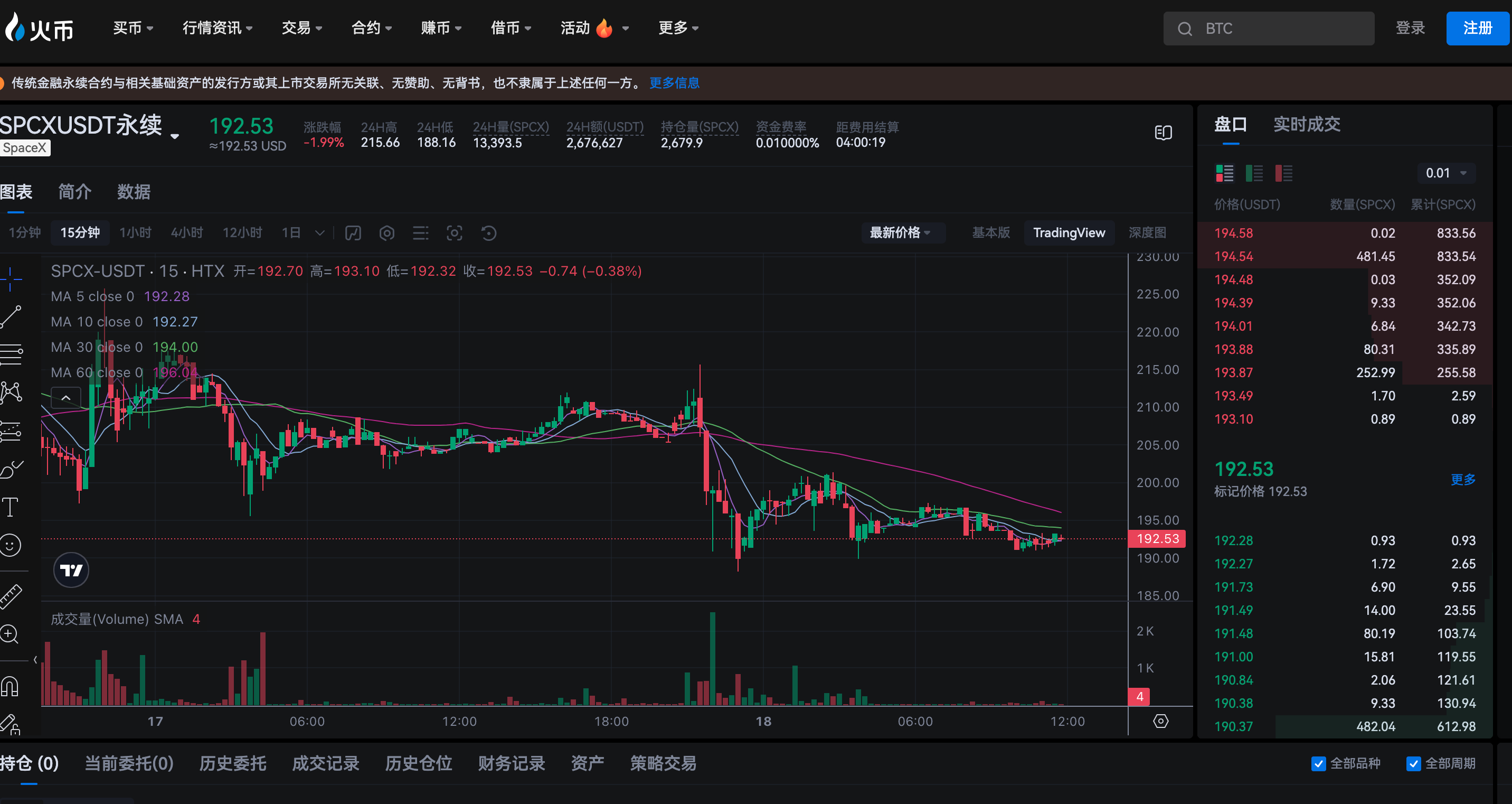
第三步:浏览所有可交易标的(目前75+),点击任意一个进入交易界面,设置杠杆(建议首次使用1-3x),设置止损价,输入仓位数量

然后选择“买入开多”或“卖出开空”,确认开仓。
TradFi的链上化不是“会不会发生”的问题,而是“速度有多快”的问题。当华尔街和Crypto之间的墙被推倒,普通人第一次可以像机构一样——用手机、用USDT、用三秒钟的时间——配置全球最主流的资产。

这就是HTX TradFi正在做的事情。

Lecturas Relacionadas

STRC Severely Unpegged, What Risks Is the Market Pricing In?

The article analyzes the recent significant de-pegging of Strategy's perpetual preferred stock, STRC, whose price fell to approximately $89, far below its $100 face value. This discount has pushed its simple yield to around 12.9%, creating a paradox. The stock was designed as a high-yield instrument trading near par, and Strategy maintains an 11.5% annual dividend, even recently switching to semi-monthly payments to support the price. The author explores several reasons why the high yield hasn't attracted enough buying pressure to restore the par value. A key factor is potential reverse deleveraging from carry trades, where leveraged investors may be forced to sell due to margin calls as the price falls, creating a self-reinforcing downward spiral. Additionally, the tokenization and integration of STRC into DeFi protocols (like Apyx, Saturn, Pendle) have introduced faster, more transparent, and potentially more volatile price adjustment mechanisms through leverage and yield-splitting products. The emergence of a competing product, Strive's SATA, offering a 13% yield with daily dividends, has also changed the yield benchmark, challenging STRC's unique high-yield narrative. Furthermore, the market is questioning the distinction between Strategy's substantial Bitcoin reserves, which provide long-term balance sheet coverage, and the certainty of stable near-term cash flow for dividends. Ultimately, the price dip represents a stress test for this type of BTC-backed, high-yield financing tool. The future path of STRC depends on whether Strategy acts to reinforce the $100 peg (e.g., by adjusting dividends), whether DeFi-related leverage unwinds further, and how investors ultimately price the risks of leverage, competition, and cash flow uncertainty against the offered yield.

marsbitHace 8 min(s)

STRC Severely Unpegged, What Risks Is the Market Pricing In?

marsbitHace 8 min(s)

LIT Token Hits Six-Month High: How Long Can the Buyback Flywheel Keep Burning Fuel?

The LIT token of decentralized perpetual exchange Lighter surged to a six-month high above $1.90 on June 18th, with a market cap of $425 million. After a price correction earlier this year, the recent rebound is attributed to its core "buyback flywheel" mechanism. All protocol fee revenue is used for programmatic, hourly market buybacks of LIT. Since its TGE in December 2025, approximately 15 million LIT (6% of circulating supply) has been repurchased for around $21 million. Additional price support comes from the LLP (Lighter Liquidity Pool), where providers must stake LIT worth 10% of their deposited USDC, locking significant token supply. However, challenges persist. Trading volume has declined amidst a sluggish market, with total volume at $1.68 trillion, significantly lower than leading competitor Hyperliquid's $4.37 trillion. While Lighter focuses on perpetual contracts, RWA, and Pre-IPO markets, Hyperliquid has expanded into prediction markets and boasts a U.S. spot ETF, attracting institutional investment and influencer endorsements like from Arthur Hayes. In contrast, LIT currently lacks similar high-profile backing. With 75% of LIT's total 1 billion supply still locked (team and investor tokens begin a 3-year linear unlock in December 2026), there is no immediate unlock selling pressure. The token's future performance hinges on sustaining trading volume growth, successful product iteration, and executing its transparent buyback strategy against a dominant competitor.

Foresight NewsHace 28 min(s)

LIT Token Hits Six-Month High: How Long Can the Buyback Flywheel Keep Burning Fuel?

Foresight NewsHace 28 min(s)

Football Draw Harvests Whales: Extreme Profit-Loss Divergence on Polymarket's World Cup

A bettor known as "fishalive" made a stunning profit of nearly $9 million on the Polymarket prediction platform by correctly wagering against favorites during the 2026 FIFA World Cup group stage. The account, registered just before the tournament, risked roughly $400,000 on two contracts for a Spain vs. Cape Verde match: one that Spain would *not* win, and another on a Cape Verde +2.5 goal handicap. The resulting 0-0 draw triggered both payouts. This single event, with a total market volume of $64 million, highlighted extreme profit-and-loss divergence. Other traders, like "betoor619" and "leeeeroyjenkins," lost millions by betting heavily on favorites Spain and Belgium to win outright—contracts that become worthless in a draw. The article explains that while markets heavily favored strong teams, the "team to win" contracts are binary and do not account for the common outcome of a draw. This creates high-risk, low-reward scenarios for favorite backers, while asymmetric profits flow to those betting on underdogs or against outright wins. The transparency of Polymarket's on-chain ledger publicly documents these massive wins and losses, driving mainstream media coverage. As the tournament progresses, the author suggests traders may shift towards hedging strategies that account for draws. The piece also notes growing regulatory scrutiny in the US and Europe, questioning whether such large-scale, anonymous sports prediction markets should be regulated as gambling or financial derivatives.

Foresight NewsHace 58 min(s)

Football Draw Harvests Whales: Extreme Profit-Loss Divergence on Polymarket's World Cup

Foresight NewsHace 58 min(s)

Trading

Spot
Futuros
活动图片