投资人开始上B站、小红书找AI项目

marsbitPublicado a 2026-06-12Actualizado a 2026-06-12

Resumen

2025年AI智能硬件创业潮爆发,投资人寻找项目的方式发生转变,开始深入B站、小红书等内容社区,通过观察用户对产品的真实讨论和反馈来发掘潜力股。AI眼镜、戒指、耳机等穿戴设备及各类智能硬件融资活跃,估值飙升,如Oura Health智能戒指估值已达700亿元。 行业火热背后,用户教育成为关键挑战。产品需让用户理解其如何解决实际问题、融入日常生活,而非仅展示技术参数。内容社区的深度互动为创业者提供了宝贵的需求洞察和产品改进方向。 然而市场已进入洗牌期。部分早期明星产品如Rabbit R1因实际体验不佳而陷入困境,一些大厂的项目也因差异化困难而暂停。行业共识是,2026年将是AI硬件的商业验证年。 尽管出现分化,赛道前景依然广阔。预计2030年全球AI硬件市场规模将达数万亿美元,中国消费级AI硬件市场规模在2026年有望突破1.27万亿元。OpenAI、Meta等巨头持续加码,国内京东等企业也在推动各类AI终端上市。 最终,AI硬件竞争的核心仍是争夺用户注意力、打磨产品力并赢得用户认知。在狂热与理性交替中,终局之争刚刚开始。

作者:投资界

“AI时代,所有硬件都值得重新做一遍”。

这句话2024年听上去也许还有些激进,但2025年来含金量陡增——如我们所见,AI智能硬件创业潮起,融资应接不暇,大洋彼岸的智能戒指Oura Health最新估值已飙至令人惊叹的700亿元。

火爆一幕,席卷着FOMO的投资人。这一次,除了纵览上千封BP(商业计划书)邮件,他们出奇一致地把Deal Sourcing目光放到那些极客和年轻人扎堆的内容社区。

背后逻辑也颇为朴素:比起参数表和路演,更早暴露一款消费级AI智能硬件真实需求的,往往是这个产品在公共地带能不能被看懂、被讨论、被质疑。

归根结底,所有那些面向大众的科技产品,最终都要去人群里过一遍才行。

AI硬件爆发,投资人争抢水下项目

我们正在经历AI硬件大年。

2025年至今,从穿戴设备这条赛道延伸,AI眼镜、AI玩具、AI录音卡、AI戒指、AI耳机、陪伴机器人、Agent Box等更多细分智能硬件产品集体迎来井喷。

如火如荼中,一些细节足以窥见投资圈的兴奋:2025下半年来,我们频频看到,多家头部机构发出英雄帖招聘AI/智能硬件投资人,JD中几乎都要求base硬件之都深圳。

好项目几乎都得挤破头“三顾茅庐”,尤其是那些还在水下的、估值还不那么高的项目。投资人们甚至开始从还没离职的潜力股下手,例如,大疆旁边的咖啡馆就挤满了“劝人创业”的VC和FA。
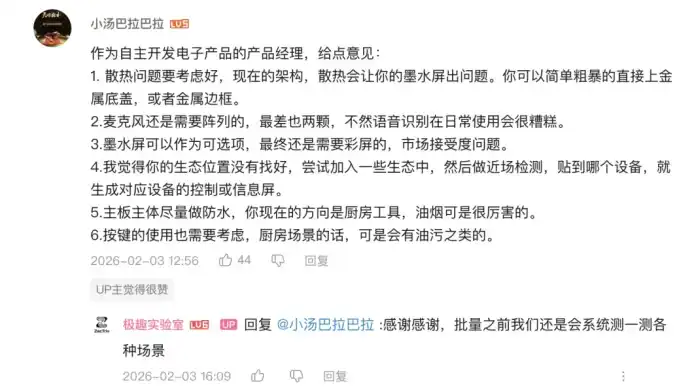
(AI便利贴产品预售视频的评论区)

“这条内容发布后,弹幕和评论区出现了许多技术讨论方向,还有更多用户开始分享自己的类似需求:有人提到自己经常参加跨境展会,有人说起和海外团队远程协作时的沟通障碍,还有人分享了陪同外籍亲友就医、处理涉外事务时翻译工具不够方便的经历。”

“这些反馈不光帮我们拓展了达人素材的方向,也直接影响了我们对产品线的思考。”吴振说道。
(UP主影视飓风的视频评论区)

发烧友云集

犹记得2024年1月,CES大会。

一款叫做Rabbit R1的橙色小方盒顶着“地球上第一款AI硬件设备”名号掀起科技圈狂潮,市场称其为AI时代的iPhone,一经上线便卖出了10万台。

可旋即而来的并非成功。恰恰相反,此后“实际用起来还不如手机”的质疑声不绝于耳。当时,风头无两的Rabbit R1并未能很好地向用户说明:在当下和未来,Rabbit R1究竟能做什么?创新之下究竟能解决用户什么实际问题?

直到今天,用户教育依然是AI智能硬件最重要的课题——当AI进入消费电子,产品消费逻辑已不仅仅局限在“提升生活效率”上,还包含着“释放个人创造力”、“解放大脑”这些更高维的需求。此时,谁能让用户们在真实场景里理解、讨论、付钱,谁才真正跨过了从技术产品到消费品的门槛。

但这并不容易。在AI眼镜的用户教育上,INMO的CMO吴振向我们直言:这不是简单地传递产品信息,它还需要去消解一个心理门槛,也就是用户得先在脑子里完成一次“试戴”,确认这东西融入日常是自然、不突兀的,才可能走到下一步。

在吴振看来,对AI智能硬件用户进行心理建设的过程,可能比大部分消费电子品类都要长。“当有天用户很自然地戴上AI眼镜出门,不需要提醒自己‘今天要用AI眼镜’,这种行为的改变,可能比很多数据都有说服力。”

洗牌开始,打响注意力争夺战

狂热登峰时,洗牌正在潜行。

眼下市场已经形成共识,2026年将是AI硬件的商业验证年。这也意味着,追风口的人和狂热的资本也将迎来理性与冷静。

大浪淘沙一幕正在上演:2025年年底,AI可穿戴设备Friend AI Necklace遭遇严重市场抵制后陷入停滞;2024年顶峰一现之后,Rabbit R1在产品力跟不上的负面反馈中退货率畸高,口碑严重下滑,最终陷入欠薪与现金流枯竭的困境。

与此同时,聪明选手们也开始审慎调整和优化决策。2026年2月,市场传出豆包AI眼镜项目暂停,至少在可见的周期内,这条产品线不再被当作一个要跑通的方向;更早前的1月,手机厂商vivo的AI眼镜项目叫停,理由是当下难做差异化。

如此种种,正是行业分化写照。

但不可否认,这条价值万亿的赛道,创业者们依然拥有巨大的确定性机会。据AICC预测,到2030年,全球AI相关硬件市场将轻松突破数万亿美元规模。中国这边,行业预计2026年中国消费级AI硬件(不含手机和汽车)市场规模将突破1.27万亿元,到2030年达到2.56万亿元。

当下退场与入场机会并存,OpenAI刚宣布将在下半年推出首款AI硬件设备,Meta也计划在2026年底前将AI智能眼镜年产能翻倍至2000万副。国内最新一幕,京东的AI台灯、AI炒菜机、AI床垫、AI轮椅等一批AI智能终端正在酝酿上新售卖。

人们依然笃定,AI智能硬件背后的入口之争不会停止,AI时代,依然是用户主权时代。

热浪会推着所有人往前走。但当注意力、产品力和用户认知开始在同一张桌面上交手,终局之争才刚刚开始。

Preguntas relacionadas

Q为什么投资人在寻找AI硬件项目时开始关注B站、小红书等内容社区?

A因为AI硬件作为面向大众的消费品,其真实需求往往最早在公共讨论中被暴露。投资人通过这些社区可以观察产品是否被用户理解、讨论和质疑,从而更早地评估其市场潜力,尤其是那些还未大规模曝光的“水下项目”。

Q文章提到2025年AI智能硬件市场出现了哪些细分产品?

A2025年,AI智能硬件市场迎来井喷,细分产品包括AI眼镜、AI玩具、AI录音卡、AI戒指、AI耳机、陪伴机器人以及Agent Box等。这些产品主要从穿戴设备赛道延伸而来。

Q根据文章,INMO的CMO吴振认为AI硬件用户教育的关键挑战是什么?

A吴振认为,AI硬件用户教育的关键挑战在于帮助用户克服“心理门槛”。用户需要在脑海中完成“试戴”,确认产品融入日常生活是自然且不突兀的,才能真正接受和使用。这种心理建设的过程比许多传统消费电子产品更长。

Q文章列举了哪些AI硬件项目遭遇了挫折或失败?

A文章列举了多个遭遇挫折或失败的AI硬件项目,包括:因市场抵制而陷入停滞的Friend AI Necklace;因产品力不足、退货率高而陷入欠薪和现金流困境的Rabbit R1;以及被暂停或叫停的豆包AI眼镜项目和vivo的AI眼镜项目。

Q文章对AI智能硬件市场的未来规模和趋势有何预测?

A文章引用行业预测指出,到2030年,全球AI相关硬件市场将轻松突破数万亿美元规模。具体到中国,预计2026年消费级AI硬件(不含手机和汽车)市场规模将突破1.27万亿元,到2030年达到2.56万亿元。同时,行业正进入商业验证和洗牌期,用户注意力和产品力的竞争将决定最终赢家。

Lecturas Relacionadas

Has the Cryptocurrency Market Hit Bottom? Here's What Institutions Think

"Has the crypto market bottomed out? Major institutions are divided on the outlook, according to a recent analysis by Matt Hougan, Chief Investment Officer of Bitwise. Three prominent research firms published in-depth reports on the topic with differing conclusions. Galaxy Digital argues Bitcoin has not yet found its bottom, pointing to only 4 out of 13 historical bottoming indicators being met. Their analysis suggests a potential bottom range of $30,000 to $54,000. NYDIG adopts a more cautious stance, noting that while metrics are close to historical bear market lows, a classic panic-selling capitulation event is missing. They acknowledge the possibility of a bottom but consider it unlikely, citing structural changes from institutional adoption. In contrast, Standard Chartered Bank asserts the bottom is already in at around $59,000. Their revised bullish view, predicting a year-end target of $100,000, hinges on anticipated reductions in ETF selling pressure linked to events like a potential SpaceX IPO. Despite the surface-level disagreement on the exact price floor, the reports share significant common ground crucial for long-term investors. All three institutions agree that a market bottom will likely form within the current year, that current prices are closer to the bottom than to previous cycle highs, and that Bitcoin is poised for another major bull cycle in the future. The core takeaway is that while the precise bottom level remains debated, the long-term value proposition for Bitcoin remains strong and may even be strengthening. Key supportive trends include rising global debt, persistent inflation, declining trust in traditional institutions, accelerating digitization, and improving market infrastructure. Therefore, for investors with a long-term horizon, the focus should shift from pinpointing the exact bottom to recognizing that the cycle's peak is likely still ahead, making current levels an attractive entry point for substantial potential upside."

Foresight NewsHace 22 min(s)

Has the Cryptocurrency Market Hit Bottom? Here's What Institutions Think

Foresight NewsHace 22 min(s)

2029 Finale Prediction: When Cryptocurrency Completely "Vanishes", Who Can Remain in This Financial Upheaval?

By 2029, the crypto industry will have transformed into a largely invisible but foundational layer for traditional finance. This timeline outlines the key shifts from now until then. By mid-2026, the most sought-after assets on-chain will not be traditional tokens, but synthetic perpetual contracts for private, high-growth companies (like SpaceX, OpenAI). These become primary price discovery tools, highlighting the market's craving for real-world asset value. Most altcoins enter a sustained bear market as their fundamental lack of asset-backed value is exposed. In late 2026, the "AI + Crypto" narrative largely fades as AI giants prove they don't need crypto infrastructure, except for prediction markets betting on model performance. Simultaneously, a quiet but significant wave of tokenization for institutional assets (money market funds, private credit) begins. The industry splits into a noisy speculative economy and a silent institutional one. Throughout 2027, major public blockchain foundations pivot decisively to serve institutional clients, building compliance toolkits and sales teams. However, key sectors hit growth ceilings: private perpetual contracts are legally restricted from public promotion, stable币 growth is capped by looming political uncertainty, and tokenization projects remain cautious. In 2028, following a U.S. election assumed to maintain a regulatory (not prohibitive) stance, a pivotal change occurs. After a major liquidation crisis exposes the flaws of synthetic contracts lacking a real-asset anchor, new regulations allow the *public solicitation* of private security sales (secondary market shares) to accredited investors. This creates a legitimate, direct on-ramp for retail capital into previously illiquid private equity. By 2029, the resulting bull market is driven by trading in real, innovative company shares (biotech, robotics, AI labs), not speculative tokens. "Crypto" as a distinct asset class recedes; it becomes the mundane, unseen plumbing for this new global private markets infrastructure. Tokens that survive are those capturing real cash flows from this infrastructure. Speculation persists but is marginalized. The core questions posed at the start are answered: token value is tied to legally enforceable claims on real assets, frontier tech adoption happens via private market channels, and crypto's absorption into traditional finance is marked by its becoming boring and invisible. The key validation for this entire thesis is whether, by late 2028, a legal pathway exists for ordinary accredited investors to access private assets directly.

marsbitHace 1 hora(s)

2029 Finale Prediction: When Cryptocurrency Completely "Vanishes", Who Can Remain in This Financial Upheaval?

marsbitHace 1 hora(s)

After the U.S. Banned Fable 5, Zhipu's Stock Soared 47%

On June 15, Chinese AI company Zhipu's stock surged up to 47.6% in Hong Kong, closing with a 32.82% gain. This sharp rise followed two key industry events. On June 12, Anthropic was compelled by a U.S. government export control order to suspend global access to its latest flagship models, Claude Fable 5 and Claude Mythos 5, impacting developers and businesses reliant on them. The next day, Zhipu announced it was opening access to its new open-source flagship model, GLM-5.2, for all Coding Plan users, with API and model weights (under the MIT license) to follow. The Anthropic incident highlighted a critical shift in the AI industry: beyond raw capability, the stability, continuous accessibility, and control over AI models are becoming equally vital, especially as AI integrates deeper into business workflows. Zhipu's move, emphasizing that "frontier intelligence should not belong to a few nor be subject to arbitrary revocation," positioned its open, accessible model as an alternative. GLM-5.2 focuses on "Long Horizon Tasks" with a 1M context window, aiming for consistency in complex, extended projects. Market analysts suggest this event exposes the risk of dependency on closed-source models subject to single jurisdiction policies, potentially accelerating a shift toward domestic base models and localized deployments. The investment response indicates a new valuation metric is emerging—prioritizing which companies can provide AI capabilities that are not only advanced but also reliably and sustainably accessible.

marsbitHace 1 hora(s)

After the U.S. Banned Fable 5, Zhipu's Stock Soared 47%

marsbitHace 1 hora(s)

Trading

Spot
Futuros

Artículos destacados

Cómo comprar ERA

¡Bienvenido a HTX.com! Hemos hecho que comprar Caldera (ERA) sea simple y conveniente. Sigue nuestra guía paso a paso para iniciar tu viaje de criptos.Paso 1: crea tu cuenta HTXUtiliza tu correo electrónico o número de teléfono para registrarte y obtener una cuenta gratuita en HTX. Experimenta un proceso de registro sin complicaciones y desbloquea todas las funciones.Obtener mi cuentaPaso 2: ve a Comprar cripto y elige tu método de pagoTarjeta de crédito/débito: usa tu Visa o Mastercard para comprar Caldera (ERA) al instante.Saldo: utiliza fondos del saldo de tu cuenta HTX para tradear sin problemas.Terceros: hemos agregado métodos de pago populares como Google Pay y Apple Pay para mejorar la comodidad.P2P: tradear directamente con otros usuarios en HTX.Over-the-Counter (OTC): ofrecemos servicios personalizados y tipos de cambio competitivos para los traders.Paso 3: guarda tu Caldera (ERA)Después de comprar tu Caldera (ERA), guárdalo en tu cuenta HTX. Alternativamente, puedes enviarlo a otro lugar mediante transferencia blockchain o utilizarlo para tradear otras criptomonedas.Paso 4: tradear Caldera (ERA)Tradear fácilmente con Caldera (ERA) en HTX's mercado spot. Simplemente accede a tu cuenta, selecciona tu par de trading, ejecuta tus trades y monitorea en tiempo real. Ofrecemos una experiencia fácil de usar tanto para principiantes como para traders experimentados.

386 Vistas totalesPublicado en 2025.07.17Actualizado en 2026.06.02

Cómo comprar ERA

Discusiones

Bienvenido a la comunidad de HTX. Aquí puedes mantenerte informado sobre los últimos desarrollos de la plataforma y acceder a análisis profesionales del mercado. A continuación se presentan las opiniones de los usuarios sobre el precio de ERA (ERA).

活动图片