Buy an NFT First to Get a Ticket? The Largest World Cup Ticket Slump in History

marsbitPublicado a 2026-06-11Actualizado a 2026-06-11

Resumen

"Ticketing Woes for 2026 World Cup: NFT 'Right-to-Buy' and High Prices Dampen Sales" Despite anticipation for the 2026 FIFA World Cup, with 48 teams and 104 matches across North America, the tournament faces significant unsold tickets, with approximately 180,000 group-stage tickets still available for resale just before kick-off. This unexpected shortfall is attributed to FIFA's controversial new ticketing strategy, which includes an NFT-based "Right-to-Buy" (RTB) system and opaque, dynamic pricing. FIFA introduced RTBs as digital collectibles (NFTs) sold on its FIFA Collect platform. An RTB grants the holder only the right to purchase a ticket for a specific match later, not the ticket itself. This two-step process, criticized for selling "scarcity" first, saw RTBs priced from tens to hundreds of dollars, generating millions in revenue for FIFA. With many tickets remaining available on official channels, the value of these prepaid purchase rights is now being questioned. Compounding the issue are ticket prices, reported to be 2 to 4 times higher than the 2022 Qatar World Cup, and up to 7 times more for marquee matches. FIFA employed dynamic pricing, common in U.S. sports, but lacked transparency on seat availability and exact locations during sales, frustrating global fans facing high travel costs. This has drawn scrutiny from regulators in New York and New Jersey. FIFA's official resale platform also drew criticism for imposing high fees—roughly 10% on sellers and 17% o...

Author: Zen, PANews

The long-awaited 2026 FIFA World Cup will officially kick off in Mexico City at 3:00 AM Beijing Time on June 12.

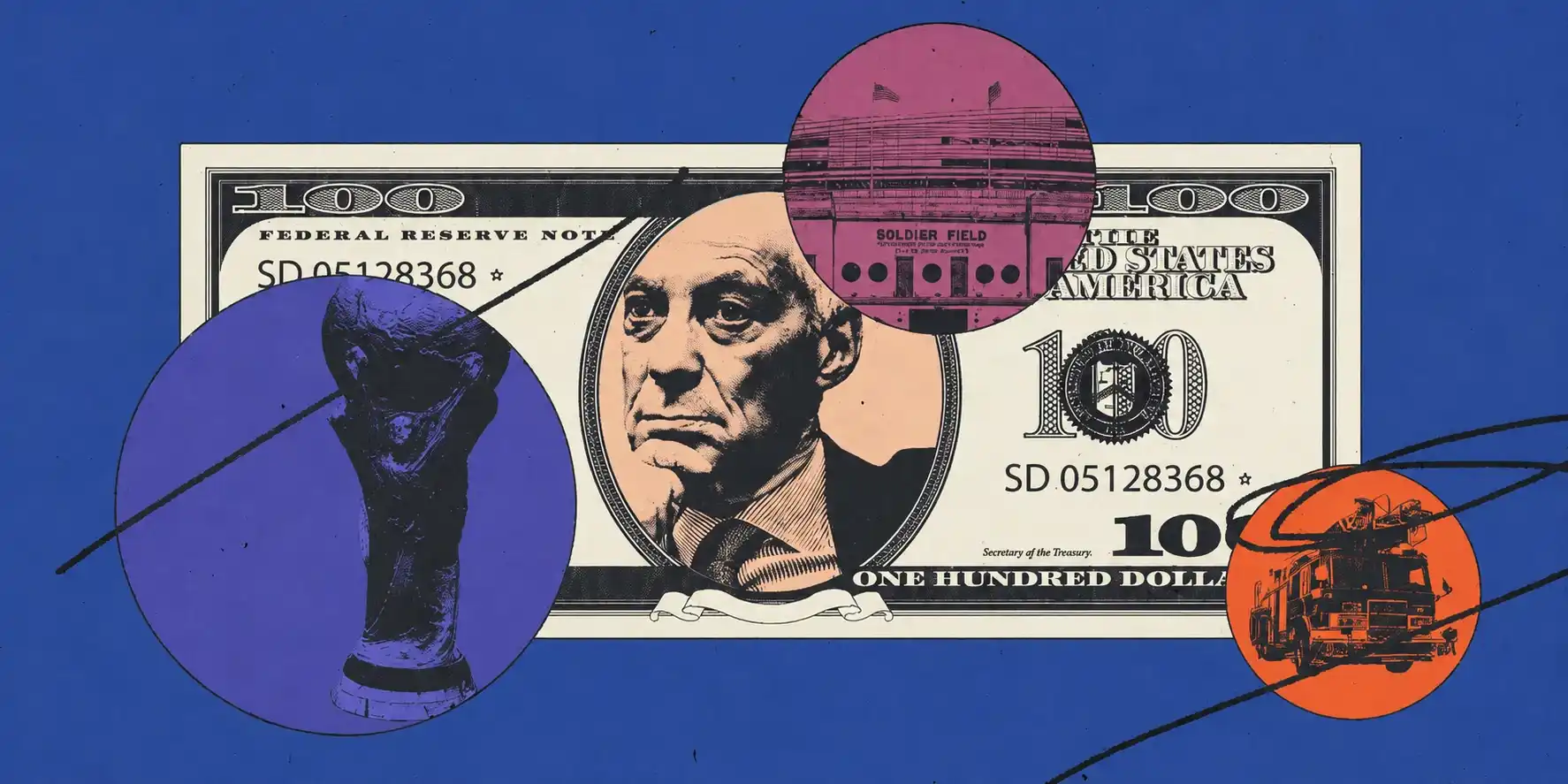
Dubbed an unprecedented super event, this World Cup will feature 48 teams playing a total of 104 matches across venues in the United States, Canada, and Mexico. Barring any unforeseen circumstances, this is poised to become the World Cup with the highest commercial revenue in history.

However, on the eve of the opening ceremony, this tournament is facing a dilemma of unsold tickets. According to the Financial Times, with the opening match just around the corner, there are still approximately 180,000 group stage tickets available for resale. For a top-tier event long regarded as a global spectacle, this contrast is strikingly stark.

This is not because the World Cup itself has lost its global appeal. In fact, the betting industry is touting this World Cup as the "biggest betting opportunity" in history. As of June 11, the amount staked on the event contract for the World Cup winner on the prediction market Polymarket has approached $20 billion. Such a massive influx of capital before the tournament even begins clearly indicates its immense popularity.

Therefore, the issue of "difficult ticket sales" lies more with FIFA's ticketing mechanisms, also exposing the side effects of FIFA's radical commercialization experiment with the ticketing system for this World Cup.

FIFA's Ticketing "Shenanigans": Buy a "Digital Collectible" First for a Ticket

One of the most controversial ticketing arrangements for this World Cup is FIFA's sale of so-called "Right-To-Buy" (RTB) through the FIFA Collect platform.

Unlike traditional ticketing products, RTB is a type of "digital right" or "digital collectible" designed around the eligibility to obtain World Cup tickets, issued and traded via the FIFA Collect digital collectibles platform. The issued digital collectibles are essentially NFTs. The FIFA Collect platform originally ran on the Algorand blockchain and migrated to FIFA's self-built FIFA Blockchain (based on Avalanche technology) in May 2025.

According to the official explanation from FIFA Collect, holding an RTB only grants fans the opportunity to purchase tickets for a specific match during a designated window. Each RTB specifies how many tickets the holder can purchase in the future, and for which match or event, but it does not include the actual ticket itself.

This mechanism splits the ticket-buying process into two steps: first, selling scarcity, and then selling the actual ticket. However, when fans purchase an RTB, they often do not know the final seating area, the full ticket price, and cannot fully assess the future value of this "priority right."

In terms of pricing, RTBs do not have a fixed price; they vary based on the importance of the corresponding match, the number of tickets that can be purchased, and market supply and demand. Previously on the FIFA Collect platform, prices for RTBs for different matches ranged from tens to hundreds of dollars, with some RTBs for popular matches or those including multiple ticket purchase rights fetching even higher prices on the secondary market.

According to reports from the UK sports business media SportsPro, FIFA had already generated revenue in the tens of millions of dollars from these RTB sales.

When tickets are highly scarce and prices are not fully known, such a design encouraging fans to pay upfront might make some sense. However, the awkwardness of RTBs becomes apparent when a significant number of tickets remain available for sale on the official platform. If tickets aren't as hard to get as imagined, the rationale for spending hundreds of dollars upfront for a "ticket purchase qualification" is called into question.

Not Just Expensive, But Also Opaque and Constantly Changing Prices

This tournament's main matches are concentrated in the US market, which is already the world's most mature and expensive market for live sports entertainment. Events like the NFL, NBA, and MLB have long employed business models featuring high ticket prices, luxury boxes, dynamic pricing, and secondary markets. Naturally, upon entering this market, FIFA aimed to align World Cup pricing with these standards.

FIFA has adopted a dynamic or variable pricing model for this World Cup, meaning ticket prices can be continuously adjusted based on demand, inventory, and sales phases. Early on, officials emphasized that some group stage tickets started at $60, but this low-price tier was limited. More prevalent were ticket prices far exceeding fan expectations; for instance, tickets for some popular group stage matches easily cost hundreds or even thousands of dollars, while prices for knockout stages and the final were exorbitantly high.

Reportedly, the actual ticket cost for this World Cup is about 2 to 4 times that of the previous Qatar World Cup, with popular matches, the opening match, and the final reaching 4 to 7 times higher. The problem lies in the fact that the World Cup is not an ordinary commercial league. Its audience isn't just local high-income sports consumers, but ordinary fans from all over the world. Many, in order to support their national teams, need to travel across continents, book flights and hotels in advance, and incur other costs like local transportation. For these fans, ticket prices are only a part of the total cost, but they have become the most uncontrollable part.

What further frustrates fans is the lack of transparency. Complaints from European fan organizations and consumer groups to FIFA stated that FIFA did not adequately disclose from the outset how many tickets remained in each price tier or specific seat locations. Some fans even had to pay high fees without being able to fully confirm seat views and locations during purchase. This information asymmetry severely amplifies the feeling of being "manipulated."

Currently, FIFA's ticketing mechanisms have not only sparked commercial controversy but have also attracted public regulatory scrutiny. Relevant departments in the US states of New York and New Jersey have also launched investigations into the World Cup ticketing, focusing on seat information, ticketing promotions, and potential issues of so-called "artificial scarcity."

Official Resale Platform Amplifies Price Anxiety

FIFA specifically launched an official resale platform for this World Cup. In theory, this was to allow fans to buy and sell tickets in a secure environment, reducing fraud and black-market transactions. However, while this platform improved transaction security, it did not enhance the ticket-buying experience for fans.

The European Fans' Association and the European Consumer Organization criticized FIFA for charging fees to both buyers and sellers on the official resale platform, allowing FIFA to continue profiting from subsequent transactions after the initial ticket sale. According to ticketing rules cited by the Financial Times, on FIFA's official resale platform, sellers pay a service fee of approximately 10% when listing a ticket, while buyers must pay an additional fee of about 17% in commissions and related surcharges.

This means that if a ticket is resold through the official platform, the combined fees borne by both parties amount to nearly 27% of the ticket's face value. This allows FIFA to not only enjoy high ticket revenue in the primary market but also continue capturing fees from the secondary resale market.

And as of now, the FIFA official site is still selling tens of thousands of group stage tickets. For scalpers and speculators who hoped to profit from reselling at higher prices after hoarding tickets at high prices, even listing at the original price would result in an actual loss after deducting platform fees.

Of course, the 180,000 tickets available for resale won't actually lead to a large number of empty seats at this World Cup. FIFA President Gianni Infantino stated at a pre-opening press conference that the tournament has sold over 6 million tickets and claimed that demand exceeded expectations by "10 times or more." Popular matches, host nation matches, knockout stages, and the final will still attract enormous attention. As the tournament begins, emotions rise, and teams' progression becomes clearer, some of the inventory may also be absorbed.

But the significance of this controversy lies in its reminder that even if overall World Cup sales remain strong, this tournament has proven that fans' passion does not equate to an unlimited willingness to pay; there is still a boundary for ticket prices and ticketing mechanisms that should not be easily crossed. The World Cup's global influence does not mean FIFA can endlessly squeeze this emotional premium.


Preguntas relacionadas

QWhat is the main reason for the ticket sales difficulties faced by the 2026 FIFA World Cup according to the article?

AThe main reason is FIFA's aggressive commercial experiment with its ticketing system, particularly the introduction of the 'Right-To-Buy' (RTB) digital collectibles (NFTs), which require fans to purchase a digital asset first for the *chance* to buy a ticket later. This multi-step, non-transparent process, coupled with high and dynamic ticket pricing, has created frustration and reduced accessibility.

QWhat is an RTB (Right-To-Buy) and how does it function in the FIFA Collect platform?

AAn RTB is a digital collectible or NFT sold on the FIFA Collect platform. It represents a right or eligibility for the holder to purchase a ticket for a specific match during a designated sales window. Crucially, the RTB itself is not a ticket; it is a separate purchase that grants the holder the opportunity to later buy the actual ticket at an unspecified seat and often unknown final price.

QHow has the pricing structure of the 2026 World Cup tickets been criticized?

AThe pricing has been criticized for being significantly higher than previous tournaments (2-4 times more expensive, up to 4-7 times for key matches), using dynamic pricing that causes prices to fluctuate, and lacking transparency. Fans often cannot see exact seat locations or know how many tickets are available at each price tier before committing to a high purchase cost.

QWhat issue does the article highlight regarding FIFA's official ticket resale platform?

AThe article criticizes the platform for charging high fees on both the seller (around 10%) and the buyer (around 17%), meaning nearly 27% of a ticket's face value goes to FIFA in a resale transaction. This allows FIFA to profit repeatedly from the same ticket and has contributed to losses for speculators trying to resell tickets, as the fees cut into their potential profits.

QWhat broader lesson does the article suggest the 2026 World Cup ticketing controversy demonstrates?

AIt demonstrates that even for a massively popular global event like the World Cup, there is a limit to how much fans are willing to pay and how much their emotional investment can be commercially exploited. High prices and complex, non-transparent ticketing mechanisms can lead to public backlash and regulatory scrutiny, showing that fan enthusiasm does not equal unlimited purchasing power.

Lecturas Relacionadas

Xpeng and NIO Compete on Computing Power, Li Auto Shifts Architecture

On June 15, 2026, Li Auto unveiled details of its self-developed chip, Mahe M100, for its new L9 Livis model. CTO Xie Yan stated the goal was not just a faster chip, but a fundamentally different one, targeting the chip architecture itself. While competitors like NIO, Xpeng, and Huawei highlight TOPS (computing power) figures for their self-developed chips, Li Auto’s Mahe M100 focuses on redesigning the underlying architecture. It employs a "dynamic data flow architecture" to address memory bandwidth bottlenecks in large model inference, claiming up to 3x the effective computing power of Nvidia's Thor U for its specific workloads and a 40% reduction in latency. The chip's design was peer-reviewed and accepted at ISCA 2026. However, this performance is highly optimized for Li Auto's own VLA2.1 algorithm, meaning it may not generalize as well to other tasks. Li Auto aims to achieve full-stack in-house development with Mahe M100, covering chip, compiler, OS, AI algorithms, and domain controller—a level of vertical integration few competitors match. Beyond the chip, CEO Li Xiang introduced a new strategic narrative: the "embodied intelligent vehicle," defined as an integration of an EV, a professional driver, an AI computer, and a life assistant. This shifts competition from features like large screens to systemic AI capabilities. A key commitment was that Li Auto's Mahe VLA autonomous driving model will match Tesla's FSD V14 by Q4 2026, with specific OTA milestones set for July, September, and December. Financially, Li Auto faces pressure with declining revenue and vehicle gross margins since Q4 2025, while maintaining high R&D investment (approx. ¥12B in 2026, 50% AI-related). Its 2026 sales target is 550,000 vehicles, up from 406,000 in 2025. The new L9 Livis garnered over 10,000 pre-orders in two weeks. The effectiveness of these strategic moves—new products, OTAs, and the novel chip architecture—will begin to show in Q3 2026 financial results, with the year-end FSD V14 benchmark being the ultimate test.

marsbitHace 52 min(s)

Xpeng and NIO Compete on Computing Power, Li Auto Shifts Architecture

marsbitHace 52 min(s)

The Year of AI Applications: Saying 'Yes' While Ignoring Risks? A Comprehensive Open Source Log of Software Development's Journey

The Year of AI Applications: Blindly Saying "Yes" While Ignoring Risks? A Software Development Log Goes Fully Open Source. AI-generated code harbors risks hidden within seemingly correct programs, potentially leading to data leaks or asset loss. The open-source project "Narwhal AI Code Risks," from Peking University's Narwhal-Lab, compiles real-world cases, early warning signs, and typical risk pathways. Its goal is to help developers identify potential hazards early and avoid repeating past mistakes. In 2026, code is generated faster than ever but deployed with less scrutiny. The danger often lies not in glaring errors, but in code that appears normal—syntactically correct, passing all checks—yet introduces subtle but critical flaws like non-existent dependencies, excessive permissions, or exposed databases. A stark example is the Moonwell cbETH oracle incident. A configuration file error, where a cryptocurrency price was set to ~$1.12 instead of ~$2,200, slipped through 28 checks and a pull request signed by both AI (Claude, Copilot) and human developers. This "semantic deviation" resulted in a loss of $1.78 million. The risk is that AI can produce functionally valid code that is semantically wrong for the business context. As AI moves beyond simple code completion to modifying configurations, installing dependencies, and operating via autonomous agents, it traverses longer, less traceable paths within software engineering, blurring traditional boundaries and oversight points. The Narwhal AI Code Risks project structures information into three layers: `/cases` for documented real-world incidents, `/inferred` for early warning signals, and `/scenarios` for clear, generalized risk patterns not yet tied to specific events. This aims to create a lasting, public record to prevent collective amnesia about past AI-coding pitfalls. Risks are categorized into seven areas: Software Supply Chain (e.g., recommending fake packages), Code-Level Vulnerabilities (e.g., reintroducing path traversal bugs), Cloud & Infrastructure Misconfiguration (e.g., overly permissive settings), Agent Risks (from autonomous tool execution), Vertical Domain Risks (e.g., in finance, healthcare), Intellectual Property & Compliance issues, and Human Factors (like over-reliance on AI output). The project's core value is transforming isolated incidents into reusable knowledge—a foundational resource for developers to spot similar issues, for security researchers to build upon, for toolmakers to create detection rules, and for the community to contribute new findings. As AI integration accelerates, this open-source "logbook" serves as a crucial navigational aid, charting past errors to help future projects steer clear of the same traps.

marsbitHace 52 min(s)

The Year of AI Applications: Saying 'Yes' While Ignoring Risks? A Comprehensive Open Source Log of Software Development's Journey

marsbitHace 52 min(s)

The Foundation of SpaceX's Trillion-Dollar Valuation: Who is Dividing Up Musk's Annual Tens of Billions in Capital Expenditure?

SpaceX's trillion-dollar valuation is built on its three core businesses: Starlink (profitable, 60% of revenue), rockets (driving down launch costs), and AI (a major investment area). This creates a financial cycle: Starlink funds rocket development, which enables low-cost launches for AI hardware, generating future revenue. This cycle fuels annual capital expenditures of tens of billions, flowing to a vast supply chain. Suppliers are categorized by their replaceability. The first group includes irreplaceable players like NVIDIA (GPU/CUDA ecosystem), Eutelsat (critical radio spectrum), Filtronic (specialized amplifiers), Materion (strategic beryllium), and STMicroelectronics (antenna chips). The second group consists of hard-to-replace suppliers due to high switching costs, such as Honeywell (flight control), Carpenter Technology (specialty alloys), Hexcel (carbon fiber), Broadcom (data exchange), and Linde (industrial gases). The third group comprises high-volume, cost-critical suppliers for mass-produced items like Starlink terminals. Key names include Wistron NeWeb (primary manufacturer) and several A-share companies like Shenzhen Sunway (connectors), Pies New Materials (forgings), Western Superconducting (alloys), and Yingliu (castings). Other niche players include Trimble (timing), Astronics (power distribution), and CTS (thermal management). The article argues that investing in these suppliers, rather than SpaceX stock directly, offers an alternative opportunity. The rationale is threefold: procurement is just beginning to scale, SpaceX's IPO brings new transparency to its supply chain, and the situation mirrors early stages of past "super terminal" ecosystems like Apple or Tesla. While risks exist (commodity cycles, geopolitical factors, technology shifts), the core thesis is that SpaceX's massive, ongoing procurement will translate into reliable revenue for its key suppliers, regardless of its own stock price volatility.

marsbitHace 1 hora(s)

The Foundation of SpaceX's Trillion-Dollar Valuation: Who is Dividing Up Musk's Annual Tens of Billions in Capital Expenditure?

marsbitHace 1 hora(s)

SpaceX's Trillion-Dollar Valuation Base: Who's Sharing in Musk's Annual Tens of Billions in Capital Expenditure?

**Title: The Foundation of SpaceX's Trillion-Dollar Valuation: Who Benefits from Musk's Annual $100 Billion Capital Expenditure?** This article argues that investors seeking to benefit from SpaceX's growth might find greater opportunities in its supply chain rather than directly investing in the company itself, drawing parallels to historical successes with Apple, Tesla, and NVIDIA suppliers. **SpaceX's Business Model & Cash Flow:** SpaceX generates revenue from three main areas: 1. **Starlink:** Its profitable core, earning $11.3B in 2023 (60% of revenue), funding other ventures. 2. **Rockets (Falcon/Starship):** Requires $3B+ in annual R&D but achieves the world's lowest launch costs. 3. **AI:** Currently unprofitable (-$6B+ in 2023), investing heavily in ground-based supercomputers (220,000 GPUs) and future orbital data centers. The cycle is: Starlink profits → fund cheaper rockets → low-cost launches deploy AI hardware → AI compute rentals generate future revenue. This cycle drives annual procurement spending of tens of billions of dollars. **The Supply Chain Beneficiaries:** Suppliers are categorized by their replaceability: **1. Nearly Irreplaceable (High Barriers to Entry):** * **NVIDIA:** Powers the Colossus supercomputer; its CUDA ecosystem creates immense switching costs. * **Eutelsat (SATS):** Controls critical radio spectrum for satellite communications; holds a ~3% stake in SpaceX. * **Filtronic (FTC):** Supplies millimeter-wave signal amplifiers for Starlink satellites; SpaceX constitutes 83% of its revenue. * **Materion (MTRN):** Global leader in beryllium production, a strategic material used in Starship structures. * **STMicroelectronics (STM):** Supplies phased-array antenna chips for Starlink satellites. **2. Replaceable, but Switching Cost is Prohibitively High:** * **Honeywell (HON):** Provides flight control and inertial navigation systems with decades of certification. * **Carpenter Technology (CRS):** Manufactures ultra-pure specialty steel alloys for Raptor engines. * **Hexcel (HXL):** Supplies custom carbon fiber composites developed over a decade with SpaceX. * **Broadcom (AVGO):** Manages high-speed data switching. * **Linde Group:** Supplies industrial gases (liquid oxygen/nitrogen) from facilities built near SpaceX launch sites. **3. High-Volume, Cost-Critical Manufacturing:** Focuses on mass-producing components like Starlink user terminals (target: 30 million units). * **Key Players:** Wistron NeWeb (6285, primary terminal manufacturer), several Chinese A-share companies (e.g., Sunway Communication, PAX New Materials, Western Metal Materials, Yingliu Co.), and smaller US firms like Trimble (TRMB, timing systems). **Why Now?** Three factors make the supply chain opportunity timely: 1. **Volume Ramp-Up:** SpaceX plans 100 launches in 2026, aims for 30 million Starlink terminals, and will deploy AI data centers, meaning procurement will accelerate. 2. **Increased Transparency:** The IPO provides public financial data, allowing investors to track supplier order growth. 3. **Historical Precedent:** The current phase is likened to Tesla's early mass-production stage (circa 2018), suggesting a long growth runway for suppliers. **Conclusion:** The article posits that while investing in SpaceX stock is betting on Elon Musk's ambitious vision at a high valuation, investing in its established suppliers is a bet on the tangible, recurring revenue from its massive procurement budget, which is largely decoupled from day-to-day stock price volatility.

链捕手Hace 1 hora(s)

SpaceX's Trillion-Dollar Valuation Base: Who's Sharing in Musk's Annual Tens of Billions in Capital Expenditure?

链捕手Hace 1 hora(s)

Trading

Spot
Futuros

Artículos destacados

Cómo comprar NFT

¡Bienvenido a HTX.com! Hemos hecho que comprar APENFT (NFT) sea simple y conveniente. Sigue nuestra guía paso a paso para iniciar tu viaje de criptos.Paso 1: crea tu cuenta HTXUtiliza tu correo electrónico o número de teléfono para registrarte y obtener una cuenta gratuita en HTX. Experimenta un proceso de registro sin complicaciones y desbloquea todas las funciones.Obtener mi cuentaPaso 2: ve a Comprar cripto y elige tu método de pagoTarjeta de crédito/débito: usa tu Visa o Mastercard para comprar APENFT (NFT) al instante.Saldo: utiliza fondos del saldo de tu cuenta HTX para tradear sin problemas.Terceros: hemos agregado métodos de pago populares como Google Pay y Apple Pay para mejorar la comodidad.P2P: tradear directamente con otros usuarios en HTX.Over-the-Counter (OTC): ofrecemos servicios personalizados y tipos de cambio competitivos para los traders.Paso 3: guarda tu APENFT (NFT)Después de comprar tu APENFT (NFT), guárdalo en tu cuenta HTX. Alternativamente, puedes enviarlo a otro lugar mediante transferencia blockchain o utilizarlo para tradear otras criptomonedas.Paso 4: tradear APENFT (NFT)Tradear fácilmente con APENFT (NFT) en HTX's mercado spot. Simplemente accede a tu cuenta, selecciona tu par de trading, ejecuta tus trades y monitorea en tiempo real. Ofrecemos una experiencia fácil de usar tanto para principiantes como para traders experimentados.

375 Vistas totalesPublicado en 2024.12.10Actualizado en 2025.03.21

Cómo comprar NFT

Qué es AINFT

EternaFi Agents y $AINFT: Un Análisis Integral de la Infraestructura NFT Potenciada por IA en el Ecosistema Web3 La intersección de la inteligencia artificial (IA) y la tecnología blockchain está evolucionando rápidamente, estableciendo plataformas innovadoras que redefinen los modelos de propiedad y la participación económica. EternaFi Agents, junto con su token nativo $AINFT, ejemplifica un enfoque revolucionario para la tokenización de infraestructuras de IA a través de tokens no fungibles (NFTs). Lanzado en julio de 2025 por el equipo de desarrollo de Nova Club, EternaFi fusiona los avances de la IA con los mecanismos financieros descentralizados de la blockchain, presentando una oportunidad de inversión única para los participantes dentro del ecosistema web3. Este artículo tiene como objetivo proporcionar una evaluación profunda de EternaFi Agents, cubriendo sus componentes centrales, funcionalidad y significado dentro del paisaje cripto. Introducción y Visión General del Proyecto EternaFi Agents se erige como un ejemplo destacado de cómo la tecnología blockchain puede democratizar el acceso a capacidades avanzadas de IA. El proyecto se esfuerza por remodelar el paradigma de la propiedad de la IA al diversificar la participación económica, haciendo que los sistemas de IA sofisticados sean accesibles para un mayor número de partes interesadas. En su núcleo, el proyecto tokeniza un modelo de lenguaje grande (LLM) propietario desarrollado por Nova Club, permitiendo a los poseedores de NFTs obtener una exposición fraccionada al rendimiento económico del modelo. Al utilizar NFTs que representan participaciones en el LLM, EternaFi Agents fomenta un modelo en el que las partes interesadas no solo participan en el consumo de servicios de IA, sino que también disfrutan de compartir las recompensas económicas generadas por la plataforma. Este enfoque transformador permite el desarrollo de modelos de ingresos sostenibles para los servicios de IA, al mismo tiempo que promueve un amplio compromiso comunitario y facilita una gobernanza transparente. ¿Qué es EternaFi Agents? EternaFi Agents representa un proyecto de infraestructura AI-NFT que busca combinar las capacidades de la IA con la tecnología blockchain en un ecosistema coherente. La característica esencial de este proyecto es la creación de NFTs que sirven como instrumentos financieros, representando fracciones de propiedad en la infraestructura de IA propietaria de Nova Club. Cada NFT simboliza una exposición directa al rendimiento económico del sistema de IA subyacente, proporcionando una oportunidad lucrativa para los inversores. El proyecto opera en la blockchain Base, conocida por su escalabilidad y eficiencia, asegurando así costos de transacción manejables mientras facilita una experiencia operativa fluida. Una de las características notables incluye un mecanismo de reparto de ingresos, en el que los poseedores de NFTs pueden recibir porciones de los ingresos por suscripción generados por los servicios de IA proporcionados en la plataforma. Este enfoque innovador establece una conexión entre el éxito de los servicios de IA y los dividendos económicos distribuidos entre los poseedores, asegurando así una alineación de intereses en toda la comunidad. ¿Quién es el Creador de EternaFi Agents? La fuerza creativa detrás de EternaFi Agents es Nova Club, un equipo de desarrollo con sede en Singapur, experto en la amalgama de IA y tecnología blockchain. Su experiencia previa en el desarrollo de IA y análisis de criptomonedas da credibilidad al proyecto, aportando una amplia gama de conocimientos a la creación de EternaFi Agents. La misión de Nova Club se centra en democratizar el acceso a tecnologías de IA de vanguardia mientras construye modelos económicos sostenibles que beneficien a los usuarios junto con los desarrolladores. Su compromiso con la transparencia, la gobernanza comunitaria y la innovación se refleja en el diseño e implementación de la plataforma EternaFi, con el objetivo de establecer un ecosistema único que fomente el compromiso positivo y la creación de valor a largo plazo. ¿Quiénes son los Inversores de EternaFi Agents? Los detalles específicos sobre los inversores u organizaciones de inversión que respaldan EternaFi Agents no están disponibles públicamente. Sin embargo, EternaFi ha adoptado un enfoque inclusivo para financiar su desarrollo a través de la venta de NFTs al público, permitiendo a una amplia variedad de participantes invertir en el ecosistema. La arquitectura del proyecto asegura que la infraestructura central se financie de manera responsable mientras permite a los miembros de la comunidad participar en la propiedad y los retornos económicos generados por los servicios de IA. Este modelo enfatiza el compromiso comunitario al alinear los intereses de los inversores y los desarrolladores del proyecto, creando un entorno colaborativo donde se incentiva la participación a largo plazo. ¿Cómo Funciona EternaFi Agents? EternaFi Agents opera a través de un ecosistema multifacético donde los NFTs sirven como un medio principal de representación de propiedad dentro del proyecto. Cada poseedor de un NFT tiene derecho a una parte de los ingresos por suscripción mensual producidos por la plataforma impulsada por IA subyacente, posicionando así la propiedad de NFTs como un vehículo de inversión lucrativo. Mecanismo de Generación de Ingresos La principal fuente de generación de ingresos para la plataforma EternaFi proviene de las tarifas de suscripción relacionadas con los servicios de IA proporcionados. Los usuarios pueden acceder a varios servicios escalonados, que van desde herramientas básicas de análisis de mercado hasta soluciones de trading asistidas por IA completas. Estos servicios se monetizan y forman la base del marco de reparto de ingresos, que distribuye ganancias a los poseedores de NFTs a través de contratos inteligentes automatizados. Una característica innovadora del ecosistema EternaFi es el mecanismo de reparto de ingresos que opera de manera transparente, asegurando que las recompensas se asignen en función de métricas verificables de las operaciones de la plataforma de IA. Esto crea un vínculo directo entre el rendimiento de los servicios de IA y los retornos disponibles para los inversores de la comunidad, estableciendo un modelo económico sostenible. Mecanismos de Staking y Vesting Los participantes dentro de EternaFi pueden participar en el staking de sus NFTs para desbloquear beneficios económicos adicionales. El cronograma de vesting está diseñado para promover el compromiso a largo plazo entre los participantes, recompensando a aquellos que demuestran apoyo continuo al proyecto. Esto asegura una robusta alineación de intereses y fomenta un sentido de compromiso comunitario esencial para lograr los objetivos a largo plazo del proyecto. Gobernanza Transparente EternaFi Agents abraza la gobernanza descentralizada, permitiendo a los poseedores de NFTs desempeñar un papel activo en la toma de decisiones sobre el desarrollo y las direcciones futuras de la plataforma. La estructura de gobernanza incluye mecanismos de votación comunitaria, proporcionando a los poseedores de NFTs la oportunidad de influir en decisiones significativas y contribuyendo a un enfoque colaborativo para el crecimiento del proyecto. Cronograma de EternaFi Agents La trayectoria de desarrollo de EternaFi Agents muestra un enfoque sistemático hacia la construcción de una infraestructura de IA sostenible mientras se satisfacen las necesidades de los participantes de la comunidad. A continuación, se presenta un cronograma de hitos importantes en la historia del proyecto: Julio de 2025: Lanzamiento de EternaFi Agents, incluyendo la venta pública de NFTs y el despliegue del token $AINFT en la blockchain Base. Q4 2025: Establecimiento de la infraestructura de mercado, incluyendo pools de liquidez y lanzamiento de paneles de staking para poseedores de NFTs. 2026: Inicio de programas de compromiso comunitario, expansión de capacidades de IA e integración con tecnologías cross-chain. Q4 2026: Implementación del sistema de distribución de dividendos, permitiendo a los poseedores de NFTs cosechar beneficios económicos de sus inversiones. Estos hitos significan el enfoque en establecer un ecosistema funcional y participativo mientras se asegura una evolución continua para satisfacer las demandas del mercado. Infraestructura Tecnológica e Integración Blockchain EternaFi Agents está anclado en un marco tecnológico avanzado que combina sistemas de IA con capacidades de blockchain. Operando en la blockchain Base, el proyecto aprovecha las ventajas de escalabilidad y bajos costos de transacción. La arquitectura subyacente de contratos inteligentes rige la propiedad de NFTs, el reparto de ingresos y las características de gestión comunitaria, asegurando eficiencia y transparencia. Desarrollo del Sistema de IA El modelo de lenguaje grande propietario que sustenta EternaFi Agents ha sido desarrollado de manera independiente y diseñado para atender aplicaciones generadoras de ingresos sin depender de marcos externos propietarios. Este esfuerzo refleja un compromiso con la creación de una infraestructura de IA versátil y adaptable capaz de ofrecer servicios significativos a los usuarios, generando así valor económico para los inversores. Medidas de Seguridad La solidez de la infraestructura de seguridad de EternaFi es primordial. Auditorías regulares y medidas de seguridad estrictas aseguran la integridad de los sistemas de IA y los mecanismos de blockchain, protegiendo contra vulnerabilidades potenciales mientras se fomenta la confianza entre los participantes. Conclusión EternaFi Agents significa una innovación histórica dentro del ámbito de la inteligencia artificial y la tecnología blockchain, abriendo avenidas para la propiedad comunitaria y la participación económica en capacidades avanzadas de IA. La estrategia integral del proyecto para tokenizar la infraestructura de IA a través de NFTs establece un precedente para futuros ecosistemas descentralizados. Al armonizar la sofisticación técnica con modelos económicos centrados en el usuario, EternaFi no solo fomenta el compromiso, sino que también genera un marco sostenible de reparto de ingresos para los participantes de la comunidad. La importancia de EternaFi se extiende mucho más allá de su éxito operativo, ya que ejemplifica cómo la blockchain puede democratizar tecnologías de IA de vanguardia, allanando el camino para futuras iniciativas en este espacio interseccional. La evolución de EternaFi Agents puede heraldar una nueva era de desarrollo de IA caracterizada por una gobernanza impulsada por los participantes, modelos económicos sostenibles y verificación transparente, contribuyendo en última instancia a la democratización más amplia de la IA y la accesibilidad tecnológica en diversas industrias.

867 Vistas totalesPublicado en 2025.08.14Actualizado en 2025.08.14

Qué es AINFT

Discusiones

Bienvenido a la comunidad de HTX. Aquí puedes mantenerte informado sobre los últimos desarrollos de la plataforma y acceder a análisis profesionales del mercado. A continuación se presentan las opiniones de los usuarios sobre el precio de NFT (NFT).

活动图片